Arabian Post Staff -Dubai Ajman Bank has opened a corporate office on Sheikh Zayed Road in Dubai, strengthening its capacity to serve companies, institutions, business owners and wealth-management clients across the UAE’s largest commercial centre. The 7,565-square-foot office has been designed as a specialised hub for corporate, business and wealth banking. It combines private meeting areas with digital screens, advanced audiovisual systems and smart technology intended to […]
Arabian Post Staff -Dubai Modon Holding and Abu Dhabi Islamic Bank have agreed to offer eligible buyers financing of up to 75 per cent for homes under construction, opening a new route into Abu Dhabi’s expanding off-plan property market. The financing programme will be available exclusively for future developments launched by Modon. It is designed to provide funding during construction rather than requiring buyers to wait until […]
HONG KONG SAR – Media OutReach Newswire – 10 July 2026 – Cushman & Wakefield, a leading global real estate services firm, has won the Silver Prize in the Integrated Marketing category at the 12th Phoenix Tree Digital Marketing Summit 2026 and Awards Ceremony for its Vision & Value thought leadership campaign. The firm also won the Silver Prize in the ESG Marketing category for its “Earth Day Every Day” Earth Day campaign, plus the Bronze Prize for the Cushman & Wakefield Client Interview video series in the Video Marketing category.
Vision & Value Thought Leadership Campaign – In 2025, Cushman & Wakefield launched the Vision & Valuethought leadership campaign in Greater China. By conducting a range of marketing activities through multiple channels, including online social platforms and offline events, this initiative deepened Cushman & Wakefield’s ties and value proposition with clients and communities, significantly enhancing brand impact and demonstrating the firm’s market-leading position.
Earth Day Every Day ESG Marketing Campaign – To celebrate the 56th Earth Day, Cushman & Wakefield launched the Earth Day Every Day 21-Day Low-Carbon Challenge campaign, running from April 22 to May 13, in conjunction with Bottloop, a pioneer in recycling and environmental conservation. Centered on carbon-reduction check-ins via the WeChat mini-program, the campaign paired with promotion on social media channels including WeChat, Weibo, Zhihu and LinkedIn. It recorded 300+ check-ins, with reduced carbon emissions of 366.5 kg, and achieved more than 43,900 views across social media, reflecting an innovative initiative in ESG marketing.
Cushman & Wakefield Client Interview Video Series – The Cushman & Wakefield Client Interviewvideo series is a refined interview program launched via the Cushman & Wakefield WeChat Channel. With a format that blends expert dialogue with insights into real estate industry insights, the series targets key players in commercial real estate, property investment, urban renewal and associated fields. The series delivers a “talk show” for Cushman & Wakefield colleagues and clients, sharing industry trends through engaging conversation. The video series has reached more than 370,000 views, generating significant buzz in the industry and reinforcing our strong corporate branding.
KK Chiu, Chief Executive, Greater China, Cushman & Wakefield, said, “We are honored to receive such high recognition for our performance at the 12th Phoenix Tree Marketing Awards. This achievement reflects trust and respect from our clients, media, and the real estate community, and marks an important milestone in the growth of our marketing capabilities across Greater China. We will continue to deliver innovative and integrated marketing initiatives to strengthen our brand positioning and elevate our industry presence. Because at Cushman & Wakefield, better never settles.”
Founded in 2015 at the inaugural WMMS Global Mobile Marketing Summit, the Phoenix Tree Awards form part of the industry’s premier recognition for mobile marketing excellence. Judged by an independent panel of senior experts, the awards evaluate criteria including innovation, strategy, execution and impact, celebrating companies that set new standards in brand marketing. Over the years, they have evolved into a symbol of professionalism and prestige, renowned for honoring high-quality case studies that drive industry advancement.
Hashtag: #Cushman&Wakefield
The issuer is solely responsible for the content of this announcement.
About Cushman & Wakefield
Cushman & Wakefield (NYSE: CWK) is a leading global commercial real estate services firm for property owners and occupiers with approximately 53,000 employees in nearly 350 offices and 60 countries. In Greater China, a network of 23 offices serves local markets across the region. In 2025, the firm reported revenue of $10.3 billion across its core services of Valuation, Consulting, Project & Development Services, Capital Markets, Project & Occupier Services, Industrial & Logistics, Retail, and others. Built around the belief that Better never settles, the firm receives numerous industry and business accolades for its award-winning culture. For additional information, visit www.cushmanwakefield.com.hk or follow us on LinkedIn (https://www.linkedin.com/company/cushman-&-wakefield-greater-china).
President Donald Trump has sharpened his public embrace of Bitcoin, calling cryptocurrency “very powerful” and saying the scale of Bitcoin use is still not fully understood, remarks that have placed digital assets back at the centre of Washington’s financial policy debate. The comments, made during a CNBC interview at the White House, marked another shift for a president who once dismissed Bitcoin as a threat to the […]
ADNOC Distribution has agreed to buy Shell Downstream South Africa in a $1 billion deal that gives the Abu Dhabi fuel retailer control of one of South Africa’s largest petrol station networks and marks a decisive expansion of Gulf capital into Africa’s downstream energy market. The agreement covers 100 per cent of Shell Downstream South Africa from Shell South Africa Holdings, with the enterprise value subject to […]
President Trump’s declaration on Wednesday that the ceasefire with Iran is over immediately pushed oil prices higher, lifted Treasury yields and revived concerns about the security of the Strait of Hormuz. Markets responded in familiar fashion, with traders reassessing energy supplies, inflation expectations and monetary policy. Another consequence deserves equal attention. Higher oil prices strengthen the fiscal position of the Gulf’s major energy exporters. Over time, stronger […]
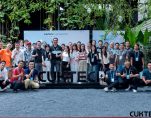
HO CHI MINH CITY, VIETNAM – Media OutReach Newswire – 8 July 2026 – Technology brand CUKTECH successfully hosted its first “Charge & Connect” event at The VIBES Events & Dining, officially introducing its next-generation charging ecosystem to the Vietnamese market. The event brought together company representatives, media professionals, technology reviewers, and industry partners, marking an important milestone in CUKTECH’s expansion strategy in Vietnam.
A Vision Built on Innovation
The event opened with a keynote by Eric Wang, Chief Marketing Officer (CMO) of CUKTECH, who shared the brand’s global vision and product roadmap for Southeast Asia, with Vietnam identified as one of its key strategic markets.
Eric Wang highlighted CUKTECH’s continuous investment in research and development (R&D) to solve the everyday challenges faced by modern consumers, including slow charging speeds, limited product innovation, and the increasing need for reliable, high-performance charging solutions that support multiple devices simultaneously. By combining advanced charging technologies with user-focused design, CUKTECH aims to deliver a faster, safer, and more intelligent charging experience.
Real-World Experience from Technology Reviewer Hung Khuc
One of the event’s highlights was a sharing session by Hung Khuc, one of Vietnam’s leading technology reviewers, who discussed his hands-on experience using CUKTECH products in his daily work.
“As a content creator who frequently shoots outdoors, I need charging devices that are both powerful and reliable. What impressed me most about CUKTECH’s power banks and chargers is their real-world performance. They can simultaneously fast charge my MacBook Pro, smartphone, and camera at full speed without power drops or interruptions.”
To promote transparency and foster closer engagement with the local technology community, the event concluded with an extensive media Q&A session. Eric Wang, together with CUKTECH’s product research and quality management teams, addressed questions on product localization, international safety standards, the brand’s one-for-one warranty policy, and future product development plans.
More than a product launch, Charge & Connect represents CUKTECH’s official step toward establishing a lasting presence in Vietnam. By combining cutting-edge charging technology, award-winning design, and a strong focus on user experience, CUKTECH is committed to delivering premium charging solutions that meet the evolving needs of modern consumers.
As the brand continues to expand its product ecosystem, CUKTECH aims to become a trusted technology partner for Vietnamese users while helping shape the future of premium charging accessories in the market.
Hashtag: #CUKTECH
The issuer is solely responsible for the content of this announcement.
Samsung Group and SK hynix have laid out investment plans worth about $174 billion for South Korea’s Chungcheong region, expanding the country’s drive to secure a stronger position in artificial intelligence chips, advanced packaging, displays and next-generation battery materials.
The commitments, unveiled at a government-backed industrial development event in Asan, place Chungcheong at the centre of a broader strategy to spread high-technology manufacturing beyond the Seoul metropolitan area and existing semiconductor clusters. President Lee Jae Myung praised the companies’ “bold decision” and called for faster execution of major industrial projects, warning that global competition in semiconductors and artificial intelligence will reward countries that move with speed on permits, power, water and land.
Samsung plans to invest 140 trillion won, or about $90 billion, across the central region. The programme covers display panels, high-bandwidth memory-related capacity, semiconductor packaging substrates, batteries and other core materials. The group’s plan is expected to reinforce manufacturing links between Samsung Electronics, Samsung Display, Samsung SDI and Samsung Electro-Mechanics, whose operations span chips, OLED screens, batteries and electronic components.
SK hynix said it would invest 100 trillion won, or about $64 billion to $72 billion depending on exchange-rate calculations, in Cheongju, North Chungcheong Province. The plan includes the M17 NAND flash memory fabrication plant and P&T7, an advanced packaging and test facility. M17 is scheduled to break ground in 2026 and begin operations in the first half of 2029, while P&T7 is targeted for completion by the end of 2027.
The Cheongju expansion is intended to strengthen SK hynix’s NAND business and add back-end capacity at a time when artificial intelligence systems are raising demand for both high-performance memory and storage. While high-bandwidth memory has received the strongest investor attention because of its role in AI accelerators, large-scale data centres also require more NAND-based storage as models, user data and enterprise workloads expand.
The Chungcheong plan follows a wider national push in which Samsung Electronics and SK hynix are expected to invest hundreds of billions of dollars in new chipmaking hubs over the next decade. The government has framed the initiative as a “triple axis” strategy built around semiconductors, physical AI and data centres, with the aim of building industrial strength outside the traditional capital-area manufacturing corridor.
For Samsung, the Chungcheong investment gives the group a regional base for several linked supply chains. OLED production in Asan and surrounding areas can support premium smartphones, tablets, monitors and automotive displays. Battery investment strengthens Samsung SDI’s role in electric mobility and energy storage, while semiconductor materials and packaging substrates address one of the key bottlenecks in AI hardware production.
For SK hynix, Cheongju already has semiconductor infrastructure, making it a faster route for expansion than a greenfield project. The company has been one of the largest beneficiaries of the AI memory boom, helped by demand for high-bandwidth memory used with Nvidia graphics processors. Its latest investment signals that the company is also preparing for broader memory demand, including NAND and advanced packaging.
The scale of the commitments underlines the strategic importance of memory chips to South Korea’s economy. Samsung Electronics and SK hynix are the world’s two largest memory chipmakers, with dominant positions in DRAM and a major presence in NAND. Their investment decisions affect global supply, pricing expectations and the pace at which cloud companies can build AI infrastructure.
The programme also carries risks. Semiconductor investment cycles have often produced periods of oversupply after large capacity expansions. Investors have shown caution over whether the current AI-driven boom can absorb the output planned by the industry, especially if data-centre spending slows or if memory pricing weakens before new factories reach full capacity.
Infrastructure remains another challenge. Advanced chip plants require stable electricity, ultra-pure water, skilled engineers and rapid permitting. Lee’s comments on execution reflect concern that delays could undermine the industrial strategy. Local governments are expected to face pressure to accelerate utility connections, transport links and land-use approvals while managing environmental and community concerns.
Regional development is a central political theme of the initiative. By placing more advanced manufacturing in Chungcheong and other areas outside Seoul’s orbit, the administration is seeking to reduce economic concentration and create high-value jobs in provincial cities. That ambition will depend on whether new factories attract suppliers, research teams and service industries rather than functioning as isolated production sites.
Arabian Post Staff -Dubai Almarai’s second-quarter revenue rose 11 per cent year on year to SAR5.87 billion, as stronger demand for dairy, poultry and bakery products helped the Riyadh-listed food group absorb higher shipping, energy and raw material costs. The company’s first-half revenue reached SAR12.03 billion, up 9 per cent from the same period last year, reinforcing its position as one of the Gulf’s most closely watched […]
Greenlogue/AP Lhyfe has expanded one of Europe’s largest bulk green hydrogen logistics fleets, adding 10 new Hexagon Purus containers as it seeks to strengthen production, transport and storage capacity across a market still constrained by cost, infrastructure gaps and uneven demand. The Nantes-based producer now operates 84 Type IV tube trailers dedicated to hydrogen transport, a fleet serving its production sites, partner locations, storage facilities and transport […]
Emergency crews began stabilising a structurally compromised Midtown Manhattan high-rise after buckled columns, cracked floors and visible deflection forced evacuations around a major office-to-residential conversion site near Grand Central Terminal. The 37-storey building at 235 East 42nd Street, formerly part of Pfizer’s global headquarters, was declared unstable after workers reported structural distress on Tuesday morning. By evening, engineers had entered the affected area, installed jacks and started […]
Twenty Saudi university students are undergoing artificial intelligence training at Huawei’s headquarters in Shenzhen under a Mawhiba-Huawei programme designed to build specialist digital skills among high-performing young talent.
The training, announced on July 6, brings together the King Abdulaziz and His Companions Foundation for Giftedness and Creativity, known as Mawhiba, and Huawei as Saudi Arabia expands its pipeline of students capable of working across artificial intelligence, cloud computing, big data and telecommunications. The initiative forms part of a wider partnership that aims to train 500 beneficiaries in advanced technology fields.
Participants are being exposed to a mix of theoretical instruction and practical exercises, with the programme structured around real-world AI applications, global technology practices and workplace-based learning. The Shenzhen placement gives students direct access to one of Huawei’s main innovation centres, where they are expected to study how artificial intelligence tools are developed, deployed and integrated into digital infrastructure.
The programme covers core areas including AI fundamentals, machine learning, deep learning, foundation models and AI development tools. Its practical component is intended to help students move beyond classroom-level understanding into applied problem-solving, particularly in fields where AI systems are increasingly tied to business operations, public services and industrial automation.
Mawhiba’s role reflects its long-standing mandate to identify and support gifted students, while Huawei’s participation gives the programme an international industry dimension. The partnership is aimed at matching academic talent with technologies that are shaping labour-market demand, especially as Saudi Arabia increases investment in data centres, digital government, smart cities and automation.
The Shenzhen cohort follows the launch of the first joint Mawhiba-Huawei training track for Saudi university students in China. The programme is being presented as both a skills initiative and an international exposure opportunity, giving participants familiarity with advanced technology ecosystems outside the Kingdom.
Saudi Arabia has placed AI capacity-building at the centre of its digital transformation agenda. The Saudi Data and Artificial Intelligence Authority has been expanding training schemes for students, professionals and government leaders as part of efforts to create a national workforce capable of supporting data-driven economic diversification.
A separate programme at the authority’s headquarters in Riyadh began with 215 male and female students from 28 universities, giving participants training in data, artificial intelligence and advanced technologies. That initiative was designed to connect academic knowledge with practical experience in computer science, data science and AI, while aligning university outcomes with labour-market needs.
The scale of national AI training has grown sharply. More than 779,000 citizens have been trained through data and AI initiatives, including 9,775 specialists and 260 scientists and experts. More than 80 government leaders have also received training focused on the design and implementation of data and AI strategies.
The Mawhiba-Huawei programme adds a private-sector and cross-border layer to that domestic training push. For students, the China placement offers exposure to applied AI in a corporate setting. For policymakers, it supports an effort to create a wider base of young specialists who can work with global platforms while contributing to local technology goals.
Saudi Arabia’s AI strategy has increasingly focused on building human capital alongside infrastructure. The country has moved to strengthen data governance, support Arabic AI models, expand cloud capacity and encourage the adoption of emerging technologies across education, healthcare, finance, energy and government services.
The emphasis on training also reflects a growing recognition that AI adoption depends on more than hardware and software. Surveys and academic studies on generative AI use in Saudi Arabia show strong public engagement with AI tools, but also uneven technical understanding and concerns over privacy, misinformation, trust and responsible use. Structured training is therefore being treated as a way to improve both competence and confidence.
For universities, the programme underlines the pressure to update curricula as AI changes entry-level skill expectations. Employers in technology, finance, logistics and energy are increasingly looking for graduates who understand data handling, model behaviour, automation workflows and ethical safeguards. Programmes that combine classroom instruction with industry exposure are seen as a route to narrowing that gap.
DXC Technology has opened a 200,000-square-foot Customer Experience Centre in Bengaluru, placing the city deeper into the global race to move enterprise artificial intelligence from pilot projects into live, measurable business systems.
The facility, announced on 7 July, is one of DXC’s largest global delivery hubs and brings together customer collaboration areas, an AI Hub, cybersecurity facilities, forensics labs, a Security Operations Centre and a Network Operations Centre. The centre is designed to help clients identify high-value AI use cases, test prototypes, integrate them with legacy platforms and operate them at scale.
The move comes as large companies are under pressure to modernise complex technology estates without disrupting core systems that run banking, insurance, manufacturing, public sector services, travel and healthcare operations. For global IT services firms, the most valuable opportunity now lies not only in building new AI tools, but in attaching them safely to ageing systems of record, cloud platforms, data pipelines and cybersecurity controls.
DXC said the Bengaluru site includes immersive Customer Experience Zones, Fluid Collaboration Hubs, Ideation Studios, Co-Creation Labs and Partner Experience Zones. The structure signals a shift in IT outsourcing from back-office delivery to co-engineering, where clients, consultants and technology partners work together on proof-of-value projects before wider deployment.
Ramnath Venkataraman, president of consulting and engineering services at DXC Technology, said the centre would bring engineering talent closer to customers and partners. He said the objective was to “co-create, engineer, and scale AI-powered solutions” that address complex business challenges and move clients faster from ideas to outcomes.
Rob Le Busque, DXC’s president for Asia Pacific and Japan, described the centre as a base for AI innovation, engineering and customer collaboration. He said DXC was aiming to help customers build connected enterprises where people work alongside AI agents to engineer and run systems of record.
The investment reflects Bengaluru’s continuing pull as a global technology hub. The city hosts a dense base of engineering talent, multinational technology development centres, enterprise software teams and start-up ecosystems. DXC already employs about 38,000 people in the country, making the new facility a strategic addition rather than a symbolic office expansion.
For DXC, the centre also arrives at a critical phase in its own turnaround. The company reported revenue of $12.64bn for fiscal 2026, down 1.8 per cent year on year, while adjusted EBIT stood at $970m. Fourth-quarter revenue was $3.13bn, down 1.2 per cent year on year, though bookings reached $3.3bn and the book-to-bill ratio stood at 1.07 times. Those figures underline both the pressure on legacy IT services revenue and the importance of higher-value modernisation work.
The enterprise AI market has moved beyond experimental chatbots and isolated productivity pilots. Large organisations are now seeking systems that can automate service operations, assist software engineering, improve fraud detection, support call-centre workflows, optimise supply chains and strengthen cyber response. The challenge is that many of these functions depend on decades-old enterprise platforms, heavily customised databases and compliance-heavy workflows.
That is where Bengaluru’s new DXC centre is positioned. Its AI Hub is intended to support hands-on development and testing, while the cyber and operations facilities allow clients to evaluate whether AI tools can be monitored, secured and maintained after deployment. This full-lifecycle approach is becoming central to enterprise modernisation, especially in sectors where downtime, data leakage or flawed automation can carry heavy financial and regulatory consequences.
The facility also strengthens DXC’s partner-led model. Its Partner Experience Zones are expected to support work with software, cloud, cybersecurity and platform companies. For IT services providers, alliances with hyperscalers and enterprise software vendors have become essential as clients seek hybrid solutions rather than single-vendor transformation programmes.
Dutch prosecutors have summoned Tata Steel IJmuiden B. V. to face criminal proceedings over alleged unlawful pollution from its vast steelworks on the North Sea coast, escalating a long-running dispute over emissions, public health and industrial regulation in the IJmond region.
The Public Prosecution Service suspects the company of multiple criminal offences, including deliberately and unlawfully releasing harmful substances into the air with possible adverse consequences for public health. The case also covers alleged breaches of the company’s duty of care, insufficient maintenance, operating without the required permits and failure to report several incidents involving raw coke, a by-product linked to the steelmaking process.
A first procedural hearing has been scheduled for 20 November 2026 at the Amsterdam District Court, where prosecutors are expected to set out the precise charges. The investigation began after a criminal complaint filed on behalf of more than 800 residents and campaigners, who have for years linked emissions from the IJmuiden complex to health risks, nuisance and damage to quality of life.
The steelworks, located west of Amsterdam in Velsen, is among the Netherlands’ biggest industrial sites and one of its largest greenhouse gas emitters. Its blast furnaces, coke ovens and associated facilities have made it a strategic employer and export asset, but also a central target for environmental enforcement. Local concern intensified after pollution incidents, odour complaints and measurements showing deposits of metals and polycyclic aromatic hydrocarbons in nearby communities.
Prosecutors say the criminal investigation examined the steel production process and the operation of Tata Steel’s coke gas factories. The inquiry was carried out with input from environmental inspection and police units, including the investigative arm of the Human Environment and Transport Inspectorate and regional environmental enforcement agencies.
The company has rejected the accusations, saying it disagrees with the decision to prosecute and has already made major improvements to reduce emissions. Tata Steel Nederland has described the case as unnecessary, arguing that it relates to a limited number of incidents where corrective action had already been taken. The company maintains that its emissions comply with legal limits and that planned investments will cut pollution further.
The prosecution has not ruled out possible action against individuals. A separate part of the investigation is examining whether people in management roles could be held personally criminally liable. Prosecutors said that part of the inquiry may take more time, while the company summons has been issued now to keep the criminal case moving.
The summons comes against a broader legal and regulatory backdrop. Residents living near the plant and environmental groups have pursued civil and criminal routes to force faster reductions in pollution. A collective claim filed in the Netherlands seeks about €1.4 billion in compensation from Tata Steel’s Dutch subsidiaries, alleging health damage, stress, loss of enjoyment of life and property-related losses across the region. Tata Steel has dismissed those claims as speculative and unsupported.
Regulatory pressure has also mounted over the coke ovens, one of the most contentious parts of the IJmuiden operation. Authorities have previously warned that permits could be at risk if breaches continue, and financial penalties have been imposed over emissions violations. The coke-making process is crucial to conventional blast-furnace steel production, but it is also associated with pollutants that have drawn sustained scrutiny from residents and health experts.
Public health studies commissioned by Dutch authorities have strengthened demands for action. Research has identified the Tata Steel site as a significant source of metals and polycyclic aromatic hydrocarbons in the IJmond area, while health assessments have pointed to higher exposure risks for communities around the plant. Campaigners argue that enforcement has been too slow, given the scale of the plant and the duration of residents’ complaints.
Tata Steel is attempting to balance the legal fight with negotiations over a cleaner production model. The company, the Dutch government and the province of North Holland signed a non-binding framework in 2025 aimed at cutting carbon emissions and improving the living environment around IJmuiden. The plan includes a shift towards lower-carbon steelmaking, with public support of up to €2 billion under discussion and additional funding sought from European programmes.
Securitize’s shares have fallen about 40 per cent since the BlackRock-backed tokenisation firm completed its public listing through a Cantor Fitzgerald-linked blank-cheque vehicle, exposing a sharp gap between investor enthusiasm for blockchain-based financial infrastructure and the early trading performance of companies entering public markets through SPAC deals. The company, now trading on the New York Stock Exchange under the ticker SECZ, slipped to about $8 after opening […]
Arabian Post Staff -Dubai Ras Al Khaimah is preparing for one of the largest residential supply expansions in its history, with 25,600 new homes expected to be delivered by 2030 as developers accelerate launches around waterfront districts, branded residences and lifestyle-led communities. The new supply pipeline, tracked by Cavendish Maxwell, is heavily weighted towards apartments, which account for 97 per cent of planned stock. The figure underlines […]
China has offered fresh channels for easing trade tensions with the European Union after Foreign Minister Wang Yi completed a four-country Nordic tour aimed at rebuilding confidence with some of Europe’s most security-conscious governments.
Wang’s 2-8 July visit to Denmark, Sweden, Finland and Norway came as Brussels and Beijing try to prevent a deepening dispute over industrial subsidies, electric vehicles, market access, export controls and critical minerals from turning into a broader trade confrontation. The trip placed trade, green technology, shipping, healthcare, tourism and scientific innovation at the centre of talks, while allowing Beijing to test whether northern Europe could support a less confrontational EU approach.
The diplomatic push followed high-level trade discussions in Brussels, where both sides agreed to establish a ministerial-level mechanism that would meet once or twice a year. Four negotiation tracks are expected to cover export controls, trade and investment balancing, market access, and supply-chain transparency, with October emerging as a key deadline for measurable progress.
The EU’s trade deficit with China stood at about €360 billion last year, driven by imports of electric vehicles, batteries, solar equipment, machinery and consumer goods. European officials have warned that subsidised Chinese production could put pressure on strategic industries, while Beijing argues that EU restrictions on technology exports and investment screening have politicised commerce.
Wang used the Nordic leg to frame China and Europe as partners rather than rivals. In Copenhagen, he urged Denmark to play a constructive role in stabilising EU-China relations and highlighted cooperation in green shipping, life sciences and tourism. Denmark holds political weight in Brussels through its support for open trade, but it has also backed a firmer European line on economic security and resilience.
The tour carried symbolic value. It was the first visit by a Chinese foreign minister to Denmark in 15 years and to Sweden in 22 years. Sweden is China’s largest trading partner in the Nordic region, but relations have faced strain over human rights, security policy and Europe’s concerns over dependence on Chinese technology. Wang met Prime Minister Ulf Kristersson and Foreign Minister Maria Malmer Stenergard in Stockholm, where the talks covered bilateral ties and the wider EU agenda.
Finland added a sharper security dimension to the visit. President Alexander Stubb and Foreign Minister Elina Valtonen have supported a more cautious European posture towards Beijing, particularly since Russia’s war in Ukraine reshaped the security debate across northern Europe. Finland’s accession to NATO has also altered the regional balance, placing Helsinki firmly inside the transatlantic security framework. Trade dialogue with Beijing therefore sits alongside hard questions over Russia, technology transfer and strategic infrastructure.
Norway, the final stop, offered Beijing a more pragmatic opening. Oslo is outside the EU but closely tied to the single market through the European Economic Area. Its energy, maritime and seafood industries give it economic links with China, while Norway’s diplomatic tradition allows space for dialogue even during periods of political tension. Wang’s meeting with Foreign Minister Espen Barth Eide was expected to focus on trade, green transition and international security.
Beijing’s message is that the EU should expand trade rather than restrict it. China has signalled willingness to increase imports from Europe and improve communication over trade frictions. It has also pressed Brussels to ease restrictions on high-tech exports and avoid measures that it views as protectionist. European negotiators, however, want more than general assurances. They are seeking concrete steps to narrow the trade gap, improve access for European firms, and curb state-backed overcapacity in sectors where Chinese exports have surged.
The most sensitive issue remains electric vehicles. The EU imposed duties on battery-powered cars made in China after concluding that state support had distorted competition. Chinese manufacturers have responded by looking more seriously at European production sites, including plants in Hungary and other markets, to maintain access to consumers while reducing tariff exposure. The dispute has become a test case for whether Brussels can defend industry without triggering retaliation that would hit exporters, luxury brands, agriculture and aviation.
Rare earths and critical inputs have become another pressure point. China dominates several stages of processing for materials used in clean energy, defence and advanced manufacturing. European officials are trying to reduce exposure without severing commercial links. Beijing retains leverage through licensing and supply-chain controls, while the EU is developing tools to diversify sourcing, screen investment and support domestic production.
Gulf Cooperation Council banks are bracing for slower growth as the Middle East war and wider geopolitical uncertainty weigh on credit demand, investor confidence and corporate activity, even as lenders retain strong profitability, capital buffers and stable funding. S&P Global Ratings analyst Tatjana Lescova said banks across the six-nation bloc are expected to continue delivering solid earnings despite pressure from the conflict, higher risk premiums and uneven […]
Temasek’s portfolio value climbed to a record S$518 billion, or about $400 billion, as the Singapore state investment company sharpened its push into artificial intelligence and reported stronger returns after two years of portfolio recalibration.
The latest figure, based on a mark-to-market valuation of listed and unlisted holdings, showed a S$49 billion rise for the financial year ended 31 March 2026. The increase reflected stronger performance from Singapore-based portfolio companies, gains from divestments and a broader recovery in public market valuations. The portfolio has doubled over the past decade, underlining the scale of Temasek’s role as one of Asia’s most influential investment groups.
Temasek invested S$51 billion during the year and divested S$31 billion, resulting in a net investment of S$20 billion. Its one-year shareholder return stood at 10.5 per cent in Singapore dollar terms, while its 10-year return was 7.1 per cent. The 20-year return was 6.8 per cent, a measure closely watched because Temasek is designed to generate long-term returns for Singapore rather than chase short-term market gains.
Artificial intelligence has become a central plank of the company’s next phase of growth. AI-related investments now account for about 6 per cent of its portfolio, with plans to raise that exposure to 10-15 per cent by 31 March 2031. Temasek has already taken positions linked to leading AI companies including OpenAI and Anthropic, while also targeting the wider infrastructure needed to support the technology.
The strategy is not limited to model developers. Temasek is looking across the AI value chain, including semiconductors, cloud service providers, data centres, energy systems, foundation models and software infrastructure. That wider approach reflects a belief that the economics of AI will not be captured only by consumer-facing platforms, but also by companies supplying chips, computing power, storage, power capacity and enterprise software.
Chief executive Dilhan Pillay has described AI adoption as a pivotal phase in the digitisation trend that Temasek has followed for more than a decade. The company’s approach is expected to combine direct investments, listed equities and private market exposure, with a preference for flexibility at a time when valuations across parts of the AI sector remain elevated.
The stronger annual performance also comes after Temasek moved to sharpen accountability within its investment structure. From April 2026, its portfolio has been organised into three broad segments: Singapore-based portfolio companies, global direct investments, and partnerships and funds. The change is intended to improve execution and give clearer visibility on how different parts of the portfolio contribute to returns.
Singapore-based companies remain an anchor of Temasek’s holdings. These include major stakes in groups tied to finance, telecommunications, transport, logistics, infrastructure and real estate. Their performance helped lift the portfolio during the year, even as Temasek continued to diversify beyond its home market.
The company has also increased attention on private credit, an asset class that has expanded as banks have retreated from some forms of lending and institutional investors have sought higher-yielding alternatives. Private credit currently accounts for about 2 per cent of Temasek’s portfolio, with a target of 5 per cent by 2031. The allocation is expected to provide recurring cash yield and a different risk profile from the predominantly equity-heavy portfolio.
Sustainable living remains another major investment theme. Temasek’s sustainable living portfolio rose to S$49 billion as of 31 March 2026, supported by commitments in renewable energy, power grids and transition technologies. Its portfolio emissions remained at about 21 million tonnes of carbon dioxide equivalent, around 30 per cent below 2020 levels, though the company has signalled that rising electricity demand, higher capital costs and exposure to emissions-intensive businesses may complicate its 2030 reduction target.
Temasek’s global exposure continues to reflect a balance between Asia and developed markets. Its earlier vulnerability to China-linked volatility had weighed on returns, prompting a more disciplined approach to capital allocation and risk management. The latest numbers suggest that portfolio adjustments, divestments and stronger listed-market performance have helped restore momentum.
Arabian Post Staff -Dubai Du Pay has signed a strategic memorandum of understanding with GCash to enable near-instant wallet-to-wallet remittances from the UAE to the Philippines, giving overseas Filipino workers a faster route to send money home and access exclusive rewards tied to digital transfers. The partnership connects du Pay’s mobile wallet in the UAE with GCash accounts in the Philippines, allowing funds sent through the du […]
KUALA LUMPUR, MALAYSIA – Media OutReach Newswire – 8 July 2026 – Philippine Air Force Reserve Brigadier General Michael “Mikee” L. Romero, who heads Mikro-Tech Capital Inc., has been recognized as one of Asia’s most outstanding leaders by ACES Awards.
He was recognized for his multiple successes that has influenced a broader mindset shift for sustainable growth beyond corporate boundaries.
“Brigadier General Romero exemplifies a leader whose multifaceted impact redefines leadership standards, setting a benchmark for future generations,” the ACES Awards 2026 said in its official statement on his winning as one of Outstanding Leaders in Asia.
Mikro-Tech Capital Inc. is an anchor organization in investments management which translates his multiplicity in skills and utmost regard for national transformation through excellence and mindset for the future.
ACES Awards cited Brigadier General Romero as the visionary chairman of Mikro-Tech Capital Inc., whose transformative leadership across multiple sectors manifests his unwavering commitment to nation-building.
Romero’s stewardship of Mikro-Tech Capital has pushed its subsidiaries in power and energy into advancing sustainability goals for the Philippines.
His pioneering approach in port infrastructure has significantly enhanced island connectivity in the Philippines, facilitating economic growth and regional integration, the award statement added.
The council praised Romero’s ability to turn his vision into results and noted that his leadership has fostered a culture of resilience and innovation within his organizations.
The ACES Council said: “Brigadier General Romero exemplifies a leader whose multifaceted impact redefines leadership standards, setting a benchmark for future generations.”
The ACES Awards is among top Asian platforms that meticulous screen and recognize individuals and organizations demonstrating excellence in leadership, sustainability, innovation, and responsible growth.
This year’s program carries the theme “Setting the Benchmark for Enduring Impact.” The ACES awards gala will be in October in Kuala Lumpur.
Brigadier General Romero said: “This honor serves as an affirmation and a challenge—to continue to create opportunities for others. It highlights the potential of Filipino leadership to move the needle for mindsets that change outcomes that yield benefits beyond one’s lifetime.”
A celebrated sportsman, sports patron and businessman, Romero was a legislator with recent focus on poverty alleviation. He devoted the past year on humanitarian service, leading the Philippine Reservist Movement as chairman of the Association of Reservist and Reservist Administrators of the Philippines.
Hashtag: #ACESAwards #Mikro-TechCapitalInc.
The issuer is solely responsible for the content of this announcement.
Formula E Season 12 accelerates global expansion and sustainability milestones as DHL delivers precision logistics behind one of the world’s most complex sporting championships
Battery logistics takes center stage off track as electrification drives new supply chain demands
SHANGHAI, CHINA – Media OutReach Newswire – 7 July 2026 – As the ABB FIA Formula E World Championship returns to Shanghai for the 2025/2026 Season, the world’s premier all-electric racing Championship accelerates into its most ambitious chapter yet with a record 17 races across 11 global cities, including new circuits in Madrid and Miami.
ABB FIA Formula E World Championship returns to Shanghai for the 2025/2026 Season
Underscoring its commitment to sustainability and transparency, Formula E has also recently become the first global sport to achieve B Corp Certification, a globally recognised designation awarded to companies that meet high standards of social and environmental performance, accountability, and transparency. “Achieving B Corp Certification is a defining milestone for Formula E and reinforces our mission to drive sustainable innovation both on and off the track,” said Barry Mortimer, Paddock and Logistics Director, Formula E. “It reflects our commitment to operating responsibly as we continue to push the boundaries of electric mobility and sustainable sport on a global stage.” DHL Powers the Global Movement of Formula E
Behind the high-speed action lies a complex global logistics operation. DHL, the Official Founding and Official Logistics Partner of the ABB FIA Formula E World Championship since 2013, plays a critical role in moving the Championship seamlessly across continents, ensuring that every race is delivered with precision, efficiency and sustainability.
Each race in this season requires the transport of approximately 400 metric tons of freight, including 21 electric race cars, charging infrastructure, broadcast equipment, and critical power systems, all orchestrated through tightly coordinated multimodal solutions spanning air, ocean, rail and road.
In the lead-up to the 2026 Shanghai E-Prix, DHL executed a three-day multimodal journey from Sanya, combining ferry and road transport. This required extensive planning and documentation to ensure full compliance across multiple transport regulations, highlighting the precision and intricate choreography required to meet unmovable race-day deadlines.
Battery Logistics at the Heart of Electrified Racing
Beyond motorsport, this partnership shines a spotlight on one of the fastest-growing and most complex areas of global trade: battery logistics. As electrification accelerates worldwide, the safe and compliant transport of lithium-ion batteries has become mission-critical and increasingly challenging.
Formula E offers a vivid real-world example. Each race involves transporting approximately 31 high-performance batteries, each weighing around 400kg—far exceeding typical consumer battery thresholds and classified as regulated dangerous goods. Their transport requires strict adherence to international regulations, including IATA and ICAO standards, covering specialized packaging, state-of-charge restrictions, certified handling procedures, and multiple layers of regulatory approvals from airlines and authorities.
The complexity is further amplified by varying customs requirements of different countries and cities, and stringent transport conditions across different modes. From certified aluminum containment units and non-stackable packaging to detailed documentation and risk classification requirements, every step demands precision and deep expertise.
“Every Formula E race may look seamless on track, but behind the scenes it is a highly complex logistics operation—especially when it comes to transporting lithium-ion batteries safely across borders,” said Federico Cavani, Head of Motorsports Italy, DHL Global Forwarding. “These are regulated dangerous goods that require meticulous planning, strict compliance with global standards, and specialized handling at every stage. Our partnership with Formula E showcases how advanced battery logistics can be executed safely at scale, and reflects the same challenges DHL customers face as electrification accelerates globally.” China: The Engine Driving Global Battery Supply Chains
China has emerged as the undisputed hub of the global battery ecosystem, underpinning the rapid growth of electrification worldwide. In 2025, global electric vehicle battery deployment reached 1.2 terawatt-hours (TWh), with China accounting for around 60% of the total, reinforcing its position as the largest and most dynamic market. Beyond demand, China also leads across the manufacturing value chain. The country produces over 70% of the world’s lithium-ion batteries, with some estimates placing its share at more than three-quarters of global output in 2025.
The ability to move batteries safely, compliantly, and efficiently—both within China and across international markets—has thus become a critical differentiator.
“DHL Global Forwarding China partners with several of the world’s leading battery manufacturers, providing end-to-end battery transportation solutions across the entire logistics value chain. The company also supports the rapidly growing energy storage logistics sector, helping customers better manage and optimize their energy storage supply chains. Each year, we handle more than 10,000 TEUs of batteries and battery-related materials exported from China, with shipments destined for major markets such as the United States and Europe,” said Stephen Zhang, Vice President, Ocean Freight, Greater China, DHL Global Forwarding.
As global supply chains evolve alongside the energy transition, DHL’s role extends far beyond the racetrack. From supporting EV and battery ecosystems to enabling resilient, compliant and sustainable logistics solutions, the company continues to power the shift toward a low-carbon future—one race, and one shipment at a time.
DHL Group has made significant investments in its New Energy capabilities under its Strategy 2030: Accelerating Sustainable Growth. Through DHL New Energy Logistics, a sector brand driving electrification and the energy transition, the company delivers end-to-end solutions across the full value chain, spanning wind, solar, EVs and batteries, BESS, charging, grid infrastructure, alternative fuels, and hydrogen. Leveraging a global network covering more than 220 countries and territories and supported by over 20 DHL EV Centers of Excellence and a dedicated team of trained dangerous goods specialists, DHL ensures high-sensitivity cargo moves safely, compliantly, and on time. Hashtag: #DHL
The issuer is solely responsible for the content of this announcement.
DHL – The logistics company for the world
DHL is the leading global brand in the logistics industry. Our DHL divisions offer an unrivalled portfolio of logistics services ranging from national and international parcel delivery, e-commerce shipping and fulfillment solutions, international express, road, air and ocean transport to industrial supply chain management. With approximately 389,000 employees in more than 220 countries and territories worldwide, DHL connects people and businesses securely and reliably, enabling global sustainable trade flows. With specialized solutions for growth markets and industries including technology, life sciences and healthcare, engineering, manufacturing & energy, auto-mobility and retail, DHL is decisively positioned as “The logistics company for the world”.
DHL is part of DHL Group. The Group generated revenues of approximately 82.9 billion euros in 2025. With sustainable business practices and a commitment to society and the environment, the Group makes a positive contribution to the world. DHL Group aims to achieve net-zero emissions logistics by 2050.
Agency leader Bryan Phang is the sole COE (Diamond Agency) winner to achieve four consecutive award wins; Prudential’s solid showing underpinned by its strong knowledge sharing and mentorship culture
SINGAPORE – Media OutReach Newswire – 7 July 2026 – Prudential Singapore (“Prudential”) achieved the strongest showing globally in the 2026 Million Dollar Round Table (MDRT) Culture of Excellence (COE) Awards, with 29 agency leaders recognised out of 68 winners worldwide. This was up from 13 winners in 2025, reflecting the strong progress made by Prudential’s agency force. Accounting for more than two in five award recipients this year, Prudential had the highest number of MDRT COE Award winners globally.
The MDRT COE Award recognises agency leaders who deliver strong outcomes across six dimensions of agency management1: production, retention, recruitment, persistency, whole person, and MDRT or MDRT Academy membership.
Mr Rom Lee, Chief Agency Officer, Prudential Singapore, said: “Having 29 agency leaders recognised on the global MDRT Culture of Excellence Awards, up from 13 last year, is a strong affirmation of the standards our leaders set for themselves and their teams. Beyond individual achievement, it reflects a culture grounded on discipline, a strong MDRT sharing culture and a deep commitment to helping customers make confident financial decisions.
“We have worked to create an environment where financial representatives can grow their careers, perform at a high level and be recognised for their achievements. As customer needs continue to evolve, this culture of excellence will remain central to how we develop a trusted, future-ready agency.”
MDRT COE Award winner Mr Bryan Phang, Financial Services Director, Prudential Singapore, is the only Diamond Agency recipient globally to achieve this distinction for a fourth consecutive year. This year, the agency went a step further by achieving all six criteria of the Award. Said Mr Phang: “Earning this recognition for a fourth consecutive year is meaningful. The best teams make each other better. For us, it’s about developing people, building leaders and creating a culture that can sustain success over time. We hope this recognition raises the bar for what strong agency culture and high standards can achieve.”
New MDRT COE Award winner, Ms Chiam Shu Yi, Wealth Director, Prudential Financial Advisers Singapore, Platinum Agency, is recognised for developing the careers of young and mid-career financial representatives. Said Ms Chiam: “Success is never built alone. The greatest fulfilment in leadership is investing in people, helping them discover hidden confidence, and reach milestones which they thought were out of reach. By supporting others, you empower them to grow, succeed, and build lives and careers they are proud of.”
Agency leaders awarded the MDRT Culture of Excellence Award include:
Diamond Agency (five out of six criteria met)
Ang Wei Boon, Financial Services Manager
Augustine Seah, Senior Executive Wealth Director
Bryan Phang, Financial Services Director
Dexter Goh, Financial Services Director
Han Chi Teng, Financial Services Director
Joyce Chan, Financial Services Director
Nicole Ng, Senior Financial Services Manager
Shalyn Lee, Senior Executive Wealth Director
Tan Chin Sian, Financial Services Director
Wesley Ee, Associate Wealth Director
Yugi Toh, Senior Executive Wealth Director
Platinum Agency (four out of six criteria met)
Chiam Shu Yi, Wealth Director
Diana Ng, Financial Services Director
Joe Goh, Financial Services Director
Jaslyn Ng, Financial Services Director
Kenny Siew, Financial Services Director
Thomas Lee, Senior Executive Wealth Director
Tricia Tan, Senior Financial Services Director
Zinc Goh, Executive Wealth Director
Gold Agency (three out of six criteria met)
Alvis Thor, Group Financial Services Director
Andrew Ang, Financial Services Director
Gerald Wu, Executive Wealth Director
Jaden Wang, Executive Wealth Director
Jeffrey Yen, Senior Financial Services Manager
Jocelyn Kau, Senior Wealth Director
Josephine Ho, Financial Services Director
Ng Ling Hoong, Financial Services Manager
Shannon Loke, Group Financial Services Director
Tracy Chia, Financial Services Director
Three-time consecutive Award winners
Augustine Seah, Senior Executive Wealth Director
Joyce Chan, Financial Services Director
Han Chi Teng, Financial Services Director
Jaslyn Ng, Financial Services Director
Jaden Wang, Executive Wealth Director
Prudential’s agency force has continued to deliver strong results and a consistently growing number of qualifiers. In 2026, it had 1,425 MDRT qualifiers, including 186 Court of The Table (TOT) and 73 Top of the Table (TOT) qualifiers, as well as 29 MDRT COE Award winners.
Prudential continues to invest in capability building across its agency force through training and professional development pathways. These include the Financial Consultant Induction Programme (FCIP) for new joiners, which leads to an Institute of Banking and Finance Qualified (Level 1) certification, as well as leadership development tracks such as the Chartered Insurance Agency Manager designation.
The company also equips financial representatives to serve affluent and high-net-worth customers through its in-house High Net Worth Skill Up Series and external programmes including the Certified Affluent Wealth Adviser and Advanced Affluent Wealth Adviser courses by the Wealth Management Institute. In 2024, Prudential also enhanced its Management Associate Programme (MAP) to support fresh graduates and young professionals pursuing a career as financial representatives2.
Prudential has 5,400 financial representatives with its tied agency and financial advisory arm, Prudential Financial Advisers Singapore, as of 31 December 2025.
1 For more information on criteria for MDRT Culture of Excellence Awards, please visit: https://www.mdrtcenter.org/culture-of-excellence-awards 2 For more information about the enhanced Management Associate Programme, visit: https://www.prudential.com.sg/about/newsroom/press-release/2024/prudential-ramps-up-hiring
The issuer is solely responsible for the content of this announcement.
About Prudential Assurance Company Singapore (Pte) Ltd (Prudential Singapore)
Prudential Assurance Company Singapore (Pte) Ltd is one of the top life and health insurance companies in Singapore, serving the financial and protection needs of the country’s citizens for 95 years. As at 31 December 2025, it has S$66.3 billion funds under management. The company has an AA Financial Strength Rating from leading credit rating agency Standard & Poor’s and delivers a suite of well-rounded product offerings in Protection, Savings and Investment through multiple distribution channels including a network of 5,400 financial representatives.
About MDRT Center for Field Leadership
The MDRT Center for Field Leadership was created exclusively for financial services field and home office leaders. As a separate, individual membership association with innovative leadership development strategies, the MDRT Center provides its members with exceptional value and leadership growth opportunities. MDRT Center membership allows increased engagement within the MDRT community while allowing leaders to develop a culture of excellence within their respective organizations. To learn more visit mdrtcenter.org.
Abu Dhabi Securities Exchange Group will remove daily price limits on exchange-traded funds and futures contracts from 3 August 2026, marking a fresh step in its push to deepen liquidity, improve price discovery and align its listed products more closely with global market practice. The change applies to ETFs and futures contracts listed on the exchange, allowing their prices to move without the daily trading bands that […]



 https://www.linkedin.com/company/cushman-&-wakefield-greater-china










 https://www.prudential.com.sg/
 https://www.facebook.com/PrudentialSingapore/
 https://www.instagram.com/prudentialsingapore/




