BYD’s premium Denza brand is considering establishing its own vehicle-financing operation in Europe as early as 2027, a move that would extend its challenge to established luxury carmakers beyond vehicle design, technology and pricing. The proposal remains under consideration rather than a confirmed launch. Details of its ownership, regulatory structure, potential banking partners and initial markets have not been publicly established. Any financing business would have to […]
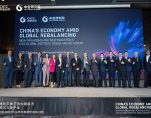
HONG KONG SAR – Media OutReach Newswire – 13 October 2026 – On October 13, the CICC Global Institute (CGI) held its 2026Q4 Macro Forum in Bangkok, Thailand, under the theme “China’s Economy amid Global Rebalancing: New Paradigms and New Industries”. The forum featured welcome remarks, keynote speeches, two thematic dialogues and an evening discussion session.
Yanliang Miao, Chief Economist and Senior Managing Director of CICC, shared his insights on China’s economic transformation and the evolving international monetary order in his opening remarks and keynote speech. He noted that understanding China requires a global rebalancing perspective, considering both the dynamism of emerging industries and the implications of the transition from old to new growth engines for jobs, incomes and demand. Alongside its green and digital transitions, China is also working toward a growth model supported by higher household incomes and services-led consumption. Turning to the international monetary order, he observed that shifts in the global economy, trade networks and financial technology are driving the evolution toward a more diversified international monetary system. Economic and trade strength do not automatically translate into international currency status: institutional credibility and the depth and breadth of financial markets remain central to understanding this evolution and the internationalization of the renminbi.
Huimin Wu, Executive Dean of CICC Global Institute and Deputy Head of Research Department at CICC, noted that, as discussed in The New Pattern of Dual Circulation, a book jointly published this year by CICC Global Institute and CICC Research Department, China’s economy is entering a new stage of development. Its trade and outward investment are undergoing a paradigm shift, while emerging industries are becoming increasingly important drivers of growth in the global economy. These changes are both part of the broader process of global economic rebalancing and deeply shaped by it, giving rise to a new pattern of interaction between China and the global economy.
The forum brought together experts and industry representatives from institutions including the International Monetary Fund (IMF), ASEAN+3 Macroeconomic Research Office (AMRO), Shanghai Advanced Institute of Finance (SAIF) at Shanghai Jiao Tong University, National University of Singapore, ICBC Standard Bank, Wood Mackenzie, and NSQ Capital. Discussions focused on the transformations of China’s trade and outward investment and their global implications, as well as the prospects for emerging industries such as innovative pharmaceuticals, green energy, and artificial intelligence.
This marked the first time the CGI Quarterly Macro Forum was held in Southeast Asia. Taking place during the week of the IMF and World Bank Annual Meetings, amid international discussions on global economic opportunities and challenges, the event brought Chinese perspectives to the global conversation and offered Chinese insights into key issues concerning China’s economy that are of broad international interest.
As an important part of CGI’s ongoing efforts to strengthen international exchanges, present China’s perspective, and foster a deeper understanding of China’s economic transformation process, the event was an innovative exploration. Looking ahead, CGI will continue to deepen its international engagement and work toward building an international dialogue platform focused on China’s economy, contributing to greater mutual trust and consensus, and playing a positive role in this cause.
Hashtag: #CICC
The issuer is solely responsible for the content of this announcement.
About CICC
China International Capital Corporation Limited (CICC, 601995.SH, 3908.HK) was founded in 1995. Our experience in professional services includes leading several prominent transactions, reflecting our close involvement in China’s economic reform and development. Our vision is to become a first-class investment bank with international competitiveness. Our extensive network and cross-border business practices have enabled us to offer high-quality, value-added financial services to a diversified client base. This includes a full-service and balanced business model that offers investment banking, equities, FICC (Fixed Income, Currencies and Commodities), asset management, private equity and wealth management services, all of which draw on our comprehensive research and technology capability. Headquartered in Beijing, the Group has over 200 securities business offices in China, and established subsidiaries or branches in places including Hong Kong SAR, New York, London, Singapore, Frankfurt, Tokyo, Ho Chi Minh City and Dubai. As an investment bank with Chinese roots and an international reach, we are committed to providing first-rate financial services to both our Chinese and global clients to help them achieve their goals.
Arabian Post Staff -Dubai RISE Summit 2026 will open at Dubai World Trade Centre on Wednesday, bringing sovereign wealth funds, institutional investors, government officials and developers together to examine shifts in international investment and the financing of major projects. The one-day gathering on 14 October, organised around the theme Recharging Momentum in Global Economies, will consider how geopolitical tensions, borrowing costs and technological change are influencing decisions […]
Dubai’s Ibn Battuta Mall is adding 38 retail, dining and entertainment businesses under an expansion programme that will introduce new attractions and services through 2027, its operator Dubai Retail announced on Monday. The programme includes 21 businesses already operating and another 17 scheduled to open by the end of next year. The additions cover restaurants, cafés, fashion outlets, healthcare services and family entertainment, including a new Roxy […]
Arabian Post Staff -Dubai Etisalat UAE has commercially introduced technology that it says can triple smartphone upload speeds on its 5.5G network, targeting growing demand from artificial intelligence applications and high-resolution content sharing. The operator announced on Monday that it had deployed 2×2 uplink multiple-input multiple-output, or MIMO, alongside carrier aggregation for compatible smartphones. It described the commercial combination as a global first, although the claim has […]
Canada has established a national artificial intelligence council to advise Prime Minister Mark Carney’s government on safe adoption, economic opportunities and domestic control of critical technology. The Prime Minister’s National Council on Artificial Intelligence, announced on 2 October, brings together researchers, entrepreneurs, investors and public-sector specialists to provide independent advice on the government’s AI for All strategy. Its remit includes managing technological risks, improving public services and […]
COFE Tech has announced an investment from KSH Investments, the international investment platform of Sheikh Mohammed bin Khalid Al Nahyan’s Private Department, strengthening the Gulf enterprise technology company’s investor base ahead of a planned public listing. The Abu Dhabi-based investment firm acquired its stake through an arrangement involving Phoenix Venture Partners Innovation Fund CEIC Limited, the company said on Tuesday. The transaction was completed earlier this year, […]
Abu Dhabi Investment Authority is considering an anchor investment in Zetwerk’s forthcoming stock market flotation, as the Bengaluru-based manufacturing platform prepares to open institutional bidding on Wednesday. The sovereign wealth fund is among more than 30 domestic and international investors examining participation in the offering, according to people familiar with the discussions. No allocation to ADIA has been confirmed, and expressions of interest do not guarantee an […]
Britain’s Chancellor John Healey has ruled out extending the planned mansion tax to homes worth £1.5 million, preserving the £2 million threshold despite mounting pressure to raise revenue ahead of this month’s Budget. The decision follows concerns among Labour MPs that widening the levy would capture substantially more households in expensive neighbourhoods, particularly London, and intensify opposition to a tax intended to target the wealthiest property owners. […]
Thyssenkrupp Automotive Technology has inaugurated an engineering centre in Pune, expanding its international research network for vehicle software, electronic systems and advanced chassis technology.
The German automotive supplier said the facility, formally inaugurated on 8 October, already employs more than 120 engineers and is expected to increase its workforce to more than 300 over the coming years. It did not specify a deadline for reaching that target or disclose the investment involved.
Engineers at the Pune centre are working on software, hardware, systems engineering and mechanical development for customers internationally. Their responsibilities include embedded software, functional safety, cybersecurity and technologies associated with the next generation of steering and chassis systems.
The operation will collaborate with Thyssenkrupp’s development teams in other countries throughout product development, rather than concentrating exclusively on projects for the domestic vehicle market. The company described the facility as an integrated part of its global research and development organisation.
Viktor Molnar, chief operating officer of Thyssenkrupp Automotive Technology, said software, electronics and collaboration between engineering teams across countries were becoming increasingly important to the automotive industry. The Pune operation would provide additional development capacity for customers worldwide, he said.
The expansion reflects changes in vehicle engineering as software increasingly controls functions previously handled primarily through mechanical components. Steering and chassis systems now require developers to coordinate electronic hardware, embedded code and physical components while meeting stringent safety and security requirements.
Functional safety work concerns the identification and control of hazards arising from failures in electrical and electronic systems. Cybersecurity engineering addresses vulnerabilities that could expose connected vehicle functions to interference or unauthorised access. Both are integral to the development of more digitally controlled automotive systems.
The Pune engineers will contribute to customer programmes at different stages of development, including systems design and integration. Thyssenkrupp has not identified individual vehicle manufacturers whose programmes will be handled at the new location, nor has it disclosed specific contracts associated with the expansion.
Björn Erbe, a senior research and development executive in Thyssenkrupp Automotive Technology’s chassis business, said the intention was to establish a significant engineering operation integrated with the group’s international teams. Combining expertise based in Pune with the company’s existing technical resources would enable it to expand development activities, he said.
The centre is situated at Solitaire Business Hub 2 in Pune’s Baner-Balewadi business district. The company identified the city’s established automotive manufacturing sector, universities, engineering businesses and availability of software specialists as factors behind its choice of location.
Recruitment is expected to concentrate initially on software, hardware and mechanical engineering, with specialist capabilities added according to technical needs and customer demand. The company has also indicated that it sees opportunities to work with universities and the wider engineering community in Pune.
The company’s move also places engineering functions and prospective customer engagement in the same city, although it has not yet publicly said whether the new sales organisation will operate from the engineering premises. The plans for sourcing and sales are separate from the confirmed staffing figures for the development centre.
The engineering investment forms part of a broader plan to expand Thyssenkrupp Automotive Technology’s activities in India. The company is strengthening its sourcing operations and establishing a sales team in Pune to build relationships with vehicle manufacturers and pursue business locally.
Manufacturing is not included in the newly inaugurated engineering centre. Thyssenkrupp said it envisages establishing production capabilities in India only if it secures suitable customer projects. No factory location, investment commitment or production timetable has been announced.
The distinction means the confirmed expansion concerns engineering capacity, while local manufacturing remains conditional on commercial demand. The company has similarly not given a precise timetable for the next phase of staffing at the Pune development site.
Plans for the facility were first announced in 2025, and engineering operations were progressively established before the formal opening. The inauguration therefore marks an expansion of an existing development team rather than the beginning of work at an entirely unstaffed location.
Thyssenkrupp’s steering business also announced a partnership with L&T Technology Services in June 2025 for a Pune software development hub dedicated to safety-critical steering applications. That agreement provided for L&T Technology Services to establish and manage the hub on the steering business’s behalf. The latest inauguration announcement did not specify whether the two Pune operations share facilities or personnel.
China’s rapidly expanding hybrid vehicle exports to the European Union face new restrictions following a trade understanding between Beijing and Brussels, potentially disrupting a market worth $7.5 billion in the first six months of 2026. Chinese customs figures show shipments to the EU’s 27 member states tripled from $2.5 billion during the corresponding period last year. The half-year total was nearly nine times the $845 million recorded […]
As sole supplier, KONE provides all 184 units to Huanggang Port, enabling vertical flow design for 300,000 daily passengers
One-year execution under dual Hong Kong-Shenzhen standards delivers fully integrated cross-border project execution
Introduces 24/7 connected services to enable predictive maintenance, leveraging real-time data and AI for seamless, 24-hour port operations
HONG KONG SAR – Media OutReach Newswire – 12 October 2026 – The Huanggang Port—the world’s largest land port and the only 24-hour passenger link between Hong Kong and Shenzhen—is officially opened. Unlike the traditional horizontal border-crossing layouts, the port adopts an innovative vertical passenger flow design fully equipped with all 184 elevators and escalators exclusively provided by Finnish’s KONE. Spanning the 9-story complex, this people flow solution is expected to slash transit times from 30 minutes to just 5 minutes for up to 300,000 daily passengers.
184 elevators and escalators across 9 levels deliver seamless vertical passenger flow Breaking away from traditional clearance layouts, the Huanggang Port utilizes the height of its nine-story complex to create a vertical passenger flow arrangement, with immigration facilities on different levels to free up ground-level space for public transit. To bring this seamless experience to life, KONE supplied all 184 elevators and escalators, including 102 elevators equipped with regenerative drive technology and 82 escalators. Notably, the escalators feature a maximum rise of 19.2 meters, while the elevators can accommodate loads of up to 12 tons. This solution is designed to support the port’s daily capacity of 300,000 passengers, significantly reducing walking distances and waiting times, while relieving traffic congestion especially during peak periods after large-scale events.
Digital predictive maintenance supports 24-Hour operations As the only 24-hour land checkpoint between Hong Kong and Shenzhen, the port demands utmost equipment reliability. KONE 24/7 connected services continuously monitors all units, leveraging real-time data and AI technology to identify potential risks in advance. By shifting from reactive to predictive maintenance, this digital solution enables seamless, round-the-clock operations. During over a hundred pre-opening drills, all KONE equipment successfully passed the 20,000-person Shenzhen-Hong Kong boundary-crossing pressure test. This not only validates its ultimate stability but also underscores our strong capacity to handle massive passenger surges. Looking ahead, KONE aims to integrate elevator and escalator data with building systems to drive passenger flow analysis, operational planning, and resource optimization. Cross-border collaboration elevates service integration across GBA Navigating the different regulations of Hong Kong and Shenzhen within a complex cross-border environment, KONE completed the installation and commissioning of all 184 units in just one year. Reflecting on KONE’s capabilities in cross-border project execution, Mr. Eric Xie, Senior Vice President of KONE Bay Region and Managing Director of KONE Hong Kong, said, “To meet the growing infrastructure demands of the Greater Bay Area, KONE has optimized its strategic setup in the region by closely integrating our Hong Kong and Shenzhen services. This investment not only strengthens our supply chain but also accelerates the delivery speed of elevator and escalator parts. By pairing Hong Kong’s world-class service standards with Shenzhen’s local technical talent and strategic location, we have built a powerful regional support network to fuel the future development of the GBA.”
From Luohu and Liantang to the Huanggang Port, KONE is one of the few companies capable of delivering complex cross-border projects. Driven by our seamless cross-border synergy, KONE remains committed to supporting public infrastructure, commercial developments, and rail transit projects, contributing to the region’s ongoing development.
Hashtag: #KONE
The issuer is solely responsible for the content of this announcement.
About KONE
At KONE, our purpose is to shape the future of cities. As a global leader in the elevator and escalator industry, we move two billion people every day, making their journeys safe, convenient, and reliable with smart and sustainable People Flow®. In 2025, KONE had annual sales of EUR 11.2 billion, and at the end of the year over 60,000 employees in close to 70 countries. KONE class B shares are listed on the Nasdaq Helsinki Ltd. in Finland. www.kone.com
Saudi Arabia faces an escalating confrontation with Yemen’s Houthi movement after successive attacks on Riyadh’s main airport killed 13 people and injured 320, prompting threats of retaliation and raising the possibility of American military involvement. A projectile struck King Khalid International Airport on Sunday, killing a Pakistani resident and injuring 11 people, according to the General Authority of Civil Aviation. The attack followed Saturday’s devastating strike, which […]
Arabian Post Staff -Dubai Artificial intelligence is becoming embedded across government services, education, healthcare and transport in the UAE, as new adoption figures confirm the country retains the world’s highest measured rate of generative AI use. Microsoft’s latest Global AI Diffusion Report, covering the second quarter of 2026, places UAE usage at 73.3 per cent of the working-age population, up from 70.1 per cent in the first […]
Debut of ASEAN and Qinghai Pavilions alongside four key themes spanning energy, technology, green cities and waste management
ECO Expo Asia 2026 – Connecting the World for a Sustainable Future
HONG KONG SAR – Media OutReach Newswire – 12 October 2026 – Eco Expo Asia 2026, jointly organised by the Hong Kong Trade Development Council (HKTDC) and Messe Frankfurt (HK) Ltd, co-organised by the Environment and Ecology Bureau of the Government of the Hong Kong Special Administrative Region (HKSAR), will be held from 26 to 29 October at AsiaWorld-Expo.
HKTDC Associate Executive Director Silas Chu said: “Last month, the Hong Kong SAR Government unveiled the Policy Address and first Five-Year Plan, setting out a vision for building a green and liveable city. Across the region and beyond, China, the European Union and many ASEAN economies are actively pursuing carbon-neutrality or net-zero emission targets, and driving decarbonisation through regulations and industrial policies. Green transformation has shifted from policy aspiration to market rule. As global demand for ESG and green solutions continues to grow, Eco Expo Asia will bring together green technologies, innovative solutions, and global business opportunities to help enterprises capitalise on the new prospects emerging from this transition.”
He added, “This year’s Eco Expo Asia brings together over 340 exhibitors from 16 countries and regions, including first-time participants from Indonesia, Laos, Myanmar, the Philippines, Thailand, and Vietnam, highlighting the Expo’s growing international reach. Some 200 key officials and representatives of semi-official organisations from the Chinese Mainland, Hong Kong, Belt and Road countries, and ASEAN, will attend and tour the Expo, further promoting cross-regional cooperation and exchange.”
Speaking at the press conference, the Deputy Director of the Environmental Protection Department of the HKSAR Government, Dr Vanessa Au, expressed: “The 21st edition of Eco Expo Asia, held under the theme ‘Connecting the World for a Sustainable Future’, dovetails with the HKSAR Government’s First Five-Year Plan, and implements the Policy Address precisely aligning with the National 15th Five-Year Plan. It underscores our commitment to advancing Hong Kong’s green transformation, fostering green innovation, seizing the opportunities presented by the low-carbon economy, creating economic benefits and enhancing citizen well-being. Key highlights of this year’s expo include the HKSAR Government booth, the Environmental Campaign Committee Pavilion, the Hong Kong Pavilion and the newly established comprehensive experience zone for green technology. This year during the expo, the Environment and Ecology Bureau and the Ministry of Ecology and Environment of the People’s Republic of China will, for the first time, co-host the Belt and Road Green Innovation Conference in Hong Kong. In addition, the Environmental Protection Department, in association with the Belt and Road Initiative International Green Development Coalition and the Chinese Academy of Sciences, will jointly organise the second edition of the ‘Green Silk Road’ International Training Programme. This expo brings together stakeholders from all sectors, uniting our efforts to advance global carbon neutrality and sustainable development.”
Businesses show continued strong confidence in Hong Kong as an ESG business hub
The HKTDC has also released the “HKTDC ESG Index 2026”. The latest ESG Index stood at 67.3, up from 64.2 last year and well above the neutral threshold of 50, reflecting the continued strengthening of corporate confidence in Hong Kong’s role as an ESG hub. The survey also showed that 93% of respondents have integrated ESG into their overall business decision-making processes, while the share of businesses sourcing or selling ESG-related products and services rose from 29% in 2025 to 46% in 2026.
Silas said, “The rise in the ESG index reflects the continued strengthening of global businesses’ confidence in Hong Kong’s role as an ESG business hub. Results further demonstrate that ESG is increasingly being built into business decisions on investment, sourcing, and supply chain management, fuelling steady growth in demand for ESG products, services and solutions. ESG has evolved beyond a compliance requirement into a source of competitive advantage for companies.”
With strong demand for ESG solutions, Hong Kong is well positioned to unlock commercial opportunities across banking and finance, professional services, and innovation and technology. In terms of technological innovation, surveyed businesses identified the most impactful Hong Kong digital and ESG platforms for boosting performance as sustainable supply chain platforms (45%), AI analytics (37%), and cloud data reporting (30%). On supply chain management, respondents most valued Hong Kong’s ESG certification services (50%), followed by transparency and traceability tools (41%), and ESG audit and risk analysis solutions (36%).
Pavilion line-up expands with ASEAN and Qinghai Pavilion debuts
Eco Expo Asia brings together green innovations and technologies from around the world, offering the industry a platform to exchange ideas and explore new business opportunities. This year, the number of participating pavilions has risen to 18, covering a wider spread of regions. On the Chinese Mainland front, Qinghai Province makes its first appearance with a pavilion of its own, joined by the nine Chinese Mainland cities in the Greater Bay Area, Macao, Guangxi, Hunan, Shanghai, and Nanjing in Jiangsu Province.
Among the international group pavilions, the headline addition is a new ASEAN Pavilion, featuring 13 green technology companies from eight member countries, including Singapore, Laos, Malaysia, Myanmar, the Philippines, Indonesia, Thailand, and Vietnam. An ASEAN networking reception on the opening day will further strengthen business ties with the region. In addition, Korea Institute of Fusion Energy (KFE), bringing two companies, will showcase their marine environmental technologies and waste gas treatment equipment. The US State of Illinois returns after several years, while Canada, Italy, and the Netherlands maintain their regular presence.
Regarding Hong Kong exhibitors, the Hong Kong Science and Technology Parks Corporation once again leads 11 start-ups to the Expo to showcase local green innovation achievements. The Hong Kong Pavilion, supported by the Environmental Protection Department and coordinated by the Federation of Hong Kong Industries, is back with 19 local exhibitors presenting a diverse range of eco-friendly products, technologies and solutions. Rounding off the home-grown line-up, the HKSAR Government booth, featuring 11 bureaux and departments including the Environment and Ecology Bureau, and the Environmental Campaign Committee Pavilion, will highlight the city’s latest work in environmental protection and green development.
As a member of the HKSAR Government’s GoGlobal Task Force, the HKTDC will set up a GoGlobal Connect Zone, helping Chinese Mainland environmental enterprises tap international markets through Hong Kong’s professional services. A seminar on going global rounds out the programme, sharing practical experiences in expanding overseas.
Four thematic areas spotlight green innovation
Aligned with global trends and policy directions, this year’s Expo centres on four areas: Green Energy in Motion, Frontier Green Tech, Building for a Greener City and From Waste to Worth, showcasing the latest innovative green technologies, products, and solutions.
Under”Green Energy in Motion“, the Expo features green energy solutions spanning the maritime, land transport and aviation sectors. Echoing the call in the Policy Address and Hong Kong’s First Five-Year Plan to build a Sustainable Aviation Fuel (SAF) industry chain, EcoCeres Ltd. (Booth: 3-F30), a global leading SAF producer, makes its Expo debut with its advanced renewable SAF made from waste materials, alongside Hydrotreated Vegetable Oil (HVO). The Hong Kong Science and Technology Parks Pavilion (Booth: 3-E02) will also focus on energy, with start-ups presenting innovations such as EV chargers and modular EV conversion technology.
Under the “Frontier Green Tech” theme, around 30 start-ups and university spin-offs will show how research achievements have been transformed into practical environmental applications. Among them, first-time exhibitor Stellerus Technology Limited (Booth: 6-D27) will display the Multi‑Spectral Imaging Carbon Observatory (MUSICO), the world’s first lightweight, high‑resolution, high‑precision synergistic greenhouse gases observatory, which has already been deployed on China’s Tiangong space station. MUSICO monitors greenhouse gas emissions, supporting enterprises in formulating emission-reduction measures and supplying precise data to green finance institutions.
In keeping with the “building a green and liveable city” policy direction under Hong Kong’s Five-Year Plan, the “Building for a Greener City” theme gathers a host of innovations now in real-world use. Green Vigor Limited (Booth: 3-E02) will exhibit a modular hydropower system that converts wasted hydraulic resources from water tanks and cooling systems in buildings into electricity, a solution already in use in local shopping malls, commercial buildings and schools. AEC GreenTech Innovations Limited (Booth: 3-C20) brings a robot designed for plastering and paint spraying, which works at least five times faster than manual labour while halving material use, delivering environmental benefits. The technology has been adopted in local construction projects.
The fourth area, “From Waste to Worth“, assembles a number of leading Chinese Mainland enterprises in the waste management sector, including Chongqing Sanfeng Environment Group (Booth: 3-E30), named among Top 50 Environmental Enterprises in China and the Top 10 Influential Enterprises in China’s Solid Waste Industry, as well as listed environmental companies Dynagreen Environmental Protection Group (Booth: 3-B30) and Beijing Enterprises Environment Group (Booth: 3-D30), showcasing their waste management and resource circular solutions. Hong Kong-based Green AI Technology Limited (Booth: 3-E26) will launch REV, its new generation of the unmanned recycling station at the Expo, demonstrating how AI and automation can be applied to recycling.
Over 30 key events to gather experts from government, industry, academia and research
More than 30 forums and seminars will be held during the Expo, bringing together over 80 government officials, industry leaders and business representatives from the Chinese Mainland, Australia, Malaysia, Thailand, and other Belt and Road countries to share insights on green opportunities, success stories and forward-looking strategies.
The annual flagship event, Eco Asia Conference, will also feature a series of seminars centred on four key themes, with industry and academic experts presenting the latest developments. On 26 October, Professor Su Hui, Chair Professor in the Department of Civil and Environmental Engineering at HKUST, who spearheaded the development of MUSICO, will join ProfessorKenneth Leung, Director of the State Key Laboratory of Marine Environmental Health at CityUHK, to discuss technologies for monitoring extreme weather and explore Hong Kong’s role as a regional green innovation hub. On 27 October, representatives from the Construction Industry Council and China State Construction Engineering (Hong Kong) Ltd will examine green building development from the perspectives of policy, certification and practice.
On 28 October, Avinash Persaud, Special Advisor on Climate Change to the President of the Inter-American Development Bank (IDB) and a member of the High-Level Expert Group on Climate Finance for the COP26, 27 and 28 Presidencies, will take to the stage. Drawing on his extensive experience spanning international finance, public policy, and climate finance, he will analyse emerging global trends in the field.
Public Dayinvites everyone to embrace green lifestyles
The final day of the Expo (29 October) will be Public Day, with free admission for the public, aiming to raise awareness of environmental protection and sustainability and to encourage the adoption of green lifestyles. A series of seminars on climate, environmental protection and food waste upcycling will be held that day. Speakers include representatives from the Hong Kong Observatory, Hong Kong meteorologist and former Assistant Director of the Hong Kong Observatory Leung Wing Mo, and guests from Ways Out HK, a local social enterprise that turns food waste into jewellery. Visitors can also take part in interactive workshops, including a recycled paper making workshop, green cleaners making workshop and green mini games, enabling participants to learn hands-on how to put resource recycling and green living into practice.
BERLIN, GERMANY – Newsaktuell – 11 October 2026 – The World Health Summit (WHS) 2026, the leading platform for global health, brings together more than 4,000 participants from 130 countries in Berlin and tens of thousands more online from October 11 to 13. Under the theme “From Crisis to Resilience: Innovating for Health,” the Summit convenes leaders from politics, science, civil society, and the private sector. Discussions address Ebola and other infectious diseases, antibiotic resistance, pandemic preparedness, resilient health systems, health care in conflict settings such as Ukraine, and climate-related health threats. The Summit will also address WHO leadership through a conversation with prospective candidates for the next WHO Director-General.
Against this backdrop, WHS President Axel R. Pries emphasized the need for innovation and collaboration: “Past achievements and continued progress in global health are increasingly challenged by multiple and overlapping crises. To build resilient, effective, and equitable health systems, we need innovation across biomedicine and technology, financing, delivery, and political coordination. This requires partnership and trust within and beyond the health sector and is at the heart of the World Health Summit 2026 leitmotif.”
Announcements and new pledges during the official WHS press conference:
Diene Keita, Executive Director of UNFPA, highlighted the Government of Bangladesh’s landmark investment of 250 million euros in women’s health, supported by the European Investment Bank.
John-Arne Røttingen, CEO of Wellcome, launched the Wellcome Global Monitor 2026, which shows trust in science has fallen since the COVID-19 pandemic.
Ilana Ron Levey, Managing Director at Gallup, shared findings from the State of the World’s Emotional Health 2026 Report, examining the relationship between social media use and emotional well-being.
Two companies affiliated with cryptocurrency market maker DWF Labs have sued custodian BitGo in London, seeking $141 million over allegations that it sold discounted tokens before contractual trading restrictions expired. DWF Maas and Falcon Digital filed the claim in the High Court, accusing BitGo of breaching agreements covering Falcon Finance’s FF token and ESPORTS tokens. They contend that premature transfers to cryptocurrency exchanges depressed prices and reduced […]
Elon Musk has said Tesla and SpaceX could eventually manufacture semiconductors better than established producers, arguing that their experience designing specialised industrial equipment could give their planned Terafab factory an advantage. Speaking by livestream at Saturday’s X Takeover gathering outside Tesla’s Gigafactory in Austin, Texas, Musk acknowledged that semiconductor production would be exceptionally difficult and offered no timetable for achieving his ambition. “I think it is accurate […]
China will introduce a new employment initiative to help workers adapt to artificial intelligence, officials announced on Saturday, as Beijing seeks to create jobs while managing technological changes across its economy.
The Ministry of Human Resources and Social Security outlined the initiative during a State Council Information Office briefing, placing workforce development and emerging employment opportunities at the centre of China’s economic priorities for the next five years.
The programme will focus on aligning workers’ skills with changing industrial requirements as artificial intelligence becomes increasingly integrated into manufacturing, services and other sectors. Officials identified technological transformation as an important consideration for employment policy during the 2026–2030 planning period.
The announcement comes as China reported creating 10.52 million urban jobs during the first nine months of 2026, equivalent to 87.7 per cent of its annual employment target. The ministry described overall employment conditions as generally stable despite continuing pressure on the labour market.
China’s surveyed urban unemployment rate averaged 5.2 per cent during the first eight months of the year. Authorities are seeking to maintain employment in labour-intensive industries while developing opportunities in emerging sectors and strengthening recruitment across services.
The government also plans additional measures to expand service-sector employment, coordinating policies across departments to support businesses and improve access to jobs. Services remain a major source of employment, making their continued expansion important for absorbing workers entering the labour market.
The artificial intelligence initiative forms part of a broader employment strategy that emphasises vocational training, occupational mobility and closer coordination between educational institutions and employers. Beijing has identified mismatches between available skills and business requirements as an obstacle to improving employment quality.
Under the government’s five-year employment framework, vocational training programmes will be expanded to help workers acquire competencies demanded by changing industries. Particular attention will be directed towards graduates, migrant workers and people experiencing difficulties securing employment.
The authorities have also committed to improving systems that match jobseekers with vacancies, including the use of artificial intelligence in recruitment services and occupational guidance. These measures are intended to make employment services more responsive to changing business demand.
Separate guidelines issued by four government agencies in June established a framework for applying artificial intelligence across human resources and social security administration. The agencies included the human resources ministry, the National Development and Reform Commission, the Ministry of Industry and Information Technology and the National Data Administration.
Those guidelines envisage using intelligent recruitment systems to identify employers’ requirements, assess applicants’ capabilities and provide personalised career guidance. They also call for improved monitoring of how artificial intelligence affects employment, including the development of assessment mechanisms to identify potential disruption.
The government wants employment services to connect information about vacancies with vocational training, skills assessment and recruitment assistance. Such integration could help workers identify qualifications required for positions emerging from technological transformation.
The initiative arrives alongside broader efforts to accelerate artificial intelligence deployment across China’s economy. Policy guidelines released this week call for stronger technological research, industrial applications and safeguards against risks associated with rapid investment in advanced technologies.
Beijing’s approach combines support for technological innovation with measures intended to prevent speculative investment and improve oversight. Authorities have called for artificial intelligence applications in established industries alongside development of intelligent products and advanced manufacturing capabilities.
Evidence of changing workplace requirements has emerged from research published by the International Labour Organization in September. Its examination of 21 Chinese enterprises across several industries found that every participating company was either deploying artificial intelligence or preparing to introduce it.
A complementary survey involving 1,591 professionals found that 56 per cent regarded artificial intelligence as an inevitable development, while 47 per cent believed the technology would create more jobs than it displaced. The findings also highlighted uncertainty surrounding employment effects.
The research identified productivity improvements in recruitment, customer services and manufacturing, although it noted limitations in measuring results consistently. These findings underline the importance of distinguishing potential employment opportunities from the displacement of existing tasks.
China’s employment authorities are also pursuing digital improvements to social insurance administration. Official figures showed that basic pension insurance covered more than 1.079 billion people at the end of September, while unemployment insurance covered 251 million.
Work-injury insurance covered 327 million people, according to the ministry. The combined balance of the country’s three principal social insurance funds stood at 11.2 trillion yuan at the end of September, providing a financial measure of the existing social protection system.
Arabian Post Staff -Dubai The UAE economy expanded by 0.4 per cent in the first half of 2026, reaching Dh961.9 billion in real gross domestic product, as non-oil activities sustained growth despite a contraction during the second quarter. Figures released on Friday by the Federal Competitiveness and Statistics Centre (FCSC) showed that non-oil GDP increased by 1.8 per cent compared with the corresponding period of 2025, lifting […]
Arabian Post Staff -Dubai SoftBank Group chief executive Masayoshi Son is seeking up to $100 billion from Gulf investors for a proposed fund that would acquire businesses and transform their operations using artificial intelligence. The fundraising discussions are at an early stage, with senior figures in the United Arab Emirates among those approached. No commitments or final agreements have been announced, and there is no assurance that […]
Greenlogue/AP Khalifa University has completed the main conference programme of the Abu Dhabi Climate Solutions Summit 2026, recording more than 1,000 registrations and accepting over 100 research posters focused on practical responses to climate change. The university said the gathering brought together scientists, policymakers, investors, businesses and young innovators to examine how promising technologies could move beyond laboratories into affordable, commercially viable applications. Five dedicated youth sessions […]
The UAE will participate in the World Bank Group and International Monetary Fund Annual Meetings in Bangkok from 12 to 18 October, with senior financial officials pursuing discussions on global economic stability, development financing and international cooperation.
Mohamed bin Hadi Al Hussaini, Minister of State for Financial Affairs, will lead the Ministry of Finance delegation, which is scheduled to attend ministerial discussions, multilateral consultations and bilateral meetings with representatives of participating countries.
The Ministry of Finance announced the participation on Friday, identifying financial resilience, sustainable development funding and stronger institutional partnerships as principal priorities. The meetings come amid mounting concerns over sovereign debt, borrowing costs, geopolitical tensions and uneven economic growth.
Khaled Mohamed Balama, Governor of the Central Bank of the UAE and the country’s governor to the IMF, will separately lead the central bank delegation. Assistant governors and senior officials will participate in discussions covering monetary policy, financial stability and emerging challenges affecting international markets.
Al Hussaini said the annual gathering offered an opportunity to coordinate economic positions and strengthen dialogue among governments and international financial institutions. The UAE would seek partnerships supporting inclusive development while examining financing mechanisms capable of improving economic resilience.
The Ministry of Finance delegation will attend the meeting of finance ministers and central bank governors from the Middle East, North Africa, Afghanistan and Pakistan with IMF Managing Director Kristalina Georgieva. Regional economic developments, financing requirements and financial stability are expected to feature in those discussions.
Its programme also includes the G20 Finance Ministers and Central Bank Governors Meeting, the annual plenary session and consultations involving the International Monetary and Financial Committee, which advises the IMF on the international monetary and financial system.
A separate meeting of Arab governors with World Bank Group President Ajay Banga will provide another forum for discussing development priorities and cooperation with multilateral lenders. UAE officials will also hold bilateral engagements with representatives of partner countries.
The central bank has identified digital transformation, artificial intelligence, financial inclusion and climate resilience among its priorities. Its delegation intends to examine how technological developments can support economic growth while strengthening financial systems against emerging risks.
These discussions will take place against a difficult international economic backdrop. IMF Managing Director Georgieva has warned governments about mounting public debt and the need for credible fiscal policies, particularly as higher borrowing costs constrain spending and investment.
Geopolitical disruptions and pressure on energy markets have added uncertainty to economic forecasts. Policymakers attending the Bangkok meetings will face questions about balancing inflation control, financial stability and growth while addressing the financing needs of developing economies.
The World Bank Group has placed employment, private investment and development opportunities among the central themes of its programme. Scheduled discussions include mobilising private capital for jobs and examining how artificial intelligence can support employment and economic development.
For the UAE, these subjects intersect with its stated priorities of expanding international financial cooperation and supporting development financing. The Ministry of Finance said its delegation would examine opportunities for practical collaboration with governments and international institutions.
Bangkok will also provide the setting for preparations linked to the UAE’s hosting of the institutions’ 2029 Annual Meetings in Abu Dhabi. The World Bank Group and IMF announced that decision in April following approval by their boards of governors.
An official signing ceremony associated with the 2029 hosting arrangements is scheduled during the Bangkok gathering. Abu Dhabi’s selection will bring the meetings back to the UAE after Dubai hosted them in 2003.
The annual meetings bring together finance and development ministers, central bankers, institutional leaders, private sector representatives and civil society organisations. Their principal forums address the world economic outlook, monetary cooperation, development challenges and the operations of the two institutions.
The main venue this year is Bangkok’s Queen Sirikit National Convention Center. The formal plenary session is scheduled for 16 October, while the International Monetary and Financial Committee plenary is scheduled for 17 October.
The UAE programme also includes a reception bringing together banks from the country and their regional and international counterparts. The Ministry of Finance said the gathering was intended to strengthen institutional relationships and create opportunities for financial cooperation.
Other scheduled engagements include discussions with partner governments on bilateral economic relations and possible areas of collaboration. The ministry has not announced individual bilateral agreements or financing commitments ahead of the meetings.
Public sessions will accompany the ministerial programme, including discussions on artificial intelligence, private investment and development. Selected events will be streamed internationally, with interpretation available in several languages, including Arabic.
Gold prices climbed to a one-week high on Friday as declining oil prices eased inflation concerns and pressure on US Treasury yields, encouraging investors to return to bullion despite uncertainty over further Federal Reserve interest rate increases. Spot gold advanced 1.4% to $4,190.49 an ounce during US trading, extending gains for a second consecutive session. The metal was heading towards a weekly increase of approximately 1.2%, recovering […]






 www.kone.com


 https://www.instagram.com/hktdclifestyle/





