Nasdaq has invested $100 million in Payward, the parent company of cryptocurrency exchange Kraken, extending a relationship that already spans tokenised equities and digital-market infrastructure. The investment places one of the world’s largest exchange operators directly on Payward’s shareholder register and adds a financial dimension to a strategic partnership announced earlier this year. Payward operates Kraken alongside businesses including NinjaTrader, Breakout, xStocks and CF Benchmarks, using a […]
Abu Dhabi-based BlueFive Capital has completed the acquisition of a 30% equity stake in Bugatti Rimac from Porsche, becoming the second-largest shareholder in the producer of Bugatti supercars. The transaction closed on September 9 after regulatory approvals were secured, BlueFive said. Rimac Group retains its 55% controlling stake in Bugatti Rimac, while BlueFive now holds the largest position after the Croatian automotive group. BlueFive will gain a […]
Mubadala Investment Company has agreed to acquire a significant minority interest in Luckin Coffee alongside controlling shareholder Centurium Capital in a transaction valued at about $1 billion, extending the Abu Dhabi sovereign investor’s exposure to China’s consumer sector. The transaction is structured through Success Cup Limited and is expected to give a Mubadala affiliate the right to nominate a director to Luckin Coffee’s board while it maintains […]
Arabian Post Staff -Dubai DP World has priced a dual-tranche international bond offering comprising €750 million of six-year green notes and $750 million of 10-year conventional notes, extending the Dubai-based ports and logistics group’s access to both sustainable and conventional debt markets. The transaction follows a global investor roadshow arranged under DP World’s $10 billion Global Medium Term Note Programme. The euro-denominated tranche is structured as green […]
Arabian Post Staff -Dubai The Boring Company has secured $3 billion in a Series D funding round led by the United Arab Emirates and affiliated investment entities, lifting the Elon Musk-founded tunnelling startup’s valuation to $23 billion. The financing will support an expanded partnership to develop more than 150 kilometres of underground infrastructure across the UAE, building on the company’s Dubai Loop project, as well as hiring […]
Uber has invested $100 million in Atoms, the industrial artificial intelligence company founded by its former chief executive Travis Kalanick, as the start-up develops autonomous-driving technology that could eventually be used on Uber’s ride-hailing network. The investment forms part of Atoms’ $1.7 billion equity financing announced in July and led by Andreessen Horowitz, with Ben Horowitz joining the company’s board. Uber’s participation reconnects the ride-hailing group with […]
Hong Kong-based New Sparkle Roll International Group is considering selling its holding in Bang & Olufsen, potentially reshaping the ownership of the Danish luxury audio maker, people familiar with the matter said. The deliberations concern a stake of more than 10 per cent in the Copenhagen-listed company, making New Sparkle Roll one of Bang & Olufsen’s two largest disclosed shareholders. The process remains under consideration and no […]
The yen could surrender part of its sharp September advance and move back towards the upper 150s per dollar if expectations for faster Bank of Japan tightening and large-scale pension-fund repatriation fail to materialise, Barclays has warned.
The caution comes after the Japanese currency surged to its strongest levels since February, helped by mounting conviction that the central bank will lift its policy rate at its September 17-18 meeting and by speculation that major domestic investors will shift more money out of overseas assets. The dollar fell below 153 yen this week before recovering some ground.
Barclays’ assessment challenges the increasingly bullish market view that the yen has entered a durable appreciation phase. The bank said the latest move has been driven by powerful expectations rather than a fully established change in capital flows or monetary policy, leaving the currency vulnerable if either catalyst disappoints.
Markets have moved close to fully pricing a quarter-point Bank of Japan increase to 1.25 per cent this month. Expectations strengthened after policymakers signalled greater concern over inflation and currency weakness. Board member Kazuyuki Masu said on Thursday that the central bank could be forced to raise rates more rapidly if underlying inflation accelerates, while stressing that decisions would depend on incoming data.
A survey of economists published this week also showed a broad expectation that the Bank of Japan will raise rates to 1.25 per cent in September, with further tightening projected during 2027. That outlook has encouraged investors to unwind positions built around Japan’s comparatively low borrowing costs and has increased demand for the yen.
The second pillar of the rally is the prospect that Japanese pension funds and other large institutions will direct more capital into domestic bonds and equities. Finance Minister Satsuki Katayama said in July that the government wanted pension funds, including the Government Pension Investment Fund, to make substantially greater investments in Japanese financial assets.
That statement triggered speculation that the GPIF, one of the world’s largest pension managers, could reduce its foreign exposure. Its portfolio stood at about 320.4 trillion yen at the end of June, with 25.59 per cent in domestic bonds, 24.48 per cent in domestic equities, 24.60 per cent in foreign bonds and 25.33 per cent in foreign equities, official data show.
A major change in those allocations could generate significant yen buying because foreign assets would have to be sold or currency exposure reduced. Rising Japanese government bond yields have strengthened the argument for keeping more capital at home. The 10-year government bond yield has reached levels not seen for decades, increasing the relative attraction of domestic fixed-income holdings.
Fitch Ratings said this week that higher Japanese yields could encourage banks, insurers and other institutional investors to retain more funds domestically. It also expects Bank of Japan policy rates to rise faster than markets had previously assumed, though it has not projected a wholesale withdrawal from overseas markets.
Evidence of repatriation has nevertheless remained mixed. The GPIF’s June-quarter figures showed domestic bond holdings rising in value while their portfolio share remained close to the fund’s 25 per cent strategic target. Foreign assets still accounted for roughly half of the portfolio, underscoring the scale of adjustment that would be required for pension flows to become a sustained source of yen demand.
The currency’s rise has also been reinforced by the unwinding of yen-funded carry trades, in which investors borrow cheaply in Japan to purchase higher-yielding assets elsewhere. Cross-border yen borrowing reached about 360 trillion yen in March, making abrupt changes in exchange-rate expectations capable of producing sizeable market moves.
The yen had fallen to around 164 per dollar in July before authorities in Japan and the United States intervened jointly in the foreign-exchange market. Its subsequent recovery accelerated this month as traders attached greater weight to tighter monetary policy and domestic capital repatriation.
Consensys Software Inc. will split into two independently operated companies, turning its MetaMask business into a standalone consumer finance firm while creating a separate company for Ethereum protocols and institutional blockchain infrastructure. The existing legal entity will continue under the MetaMask name, with Ethereum co-founder Joe Lubin serving as chairman and chief executive. Its protocols group and institutional infrastructure operations will move into a newly formed company […]
Artificial intelligence is widening the investment divide between the United States and Europe, with American companies absorbing the overwhelming majority of global AI venture capital while European firms continue to face shortages of large, late-stage funding. OECD data show US-based AI companies attracted about $194 billion in venture capital in 2025, roughly 75% of worldwide AI deal value. Companies across the EU27 drew $15.8 billion, or 6%, […]
The Philippines has finalised a $34.4 billion artificial intelligence infrastructure masterplan targeting a thirtyfold increase in AI-ready data centre capacity to 1.5 gigawatts by 2033, while two US-headquartered hyperscalers assess potential sites in Luzon.
The Philippines AI+ Infrastructure Masterplan 2026-2033, launched by the Department of Information and Communications Technology on September 8, sets an initial goal of deploying about 400 megawatts by 2030 from a baseline of roughly 50 MW. The programme is designed to combine public infrastructure spending with substantially larger private investment in computing capacity, power, connectivity, water systems and workforce development.
Information and Communications Technology Secretary Henry Aguda said two unnamed US hyperscale cloud companies are conducting due diligence on locations within the Bataan-Clark and Batangas-Aurora corridors. Each is considering about 200 MW of capacity over five years, but officials have stressed that the figures represent projects under evaluation rather than committed investments.
Aguda said the corridor approach is intended to shorten a site-selection process that can take hyperscalers six to nine months by mapping available land, electricity, connectivity and other requirements before investors make final choices. He said the companies have so far focused on Luzon, and no timetable has been disclosed for investment decisions.
The masterplan estimates that $13.5 billion, or 39 per cent of total funding, would come from public sources and about $21 billion, or 61 per cent, from private capital. Government officials said roughly $18.2 billion is already linked to existing national programmes, mainly in connectivity and energy, leaving an additional requirement of about $16.3 billion. AI compute and data centres account for the largest component, estimated at about $14.6 billion. No project auction has started, and Aguda said the masterplan itself is not funded under the 2027 national budget, though enabling power and water infrastructure may already be covered by broader government programmes serving the grid.
Gemma Baysic, officer-in-charge director of the National ICT Planning, Policy and Standards Bureau, said the strategy is intended to enable the country to build, host, power and support a larger AI ecosystem rather than remain principally a consumer of the technology.
Energy supply is a central constraint. Department of Energy Undersecretary Maria Francesca Del Rosario said planners estimate the infrastructure could support about 152,000 graphics processing units. The department expects natural gas to meet immediate additional electricity needs while aiming for renewable sources, including solar and geothermal power, to provide 40 per cent of the energy used by AI infrastructure by 2033.
Officials said additional generation must be developed without diverting electricity from households. The government is also examining nuclear energy as a longer-term option under the Philippine National Nuclear Energy Safety Act, although no nuclear capacity has been committed specifically to the data centre programme.
The roadmap identifies Clark-Bataan as the primary anchor for large-scale AI infrastructure, with Batangas-Aurora serving as a strategic international gateway. Subic and Calabarzon are designated supporting hubs, while Cebu, Iloilo, Davao and Cagayan de Oro are listed as future regional nodes as capacity expands beyond Luzon.
The plan also links infrastructure investment to labour-market objectives. It calls for reskilling 1.3 million workers in the information technology and business process management sector for AI-enabled services. Government projections envisage more than 500,000 AI-related jobs and a further 175,000 positions associated with AI infrastructure projects by 2033.
Those employment and economic estimates remain targets rather than assured outcomes. The masterplan projects that AI-linked productivity gains and new digital services could increase gross domestic product by 10 to 12 per cent by 2033, dependent on investment, infrastructure delivery, workforce adaptation and wider adoption.
The Asian Development Bank supported preparation of the masterplan. Winfried Wicklein, an ADB director general, described AI infrastructure as a national competitiveness and productivity priority, while emphasising that the launch marks the start of implementation rather than completion of the programme.
Veegaland Developers has secured ₹63 crore from anchor investors ahead of its ₹210 crore initial public offering, giving the Kerala-focused property developer an institutional base before public bidding opened on Thursday.
The company allotted 45 lakh equity shares to anchor investors on September 9 at ₹140 apiece, the top end of the IPO price band. The allocation represented 30 per cent of the total 1.5 crore shares offered in the issue.
Public subscription opened on September 10 and will close on September 15. The price band has been set at ₹130 to ₹140 a share, with investors required to bid for a minimum lot of 107 shares and in multiples of 107 thereafter. At the upper end of the band, the minimum retail application amounts to ₹14,980.
The IPO is entirely a fresh issue of shares, with no offer-for-sale component. At the ceiling price, the issue will raise up to ₹210 crore. The company’s shares are proposed to be listed on the BSE and NSE, with the listing scheduled for September 18, subject to completion of the allotment process.
EQ India Fund received the largest share of the anchor allocation, taking about 10.71 lakh shares worth nearly ₹15 crore. Swyom India Alpha Fund was allotted about 7.14 lakh shares valued at ₹10 crore, while Tiger Strategies Fund-I took roughly 5.72 lakh shares for about ₹8 crore.
Other anchor participants included Taurus Mutual Fund schemes, Innovative Vision Fund, Visionary Value Fund, VBCUBE Ventures Trust, CP Capital and Navbharat Investment Trust. The anchor book comprised nine institutional investors across 10 fund accounts, reflecting the participation of more than one scheme under a single fund house.
Veegaland plans to deploy ₹119.82 crore of the net proceeds towards part-financing expenditure on its ongoing real estate projects. The remaining proceeds are earmarked for unidentified land acquisitions and general corporate purposes, according to the offer documents.
For the year ended March 2026, Veegaland reported total income of ₹254.16 crore, up from ₹196.22 crore a year earlier, while profit after tax rose to ₹26.61 crore from ₹20.43 crore. Revenue from operations was ₹250.98 crore and EBITDA stood at ₹42.64 crore. The company reported, in its restated accounts, assets of ₹483.81 crore and borrowings of ₹85.59 crore at the end of the financial year.
The company had earlier proposed a larger fresh issue of up to ₹250 crore in its draft prospectus before reducing the size to ₹210 crore in the final offer structure. The Securities and Exchange Board of India issued its final observation on the proposed public issue on June 1, and the red herring prospectus was filed on August 31.
Veegaland develops residential apartment projects across Kerala under the Veegaland Homes brand. Its portfolio spans mid-premium, premium, ultra-premium, luxe and ultra-luxury residential categories, with projects concentrated in key urban markets in the state.
As of June 2026, the developer had completed 10 projects with an aggregate saleable area of about 11.05 lakh square feet. It also had 12 ongoing projects and three upcoming developments, according to information disclosed for the issue.
The IPO timetable provides for the basis of allotment to be finalised on September 16. Refunds for unsuccessful bidders are expected to be initiated on September 17, with shares scheduled to be credited to successful investors’ demat accounts the same day.
The offer reserves 30 per cent of the total issue for anchor investors. Of the remaining shares, 20 per cent is allocated to qualified institutional buyers, 15 per cent to non-institutional investors and 35 per cent to retail individual investors, under the stated reservation structure.
The company’s issue documents identify Cumulative Capital as the book-running lead manager, while MUFG Intime India is the registrar. The face value of each equity share is ₹10, making the floor price 13 times face value and the cap price 14 times face value.
Arabian Post Staff -Dubai Dubai Municipality has signed a cooperation agreement with Singapore’s BCA International after a high-level visit focused on modern building methods, green construction, digital technologies and regulatory practices that could support Dubai’s expanding built environment. The delegation, led by Director-General Marwan Ahmed bin Ghalita, concluded the official visit after meetings with government bodies, construction specialists and technology companies, alongside site inspections examining how Singapore […]
Growth reflects Prudential’s continued investment in adviser development and career progression
HONG KONG SAR – Media OutReach Newswire – 10 September 2026 – Prudential plc (“Prudential”) has retained its No. 2 position among multinational companies in the 2026 Million Dollar Round Table (MDRT) rankings. First-time qualifiers increased 14 per cent year-on-year, reflecting continued momentum in Prudential’s agency business and the impact of its strategy to build a more professional and productive agency force across Asia and Africa.
This momentum is reflected across Prudential’s markets:
Indonesia has held the No. 1 in-country ranking for more than a decade and continues to have the largest number of MDRT members in the market.
Hong Kong climbed three places in MDRT rankings to No. 3 globally and No. 2 in-country, with the second-highest number of Top of Table (TOT) and Court of Table (COT) qualifiers.
Singapore ranked No. 1 in-country for TOT qualifiers, with an 83.8 per cent MDRT member retention rate, and sits in the global top three. It also led the 2026 MDRT Culture of Excellence Awards, with 29 Agency Leader award recipients from a total of 68 winners worldwide.
In Africa, Prudential remains the only insurer represented in the MDRT Global Top 100 company rankings in the last three years, with Nigeria and Ghana each ranked No. 1 in-country.
In the Chinese Mainland, Prudential grew MDRT qualifiers 40 per cent year-on-year in the first half of 2026.
Prudential’s base of quality producers is driving year-on-year double-digit growth in new business profit per MDRT agent, as reported in its 2026 Half Year Results.
Pankaj Banerjee, Group Chief Agency Officer, Prudential plc, said: “Our agency transformation is gathering pace, and our direction is clear: we are building a higher-quality, more professional and more productive agency force, equipped to deliver the trusted advice our customers increasingly need, at every stage of their lives. The continued growth in first-time MDRT qualifiers reflects the progress we are making and the commitment of our advisers, agency leaders and colleagues to raising professional standards across the industry.”
As customer needs become more complex, particularly in health, protection and wealth planning, the demand for trusted, high-quality advice is rising. For Prudential, upholding agency excellence is about providing advisers access to learning, role models, communities and opportunities that help them progress and deliver better outcomes for customers.
This commitment is reflected in Prudential’s long-standing partnership with MDRT, which gives advisers access to a global professional community, learning opportunities and standards of excellence. At every stage of the adviser journey, Prudential continues to invest in attracting high-quality talent, strengthening capabilities and productivity. This includes equipping advisers with deeper wealth planning capabilities, insights and AI-enabled tools to meet evolving customer needs and drive sustained MDRT growth.
To accelerate this progress, Prudential recently established the MDRT Advisory Council, a Group-wide platform bringing together leading producers in 11 agency markets to share best practices, accelerate adviser growth and support advisers in their professional progression across the force.
Prudential’s commitment to adviser development was also reflected at the 2026 MDRT Global Conference in Sydney, where it was recognised as MDRT Premier Sponsor and joined by 400 of its advisers and agency leaders from across different markets.
As MDRT approaches its 100th anniversary, Prudential looks forward to continuing its partnership with MDRT with a focus on expanding development pathways, raising professional standards, and supporting the next generation of advisers to achieve their full potential.
Hashtag: #Prudentialplc
The issuer is solely responsible for the content of this announcement.
About Prudential plc
Prudential provides life and health insurance and asset management in Greater China, ASEAN, India and Africa. Prudential’s mission is to be the most trusted partner and protector for this generation and generations to come, by providing simple and accessible financial and health solutions. The business has dual primary listings on the Stock Exchange of Hong Kong (HKEX: 2378) and the London Stock Exchange (LSE: PRU). It also has a secondary listing on the Singapore Stock Exchange (SGX: K6S) and a listing on the New York Stock Exchange (NYSE: PUK) in the form of American Depositary Receipts. It is a constituent of the Hang Seng Composite Index and is also included for trading in the Shenzhen-Hong Kong Stock Connect programme and the Shanghai-Hong Kong Stock Connect programme.
Prudential is not affiliated in any manner with Prudential Financial, Inc. a company whose principal place of business is in the United States of America, nor with The Prudential Assurance Company Limited, a subsidiary of M&G plc, a company incorporated in the United Kingdom.
Arabian Post Staff -Dubai Mashreqbank has raised $500 million through a five-year US dollar-denominated senior unsecured bond, with the pricing spread tightened to 115 basis points over US Treasuries as investor demand supported the transaction. The Dubai-based lender completed the Regulation S offering under its $5 billion Euro Medium Term Note programme after mandating a group of international and regional banks for investor calls earlier this week. […]
DP World and GulfCap Africa have formalised their joint venture to develop the 222-hectare Mombasa Industrial Park, advancing a major special economic zone project intended to expand manufacturing and logistics capacity on Kenya’s coast. The companies signed a Shareholders Agreement at State House in Nairobi in the presence of President William Ruto, building on a partnership announced in August. The agreement establishes the ownership framework behind the […]
US Treasury yields climbed on Wednesday as oil prices pushed above $100 a barrel, intensifying concern that higher energy costs could keep inflation elevated and persuade the Federal Reserve to raise interest rates at its September 15-16 meeting. The benchmark 10-year Treasury yield moved above 4.8%, touching its highest level since late 2023, while longer-dated yields remained under pressure as investors reassessed the inflation outlook and the […]
The transaction follows the landmark property’s March 2026 debut and marks the completion of the joint venture transformation of the Lake Como site into a five-star EDITION hotel
BANGKOK, THAILAND – Media OutReach Newswire – 9 September 2026 – Bain Capital, a leading global private investment firm, and Omnam Group, a Europe-based hospitality real estate developer and investor, recently announced the sale of The Lake Como EDITION to Sansiri Capital, the hospitality trophy asset fund of Sansiri Public Company Limited, a leading Thai real estate developer with more than 40 years of experience. The transaction marks the culmination of the partners’ transformation of the landmark Lake Como property into one of Italy’s most significant new luxury hospitality destinations. The transaction is expected to be completed in the next several weeks. Completion remains subject to customary closing conditions and required third-party approvals. Financial terms were not disclosed.
The Lake Como EDITION
Set on the shores of Cadenabbia, the property occupies a rare waterfront position opposite Bellagio, with access to Milan and Malpensa International Airport in approximately one hour. The landmark 19th-century palazzo was acquired by Bain Capital and Omnam Group in late 2021. An extensive redevelopment began in April 2022, reimagining the historic property as The Lake Como EDITION. The hotel opened in March 2026, just under six months ago, as part of Marriott International’s EDITION Hotels portfolio, introducing a new expression of contemporary luxury to one of Italy’s most iconic destinations.
Penthouse
At acquisition, Bain Capital and Omnam identified an opportunity to create a new luxury hospitality offering in a market characterized by strong international demand, limited five-star supply and significant barriers to new lakeside development. Acquiring the property with vacant possession enabled the partners to undertake a comprehensive repositioning rather than an incremental refurbishment.
The sale reflects growing international investor interest in distinctive, experience-led European hospitality assets and marks Sansiri’s strategic expansion into Europe’s luxury hospitality sector through the Sansiri Capital fund, further strengthening its portfolio of trophy assets. For Bain Capital and Omnam Group, the transaction demonstrates the value created by combining real estate investment, development expertise and leading hospitality partners to reposition a complex asset.
The redevelopment substantially reconfigured the property, reducing the former hotel’s room count from nearly 300 to 148 larger rooms and suites and creating a new spa and wellness building, alongside an extensive food and beverage and leisure offering. The transformation also incorporated the property’s distinctive waterfront amenities, including its floating pool and beach club.
The Pool
Ali Haroon, a Partner and Head of Europe Real Estate for Bain Capital, said:
“Lake Como is a strong example of how we approach real estate investing in Europe. We focus on sectors supported by long-term structural demand and opportunities where our capital, local relationships and hands-on capabilities can fundamentally transform an asset. Together with Omnam, we have taken a highly underinvested property in an irreplaceable location and created a contemporary luxury destination for the international market. This is exactly the type of complex, execution-led opportunity we seek across our Europe Real Estate strategy.”
The Lake Como EDITION
David Zisser, CEO and Founder of Omnam Group, said:
“The Lake Como EDITION has been an ambitious undertaking from the outset. Our vision was to take a remarkable historic property in one of the world’s most iconic destinations and give it new relevance through architecture, design and hospitality, while remaining deeply connected to the character of Lake Como.
Together with Bain Capital and an exceptional group of partners, we have taken that vision from acquisition and development through to the opening of a landmark new hotel. We are immensely proud of what has been created. The completion of this transaction is a significant milestone for Omnam and a testament to the strength of our development approach, while marking the beginning of an exciting new chapter for The Lake Como EDITION.”
The sale of The Lake Como EDITION marks the latest chapter in Omnam Group’s expanding presence across Europe, where an ambitious pipeline of projects is currently underway in Florence, Venice, Puglia and Sicily — each reimagining distinctive properties into internationally relevant lifestyle destinations.
The acquisition also marks a significant international investment for Sansiri Public Company Limited, bringing one of Lake Como’s newest luxury hospitality assets into its trophy-asset portfolio through Sansiri Capital, the hospitality trophy-asset investment arm.
Napat Thavisin, President of International Operations, Sansiri Public Company Limited and Managing Director of Sansiri Capital, said:
“The acquisition of The Lake Como EDITION marks a significant milestone in advancing Sansiri’s New S-Curve strategy. It strengthens our financial resilience and diversifies risk across our global hospitality portfolio. We remain focused on ultra-luxury trophy assets in gateway cities and high-demand leisure destinations—markets characterised by robust demand and inherently constrained supply. This disciplined capital-allocation approach is designed to maximise long-term shareholder value.
As Thailand’s No.1 most trusted luxury real estate developer, with 40 year of experience, Sansiri brings a proven record in global markets from The Manner SoHo, New York to the growth of Standard International prior to its acquisition by Hyatt Hotels Corporation. Leveraging this expertise, we look forward to stewarding this exceptional investment in The Lake Como EDITION under Sansiri Capital’s ownership, in collaboration with Marriott International, which will continue to operate the hotel, while further diversifying our revenue streams across major global currencies. Looking ahead, Sansiri will actively pursue trophy-asset investments in premier leisure and gateway destinations worldwide, reinforcing our position as a fully integrated global real estate and lifestyle investment platform.”
Hashtag: #Sansiri
The issuer is solely responsible for the content of this announcement.
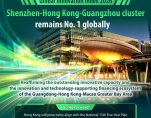
HONG KONG SAR – Media OutReach Newswire – 9 September 2026 – The World Intellectual Property Organization (WIPO) released its Global Innovation Index (GII) 2026 on September 8, revealing that the Shenzhen-Hong Kong-Guangzhou metropolitan cluster, located in Southern China, has once again secured the top position among the world’s 100 leading innovation clusters. This marks another triumph for the Guangdong-Hong Kong-Macao Greater Bay Area (GBA), solidifying its status as a global powerhouse for scientific advancement and technological entrepreneurship.
The annual GII ranking evaluates innovation activity through three core metrics: international patent filings via WIPO’s Patent Cooperation Treaty (PCT), scientific publications and the number of venture capital deals. For this year’s ranking, the Shenzhen-Hong Kong-Guangzhou cluster filed 2,259 PCT applications, published 4,060 scientific articles and had 138 venture capital deals, all per 1 million inhabitants over the past five years.
Welcoming the announcement, a spokesman for the Hong Kong Special Administrative Region (HKSAR) Government said the ranking reaffirms the outstanding innovative capacity and the innovation and technology (I&T)-supporting financing ecosystem of the GBA.
“Expediting I&T development has been a policy priority of this Government,” the spokesman added, highlighting the HKSAR Government’s continuous development of the original grant patent system and introduction of the patent box regime, which offers tax concessions for intellectual property income to promote innovation.
The HKSAR Government’s strategic investments are already yielding tangible results. The number of start-ups in Hong Kong has surged from over 1,500 in 2015 to more than 5,200 in 2025. The city’s two I&T flagships—Hong Kong Science Park and Cyberport—have collectively nurtured around 20 unicorns to date.
A landmark development in this trajectory is the official opening of the Hong Kong Park of the Hetao Shenzhen-Hong Kong Science and Technology Innovation Co-operation Zone (the Loop Hong Kong Park) in December 2025. Over 100 technology enterprises and institutions have already signed leases and begun moving in. The Loop Hong Kong Park is poised to serve as an important platform for basic scientific research, commercialisation, pilot production, and international I&T collaboration within the GBA.
Furthermore, the establishment of the San Tin Technopole Company Limited in June 2026 is set to develop 210 hectares of I&T land in the San Tin Technopole, which is located in Hong Kong’s Northern Metropolis development. It will create a vital node for integrated upstream, midstream and downstream industrial development, alongside the Loop Hong Kong Park.
Hong Kong’s financial machinery remains a cornerstone of its innovation success. The city boasts a vibrant private equity market with assets under management nearing US$250 billion, ranking second in Asia after the Chinese Mainland.
Looking ahead, Hong Kong will proactively align its strategy with the National 15th Five-Year Plan to fortify its position as an international I&T centre. The city will also further deepen collaboration with GBA sister cities, and contribute to the nation’s efforts in building a modern industrial system and achieving high-level scientific and technological self-reliance and strength.
Malaysia is considering Huawei’s Ascend 910C processors for a RM2 billion sovereign artificial intelligence project, potentially placing Chinese hardware at the centre of infrastructure designed to keep sensitive national data under domestic control.
The government is seriously evaluating Huawei’s AI accelerators for the initiative, although no final procurement decision has been announced and the number of chips under consideration remains unclear. The project would be operated by state-linked Telekom Malaysia, which was selected through a public tender and already works with Huawei on cloud infrastructure.
The deliberations put Malaysia at the centre of a widening contest between Washington and Beijing over the technology underpinning artificial intelligence. US officials have warned that use of Huawei’s Ascend 910C could violate American export-control rules, while Malaysia has maintained that technology decisions should serve its national interests and comply with applicable laws.
Huawei’s 910C is the company’s flagship AI accelerator currently available at scale. Malaysia is considering that product rather than the newer Ascend 950 series, which remains in limited production. Huawei has sought to expand sales of its AI systems beyond China as US restrictions continue to limit its access to advanced foreign semiconductor manufacturing technology.
Telekom Malaysia’s existing AI computing service uses Nvidia processors, highlighting the competing technology options facing Kuala Lumpur. The government is also discussing another tender process that could give Nvidia and other US suppliers a more direct opportunity to compete for the sovereign AI contract.
Prime Minister Anwar Ibrahim has repeatedly argued that Malaysia should build domestic technological capability rather than remain solely a consumer of systems developed overseas. His government formally established AI Malaysia Berhad under the Digital Ministry in July to lead its ambition of becoming an “AI Nation” by 2030 and to strengthen national AI development, governance and deployment.
Sovereign AI has become particularly important to the government because the proposed infrastructure is intended to process information that could include sensitive government, military and intelligence material. Kuala Lumpur wants such data to remain within Malaysia, reducing dependence on foreign-controlled computing environments and giving national institutions greater authority over storage and access.
Anwar has also questioned the implications of the US Cloud Act, which allows American courts in specified circumstances to compel US technology companies to provide electronic data even when it is stored abroad. Speaking to university students in April, he described the law as unreasonable while acknowledging the difficulty of challenging Washington on the issue.
US officials have raised separate security concerns about Huawei equipment being used to handle intelligence-related material, including information supplied by foreign governments. A State Department spokesperson said secure technology was essential to economic prosperity and warned that suppliers susceptible to government manipulation could pose risks to critical infrastructure, privacy, intellectual property and national security. The statement did not name China or Huawei.
Malaysia’s National Security Council officials are expected to visit Washington later this month for discussions that will include the technology issue. The talks come as the United States promotes American AI hardware, software and applications across developing markets and considers government-backed financing packages to strengthen the international position of US suppliers.
The current evaluation follows an earlier controversy in May 2025, when a deputy communications minister said a Malaysian AI initiative would deploy 3,000 Huawei Ascend chips. Her remarks were withdrawn shortly afterwards, and the Investment, Trade and Industry Ministry clarified that the project concerned was privately driven, not endorsed or coordinated by the government.
At the time, the ministry said any government AI infrastructure programme would require legal, operational and reputational due diligence. It also reaffirmed Malaysia’s commitment to applicable export-control laws while asserting the country’s sovereign right to formulate policy according to national interests.
Malaysia’s National AI Action Plan for 2026-2030 calls for responsible adoption, stronger domestic capabilities and globally competitive locally developed solutions. The programme links AI deployment to economic productivity, public-sector transformation and governance, placing infrastructure choices within a strategy.
Arabian Post Staff -Dubai Dubai Multi Commodities Centre has formally brought the world’s largest silver bar into regulated tokenised investment, allowing eligible investors to buy fractional digital interests linked to the 1,971kg Guinness World Record asset. The launch makes the bar the first tokenised commodity asset issued under the DMCC-Virtual Assets Regulatory Authority tokenisation framework, advancing Dubai’s push to create regulated markets for real-world assets represented digitally. […]
Arabian Post Staff -Dubai Saudi low-cost carrier flynas has agreed to acquire a 10 per cent stake in Swissport Saudi Arabia for about SAR50 million, pairing the investment with a five-year exclusive ground-handling agreement covering its network across the kingdom. The transaction, signed on September 6 and disclosed to the Saudi Exchange on Monday, also gives flynas an option to buy an additional 10 per cent of […]
Global research explores how newer wealth, continued business ownership, and family stewardship influence philanthropic practices among Asia’s wealthiest families
Roughly 94 percent of Asia‘s wealthiest families are first- or second-generation wealth holders
Approximately 95 percent of Asia’s wealthiest families retain control of the businesses that generated their wealth
SINGAPORE – Media OutReach Newswire – 8 September 2026 – As private wealth continues to expand globally and an estimated US$74 trillion is expected to transfer between generations over the next 20 to 25 years, understanding how wealthy families approach philanthropy is becoming increasingly important. New research from The Bridgespan Group, based on analysis of 186 of the wealthiest individuals and families across 20 economies spanning Asia, Africa, Europe, and the Americas, sheds light on how the world’s wealthiest families give, what they fund, how they organise their philanthropy, and how they seek to create change.
“This research comes at a pivotal moment for family philanthropy, especially as private wealth continues to grow,” said Xueling Lee, co-author and partner at Bridgespan. “Our research helps fill a knowledge gap on how the world’s wealthiest families organise their philanthropy and pursue impact, and finds distinguishing characteristics in Asia.”
In Asia, where founders and second-generation leaders often remain closely involved in the businesses that generated their wealth, philanthropy is frequently connected to broader questions of stewardship, business ownership, succession, and community engagement. The research finds that these differences are shaped by factors including the relative newness of wealth, continued business ownership, and the close connection between family, business, and philanthropy. Bridgespan’s research on corporate giving highlights this dynamic: founder- or family-linked companies account for 11 of Asia’s 20 largest corporate funders, compared with four among the world’s 20 largest corporate funders.
“Beyond the scale of their giving, many families bring a long-term perspective, deep personal commitment, and relationships across sectors built over decades,” said Brian San, secretary-general of the Institute of Philanthropy. “These qualities are particularly relevant in Asia, where family-owned businesses remain a powerful force and philanthropy is often closely connected to family stewardship, business leadership, and community engagement. The report highlights how these characteristics can help families catalyse collaboration, support innovation, and contribute to meaningful impact over time.”
“This research confirms what we have seen firsthand: family philanthropy has driven some of today’s boldest solutions and most pioneering research. These funders are uniquely positioned to take risks and build coalitions that can solve big, complex problems at their root,” said Deepali Khanna, senior vice president and head of Asia (division) at The Rockefeller Foundation. “Some of the work we are proudest of, like the Global Energy Alliance for People and Planet, started because family philanthropies were willing to commit early and jointly at a time when no single institution could have carried it alone.”
While the report finds that wealthy families around the world share many common philanthropic behaviours, it also identifies several characteristics that distinguish family philanthropy in Asia.
Asia’s wealth is newer: Approximately 94 percent of wealth held by Asia’s wealthiest families sits with first- or second-generation wealth holders, compared with roughly 85 percent in high-income economies outside Asia. The relative newness of wealth influences how wealth is held, the degree of family involvement in operating businesses, the availability of liquid assets, and the form philanthropy takes.
Asian families retain tighter control of their businesses: Approximately 95 percent of Asian families maintain control of the businesses that generated their wealth, compared with roughly 68 percent outside Asia. Where wealth remains closely tied to an operating business, philanthropic decisions often sit alongside broader considerations such as government relationships, succession planning, and reputation.
Families fund remarkably similar issues across regions: Education, health, and support for marginalised and vulnerable populations are among the top issues supported by wealthy families. In Asia, families are more likely to support elderly care, religion, and sports, while families from other regions more frequently fund science and technology initiatives, including those related to artificial intelligence.
Few families publicly report outcomes from their giving: More than 80 percent of families in Asia publicly report outputs from their giving, such as schools built or teachers trained, compared with just 45 percent of high-income families outside Asia. However, outcome reporting, such as learning gains or graduation rates, remains uncommon across all groups.
Beyond examining how families give, the companion report How the World’s Wealthiest Families Give explores approaches that help families translate their resources and influence into meaningful and sustained impact:
Taking risks others cannot or will not: Families often have the autonomy to move from decision to deployment more readily than institutional or corporate funders. In Singapore, for example, the Lien Foundation made a decade-long push into early childhood development, a sector that few had championed when it began. Its sustained work alongside government and other stakeholders contributed to broader sector development over time.
Facilitating collective action: Families with trusted relationships across sectors can bring together stakeholders who might not otherwise gather, helping fragmented efforts to evolve into coordinated action. In 2024, the Jollibee Group Foundation, led by Tony and Grace Tan Caktiong, partnered with the Provincial Government of Basilan, the Zuellig Family Foundation, and the League of Corporate Foundations to expand its school feeding programme. Together, the partnership supports the delivery of nutritious meals to nearly 25,000 children in 250 schools.
Mobilising multiple types of capital: A family with authority across philanthropic and investment decisions may be able to move capital across different instruments with fewer external negotiations, board approvals, or fiduciary obligations to outside investors.
The issuer is solely responsible for the content of this announcement.
About The Bridgespan Group
The Bridgespan Group (www.bridgespan.org) is a global nonprofit that collaborates with social change organisations, philanthropists, and impact investors to make the world more equitable and just. Bridgespan’s services include strategy consulting and advising, sourcing and diligence, and leadership team support. We take what we learn from this work and build on it with original research, identifying best practices and innovative ideas to share with the social sector. We work from locations in Boston, Delhi, Johannesburg, Mumbai, New York, San Francisco, Singapore, and Washington, DC.
Arabian Post Staff -Dubai Saudi Arabia’s Public Investment Fund has established Gulf Coast Development Company to build a large tourism and residential destination along the Al-Khafji coastline near Kuwait, extending the sovereign wealth fund’s investment drive into the northern Eastern Province. PIF said on Monday the new company would develop the project with private-sector partners and local and regional investors, targeting demand for housing, hospitality and tourism […]



 www.prudentialplc.com/





 https://www.linkedin.com/company/brand-hong-kong/
 https://x.com/Brand_HK/
 https://www.facebook.com/brandhk.isd
 https://www.instagram.com/brandhongkong