Grayscale Investments has moved a step closer to launching a spot exchange-traded fund tied to Hyperliquid’s HYPE token after submitting a third amended S-1 registration statement to the US Securities and Exchange Commission, sharpening market expectations that regulated access to one of the fastest-growing decentralised trading ecosystems may be nearing approval. The proposed Grayscale HYPE ETF would trade on Nasdaq under the ticker GHYP if cleared by […]
Seychelles and Bangladesh have moved to accelerate bilateral cooperation, with pending agreements and memoranda of understanding now expected to take clearer shape this year after talks in Victoria between Bangladesh High Commissioner Dr Zokey Ahad and Seychelles Foreign Affairs and Diaspora Minister Barry Faure. The meeting, held on 21 May at Maison Quéau de Quinssy, centred on formalising cooperation frameworks that have been under discussion since Dr […]
Google and Blackstone have agreed to create a $5 billion TPU-powered cloud company, widening the battle for artificial intelligence infrastructure as enterprises seek alternatives to graphics processing units that dominate AI training and inference. The US-based venture will offer data centre capacity, operations, networking and Google Cloud’s Tensor Processing Units through a compute-as-a-service model. Blackstone is making the initial equity commitment, with the first 500 megawatts of […]
BANGKOK, THAILAND – Media OutReach Newswire – 22 May 2026 – Thai Cement Manufacturers Association (TCMA) marked a significant national milestone in advancing the decarbonization of Thailand’s cement and concrete industry toward Net Zero 2050. This progress is driven by strong collaboration among government agencies, industry players, and international partners under the “Decarbonization of the Cement and Concrete Sectors in Thailand” project, while accelerating the adoption of technology, innovation, and green investment to enhance competitiveness and support long-term economic growth.
Dr. Chana Poomee, Honourary Chairman of TCMA and President of ASEAN Federation of Cement Manufacturers (AFCM), stated that today’s “National Milestone” reflects the power of collaboration at both national and international levels. The initiative is led by the United Nations Industrial Development Organization (UNIDO), in partnership with TCMA and key Thai government agencies, including the Department of Climate Change and Environment and the Department of Industrial Works, with financial support of CAD 8 million from the Government of Canada through Environment and Climate Change Canada (ECCC), to accelerate tangible greenhouse gas reductions in the cement and concrete sector.
TCMA, as the industry representative, serves as a central platform connecting stakeholders across the entire value chain, driving the implementation of the “Thailand 2050 Net Zero Cement and Concrete Roadmap.” This aligns with Thailand’s NDC 3.0 targets, strengthening industrial competitiveness, attracting green investment, and fostering sustainable economic growth.
“Decarbonization is not only a pressing challenge but also a strategic opportunity to enhance national competitiveness. The progress achieved under this project spans policy development, innovation, technology deployment, standards, and capacity building-key enablers that will accelerate the industry’s transition toward Net Zero”, Dr. Chana said.
A key technological advancement under the project is the introduction of the Mobile Carbon Capture Unit (MCCU) from CETRI, Canada. This advanced and flexible technology is designed for real-world industrial operations and will be piloted starting in June, rotating across cement plants of TCMA members in the SARABURI SANDBOX. The pilot aims to validate performance under diverse operational conditions and pave the way for large-scale industrial application.
“The deployment of MCCU in Thailand highlights the strength of international collaboration in bringing advanced technologies into real-world application. It accelerates learning-by-doing, validates technological performance, strengthens local technical capabilities, and reduces investment risks-laying a strong foundation for future scale-up”, Dr. Chana added.
From an investment perspective, the development of technology-ready and standards-aligned projects enhances investor confidence, increases the attractiveness of green investment, and improves access to sustainable finance-key drivers in accelerating the industry’s transition to Net Zero.
TCMA continues to advance the industry under a “Collaborative Mindset-Action-Value,” promoting the systematic adoption of low carbon technologies, including low carbon cement innovations such as Limestone Calcined Clay Cement (LC3), Carbon Capture, Utilization and Storage (CCUS). These solutions not only reduce emissions but also improve efficiency, lower long-term costs, and strengthen global competitiveness.
At the regional level, TCMA is expanding its role through AFCM by fostering collaboration and advancing the AFCM Decarbonization Roadmap, which serves as a shared framework to reduce carbon emissions across ASEAN’s cement industry while enhancing regional technology, standards, and competitiveness.
“As President of the AFCM, TCMA is committed to driving ASEAN toward becoming a low carbon region by leveraging collaboration as a key mechanism to accelerate technology transfer, strengthen the industry capabilities, and unlock new regional economic opportunities”, Dr. Chana said.
TCMA reaffirmed its commitment to strengthening collaboration and welcoming international support in both technology and finance to accelerate the transition toward a low carbon industry, while enhancing Thailand’s competitiveness on the global stage.
India’s rapid AI adoption is exposing weak points in software supply chain security, with enterprises expanding automated development faster than their ability to detect compromised packages, unsafe containers and unverified AI components.
A 2026 software supply chain security assessment shows that about 65 per cent of organisations in India cannot detect malicious packages, while 71 per cent do not use container security tools. The findings underline a widening gap between the speed of AI-led software development and the controls needed to secure code, dependencies, models and deployment pipelines before they reach production systems.
Security teams are facing a more complex threat environment as AI coding assistants, model registries, agent frameworks and machine-learning libraries become embedded in day-to-day software engineering. AI is no longer confined to application features or analytics layers. It is becoming part of the software supply chain itself, influencing how code is written, tested, packaged and deployed.
Enterprises in India have been quick to adopt AI tools to improve developer productivity, reduce repetitive work and accelerate product releases. Yet the same shift has increased reliance on open-source packages, pre-trained models, plug-ins and automated build systems. Each of these components can introduce hidden risks if provenance, integrity and behaviour are not continuously verified.
Global software repositories are now attracting sustained attacks because they provide a direct route into enterprise development environments. Malicious npm packages rose by 451 per cent during 2025, while more than 48,000 new Common Vulnerabilities and Exposures were disclosed worldwide, a rise of about 20 per cent from the previous year.
The pressure on security teams is being amplified by the volume of AI-generated code. Developers in India are spending about 51 per cent of their time reviewing, validating and hardening code produced by AI tools. About 53 per cent treat such output only as a starting point and review every line before use, while 11 per cent rewrite AI-generated fixes from scratch.
This shift has altered the economics of software engineering. AI may reduce the time needed to draft code, but it can also transfer effort to verification, testing and security review. Weaknesses such as cross-site scripting, SQL injection and missing authorisation checks can still be reproduced by automated tools, particularly when developers rely on generated code without adequate scrutiny.
Governance is emerging as another area of concern. Nearly 97 per cent of organisations surveyed said they had certified AI model governance programmes, but only 59 per cent claimed full provenance visibility across production environments. About 48 per cent still needed a week or longer to produce audit-ready compliance evidence.
That gap points to a difference between policy and enforceable control. Many enterprises have AI governance frameworks on paper, but fewer can prove where every model, library, container image and software artefact came from, how it changed, who approved it and whether it complies with internal policy.
CERT-In has also warned that software supply chain compromises are increasingly targeting developer tools and trusted repositories. Its April 2026 activity note referred to attacks affecting npm, PyPI, GitHub Actions and container registries, including incidents involving Checkmarx, Trivy, LiteLLM, Axios, Telnyx and npm packages linked to the CanisterWorm campaign. The payloads observed in these attacks included credential harvesting, data exfiltration, remote execution and persistence within developer systems.
Model registries have added another layer to the risk. Around 1.4 million new AI artefacts were published on Hugging Face during 2025, representing 58 per cent of all new software packages tracked in one assessment. Researchers identified 495 malicious AI models in public repositories with active payloads capable of credential theft, command execution and reverse-shell activity, along with 969 malicious AI-agent skills designed to exploit developer environments and automation workflows.
For enterprises in India, the challenge is sharpened by the country’s role as a major software engineering and global capability centre hub. Bengaluru, Hyderabad, Pune, Chennai and Gurugram host large engineering teams serving banking, retail, telecoms, manufacturing and cloud services. These centres are increasingly responsible not only for maintenance work but also for product development, AI integration and security-sensitive digital platforms.
Regulatory and customer expectations are also tightening. Buyers are asking for software bills of materials, vulnerability disclosure processes, provenance records and proof that build pipelines are protected. CERT-In’s technical guidance on SBOM, QBOM, CBOM, AIBOM and HBOM has emphasised regular updates, vulnerability exploitability exchange documents and staff training around software supply chain visibility.
Security leaders are therefore moving towards stronger controls across development pipelines. These include automated malicious package detection, container image scanning, secrets detection, signed artefacts, dependency pinning, model provenance checks, policy enforcement in CI/CD systems and continuous monitoring of developer environments.
The investment case is becoming harder to ignore. Software supply chain attacks can bypass perimeter defences because they enter through trusted development channels. Once inside, malicious packages can steal credentials, alter builds, move into cloud environments or compromise downstream customers. AI raises the stakes because it can accelerate both legitimate development and attacker experimentation.
Hyperliquid’s HYPE token has pushed beyond its former record, turning a sharp 24-hour rally into one of the most closely watched moves in the digital-asset market as trading volumes, exchange activity and listed-product demand converge around the decentralised derivatives platform. HYPE traded above $62 after gaining strongly through the week, surpassing the previous peak near $59 set in September 2025. The move lifted the token into the […]
Arabian Post Staff -Dubai Flydubai and Cyprus Airways have launched an interline partnership that gives passengers from Larnaca wider one-stop access to destinations across the Gulf, Asia, Africa and the Indian Ocean through Dubai International. The agreement allows customers to book travel on a single itinerary, with coordinated baggage handling and smoother transfers at DXB. For Cyprus Airways passengers, the arrangement opens connections beyond Dubai to flydubai […]
AMD has committed more than $10 billion to Taiwan’s semiconductor ecosystem, targeting advanced packaging and manufacturing capacity as demand for artificial intelligence infrastructure intensifies across global data centres.
The investment is designed to strengthen the chipmaker’s partnerships with foundries, packaging houses, substrate suppliers and server manufacturers that are central to its next generation of AI systems. The programme places Taiwan at the centre of AMD’s effort to scale production of high-performance processors, accelerators and rack-level systems built for increasingly complex AI workloads.
A major focus will be Elevated Fanout Bridge, or EFB, a 2.5D packaging technology intended to improve the speed and efficiency of connections between chip components. AMD plans to use the technology in its sixth-generation EPYC central processing units, codenamed “Venice”, which are being positioned for AI, cloud and high-performance computing deployments.
The move comes as AI infrastructure spending shifts from individual chips towards complete systems that combine CPUs, graphics processors, high-bandwidth memory, networking and software. Advanced packaging has become a critical bottleneck because AI workloads require large volumes of data to move quickly between processors while keeping power consumption and heat within manageable limits.
AMD Chair and Chief Executive Lisa Su said customers were rapidly expanding AI infrastructure to meet rising compute demand. The company is seeking to combine its high-performance computing portfolio with Taiwan’s manufacturing and packaging capabilities to support integrated, rack-scale AI systems.
AMD is working with partners including ASE, SPIL, Powertech Technology, Wiwynn, Wistron, Inventec, Unimicron, AIC, Nan Ya PCB and Kinsus. These companies cover key parts of the supply chain, from advanced packaging and substrates to server assembly and mechanical architecture. Sanmina is also involved in manufacturing support for the company’s Helios platform.
The investment will support both wafer-based and panel-based EFB interconnect development. AMD and Powertech Technology have qualified what they describe as the industry’s first 2.5D panel-based EFB interconnect, a step aimed at improving scalability and production economics for high-volume AI processors.
The technology is expected to help the “Venice” EPYC processors deliver higher interconnect bandwidth and better power efficiency. That matters because data centre operators are increasingly constrained by electricity availability, cooling capacity and rack density, not only by chip performance.
AMD has also begun ramping production of “Venice” CPUs using Taiwan Semiconductor Manufacturing Company’s 2-nanometre process technology in Taiwan. Future production is planned at TSMC’s Arizona facility, extending the supply chain beyond Taiwan while preserving the company’s close reliance on TSMC’s leading-edge manufacturing.
The “Venice” chips will be a central element of AMD’s Helios rack-scale platform, which also includes AMD Instinct MI450X graphics processors, advanced networking and the ROCm open software stack. The platform is scheduled for deployments beginning in the second half of 2026, with AMD describing the opportunity in terms of multi-gigawatt AI infrastructure rollouts.
The strategy puts AMD in a more direct contest with Nvidia, which dominates AI accelerator sales and has built a strong lead through its GPUs, networking, software ecosystem and full-rack systems. AMD’s challenge is not only to deliver competitive silicon but also to prove that it can scale complete AI infrastructure with dependable supply, efficient packaging and broad software support.
AMD’s data centre business has become the company’s main growth engine. First-quarter 2026 data centre revenue reached $5.8 billion, up 57 per cent from a year earlier, driven by demand for EPYC processors and the ramp-up of Instinct GPU shipments. That performance has strengthened investor expectations that AMD can capture a larger share of AI and cloud infrastructure spending.
Taiwan remains critical to that effort because of its concentration of semiconductor expertise. TSMC anchors the foundry side, while packaging, substrate and system-assembly partners provide the manufacturing depth needed to turn chip designs into deployable infrastructure. The concentration also creates geopolitical and supply-chain risks, particularly as governments and companies seek greater resilience across strategic technologies.
HONG KONG SAR – Media OutReach Newswire – 22 May 2026 – At the International Hydrogen Development Symposium 2026 today (May 18), nine pioneering companies from Korea, the Chinese Mainland, France, and Hong Kong – including Hyundai Motor Group – signed a landmark Memorandum of Understanding (MOU) on hydrogen ecosystem building, marking a major step toward advancing the city’s green economy.
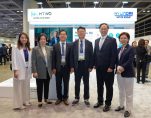
At the International Hydrogen Development Symposium 2026 today (May 18), nine pioneering companies from Korea, the Chinese Mainland, France, and Hong Kong – including Hyundai Motor Group – signed a landmark Memorandum of Understanding on hydrogen ecosystem building, marking a major step toward advancing the city’s green economy. Photo shows (from left) Senior Vice President (Sustainability) for Technology, Innovation and Entrepreneurship of Invest Hong Kong (InvestHK), Ms Olivia To; the Director-General of Investment Promotion of InvestHK, Ms Alpha Lau; Executive Vice President and Head of Energy & Hydrogen Policy Sub-Division at Hyundai Motor Group, Mr Seung Kyu-shin; Deputy Minister for Territorial and Urban Policy at Ministry of Land, Infrastructure and Transport of the Republic of Korea, Mr Jeong Eui-kyung; the Global Head of Financial Services, Fintech & Sustainability of InvestHK, Mr King Leung; and Senior Vice President, Transport, Logistics and Industrials of InvestHK, Ms Bonnie Ho, at the symposium.
This multi-party signing was officiated by Deputy Minister for Territorial and Urban Policy at Ministry of Land, Infrastructure and Transport of the Republic of Korea, Mr Jeong Eui-kyung; the Acting Secretary for Environment and Ecology, Miss Diane Wong; the Director of Electrical and Mechanical Services, Mr Poon Kwok-ying; and the Director-General of Investment Promotion of Invest Hong Kong (InvestHK), Ms Alpha Lau.
At the International Hydrogen Development Symposium 2026 today (May 18), nine pioneering companies from Korea, the Chinese Mainland, France, and Hong Kong – including Hyundai Motor Group – signed a landmark Memorandum of Understanding on hydrogen ecosystem building, marking a major step toward advancing the city’s green economy. Photo shows the Director-General of Investment Promotion of Invest Hong Kong, Ms Alpha Lau, delivering a speech.
Spearheaded by Hyundai Motor Group, the MOU establishes a collaborative framework to build a comprehensive, self-sustaining hydrogen ecosystem in Hong Kong, targeted to be fully operational by the end of 2030. The collaboration will prioritise the development of waste-to-hydrogen technologies to convert landfill gas into clean energy, along with an immediate focus on piloting a liquefied hydrogen refuelling infrastructure. To enable full value chain integration, it also targets the deployment of customised hydrogen fuel cell commercial vehicles, including tour and airport shuttle buses.
Through facilitating public-private partnerships and inter-governmental collaboration, InvestHK is supporting Hyundai Motor Group and its partners to implement go-to-market strategies aligned with the shared vision for hydrogen ecosystem building.
This partnership will also position Hong Kong as a strategic base for Hyundai Motor Group’s hydrogen business expansion across the Asia-Pacific region.
Miss Wong said, “This collaboration marks a significant milestone in developing tangible, on-the-ground hydrogen applications to accelerate the green transition towards carbon neutrality. By combining Korea’s world-class technological capabilities with Hong Kong’s strategic urban context, Hong Kong could serve as an exceptional international demonstration platform for showcasing green and low-carbon technologies. If these cutting-edge innovations could be applied and scaled up successfully here, it will serve as a positive model and provide highly viable options for reference by modern cities worldwide.”
Ms Lau said, “Today’s multi-party signing is both a landmark moment for Hong Kong’s green economy and a clear signal that the city’s hydrogen ecosystem is gaining real traction. Over the past three years, InvestHK has helped leading hydrogen enterprises establish themselves in Hong Kong, several of which have since listed on the Hong Kong Stock Exchange, raising over $2.5 billion in total. For businesses with global green ambitions, Hong Kong is where business growth takes shape.”
At the International Hydrogen Development Symposium 2026 today (May 18), nine pioneering companies from Korea, the Chinese Mainland, France, and Hong Kong – including Hyundai Motor Group – signed a landmark Memorandum of Understanding on hydrogen ecosystem building, marking a major step toward advancing the city’s green economy. Photo shows the Acting Secretary for Environment and Ecology, Miss Diane Wong, delivering a speech.
Executive Vice President and Head of Energy & Hydrogen Policy Sub-Division at Hyundai Motor Group, Mr Seung Kyu-shin, said, “This MOU was signed as Hyundai Motor Group’s commitment to advancing Hong Kong’s proactive hydrogen policies and driving the acceleration of its hydrogen ecosystem utilising the Group’s hydrogen business capability and experience. Starting with Hong Kong, we look forward to expanding our collaboration and business opportunities across the broader Asia-Pacific hydrogen market.”
At the International Hydrogen Development Symposium 2026 today (May 18), nine pioneering companies from Korea, the Chinese Mainland, France, and Hong Kong – including Hyundai Motor Group – signed a landmark Memorandum of Understanding on hydrogen ecosystem building, marking a major step toward advancing the city’s green economy. Photo shows Deputy Minister for Territorial and Urban Policy at Ministry of Land, Infrastructure and Transport of the Republic of Korea, Mr Jeong Eui-kyung (back row, second right); the Acting Secretary for Environment and Ecology, Miss Diane Wong (back row, second left); the Director of Electrical and Mechanical Services, Mr Poon Kwok-ying (back row, first left); and the Director-General of Investment Promotion of Invest Hong Kong, Ms Alpha Lau (back row, first right), witnessing the signing.
Partners entering into this MOU include Hyundai Motor Company and Hyundai Engineering & Construction from Hyundai Motor Group, China Inspection Co Ltd, Chun Wo Bus Services Limited, Chun Wo Construction & Engineering Company Limited, Jiangsu Guofu Hydrogen Energy Equipment Co Ltd, JEA ENG, Templewater Limited, the Hong Kong and China Gas Company Limited, and Veolia Hong Kong Holding Limited.
This multi-party, long-term collaboration is set to establish a robust, end-to-end hydrogen industry chain – spanning production, storage, transportation, refuelling and utilisation.
New energy is vital to Hong Kong’s Climate Action Plan 2050 and the national dual-carbon goals. As set out in the Chief Executive’s 2025 Policy Address, Hong Kong will establish public hydrogen filling facilities on Hong Kong Island and in Kowloon, press ahead with more hydrogen trial projects, and develop the GBA Hydrogen Corridor in collaboration with Guangdong Province. The Hong Kong Special Administrative Region Government is actively advancing hydrogen development through technological innovation, talent cultivation, ecosystem building, and regional co-ordination. To date, over 30 hydrogen trial projects have been greenlit, paving the way not only for decarbonisation targets, but also for unlocking new quality productive forces for green economic growth. Hashtag: #InvestHK
The issuer is solely responsible for the content of this announcement.
About InvestHK
Invest Hong Kong (InvestHK) is the investment promotion agency of the Government of the Hong Kong Special Administrative Region (HKSAR).
Full oil shipments through the Strait of Hormuz are not expected to return before the first or second quarter of 2027, even if the Middle East conflict were to end immediately, ADNOC chief Sultan Ahmed Al Jaber has said, signalling that the energy shock from the Iran war could outlast any diplomatic settlement by many months. The warning from the head of the Abu Dhabi National Oil […]
Emirates NBD has extended a AED367.3 million loan facility to Luxembourg-based CPI Property Group, giving the European real estate investor funding cover for deferred payments on a portfolio of ultra-luxury residential units in Dubai through 2026 and 2027. The transaction, equivalent to about $100 million or €86 million, is secured against 19 high-end residences owned by CPI Property Group, including 15 units still under construction. The assets […]
Core42 has secured $550 million in structured trade finance from HSBC to accelerate artificial intelligence cloud and compute deployments across the United States and Europe, strengthening the Abu Dhabi group’s position in the global race to build large-scale AI infrastructure. The financing, arranged through two non-equity dilutive facilities, gives the G42 company additional capital without requiring a share sale. The first facility, worth $240 million, was completed […]
UAE economic growth is expected to slip into a mild contraction in 2026 as the Iran war disrupts oil exports through the Strait of Hormuz, before staging a strong recovery in 2027 on higher crude and gas production, major energy projects and continued strength in non-oil sectors. The projected setback marks a sharp reversal for the Gulf’s second-largest economy, which has spent the past decade reducing its […]
NANNING, CHINA – Media OutReach Newswire – 21 May 2026 – The China-ASEAN Business and Trade Information Platform was officially launched in Nanning, Guangxi Zhuang Autonomous Region on Tuesday.
A sub-forum themed international exchange and mutual learning of cyber civilization at the 2026 China Internet Civilization Conference is held in Nanning, Guangxi Zhuang Autonomous Region, May 19, 2026. (Photo: China News Service/Li Taiyuan)
The platform offers comprehensive information services and an international communication platform to support economic and trade cooperation between China and ASEAN countries.
Built and operated by China News Network, the official website of China News Service, the platform serves as ASEAN trade agencies, industry associations, overseas Chinese communities, and cross-border enterprises, providing one-stop trade information services.
China News Service will leverage its strengths to build the China-ASEAN Business and Trade Information Platform into an influential and dynamic communication channel that promotes information sharing and provides services, to facilitate trade and people-to-people exchanges between China and ASEAN countries.
Currently, a trade information network between China and ASEAN countries has been built, with key content covering policy explanations, market conditions, investment promotion, business cooperation, and industry analysis, to comprehensively support cross-border trade activities.
Prior to the platform’s launch, representatives from government departments, media outlets, research institutes, and universities in China and multiple ASEAN countries participated in discussions on economic and trade information exchange between China and ASEAN countries, as well as the development of the platform.
Consular officials from ASEAN member states including Cambodia, Myanmar, and Vietnam, stationed in Nanning expressed their hopes for enhancing China-ASEAN economic and trade connectivity as well as people-to-people ties through information sharing.
Against the backdrop of the signing of the China-ASEAN Free Trade Area 3.0 Upgrade Protocol, the platform serves as an information bridge for expanding cooperation, promoting trade, enhancing industrial upgrade, and achieving mutual benefits and win-win outcomes, they said.
They hope that the platform will play a greater role in trade facilitation and logistics services, empowering micro, small and medium-sized enterprises (MSMEs), and investment policies and regulatory measures, while helping share cooperation stories between China and ASEAN countries.
Hashtag: #Nanning
The issuer is solely responsible for the content of this announcement.
By Roksolana Pyrtko, Managing Consultant, Symbol Consulting DMCC Walk through a shopping centre in Warsaw, Kyiv, or Bratislava and the formula is almost always the same. A hypermarket on the ground floor, a food court upstairs, fashion brands filling the floors in between. For a long time, it worked. Developers across the region built to that template, leased up quickly, and moved on. The model is now […]
SAN FRANCISCO, USA – Media OutReach Newswire – 21 May 2026 – From May 11 to 14, a Hainan economic and trade delegation, jointly organized by the China Council for the Promotion of International Trade Hainan Provincial Committee (CCPIT Hainan)and the Hainan Youth Federation, visited the United States to conduct business exchange activities aimed at accelerating bilateral trade and investment between Hainan and the U.S. The delegation, comprising over 20 members, included heads of enterprises and institutions from sectors such as international trade, port logistics, digital technology, marine environmental protection, legal services, and modern agriculture.
China (Hainan Free Trade Port)–U.S. (San Francisco) Economic and Trade Exchange Meeting
At the China (Hainan Free Trade Port)–U.S. (San Francisco) Economic and Trade Exchange Meeting, the delegation highlighted the policy advantages and innovative achievements of the Hainan Free Trade Port to American enterprises. The two sides engaged in extensive exchanges in areas such as international trade, modern services, high-tech industries, and cross-border investment.
The head of the delegation noted that since the Hainan Free Trade Port began island-wide special customs operations on December 18, 2025, policy dividends have been steadily unleashed. The customs supervision model of “freer access at the first line, regulated access at the second line” has been fully implemented. The number of zero-tariff commodity items has been expanded to 6,631. Additionally, the policy of exempting tariffs on processed goods with a value-added rate exceeding 30% has created new cost advantages for cooperation between Chinese and U.S. enterprises.
Sean Randolph, a representative of the Bay Area Council, stated that direct exchanges between companies are essential for establishing long-term cooperative relationships. He noted that the San Francisco Bay Area, as a key gateway for Pacific trade, has maintained long-standing economic ties with Asia, particularly China. As the Hainan Free Trade Port continues to develop, sectors such as services, life sciences, and tourism are creating new opportunities for collaboration with California-based businesses.
During the visit, the delegation also participated in the 2026 China-California Economic and Trade Forum and held business negotiations with U.S. companies. The CCPIT Hainan signed a memorandum of cooperation with the Sino America Business Information Center to support the establishment of a platform for bilateral economic and trade cooperation and exchanges.
In addition, the delegation visited institutions such as the American-Chinese CEO Society, the Huamei Business Information Center, the Silicon Valley Open Intelligent Culture Foundation, and Sidley Austin LLP, engaging in in-depth exchanges on cross-border investment , specialized industry development, and commercial legal matters.
In June 2020, China unveiled a master plan to build the whole of Hainan Island into a globally influential and high-level free trade port by the middle of the century. The initiative reached a major milestone in December last year with the launch of island-wide special customs operations, which marked the completion of the first key step toward that goal.
The move has turned the island into a special customs supervision zone, allowing freer trade between Hainan and areas outside China’s customs borders, while enforcing standard customs controls for goods moving from Hainan to the mainland.Hashtag: #CPITHainan
The issuer is solely responsible for the content of this announcement.
Mexico’s sovereign credit rating has been cut to the last rung of investment grade, placing fresh pressure on President Claudia Sheinbaum’s administration as investors weigh rising debt, sluggish growth and the continuing fiscal burden of Petróleos Mexicanos. Moody’s Ratings lowered Mexico’s long-term local and foreign-currency issuer and senior unsecured ratings to Baa3 from Baa2, while changing the outlook to stable from negative. The move leaves Latin America’s […]
Caracas has become an unlikely stop for financiers, oil executives and restructuring advisers as Venezuela’s attempt to reopen its economy turns a once-quiet luxury hotel into a meeting point for dealmaking. The Cayena, a boutique property in the capital’s La Castellana district where rooms start at about $400 a night, spent much of its 13 years operating in a market cut off by sanctions, political conflict and […]
Morocco is moving to turn video gaming into a high-growth industry, offering financial backing, incubation and training to local startups as it seeks to create skilled jobs, widen export revenue and produce the country’s first billion-dollar technology companies. The push has gained fresh momentum around the Morocco Gaming Expo 2026 in Rabat, held from May 20 to 24, where officials, developers, investors and international technology firms are […]
Arabian Post Staff -Dubai Abu Dhabi’s push to build a new crude pipeline bypassing the Strait of Hormuz has reached the halfway mark, with ADNOC chief executive Sultan Al Jaber saying the project is being accelerated towards a 2027 launch as regional tensions continue to expose the vulnerability of Gulf energy routes. Al Jaber said the pipeline, intended to expand export capacity through Fujairah on the Gulf […]
Meta Platforms has told employees it does not expect further company-wide layoffs this year after cutting about 8,000 jobs and shifting thousands more workers into artificial intelligence projects. Chief Executive Mark Zuckerberg delivered the assurance in an internal memo on Wednesday, the same day the Facebook, Instagram and WhatsApp owner carried out one of its largest reorganisations since the post-pandemic technology downturn. The cuts affect about 10 […]
SINGAPORE – Media OutReach Newswire – 21 May 2026 – Synology today announced the general availability of PAS7700, the company’s first active-active, all flash NVMe storage system. Built for mission-critical workloads, PAS7700 delivers enterprise-grade performance, uninterrupted resilience, and optimized operational efficiency.
Synology PAS7700 delivers ultra-high performance, active-active availability and sub-millisecond latency for mission-critical workloads.
As AI, data analytics, and virtualization platforms continue to reshape how Singapore enterprises operate their IT infrastructure, storage is no longer merely a place to keep data. It has become the foundation behind core operational applications. As a result, organizations are placing greater demands on access speed, service continuity, and long-term operational stability. This is also why enterprises are increasingly seeking high-performance storage platforms that can maintain reliable operations over time.
“PAS7700 reflects Synology’s 25+ years of experience in storage and our close collaboration with enterprise customers to address evolving requirements for high availability, performance, and scalability,” said Bie-i Chu, Executive Vice President of the Synology NAS Group. “After a year of extensive real-world validation through our enterprise proof-of-concept program, PAS7700 is field-proven to deliver high reliability and performance, while helping customers lower total cost of ownership (TCO).”
A Storage Platform for Mission-Critical Systems PAS7700 is equipped with dual controllers and 48 NVMe SSD bays in a 4U chassis, and can scale up to 1.65 PB of raw storage capacity with up to seven expansion units. The system supports both file and block storage and offers broad protocol support, including NVMe-oF, iSCSI, Fibre Channel, SMB, and NFS.
With up to 2,048 GB of memory* and 100GbE networking, PAS7700 delivers up to 2 million IOPS, latency of under 1 millisecond and sequential throughput of up to 30 GB/s.
PAS7700 is designed for environments that require real-time data processing, such as virtualization, databases and large-scale data processing environments. It also targets performance-intensive and always-on workloads such as VDI, EDA and AI.
In addition, the solution is well suited for organizations operating data-intensive infrastructure in sectors such as data centers, manufacturing, semiconductor design, game development, and healthcare. These environments typically process large volumes of data concurrently and require systems that can sustain consistent performance and continuous service availability.
Designed to Minimize System Disruption One of PAS7700’s most notable strengths is its active-active architecture, which enables both controllers to operate simultaneously rather than relying on a traditional active-standby model. If one controller or a network component fails, the system can continue delivering services, significantly reducing the risk of business disruption.
The system is built with multiple protection layers to ensure high availability, including triple-parity RAID, mirrored write cache protection, IP failover, and automatic failover mechanisms.
PAS7700 also includes Continuous Availability Manager that enables enterprise IT teams to visually monitor the health status of each system component and detect and address issues quickly before they affect services.
Multi-Layer Data Protection for Enterprises Synology places strong emphasis on enterprise data protection. PAS7700 supports Self-Encrypting Drives (SEDs), providing hardware-level protection without compromising system performance.
The system also supports WORM folders and immutable snapshots, allowing snapshots to remain protected from unauthorized modification or deletion after creation, thereby reducing the risk of tampering and unauthorized data interference.
In addition, PAS7700 features Snapshot Replication and Hyper Backup that enable enterprises to build multiple layers of backup and recovery between production environments and secondary systems. This helps strengthen cyber resilience and improve data recoverability in the event of incidents or cyberattacks.
Lower Cost, Greater Efficiency Beyond performance, Synology also addresses the challenge of optimizing long-term storage investment for enterprises. As many businesses in Singapore continue expanding their data infrastructure, virtual machines and internal AI workloads, the cost of high-speed storage is exerting increasing pressure on IT environments.
PAS7700 supports both inline and offline deduplication technologies to help reduce unnecessary data usage and extend SSD lifespan. This mechanism can significantly improve storage efficiency in large-scale data environments.
In the near future, the system will also support Synology Tiering, which automatically moves infrequently accessed data to high-capacity storage systems. This helps free up high-speed NVMe resources for active applications and hot data.
The entire platform runs on DSM Enterprise, Synology’s operating system developed specifically for enterprise storage, and is designed for environments that require high performance while maintaining intuitive management and operational simplicity.
PAS7700 is now available globally through Synology’s network of partners and distributors.
*Memory module is upgradable to 1,024GB per node; 2,048GB for the whole PAS7700 system.
Hashtag: #Synology, #PAS7700
The issuer is solely responsible for the content of this announcement.
About Synology
Founded in Taiwan in 2000, Synology is a technology company specializing in network-attached storage (NAS), data backup and recovery, video surveillance, and networking solutions for businesses and individuals worldwide. Over the past two decades, Synology has continuously expanded its ecosystem to help users manage, protect, and unlock the value of data more effectively in the era of cloud, AI, and big data.
Synology’s core philosophy is to build a comprehensive hybrid-cloud ecosystem that enables businesses to protect, synchronize, and manage data through a centralized, intuitive, and easy-to-operate platform. From enterprise storage, data backup, file sharing, and collaboration to video surveillance and network infrastructure, Synology’s solutions are designed to simplify IT management and accelerate digital transformation.
Alongside ongoing technology innovation, Synology also focuses strongly on long-term stability, security, and scalability for data infrastructure. More than half of Fortune 500 companies use Synology solutions, reflecting the brand’s credibility and ability to support large-scale data operations worldwide.
Arabian Post Staff -Dubai Abu Dhabi’s push to build a crude export route outside the Strait of Hormuz has moved to the centre of Gulf energy security after ADNOC said its new West-East Pipeline is about halfway complete and on course to expand shipments through Fujairah by 2027. The project, being fast-tracked under the direction of Sheikh Khaled bin Mohamed bin Zayed Al Nahyan, Crown Prince of […]
MANILA, PHILLIPINES – Media OutReach Newswire – 21 May 2026 – State Street Corporation (NYSE: STT), one of the world’s leading providers of financial services to institutional investors, today announced the establishment of a new office in Manila, the Philippines.
The new Manila office, scheduled to open in the second half of 2026, will further strengthen State Street’s global operating model and expand its processing capabilities, complementing the firm’s existing operations across the Asia Pacific region.
“The Asia Pacific region is critical to our longterm growth strategy,” said Ann Fogarty, chief operating officer for Investment Services, State Street. “The expansion into Manila is an important step in the continued evolution of our global operating model as we continue to support significant client growth in the region.”
Manila offers access to a young, diverse and highly educated workforce, drawing talent from the city’s wellestablished University Belt and its strong pipeline of graduates with financial services and operations expertise.
With USD54.5 trillion1 in assets under custody and/or administration, State Street services more than 12% of the world’s assets2. The firm operates in more than 100 geographic markets and employs approximately 51,000 people worldwide. State Street established its presence in Asia Pacific more than 40 years ago and today operates 16 offices across the region.
1As of March 31, 2026
2Represents State Street AUC/A of USD$54.5T as of March 31, 2026, divided by Global Financial Assets, including Global Equity, Global Debt Securities and Global Broad Money (M3), as of December 31, 2024. Sources: SIFMA Markets Factbook, 2025; Organisation for Economic Co-Operation (OECD), World Bank. Hashtag: #StateStreetCorporation #Manila #GlobalOperatingModel
The issuer is solely responsible for the content of this announcement.
About State Street Corporation
State Street Corporation (NYSE: STT) is one of the world’s leading providers of financial services to institutional investors including investment servicing, investment management and investment research and trading. With US$54.5 trillion in assets under custody and/or administration and US$5.6 trillion* in assets under management as of March 31, 2026, State Street operates globally in more than 100 geographic markets and employs approximately 51,000 worldwide. For more information, visit State Street’s website at www.statestreet.com.
*Assets under management as of March 31, 2026 includes approximately US$184 billion of assets with respect to SPDR® products for which State Street Global Advisors Funds Distributors, LLC (SSGA FD) acts solely as the marketing agent. SSGA FD and State Street Investment Management are affiliated.












 https://www.synology.com/en-sg