News related to
Investment

Abu Dhabi University has surpassed 5,000 research papers indexed in Scopus, marking a significant milestone in its academic development and signalling the institution’s expanding footprint in global scholarship. The university confirmed that the achievement was recorded through its Office of Research and Sponsored Programmes, which oversees research strategy, funding partnerships and publication performance. Scopus, operated by Elsevier, is among the world’s largest abstract and citation databases of […]

Arabian Post Staff -Dubai Abu Dhabi Judicial Department has begun rolling out facial recognition technology for notary transactions, marking a significant shift in how legal documents are verified and authenticated in the emirate. The first phase of the initiative, announced by the department, integrates biometric identification into selected notary services, enabling clients to complete procedures through digital platforms without the need for physical attendance. Officials describe the […]

Brussels has thrust the European Union’s carbon market into a fresh political battle, as leaders weigh changes to the bloc’s Emissions Trading System amid economic headwinds and mounting pressure from industry. Debate intensified at a summit of EU heads of state and government last week, where divisions surfaced over how far to adjust the Emissions Trading System, widely regarded as the centrepiece of Europe’s climate policy. European […]

Arabian Post Staff -Dubai Yango Group says its artificial intelligence-driven routing system saved users more than five million hours in 2025, with riders in Dubai and Abu Dhabi alone reclaiming over 34,000 hours through dynamic route optimisation. The mobility and technology company, which operates ride-hailing and delivery services across the Middle East, Africa, Europe and Latin America, reported that its AI models analysed billions of data points […]

Singapore’s drive to harness artificial intelligence as an engine of economic growth is entering a decisive phase marked by abundant ambition and clear signs of strain across company ranks. Government fiscal policy and private-sector deployment are converging on AI, but weak data infrastructure, skills gaps and uneven returns are tempering expectations even as enterprises escalate investments and policy support grows.

Last week, the nation’s Budget for the 2026 fiscal year unveiled a suite of measures aimed at elevating AI adoption across multiple industries. Prime Minister and Finance Minister Lawrence Wong confirmed the establishment of a National AI Council, to be chaired by himself, tasked with coordinating research, regulation and investment to align public and private interests in developing AI capability. The plan also includes National AI Missions focused on advanced manufacturing, connectivity and logistics, finance and healthcare, sectoral areas where government and business leaders see the most potential for productivity gains and value creation. The budget expands fiscal incentives with enhanced tax deductions for AI-related expenditures over the next two assessment years and widened grant schemes to support adoption, workforce training and enterprise transformation. Leaders of major consultancies said these measures signal a shift from experimentation to enterprise-scale adoption and give firms a clearer pathway to embed AI into core operations.

Despite this policy momentum, data from industry surveys and corporate research paint a more nuanced picture of utilisation and outcomes. Adoption of AI tools in Singapore is now near universal among larger firms, with about 96 per cent reporting some level of use. But a significant gap remains between deployment and measurable returns on investment. Only a minority of organisations consider themselves leaders in achieving strong, sustained ROI, indicating an emerging disconnect between AI deployment at scale and operational readiness to turn it into business value. Executives widely acknowledge that sprawling and complex data environments, coupled with cybersecurity concerns, are contributing to operational friction and risks that constrain potential gains.

Private forecasts and vendor research suggest that enterprises are committed to accelerating AI spending even as returns lag. Surveys of business leaders show average investments in AI of around SG$18.9 million, with expectations for investment growth of roughly 38 per cent over the next two years and ROI projections rising to an average of 29 per cent during the same period. Yet analysts note that these returns will depend significantly on firms’ ability to bridge gaps in data readiness and workforce capability. Many Singapore companies acknowledge limited internal training, fragmented data integration and widespread informal use of ungoverned AI tools, all of which undermine robust enterprise-level strategy and governance structures.

Structural issues are as salient as technical ones. Industry leaders point to weaknesses in reliable data foundations and the need for stronger leadership alignment to embed AI into strategic operations rather than relegated to pilot projects or isolated business functions. Senior executives contend that competitive advantage over the coming decade will be determined less by technology choice and more by how effectively organisations build hybrid human-AI teams and integrate AI into everyday workflows.

Talent acquisition and retention also feature prominently in conversations around Singapore’s AI trajectory. Advanced AI, cloud and cybersecurity skills are in high demand globally and Singapore is no exception, with firms reporting difficulty scaling teams with the specialised expertise needed to support complex AI systems. This talent shortage both drives up costs and slows the pace at which organisations can absorb and leverage new technologies.

Cloud infrastructure and advanced digital foundations are another determinant of success. Financial services institutions in Singapore, for example, are among the most advanced globally in cloud adoption, with a majority running core workloads in cloud or hybrid environments that facilitate large-scale AI deployment. This infrastructure supports use cases ranging from compliance and risk management to fraud detection and transaction monitoring. However, budget constraints, talent gaps and integration challenges remain headwinds even in these relatively strong pockets of adoption.

Commentators outside the corporate sphere emphasize the importance of inclusive growth, noting that small- and medium-sized enterprises must not be left behind in the national AI push. Business federation and consultancy leaders warn that without targeted support for smaller firms to sustain, not just adopt, AI technologies, widening capability divides could undermine broader economic innovation and productivity goals.

ByteDance is said to be in advanced negotiations to sell Shanghai-based game developer Moonton Technology — the studio behind Mobile Legends: Bang Bang — to the Saudi-backed Savvy Games Group in a transaction valued at between $6 billion and $7 billion, with talks progressing toward a possible deal this quarter. Both parties have reportedly agreed on broad commercial terms, marking a significant shift in ByteDance’s strategy and […]

Sega Sammy Holdings announced a substantial impairment charge against Finnish studio Rovio Entertainment as part of its financial results for the nine months ended 31 December 2025, underscoring challenges in its bid to expand mobile gaming revenue and prompting strategic shifts in its broader gaming portfolio. The company recorded an impairment loss close to US $200 million linked to Rovio’s performance, coinciding with a sharp fall in […]

Advertisements

Arabian Post Staff -Dubai Dubai’s education landscape is set for a major expansion as Dubai Holding Investments and global operator Nord Anglia Education announced a strategic partnership to develop and operate a network of premium K-12 schools across the emirate, responding to surging demand driven by population growth and an expanding expatriate community — a move that adds momentum to the broader Gulf private education boom while […]

The Al-Khayyat family, a Syrian-Qatari business dynasty that rose to prominence in Doha through ventures such as Baladna dairy and Power International Holding, is accelerating its involvement in rebuilding Syria’s economy as Damascus opens up to foreign investment after years of conflict. Brothers Moutaz and Ramez Al-Khayyat, chairing sprawling conglomerates that span food, construction, energy and financial services, are spearheading a wave of deals that could shape […]

China is set to eliminate import tariffs on goods from 53 African nations from 1 May 2026, a sweeping policy shift that extends duty-free access to almost the entire continent and aims to deepen trade ties and economic cooperation between Beijing and Africa. The government announcement confirms that the move will apply to all tariff lines for countries with which China has formal diplomatic relations, excluding only […]

By Nantoo Banerjee There is little to be excited about the defence ministry’s latest clearance for the acquisition of 114 Rafale fighter jets from France at a huge cost of Rs.3.25 lakh crore (nearly $40 billion), branded as ‘mother of all defence deals’. It is a matter of major concern that even 78 years after […]

The article India’s Reliance On Imported Arms For Defence Is A Concern appeared first on Latest India news, analysis and reports on Newspack by India Press Agency).

Nigeria has launched a sweeping industrial policy aimed at restarting idle factories, boosting domestic manufacturing and positioning Africa’s largest economy as a competitive production hub in global supply chains. Federal authorities say the framework is designed to tackle long-standing structural weaknesses that have undermined output, including erratic power supply, limited access to long-term finance, foreign exchange volatility and infrastructure gaps. Manufacturing accounts for less than 10 per […]

African Development Bank Group has approved a $200 million loan to support Nigeria’s efforts to expand agricultural production and curb reliance on food imports, reinforcing Abuja’s push to tackle food inflation and strengthen rural incomes. Board members of the AfDB cleared the financing to scale up priority investments across key value chains, targeting improved productivity, better access to inputs and enhanced storage and processing capacity. The funding […]

Zilliz has launched a new Zilliz Cloud region in Amazon Web Services’ eu-west-1 data centre in Ireland, expanding its European infrastructure as demand for localised artificial intelligence systems accelerates across Western Europe and the United Kingdom. The move positions the vector database specialist closer to enterprise customers that require data residency, lower latency and regulatory compliance within the European Union. By deploying in AWS’s Ireland region, Zilliz […]

Harvard Management Company has reduced its exposure to bitcoin-linked holdings by about 20 per cent while initiating a new position tied to ether, signalling a recalibration of its digital asset strategy amid shifting market dynamics and valuation pressures. Regulatory filings show that the endowment’s investment arm pared back its stake in BlackRock’s iShares Bitcoin Trust during the latest reporting period, cutting the value of its holding from […]

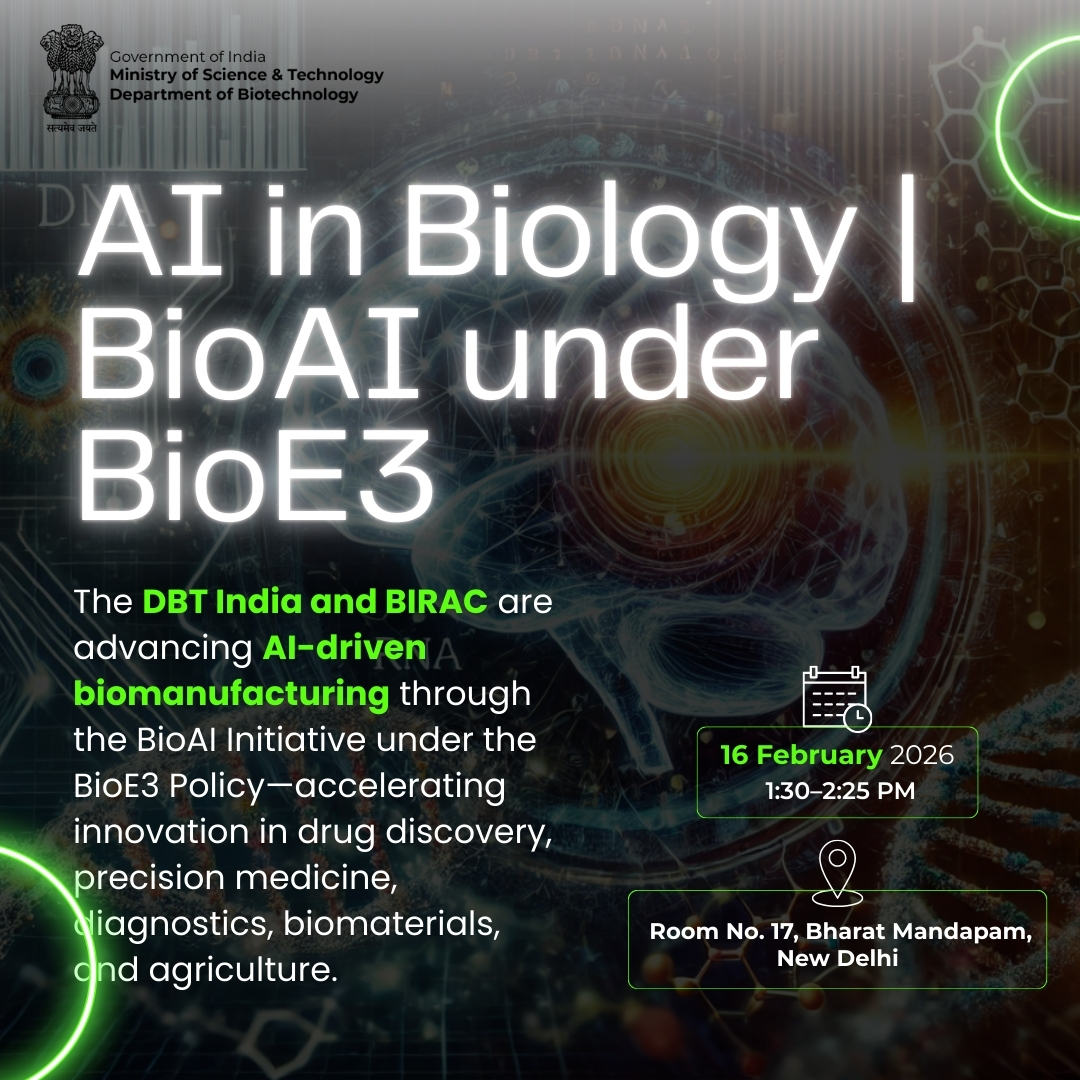
Artificial intelligence is being positioned as a catalytic force in reshaping biomanufacturing, with policymakers, scientists and industry leaders outlining a roadmap that blends computational power with biological science to accelerate drug discovery, industrial enzymes and sustainable materials. Discussions at the India AI Impact Summit placed BioAI at the centre of a strategy aimed at using genomics, in-silico modelling and closed data loops to build scalable and trusted production systems.

The convergence of AI and biology has moved from laboratory experimentation to commercial ambition. India’s biotechnology sector, valued at over $80 billion and targeting significant expansion by the end of the decade under the BioE3 policy framework, is seeking to harness machine learning tools to shorten development cycles that traditionally take years. Speakers at the summit argued that AI-enabled simulation and predictive modelling can reduce trial-and-error experimentation in fields ranging from vaccine development to precision fermentation.

BioAI refers to the integration of artificial intelligence techniques with biological data, particularly genomic sequencing, proteomics and metabolic engineering. The approach relies on large datasets and advanced algorithms capable of identifying patterns invisible to conventional research methods. Advances in protein structure prediction, including breakthroughs in computational biology over the past few years, have demonstrated how neural networks can model complex molecular interactions with remarkable accuracy.

At the summit, researchers described how generative AI systems are being trained to design novel proteins and enzymes tailored for industrial use. By feeding genomic datasets into predictive algorithms, scientists can simulate biological pathways in silico before conducting physical experiments. This method reduces costs and speeds up scaling, particularly in biopharmaceutical production and alternative protein manufacturing.

Government representatives outlined plans to expand national AI infrastructure to support such applications. IndiaAI Mission initiatives include the creation of high-performance computing resources and domain-specific data repositories to ensure that biotech firms and research institutes have access to secure and interoperable datasets. Officials emphasised that trust frameworks and regulatory clarity would be essential to encourage private investment while safeguarding data privacy and biosafety standards.

Industry leaders echoed that sentiment, highlighting that biomanufacturing requires rigorous validation. Unlike digital products, biological outputs interact with living systems, making quality control paramount. AI-driven feedback loops—where laboratory results continuously refine algorithms—were presented as a mechanism to maintain reliability while scaling up production. Data integrity, traceability and auditability were recurring themes, reflecting global debates about AI governance.

The global context underscores the strategic significance of BioAI. The United States and European Union have invested heavily in synthetic biology and AI-assisted drug discovery. China has also advanced computational genomics and large-scale fermentation capabilities. Analysts note that countries able to combine AI talent with robust biotech ecosystems stand to capture a growing share of the global bioeconomy, projected by several industry reports to exceed $4 trillion over the coming decade.

India’s strength in information technology services and pharmaceutical manufacturing offers a foundation for this convergence. The country is a major supplier of generic medicines and vaccines, supported by a network of research institutions and startups. By integrating AI tools into these value chains, stakeholders believe production timelines can be compressed and new therapeutic molecules identified with greater precision.

Academic voices at the summit stressed the importance of interdisciplinary training. Biologists must understand algorithmic thinking, while data scientists need grounding in molecular biology. Collaborative platforms linking universities, startups and established pharmaceutical firms were proposed to ensure knowledge transfer and talent development. Investment in computational biology curricula and shared research facilities is seen as critical to sustaining momentum.

Ethical considerations formed part of the dialogue. AI models trained on genomic data raise questions about consent, ownership and equitable benefit sharing. Experts argued for transparent governance structures aligned with international norms, noting that trust is fundamental when dealing with health-related information. Regulatory agencies are exploring how to evaluate AI-generated biological designs within existing approval pathways.

Private sector participation is accelerating. Venture capital funding in biotech startups leveraging machine learning has grown steadily, reflecting confidence in AI-assisted discovery platforms. Companies are experimenting with digital twins of biological systems, enabling simulation of fermentation processes before industrial deployment. Such capabilities can enhance efficiency and reduce resource consumption, aligning with sustainability goals.

Sustainability featured prominently in discussions on biomanufacturing. AI-optimised microbes can produce bio-based chemicals and materials that substitute fossil-derived inputs. Precision fermentation techniques, guided by predictive analytics, may lower energy use and waste. As global supply chains face pressure to decarbonise, the combination of AI and biotechnology is viewed as a pathway to cleaner industrial production.

Participants also highlighted challenges. High-quality biological datasets remain fragmented, and interoperability across laboratories is uneven. Ensuring cybersecurity in research networks is another concern, given the sensitivity of genetic information. Scaling laboratory successes to commercial volumes demands capital expenditure and regulatory compliance that can deter smaller enterprises.


Cyber security researchers are warning that built-in “Summarise with AI” buttons and AI-generated share links are being exploited to covertly plant malicious instructions inside artificial intelligence assistants, creating a new class of threat capable of distorting recommendations on health, finance and security matters. The technique, described by Microsoft as “AI recommendation poisoning”, centres on prompt injection attacks that subtly bias what large language models treat as trusted […]

Galaxy Digital’s head of asset management, Steve Kurz, is projecting a structural shift in the cryptocurrency market as the industry grapples with price volatility and evolving investor behaviour. Speaking publicly this week, Kurz said the downturn in digital-asset prices is better understood as healthy deleveraging rather than evidence of systemic failure, and described a deepening integration between traditional financial systems and digital-asset infrastructure that he believes underpins […]

Arabian Post Staff -Dubai Havelock One Interiors has completed the full fit-out of SOCO, a new family entertainment concept developed by Majid Al Futtaim Entertainment and launched at City Centre Mirdif in Dubai, marking another high-profile addition to the region’s expanding leisure and lifestyle sector. The Bahrain-headquartered interior fit-out specialist said the project involved the turnkey delivery of a multi-zone “social jungle” environment designed to blend interactive […]

Arabian Post Staff -Dubai Abu Dhabi has test-launched the country’s first hybrid rocket developed entirely within the UAE, signalling a significant advance in its ambition to build an indigenous space technology base. The Technology Innovation Institute confirmed that the rocket’s propulsion system was fully designed, manufactured, integrated and operated by Emirati engineers, a development officials described as a pivotal step towards sovereign launch capability. The suborbital test, […]

Rolling road closures are under way across Al Dhafra as the UAE Tour begins its latest edition, with authorities in Abu Dhabi implementing phased traffic diversions to accommodate the opening stage of the WorldTour cycling race. Organisers confirmed that the first stage, set against the sweeping desert highways of the Al Dhafra region, will see intermittent road blocks along key routes from morning until late afternoon, depending […]

Wynn Resorts has posted a sharp drop in fourth-quarter profit despite edging up revenues, underscoring mounting pressure from softer gaming volumes on the Las Vegas Strip and uneven recovery in Macau as the company presses ahead with a multibillion-dollar expansion in the United Arab Emirates. The US-listed casino operator reported that net income for the final quarter fell markedly from a year earlier, even as overall revenue […]

  International Holding Company, the Abu Dhabi-based investment conglomerate known as IHC, has posted full-year 2025 revenue of AED111.4 billion, a rise of 29.1 per cent from a year earlier, while profit after tax climbed 35.1 per cent to AED34.7 billion, reflecting what the group described as disciplined execution and tighter cost management across its expanding portfolio. The audited results mark another year of strong expansion for […]

JSW MG Motor, the automotive joint venture backed by China’s SAIC Motor and the Mumbai-based JSW Group, has announced plans to invest up to $440 million to scale up manufacturing capacity in India and accelerate its product lineup towards hybrid and electric vehicles. The company aims to lift annual output to 300,000 units from about 120,000 at its Halol, Gujarat plant while rolling out three to four new […]

VISHNU RAJA
RYO YAMADA
HITORI GOTOH
IKUYO KITA



