Arabian Post Staff -Dubai Arada has entered the UAE healthcare market by acquiring a majority stake of more than 80 per cent in Reem Hospital, marking a decisive shift by the master developer from residential communities and branded wellness projects into clinical care. The transaction gives Arada control of one of Abu Dhabi’s specialist private healthcare assets and comes with an AED2 billion investment commitment to […]
The five-year extension ensures operational continuity at one of Thailand’s leading container terminals, supporting the country’s expanding role in intra-Asian trade
BANGKOK, THAILAND – Media OutReach Newswire – 7 May 2026 – DP World, through its joint venture Laem Chabang International Terminal Co., Ltd. (LCIT), has secured a five-year concession extension to continue operating the B5 container berth at Laem Chabang Port. The extension comes at a time of increasing intra-Asian trade and evolving supply chain dynamics, reinforcing the port’s role as a critical gateway for Thailand’s economy.
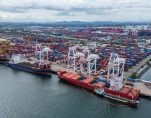
Terminal and yard at Laem Chabang Port
The contract, granted by the Port Authority of Thailand (PAT), will run from May 2026 to April 2031, reinforcing DP World’s central role in bolstering regional trade flows.
LCIT operates both B5 and C3 berths at Laem Chabang, Thailand’s principal deep-sea gateway and the country’s largest container hub supporting international trade. The terminals can accommodate up to four vessels simultaneously along 900 meters of berth length and are supported by 4,420 sqm of on-dock container freight station (CFS) facilities. In 2025, LCIT handled a record 1.936 million twenty-foot equivalent units (TEUs), its highest annual throughput to date, reflecting sustained growth in container volumes.
Glen Hilton, CEO & Managing Director, Asia Pacific, DP World, said: “This concession extension at Laem Chabang Port ensures continuity and service stability for our customers at a time when supply chains face increasing pressure and complexity. As Thailand strengthen its position as a regional trade hub, this extension allows us to continue investing in capacity, efficiency and sustainable operations. Together with our partners at LCIT, we are well positioned to support growing intra-Asia trade and deliver long-term value for customers across the Asia Pacific region.”
This concession will enable continued investment by DP World in operational efficiency and sustainability at Laem Chabang. In 2025, five electric internal transfer vehicles (eITVs) were deployed at LCIT, reducing emissions by approximately 60% compared to diesel alternatives while supporting faster vessel handling. Further upgrades are planned in 2026, including the installation of additional eITVs, electric reach stackers, and an electric empty container handler.
Complementing its operations at Laem Chabang Port, DP World has an integrated logistics network throughout Thailand, including cross-border trucking, landside logistics and freight forwarding. The company also recently launched a rail-connected inland container yard in Khon Kaen with a dedicated thrice-weekly rail shuttle to Laem Chabang, enhancing connectivity for exporters in Thailand’s Northeastern region.
These services and solutions aim to strengthen Thailand’s domestic and export trade by enabling the seamless movement of goods and materials from port to domestic hinterlands, and to markets across the wider Asia Pacific region. Hashtag: #DPWorld
The issuer is solely responsible for the content of this announcement.
About DP World
DP World is reshaping the future of global trade to improve lives everywhere. Operating across six continents with a team of over 125,000 employees, we combine global infrastructure and local expertise to deliver seamless supply chain solutions. From Ports and Terminals to Marine Services, Logistics and Technology, we leverage innovation to create better ways to trade, minimising disruptions from the factory floor to the customer’s door.
In Asia Pacific, DP World employs over 15,000 people across 22 geographies. We operate 17 ports and terminals, complemented by a comprehensive suite of end-to-end supply chain solutions – to connect the region to the rest of the world.
Tether is positioning USDT as a core payments and liquidity layer for the Bitcoin economy, with chief executive Paolo Ardoino framing the stablecoin issuer’s strategy as a long-term infrastructure project rather than a conventional crypto trading business. Ardoino has likened the company’s approach to Isaac Asimov’s Foundation series, arguing that durable systems must be built before periods of financial stress expose weaknesses in existing institutions. The comparison […]
China’s push into humanoid robots is emerging as a new test of its ability to convert industrial policy, supply-chain depth and scale manufacturing into export power, with Morgan Stanley research arguing that the sector could help lift the country’s share of global manufacturing by the end of the decade.
Economists led by Chetan Ahya have drawn a parallel with electric vehicles, where early policy support, component localisation and aggressive production expansion turned China from a fast follower into the world’s dominant exporter. Their research projects China’s share of global manufacturing could rise to 16.5 per cent by 2030, from about 15 per cent now, as advanced automation and embodied artificial intelligence move from demonstration projects into factory and logistics use.
The bullish case rests on China’s widening lead in humanoid robot production. Industry estimates show the country produced about 12,800 humanoid robots in 2025, close to 90 per cent of global output, though the market remains tiny compared with conventional industrial robotics. China also remains the world’s largest industrial robot market, accounting for more than half of global factory robot installations in 2024, with an operational stock above 2 million units.
That foundation matters because humanoid robots require the same manufacturing strengths that supported China’s rise in solar panels, batteries and electric vehicles: precision motors, sensors, actuators, batteries, control systems, machine vision and low-cost assembly. Local companies are building ecosystems around these components, while provincial governments are offering subsidies, industrial parks and procurement support to accelerate commercial deployment.
Beijing has identified humanoid robots as a strategic industry, setting targets for mass production and global leadership while integrating robotics into wider plans for artificial intelligence and advanced manufacturing. The 15th Five-Year Plan framework is expected to place AI-powered robots near the centre of industrial upgrading, although large-scale commercialisation is more likely toward the later part of the plan period than immediately.
The sector’s momentum has drawn major private capital. Start-ups such as Unitree, UBTech, AgiBot and Fourier Intelligence have moved quickly from stage demonstrations to pilot factory and warehouse deployments. Linkerbot, a fast-growing maker of dexterous robotic hands, is seeking a valuation of about $6 billion after building a strong position in high-degree-of-freedom robotic hands used in humanoids and industrial systems. Its modular products point to an important feature of the market: some of the earliest profits may come from components rather than complete humanoid machines.
Automakers and electronics groups are also moving into the field. Xpeng has said humanoid robotics could become a long-term investment area alongside electric vehicles, while other manufacturers are testing robots for inspection, sorting, materials handling and repetitive shop-floor tasks. The logic is clear. China faces an ageing workforce, rising labour costs in coastal manufacturing hubs and growing pressure from tariff barriers. A successful humanoid robotics industry could help preserve competitiveness even as low-cost labour advantages fade.
The export implications are broader than robot sales. If humanoids improve productivity in Chinese factories, they could lower production costs across electronics, machinery, appliances and consumer goods. That would reinforce the country’s position in global supply chains at a time when the United States, Europe and several Asian economies are trying to reduce dependence on Chinese manufacturing. It could also create a new export category in robots, components, software and maintenance services.
Yet the constraints remain substantial. Humanoid robots are still expensive, often have limited battery life and struggle with unstructured environments. Many can perform scripted tasks in controlled settings but fall short when asked to handle the speed, judgement and dexterity of human workers. Even executives in China’s robotics industry acknowledge that factory humanoids remain less efficient than people in many jobs. Safety certification, liability rules, data protection and workplace integration will also affect adoption.
Dependence on high-end chips and advanced software ecosystems is another weakness. US restrictions on AI semiconductors have pushed Chinese firms to localise more hardware, but training and deploying capable embodied AI systems remains compute-intensive. Without steady access to cutting-edge chips, progress may be uneven, particularly in models that require real-time perception, movement planning and continuous learning.
Arabian Post Staff -Dubai Mubadala Investment Company has taken a significant minority stake in Power Factors, deepening Abu Dhabi’s exposure to the software layer of the global renewable energy industry as operators confront larger, more complex and increasingly hybrid clean-power portfolios. The transaction brings Mubadala alongside Vista Equity Partners, the existing investor in Power Factors, and positions the Abu Dhabi-based global investor behind a company whose systems […]
LOS ANGELES, US – Newsaktuell – 7 May 2026 – The newly released 2026 Berggruen Governance Index (BGI) paints a mixed picture of global governance heading into a future of mounting shocks, finding widespread gains in public-goods provision from 2000 to 2023 even as democratic accountability edged down and state capacity showed little overall improvement.
Presentation of the 2026 Berggruen Governance Index: On 6 May in Los Angeles, the following individuals discussed the findings of the study (from left): Vinay Lai (Professor of History, UCLA), Michael Storper (Distinguished Professor of Urban Planning, UCLA), Stella Ghervas (Professor of History, UCLA) and the two authors of the study, Joseph Saraceno and Prof. Helmut Anheier (both from UCLA’s Luskin School of Public Affairs). Democracy News Alliance / Jordan Strauss/AP for DNA
The BGI, presented Wednesday by an international group of governance scholars, analyses measurable benchmarks of democratic accountability across 145 countries.
On a 100-point scale, the global score for democratic accountability slipped slightly from 65 in 2000 to 64 in 2023, the most recent data used in the project. The wave of democratisation observed in the closing decades of the last century has stalled in the last 15 years. Democratic accountability fell in 54 countries while it improved in 48 countries.
Yet the BGI — a collaborative project of the Luskin School of Public Affairs at the University of California, Los Angeles (UCLA), Berlin’s Hertie School and the Berggruen Institute, a think tank headquartered in Los Angeles — captures remarkably widespread growth in provision of public goods.
Encompassing healthcare, education, infrastructure, environmental sustainability and conditions to foster employment and rising prosperity, public goods improved in 135 of the countries studied, while declining slightly in just four. The global average jumped from 58 to 69 points from 2000 to 2023.
The third component of what the BGI authors refer to as the “governance triangle” is state capacity, defined as the ability to tax, borrow and spend, control territory, operate scrupulous, competent bureaucracies and administer predictable rule of law. The index finds the global average ticking up from 48 to 49 points; 56 countries had increased state capacity while 57 declined.
“What does it tell us about the world ahead?” Prof. Helmut K. Anheier, a Luskin School sociologist and BGI principal investigator, asked during the public release of the 2026 BGI on the UCLA campus.
“Countries are not really improving in their governance performance in significant ways. … We’re not really having forward-looking investment in governance capacity. There is considerable inertia.”
The largest improvements across all three BGI components occurred in Gambia, which the report groups with “low-capacity developing states.” These states score low across the board, particularly in the provision of public goods. This cluster constitutes the poorest countries with the least developed economies, which face the most serious challenges.
“They have the greatest exposure to likely future crises, whether it’s global warming, whether it’s a new pandemic, whether it’s another financial crisis, whether it’s the impact of AI,” Anheier said. “And they have the least capacity to respond to it.”
Bhutan, Georgia, Iraq and Tunisia — which make up the remaining top five countries with the largest improvements in the BGI — are classified as “capacity-constrained states.” They tend to be middle-income with struggling democracies. These countries score higher across the board than the low-capacity developing states, but their state capacity tends to lag compared to public goods and democratic accountability.
The capacity-constrained states risk falling into “a cycle that erodes the institutions they have built,” Anheier said.
“Consolidated democratic states”, a cluster of most of the world’s richest countries, which score highly in all three BGI components, have to confront domestic complacency. Further, in the United States and some others, “political dysfunction” is leaving mounting problems unaddressed and risking erosion of state capacity, Anheier said.
At the other end of the spectrum, the country with the farthest fall on the BGI since 2000 is Nicaragua. Second from last is Venezuela, followed by Hong Kong, Hungary and Turkey. The rest of the bottom 10 are Russia, Iran, Poland, El Salvador and Belarus.
Since 2023, which is the last year of data available for the study, Poland and Hungary have both seen government changes via election, despite serious democratic backsliding. Both had fallen out of the group of “consolidated democratic states” by 2023 and moved into the capacity constrained cluster.
The other eight countries at the bottom of the list are all places that once had some semblance of competitive elections, but by now have little or no remaining pretense of democracy. They are grouped by the authors among the “authoritarian and hybrid states”, which have by far the lowest democratic accountability but outperform even some struggling democracies in delivering public goods.
These regimes have tended toward faster economic growth in the period observed. But that seeming prosperity, typically fueled by extractive industries or overreliance on exports, masks “serious institutional weaknesses in these countries, including divided elites,” Anheier said.
Relatively few countries — 21 of the 145 — changed enough for better or worse to be classified in a new group by the end of the 23-year study period.
“Movement between them is rare, but this is largely what we should expect,” said Stella Ghervas, a UCLA historian on a panel of experts who discussed the BGI findings Wednesday. “Government systems are not created in a moment. They evolve over long periods of time.”
Local conditions shaping governance in each country can rarely be quickly reset through political will or even external shocks, Joseph C. Saraceno, a Luskin School data scientist and BGI co-author, said Wednesday.
“Despite all the talk of major transformations happening in global affairs, the underlying configuration of governance simply doesn’t appear to change very much,” Saraceno said. “We use the term inertia to describe this reoccurring pattern. In other words, the structures of global governance are resistant to movement as the conditions beneath them are quite sticky: political economies, demographics, resource endowments. These are deeply layered, and they push each country toward the world that it already inhabits.”
But the challenges lurking around the world may not wait for the slow and difficult processes of political change and development to catch up.
“With the few exceptions of those countries in the consolidated democratic world,” Anheier said, “the great majority of the countries in the world is ill-prepared for the future.”
This text and the accompanying material (photos and graphics) are an offer from the Democracy News Alliance, a close co-operation between Agence France-Presse (AFP, France), Agenzia Nazionale Stampa Associata (ANSA, Italy), The Canadian Press (CP, Canada), Deutsche Presse-Agentur (dpa, Germany) and PA Media (PA, UK). All recipients can use this material without the need for a separate subscription agreement with one or more of the participating agencies. This includes the recipient’s right to publish the material in own products.
The DNA content is an independent journalistic service that operates separately from the other services of the participating agencies. It is produced by editorial units that are not involved in the production of the agencies’ main news services. Nevertheless, the editorial standards of the agencies and their assurance of completely independent, impartial and unbiased reporting also apply here.
The issuer is solely responsible for the content of this announcement.
Arabian Post Staff -Dubai Dubai’s financial free zone has strengthened its standing as a global insurance centre after gross written premiums climbed to $4.2 billion in 2025, up 20 per cent from $3.5 billion a year earlier. Underwriting volumes at Dubai International Financial Centre have doubled since 2022, marking a sharp expansion in the emirate’s role as a booking, structuring and specialist underwriting platform for risks flowing […]
Edelman Smithfield has announced a series of senior promotions and appointments across its Middle East business, reflecting its focus on building talent and leadership in the region. These moves underscore the firm’s commitment to developing senior expertise and strengthening its capabilities across key client accounts. Dhanya Issac has been promoted to Managing Director, Edelman Smithfield Middle East. In this expanded regional role, she will continue to lead […]
Dubai’s property market has absorbed a sharp geopolitical jolt without sliding into a systemic downturn, with transaction data pointing to a bruised but functioning sector after two months of regional conflict. The market entered 2026 with exceptional momentum. January produced AED104.1 billion in transactions, marking a historic high and reinforcing Dubai’s position as one of the world’s most active property investment destinations. That pace was disrupted when […]
Arabian Post Staff -Dubai ADNOC Drilling is targeting an equal revenue split between its core drilling business and manufacturing-linked oilfield services within five years, signalling a deeper push into local industrial capacity as Abu Dhabi’s energy sector widens its role beyond upstream operations. Youssef Salem, Chief Financial Officer of ADNOC Drilling, said the company aims to generate about 50 per cent of revenue from drilling and 50 […]
KUALA LUMPUR, MALAYSIA – Media OutReach Newswire – 6 May 2026 – IBPO Group Berhad (“IBPO”), an award-winning fintech and financing solutions provider has entered into a Memorandum of Understanding (MOU) with Afsha Shariah Advisory Sdn. Bhd. (“Afsha”), a Shariah Advisory firm as its official Shariah Advisor. This strategic partnership reinforces IBPO’s commitment to “Trusted Financing with Shariah Compliance,” in line with the growing demand for ethical, responsible and Shariah-aligned financial solutions.
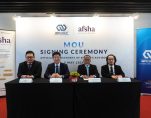
IBPO Group Berhad and Afsha Shariah Advisory Sdn. Bhd. officially formalise their partnership with the appointment of Afsha as IBPO’s Official Shariah Advisor, reinforcing IBPO’s commitment to delivering Shariah-compliant financing solutions. From the middle left; IBPO Group Berhad, Founder & Group Managing Director, Andy Lim and Head of Finance, Aaron Lee. From the middle right; Afsha Shariah Advisory Sdn. Bhd., Managing Director, M. Aminuddin Bin Ismail and Assistant Manager, Mohamad Faiq Bin Mohamad Sharin.
According to Bank Negara Malaysia’s (“BNM”) Annual Report 2025, Islamic financing continues to show strong growth, accounting for approximately 48% of Malaysia’s total financing or equivalent to RM1.219 trillion, reflecting increasing demand for Shariah-compliant offerings.
Through this partnership, IBPO aims to further strengthen its Shariah Governance framework and ensure that its financial products and programs are structured in accordance with recognised Shariah Principles. This reflects IBPO’s continued focus on transparency, responsibility and inclusivity across its financial services offerings while supporting BNM’s efforts to promote a progressive and inclusive Islamic Financial system.
The MOU signing ceremony was officiated by Andy Lim, Founder and Group Managing Director of IBPO Group Berhad and M. Aminuddin Bin Ismail, Managing Director of Afsha Shariah Advisory Sdn. Bhd.
In conjunction with this appointment IBPO is also introducing its latest financing program, i-Personal Financing. With Afsha’s appointment as official Shariah Advisor, IBPO’s Islamic financing programs including i-Personal Financing, i-Bridge Financing and Payday Financing will be supported by Afsha in ensuring consistent Shariah Compliance.
i-Personal Financing is designed to give customers easy access to cash based on their income levels. It offers responsible and affordable financing amounts along with flexible payment options of 3, 6, 9 or 12 months, aligned with monthly salary cycles for greater convenience and peace of mind.
All financing solutions are accessible via IBPO’s Online Customer Financial AI Portal which provides a 360-degree view of customers’ financial commitments including those with other financial institutions while offering AI-driven insights to help users better manage and optimise their finances. This initiative is part of IBPO’s ongoing efforts to leverage AI-driven capabilities to build an integrated financial ecosystem across the Group and its subsidiaries including IBPO Genesis Sdn. Bhd., IBPO Credit System Sdn. Bhd., IBPO Capital Ventures Sdn. Bhd. and IBPO Property Sdn. Bhd.
“We are proud to have Afsha as our official Shariah Advisor as we strengthen our position as Malaysia’s trusted choice for Islamic financing. This further reinforces our ongoing commitment to delivering inclusive, ethical and comprehensive Islamic Financial ecosystem that contributes positively to the economy and broader society. This allows us to deliver value to those seeking Shariah-aligned options, while remaining accessible to all, giving our customers greater confidence in what we provide,” said Andy Lim, Founder & Group Managing Director of IBPO Group Berhad.
“We are honoured to partner with IBPO Group Berhad as their official Shariah Advisor. At the core of actively disseminating Shariah principles across the financial sector, our mission is to enable our clients to achieve their optimum potential by ensuring that their policies and practices strictly comply with Shariah rules and regulations through the highest standards of professional competence. We look forward to guiding IBPO in structuring ethical and transparent Shariah-compliant financing solutions that meet the growing demand in Malaysia’s Islamic financial ecosystem,” said M. Aminuddin Bin Ismail, Managing Director of Afsha Shariah Advisory Sdn. Bhd. Hashtag: #IBPOGroupBerhad #IslamicFinancing #ShariahCompliance
The issuer is solely responsible for the content of this announcement.
IBPO Group Berhad
IBPO Group Berhad serves as the holding company for its subsidiaries, namely IBPO Genesis Sdn. Bhd., IBPO Credit System Sdn. Bhd., IBPO Capital Ventures Sdn. Bhd. and IBPO Property Sdn. Bhd., each operating across diverse sectors including financial services, property, investment and licensed financing. Together, IBPO delivers an integrated suite of end-to-end services tailored to meet the unique needs of its clients and support their financial aspirations. Incorporated in 2012, IBPO Group became a public limited company in 2020.
We deliver bespoke financial consultancy services with our cutting-edge Fusion Financial System, a financial technology (“fintech”) system powered by Artificial Intelligence (“AI”) that was developed through extensive in-house IT research and development and ANIKA, the first AI-powered virtual financial consultant chatbot in Malaysia.
Our financial programs include; i-Refinancing, i-Connect, i-Console Plus, Payday Financing, i-Bridge Financing, i-Personal Financing and Housing Value Investment. Discover personalised solutions tailored to your needs with mortgage refinancing, personal loans and financing, property management and more. To learn more, visit www.ibpo.com.my.
Afsha Shariah Advisory Sdn. Bhd. is a corporate Shariah Advisory firm established as a one-stop professional Shariah guidance center to meet the growing demands of the Islamic financial industry. With a vision to be a leader in providing Shariah Compliance Audit and Advisory services, Afsha contributes to the development of Islamic business principles and practices. Central to this goal is Afsha’s vision to actively disseminate Shariah principles across the financial landscape, empowering businesses to operate ethically. Drawing upon the expertise of a multi-disciplinary team of experienced Shariah Advisers, the firm offers a comprehensive suite of services, including Shariah compliance audits, Islamic product development, training and zakat management. Through its core values of integrity, commitment and efficiency, Afsha empowers clients to succeed in their ventures and improve their competitive edge while remaining strictly compliant with Shariah standards.
Address: B-15-1, Bangi Gateway, Persiaran Pekeliling, Seksyen 15, 43650 Bandar Baru Bangi, Selangor Darul Ehsan.
A war that threatens the flow of one-fifth of the world’s oil supply should be dominating market pricing. It isn’t. President Donald Trump has pushed the US deeper into confrontation with Iran, locking policy into a narrow and dangerous path. The Strait of Hormuz remains under constant threat, energy flows are disrupted, and, as a result, oil has surged above $110 a barrel at points in recent […]
Arabian Post Staff -Dubai Abu Dhabi’s EDGE Group and France-headquartered ICAPE Group have signed an agreement to explore joint development and local supply of critical electronic subsystems, strengthening the UAE’s drive to build more resilient defence and advanced-technology manufacturing chains. The memorandum of understanding was signed on 5 May at Make it in the Emirates 2026 in Abu Dhabi, where industrial localisation, supply-chain security and high-value manufacturing […]
SEMICON Southeast Asia 2026 opened in Kuala Lumpur on Tuesday, putting Malaysia at the centre of a regional push to capture a larger share of the global semiconductor value chain as chipmakers rethink production networks, sourcing risks and capacity plans.
The three-day industry gathering at the Malaysia International Trade and Exhibition Centre runs from 5 to 7 May and is expected to draw more than 20,000 policymakers, manufacturers, suppliers, investors, researchers and technology specialists. Held under the theme “Transform Tomorrow”, the event is being staged in strategic partnership with Malaysia’s Ministry of Investment, Trade and Industry and the Malaysian Investment Development Authority.
The launch ceremony was officiated by Datuk Seri Johari Abdul Ghani, Malaysia’s Minister of Investment, Trade and Industry, with senior SEMI executives, MIDA leadership and global semiconductor company representatives in attendance. The programme places manufacturing scale-up, advanced packaging, intelligent manufacturing, sustainability and workforce development at the centre of discussions, reflecting the industry’s shift from pure capacity expansion to more resilient and geographically diversified ecosystems.
Malaysia enters the event with a strong base in electrical and electronics manufacturing, particularly assembly, testing and packaging. The country has long been a critical node for chip back-end operations, with Penang and Kulim playing key roles in outsourced semiconductor assembly and test activity. The policy focus is now moving further up the value chain into chip design, advanced packaging, automation, materials, equipment support and higher-value manufacturing services.
Datuk Sikh Shamsul Ibrahim Sikh Abdul Majid, chief executive officer of MIDA, said Malaysia was no longer positioning itself as a passive beneficiary of industry shifts. “The semiconductor industry is at an inflection point, and Malaysia intends to be at the centre of what comes next,” he said, pointing to the MADANI Economy Framework and the New Industrial Master Plan 2030 as policy anchors for a broader industrial upgrade.
The E&E sector secured RM28.5 billion in approved investments in 2025, underlining continued investor interest despite a more fragmented global trade environment. Malaysia’s broader semiconductor strategy is focused on supply-chain integration, stronger domestic enterprise capability and talent development, as the country seeks to build a deeper industrial base around its existing production strengths.
Ajit Manocha, president and chief executive officer of SEMI, said closer coordination across design, manufacturing, materials and supply chains had become essential as artificial intelligence, high-performance computing and advanced electronics reshape demand. He said SEMICON Southeast Asia was designed not only as a technology showcase but as a platform for partnerships that can support long-term industry growth and resilience.
The timing of the Kuala Lumpur event is significant. Global semiconductor sales are on course to approach $1 trillion in 2026, driven largely by demand for AI accelerators, memory, advanced logic, data-centre infrastructure, automotive electronics and edge devices. Monthly industry sales crossed $99 billion in March 2026, while first-quarter sales were sharply higher than the previous quarter, showing the scale of the current upcycle.
Capital expenditure is also accelerating. Spending on 300mm fab equipment is projected to rise to about $133 billion in 2026 and $151 billion in 2027, as chipmakers expand capacity for advanced logic and memory while governments push for more localised semiconductor supply chains. Yet Southeast Asia remains under-represented in new front-end fabrication plans compared with China, Taiwan, South Korea, Japan and the United States, leaving room for Malaysia, Singapore, Vietnam, Thailand and the Philippines to compete more aggressively for future investment.
SEMICON Southeast Asia 2026 features the Executive Leadership Summit, the MIDA Strategic Semiconductor Forum and Seminar, the Sustainability and Energy Summit, TechZoomers Challenge and TalentCONNECT. These sessions are designed to connect policy, capital, manufacturing capability and workforce planning, rather than treating the exhibition as a conventional trade fair.
The emphasis on talent is especially important. Semiconductor expansion is being constrained not only by investment cycles and export controls but also by shortages of engineers, technicians, automation specialists and materials experts. Malaysia’s challenge is to match global investor confidence with a skilled workforce capable of supporting advanced packaging, precision manufacturing and design-linked activity.
Arabian Post Staff -Dubai Parkin has signed a long-term framework agreement with Arada to operate parking assets at Aljada in Sharjah, marking the Dubai-listed company’s first expansion into the emirate and a key step in its plan to grow beyond its home market. The agreement appoints Parkin as the sole parking operator at Arada’s flagship mixed-use Aljada development, where up to 9,900 spaces will be brought into […]
Panthalassa has secured $140 million in Series B financing to push artificial intelligence computing into open waters, backing a plan to run inference workloads on floating platforms powered by ocean waves rather than land-based grids. Peter Thiel led the round, joined by John Doerr, Marc Benioff’s TIME Ventures, Max Levchin’s SciFi Ventures, Susquehanna Sustainable Investments, Hanwha Asset Management’s venture fund, Fortescue Ventures, Future Positive, Super Micro Computer […]
Arabian Post Staff -Dubai Abu Dhabi’s family business ecosystem is set for a new layer of banking support after the Abu Dhabi Family Business Council signed a memorandum of understanding with Abu Dhabi Islamic Bank to provide tailored financial services, priority banking access and dedicated digital channels for member companies. The agreement establishes a structured framework for cooperation between ADFBC and ADIB, bringing together a council […]
Arabian Post Staff -Dubai London-listed Man Group is moving to establish an office in Abu Dhabi, adding fresh momentum to the UAE capital’s drive to become a larger global centre for hedge funds, alternative assets and private capital. The firm, one of the world’s biggest publicly traded hedge fund managers, has applied for a Category 3A licence at Abu Dhabi Global Market, the emirate’s international financial centre. […]
The official ceremony underscores Southeast Asia’s growing role in the global semiconductor value chain through collaboration, innovation and ecosystem-wide partnerships
KUALA LUMPUR, MALAYSIA – Media OutReach Newswire – 5 May 2026 – SEMICON Southeast Asia (SEMICON SEA) 2026 was officially launched today at the Malaysia International Trade and Exhibition Centre (MITEC), bringing together policymakers, manufacturers, suppliers, researchers, investors and emerging talent from across the global semiconductor ecosystem for three days of industry dialogue, technology showcases and business engagement.
The opening ceremony was officiated by YB Datuk Seri Johari Abdul Ghani, Minister of Investment, Trade and Industry (MITI), and attended by SEMI leadership, the Malaysian Investment Development Authority (MIDA) led by the Chief Executive Officer Datuk Sikh Shamsul Ibrahim Sikh Abdul Majid, and senior executives from global semiconductor companies.
Held under the theme ‘Transform Tomorrow’ in strategic partnership with MITI and MIDA, SEMICON Southeast Asia 2026 is expected to welcome more than 20,000 innovators, policymakers and technology experts. The three-day event focuses on key industry priorities including manufacturing scale-up, advanced packaging, intelligent manufacturing and workforce development, as companies respond to demand driven by artificial intelligence, high-performance computing and advanced electronics.
Datuk Sikh Shamsul Ibrahim Sikh Abdul Majid, Chief Executive Officer of MIDA, said Malaysia is approaching the next phase of semiconductor growth as an active builder rather than a beneficiary of global trends.
“The semiconductor industry is at an inflection point, and Malaysia intends to be at the centre of what comes next. Under the MADANI Economy Framework and the New Industrial Master Plan 2030, we are not simply maintaining our position in the global semiconductor supply chain, we are deliberately reshaping it. The NIMP 2030 sets a clear direction for the E&E sector to move beyond assembly and test into design, advanced packaging and innovation-driven manufacturing, and MIDA is here to make that transition real. The RM28.5 billion secured by the E&E sector in 2025 is proof that global confidence in Malaysia has not wavered. What we are now building is the ecosystem to match that confidence, through supply chain integration, local capability development and the kind of high-value partnerships that platforms like SEMICON Southeast Asia are uniquely placed to catalyse,” said Datuk Sikh Shamsul Ibrahim.
“SEMI’s role has always been to bring together the global semiconductor ecosystem, and that responsibility becomes even more important as the industry grows in scale and complexity. Today, innovation is no longer confined to a single segment. It requires closer alignment across design, manufacturing, materials and supply chains. SEMICON Southeast Asia provides a platform to bridge these different parts of the ecosystem, enabling stakeholders to engage in more meaningful collaboration and move from discussion to execution,” said Ajit Manocha, President and CEO of SEMI.
“As demand continues to be driven by artificial intelligence, high-performance computing and advanced electronics, the ability to coordinate across regions and capabilities will be critical. SEMICON Southeast Asia 2026 is not only about showcasing technology, but about strengthening the partnerships needed to support long-term industry growth and resilience.”
The event features key leadership programmes including the Executive Leadership Summit, MIDA Strategic Semiconductor Forum and Seminar, Sustainability and Energy Summit, TechZoomers Challenge and TalentCONNECT, reflecting SEMICON Southeast Asia’s role not only as an exhibition platform, but as a convening point for leadership, capability and execution across the region’s semiconductor ecosystem.
Marking over a decade of strategic collaboration, MIDA and SEMI today reinforce 12 years of a transformative partnership dedicated to elevating Malaysia’s standing in the global semiconductor value chain. This enduring alliance remains anchored on three core pillars designed to future-proof the nation’s industrial landscape:
Ecosystem Integration: Harmonising domestic and international supply chains to ensure seamless operational synergy.
Enterprise Capability: Empowering local businesses to scale their technical expertise and compete on a global stage.
Talent Advancement: Cultivating a high-skilled workforce as the essential bedrock of Malaysia’s long-term economic resilience and competitive edge.
SEMICON Southeast Asia 2026 runs from 5–7 May 2026 at MITEC, Kuala Lumpur, with participation from companies and organisations across Asia, the United States and Europe.
The issuer is solely responsible for the content of this announcement.
About MIDA
MIDA is the government’s principal investment promotion and development agency under the Ministry of Investment, Trade and Industry (MITI) to oversee and drive investments into the manufacturing and services sectors in Malaysia. Headquartered in Kuala Lumpur Sentral, MIDA has 12 regional and 20 overseas offices. MIDA partners with investors at every stage of their journey, supporting sustainable growth and long-term value creation for Malaysia. For more information, please visit www.mida.gov.my and follow MIDA on X, Instagram, Facebook, LinkedIn, TikTok and YouTube.
About SEMI
SEMI® is the global industry association connecting over 4,000-member companies and 1.5 million professionals worldwide across the semiconductor and electronics design and manufacturing supply chain. We accelerate member collaboration on solutions to top industry challenges through Advocacy, Workforce Development, Sustainability, Supply Chain Management and other programs. Our SEMICON® expositions and events, technology communities, standards and market intelligence help advance our members’ business growth and innovations in design, devices, equipment, materials, services and software, enabling smarter, faster, more secure electronics. Visit www.semi.org, contact a regional office, and connect with SEMI on LinkedIn and X to learn more.
War-linked disruption to shipping and tourism sharply slowed the UAE’s non-oil private sector in April, pushing business conditions to their weakest level since February 2021 and exposing the economy’s sensitivity to transport bottlenecks across the Gulf. The seasonally adjusted UAE Purchasing Managers’ Index fell to 52.1 in April from 52.9 in March, staying above the 50 mark that separates expansion from contraction but signalling a clear […]
Kenya is moving to keep more value from its minerals at home, signalling a sharper shift from raw exports towards processing, refining and manufacturing as global competition for critical minerals intensifies. President William Ruto set out the policy direction while opening the 2026 Kenya Mining Investment Conference and Expo in Nairobi, telling investors and government delegations that Kenya no longer wants to serve mainly as a supplier […]
Greenlogue/AP Ethiopia’s drive to turn abundant renewable electricity into wider power access and cheaper transport has gained fresh backing from Europe, with new UK and EU-linked investments targeting electric mobility, transmission upgrades and rural electrification. The latest financing adds momentum to Addis Ababa’s wider strategy of using hydropower-led electricity generation to cut fuel imports, expand industrial capacity and speed up the shift to electric vehicles. The UK […]
Wall Street’s latest rally is being driven less by relief over geopolitics than by a force investors can measure more easily: earnings. Morgan Stanley strategists say the strength of US corporate profits, led by technology companies, is giving equities enough support to look beyond the market risks created by the Iran conflict and the disruption around the Strait of Hormuz. The bank’s team, led by Michael Wilson, […]
Auto China 2026 closed in Beijing on Sunday after setting new benchmarks for scale, attendance and vehicle premieres, reinforcing China’s position as the central battleground for electric vehicles, intelligent driving and next-generation automotive supply chains.
The 19th Beijing International Automotive Exhibition, held from April 24 to May 3, brought together nearly 1,000 companies from 26 countries and regions across two venues for the first time. Its 380,000 square metres of exhibition space, spread across 17 halls at the China International Exhibition Center in Shunyi and the Capital International Convention and Exhibition Center, made it the largest edition in the event’s history.
Organisers recorded 1.28 million visitors, including about 65,000 overseas attendees, underlining the show’s growing appeal beyond China’s domestic market. A total of 1,451 vehicles were displayed, including 181 world premieres and 71 concept cars, placing the event among the most active global platforms for new model launches.
The numbers told only part of the story. Auto China 2026 was dominated by a clear shift from conventional vehicle launches to software-defined mobility, artificial intelligence, battery breakthroughs and advanced driver assistance. Carmakers used the show not merely to present new models, but to demonstrate how quickly vehicles are becoming technology platforms.
China’s home-grown manufacturers were at the centre of the exhibition’s momentum. BYD, XPeng, Nio, Geely, Chery, Dongfeng and Huawei-linked brands showcased vehicles and systems aimed at defending their lead in the world’s largest car market while accelerating overseas expansion. Their focus was sharply aligned with consumer demand for longer range, faster charging, smarter cabins and more automated driving functions.
BYD highlighted fast-charging and low-temperature battery performance, including technology designed to charge under conditions as cold as minus 30 degrees Celsius. CATL drew attention with new battery systems promising ultra-fast charging and longer driving ranges, including a version of its Shenxing battery that can charge from 10 per cent to 98 per cent in about six and a half minutes. These advances added further pressure on global rivals still working to close gaps in battery cost, charging speed and supply-chain depth.
Huawei’s presence illustrated the growing power of technology suppliers inside the automotive ecosystem. Its intelligent driving systems, HarmonyOS cockpit technology and vehicle partnerships featured prominently across several brands. The company’s Qiankun advanced driving system was presented as part of a broader push into AI-assisted mobility, with claims of stronger collision avoidance and more natural in-car interaction.
XPeng used the event to promote intelligent driving features that can detect when a driver is unable to control the vehicle, pull over automatically and alert emergency services. Nio displayed its three brands, Nio, Onvo and Firefly, together at the same booth, signalling a wider product strategy covering premium, family and mass-market electric segments.
Foreign automakers also used Beijing to reset their China strategies. Volkswagen introduced China-focused electric models and AI-driven cockpit features developed with local partners, including XPeng and Horizon Robotics. BMW, Mercedes-Benz and Toyota presented products tailored to a market where customers increasingly expect high-end digital functions even in mid-priced vehicles.
The competitive pressure remains intense. China’s passenger car sales fell sharply in the first quarter from a year earlier, reflecting weaker subsidy support, cautious consumers and price competition across the sector. Exports, however, continued to expand strongly as China-made vehicles gained ground in Europe, Southeast Asia, Latin America and other growth markets.
That divergence shaped much of the discussion around the exhibition. Domestic demand is tougher, margins are thinner and consolidation risks are rising, yet China’s automakers and suppliers are moving faster on product cycles than many overseas competitors. More than 80 new models were launched in China in March alone, a pace that underscores the speed of iteration in the market.
Auto China 2026 also showed that global expansion is entering a new phase. Chinese manufacturers are no longer relying only on exports. Several are building or planning overseas production bases to reduce tariff exposure, ease regulatory concerns and strengthen local market access. Hungary, Turkey, Southeast Asia and Latin America have emerged as important destinations for investment.



 https://www.dpworld.com
 https://www.linkedin.com/company/dp-world
 https://twitter.com/DP_World



 contactus@ibpo.com.my