News related to
Investment

SEOUL, SOUTH KOREA – Media OutReach Newswire – 6 June 2026 – Making its first-ever appearance at the Seoul International Travel Fair (SITF) 2026, one of South Korea’s largest international travel fairs, held from June 4–7, Sun Group has delivered a meaningful message: “Visit Vietnam: Beloved Destinations – Extraordinary Experiences.” The group has showcased iconic destinations including Da Nang, Phu Quoc, Sa Pa, and Ha Long, while telling the story of a Vietnam that is constantly innovating to create unique experiences for global travelers.

The Sun Group booth attracts a large number of visitors with its interactive activities, destination ecosystem, and promotions.

A special highlight is Sun Group’s unveiling of its new development vision for Phu Quoc in the lead‑up to APEC 2027, presented directly to Korean partners and visitors.

From the first day of the fair, Sun Group’s booth has welcomed a steady stream of visitors. Throughout the four-day event, the booth has organized B2B and B2C networking activities, customer consultations, and introductions to tourism, resort, and aviation products. Interactive programs, including mini-games, souvenir giveaways, and tailored offers for the Korean market, have kept the atmosphere lively for hours, with a continuous flow of engaged visitors.

During SITF (June 4–7), travelers have the opportunity to receive a 20% discount on the base fare when booking Sun PhuQuoc Airways tickets via the airline’s website or app. The offer applies to the Korean market for one‑way or round‑trip journeys from Korea to Phu Quoc. Limited to 200 Economy Class discount codes, it is valid for flights from June 15 to October 24, 2026 (excluding peak periods as defined by the airline).

Visitors also have the chance to win attractive prizes through booth activities, including free round‑trip air tickets on the Seoul–Phu Quoc route (ICN–PQC) and resort vouchers at hotels within Sun Group’s ecosystem.

By combining destination promotion with airline incentives, Sun Group aims to further encourage South Korean tourists to choose Vietnam for their upcoming holidays, especially Phu Quoc, which is entering a new era of large‑scale investments in projects, products, and experiences all aimed at APEC 2027.

Hashtag: #SunGroup

The issuer is solely responsible for the content of this announcement.

About Sun Group

Vietnam’s leading private economic group, Sun Group operates an integrated ecosystem spanning tourism, entertainment, hospitality, real estate, infrastructure, and aviation. Guided by the mission “Enhancing the beauty of the lands,” the Group shapes iconic destinations nationwide through its Sun World entertainment brand. In the aviation sector, Sun Group develops a hub-and-spoke model anchored by Phu Quoc, driven by strategic airport investments and Sun PhuQuoc Airways.

Abu Dhabi will add a Sphere entertainment venue to Yas Island by the end of 2029, placing a $1.7 billion immersive arena beside some of the emirate’s biggest visitor attractions and intensifying its drive to become a global leisure and live-events hub. The project, announced by the Department of Culture and Tourism – Abu Dhabi and Sphere Entertainment Co., will be the first Sphere venue outside the […]

HONG KONG SAR – Media OutReach Newswire – 5 June 2026 – A large high-level business delegation led by John Lee, Chief Executive of the Hong Kong Special Administrative Region (HKSAR), today (June 5) wrapped up its five-day visit to Kazakhstan and Uzbekistan respectively, achieving fruitful results of strengthening bilateral relations and deepening ties with Central Asia.

The delegation of over 70 business and institutional leaders from Hong Kong and the Chinese Mainland is the largest and most diverse overseas mission led by the current term of the HKSAR Government so far.

Hong Kong SAR's Chief Executive, John Lee (fifth right) and the Advisor to the President of Uzbekistan on Strategic Development, Sardor Umurzakov (fourth right) witness the exchange of memoranda of understanding and co-operation agreements between government departments, enterprises and organisations from Hong Kong and Uzbekistan.
Hong Kong SAR’s Chief Executive, John Lee (fifth right) and the Advisor to the President of Uzbekistan on Strategic Development, Sardor Umurzakov (fourth right) witness the exchange of memoranda of understanding and co-operation agreements between government departments, enterprises and organisations from Hong Kong and Uzbekistan.

Speaking to the media in Uzbekistan yesterday (June 4), Mr Lee set out the three main objectives of the visit: further explore emerging markets and lay the foundation for long-term economic and trade development; strengthen government-to-government (G2G) relationships and promote closer bilateral co-operation; and build a “hub-to-hub” model of co-operation.

He said the visit had been successful, yielding achievements in eight areas, including:

  • Establishing high-level contacts and ties between the HKSAR Government and the Governments of Kazakhstan and Uzbekistan, and reaching consensus on co-operation in multiple areas;
  • A total of 96 co-operation agreements and memoranda of understanding (MoUs) were reached during the visit (61 with Kazakhstan, 35 with Uzbekistan), involving specific amounts exceeding US$1.65 billion in total;
  • The governments agreed to commence bilateral discussions on agreements in various areas;
  • Deepening project matching and research collaboration between Hong Kong and Central Asian region in areas including finance, innovation and technology (I&T), and aviation;
  • Demonstrating Hong Kong’s effective role as a platform for going global and achieving substantial results, with Hong Kong and Mainland enterprises joining forces in tapping new markets and bringing synergistic advantages into full play;
  • Facilitating more convenient people-to-people exchanges by promoting direct flights, aviation and transport co-operation, and extensions to the mutual visa-free period;
  • Promoting exchanges in education, talent and culture to further deepen people-to-people bonds; and
  • Advancing a hub-to-hub co-operation model to open up broader room for co-operation between Hong Kong and the Central Asian region.

image-1.jpeg

While in Tashkent (June 3-5), Mr Lee met with local leaders, government officials and business representatives to deepen co-operation between Hong Kong and Uzbekistan in areas including trade, investment, finance, I&T, and people-to-people exchanges.

Mr Lee held meetings with the President of Uzbekistan, Shavkat Miromonovich Mirziyoyev, his Advisor on Strategic Development, Sardor Umurzakov, the Prime Minister, Abdulla Nigmatovich Aripov, as well as the Deputy Prime Minister, Jamshid Khodjayev, to exchange views on furthering mutual co-operation.

Mr Lee highlighted that under the “one country, two systems” principle, Hong Kong enjoys both the China advantage and the global advantage. He said that Hong Kong would continue to play its roles as a “super connector” and a “super value-adder” to further deepen co-operation and exchanges with Uzbekistan on various fronts in line with Uzbekistan’s goal of achieving high-quality development.

Hong Kong SAR's Chief Executive, John Lee (left) meets with the President of Uzbekistan, Shavkat Miromonovich Mirziyoyev.
Hong Kong SAR’s Chief Executive, John Lee (left) meets with the President of Uzbekistan, Shavkat Miromonovich Mirziyoyev.

Earlier (June 3), Mr Lee met with the Minister of Foreign Affairs of Uzbekistan, Bakhtiyor Saidov, after which they jointly witnessed an exchange of notes between the two places on a mutual visa-free arrangement, which would allow a visa-free period of 30 days for visitors from both sides.

“Moreover, we are glad to have initialed the Air Services Agreement with Uzbekistan, and look forward to launching direct passenger flights between the two places soon,” Mr Lee said, during a high-level business dinner (June 4). The Chief Executive pointed out that Hong Kong and Uzbekistan are important trade and investment gateways to their respective regions – the Asia-Pacific and Central Asia.

“It helps that we are all believers in the Belt and Road (B&R) Initiative, a modern expression of the ancient Silk Road spirit,” Mr Lee said. “Today, China is Uzbekistan’s largest trading partner, and the two countries work closely on major infrastructure and connectivity projects that are revitalising the Silk Road. Hong Kong is a pivotal player in the B&R Initiative, thanks to our world-class professional and financial services expertise.”

The delegation also toured the IT Park Uzbekistan and the Center for Islamic Civilization before concluding its visit in Tashkent.

Hashtag: #HongKong #BrandHongKong #CentralAsia #Kazakhstan #Uzbekistan


The issuer is solely responsible for the content of this announcement.

New Delhi scrapped capital gains tax on foreign institutional investment in government securities, using an ordinance to sharpen the appeal of its sovereign debt market and draw overseas capital as the rupee faces pressure from higher energy costs and equity outflows.

The exemption, effective from 1 April 2026, covers interest income and capital gains arising from the sale, exchange or transfer of specified government securities by eligible foreign institutional investors and the Bank for International Settlements. President Droupadi Murmu signed the Income-tax Ordinance, 2026 while Parliament was not in session, amending the new direct tax framework that took effect at the start of the financial year.

Foreign investors had been subject to long-term capital gains tax of 12.5% on listed bonds held for more than 12 months and withholding tax of 20% on interest from government securities. By removing the tax burden for eligible investors, the Centre is seeking to improve post-tax returns and make rupee debt more competitive at a time when global funds are weighing currency risk, oil-market volatility and geopolitical uncertainty.

The policy shift comes as the rupee has weakened by more than 5% this year, pressured by crude prices and sustained foreign selling in equities. The currency recovered after the announcement of measures aimed at attracting foreign currency inflows, but traders continued to watch oil prices, reserve levels and the central bank’s market operations for signs of durable support.

Reserve Bank of India kept the policy repo rate unchanged at 5.25% and announced steps to encourage dollar inflows, including support for foreign-currency borrowing by public sector entities, incentives for non-resident deposits and a longer window for exporters to repatriate proceeds. The central bank also revised its growth forecast to 6.6% and raised its inflation estimate to 5.1%, underlining the pressure created by imported energy costs.

The tax relief is aimed at deepening overseas participation in government securities after the inclusion of rupee bonds in major global debt benchmarks. Fully accessible route bonds have already been added to J. P. Morgan’s emerging market debt index and Bloomberg’s emerging market local currency index, widening the pool of passive and active investors that can allocate funds to sovereign debt. A separate decision on inclusion in broader global bond benchmarks is being watched by investors because it could influence medium-term flows.

Debt inflows have remained more resilient than equity flows, but the scale has not been sufficient to offset pressure from the current account and stock-market exits. Foreign investors have pulled large sums from equities this year, while government debt has continued to attract selective buying. Higher hedging costs and expectations of currency weakness have limited enthusiasm among some global investors despite the comparatively attractive yield on rupee bonds.

Market participants expect the tax exemption to help long-only funds, pension funds, sovereign investors and reserve managers that focus on net returns after tax. The measure could also support liquidity in benchmark government securities and reduce borrowing costs at the margin if foreign demand rises. For the Centre, a broader investor base would help absorb a large borrowing programme without placing excessive pressure on domestic banks and insurance companies.

The effect may still depend on factors beyond tax policy. Currency stability, inflation expectations, oil prices, fiscal credibility and the central bank’s approach to liquidity will shape overseas appetite. Investors that hedge currency exposure must still account for hedging costs, while those that remain unhedged face the risk of rupee depreciation wiping out yield gains.

Arabian Post Staff -Dubai First Abu Dhabi Bank has entered a strategic partnership with Water. org and WaterEquity, investing in the WaterEquity Everspring Fund to expand access to safe water and sanitation across emerging markets through market-based financing. The Abu Dhabi lender said the agreement creates a platform for continuing collaboration with the global non-profit Water. org and its affiliated impact investment manager WaterEquity. The fund channels […]

Japan is preparing to replace as many as 14 ageing nuclear reactors by the 2050s, marking one of its clearest moves yet towards restoring atomic power as a central pillar of national energy security after more than a decade of post-Fukushima restraint.

The Ministry of Economy, Trade and Industry has set out a policy proposal calling for the rebuilding of between two and five reactors by the 2040s and up to 14 by the 2050s. The plan would add about 16 gigawatts of nuclear capacity, helping the country meet rising electricity demand from artificial intelligence, data centres, advanced manufacturing and wider electrification.

The proposal reflects a major shift in Japan’s energy strategy. After the Fukushima Daiichi disaster in March 2011, Japan shut all 54 operating reactors, leaving the world’s third-largest economy more dependent on imported liquefied natural gas, coal and oil. Only 15 of the 33 remaining operable reactors have returned to service, while many units face retirement pressure as they approach or exceed their permitted 60-year operating life.

Tokyo’s latest energy plan targets nuclear power at around 20 per cent of electricity generation by fiscal 2040, while renewables are expected to provide 40 to 50 per cent. Thermal power, which still accounts for a large share of supply, is expected to decline but remain important for grid stability and emergency backup. The policy removes earlier language about reducing reliance on nuclear power, replacing it with a call to maximise the use of both renewables and atomic energy.

The renewed push is driven by a combination of economic and geopolitical pressures. Japan imports most of its energy, leaving households and industry exposed to volatile fuel prices, shipping risks and currency swings. The war in Ukraine, instability in the Middle East and tighter global gas markets have strengthened the case within government for expanding domestic low-carbon baseload power.

Electricity demand, which had been broadly flat for years, is also expected to turn higher. The spread of AI computing, semiconductor plants, battery factories and digital infrastructure has increased concern that inadequate power supply could weaken Japan’s ability to attract investment. Officials view nuclear energy as a way to provide stable, large-scale electricity without increasing carbon emissions.

The plan is likely to benefit major utilities including Tokyo Electric Power, Kansai Electric Power, Kyushu Electric Power and Chubu Electric Power, although the sector still faces high regulatory, financial and social hurdles. Reactor replacement requires local consent, safety approval, heavy capital spending and long construction timelines. Japan has not built a new reactor since before Fukushima, and public trust remains fragile.

Safety concerns remain the central political obstacle. The Fukushima disaster, triggered by the March 2011 earthquake and tsunami, forced mass evacuations and left deep scepticism about official oversight of the nuclear industry. Questions over seismic risk, evacuation planning, spent fuel storage and operator transparency continue to shape public debate, particularly in communities near existing plants.

Controversies have added to the challenge. Chubu Electric has faced scrutiny over falsified seismic risk assessment data at the Hamaoka nuclear plant, a facility long viewed as sensitive because of its location in an earthquake-prone area. Incidents of that kind reinforce concerns among critics who argue that Japan should prioritise renewables, storage, grid upgrades and efficiency rather than committing to another generation of nuclear infrastructure.

Supporters counter that renewables alone will not meet Japan’s industrial needs quickly enough, given land constraints, permitting delays and the intermittency of solar and wind power. Offshore wind has long-term potential, while next-generation solar technologies such as perovskite cells are being promoted, but large-scale deployment will take time. Nuclear advocates argue that replacing old reactors with advanced designs could improve safety and reliability while supporting climate targets.

The government’s approach is to rebuild reactors at existing or decommissioned nuclear sites rather than open entirely new locations, a strategy designed to reduce political resistance and use established grid infrastructure. Next-generation reactors are expected to incorporate stronger passive safety systems and improved resilience against natural disasters, although costs and construction schedules remain uncertain.

Washington has moved to close a sensitive gap in its China technology controls after Trump administration officials concluded that overseas units of Chinese companies may have been able to buy Nvidia’s most advanced artificial intelligence chips without the export licences required for direct shipments to China. The Commerce Department’s Bureau of Industry and Security issued guidance on 31 May clarifying that licence requirements for advanced computing items […]

Advertisements

Asia and MENA’s video games market is on course to expand from $88.9 billion in 2025 to $103.6 billion by 2030, a 16.5% rise that underlines the region’s growing weight in the global games industry as publishers, platforms and investors look beyond slower mature markets for new growth. The latest market model points to revenue growth of 3.4% in 2026 to $91.8 billion, with the five-year compound […]

Saudi Arabia has moved to reassure global energy markets that it will remain a dependable supplier as geopolitical shocks, shipping risks and divergent demand forecasts intensify pressure on producers and consumers. Minister of Energy Prince Abdulaziz bin Salman told the 29th St. Petersburg International Economic Forum that stability in the energy sector had become an urgent global requirement. “We are a resilient energy supplier; we have been […]

Capital inflows into the UAE are holding steady as investors adopt tougher due diligence standards rather than retreating from the market, with relative stability, low taxation and business-friendly regulation reinforcing the country’s position as a regional safe haven. Archers Valuation & Advisory said the market was not showing signs of capital withdrawal despite heightened regional uncertainty, but investors and lenders were becoming more selective in the way […]

SHANGHAI, CHINA – Media OutReach Newswire – 5 June 2026 – SKYWORTH Solar has reinforced its commitment to Thailand’s growing clean energy sector following the opening of its Bangkok office and the signing of a 100MW commercial and industrial (C&I) solar project memorandum of understanding with local partner CapSolar.

Source: SKYWORTH

The announcement forms part of SKYWORTH Solar’s newly unveiled global growth strategy, revealed at the 2026 SNEC Exhibition and Global Customer Summit in Shanghai, where the company introduced its new positioning as a “Global Smart Energy Ecosystem Leader” and outlined plans to accelerate expansion across key international markets.

Thailand has emerged as one of SKYWORTH Solar’s strategic markets in Southeast Asia, driven by rising energy demand, increasing electricity costs for businesses, and growing momentum behind renewable energy adoption.

The opening of the company’s Thailand office at Empire Tower in Bangkok strengthens SKYWORTH Solar’s local presence. It enables the company to provide customers and partners with enhanced support across consultation, project execution, after-sales service, supply chain coordination and project delivery.

“Thailand represents a significant growth opportunity for SKYWORTH Solar as businesses increasingly seek reliable and cost-effective clean energy solutions,” said Wanfei Qu, Chief Investment Officer of SKYWORTH Group, CEO and Director of SKYWORTH Solar. “Our strategy is built on the principle of ‘Global Vision, Local Execution’, combining global expertise with strong local partnerships to support Thailand’s energy transition and long-term sustainability goals.”

As part of its expansion plans, SKYWORTH Solar signed a 100MW C&I solar project MOU with CapSolar, supporting the growing demand for rooftop solar solutions among commercial and industrial businesses.

The company is also strengthening its local ecosystem through investments in project development, financing partnerships and service capabilities. This includes a strategic banking collaboration with ICBC Thai and access to a US$500 million investment fund to support solar project development and deployment in Thailand and other international markets.

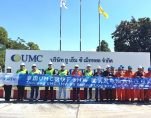
One example of SKYWORTH Solar’s growing footprint in Thailand is its 3MW rooftop solar project at UMC Steel Plant in Chonburi Province. The project is expected to generate approximately 4.4 million kWh of clean electricity in its first year, helping reduce energy costs while supporting the facility’s sustainability objectives.

The developments in Thailand were highlighted as part of SKYWORTH Solar’s broader global strategy unveiled at SNEC 2026. The company announced plans to expand its solar, energy storage, and integrated smart energy solutions across Europe, Southeast Asia, the Middle East, and Africa, in response to increasing global demand for renewable energy technologies.

As governments and businesses accelerate their decarbonisation efforts, SKYWORTH Solar aims to support customers through a combination of advanced technology, flexible business models and localised service capabilities.

For more information about SKYWORTH Solar and its clean energy solutions, please visit https://www.skyworth-pv.com.
Hashtag: #SKYWORTH

The issuer is solely responsible for the content of this announcement.

About SKYWORTH

SKYWORTH Solar, the cutting-edge PV brand under SKYWORTH Group, is a global leader in providing comprehensive one-stop solar solutions. Comprehensive end-to-end services are provided, encompassing consulting, design, and product O&M, all supported by a portfolio of self-developed solutions.

As a leading global renewable energy developer, service provider and energy solutions provider, SKYWORTH is actively shaping the future of energy. With a strong presence in EPC services and one-stop product solutions, SKYWORTH delivers high-quality, reliable, and innovative energy solutions. SKYWORTH ‘s commitment to originality and excellence has earned widespread recognition in international markets such as Germany, Italy, the UK, Brazil, and Senegal.

First Abu Dhabi Bank has entered a strategic partnership with Water. org and WaterEquity, placing capital behind an impact fund aimed at expanding access to safe water and sanitation across emerging markets. The Abu Dhabi lender has invested in the WaterEquity Everspring Fund, an open-ended vehicle designed to channel private capital into financial institutions and enterprises that serve low-income households and small businesses needing affordable water and […]

Thailand’s richest man Sarath Ratanavadi is preparing a 140 billion baht expansion through Gulf Development Pcl over five years, placing data centres, digital infrastructure and power supply at the centre of one of Southeast Asia’s most ambitious corporate bets on artificial intelligence demand.

The plan, worth about $4.3 billion, reflects a sharp turn by Gulf from its traditional base as a power producer into a broader infrastructure group linking electricity generation, telecommunications, cloud services and industrial logistics. The investment push comes as Thailand seeks to position itself as a regional data hub, helped by rising demand for cloud computing, artificial intelligence workloads and data-localisation capacity across Southeast Asia.

Gulf’s strategy is built around a simple commercial premise: AI facilities need vast, reliable and increasingly low-carbon electricity. Data centres are among the most power-intensive assets in the digital economy, and operators are under pressure to secure stable energy supply while meeting sustainability commitments from global technology clients. Gulf’s existing position in gas-fired power, renewable energy and utilities gives it an advantage that pure technology infrastructure firms may struggle to match.

Sarath, Gulf’s chief executive and controlling figure, has spent years reshaping the group from a conventional energy developer into a conglomerate with exposure to telecoms, satellites, digital platforms and cloud infrastructure. The merger of Gulf Energy Development and Intouch Holdings created a larger listed platform linked to Advanced Info Service, Thailand’s biggest mobile operator, and Thaicom, the satellite company. That structure gives Gulf access to telecom traffic, enterprise clients and digital distribution channels that can support its data-centre ambitions.

The investment programme is expected to support new data-centre capacity, related infrastructure and power projects needed to serve hyperscale and enterprise customers. Gulf has already moved into the sector through partnerships involving global technology names and regional operators, while its digital arm has explored cloud and AI services designed for corporate and government clients. The company’s first major data-centre project has become a reference point for its expansion into facilities that can host high-density computing workloads.

Thailand’s broader investment environment has also shifted in Gulf’s favour. Authorities have approved large-scale data infrastructure projects from global technology players, including server and data-processing investments across Bangkok, Samut Prakan and Chachoengsao. Google, Amazon Web Services, Microsoft and ByteDance-linked operations have all announced or pursued major commitments in the country, intensifying competition but also validating Thailand’s role in the regional digital economy.

For Gulf, the opportunity lies not only in renting data-centre capacity but also in selling bundled infrastructure: power, connectivity, cloud access and long-term operational reliability. That model could create recurring income and reduce dependence on regulated returns from power generation. It may also help Gulf deepen its relationship with large technology clients seeking local partners that understand land, energy approvals, grid constraints and domestic regulatory requirements.

The group’s financial position gives it room to move, though the scale of the programme will be closely watched by investors. Gulf reported strong first-quarter earnings for 2026, helped by its energy operations and profit contribution from Advanced Info Service. Revenue growth and core profit gains have strengthened confidence in its ability to finance new projects, but data centres require heavy upfront spending and returns can depend on utilisation rates, long-term contracts and energy costs.

The timing is also sensitive. Across Asia, governments are competing for data-centre investment while confronting pressure on power grids, water use and land availability. Singapore’s cautious approach to new data-centre capacity has encouraged developers to look at Malaysia, Thailand, Indonesia and Vietnam, but each market faces its own constraints. Thailand has industrial land, policy incentives and improving connectivity, yet grid readiness and clean-energy availability remain decisive issues for hyperscale clients.

Gulf’s renewable energy targets are likely to form part of its sales pitch. The company has set out plans to raise the share of renewables in its generation portfolio and reduce carbon intensity, while continuing to rely on gas as a stable baseload fuel. Its long-term LNG supply arrangements also point to a strategy that balances energy security with transition commitments, even as customers demand cleaner electricity for digital operations.

Sarath’s expansion plan underscores how AI is redrawing corporate strategy beyond Silicon Valley. Energy groups, telecom operators and infrastructure funds are increasingly competing for the physical assets behind the digital boom. Gulf’s bet is that Thailand’s AI economy will be shaped as much by power plants, fibre networks and industrial sites as by software models and cloud applications.

Greenlogue/AP   Dubai Electricity and Water Authority has raised clean energy’s share of its total production capacity to 21.5%, strengthening the emirate’s shift towards a lower-carbon electricity system as demand for power continues to rise across residential, commercial and industrial sectors. Saeed Mohammed Al Tayer, Managing Director and Chief Executive Officer of DEWA, said the increase reflects Dubai’s long-term strategy to align infrastructure growth with environmental sustainability, […]

Goldman Sachs has joined Apex Group and Archax in launching a blockchain-native real estate fund, marking a fresh institutional test of whether tokenised structures can bring greater efficiency, transparency and transferability to a traditionally illiquid asset class without moving outside regulated fund frameworks. The Luxembourg-domiciled fund has been developed with LRC Group and Ownera, combining established alternative investment fund structures with on-chain issuance of fund units. The […]

Whale. io has launched Whale Printer, a staking feature that allows eligible holders of its native $WHALE token to lock tokens for fixed periods in return for predetermined rewards, adding a yield mechanism to the crypto casino and sportsbook platform’s token economy. The new system offers three lock-up options. Users can stake $WHALE for 90 days with a 1.2x multiplier and 107.8% annual percentage yield, 180 days […]

By Dr. Gyan Pathak The preliminary version of the OECD Outlook released on June 3, 2026 has projected the real GDP of India to grow by 6.3% during the FY 2026-27, which is a sharp decline from the robust growth rate of 7.8 per cent year-on-year in the quarter ending in December 2025 (Q3 FY2025–26), […]

The article India Stares At Difficult Days Ahead With Sharp Decline In Growth Rate In 2026-27 appeared first on Latest India news, analysis and reports on Newspack by India Press Agency).

Elon Musk will probably get the $86 billion he wants from the SpaceX IPO. The harder question is whether investors will still be as enthusiastic about the company a year from now. Seeking a valuation of $1.78 trillion, SpaceX is attempting something unprecedented. If successful, the offering will become the largest IPO in history and instantly rank among the biggest corporate fundraising events ever seen. Many investors […]

Romanian President Nicușor Dan is preparing to nominate Eugen Tomac as prime minister, seeking to break a month-long political deadlock and restore fiscal direction in one of the European Union’s most strained economies. Tomac, a member of the European Parliament and leader of the People’s Movement Party, has emerged as the presidency’s preferred option after talks among mainstream parties failed to produce a stable governing formula. His […]

Blockchain users searching for simpler wallet identities have pushed. bit into the wider debate over decentralised naming, digital ownership and cross-chain authentication, as Web3 developers look for alternatives to long alphanumeric addresses that remain difficult for mainstream users to manage.. bit is commonly called a “domain”, but its developers describe it more precisely as a decentralised identity and account system rather than a conventional internet domain. Unlike […]

Gas engine manufacturer Innio has raised $2.43 billion in a US initial public offering, pricing an upsized share sale at the top of its marketed range as investors continue to chase companies tied to the electricity demands of artificial intelligence. The Munich-based distributed energy group priced 90 million shares at $27 each, above the 75 million shares originally planned and at the upper end of the $24 […]

Bitcoin fell four percent on Wednesday to $64,721.39, its weakest level since 28 February, as pressure from fund withdrawals, leveraged liquidations and shifting macroeconomic signals deepened a broad retreat across digital assets. The slide extended a difficult stretch for the world’s largest cryptocurrency, which has moved sharply lower after failing to hold above key support levels near $70,000. Selling accelerated as investors reduced exposure to risk assets, […]

HONG KONG SAR – Media OutReach Newswire – 4 June 2026 – AECOM, the trusted global infrastructure leader, and the Urban Land Institute (ULI), today announced the launch of the Asia Pacific Infrastructure Innovation Index 2026, a new thought leadership report examining how the infrastructure industry across the region is prioritizing innovation in response to stakeholders’ needs, increasing system complexity, operational pressures and evolving delivery challenges.

AECOM and Urban Land Institute launch inaugural Asia Pacific Infrastructure Innovation Index, highlighting region's evolving infrastructure innovation priorities.
AECOM and Urban Land Institute launch inaugural Asia Pacific Infrastructure Innovation Index, highlighting region’s evolving infrastructure innovation priorities.

Developed in collaboration between AECOM and ULI, the report brings together perspectives from stakeholders across infrastructure, government, utilities, investment, planning and development sectors. It draws on a survey of more than 100 senior infrastructure professionals in Asia Pacific, alongside in-depth interviews with industry leaders. As the first edition of the Index, it establishes a baseline for understanding how infrastructure innovation is currently being prioritized and delivered across the region.

“This report highlights how organizations are moving beyond ideas and applying innovation in practical ways to improve delivery, resilience and system performance,” said Ian Chung, chief executive of AECOM’s Asia region. “Infrastructure leaders across Asia Pacific are responding to growing complexity by strengthening digital capabilities, improving coordination across interconnected systems and focusing on long-term operational performance.”

“Our collaboration with AECOM reflects a growing recognition that infrastructure and real estate are increasingly interdependent,” said Alan Beebe, CEO Asia Pacific, ULI. “As cities in Asia Pacific evolve, infrastructure is no longer just a technical consideration, but plays a critical role in shaping how places function, grow and perform. Understanding how innovation is being applied in this context is essential for those involved in the built environment.”

Among the top ten takeaways highlighted in the report, three key themes emerged consistently across both the survey findings and interview insights: the role of AI in infrastructure systems, the integration and growing demands on energy systems, and the need to design and operate infrastructure for climate resilience. Together, these themes highlight a broader shift toward enhancing how infrastructure systems are developed and perform under increasingly complex, real-world conditions.

Read the report here: Asia Pacific Infrastructure Innovation Index | AECOM Insights

Hashtag: #AECOM #AsiaPacificInfrastructureInnovationIndex

The issuer is solely responsible for the content of this announcement.

About AECOM

AECOM is the global infrastructure leader, committed to delivering a better world. As a trusted professional services firm powered by deep technical abilities, we solve our clients’ complex challenges in water, environment, energy, transportation and buildings. Our teams partner with public- and private-sector clients to create innovative, sustainable and resilient solutions throughout the project lifecycle — from advisory, planning, design and engineering to program and construction management. AECOM is a Fortune 500 firm that had revenue of $16.1 billion in fiscal year 2025. Learn more at aecom.com.

About the Urban Land Institute

The Urban Land Institute (ULI) is a non-profit education and research institute supported by its members. Its mission is to shape the future of the built environment for transformative impact in communities worldwide. Established in 1936, the Institute has more than 48,000 members worldwide and over 3,000 members in the Asia Pacific region representing all aspects of land use and development disciplines. For more information on ULI Asia Pacific, please visit , or follow us on , , , , and .

Strategic alliance to drive headline concerts, sports events and premium travel experiences for international audiences, accelerating Macau’s push to become a global “City of Performing Arts.”

MACAU SAR – Media OutReach Newswire – 3 June 2026 – Galaxy Macau, the world-class luxury integrated resort, has entered into a landmark three-year strategic partnership with Trip.com Group, the global leading one-stop travel services platform, spanning 2026 to 2029. Anchored in the fast-growing convergence of live entertainment, sports and premium travel, the alliance signals an ambitious push to reshape Asia’s high-value tourism and events landscape.

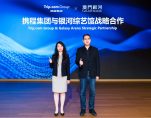
Galaxy Macau and Trip.com Group formulate a three-year strategic partnership that focuses on scaling live events and unlocking value through integrated membership ecosystems. Pictured at the Galaxy Auditorium (trom right) Mr Jeffrey Jiang, Executive Vice President of Entertainment Services of Galaxy Entertainment Group, and Ms Echo He, Vice President of Trip.com Group, marking the collaboration.

At the core of the collaboration lies a shared commitment to scale world-class live experiences, leveraging Trip.com Group’s expansive global membership ecosystem alongside Galaxy Macau’s proven expertise in venue operations and large-scale event execution. This includes the flagship Galaxy Arena, a premier destination for international concerts, sporting spectacles and marquee entertainment programming.

Celebrating 15th Anniversary in 2026, Galaxy Macau cements its position as Asia's market-leading leisure and entertainment hub.
Celebrating 15th Anniversary in 2026, Galaxy Macau cements its position as Asia’s market-leading leisure and entertainment hub.

Through this partnership, both parties will deepen integration across event curation, execution and distribution, while unlocking new layers of value through cross-platform membership privileges. The result is designed to deliver a more seamless, diversified and elevated experience for audiences — from ticket access and travel planning to on-ground entertainment delivery.

The agreement marks a pivotal step forward in advancing the integration of culture and tourism, a priority theme shaping the next phase of regional tourismdevelopment. By combining digital reach with physical destination excellence, Galaxy Macau and Trip.com Group are positioned to explore a broader spectrum of co-branded initiatives, immersive event formats and destination-led campaigns that extend beyond conventional travel offerings.

As the collaboration evolves, Galaxy Macau and Trip.com Group will jointly shape emerging trends at the intersection of luxury tourism and cultural entertainment, injecting fresh momentum into Macau’s ambition to strengthen its standing as a world centre of tourism and leisure.

For more information about Galaxy Macau, please visit www.galaxymacau.com.

Hashtag: #GalaxyMacau

The issuer is solely responsible for the content of this announcement.

ABOUT GALAXY MACAU INTEGRATED RESORT

Galaxy Macau, world-class luxury integrated resort, delivers the “Most Spectacular Entertainment and Leisure Destination in the World”. Developed at an investment of HK$43 billion, the property covers 1.1 million-square-meter of unique entertainment and leisure attractions that are unlike anything else in Macau. Nine award-winning world-class luxury hotels provide close to 5,000 rooms, suites and villas. They include Banyan Tree Macau, Galaxy Hotel™, Hotel Okura Macau, JW Marriott Hotel Macau, The Ritz-Carlton, Macau, Broadway Hotel, Raffles at Galaxy Macau, Andaz Macau, and Capella at Galaxy Macau. Unique to Galaxy Macau, the 75,000-square-meter Grand Resort Deck features the world’s longest Skytop Adventure Rapids at 575 metres, the largest Skytop Wave Pool with waves up to 1.5-metre high and 150-metre pristine white sand beach. Two five-star spas from Banyan Tree Spa Macau and The Ritz- Carlton Spa, Macau help guests relax and rejuvenate.

As the dining destination in Asia, Galaxy Macau offers a wide variety of gastronomic delights, exquisite experiences and ingredients of the finest quality with over 120 dining options from Michelin dining to authentic delicacies; Galaxy Promenade is the hottest shopping destination featuring the latest in fashion and curated experiences in Macau. Spanning over 100,000-square-meter, luxury flagship stores, lifestyle boutiques and our selection of labels are among the more than 200 world-renowned brands for a world-class shopping journey; Galaxy Cinemas, immersive thrills and luxurious comfort go hand in hand at Galaxy Cinemas. All 10 theatres are equipped with the latest audio-visual technology; CHINA ROUGE, one-of-a-kind deluxe lounge that evokes the glitz and glamor of Shanghai’s golden era with entertainment in luxury and style; and Foot Hub presents the traditional art of reflexology to make you feel more relaxed and revitalized. For Authentic Macau Flavours & Vibrant Asian Experiences, Broadway Macau – just a 90-second walk via a bridge from Galaxy Macau, has over 35 Authentic Macau & Asian Flavours at its Broadway Food Street. The 2,500-seat Broadway Theatre plays host to world-class entertainers and a diverse array of cultural events. Meeting, incentive and banquet groups are also well looked after with a portfolio of unique venues in Galaxy Macau and a professional service staff.

Galaxy International Convention Center (GICC) is the latest addition to the Group’s ever-expanding integrated resort precinct and will usher in a new era for the MICE industry in Macau. GICC is a world- class event venue featuring 40,000-square-meter of total flexible MICE, and a 16,000-seat Galaxy Arena – the largest indoor arena in Macau.

For more details, please visit and

VISHNU RAJA
RYO YAMADA
HITORI GOTOH
IKUYO KITA