News related to
Investment

Arabian Post Staff -Dubai OPEC+ producers have agreed to keep their October oil production quotas unchanged, resisting pressure for another supply adjustment as war-related disruptions continue to remove millions of barrels a day from Middle Eastern output. Saudi Arabia, Russia, Iraq, Kuwait, Kazakhstan, Algeria and Oman decided at a virtual meeting on Sunday to maintain September’s required production levels through October, OPEC said. The seven countries also […]

Deputy Prime Minister Ekniti Nitithanprapas outlined an investment-led blueprint anchored by an upgraded Joint Public Private Committee (JPCC), private-sector syndication, and World Bank alignment ahead of the 2026 Annual Meetings and 2028 ASEAN Chairmanship.

BANGKOK, THAILAND – Media OutReach Newswire – 7 September 2026 – Thailand is ready to cross into “new horizons” — achieving high-income status and driving a more resilient ASEAN, declared Deputy Prime Minister and Minister of Finance Dr. Ekniti Nitithanprapas as he delivered the closing address at the Bangkok Business Summit 2026 today,

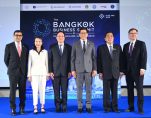
Public and private sector leaders at the closing of the Bangkok Business Summit 2026, Queen Sirikit National Convention Center.

Detailing the strategic “why, how, and design” of the national transition, Dr. Ekniti stated that entering new horizons is an unavoidable global imperative. While ASEAN is uniquely positioned to capture emerging opportunities, the region must guard against severe geopolitical, technological, and climate risks with proactive, unified action.

Dr. Ekniti Nitithanprapas, Deputy Prime Minister and Minister of Finance, at the closing panel of the Bangkok Business Summit 2026.

“The goals must be clear, and we are completely on the same page: Thailand must achieve high-income status,” said Dr. Ekniti.

“The recipe provided by the World Bank aligns directly with what our business leaders have outlined. An investment-led growth policy, private-sector-centred endeavours, and persistent implementation are what the government and business community are now executing together. Think of the seven new growth engines as our forwards on the pitch. The government acts as both coach and midfielder — spearheading investment, driving trade, empowering SMEs, unlocking regulatory friction, and cultivating human capital. Meanwhile, fiscal and financial stability serves as our steadfast defensive backline.”

Dr. Ekniti affirmed that the Joint Public and Private Committee (JPPC) will no longer function as a purely advisory body, but will operate as an executive economic steering council mandated to enact structural reforms and track execution against the World Bank’s recommendations.

“We will not be the same old Thailand. We will be driving the global agenda. Thailand will enter new horizons, empower people, and build resilience,” Dr. Ekniti emphasised. “In the next two years, Thailand will assume the Chairmanship of ASEAN. We will establish a long-term, multi-year agenda for a stronger, more resilient ASEAN. If this new model of public-private partnership carries on, we will decisively reinvent Thailand.”

Key leaders representing the Joint Standing Committee on Commerce, Industry, and Banking (JSCCIB) delivered strategic sector priorities to anchor the transition.

Representatives of the Joint Standing Committee on Commerce, Industry and Banking (JSCCIB) share Thailand's strategic economic direction.
Representatives of the Joint Standing Committee on Commerce, Industry and Banking (JSCCIB) share Thailand’s strategic economic direction.

Payong Srivanich, Chairman of the JSCCIB and the Thai Bankers’ Association, underscored that reinventing the economy requires modernising legacy industries while creating space for future engines.

“From three core challenges – structural, competitiveness, and public-sector efficiency – came the White Paper outlining the seven industries of the future,” stated Mr. Payong. “This time, the government has presented a credible policy framework based on collaborative public-private partnership. Thailand must address fundamental security—whether in food, energy, or low-carbon growth. We are declaring to the world that we are done with planning and on the same page. Now we are geared up for execution.”

Dr. Poj Aramwattananont, Chairman of the Thai Chamber of Commerce and Board of Trade of Thailand, stressed that amid geopolitical friction, geoeconomics, and regional conflict, growth must be anchored in ASEAN’s 600-plus million people which serve as both supply and demand networks.

Adapting to international trading rules is inseparable from Thailand’s targeted accession to the OECD by 2028. The accession process acts as the structural catalyst to modernise domestic legislation, corporate governance, transparency, and fair market competition to premier global standards—lowering compliance costs and solidifying investor confidence.

Pimjai Leeissaranukul, Chairwoman of the Federation of Thai Industries, insisted that Thailand must build its own brand; it can no longer afford to be just the world’s OEM. She called for a decisive departure from labor-cost competition toward high productivity, automation, AI, and green sustainability. She advocated expanding target sectors—such as next-generation electric vehicles, smart electronics, automation, and wellness—while enforcing enhanced public procurement.

Carlos Felipe Jaramillo, Vice President for East Asia and Pacific at the World Bank, observed that the eyes of the financial world will be on Bangkok next month as it hosts the 2026 IMF–World Bank Group Annual Meetings, providing Thailand with a premier global stage to show that it is advancing on a credible pathway to attain high-income status by 2037.

“The World Bank has presented a series of structural reforms that Thailand can pursue to reach high-income status, creating more and better-paying jobs for young Thais in the future,” Mr. Jaramillo stated. “The plan deliberately puts the private sector at the center, because experience has taught us that the private sector is the primary engine of employment. This reform agenda is multifaceted, requiring coordinated national effort, and, more importantly, relentless persistence in implementation.”

The Bangkok Business Summit 2026 concluded with a clear consensus: today’s closing discussions mark the formal launch of sustained, institutionalised execution across the public sector, private enterprise, and multilateral institutions to ensure Thailand stands as a resilient economic anchor for the wider ASEAN region.

Hashtag: #JSCCIB

The issuer is solely responsible for the content of this announcement.

Arabian Post Staff -Dubai ROX has begun local vehicle production at its newly completed Advanced AI Manufacturing Centre in Abu Dhabi, with the first three ADAMAS models carrying the “Made in the Emirates” mark rolling off the line. The company said the start of production marks a new phase in its localisation strategy, extending its Abu Dhabi presence from regional operations into manufacturing, supply chains, technology and […]

KOCHI: Artificial intelligence is accelerating the scale, speed and sophistication of cybercrime, making resilience and skilled manpower critical to protecting essential systems, Director General of Police-rank officer and Vigilance and Anti-Corruption Bureau Director Manoj Abraham warned at the Kerala Cyber Suraksha Summit 2026.

Addressing the second edition of the summit at Le Meridien, Kochi, on Saturday, Abraham said cyberattacks had evolved to a point where they could cripple countries and organisations, disrupt critical infrastructure and interfere with military operations without conventional weapons being used.

He cited a 389 per cent year-on-year rise in confirmed ransomware victims worldwide, a figure also recorded by FortiGuard Labs for 2025, when 7,831 victims were identified compared with about 1,600 a year earlier. The security company linked part of the increase to the availability of AI-enabled crime tools and automated attack capabilities.

Abraham also pointed to the financial impact of online fraud across India, saying reported losses reached Rs 19,813 crore in 2025. Data compiled by the Indian Cyber Crime Coordination Centre from the National Cyber Crime Reporting Portal put the number of complaints that year at about 21.77 lakh, underscoring the volume of fraud cases confronting enforcement agencies and financial institutions.

The senior police officer said artificial intelligence had changed both the economics and operational reach of cybercrime by allowing attackers to automate tasks that previously required greater technical skill, time and manpower. That shift has increased the need for organisations to design systems capable not only of preventing breaches but also of continuing essential operations and recovering quickly when attacks succeed.

A shortage of cybersecurity skills is adding to the pressure. Abraham referred to a global gap of 4.8 million cybersecurity professionals, an estimate published by ISC2 in its 2024 workforce study. The organisation’s 2025 study shifted emphasis from total headcount to shortages in specific skills, finding that employers were increasingly concerned about capabilities in areas such as artificial intelligence, cloud security and incident response.

Abraham said Kerala’s human-resource base could provide an advantage in meeting demand for cybersecurity expertise, provided training kept pace with rapidly changing threats. His remarks placed workforce development alongside technology investment as a central component of cyber resilience.

Gaganyaan astronaut-designate Air Commodore Prasanth Balakrishnan Nair, who also addressed the summit, said cybersecurity alone would not be sufficient unless India strengthened its own artificial-intelligence capabilities. He said future conflicts and industries would increasingly blur distinctions between physical and digital domains, making sovereign technological capacity more important.

“No amount of cybersecurity is ever completely sufficient. True security can only be guaranteed if we develop our own AI technology,” Nair said, arguing that the country should use its software strengths to build indigenous systems rather than depend entirely on technologies developed elsewhere.

Ernakulam MP Hibi Eden inaugurated the summit. He welcomed an initiative by F9 Infotech to provide cybersecurity training, awareness programmes and certification without charge to government educational institutions across Kerala, an effort aimed at expanding access to basic cyber skills.

F9 Infotech founder Jayakumar Mohanachandran said cyber protection needed to extend beyond corporate leadership and specialist teams to ordinary users, businesses and public institutions. He said more than Rs 56,000 crore in cyber-fraud complaints had been recorded across India over the past three years, while response systems had helped prevent losses exceeding Rs 11,000 crore across roughly 32 lakh complaints.

FortiGuard Labs’ 2026 threat assessment, reflecting 2025 activity, also found that exploitation attempts rose by about 25 per cent to nearly 122 billion worldwide, while critical vulnerabilities could be targeted within 24 to 48 hours of disclosure. The findings illustrated the shrinking window available to defenders to patch exposed systems, revoke compromised credentials and contain intrusions before attackers move laterally through networks or deploy ransomware at scale globally.

Arabian Post Staff -Dubai Kuwait Finance House-Bahrain has joined Fintech Forward 2026 as a Diamond Sponsor, adding its backing to the fourth edition of Bahrain’s flagship financial services forum scheduled for October 7 and 8. The bank said it will also operate a pavilion in the exhibition area at Exhibition World Bahrain, where visitors will be able to learn about its digital banking services and technology-led offerings. […]

Tether chief executive Paolo Ardoino has attributed Bitcoin’s failure to match gold’s global reach to a generational divide among financial decision-makers, arguing that the cryptocurrency remains poorly understood by many of the people who control pools of capital. Ardoino said Bitcoin is still at an early stage of adoption compared with gold, whose role as a store of value and reserve asset has been embedded in financial […]

Arabian Post Staff -Dubai Al Mazunah Free Zone has lifted cumulative investment above OMR141 million after localising four new projects in the first half of 2026, according to figures released by its operator, the Public Establishment for Industrial Estates, or Madayn. The four projects carry investment of more than OMR620,000 and cover industrial and logistics activities as well as export offices. Together they will occupy more than […]

Advertisements
Singapore’s government will not intervene in Singapore Airlines’ decisions on whether to provide further capital to Air India, Senior Minister K. Shanmugam said on Saturday, stressing that commercial judgments must remain with the carrier’s board and management.

Shanmugam, who is also Coordinating Minister for National Security and Home Affairs Minister, said the government maintains a strict principle of not directing individual investment decisions by Temasek portfolio companies. Singapore Airlines, rather than state investor Temasek, is the shareholder in Air India and must decide whether additional funding is commercially justified, he said.

Air India is seeking about $1.5 billion in fresh equity from its owners, Tata Sons and Singapore Airlines, after losses widened sharply in the financial year ended March 2026. Singapore Airlines owns 25.1 per cent of the carrier, while Tata Sons holds the remaining 74.9 per cent.

Singapore Airlines said last week that its board would “carefully consider” any request for additional capital, taking account of the group’s other funding requirements and Air India’s business strategy. The airline said it works with Tata Sons to support Air India’s transformation programme as a significant minority shareholder.

The funding question has prompted political scrutiny in Singapore because Temasek, which is owned by the Ministry of Finance, is the majority shareholder in Singapore Airlines. Workers’ Party MP Kenneth Tiong has questioned whether Temasek funds should ultimately be used to support Air India and has filed a question for the September 8 sitting of Parliament.

Shanmugam said shareholders and the public were entitled to expect rigorous assessment, accountability and transparency from Singapore Airlines. Shareholders could question management and directors at the company’s annual general meeting, but political views should not replace the professional judgment of its board, he said.

“Neither his views nor those of any minister or any other MP should substitute for the commercial judgment of SIA’s management and board of directors,” Shanmugam said, referring to Tiong.

He said Temasek is accountable to the government for its overall portfolio and long-term performance, but not for individual investments made by its portfolio companies. The government’s role, he added, was to ensure professional management and give companies sufficient independence to make properly considered decisions without political pressure.

Shanmugam warned that directing specific investments could weaken commercial discipline by allowing political considerations to shape corporate decisions. He said companies must be able to accept that some investments will produce gains and others losses, with performance judged across portfolios and over appropriate time horizons.

The debate follows Air India’s continuing financial and operational pressures during its overhaul under Tata ownership. The airline group posted a record loss of more than $2 billion for the last financial year, while its transformation has required extensive investment in aircraft, systems, customer service, maintenance and staffing.

Singapore Airlines became an Air India shareholder after the merger of Vistara with Air India was completed in November 2024. It received a 25.1 per cent stake in the enlarged carrier, combining its former Vistara interest with a cash investment agreed as part of the transaction.

Singapore Airlines subsequently injected further capital into Air India. By the end of March 2025, the total cost of its investment in the carrier stood at about S$2.1 billion, according to its disclosures.

The airline has repeatedly described its exposure to Air India as a long-term strategic investment, giving it direct participation in India’s large domestic aviation market and international traffic flows beyond its Singapore hub. It has also acknowledged that the turnaround will take time and that Air India faces both company-specific and wider industry challenges.

Tata Consultancy Services has committed with partners to invest up to ₹700 billion in a one-gigawatt artificial intelligence data centre campus in Hyderabad, marking one of the largest planned AI infrastructure projects in the country. The project will be developed by TCS subsidiary HyperVault AI Data Center Limited on 264 acres secured in Hyderabad, Telangana. TCS said the campus would be built in phases, with the pace […]

CoinRabbit has been named Best Crypto Lending Platform 2026 by International Business Magazine, adding an industry accolade to the crypto-backed lender as it expands beyond loans into broader digital-asset capital management. The Toronto-based company said the recognition covers a lending operation that has originated more than $1.45 billion in crypto-backed loans since its launch in 2020. International Business Magazine lists a 2026 awards programme and says its […]

Bitcoin ownership is estimated at about 5% of the world’s population, with India accounting for the largest number of holders, according to figures published by on-chain analyst Willy Woo. Woo’s country-level table, posted on September 1, places worldwide adoption in a range of 4.5% to 6%, equivalent to roughly 370 million to 500 million people. India is estimated to have about 68 million Bitcoin holders, representing 4.6% […]

The Gulf’s events and hospitality sectors are expanding at a pace few regions can match, and much of that growth is being carried on the backs of a workforce that barely existed in its current form a decade ago: flexible, on-demand talent. From five-star product launches in Dubai to sprawling exhibitions in Riyadh, the ability to scale a team up or down within days has become just […]

Two Thai businessmen have sued stablecoin issuer Tether in a New York court, alleging it froze $42.4 million in USDT months before US authorities obtained a seizure warrant. Nutthawat Rukthammachalern and Natthawat Kasamvilas filed the complaint in the US District Court for the Southern District of New York on August 31, challenging Tether’s decision to blacklist 10 Ethereum addresses containing 42,417,785.62 USDT. The plaintiffs allege Tether acted […]

Maharashtra Chief Minister Devendra Fadnavis has laid the foundation stone for Bajaj Finserv’s planned technology-led corporate campus in Pune, a 7.2-million-square-foot development the company says will become the country’s largest single-location financial services office.

The campus at Koregaon Park Annexe is being designed around artificial intelligence and Internet of Things systems that will monitor environmental conditions, occupancy and infrastructure and adjust building operations in real time. Bajaj Finserv describes the project as its first “sentient” corporate campus.

Fadnavis unveiled a commemorative plaque at the September 4 ceremony, which was attended by Deputy Chief Minister Sunetra Pawar, Pune Mayor Manjusha Nagpure, Bajaj Finserv Chairman and Managing Director Sanjiv Bajaj and other officials.

The company said the project would consolidate its diversified financial services businesses at a common address for the first time, bringing together operations spanning lending, deposits, payments, insurance and investments. The complex is also planned to include what Bajaj Finserv says will be Pune’s tallest steel tower.

Fadnavis said Bajaj Finserv had built a significant position in the state’s fintech ecosystem by using technology to widen access to loans, insurance and other financial services. He said the new campus would strengthen Pune’s role as a financial-technology centre and described the project as a major addition to Maharashtra’s business infrastructure.

The development is intended to use AI and IoT systems across energy management, water consumption, air quality, crowd density, movement and safety. Sensors and analytics are expected to help the campus respond to changes in weather and occupancy, while predictive maintenance systems will monitor critical infrastructure. Automation and robotics are also planned for some campus operations.

Bajaj Finserv said sustainability, environmental design and employee wellbeing would be the three main design pillars. The buildings are being planned to global LEED and Indian Green Building Council standards, with renewable energy intended to power the campus.

The company has set a target of recycling 80 per cent of water used at the site, alongside rainwater harvesting and zero-waste measures. Those features form part of Bajaj Finserv’s stated goal of achieving carbon neutrality for Scope 1 and Scope 2 emissions by the 2031-32 financial year.

Sanjiv Bajaj said the project was intended to combine environmental responsibility with the group’s financial inclusion goals. He said the campus would use eco-efficient and biophilic design, AI-driven systems and renewable energy while placing employee health and wellbeing at the centre of the workplace plan.

Green zones are expected to include Ayurvedic gardens, Miyawaki forests and replanted native forests, with species from Maharashtra selected to support biodiversity. The design will seek to increase natural daylight and ventilation and reduce cooling requirements, according to the company.

Indoor environmental monitoring is planned at floor and cluster level, covering air quality and temperature. Employees are also expected to use an integrated Bajaj One application for services such as navigation, parking and facility bookings.

The project includes plans for a medical centre with telemedicine and emergency-response facilities as well as dedicated wellness support. Bajaj Finserv said these services would be integrated with the wider digital infrastructure of the campus.

The company also plans to incorporate art, craft and heritage traditions from across the country into the development, including lesser-known and lost art forms. Elements of Bajaj Finserv’s corporate social responsibility programmes and work produced by programme beneficiaries are expected to feature within the campus design.

Fadnavis used the ceremony to highlight the Bajaj group’s long association with Maharashtra and its role in the state’s industrial development. He also referred to the legacy of Jamnalal Bajaj, the industrialist and freedom movement figure associated with the group’s early history.

Bajaj Finserv already has several corporate and group offices in Pune. The new site is intended to serve as the company’s principal corporate office and create a single large workplace for businesses that are now spread across different locations.

South Korea’s Financial Services Commission has set February 2027 as the starting point for a three-stage expansion of tokenised securities, with the programme ultimately intended to support on-chain settlement linked to stablecoins. The roadmap, announced after a public-private consultative meeting on September 4, covers conventional assets including stocks, bonds and funds as well as fractional investment products. It is tied to amendments to the Act on Electronic […]

As part of his official visit to Vietnam, on the afternoon of September 4, 2026, His Excellency Min Aung Hlaing, President of the Republic of the Union of Myanmar, and the high-level Myanmar delegation visited the VinFast Hai Phong Manufacturing Complex, where they learned firsthand about the remarkable and rapid development journey of the Vietnamese automotive brand.

HAI PHONG, VIETNAM – Media OutReach Newswire – 5 September 2026 – Mr. Pham Nhat Quan Anh, Chairman of VinFast, personally welcomed His Excellency President Min Aung Hlaing and led the delegation throughout their visit to the VinFast Hai Phong Manufacturing Complex. Mr. Quan Anh accompanied the President and the delegation through the Body Shop and General Assembly Shop, introducing VinFast’s integrated manufacturing processes, advanced production lines featuring a high level of automation, and its internationally competitive portfolio of electric vehicles.

Myanmar President Min Aung Hlaing was impressed by the scale of the factory and VinFast's diverse lineup of electric cars and electric motorcycles.
Myanmar President Min Aung Hlaing was impressed by the scale of the factory and VinFast’s diverse lineup of electric cars and electric motorcycles.

At the General Assembly Shop, where VinFast vehicles are completed, President Min Aung Hlaing expressed his strong impression of the quality and high standards of VinFast’s Vietnamese-made electric vehicles. The President also praised the modern infrastructure and advanced facilities of the manufacturing complex, as well as VinFast’s remarkable journey in establishing itself as the No. 1 automotive brand in Vietnam and rapidly expanding its presence internationally.

As of September 2026, VinFast has maintained the No. 1 position in Vietnam’s automotive market for 24 consecutive months, while expanding its presence to more than 10 countries worldwide, including key markets such as Indonesia, India, the Philippines and North America.

The visit by President Min Aung Hlaing takes place against the backdrop of Vietnam and Myanmar strengthening cooperation across multiple areas, contributing to greater connectivity and exchanges, while opening up new opportunities for cooperation between the business communities of the two countries.

The visit also provided an opportunity for VinFast to showcase to Myanmar’s leadership the latest achievements of Vietnam’s automotive industry, as well as the manufacturing capabilities and technological expertise of a Vietnamese enterprise. It further contributed to strengthening connectivity between Vietnam and Myanmar in the areas of industry, trade and green mobility.

As one of Vietnam’s modern automotive manufacturing complexes, the VinFast Hai Phong Manufacturing Complex represents an important milestone in the journey of a Vietnamese automotive brand onto the global stage. Built on its manufacturing foundation in Vietnam, VinFast is expanding its operations across international markets, with a strategic focus on developing a green mobility ecosystem and accelerating the transition toward electric transportation.

The VinFast Hai Phong Manufacturing Complex has previously welcomed numerous senior leaders and heads of state during their official visits to Vietnam. Former Indonesian President Joko Widodo, former President of Bulgaria Rumen Radev and former Prime Minister of Luxembourg Xavier Bettel are among the international leaders who, while in office, visited the facility, toured VinFast’s electric vehicle production lines and learned firsthand about VinFast’s electric vehicle offerings.

The visits by heads of state and senior leaders to the VinFast Manufacturing Complex not only reflect international interest in the manufacturing capabilities and technological potential of a Vietnamese enterprise but also create opportunities to strengthen economic connectivity and advance cooperation in industry and green mobility between Vietnam and countries across the region.

With its vision of “For a Green Future,” VinFast continues to accelerate investment in manufacturing capabilities, technology and its electric vehicle ecosystem, with the ambition of bringing Vietnamese green mobility products and solutions to an increasing number of customers around the world.

Hashtag: #VinFast

The issuer is solely responsible for the content of this announcement.

ByteDance has secured a $29.6 billion syndicated loan from nearly 30 banks, as the TikTok owner steps up spending on artificial intelligence and overseas computing infrastructure, three people with direct knowledge of the financing said on Friday. The dollar-denominated facility is one of Asia’s largest loans this year and was expanded from an initial target of $20 billion after strong demand from lenders, the people said. Chinese […]

Arabian Post Staff -Dubai Dell Technologies and Armada have signed a memorandum of understanding to develop containerised mobile and edge data centre solutions across Saudi Arabia, targeting organisations that need computing and storage capacity close to operations. The agreement, announced on Friday after being signed during LEAP 2026 in Riyadh, sets a framework for combining Dell’s enterprise hardware and infrastructure stack with Armada’s specialised mobile, containerised data […]

KUALA LUMPUR, MALAYSIA – Media OutReach Newswire – 4 September 2026 – On September 3, the Macao SAR Government hosted a reception and the Macao Economic, Trade and Tourism Investment Promotion Seminar in Kuala Lumpur, Malaysia, to pragmatically advance bilateral cooperation across public and private sectors. The event facilitated over 120 business matching sessions and concluded with more than 60 signed agreements. These partnerships span key sectors including tourism, MICE (meetings, incentives, conferences, and exhibitions), high-tech & AI services, traditional Chinese medicine (TCM) & big health, and Muslim-friendly initiatives. Some agreements specifically focused on pharmaceutical registration and certification, regional distribution networks, and “multi-destination” tourism layouts.

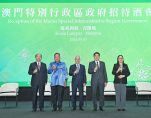
The Chief Executive, Mr Sam Hou Fai, and guests make a toast at a reception in Kuala Lumpur, Malaysia hosted by the Macao Special Administrative Region Government.

The event gathered over 350 guests, including Sam Hou Fai, Chief Executive of the Macao SAR; Tiong King Sing, Minister of Tourism, Arts and Culture of Malaysia; Sim Tze Tzin, Deputy Minister of Investment, Trade and Industry of Malaysia; and Ouyang Yujing, Chinese Ambassador to Malaysia. They were joined by members of the Macao SAR government and entrepreneurial delegations, representatives from the Chinese Embassy in Malaysia, and prominent figures from various sectors in Malaysia.

Sam Hou Fai stated that this visit to Malaysia aims to renew traditional friendship, build further consensus, and elevate pragmatic cooperation between Macao and Malaysia to a higher level. Macao aspires to serve as a bridge for deepening cooperation between Malaysia and Mainland China, working together to open a new chapter of mutual benefit, win-win outcomes, and synergistic development. He pointed out that both Macao and Malaysia are key nodes on the “Maritime Silk Road,” sharing deep cultural and people-to-people bonds and close exchanges. Facilitated by mutual visa-free entry and direct flights, the two regions have achieved fruitful cooperation in trade, investment, tourism, MICE, and education. Malaysia is not only an important economic partner and international tourist source market for Macao, but also demonstrates immense potential for collaboration in cultural exchange, educational partnerships, and the promotion of Muslim-friendly tourism.

Tiong King Sing highlighted Malaysia’s strategic position in ASEAN—a fast-growing regional market—and Macao’s role in the Guangdong-Hong Kong-Macao Greater Bay Area (GBA). By linking their networks, both sides can help businesses unlock vast opportunities between ASEAN and the GBA. He emphasized Malaysia’s readiness to strengthen cooperation in trade, tourism, and education. He urged both sides to bridge connections and engage businesses, schools, tourism operators, and cultural groups to deliver tangible results.

The seminar featured presentations, business matching, and sharing sessions highlighting Macao’s “Tourism+” initiatives, especially “Tourism + Healthcare” big health. Notably, Macao Union Medical Center’s advanced services are meet diverse international healthcare needs.

Additionally, Macao’s upcoming private healthcare law will introduce a “day hospital” category, a one-stop licensing system, and regulations for telemedicine, outreach services, and advanced therapies, fostering a clear, flexible investment environment. Leveraging Macao-Hengqin synergy, the region seeks to partner with Southeast Asian firms to capture medical tourism and big health opportunities.

The issuer is solely responsible for the content of this announcement.

LSAF Global, in partnership with ISCA and the Professional Services (PS) Centre Alliance, brings the PS Centre ecosystem to businesses in Indonesia.

SINGAPORE – Media OutReach Newswire – 4 September 2026 – A business expanding into another country may need an accountant, lawyer, tax adviser, talent specialist and local business partner before it can make its first move.

The challenge is often not finding advisers. It is knowing where to start.

LSAF Global, in partnership with the Institute of Singapore Chartered Accountants (ISCA) and the Professional Services (PS) Centre Alliance, is bringing the PS Centre ecosystem to businesses in Indonesia, connecting them with professional expertise, trusted networks and opportunities across Singapore, Indonesia and the region.

The PS Centre is a collaborative network that aims to make that easier by giving businesses a trusted starting point to find professional expertise, local market knowledge and business connections when expanding across the region.

Businesses in Indonesia can tap on the wider PS Centre network, which currently spans Hongqiao in Shanghai, Ho Chi Minh City, Nanjing and Singapore.

The network is set to grow further, with Johor, Shenzhen and Bangkok among the next locations being developed.

Together, the PS Centres and wider ecosystem are intended to create trusted business corridors across the region so that companies entering a new market do not have to start from zero.

Cross-border business is getting harder

The collaboration in Indonesia comes at a time when companies are looking overseas for growth while facing a more complicated business environment.

Tariffs and geopolitical tensions are changing where companies manufacture and source their products. Supply chains are being redesigned. AI and cyber risks are creating new business questions. Sustainability requirements are changing how companies operate and report.

Increasingly, these problems do not sit neatly within one profession.

A company may start with a tariff question only to discover that it also needs tax, legal and supply chain advice. Another may see an opportunity in Indonesia but need help finding local partners and understanding how best to enter the market.

The PS Centre ecosystem brings different forms of expertise and business networks together so companies do not have to navigate these issues alone.

The collaboration comes amid strong economic links between Singapore and Indonesia.

From Singapore to Indonesia and from Indonesia to the region

The PS Centre ecosystem is designed to work across markets.

Singapore businesses entering Indonesia can connect with local professional advisers, business networks and partners on the ground through LSAF Global and the wider PS Centre ecosystem.

Indonesian businesses looking towards Singapore can tap the Singapore PS Centre and Singapore’s professional services ecosystem.

A business looking beyond Indonesia and Singapore can tap the wider network for support in Vietnam and China. As new centres open, the network will extend into more markets.

Across its existing locations, the PS Centre network has already facilitated more than 90 business connections, supported 100 companies and engaged over 700 businesses and professionals.

The ambition goes beyond opening centres in different cities.

It is to build a connected ecosystem and trusted business corridors that connect opportunities in one market with trusted expertise and networks in another.

Helping businesses solve cross-border challenges

A key initiative being expanded across the PS Centre network is the Business Growth Clinic.

Its premise is simple.

Businesses do not always know which professional they need. They simply know they have a problem to solve.

A manufacturer may produce different parts of the same product across several countries and need help understanding how changing tariffs affect its business.

A professional services firm may want to access talent in another market but is unsure how to structure its operations.

Another business may be looking for an overseas partner, considering an acquisition or trying to understand how geopolitical changes could affect where it invests next.

Instead of figuring out which adviser to approach first, businesses can bring their problem to the Business Growth Clinic.

Depending on the issue, accountants, lawyers, tax specialists, valuers, consultants and other professionals can come together to understand the problem and connect the business with the expertise it needs.

Businesses in Indonesia will also be able to tap the Business Growth Clinic through the PS Centre ecosystem. A Singapore company facing a business issue in Vietnam can tap expertise through the Ho Chi Minh City PS Centre. An Indonesian business looking to establish operations in Singapore can connect with professionals through the Singapore PS Centre. A business exploring China can access support through Hongqiao.

As the PS Centre network expands, the reach of the Business Growth Clinic will expand with it.

Mr Lee Boon Teck, President of the Institute of Singapore Chartered Accountants (ISCA), said: “Businesses do not always know which professional they need. They simply know they have a problem to solve. The strength of the PS Centre lies in the network we are building together: connecting businesses with professional expertise, trusted networks and opportunities across markets. The PS Centre Alliance can help businesses in Singapore and Indonesia make the connections they need to grow across the region.”

Connecting businesses with professional expertise

The initiative is led by the PS Centre Alliance, comprising the Association of Small & Medium Enterprises, Institute of Valuers & Appraisers Singapore, Singapore Business Federation, Singapore Chinese Chamber of Commerce & Industry, Singapore Manufacturing Federation, Tax Academy of Singapore, The Law Society of Singapore and ISCA.

The Alliance brings together organisations representing both sides of the equation: businesses looking for opportunities and professional services firms with the expertise to help them pursue those opportunities.

In Indonesia, this gathering of the PS Centre Alliance partners to build relationships with local business and professional organisations, including the Indonesian Employers Association (APINDO), Singapore Chamber of Commerce Indonesia, The Indonesia Capital Market Institute (TICMI) and Kongres Advokat Indonesia (KAI).

These relationships will help connect businesses with people who understand the local market while linking them to the wider PS Centre network.

Building sustainability capabilities in Indonesia

ISCA and Universitas Sahid (USAHID) will enter a three-year collaboration to strengthen sustainability capabilities in Indonesia.

The collaboration will facilitate access to the ISCA Sustainability Professional Certification for eligible USAHID students, faculty members, alumni and other participants. It will also support learning and knowledge sharing in sustainability reporting and related areas.

The collaboration aims to connect academic learning with professional practice and build a stronger pool of professionals who can support businesses as sustainability requirements evolve.

Prof. Dr. Ir. Giyatmi, M.Si., Rector of Universitas Sahid, said: “Bringing the Professional Services Centre ecosystem to businesses in Indonesia represents an important step in strengthening collaboration between Indonesia and Singapore’s professional and business communities. We believe the ecosystem can serve as a valuable platform for knowledge exchange, professional development, and stronger connections between academia and industry. Universitas Sahid is pleased to support this initiative and looks forward to contributing to the development of future-ready professionals who can support sustainable and regional economic growth.”

The collaboration in Indonesia marks another step in building a regional network where businesses, professional services firms and local partners can connect across markets.

As businesses increasingly look beyond their home markets for growth, the aim is simple: when a business sees an opportunity across borders, it should not have to start from zero.

For additional quotes from PS Centre Alliance partners, please refer to the attached Annex.

ANNEX

Ms Hamidah Aidillah, Vice President, Association of Small & Medium Enterprises, said: “For Small & Medium Enterprises (SMEs) looking to grow overseas, finding the right connections and trusted support in a new market can be challenging. Through the PS Centre Alliance’s collaboration in Indonesia, businesses can gain access to professional expertise and local networks, helping Singapore SMEs better navigate the Indonesian market and pursue opportunities for growth across the region. This move is also in line with ASME’s internatiolisation efforts across ASEAN. ”

Mr Lie Kok Keong, Council Chairperson, Institute of Valuers and Appraisers Singapore, said: “Bringing the PS Centre ecosystem to businesses in Indonesia creates meaningful new opportunities for Chartered Valuers and Appraiser (CVA) holders to connect with a wider network of professionals in Indonesia through fostering knowledge exchange and capacity building. We encourage CVA holders to leverage on the wider network to build ties with their Indonesian counterparts to grow and create opportunities together.”

Mr Mark Lee, Chairman of Singapore Business Federation, said: “Businesses today need to remain agile and diversify their markets to build long-term resilience. Indonesia’s long term growth prospects and close ties with Singapore offer significant opportunities for our companies. By bringing PS Centre Jakarta and SEC@Jakarta together, we can make it easier for businesses to access our collective networks, advisory expertise and facilitation support, and help them turn these opportunities into meaningful partnerships and growth.”

Mr Ernie Koh, Council Member, Singapore Chinese Chamber of Commerce & Industry (SCCCI), said: “Indonesia is an important market for many Singapore businesses seeking to expand their regional presence. Through the PS Centre Alliance’s collaboration in Indonesia, enterprises can access trusted professional support and local networks, helping them better navigate the market and build the connections needed for cross-border growth.”

Mr Wayne Yap, Chief Executive Officer of the Singapore Manufacturing Federation, said: “Professional services firms are important partners in helping manufacturers understand new markets, manage business requirements and expand with confidence. Through the PS Centre ecosystem, businesses will bring together professional expertise, industry networks and local market connections to support manufacturers and other businesses pursuing opportunities in Indonesia and across the region.”

Mr Dennis Lui, Chief Executive Officer, Tax Academy of Singapore, said: “Tax is not a footnote to cross-border investment – It can determine whether opportunity becomes reality. Tax Academy of Singapore sits at the intersection of government, industry, and academia, enabling us to translate policy into practical capability and connect the people who make investment happen. Through the PS Centre Alliance’s collaboration in Indonesia, we want to bring that strength to the Singapore-Indonesia corridor – helping businesses move from opportunity to execution.”

Ms Peggy Yee, Treasurer and Council Member of The Law Society of Singapore said: “With more businesses expanding across borders and industries, the ability to navigate legal and regulatory complexities will become a critical skill for both businesses and firms. Bringing the PS Centre ecosystem to businesses in Indonesia will further provide valuable and trusted support for enterprises in the region, ensuring access to trusted legal expertise along with other professional services.”

Hashtag: #ISCA #CharteredAccountants #ProfessionalServices #ProfessionalServicesCentre #DifferenceMakers #Accounting #Accountancy

The issuer is solely responsible for the content of this announcement.

About the Institute of Singapore Chartered Accountants (ISCA)

The Institute of Singapore Chartered Accountants (ISCA) is the national accountancy body of Singapore. Established in 1963, ISCA administers the Singapore Chartered Accountant Qualification programme and is the designated entity by the Singapore Ministry of Finance to confer the Chartered Accountant of Singapore [CA (Singapore)] designation.

ISCA supports over 46,000 members across industries in Singapore and globally, with members in more than 40 countries. With a growing international presence, ISCA has 12 overseas chapters, 7 offices across 10 countries and a network of over 150 strategic partners, strengthening professional connections and opportunities across borders. ISCA is also a member of Chartered Accountants Worldwide, a global network representing more than 1.8 million Chartered Accountants and students across over 190 countries.

ISCA advances professional development and lifelong learning through ISCA Academy, its training arm and drives community impact through ISCA Cares, its charity arm.

For more information, visit .

Iran’s worsening fiscal squeeze is spilling into daily life as collapsing oil revenue, a record-low currency and surging prices force Tehran to balance military demands against the cost of keeping fuel, food and other essentials affordable. The pressure has sharpened after Iranian crude exports fell to roughly 260,000 barrels a day in August from about 1.7 million before the latest tightening of US economic pressure, draining the […]

Kenya’s President William Ruto has ordered Tata Chemicals to end its operations in the country and said two new companies would be brought in to replace it, escalating a dispute over the future of soda ash mining at Lake Magadi.

Ruto announced the decision during a visit to Kajiado County on Thursday, arguing that Tata Chemicals’ long presence in the area had delivered insufficient industrial development for local communities. He said any replacement investors would be expected to establish manufacturing operations in the county rather than simply extract and export raw materials.

The president said one of the incoming companies should develop a major glass manufacturing plant, while another would produce chemicals in Kajiado. His comments signalled a shift towards requiring more domestic processing of minerals and greater value addition around Lake Magadi, one of Kenya’s best-known mineral production centres.

“That TATA company… had that contract for 100 years. They have not built anything in Kajiado, they have not built any factory in Kajiado,” Ruto said. He questioned why Kenya should continue exporting soda ash while importing products such as glass that can be manufactured using the mineral.

Tata Chemicals said it respected the authority of Kenya’s government and remained committed to resolving outstanding issues through the appropriate legal and regulatory channels. The company said its Kenya unit had submitted a comprehensive response to matters raised by the Ministry of Mining, Blue Economy and Maritime Affairs, including information concerning compliance with applicable regulatory requirements.

The latest order follows a government directive that halted mining operations at Tata Chemicals Magadi Limited on July 28. The company had also been required to suspend exports of soda ash from its Magadi operation while the ministry reviewed regulatory concerns.

Tata Chemicals said on August 17 that it had provided all information, reports and documentation requested by the ministry and was awaiting further direction. At that stage, the company said it believed it had demonstrated compliance and was seeking a clear pathway to resume operations.

The company has disputed any suggestion that its activities have brought no benefit to the area. It said last month that about 500 employees and their families, as well as contractors, suppliers, transporters and local businesses, depended directly or indirectly on its Magadi operations. It also said about 30,000 people in the surrounding community benefited from its programmes in water, healthcare, education, infrastructure and community development.

Tata Chemicals Magadi describes itself as Africa’s leading producer of natural soda ash and one of Kenya’s leading exporters. The company says it exports more than 350,000 tonnes annually to markets in Southeast Asia, India, the Middle East and elsewhere in Africa.

Its financial performance in Kenya has weakened amid pressure on global soda ash prices. Tata Chemicals reported that the Magadi unit generated revenue of ₹5.86 billion in the financial year ended March 2026, down from ₹6.12 billion a year earlier. Earnings before interest, tax, depreciation and amortisation fell to ₹1.01 billion from ₹1.42 billion, while net profit declined to ₹480 million from ₹1.18 billion.

The company nevertheless recorded higher sales volumes in Kenya during the year and commissioned new equipment, including a five-megawatt solar plant, a solar pond and a 50,000-tonne electric calciner soda ash facility. Those investments were disclosed before the July suspension.

Ruto’s government is now tying future access to the Lake Magadi resource to industrial projects inside Kajiado. Kenya’s state news agency said the president indicated that a new investor would be required to establish glass and chemical processing facilities before receiving a licence to operate.

The change places the Magadi operation’s ownership, workforce and supply relationships under fresh uncertainty. Tata Chemicals said its immediate priorities remained the welfare of employees, the Magadi community and other stakeholders while it continued engagement with government authorities.

No timetable has been announced for the two prospective replacement companies to begin operations, and the government has not publicly identified them. Details of how existing mining rights, licences, assets or contractual obligations would be transferred have also not been disclosed.

Arabian Post Staff -Dubai Nasdaq Dubai has listed $713 million of dual-currency green bonds issued by Industrial and Commercial Bank of China Limited through its Dubai International Financial Centre branch, adding another sizeable sustainable debt transaction to the exchange. The offering was issued under ICBC’s $20 billion Global Medium Term Note Programme and comprises two three-year tranches carrying the theme China-Arab States Renewable Energy Cooperation. The first […]

The Federal Ministry of Solid Minerals Development is partnering with EnergyNet to deliver the first Nigeria NOW

ABUJA, Nigeria – EQS Newswire – 3 September 2026 – The Nigeria NOW! takes place on 19 and 20 November at the Bola Ahmed Tinubu International Conference Centre, under the patronage of the Honourable Minister of Solid Minerals Development, Dr Dele Alake. Between 500 and 600 delegates are expected across energy, infrastructure and mining.

The Federal Ministry of Solid Minerals Development is partnering with EnergyNet to deliver the first Nigeria NOW!, and has committed to remain involved through the preparatory period rather than at the event alone. The Ministry hosted the Abuja launch, secured the patronage of the Honourable Minister, and convened three further federal ministries as deliberate participants.

Speaking at the launch through Engr. Obadiah Simon Nkom, Director-General of the Mining Cadastre Office, Dr Alake set out why four ministries participate rather than one. Infrastructure, licensing, financing, technology, security and market access fall across several mandates, and no single ministry can answer an investor’s questions on all of them.

Why Nigeria

Nigeria now issues no mining licence without a plan for a local processing plant. The rule has been applied consistently and the investment following it includes a $1.3 billion partnership with the Africa Finance Corporation covering an alumina refinery, geological mapping and exploration support, a $600 million lithium processing plant near the Kaduna-Niger border, and a $200 million lithium refinery outside Abuja.

The first working demonstration is already running. A lithium plant at Endo in Nasarawa State, commissioned on 2 July, processes 6,000 tonnes of ore a day on around $250 million of investment. Sector revenue reached over 38 billion naira in 2024 against 6 billion the previous year. A memorandum signed with Türkiye in May covers exploration, technology transfer, digitalisation and training, and the Solid Minerals Development Fund began awarding exploration grants in July under its new EMERGE endowment.

Nigeria’s power sector is moving on the same principle of decentralised decision-making. Two years into the Electricity Act 2023, the Nigerian Electricity Regulatory Commission has transferred regulatory oversight to sixteen subnational commissions, giving states authority over their own electricity markets for the first time. The Nigerian Sovereign Investment Authority has put domestic capital behind distributed renewable energy, and industrial self-supply has reached 200MW, with a steel plant among the projects breaking ground against it.

Dr Alake’s own formulation is that the days of exporting raw minerals from pit to port are over.

What the Expo covers

Nigeria NOW! brings government, investors, project developers, financial institutions and development partners together around three sectors, energy, infrastructure and mining, with a focus on projects, capital and partnerships rather than announcements alone. The programme runs across two days at the Bola Ahmed Tinubu International Conference Centre in Abuja.

“This is the first Nigeria NOW! held in Nigeria, and the Ministry’s commitment to stay involved through the preparatory period is what makes it different from a conference that arrives and leaves,” said Abdoulaye Sylla, Portfolio Manager and Head of Corporate Development at EnergyNet. “We expect between 500 and 600 delegates, and the Ministry has asked that the Expo be judged on what is delivered after it closes.”

Partners

Nextier joins the Expo as Official Advisory Partner, providing strategic advisory and media support across the programme.

The Nigerian Indigenous Women in Mining and Natural Resources Organisation (NIWIMNRO) joins as Women in Mining Partner. The network was recognised at the Abuja launch with EnergyNet’s Leadership Award and a $25,000 grant, following a year in which it took its work with women artisanal miners from three states to all six of Nigeria’s geopolitical zones, adding protective equipment, mobile medical visits and cooperative registration to the training programme it began with.

Women in Mining joins as Women in Mining in Nigeria Partner; The Lagos State Ministry of Energy and Mineral Resources joins as Lagos State Sponsor; The Electricity Hub joins as Official Podcast Partner.

YES! Nigeria

The Youth Energy Summit runs alongside Nigeria NOW! on 20 November at the same venue, bringing young professionals and entrepreneurs into the same building as the investors and ministries. The Youth Sustainable Development Network joins as a partner for the Nigerian edition, alongside the University of Abuja’s Centre for Entrepreneurship Development and Students as YES! Supporting Partner.

Distributed by APO Group on behalf of EnergyNet Ltd.

Download Image (1): https://apo-opa.co/4gIB9gr (Four Nigerian ministries convene global investors in Abuja for the maiden Nigeria NOW! Launch (1))

Download Image (2): https://apo-opa.co/4x1g0o5 (Four Nigerian ministries convene global investors in Abuja for the maiden Nigeria NOW! Launch (2))

Download Image (3): https://apo-opa.co/4gV7u42 (Four Nigerian ministries convene global investors in Abuja for the maiden Nigeria NOW! launch (3))

Media and partnership enquiries:
Poliana Sperandio
Director
Marketing Strategy & Performance
EnergyNet
Poliana@EnergyNet.co.uk
+44 (0) 207 384 8191

The issuer is solely responsible for the content of this announcement.

About EnergyNet

EnergyNet produces investment forums and digital dialogues across energy, mining and infrastructure in Africa, bringing governments, investors, developers and utilities together around investment, policy dialogue and project delivery. Best known for the Africa Energy Forum, EnergyNet has worked in Nigeria for fifteen years. EnergyNet owns and operates the Energy News Network, its independent editorial platform, and is part of Clarion Events.

VISHNU RAJA
RYO YAMADA
HITORI GOTOH
IKUYO KITA