Twenty Saudi university students are undergoing artificial intelligence training at Huawei’s headquarters in Shenzhen under a Mawhiba-Huawei programme designed to build specialist digital skills among high-performing young talent.
The training, announced on July 6, brings together the King Abdulaziz and His Companions Foundation for Giftedness and Creativity, known as Mawhiba, and Huawei as Saudi Arabia expands its pipeline of students capable of working across artificial intelligence, cloud computing, big data and telecommunications. The initiative forms part of a wider partnership that aims to train 500 beneficiaries in advanced technology fields.
Participants are being exposed to a mix of theoretical instruction and practical exercises, with the programme structured around real-world AI applications, global technology practices and workplace-based learning. The Shenzhen placement gives students direct access to one of Huawei’s main innovation centres, where they are expected to study how artificial intelligence tools are developed, deployed and integrated into digital infrastructure.
The programme covers core areas including AI fundamentals, machine learning, deep learning, foundation models and AI development tools. Its practical component is intended to help students move beyond classroom-level understanding into applied problem-solving, particularly in fields where AI systems are increasingly tied to business operations, public services and industrial automation.
Mawhiba’s role reflects its long-standing mandate to identify and support gifted students, while Huawei’s participation gives the programme an international industry dimension. The partnership is aimed at matching academic talent with technologies that are shaping labour-market demand, especially as Saudi Arabia increases investment in data centres, digital government, smart cities and automation.
The Shenzhen cohort follows the launch of the first joint Mawhiba-Huawei training track for Saudi university students in China. The programme is being presented as both a skills initiative and an international exposure opportunity, giving participants familiarity with advanced technology ecosystems outside the Kingdom.
Saudi Arabia has placed AI capacity-building at the centre of its digital transformation agenda. The Saudi Data and Artificial Intelligence Authority has been expanding training schemes for students, professionals and government leaders as part of efforts to create a national workforce capable of supporting data-driven economic diversification.
A separate programme at the authority’s headquarters in Riyadh began with 215 male and female students from 28 universities, giving participants training in data, artificial intelligence and advanced technologies. That initiative was designed to connect academic knowledge with practical experience in computer science, data science and AI, while aligning university outcomes with labour-market needs.
The scale of national AI training has grown sharply. More than 779,000 citizens have been trained through data and AI initiatives, including 9,775 specialists and 260 scientists and experts. More than 80 government leaders have also received training focused on the design and implementation of data and AI strategies.
The Mawhiba-Huawei programme adds a private-sector and cross-border layer to that domestic training push. For students, the China placement offers exposure to applied AI in a corporate setting. For policymakers, it supports an effort to create a wider base of young specialists who can work with global platforms while contributing to local technology goals.
Saudi Arabia’s AI strategy has increasingly focused on building human capital alongside infrastructure. The country has moved to strengthen data governance, support Arabic AI models, expand cloud capacity and encourage the adoption of emerging technologies across education, healthcare, finance, energy and government services.
The emphasis on training also reflects a growing recognition that AI adoption depends on more than hardware and software. Surveys and academic studies on generative AI use in Saudi Arabia show strong public engagement with AI tools, but also uneven technical understanding and concerns over privacy, misinformation, trust and responsible use. Structured training is therefore being treated as a way to improve both competence and confidence.
For universities, the programme underlines the pressure to update curricula as AI changes entry-level skill expectations. Employers in technology, finance, logistics and energy are increasingly looking for graduates who understand data handling, model behaviour, automation workflows and ethical safeguards. Programmes that combine classroom instruction with industry exposure are seen as a route to narrowing that gap.
Epic Games has moved to end its lawsuit against former contractor Hayden Cohen, accused of leaking confidential Fortnite collaboration plans involving major entertainment and gaming franchises before they were made public. The proposed settlement, filed in a North Carolina federal court, would permanently bar Cohen from possessing, accessing, using or disclosing Epic’s confidential information and trade secrets. It would also prevent him from helping others obtain or […]
Temasek’s portfolio value climbed to a record S$518 billion, or about $400 billion, as the Singapore state investment company sharpened its push into artificial intelligence and reported stronger returns after two years of portfolio recalibration.
The latest figure, based on a mark-to-market valuation of listed and unlisted holdings, showed a S$49 billion rise for the financial year ended 31 March 2026. The increase reflected stronger performance from Singapore-based portfolio companies, gains from divestments and a broader recovery in public market valuations. The portfolio has doubled over the past decade, underlining the scale of Temasek’s role as one of Asia’s most influential investment groups.
Temasek invested S$51 billion during the year and divested S$31 billion, resulting in a net investment of S$20 billion. Its one-year shareholder return stood at 10.5 per cent in Singapore dollar terms, while its 10-year return was 7.1 per cent. The 20-year return was 6.8 per cent, a measure closely watched because Temasek is designed to generate long-term returns for Singapore rather than chase short-term market gains.
Artificial intelligence has become a central plank of the company’s next phase of growth. AI-related investments now account for about 6 per cent of its portfolio, with plans to raise that exposure to 10-15 per cent by 31 March 2031. Temasek has already taken positions linked to leading AI companies including OpenAI and Anthropic, while also targeting the wider infrastructure needed to support the technology.
The strategy is not limited to model developers. Temasek is looking across the AI value chain, including semiconductors, cloud service providers, data centres, energy systems, foundation models and software infrastructure. That wider approach reflects a belief that the economics of AI will not be captured only by consumer-facing platforms, but also by companies supplying chips, computing power, storage, power capacity and enterprise software.
Chief executive Dilhan Pillay has described AI adoption as a pivotal phase in the digitisation trend that Temasek has followed for more than a decade. The company’s approach is expected to combine direct investments, listed equities and private market exposure, with a preference for flexibility at a time when valuations across parts of the AI sector remain elevated.
The stronger annual performance also comes after Temasek moved to sharpen accountability within its investment structure. From April 2026, its portfolio has been organised into three broad segments: Singapore-based portfolio companies, global direct investments, and partnerships and funds. The change is intended to improve execution and give clearer visibility on how different parts of the portfolio contribute to returns.
Singapore-based companies remain an anchor of Temasek’s holdings. These include major stakes in groups tied to finance, telecommunications, transport, logistics, infrastructure and real estate. Their performance helped lift the portfolio during the year, even as Temasek continued to diversify beyond its home market.
The company has also increased attention on private credit, an asset class that has expanded as banks have retreated from some forms of lending and institutional investors have sought higher-yielding alternatives. Private credit currently accounts for about 2 per cent of Temasek’s portfolio, with a target of 5 per cent by 2031. The allocation is expected to provide recurring cash yield and a different risk profile from the predominantly equity-heavy portfolio.
Sustainable living remains another major investment theme. Temasek’s sustainable living portfolio rose to S$49 billion as of 31 March 2026, supported by commitments in renewable energy, power grids and transition technologies. Its portfolio emissions remained at about 21 million tonnes of carbon dioxide equivalent, around 30 per cent below 2020 levels, though the company has signalled that rising electricity demand, higher capital costs and exposure to emissions-intensive businesses may complicate its 2030 reduction target.
Temasek’s global exposure continues to reflect a balance between Asia and developed markets. Its earlier vulnerability to China-linked volatility had weighed on returns, prompting a more disciplined approach to capital allocation and risk management. The latest numbers suggest that portfolio adjustments, divestments and stronger listed-market performance have helped restore momentum.
By Satyaki Chakraborty Amidst Trump-Modi bonhomie and the continuation of India-US trade talks, former Indian intelligence chief Vikram Sood said on Sunday in an interview to a British network that the present U.S. deputy secretary of state Christopher Landau told Indian officials during his visit to India in March 2026 that Washington would use tariffs, […]
Formula E Season 12 accelerates global expansion and sustainability milestones as DHL delivers precision logistics behind one of the world’s most complex sporting championships
Battery logistics takes center stage off track as electrification drives new supply chain demands
SHANGHAI, CHINA – Media OutReach Newswire – 7 July 2026 – As the ABB FIA Formula E World Championship returns to Shanghai for the 2025/2026 Season, the world’s premier all-electric racing Championship accelerates into its most ambitious chapter yet with a record 17 races across 11 global cities, including new circuits in Madrid and Miami.
ABB FIA Formula E World Championship returns to Shanghai for the 2025/2026 Season
Underscoring its commitment to sustainability and transparency, Formula E has also recently become the first global sport to achieve B Corp Certification, a globally recognised designation awarded to companies that meet high standards of social and environmental performance, accountability, and transparency. “Achieving B Corp Certification is a defining milestone for Formula E and reinforces our mission to drive sustainable innovation both on and off the track,” said Barry Mortimer, Paddock and Logistics Director, Formula E. “It reflects our commitment to operating responsibly as we continue to push the boundaries of electric mobility and sustainable sport on a global stage.” DHL Powers the Global Movement of Formula E
Behind the high-speed action lies a complex global logistics operation. DHL, the Official Founding and Official Logistics Partner of the ABB FIA Formula E World Championship since 2013, plays a critical role in moving the Championship seamlessly across continents, ensuring that every race is delivered with precision, efficiency and sustainability.
Each race in this season requires the transport of approximately 400 metric tons of freight, including 21 electric race cars, charging infrastructure, broadcast equipment, and critical power systems, all orchestrated through tightly coordinated multimodal solutions spanning air, ocean, rail and road.
In the lead-up to the 2026 Shanghai E-Prix, DHL executed a three-day multimodal journey from Sanya, combining ferry and road transport. This required extensive planning and documentation to ensure full compliance across multiple transport regulations, highlighting the precision and intricate choreography required to meet unmovable race-day deadlines.
Battery Logistics at the Heart of Electrified Racing
Beyond motorsport, this partnership shines a spotlight on one of the fastest-growing and most complex areas of global trade: battery logistics. As electrification accelerates worldwide, the safe and compliant transport of lithium-ion batteries has become mission-critical and increasingly challenging.
Formula E offers a vivid real-world example. Each race involves transporting approximately 31 high-performance batteries, each weighing around 400kg—far exceeding typical consumer battery thresholds and classified as regulated dangerous goods. Their transport requires strict adherence to international regulations, including IATA and ICAO standards, covering specialized packaging, state-of-charge restrictions, certified handling procedures, and multiple layers of regulatory approvals from airlines and authorities.
The complexity is further amplified by varying customs requirements of different countries and cities, and stringent transport conditions across different modes. From certified aluminum containment units and non-stackable packaging to detailed documentation and risk classification requirements, every step demands precision and deep expertise.
“Every Formula E race may look seamless on track, but behind the scenes it is a highly complex logistics operation—especially when it comes to transporting lithium-ion batteries safely across borders,” said Federico Cavani, Head of Motorsports Italy, DHL Global Forwarding. “These are regulated dangerous goods that require meticulous planning, strict compliance with global standards, and specialized handling at every stage. Our partnership with Formula E showcases how advanced battery logistics can be executed safely at scale, and reflects the same challenges DHL customers face as electrification accelerates globally.” China: The Engine Driving Global Battery Supply Chains
China has emerged as the undisputed hub of the global battery ecosystem, underpinning the rapid growth of electrification worldwide. In 2025, global electric vehicle battery deployment reached 1.2 terawatt-hours (TWh), with China accounting for around 60% of the total, reinforcing its position as the largest and most dynamic market. Beyond demand, China also leads across the manufacturing value chain. The country produces over 70% of the world’s lithium-ion batteries, with some estimates placing its share at more than three-quarters of global output in 2025.
The ability to move batteries safely, compliantly, and efficiently—both within China and across international markets—has thus become a critical differentiator.
“DHL Global Forwarding China partners with several of the world’s leading battery manufacturers, providing end-to-end battery transportation solutions across the entire logistics value chain. The company also supports the rapidly growing energy storage logistics sector, helping customers better manage and optimize their energy storage supply chains. Each year, we handle more than 10,000 TEUs of batteries and battery-related materials exported from China, with shipments destined for major markets such as the United States and Europe,” said Stephen Zhang, Vice President, Ocean Freight, Greater China, DHL Global Forwarding.
As global supply chains evolve alongside the energy transition, DHL’s role extends far beyond the racetrack. From supporting EV and battery ecosystems to enabling resilient, compliant and sustainable logistics solutions, the company continues to power the shift toward a low-carbon future—one race, and one shipment at a time.
DHL Group has made significant investments in its New Energy capabilities under its Strategy 2030: Accelerating Sustainable Growth. Through DHL New Energy Logistics, a sector brand driving electrification and the energy transition, the company delivers end-to-end solutions across the full value chain, spanning wind, solar, EVs and batteries, BESS, charging, grid infrastructure, alternative fuels, and hydrogen. Leveraging a global network covering more than 220 countries and territories and supported by over 20 DHL EV Centers of Excellence and a dedicated team of trained dangerous goods specialists, DHL ensures high-sensitivity cargo moves safely, compliantly, and on time. Hashtag: #DHL
The issuer is solely responsible for the content of this announcement.
DHL – The logistics company for the world
DHL is the leading global brand in the logistics industry. Our DHL divisions offer an unrivalled portfolio of logistics services ranging from national and international parcel delivery, e-commerce shipping and fulfillment solutions, international express, road, air and ocean transport to industrial supply chain management. With approximately 389,000 employees in more than 220 countries and territories worldwide, DHL connects people and businesses securely and reliably, enabling global sustainable trade flows. With specialized solutions for growth markets and industries including technology, life sciences and healthcare, engineering, manufacturing & energy, auto-mobility and retail, DHL is decisively positioned as “The logistics company for the world”.
DHL is part of DHL Group. The Group generated revenues of approximately 82.9 billion euros in 2025. With sustainable business practices and a commitment to society and the environment, the Group makes a positive contribution to the world. DHL Group aims to achieve net-zero emissions logistics by 2050.
Abu Dhabi Securities Exchange Group will remove daily price limits on exchange-traded funds and futures contracts from 3 August 2026, marking a fresh step in its push to deepen liquidity, improve price discovery and align its listed products more closely with global market practice. The change applies to ETFs and futures contracts listed on the exchange, allowing their prices to move without the daily trading bands that […]
Arabian Post Staff -Dubai ADNEC Group delivered AED9.2 billion in economic impact in 2025, marking its strongest annual performance and strengthening Abu Dhabi’s position as a regional centre for exhibitions, conferences, hospitality and business tourism. The figure represented an 8 per cent rise from AED8.5 billion in 2024, supported by higher event activity, stronger visitor flows and deeper integration across venues, events, services, catering, tourism and media. […]
Arabian Post Staff -Dubai ADNOC Distribution has agreed to buy Shell Downstream South Africa from Shell South Africa Holdings in a transaction that values the business at about $1 billion, giving the Abu Dhabi-listed fuel retailer a large platform in one of Africa’s most developed downstream markets. The definitive agreement covers 100% of SDSA’s share capital, before adjustments for net debt and working capital. Completion is expected […]
Arabian Post Staff -Dubai Saudi Arabia has slashed the price of its flagship crude for Asian buyers by the widest margin in more than two decades, signalling a tougher fight for market share as rising supply and softer demand reshape the oil trade. Saudi Aramco cut the August official selling price of Arab Light crude by $11 a barrel, setting it at $1.50 below the Oman-Dubai average, […]
Over 90% Take Punitive Action Against Brand Doubt, While 61% Have Walked Away
HONG KONG SAR – Media OutReach Newswire – 6 July 2026 – Hong Kong consumers have very low tolerance for brands and organisations that are deemed not believable, responding with rapid and decisive backlash when corporate promises trigger doubt. According to a new study on “The Believability Economy” by Ogilvy and YouGov, local residents quickly escalate from questioning claims to complaining on social media, switching to competitors, and fully disengaging. Part of a seven-market Asia Pacific initiative, the Hong Kong SAR edition of Ogilvy’s “Believability Index: The Power of Proof” reveals how critical proof has become to maintaining brand survival.
Believability Index HK Infographics
Silent Disengagement Directly Threatens Revenue
When believability falters, consumer action is almost universal. Of the 1,032 Hong Kong residents aged 18 and over surveyed between late April and early May 2026, 94% stated that they take punitive action once they harbour doubts about a brand or organisation, leaving only 6% with their behaviours unchanged. The local backlash is only slightly below the APAC average of 96%.
This belief-triggered disengagement also inflicts immediate financial consequences: 61% of Hong Kong respondents (70% in APAC) have stopped engaging with or purchasing from a brand or organisation over the past 12 months due to a lack of belief in its claims.
More importantly, silent forms of disengagement dominate the Hong Kong market. Nine in 10 Hongkongers (89%) opt for “silent disengagement”, walking away without saying a word. This quiet exit also carries a severe commercial penalty: it includes 46% who stop purchasing altogether and 32% who migrate to a competitor.
“The research findings are a stark wake-up call for brands and organisations, and show believability makes or breaks consumer decisions in immediate and severe ways,” said Clara Shek, President, Ogilvy Public Relations Hong Kong. “The Hong Kong findings reflect a broader trend in the Asia Pacific region: disengagement often combines quiet withdrawal with more visible signals. Brands and organisations must recognise that what they see publicly is only part of the picture — the quieter, unseen behaviours are dangerous and could be the silent killers of an organisation’s success.”
Vocal punishment is common. Over half (58%) of the respondents say they would take public or semi‑public action, such as:
Telling friends, family or colleagues not to support the brand or organisation (30%)
Reporting or flagging organisational content as misleading (17%)
Leaving a negative review or public comment (15%)
Actively and publicly avoid their content (14%)
Contacting them directly to express concerns (12%)
Posting personal experiences directly on social media (10%)
Lack of Competence and Ethics Triggers Consumer Disengagement
When consumers abandon a brand or organisation due to a breakdown of belief, the top reasons that prompted them to stop engaging or stop purchasing in the past 12 months tie directly to operational execution:
Products and services didn’t deliver what was promised (34%)
The brand or organisation handled an issue or mistake poorly (29%)
Poor business ethics (27%)
Communication missteps also erode foundational belief. A quarter of consumers (25%) state that exaggerated or misleading communications have prompted them to disengage, and 24% disengage when a brand or organisation is unresponsive to issues they raise. In contrast, influencers and spokespeople play a smaller role in believability-driven disengagement — only 15% of respondents report that they would stop engaging with a brand or organisation because a spokesperson or influencer loses credibility.
Drivers of Believability
In Hong Kong, believability is driven far more by the credibility of the source than by the creative style of the content, and people rely primarily on their own judgement or official sources, rather than influencers or highly-polished content. Three quarters (76%) of Hong Kong residents rely on credibility-related influences (such as credible sources and multiple sources), 62% rely on personal perception (whether information aligns with existing knowledge), 59% turn to reviews, and 43% turn to peer validation.
Across all ages, the top drivers of belief are consistently rooted in familiarity and prior experience:
A source they already find credible (43%)
Information that aligns with their own knowledge or experience (34%)
Official or institutional sources (30%)
Conversely, the signals that dominate digital and social media culture — polished and professionally produced content (8%), the amount of people engaging with or sharing the information (16%), and “authentic” creator content (12%) — sit at the bottom of the list as factors that influence whether they believe new information about a brand or organisation.
The Channel Paradox – Where Belief and Scepticism Collide
The Ogilvy Believability Index 2026 finds that mainstream media and official brand channels remain the most influential sources of increased belief in Hong Kong. Almost two-thirds (58%) of Hong Kong residents say information from mainstream media increases their belief in brands and organisations that matter to them, and half (50%) say official brand channels improve belief. Both sources were greeted with relatively minimal scepticism (7% and 8% respectively).
Influencer content and private messaging apps tell a more complex story. The study shows that 30% of Hong Kong consumers say information from social media influencers and KOLs increase their belief, but 26% express heightened scepticism. Private group chats such as WhatsApp show the same near‑equal split: 30% say these channels strengthen their belief, while 26% say they make them more doubtful. In these environments, brands and organisations aren’t generating belief alone — they’re generating belief and doubt in almost equal measure.
“Social media channels may be influential in reach and visibility for brands and organisations, but they are far less effective at strengthening belief,” Ms. Shek said. “In fact, they often create a mix of belief and doubt – a paradox that organisations need to navigate carefully. Traditional tracking tools can create a blind spot for senior leadership as organisations run the risk of over-indexing spending on the exact platforms that are triggering scepticism.”
The importance of mainstream media echoes the latest findings in South China Morning Post’s (SCMP) Intersection of Influence study released on June 24, 2026. The SCMP study shows news media commands the highest attention of any channel in Hong Kong, significantly outperforming other channels (such as social media) in terms of audience focus and staying power. Sixty-one percent (61%) say news reports stay with them long after reading, and 16% use the information to make important decisions. For believability, this shows that news environments don’t just attract attention; they generate intentional, lasting and active engagement in the content.
Negative Ripple Effect for Other Brands
When believability breaks, it spreads. A third (31% local; 36% in APAC) of consumers admit that when their belief in a brand or organisation is lost, they become more wary or suspicious, with 38% of Hong Kong consumers (29% in APAC) reporting that they will subsequently minimise their use of similar products or services from other brands and organisations.
Restoring Belief – Action is Louder Than Words in Hong Kong
On the bright side, 82% of Hong Kong residents (85% in APAC) say belief can be restored. Only 14% of Hong Kong residents (11% in APAC) say that once belief in a source is lost — whether an organisation, media outlet, or public figure — it can never be regained.
When it comes to restoring belief, Hong Kong consumers respond most positively to concrete action. Half (50%) say an organisation must “actively fix the issue” before they will believe them again – a requirement that ranks well above a “public acknowledgement” (40%). Furthermore, another 40% believe it is important to “demonstrate consistent accuracy.”
For Hongkongers, these concrete actions carry far more weight than shifts in communication style alone. Only 29% of respondents feel that being “more transparent or further evidence-based” in their communication helps restore belief, while only 13% say “endorsements from respected individuals” helps restore belief. In other words, accountability and follow‑through are the real drivers of believability.
“Consumers are open to brands and organisations that take actions to repair that credibility. The path to redemption clearly lies in tangible action – correcting problems, publicly acknowledging mistakes and demonstrating consistency. As the findings show, accountability is the ultimate currency of belief,” said Ms. Shek at Ogilvy.
“Despite the popularity of social media and digital channels, Ogilvy’s Hong Kong edition of the ‘Believability Index: The Power of Proof’ calls for a rethink on marketing and issue management approach,” Ms. Shek concluded. “To protect against silent disengagement, leaders must deliver on their core promise, tackle issues transparently, and anchor their communications in mainstream media and official channels, with mindful management of social media and influencer strategy recognising these channels’ belief-scepticism double-edged impact on consumers.”
Hashtag: #Ogilvy
The issuer is solely responsible for the content of this announcement.
About Ogilvy’s 2026 Believability Index: Power of Proof
The Hong Kong edition of “Believability Index: The Power of Proof” was conducted online between 22nd April – 4th May 2026. The sample comprised an online representative sample of 1,032 Hong Kong adults aged 18 years and older. Total sample size for Ogilvy’s seven-market Asia Pacific Believability Index 2026 was 7,176 adults in Australia, Indonesia, Singapore, Malaysia, the Philippines, Mainland China and Hong Kong SAR (1,032). All figures, unless otherwise stated, are from YouGov Plc. The figures have been weighted and are representative of all respective market adults (aged 18+). Ogilvy designed the questionnaire in collaboration with YouGov.
About Ogilvy PR
Ogilvy PR and Influence is a global creative communications agency that partners with organisations to drive value and growth. We build brands, protect reputations, and earn attention and influence through creative storytelling informed by data, and fuelled by technology. Our specialist practice areas offer media relations, social and digital communications, external and internal stakeholder communications, issues and crisis management, and stakeholder engagement. We are the region’s largest and most specialised public relations and public affairs consultancy.
Majid Al Futtaim’s VOX Cinemas at Mall of the Emirates has been recognised as the first fully accessible cinema in the Middle East, marking a significant shift in how entertainment venues in the region are adapting to universal design standards. The flagship Dubai cinema has secured Dubai Municipality’s Wosool Certificate of Compliance with Accessibility Regulations for Existing Buildings, becoming the first cinema in the GCC to receive […]
G42 and Microsoft have deepened their artificial intelligence alliance through a new collaboration linking Inception42’s Catalyst agentic AI platform with Microsoft Copilot, a move designed to shift AI agents from limited trials into day-to-day government and enterprise operations. The agreement, announced on Monday, allows organisations to build, govern and monitor AI agents on Catalyst while making them available through Microsoft 365 applications including Teams, Outlook and Word. […]
A UAE-based company has moved to bring Korean manufacturing into Abu Dhabi through a proposed industrial zone that could host more than 25 factories in its first phase and attract investments exceeding $1 billion.
AG Company signed a strategic partnership with Akbar Investment Company of the Republic of Korea to study the establishment of a zone dedicated to Korean industries, with Al Ain identified as the proposed location. The initiative comes as the UAE and Korea deepen economic ties under a bilateral trade framework that entered into force on May 1, 2026, after being signed in Seoul on May 29, 2024.
The announcement coincided with the visit of a high-level Korean delegation to Abu Dhabi, led by Jung Min Kim, a member of the National Assembly of the Republic of Korea and member of its Committee on Trade, Industry, Energy, SMEs and Startups. The delegation included representatives from government and semi-government entities, investors and industrial companies.
The agreement was accompanied by the signing of 15 memoranda of understanding with Korean companies and manufacturers across industrial sectors. The proposed zone is expected to focus on advanced manufacturing, technology-led production, artificial intelligence applications, healthcare technologies and related industries, although the final sector mix will depend on feasibility studies, regulatory approvals and investor commitments.
The project aligns with Abu Dhabi’s wider industrial strategy, which seeks to more than double the emirate’s manufacturing sector to AED172 billion by 2031, expand non-oil exports and create thousands of skilled jobs. Abu Dhabi has been positioning industrial growth as a pillar of diversification, combining ports, free zones, logistics networks and investment incentives to attract manufacturers serving the Middle East, Africa and South Asia.
During the visit, the Korean delegation held meetings with the Abu Dhabi Investment Office and Khalifa Economic Zones Abu Dhabi to review the emirate’s investment environment, infrastructure and industrial services. The delegation also met business leaders and investors and carried out field visits to assess operational readiness, logistics capacity and production facilities.
Jung Min Kim said the UAE, and Abu Dhabi in particular, had established itself as one of the world’s most attractive and trusted investment destinations due to its economic vision, legislative environment and infrastructure. He said those advantages, along with stability and the capacity to attract quality investment, made the country an appropriate partner for expanding the presence of Korean industries across the region.
Dr Ahmed Abdullah, chief executive of AG Company, said the project reflected the UAE’s direction towards a more diversified and competitive economy based on knowledge, innovation and autonomous artificial intelligence capable of self-operation and execution. He said attracting Korean industries represented not only an economic investment but also an opportunity to transfer expertise, develop national competencies and strengthen the UAE’s position as a hub for industry and innovation.
The UAE–Korea trade agreement is expected to eliminate or reduce duties on more than 90 per cent of tariff lines over a period of up to 10 years. It also covers trade in goods and services, investment, customs procedures, digital trade, intellectual property, government procurement and cooperation in sectors including energy, healthcare and advanced industries.
The industrial zone proposal gives private-sector form to those commitments. Korean companies have strong global positions in electronics, automotive components, batteries, robotics, shipbuilding, healthcare equipment and advanced materials. Abu Dhabi offers access to capital, energy, transport infrastructure and regional markets, while Korean manufacturers bring production systems, export networks and technology capabilities.
The location of Al Ain carries added significance. The city has been seeking a larger role in Abu Dhabi’s economic diversification beyond its established strengths in agriculture, education, culture and tourism. A manufacturing cluster there could broaden industrial activity outside the coastal logistics corridor, although investors will assess connectivity, labour requirements, utilities, supply chains and access to ports before committing to factory sites.
Safwan Bals, board adviser at AG Company, said nominating Al Ain reflected a vision of expanding economic development and diversifying production hubs. He said the project could support the city’s economic and social development by attracting investments and creating direct and indirect employment opportunities.
By Nantoo Banerjee Despite never qualifying for the FIFA (Federations of International Football Associations) World Cup, India has emerged as one of the largest global markets for the current tournament being co-hosted by the United States, Canada, and Mexico, with matches played across 16 official host cities. In the opening weekend alone, the tournament reached […]
Arabian Post Staff -Dubai DMCC has launched a dedicated cybersecurity vertical as part of a wider restructuring of its technology ecosystem, bringing more than 4,000 technology companies under the newly formalised DMCC Tech platform. The new unit, DMCC Cyber, is designed to support businesses working across cyber resilience, digital trust, data protection, identity management, and governance, risk and compliance. It will sit alongside the DMCC AI Centre, […]
Ripple has secured full authorisation under the European Union’s Markets in Crypto-Assets framework, clearing the San Francisco-based blockchain payments company to expand regulated crypto services across the European Economic Area. The approval, granted through Luxembourg’s financial regulator to Ripple Payments Europe S. A., gives the company a Crypto Asset Service Provider licence and allows it to passport services across 30 EEA markets. It follows a preliminary clearance […]
Arabian Post Staff -Dubai OPEC+ has approved another increase in oil output targets for August, adding 188,000 barrels per day to planned supply as Gulf exports move back through the Strait of Hormuz and crude prices ease from wartime highs. The decision, taken at a virtual meeting on Sunday, extends a sequence of monthly quota increases that began in April and continued through June and July. Saudi […]
Famous for its signature crispy fried duck, the fast-growing Indonesian food brand proves that high-quality, affordable dining is a winning formula.
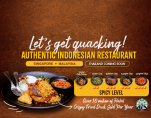
SINGAPORE – Media OutReach Newswire – 6 July 2026 – Bebek Goreng Pak Ndut, the rapidly expanding restaurant brand famous for its signature crispy fried duck and authentic Indonesian-style cuisine, today announced the upcoming grand opening of its fourth Singapore outlet at Sengkang Grand Mall, officially opening its doors on Saturday, July 11, 2026. This launch represents a key milestone in the brand’s aggressive regional growth strategy, which currently includes two successful high-volume locations in Malaysia and an upcoming market entry into Bangkok.
Built on a fast-turnover, highly accessible dining model, Bebek Goreng Pak Ndut is proving that affordable, everyday meals do not have to compromise on taste or quality. The brand focuses purely on operational efficiency and delivering exceptional value to the masses, making its famous fried duck and authentic Indonesian flavors accessible to everyone without the premium price tag.
”Our mission is simple: serve uncompromisingly authentic, high-quality food at a price that keeps customers coming back multiple times a week,” said Joni Anson, Founder of Bebek Goreng Pak Ndut. “With this new Sengkang location, our thriving outlets in Malaysia, and our upcoming expansion into Bangkok, we are showing that a great dining experience should be affordable, fast, and consistently delicious.”
To celebrate the grand opening with the Sengkang community, the new outlet will be offering an exclusive 23% storewide discount throughout the weekend of July 11 and 12, 2026.
For more information, to view the menu, or to find the nearest location, please visit www.bebekgorengpakndut.com.sg or follow the brand on Instagram and TikTok at @bebekgorengpakndut_sg. Hashtag: #BebekGorengPakNdut
The issuer is solely responsible for the content of this announcement.
About Bebek Goreng Pak Ndut
Bebek Goreng Pak Ndut is a regional multi-outlet restaurant brand specializing in authentic, affordable Indonesian-style cuisine. Operating a high-efficiency central kitchen and multiple fast-casual outlets across Singapore and Malaysia, the brand is dedicated to delivering consistent, high-quality meals at accessible price points.
Parrot OS 7.3 has been released with a clear emphasis on faster execution, cleaner images and smoother daily use, marking a refinement-led update for the security-focused Linux distribution rather than a broad expansion of its tool catalogue. The update rebuilds every edition of the operating system and targets two areas that matter to security researchers, penetration testers, developers and privacy-focused users: better performance on modern hardware and […]
Arabian Post Staff -Dubai Mastercard has joined a consortium of more than 140 companies backing Open USD, a new dollar-pegged stablecoin designed to lower the cost of business payments and widen corporate use of blockchain-based settlement. The initiative, run by Open Standard, brings together payment networks, banks, technology companies, crypto platforms and asset managers in an attempt to create a shared stablecoin infrastructure rather than a token […]
Abu Dhabi has unveiled two collaborations with the Massachusetts Institute of Technology to strengthen cancer research, artificial intelligence-enabled oncology and faster translation of laboratory discoveries into patient care. The initiatives, announced during BIO International Convention 2026 in San Diego, bring together the Department of Health – Abu Dhabi, Future Health – A Global Initiative by Abu Dhabi, and MIT’s Koch Institute for Integrative Cancer Research. The move […]
China’s cinemas are being encouraged to add AI agents, karaoke rooms, coffee bars, retail corners and cultural events as regulators seek to turn theatres into broader entertainment venues rather than spaces dependent only on film screenings. The policy direction was set out in a notice issued by the National Film Administration and the State Administration for Market Regulation, outlining 10 measures across business diversification, brand management and […]
Singapore has set out a two-decade plan to reshape Sentosa and neighbouring Brani into a larger leisure and lifestyle district, with new attractions, hotels, beaches, transport links and coastal protection works expected to open in phases from the early 2030s.
The Greater Sentosa Master Plan brings the 120-hectare Brani under Sentosa’s development framework, creating a larger tourism precinct at a time when Singapore is refreshing its visitor economy and preparing for stronger regional competition in leisure, hospitality and events. The project is being positioned as the biggest transformation of Sentosa since the island was developed as a resort destination more than five decades ago.
Sentosa drew more than 16 million visitors between April 2024 and March 2025. Once the master plan is fully delivered, the enlarged precinct is projected to attract about twice that number. The long development period reflects the scale of infrastructure works, the planned relocation of port operations from Brani to Tuas by 2027, and the need to combine commercial expansion with coastal and ecological safeguards.
A major element of the plan is Brani West, which has been earmarked as one of the largest future sites for attractions development. Authorities are engaging potential partners and concept owners, though details on investors, operators and the cost of the project have not been disclosed. The lack of a public investment figure leaves open questions on funding, phasing and commercial returns, particularly as large tourism projects face higher construction costs, labour constraints and changing traveller preferences.
The plan also includes new landmarks on Sentosa itself. Imbiah Canopy is proposed as a vantage point on Mount Imbiah, with food and beverage outlets, retail space, event areas and links to nature-based activities. A sheltered elevated forest canopy route, Imbiah Lookout Walk, is expected to connect Sensoryscape with Imbiah Lookout and nearby walking trails. Later phases are intended to expand nature and heritage routes, with the possibility of linking Sentosa’s green areas to the Southern Ridges on the mainland.
Along Siloso Beach, a new venue called Sensorium is being planned as a lifestyle and indoor attraction hub capable of hosting events and festival activity. The broader beach redevelopment will cover Siloso, Palawan and Tanjong, where coastal protection works will be paired with new leisure uses. Concepts under study include beach clubs, coastal activities, treetop dining, and a floating boardwalk linking small islets along Sentosa’s 3km beachfront.
Transport is another central feature. The proposed Island Heart Transport Hub will serve as a new arrival point connecting Sentosa and Brani, while a new people-mover system is expected to replace the Sentosa Express monorail. The new system is intended to increase capacity and provide smoother movement from the mainland through Brani and across Sentosa. Water taxis and additional waterfront links are also being examined, while the Singapore Cable Car will continue to form part of the wider mobility network.
The transformation is tied to wider planning along Singapore’s southern waterfront, a 30km belt stretching from Gardens by the Bay East to Pasir Panjang. That corridor is expected to include new residential, commercial, recreational and entertainment spaces as port activities shift westwards. Greater Sentosa is also being developed as Singapore prepares for Changi Airport Terminal 5, due around the mid-2030s, which will add about 50 million passengers a year in its first phase to the airport’s current capacity of 90 million.
The tourism strategy goes beyond building new attractions. Singapore is seeking to broaden its appeal from stopover travel and convention traffic to experience-led visits, family tourism, events, coastal leisure and premium lifestyle spending. Resorts World Sentosa is also expanding its offer, with a Waterfront Lifestyle Development scheduled for completion in 2030 and Super Nintendo World planned for Universal Studios Singapore. These additions are expected to support a shift from single-attraction visits towards longer, multi-part itineraries across the island.
Sustainability has been built into the planning narrative, reflecting the vulnerability of a low-lying city-state to sea-level rise and coastal erosion. Sentosa has about 16km of coastline, making protection works a practical requirement rather than an optional enhancement. The master plan includes ecological connectivity, shaded routes, greenery, thermal comfort measures and coastal resilience features. Sensoryscape, a 350m connector linking Resorts World Sentosa to the beaches, is being used as an early example of infrastructure that combines visitor flow, planting, accessibility and digital experiences.
Adani Enterprises has expanded its qualified institutional placement to ₹150 billion after demand from large investors exceeded the original ₹100 billion target, giving Gautam Adani’s flagship company a sizeable pool of equity capital for its next phase of infrastructure and industrial expansion.
The share sale, opened to institutional investors this week, drew bids of about ₹380 billion, or roughly 3.8 times the base offer. The indicative price was set at ₹2,883 a share, below the regulatory floor price of ₹3,034.68 and at a discount to the stock’s previous close, reflecting the typical pricing structure used to secure large-block institutional participation.
The enlarged issue marks one of Adani Enterprises’ biggest equity-raising exercises since the group was hit by a market rout in 2023 following allegations by US short-seller Hindenburg Research. The conglomerate denied wrongdoing, and group companies have since rebuilt access to capital through a mix of equity, debt, asset recycling and strategic partnerships.
The strong response to the placement signals that institutional investors are again willing to back the group’s growth strategy, even as they continue to price in governance, leverage and execution risks. The investor book included global funds and domestic asset managers, with demand high enough for the company to lift the deal size by 50 per cent.
Adani Enterprises is the incubator of the group’s newer businesses. Its portfolio spans airports, roads, data centres, green hydrogen, mining services, defence, solar manufacturing and other infrastructure-linked ventures. The company has been central to the group’s plan to build large operating platforms before eventually listing or separating mature units.
The latest fundraising comes as the group accelerates capital spending across transport, energy transition and materials. Its airports business operates eight airports and is preparing for the opening of Navi Mumbai International Airport, a project expected to strengthen the group’s presence in aviation infrastructure. Data centres and green hydrogen remain capital-intensive bets that require long gestation funding and steady access to institutional capital.
The timing also follows Adani Enterprises’ rights issue of about ₹250 billion completed in late 2025, which was oversubscribed. That offer was used to support capital expenditure, debt repayment and shareholder loan obligations. The new placement gives the company additional flexibility at a time when infrastructure companies are competing for long-duration capital amid rising demand for logistics, power, digital infrastructure and manufacturing capacity.
The share sale is also significant because it reduces reliance on borrowings for the next leg of expansion. Equity funding can ease pressure on balance sheets and improve investor perception of leverage, particularly for companies pursuing several projects at once. At the same time, the discounted pricing means some dilution for existing shareholders, a common trade-off in large institutional placements.
Market reaction was measured. Adani Enterprises shares initially faced pressure after pricing details emerged but later stabilised, suggesting investors had largely anticipated a discount. The stock has recovered substantially from its 2023 lows, though it remains closely watched because of the group’s debt profile, promoter holdings and regulatory scrutiny around past allegations.
The company’s investment cycle has broadened further with plans linked to a major aluminium project in Odisha in partnership with Abu Dhabi’s International Holding Company. The proposed project, valued at about $11.5 billion, is expected to include bauxite mining, alumina refining, aluminium smelting and downstream capacity. The partnership underscores the group’s continuing effort to deepen industrial manufacturing alongside infrastructure.
IHC has been a notable backer of the group through periods of market volatility. Its involvement provides strategic weight to Adani’s expansion into metals, a sector that requires heavy upfront investment, access to raw materials, power security and strong execution discipline. Aluminium demand is being driven by transport, packaging, power transmission, construction and renewable energy infrastructure.
Adani Enterprises’ fundraising also fits a broader trend across the equity market, where companies have used qualified institutional placements to raise growth capital while valuations remain supportive. QIPs allow listed companies to place shares with large investors without the longer timelines associated with some other public offerings. For issuers, the format is faster; for institutions, it provides access to sizeable allocations in liquid companies.