San Francisco played host to a decisive moment for the cybersecurity industry as winners of the 2026 Cybersecurity Excellence Awards were unveiled during the RSA Conference, highlighting a sharp pivot toward artificial intelligence-driven security as the sector’s defining battleground. Organised by Cybersecurity Insiders, the awards recognised companies, technologies and professionals demonstrating leadership across a broad range of categories. This year’s results underscored the growing urgency surrounding AI […]
Arabian Post Staff -Dubai Dubai’s healthcare ecosystem is set for a strategic boost after Dubai Health and Dubai Future District Fund formalised a partnership aimed at building a global health technology launchpad, underscoring the emirate’s ambition to position itself at the forefront of digital medicine and biotech innovation. The agreement, structured as a memorandum of understanding, outlines a framework to accelerate investment, innovation and talent development in […]
Dubai has unveiled an ambitious expansion of its pedestrian infrastructure under a new “Dubai Walk” initiative, with authorities outlining plans to reshape parts of the historic Al Ras district into a walkable, transit-connected urban zone by 2027. The project, anchored in the Dubai Urban Plan 2040, aims to deliver 12 kilometres of pedestrian-friendly routes and 5 kilometres of dedicated cycling paths in Al Ras, one of the […]
Arabian Post Staff -Dubai Etihad Airways has launched its first direct service to Charlotte, marking a strategic expansion into the southeastern United States as the Abu Dhabi-based carrier seeks to strengthen transatlantic connectivity and tap into a growing business travel market. The inaugural flight landed at Charlotte Douglas International Airport on March 20, operated by the Airbus A350-1000, one of the airline’s most advanced long-haul aircraft. The […]
Securing maritime access through the Strait of Hormuz has emerged as the most attainable strategic objective for Washington and Tel Aviv, as policymakers recalibrate expectations in a prolonged confrontation with Tehran that has defied earlier ambitions of regime change or a complete halt to nuclear activity. Officials on both sides have signalled a growing consensus that ensuring uninterrupted passage through the narrow waterway — a chokepoint for […]
ManpowerGroup Greater China and Beacon Group Partner with FGA Trust and Payment Asia to Launch “Talent in HK” Program
HONG KONG SAR – Media OutReach Newswire – 25 March 2026 – ManpowerGroup Greater China Limited (Stock Code: 2180.HK), a leading global workforce solutions provider, and Beacon Group (parent company BExcellent Group Holdings Limited, listed on the Main Board of the HKEX, Stock Code: 1775.HK), a renowned Hong Kong educational institution, today announced the joint launch of the “Talent in HK” Youth and Family Life Service Security Program.
From left to right: Ms. Lancy Chui, Senior Vice President of ManpowerGroup Greater China; Ms. June Leung, Founder of Beacon Group; Ms. Helen Chen, Chief Strategy Officer of FGA Trust
This forward-looking initiative is supported by Payment Asia, a leading payment platform in Hong Kong, providing streamlined payment channels. FGA Trust will serve as the third-party custodian. The program aims to establish an institutionalized, transparent, and collaborative ecosystem, providing end-to-end protection from education and academic support to life services and career consultancy, while injecting long-term momentum into Hong Kong’s strategy to attract and retain international talent.
As Hong Kong continues to attract top-tier students globally, many non-local students face challenges adapting to a new cultural environment upon arrival. Recently, there has been a rising trend in crimes targeting this demographic, including scams involving impersonation of government or academic institutions, as well as telecommunications and online fraud. These incidents pose substantial threats to talents’ personal and financial security, causing significant concern for their families.
In response to these social concerns and to reinforce the comprehensive security net for international students, ManpowerGroup, Beacon Group, and FGA Trust have initiated this program to provide stable, orderly support and ensure the long-term residency of talent in Hong Kong.
Holistic Talent Services: Strengthening Hong Kong’s Foundation as an International Hub
The “Talent in HK” program offers comprehensive life services for students and their families. Beacon Group will provide a long-term study plan spanning three to five years, including customized education, admissions services, profile enhancement, and application support. Simultaneously, ManpowerGroup will facilitate internships, visa arrangements, and long-term career development services.
Once a student receives an admission offer, parents can inject tuition and living expenses through Payment Asia’s official channels into a dedicated project account monitored by FGA Trust. This ensures financial security and the precise disbursement of funds. The entire process will be followed by an audit report, ensuring a smooth transition from campus to the workplace. The program’s website is expected to go live around mid-April this year, with official applications opening in May.
In an era of intensifying global competition for higher education and talent, Hong Kong remains a pivotal international financial and educational hub. Non-local students are not only a vital component of the education system but also a driving force for cross-cultural exchange and future professional talent. They are estimated to contribute over HK$10 billion in tuition fees annually, serving as a significant pillar of the local economy.
Multi-Party Collaboration: A New Paradigm for Talent Services
The core strength of the program lies in its innovative collaborative model, bringing together industry leaders:
ManpowerGroup Greater China (2180.HK): As the exclusive career development partner of the project, ManpowerGroup will leverage its extensive network and expertise to provide career planning, internship matching, and employment guidance, bridging the gap between graduation and professional life, and help students to have a smooth transition from academies to careers.
Beacon Group (parent company BExcellent Group Holdings Limited 1775.HK): As one of the initiators of the project with 37 years of experience in the education sector, Beacon Group will provide personalized academic consulting and profile enhancement, provide better guidance and adaptation for candidates to pursuit their study in Hong Kong. Its deep roots in the education sector help families navigate educational choices and avoid scams or unnecessary hurdles.
FGA Trust (TCSP license: TC008341): As the structural architect and asset trustee, FGA Trust will establish a specialized trust framework with individual sub-accounts for each student. This ensures funds for tuition, housing, and living expenses are managed with clear traceability, mitigating risks of fraud or improper spending.
Payment Asia: As the primary channel partner, Payment Asia provides secure and compliant collection channels, ensuring the seamless transfer of funds into the program’s dedicated accounts.
Studying abroad is the starting point for talent development in Hong Kong. Proactive financial arrangements reduce uncertainty during status transitions and life settlement, increasing the willingness of talent to remain in the city long-term. Data suggests that initiatives like the Top Talent Pass Scheme (TTPS) continue to drive local consumption, with rents for small-to-medium residential units expected to rise by 5% this year.
Ms. Lancy Chui, Senior Vice President of ManpowerGroup Greater China, stated: “We understand the strong desire of non-local graduates to work in Hong Kong. By providing proactive career planning and internship arrangements, we can reduce uncertainty during their transition into the local workforce, helping them settle and contribute to Hong Kong’s market.”
Ms. June Leung, Founder of Beacon Group, noted: “Talent cultivation requires long-term education. We are delighted to initiate this program, integrating academic support with life security and career development to provide a comprehensive, forward-looking environment for talent growth.”
Ms. Helen Chen, Chief Strategy Officer of FGA Trust, added: “Protecting the financial security and well-being of international students is both a social responsibility and a key to consolidating Hong Kong’s status as an international education hub. This program ensures a seamless transition from study to employment, transforming international talent into a long-term driver for Hong Kong’s development.”
The launch of “Talent in HK” marks a significant step from fragmented support to a comprehensive ecosystem. Through institutional innovation and cross-sector collaboration, the program aims to provide a safe harbor for international students and their families, contributing to Hong Kong’s goal of becoming a global talent hub. Hashtag: #FGA #Trust #Talent #Career
The issuer is solely responsible for the content of this announcement.
FGA Trust
FGA Trust (TCSP License No. TC008341) is a premier trust and fiduciary services provider headquartered in Hong Kong, offering comprehensive wealth solutions to an international clientele. We specialize in trustee services, all-asset custody, and strategic financial planning. This core expertise is uniquely enhanced by our integrated lifestyle management, delivering a truly holistic approach to wealth preservation and growth.
Reliance Industries has secured about five million barrels of crude oil from Iran in a transaction estimated at more than $350 million, signalling a calculated return to a trade corridor constrained for years by geopolitical tensions and sanctions.
The purchase, attributed to cargoes loaded through intermediaries and structured channels, underscores a shifting pattern in global oil flows as refiners seek cost advantages amid volatile benchmarks. Market participants said the acquisition reflects both commercial pragmatism and a broader recalibration of sourcing strategies by large refiners navigating supply disruptions and pricing differentials.
Reliance, which operates one of the world’s largest refining complexes at Jamnagar, has historically processed Iranian crude due to its favourable refining characteristics and pricing structure. The latest move suggests the company is again exploring opportunities linked to Iranian grades, which are often discounted relative to comparable Middle Eastern benchmarks.
Iran’s oil exports have been subject to US sanctions since Washington withdrew from the nuclear agreement in 2018. Those restrictions significantly curtailed Tehran’s ability to sell crude openly, pushing exports into opaque channels involving ship-to-ship transfers, reflagging, and complex payment mechanisms. Despite these constraints, Iran has continued to move significant volumes to Asia, particularly to buyers willing to navigate compliance risks.
Industry analysts say the renewed interest in Iranian oil stems from tightening margins and evolving global supply dynamics. Production curbs by OPEC+ members, combined with geopolitical disruptions affecting Russian and Middle Eastern supplies, have altered trade routes and pricing structures. Refiners are increasingly prioritising flexibility, often sourcing from multiple regions to optimise margins.
Reliance’s procurement strategy has expanded notably over the past two years, with the company becoming a major buyer of discounted crude, including shipments linked to Russia following Western sanctions. The latest Iranian cargoes appear to align with this broader approach, where cost competitiveness outweighs traditional sourcing patterns.
Energy traders indicate that the cargoes in question were likely acquired through intermediaries rather than direct state-to-company contracts, a common practice in sanctioned markets. Such arrangements can involve layered ownership structures, making it difficult to trace the origin of the oil definitively. Payment mechanisms also tend to bypass conventional banking channels, relying on alternative currencies or barter-like systems.
Officials in Tehran have repeatedly stated that oil exports remain a central pillar of the country’s economic resilience, even under sanctions. Output has gradually recovered, with production estimates rising above 3 million barrels per day in recent months. Much of this increase has been driven by exports to Asia, where demand remains robust despite regulatory scrutiny.
Global oil prices have remained sensitive to geopolitical developments, with Brent crude fluctuating amid concerns over supply security and demand recovery in major economies. The availability of discounted barrels from sanctioned producers has created a parallel market that exerts downward pressure on certain price segments, benefiting refiners capable of accessing such supplies.
For Reliance, the ability to process a wide range of crude grades provides a strategic advantage. Its refining configuration allows it to handle heavier and more complex crudes, including those from Iran, Venezuela, and Russia. This flexibility enables the company to capitalise on arbitrage opportunities that may not be available to less sophisticated refiners.
Policy implications remain a key consideration. While there has been no formal indication of a shift in sanctions policy by Western governments, enforcement patterns have shown variability. Analysts note that enforcement intensity often fluctuates depending on broader diplomatic priorities, creating windows of opportunity for market participants.
New Delhi has maintained a delicate balance in its energy diplomacy, emphasising the need for affordable supplies while adhering to international frameworks. Purchases of crude from sanctioned producers have typically been structured to avoid direct violations, with companies relying on legal and compliance teams to manage exposure.
Shipping data and market intelligence suggest that Iranian crude continues to reach global markets through a network of vessels operating under flags of convenience. These ships often disable tracking systems or conduct transfers in international waters, complicating monitoring efforts.
PRsonaME, an artificial intelligence-driven platform focused on personal branding and leadership positioning, has entered the market with ambitions to reshape how professionals build influence across regions including the Middle East, the United Kingdom and India. The launch reflects a broader shift in corporate and entrepreneurial circles where digital identity and narrative control are becoming as critical as operational performance. The platform positions itself at the intersection of […]
Arabian Post Staff -Dubai Sharjah Asset Management has secured a “Best Place to Work” certification, signalling growing emphasis within Gulf investment entities on employee engagement, corporate culture and organisational wellbeing as competition for talent intensifies across the region. The company, which oversees a diversified portfolio spanning real estate, infrastructure and strategic investments for the Sharjah government, said the recognition reflects sustained efforts to build a supportive and […]
Arabian Post Staff -Dubai Abu Dhabi’s social development agenda has gained fresh momentum as the Department of Community Development signed a partnership with Mbank aimed at strengthening the financial resilience of families across the emirate, reflecting a broader policy shift towards preventive welfare and long-term economic stability. The agreement, announced as part of initiatives aligned with the UAE’s Year of Family, focuses on enhancing access to financial […]
Capcom’s latest instalment in its long-running survival horror franchise signals a decisive break from its own mythology, as Resident Evil Requiem dismantles legacy narratives to reposition the series for a new era. Requiem arrives with a clear narrative intent: to close the chapter on a sprawling continuity that has grown increasingly complex since the early 2000s. By directly confronting the consequences of Resident Evil 6, the game […]
Arabian Post Staff -Dubai Ajman University has introduced a doctoral programme in artificial intelligence, positioning it as a research-intensive offering backed by faculty ranked among the world’s top 0.5% of scientists, as the institution seeks to strengthen its standing in advanced technology education and align with the UAE’s broader digital economy ambitions. The new PhD in Artificial Intelligence is designed to focus on high-impact research across areas […]
Dubai’s Roads and Transport Authority has awarded a contract to begin Phase I of a city-wide pedestrian infrastructure programme centred on Al Ras, marking a step in efforts to reshape mobility patterns in one of the emirate’s oldest commercial districts. Officials said the project forms part of the Dubai Walk Master Plan, a long-term initiative designed to expand walkability, improve connectivity between transit hubs and heritage areas, […]
A major expansion of Yas Waterworld on Yas Island is scheduled to open in April, marking a significant addition to Abu Dhabi’s leisure and tourism portfolio as developer Miral pushes ahead with plans to position the emirate as a global entertainment destination. Miral, which oversees the development of Yas Island’s attractions, said the upgraded waterpark will introduce a broad range of new rides, attractions and immersive experiences […]
Amazon is developing an artificial intelligence-driven smartphone aimed at revitalising its voice assistant ecosystem, marking a strategic return to hardware after the commercial failure of its Fire Phone. The project, internally referred to as “Transformer”, is understood to centre on embedding generative AI deeply into the device’s operating system, signalling a shift from voice-first assistants to context-aware digital agents. The initiative comes at a time when large […]
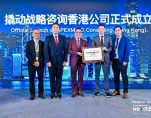
HONG KONG SAR – Media OutReach Newswire – 24 March 2026 – The Apexmind Summit 2026 was grandly held in Hong Kong today. The summit brought together leading global strategists, scholars, and business and policy leaders to engage in high-level dialog on how strategic opportunities are reshaping the competitive landscape. During the event, the Apexmind Consulting Hong Kong Office Inauguration was officially announced, and Founder & Chairman, Apexmind Consulting, Mr. Yao Rongjun was honored as an Honorary Fellow of the Institute of Management Consultants Hong Kong (IMCHK). These dual milestones mark that the Chinese strategic consulting force, represented by Apexmind, is actively achieving a “cultural handshake” with global business through Hong Kong. Under the vision of “Strategic Co-evolution”, it advances the global expansion in a meaningful and tangible way.
Official Launch of Apexmind Consulting Hong Kong Office
Redefining the Logic of Competition and Interpreting the Essence of Strategy in the New Era
Mr. Yao, Founder & Chairman of Apexmind Consulting, delivered a keynote, offering a profound analysis of how competitive dynamics are evolving in the new era. He emphasized: “Competition is not about meeting demand, but about winning the mind. The purpose of business is not to create customers, but to occupy a position in the mind. Business is not about improving efficiency, but about winning people’s hearts. Decisions should not be made from the inside out, but from the outside in. Strategy is not the sum of parts, but an integrated system.” In his view, as Chinese enterprises transition from product globalization to brand and model globalization, the global market urgently requires a strategic language that is both universally applicable and capable of engaging in dialog with the world.
Gaining Recognition from International Professional Forces, Co-building a New Global Consulting Ecosystem
Nicholas Warn, Chair of the International Council of Management Consulting Institute, delivered a keynote and expressed his vision for deep cooperation with Apexmind to collaboratively build a global business ecosystem and drive industry evolution. He stated, “What Chinese consultancies can bring to us, particularly consultancies like Apexmind, is an enrichment of what we have already.” This recognition from a global authoritative consulting organization, combined with Mr. Yao’s same-day honor as the IMCHK Honorary Fellow, signals a pivotal shift that Chinese strategy consulting is evolving from a recipient of global business wisdom into a co-creator of original strategic thought systems.
Identifying Seven Strategic Opportunities, Mapping the Growth Blueprint for Chinese Enterprises
Co-President, Apexmind Consulting, Mr. Chen Ji released “Seven Strategic Opportunities for Chinese Enterprises” on site, presenting a structured strategic methodology that provides companies with clear, actionable growth pathways and breakthrough directions. Each opportunity reflects insights refined through real-world strategic engagements with 62 enterprises. These frameworks enable companies to transform external uncertainty into sustainable growth certainty.
From Hong Kong to the World: Powering Shared Growth Across the Greater Bay Area
Distinguished speakers from academia, industry associations, and business communities contributed further insights. Professor Shi Weilei of The Chinese University of Hong Kong, from a global perspective, proposed that the transnational strategy of Chinese enterprises must anchor a balanced core between localization and global collaboration. Mr. Yang Yang, Professor of the Hong Kong University of Science and Technology and Director of HKUST Shanghai Center, illustrated the value driven by disruptive innovation scenarios in smart cities, noting that data and algorithms in the AI era are opening entirely new competitive tracks for global entrepreneurs.
Daniel Chan, President of the Institute of Management Consultants Hong Kong (IMCHK), stated that Hong Kong is upgrading from a “Super Connector” to a “Super Value-Chain Enhancer”. By building a strategic bridge for Chinese enterprises going global and international firms entering the market through two-way empowerment, Hong Kong demonstrates its unique value as a hub. Dr. Huang Weihong, Vice President of The Chinese Manufacturers’ Association of Hong Kong, shared a Hong Kong perspective, interpreting the pathways for brands to achieve strategic breakthroughs in the new consumer wave by leveraging regional advantages and strategic wisdom.
The establishment of Apexmind Consulting Hong Kong Office and the successful conclusion of this summit are a small step in Apexmind’s global journey, but a significant leap for Chinese strategy consulting toward “Cultural Handshake, Strategic Co-evolution”. With a proven track record of enabling 62 enterprises to achieve billion-level growth at scale, Apexmind Consulting continues to drive the industry forward from setting local benchmarks to contributing to global standards. Moving ahead, Apexmind will remain committed to an open vision, bringing strategy frameworks rooted in China and validated through real-world practice to the international stage. In the evolving landscape of global business, Apexmind Consulting is poised to elevate the Chinese consulting industry to new global heights. Hashtag: #ApexmindConsulting
The issuer is solely responsible for the content of this announcement.
Messaging platform Telegram has fully repaid bonds issued five years ago, marking a significant financial milestone as the company signals sustained profitability and stronger investor confidence, according to a statement from its founder Pavel Durov. Durov confirmed that the debt raised in 2021 has now been cleared in full, underscoring a turnaround in the platform’s financial trajectory. The repayment follows a period during which Telegram introduced a […]
Microsoft is moving to scale back several artificial intelligence-driven features in Windows 11 while prioritising performance improvements, a shift that reflects mounting user feedback over system slowdowns and intrusive automation tools. The company has indicated that upcoming updates will focus on responsiveness, stability and user control, marking a departure from an aggressive push to embed AI across the operating system. The recalibration comes after months of criticism […]
Duos Edge AI has expanded its footprint in Texas with the launch of a second edge data centre in Amarillo, signalling a push to localise artificial intelligence infrastructure and reduce latency for enterprise users in underserved regions. The new facility, announced this week, is designed to support high-performance computing workloads that require rapid data processing at the network’s edge, including real-time analytics, computer vision and industrial automation. […]
Primark is set to enter the Gulf retail market with its first store in Dubai scheduled to open on March 26 at Dubai Mall, marking a significant step in the British-Irish fashion retailer’s expansion beyond its traditional European strongholds. The Dublin-founded company, known for its low-cost apparel and homeware, will simultaneously establish a presence across three major shopping centres in the UAE over a two-month period. Following […]
Bitcoin miners are facing a widening gap between production costs and market prices, yet data shows a marked slowdown in selling activity, raising questions about strategy and resilience across the sector. Bitcoin has been trading near $68,000, while estimates of the average cost to mine a single coin have climbed towards $85,000 or higher for many operators. The divergence has been driven largely by a sharp rise […]
Korean artificial intelligence startup Upstage is in discussions to acquire around 10,000 advanced AI accelerators from Advanced Micro Devices as it seeks to scale domestic computing capacity and reduce reliance on overseas infrastructure, signalling an intensifying race to secure high-performance hardware in Asia’s AI sector.
The proposed deal centres on AMD’s latest data centre-grade accelerators, designed to rival dominant offerings in the global AI chip market. Upstage, known for its large language model development and enterprise AI services, is positioning the potential purchase as a step towards building sovereign computing capabilities within Korea, where demand for generative AI infrastructure is rising sharply across finance, manufacturing and public-sector applications.
People familiar with the discussions indicate that the scale of the planned acquisition reflects both immediate computational needs and longer-term ambitions to establish a domestic AI ecosystem capable of training and deploying advanced models without depending heavily on foreign cloud providers. The move aligns with broader efforts in several countries to localise AI infrastructure amid geopolitical concerns and supply chain constraints.
AMD has been expanding its footprint in AI hardware as companies seek alternatives to entrenched suppliers. Its latest accelerators, part of the MI300 series, are designed to handle large-scale model training and inference workloads with improved memory bandwidth and energy efficiency. Industry analysts view Upstage’s interest as a sign that AMD’s strategy of targeting hyperscalers and emerging AI players is gaining traction beyond North America.
Upstage has grown steadily since its founding, focusing on document processing, natural language understanding and enterprise automation. Its proprietary models have been deployed across industries including banking and legal services, where demand for domain-specific AI solutions continues to expand. Executives at the company have previously emphasised the need for greater control over computing resources, citing cost volatility and limited access to high-performance GPUs as barriers to scaling.
Securing a large volume of accelerators could enable Upstage to train more advanced models locally while offering competitive AI services to regional clients. It also positions the company to compete with larger global players that benefit from extensive infrastructure investments. Market observers note that access to compute power has become a defining factor in the AI race, with startups increasingly seeking direct hardware procurement rather than relying solely on cloud-based capacity.
The discussions come amid tightening supply conditions for AI chips, driven by surging demand from technology firms, research institutions and governments. Export controls and trade restrictions have further complicated access to advanced semiconductors, prompting countries in Asia and Europe to accelerate domestic capacity-building initiatives. Korea, home to major semiconductor manufacturers, has been exploring strategies to strengthen its position across the AI value chain.
Government-backed initiatives have aimed to support AI development through funding, talent programmes and infrastructure investments. The potential deal between Upstage and AMD reflects private-sector momentum complementing these policy efforts, as companies seek to capitalise on the growing importance of AI across economic sectors.
Competition in the AI hardware market has intensified as AMD, Intel and other players attempt to challenge established leaders. While Nvidia maintains a dominant position, particularly in training large language models, customers are increasingly evaluating alternative suppliers to diversify risk and manage costs. AMD’s recent partnerships with cloud providers and enterprise customers highlight a shift towards a more competitive landscape.
Analysts caution that large-scale procurement of accelerators involves significant logistical and operational challenges, including data centre readiness, energy consumption and integration with existing software frameworks. Upstage would need to invest in infrastructure and engineering capabilities to fully utilise the hardware, particularly if it aims to build a self-sufficient AI platform within Korea.
At the same time, the strategic implications extend beyond a single company. A successful deployment of large-scale compute resources by Upstage could encourage other regional players to pursue similar investments, contributing to a broader decentralisation of AI development. This trend could reshape how AI capabilities are distributed globally, reducing the concentration of computing power in a handful of technology hubs.
Daily life across Cuba has become increasingly precarious as prolonged power cuts, dwindling fuel supplies and unreliable access to water combine to strain households already grappling with a fragile economy. Residents in Havana and provincial cities describe a routine shaped by uncertainty, with electricity outages stretching for hours and, in some regions, extending through entire days. The disruptions have intensified following tighter constraints on oil shipments, a […]
Two Indian-flagged liquefied petroleum gas carriers are navigating the Strait of Hormuz along a route close to Iran’s coastline, according to ship-tracking data, underscoring a cautious approach by operators as geopolitical tensions continue to shape shipping decisions in one of the world’s most critical energy corridors.
The vessels, loaded with LPG cargoes, are following a path similar to that taken by earlier ships that received clearance to transit the narrow waterway. Industry observers say hugging the Iranian side of the strait may reflect efforts to minimise exposure to potential risks amid heightened scrutiny of maritime movements in the region. The Strait of Hormuz, through which a significant share of global oil and gas exports passes, has long been vulnerable to disruption during periods of political friction.
Shipping analysts note that the altered routing strategy has become more visible as operators weigh safety considerations against the need to maintain steady energy flows. The decision to steer closer to Iran’s coast does not necessarily indicate a change in official navigation guidelines but highlights the adaptability of commercial shipping in response to perceived threats. Maritime insurers and charterers have been closely monitoring developments, with premiums and risk assessments adjusting in line with evolving conditions.
India’s reliance on imported LPG has grown steadily over the past decade, driven by expanding domestic consumption and government-backed programmes aimed at increasing access to cleaner cooking fuels. As a result, uninterrupted maritime supply chains are critical for meeting demand. The movement of Indian-flagged vessels through Hormuz carries added significance given the country’s position as a major energy importer and its exposure to volatility in global shipping lanes.
The route taken by these vessels follows earlier transits that were understood to have been cleared through established maritime coordination channels. While no formal restrictions have been imposed on passage through the strait, heightened alert levels in surrounding waters have prompted shipowners to adopt precautionary measures. These include adjustments to sailing speeds, increased onboard vigilance, and coordination with naval authorities in the region.
Tensions in West Asia have periodically raised concerns about the security of shipping through Hormuz. Episodes involving vessel seizures, drone activity, and naval manoeuvres have reinforced the strategic sensitivity of the waterway. Although large-scale disruptions have been avoided, even limited incidents can have ripple effects across global energy markets, influencing freight rates, insurance costs, and delivery schedules.
Market participants indicate that LPG shipments have remained largely uninterrupted, but logistical complexities have increased. Charter rates for gas carriers have shown signs of volatility, reflecting both demand dynamics and risk premiums associated with transiting high-risk zones. Traders and refiners are factoring in longer voyage times and potential delays when planning cargo movements.
Officials and industry executives emphasise that international maritime law guarantees freedom of navigation through straits used for international transit, including Hormuz. However, the practical execution of that principle often depends on the prevailing security environment. Naval patrols by regional and international forces continue to play a role in deterring threats and ensuring safe passage for commercial vessels.
Energy analysts point out that India sources LPG from multiple suppliers, including producers in West Asia and beyond, making the Hormuz route indispensable. Any sustained disruption could have implications for domestic supply chains, pricing, and inventory management. At the same time, diversification strategies, including alternative sourcing and storage capacity expansion, are being explored to mitigate potential risks.
The movement of the two LPG carriers also reflects broader trends in global shipping behaviour, where operators increasingly rely on real-time intelligence and data analytics to inform routing decisions. Advances in vessel tracking and communication technologies have enhanced situational awareness, enabling more responsive navigation strategies in sensitive regions.
Shipping companies have also strengthened coordination with flag states and port authorities to ensure compliance with safety advisories and regulatory requirements. Crew training and contingency planning have gained prominence, with a focus on preparedness for a range of scenarios, from mechanical issues to security incidents.




 https://www.linkedin.com/company/fga-trust/