Michael Saylor has indicated that his company could expand its already vast Bitcoin holdings, renewing debate over corporate exposure to the world’s largest cryptocurrency and reinforcing his long-standing conviction that digital assets will define what he calls the “Orange Century”. Saylor, executive chairman of MicroStrategy, now rebranded as Strategy, shared remarks on social media that were widely interpreted by market participants as a signal of further purchases. […]
Dubai has outlined the next phase of a Dh690 million overhaul of Hessa Street, setting out plans to ease persistent congestion along one of the city’s busiest east–west corridors and shorten daily travel times for thousands of motorists. Officials said the upgraded stretch will introduce additional lanes, new signal-controlled junctions and grade-separated interchanges designed to improve traffic flow between Sheikh Zayed Road and Al Khail Road. The […]
Apple is preparing to equip the iPhone with a more visually intelligent assistant as it integrates a new artificial intelligence model, known as Ferret-UI, into the software foundation of iOS 18. The development marks a shift in how Siri may interpret and respond to what appears on a user’s screen, enabling more precise app navigation, icon recognition and contextual understanding. The Ferret-UI model, introduced through Apple’s machine […]
Aston Martin is exploring the sale of branding rights linked to its Formula One team as the luxury carmaker warns that losses are set to deepen, underscoring the financial strain facing one of Britain’s most storied automotive marques. The company said it is assessing options to monetise the commercial value of the Aston Martin name within Formula One, a move that could involve selling or licensing branding […]
Starbucks Corp’s India venture is accelerating store openings and introducing new menu innovations, including protein foam coffee, as it deepens its bet on the world’s most populous country even while losses widen. Tata Starbucks Pvt., the 50:50 joint venture between Starbucks Corporation and Tata Group, plans to prioritise scale over short-term profitability, according to chief executive Sushant Dash. The strategy underscores a long-term view of India as […]
Arabian Post Staff -Dubai President Donald Trump has declared an immediate increase of the global tariff rate to 15 per cent, intensifying a high-stakes confrontation over trade policy following a ruling by the United States Supreme Court that he exceeded his authority with earlier broad tariff measures. The move comes as he invoked a different legal framework to maintain pressure on foreign producers and to limit what […]
Belgian accessories brand Kipling is sharpening its focus on the Gulf as it unveils a redesigned flagship at Dubai Mall, betting that immersive retail and a renewed emphasis on its playful DNA will reconnect it with shoppers across the region. Domitille Parent, a senior executive overseeing the label’s regional strategy, said the store’s overhaul marks more than a cosmetic refresh. It signals a broader repositioning aimed […]
Agentic artificial intelligence is forcing a fundamental reassessment of how enterprise software is sold, bought and priced, with implications for licensing models, cloud economics and the broader SaaS market worldwide. As autonomous AI agents that can plan, execute and optimise complex workflows proliferate across enterprises, traditional per-seat software licensing is coming under pressure, major vendors are redesigning pricing frameworks and investors are recalibrating valuations around AI’s transformative potential.
Industry executives and analysts say that agentic AI – autonomous systems that operate beyond simple generative tasks to perform multi-step functions without constant human direction – is altering the value proposition of enterprise software. Organisations are increasingly demanding pricing that reflects outcome-based performance and consumption rather than fixed seat counts, pushing large software providers to experiment with enterprise licence agreements that bundle AI capacity with predictable costs and shared risk. This shift is expected to reshape cloud economics by altering how revenue and costs are aligned in the era of pervasive AI automation.
The software industry’s long reliance on per-seat or subscription models is facing disruption as AI agents demonstrate the ability to automate work historically done by humans. Gartner forecasts that around 40 per cent of enterprise software applications will feature embedded task-specific AI agents by the end of this year, exponentially up from a fraction only a short time ago. Enterprises are seeking simpler, more transparent pricing arrangements that reflect AI usage and business outcomes, rather than paying for seats that may no longer correspond to human users in traditional roles.
Salesforce and other leading software vendors have moved to reframe their pricing strategies for an agent-centric world. Executives have described new Agentic Enterprise Licence Agreements that offer “all you can eat” access to AI-powered tools and platforms at agreed-upon costs, designed to give customers confidence to scale AI deployments without unpredictable usage charges. These agreements represent a departure from legacy licence structures and a bet that long-term customer engagement will outweigh short-term licence profitability concerns.
Investors are already pricing in uncertainty about how this transition will unfold. Episodes of sharp stock sell-offs in global software equities have highlighted market anxiety about whether traditional enterprise software will maintain its relevance as agentic AI systems gain traction. While some market observers argue that fears of widespread obsolescence are overstated, the volatility reflects genuine debate about how software demand will evolve as autonomous AI agents become more capable of developing, integrating and executing workflows.
The transformation extends beyond pricing into cloud infrastructure economics. AI workloads, particularly those driven by agentic systems, impose heavier and more variable demands on cloud compute and data storage, challenging conventional cost forecasts. Infrastructure expenses tied to training and operating autonomous agents can grow faster than top-line revenue if not carefully managed. Finance teams are rethinking cost allocation, forecasting and real-time billing to provide clearer visibility into consumption by AI agents, a trend that underscores the complexity of cloud economics in an AI era.
Enterprise readiness for agentic AI varies. While adoption continues to expand rapidly, many organisations are cautious about the risks of autonomous decision-making, prioritising data trust, governance and integration challenges. A significant number of leaders report that scaling fully autonomous agents remains an enterprise priority, but that confidence in data integrity and risk controls are the biggest bottlenecks for broad deployment. The interplay between promise and practical reality is shaping cautious but forward-looking strategies.
For software providers, the transition to AI-centric offerings is pushing a broader rethinking of product strategy and business model evolution. Traditional vendors are integrating agentic capabilities into existing platforms, expanding from assistive features to autonomous operations, while newer AI-native firms are building products around AI agents from the ground up. Software incumbents face a dual challenge: reinventing core products to leverage agentic capabilities while maintaining service quality, compliance and continuity for enterprise customers.
Beyond commercial implications, the rise of agentic AI is prompting discussions about its broader impacts on organisational structures, work roles and human-AI collaboration. Proponents argue that autonomous agents can dissolve rigid organisational silos, enhance productivity by taking over repetitive and complex tasks, and free human workers to focus on higher-order decision-making. Skeptics warn of ethical, legal and accountability challenges associated with handing over greater autonomy to AI systems, including liability, bias and governance risks.
Japan’s SBI Holdings has announced plans to issue a ¥10 billion onchain bond that will be settled via blockchain technology and offer XRP rewards to eligible retail investors, marking one of the most prominent efforts by a major financial group to merge traditional fixed-income products with digital asset incentives. The offering, branded as SBI START Bonds, will provide a fixed interest rate and use distributed ledger infrastructure […]
Arabian Post Staff -Dubai Rolling road closures will be enforced across parts of Abu Dhabi on Sunday afternoon as the UAE Tour concludes with its final stage, prompting authorities to advise motorists to plan ahead and expect delays. Abu Dhabi Police and the Integrated Transport Centre confirmed that temporary traffic diversions will be introduced along key corridors linked to the race route, with closures moving in tandem […]
Arabian Post Staff -Dubai A strategic partnership signed in Riyadh this week is aimed at transforming veterinary vaccine production in Saudi Arabia through domestic manufacturing and advanced technology transfers, marking a decisive shift in the Kingdom’s approach to animal health and biosecurity. Under the patronage of Abdulrahman bin Abdulmohsen Al-Fadhli, Minister of Environment, Water and Agriculture and chairman of the National Livestock and Fisheries Development Program, Saudi […]
Arabian Post Staff -Dubai Dubai has moved to enable the resale of tokenised property assets, marking a significant step in a $16 billion plan to digitise parts of its real estate market and make transactions faster and more accessible. The Dubai Land Department has confirmed that the next phase of its real estate tokenisation initiative, developed with technology firm Ctrl Alt, will allow investors to trade property […]
Copy trading has become the talk of the town among various online trading forums and communities, especially among newbie traders. For many traders, copy trading appears to be the easiest way to generate profits without having to develop complex trading strategies or spend years mastering market analysis. However, the biggest question that lingers in the air remains: is copy trading profitable? You will find many stories highlighting […]
HANOI, VIETNAM – Media OutReach Newswire – 19 February 2026 – Vietnam Airlines, the National Flag Carrier of Vietnam, signed an agreement to purchase 50 Boeing 737-8 narrow-body aircraft in Washington, D.C. (USA), in the presence of General Secretary of the Central Committee of the Communist Party of Vietnam To Lam and Vietnamese officials as part of his visit to the United States to attend the Board of Peace.
On the sidelines of the signing ceremony, the airline’s leadership also met with Boeing to discuss a subsequent plan to invest in 30 wide-body aircraft in the coming period, with an estimated total value of over USD 12 billion, in support of its international network development strategy.
This landmark agreement represents a cornerstone of Vietnam Airlines’ long-term fleet modernization strategy. The airline is scheduled to take delivery of the aircraft between 2030 and 2032, with the expansion expected to increase its total fleet to approximately 151 aircraft by 2030. The US$8.1 Billion (at 2025 catalog pricing) investment prioritizes the development of the narrow-body fleet to enhance network frequency, operational flexibility and cost efficiency, while strengthening competitiveness in the next phase of growth.
The Boeing 737-8 aircraft will primarily operate on domestic and regional Asian routes, supporting rising passenger demand and strengthening regional connectivity. Over the next five years, Vietnam Airlines targets sustained double-digit average annual growth across key operating indicators, in line with the robust expansion of Vietnam’s aviation market.
Dang Ngoc Hoa, Chairman of the Board of Directors of Vietnam Airlines, said: “Vietnam Airlines is taking a comprehensive and forward-looking approach to strengthening its capabilities, spanning fleet modernization, financial resilience and the development of high quality talent, to support our long term growth ambitions. The investment in 50 Boeing 737-8 aircraft marks a significant step in building a modern, fuel efficient fleet while enhancing operational performance and elevating service standards to meet international benchmarks. This agreement also deepens the long standing strategic partnership between Vietnam Airlines and Boeing, creating a strong foundation for our ambition to become a five star international airline by 2030.”
Stephanie Pope, President and CEO of Boeing Commercial Airplanes, said: “We are proud to build on our partnership with Vietnam Airlines and support them as they pair the 737 MAX with the 787 Dreamliner to further scale regional networks and strengthen connectivity across Asia. The 737‑8’s capabilities, economics and passenger experience make it an ideal airplane to support Vietnam Airlines’ growth plans.”
Boeing 737-8 is the fastest-selling airplane in Boeing’s history, recognized for its advanced design, operational reliability, and sustainability performance. With seating for up to 200 passengers and a range of up to 6,570 kilometers, the aircraft offers strong flexibility across short- and medium-haul networks.
Powered by CFM International LEAP-1B engines and incorporating an optimized aerodynamic design and advanced technology winglets, the 737 reduces fuel use and emissions by 20 percent compared to the airplanes it replaces. On average, each aircraft is expected to save up to 8 million pounds of CO₂ emissions annually, supporting the airline’s network expansion while lowering operating costs.
The Boeing Sky Interior further enhances the passenger experience, featuring larger pivoting bins, advanced LED lighting, larger windows, and a spacious cabin architecture that delivers a modern and comfortable flying experience.
Beyond fleet expansion, this investment underscores Vietnam Airlines’ long-term commitment to sustainable development, emissions reduction, and service excellence. With the addition of the 737-8, the airline is strengthening its operational capabilities and adherence to international safety and service standards.
To secure diversified funding sources, Vietnam Airlines in 2025 engaged in discussions with domestic banks and dominant U.S. financial institutions, including EXIM Bank and Citi, to arrange financing for strategic projects such as fleet investment.
Building on strengthened financial foundations and improving operational performance, Vietnam Airlines continues to expand its global footprint, including the recent launch of a record 14 new international routes. The introduction of the Boeing 737-8 will further enhance the airline’s capacity to capture growth in the Asia Pacific aviation market, expand connectivity and elevate service quality, as it advances toward its goal of becoming a five-star airline by 2030. Hashtag: #VietnamAirlines #Boeing7378 #FleetExpansion #AviationIndustry #AirlineGrowth
Aldar Properties has raised $1 billion through a privately placed issue of subordinated hybrid notes to Apollo Global Management, bolstering its balance sheet as the Abu Dhabi-based developer pursues expansion across its core real estate platforms. Rated Baa2 with a stable outlook by Moody’s, Aldar structured the notes with a non-call period of 10.25 years, underlining the long-term nature of the funding. The transaction was executed through […]
Mayo Clinic Platform is positioning the Gulf as a proving ground for a new generation of data-driven healthcare, with its chief operating officer Maneesh Goyal outlining plans to expand the organisation’s digital ecosystem and deploy two flagship offerings, Orchestrate and Insights, across the region. Speaking on the sidelines of World Health Expo Dubai 2026, Goyal said the future of medicine will be shaped less by individual hospitals […]
Saudi Arabia’s state-owned artificial intelligence company Humain has committed $3 billion to Elon Musk’s AI venture xAI as part of a substantial funding round conducted just before the startup was brought under the umbrella of his space technology firm SpaceX. The deal immediately positioned Humain as a significant minority shareholder, with its equity in xAI converted into SpaceX shares after the acquisition, the company said. The transaction […]
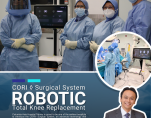
JOHOR BAHRU, MALAYSIA – Media OutReach Newswire – 20 February 2026 – Columbia Asia Hospital Tebrau is advancing patient-centred knee care by offering a full continuum of treatment for osteoarthritis, ranging from Hyaluronic Acid (HA) injections to state-of-the-art robotic-assisted total knee replacement (TKR).
“Our knees are subjected to wear and tear over time due to aging, injuries, and repetitive stress,” said Dr Hazli Sufian, Consultant Orthopedic Surgeon with Special Interest in Arthroplasty at Columbia Asia Hospital Tebrau. “While HA injections can help relieve pain and improve mobility in early-stage osteoarthritis, advanced cases often require knee replacement surgery for long-term relief and function.”
Dr Hazli and his surgical team have replaced conventional techniques with the CORI® robotic-assisted system by Smith+Nephew, an advanced technology designed to enhance precision and personalise knee replacement procedures.
“The CORI® system allows surgeons to capture patient-specific anatomical data in real time, enabling more precise bone preparation and soft tissue balancing,” Dr Hazli explained. “This contributes to improved joint stability, better alignment, and more natural knee movement after surgery.”
Beyond surgical precision, robotic-assisted technology improves the overall patient experience. The personalised approach can lead to reduced tissue disruption, less post-operative pain, and lower risk of complications. Many patients also benefit from enhanced mobility, greater confidence in joint function, and a potentially faster return to daily activities and rehabilitation.
By tailoring each procedure to the patient’s unique anatomy, the CORI® system supports predictable outcomes and consistent surgical results, which are key to long-term patient satisfaction.
Dr James Chong, CEO of Columbia Asia Hospital Tebrau, said the introduction of robotic-assisted knee replacement reflects the hospital’s commitment to advancing patient-centred care through innovation.
“Our investment in robotic-assisted surgery enhances not only surgical precision but also the overall patient journey—from pre-operative planning and intra-operative accuracy to post-operative recovery and rehabilitation,” he said. “This technology allows us to deliver high-quality outcomes while improving comfort, confidence, and experience for our patients.”
The issuer is solely responsible for the content of this announcement.
About Columbia Asia Hospital Tebrau
Columbia Asia Hospital Tebrau is dedicated to serving the healthcare needs of the Johor community with compassion, professionalism, and clinical excellence. Equipped with advanced medical technology—including a Cardiac Catheterization Laboratory, Mammography services, a 128-slice CT Scan, and a 1.5 Tesla MRI—the hospital delivers comprehensive diagnostic and treatment capabilities to support timely and accurate clinical decision-making.
The hospital offers a broad range of medical specialties, including Cardiology, Nephrology, Internal Medicine, Maternal Fetal Medicine, Ear, Nose & Throat (ENT), General Surgery, Obstetrics & Gynecology (O&G), Respiratory Medicine, Orthopaedics, and Dermatology. A fully operational 24/7 Emergency Room, supported by on-call Emergency Physicians, ensures that patients receive immediate and appropriate care at any time of the day.
At the core of Columbia Asia Hospital Tebrau’s philosophy is a strong commitment to personalized, patient-centred care—ensuring that every individual feels heard, supported, and well cared for throughout their healthcare journey.
Looking ahead over the next five years, Columbia Asia Hospital Tebrau will align its strategic direction with Rancangan Malaysia Ke-13 (RMK-13), with a focused emphasis on addressing Non-Communicable Diseases (NCDs). In particular, the hospital will strengthen its efforts in obesity management through integrated, multidisciplinary care models encompassing prevention, early intervention, medical management, surgical intervention and long-term follow-up. This reflects a proactive approach to tackling one of the most pressing public health challenges affecting the Johor community.
In parallel, the hospital has advanced its surgical capabilities through the adoption of robotic-assisted surgery. This investment is aimed at enhancing surgical precision, improving clinical outcomes, reducing recovery times, and elevating overall patient experience, in line with global best practices.
To meet the growing healthcare demands of Johor, Columbia Asia Hospital Tebrau is also planning for future expansion, including the addition of more inpatient beds. This expansion will enable the hospital to better serve the increasing needs of the community while maintaining high standards of safety, quality, and accessibility in care delivery.
Through strategic alignment, technological advancement, and capacity expansion, Columbia Asia Hospital Tebrau remains committed to supporting the long-term health and well-being of the Johorean population.
About Columbia Asia
For 30 years, Columbia Asia Group of hospitals has been at the forefront of quality healthcare in the private healthcare industry. Established in 1996, it has evolved from its first hospital in Shah Alam to its latest in Penang, to date. As an international healthcare provider, its services span across 19 hospitals in the region; 13 in Malaysia, five in Indonesia, and one in Vietnam. Through the years, the company strategy has always been about making private healthcare accessible to all, hence its hospitals are strategically located in densely populated areas. Under the umbrella of private healthcare company, Asia OneHealthcare, the Columbia Asia group has expanded its reach to bring not just world-class, but also effective healthcare, closer to home.
Through the years, Columbia Asia’s emphasis has consistently been about early detection of diseases. This is carried out by way of advanced technology for precise diagnostics, resulting in minimally invasive procedures. To fulfil the typical healthcare needs of communities, Columbia Asia offers core disciplines such as obstetrics & gynecology, pediatrics, and general surgery. Today, it also provides tertiary healthcare addressing more complex fields of medicine such as neurosurgery, cardiac disease treatments, and integrated cancer care.
As it approaches a new decade, Columbia Asia continues to expand; adopting cutting-edge technology to meet the ever-increasing needs of today’s discerning customers. Upholding strict clinical governance, medical ethics and acknowledged by the Malaysian Society for Quality in Health, Columbia Asia continues to deliver excellent patient outcomes in a safe and trusted environment.
By T N Ashok At the center of Bharat Mandapam, the chiselled, lotus-shaped convention complex that has become the theatre for India’s global ambitions, Prime Minister Narendra Modi stood for a “family photo” that looked less like a diplomatic formality and more like a merger of Silicon Valley and the Westphalian order. To his left […]
AD Ports Group has increased its global network to 36 ports and terminals with the addition of Aqaba Multipurpose Port in Jordan, marking another step in the Abu Dhabi-based operator’s overseas expansion strategy. Ahmed Al Mutawa, Regional Chief Executive Officer of AD Ports Group, said the company’s footprint now stretches across the Middle East, Central Asia, Africa and Europe, covering the UAE, Jordan, Kazakhstan, Pakistan, Spain, […]
Abu Dhabi-based artificial intelligence firm Origen has raised $50 million from Bluefive Capital, marking one of the larger disclosed growth investments in the emirate’s emerging AI ecosystem and signalling fresh momentum for technology ventures anchored in the Gulf. The funding, confirmed by both companies, will be directed towards expanding Origen’s operations, deepening research and development capabilities, and accelerating commercial deployments across the Middle East and other target […]
Arabian Post Staff -Dubai Abu Dhabi has moved to tighten oversight of its off-plan property market by requiring developers to register all investor Expressions of Interest through a central digital system, marking a significant shift in how early-stage real estate sales are tracked and approved in the emirate. The Abu Dhabi Real Estate Centre, the regulator overseeing the capital’s property sector, announced the digitisation of EOIs via […]
Arabian Post Staff -Dubai APM Terminals has agreed to acquire a 37.5 per cent stake in the South Container Terminal at Jeddah Islamic Port, marking a strategic partnership with DP World in one of the Red Sea’s most significant trade gateways. The deal, confirmed by both companies on Wednesday, will see the subsidiary of Denmark-based shipping group A. P. Moller-Maersk join DP World in the ownership of […]
OpenAI has announced a sweeping expansion of its global education strategy by forging deep partnerships with a group of India’s most influential higher education institutions to embed artificial intelligence tools, training and research into campus life and academic workflows. The initiative, unveiled in New Delhi this week, aims for institutional transformation by offering enterprise-grade AI access and structured integration support across disciplines including engineering, management, health sciences and creative industries.
The programme brings together six premier universities — Indian Institute of Technology Delhi, Indian Institute of Management Ahmedabad, All India Institute of Medical Sciences New Delhi, Manipal Academy of Higher Education, University of Petroleum and Energy Studies and Pearl Academy — under a coordinated effort to build AI fluency and responsible usage skills for students, faculty and staff. The roll-out will provide secure access to ChatGPT Edu, detailed onboarding programmes, faculty training and discipline-specific implementation guidance aligned with institutional policies.
This shift marks a deliberate departure from ad-hoc access to consumer AI tools toward embedding artificial intelligence as an academic backbone to teaching, research, evaluation and campus operations. OpenAI’s Head of Education for India and Asia Pacific, Raghav Gupta, said the collaboration reflects a broader need to close the gap between what AI tools are capable of and how they are actually used. He referenced projections that by 2030 a significant portion of core skills relied upon by workers globally will be redefined by AI, underscoring the urgency for deep institutional readiness.
At IIT Delhi, the partnership will focus on engineering-led innovation and applied research, integrating AI capabilities into project-based learning, coding, simulations and prototype development. The institute also plans OpenAI-supported hackathons and ‘Industry Days’ designed to link student innovation with India’s manufacturing and deep-technology ecosystem. IIM Ahmedabad intends to embed AI fluency into core management education — spanning strategy, finance, operations and public policy — with scope for certification pathways backed by the collaboration.
All India Institute of Medical Sciences New Delhi is positioning AI as a tool for medical education and clinical training, exploring applications in clinical documentation, simulation-based learning and evidence synthesis. Officials at the institute said prioritising safe, ethical deployment of AI in clinical settings will be critical to maintaining educational and professional standards. Manipal Academy of Higher Education will pursue multidisciplinary AI literacy across engineering, health sciences and business programmes, while UPES and Pearl Academy will tailor integration to applied innovation and creative workflow environments respectively.
OpenAI’s strategy extends beyond campuses to partnerships with major education technology platforms, including upGrad, PhysicsWallah and HCL GUVI. These collaborations aim to launch structured courses on AI fundamentals and practical ChatGPT applications targeting students and early-career professionals who are not formally enrolled in partner institutions. The move reflects a growing industry recognition that AI skills must be scaled across the broader learner base, not just within elite universities.
Experts in education and technology policy see this initiative as part of a larger global trend where leading artificial intelligence firms are moving from consumer-oriented models toward institutional engagement that shapes long-term adoption and usage norms. By embedding AI literacy into the frameworks of higher education, these alliances could influence curriculum design, research priorities and the preparation of graduates for an AI-driven economy.
Industry analysts note that India’s higher education system represents one of the world’s largest talent markets, with millions of students entering the workforce each year. Integrating advanced AI tools into academic settings could enhance learning outcomes, deepen research capacity and create new pathways for innovation across sectors. However, some critics caution that rapid adoption must be matched with robust ethical and governance frameworks to address concerns around data privacy, academic integrity and equitable access to technology.
While OpenAI estimates that this phase of the initiative will directly benefit over 100,000 students, educators and administrators across its core partner institutions over the coming year, independent observers emphasise that the broader impact will depend on how well universities and ed-tech partners can operationalise the technology within existing academic structures. They point to the need for ongoing investment in faculty development, infrastructure and policy frameworks that ensure AI augments rather than disrupts pedagogical goals.








 https://www.columbiaasia.com/malaysia/ms/hospitals/tebrau/
 https://www.linkedin.com/company/columbia-asia-malaysia/about/
 https://x.com/columbiaasia
 https://www.facebook.com/columbiaasia
 https://www.instagram.com/columbiaasia/





