Greenlogue/AP Qatar’s greenhouse industry is projected to more than double in value by 2034 as investment in controlled-environment farming accelerates efforts to raise domestic food production and conserve water resources. Market research firm IMARC Group estimates the sector will expand from $226.9 million in 2025 to $600.1 million by 2034, equivalent to about QR2.18 billion at Qatar’s fixed exchange rate. The forecast implies compound annual growth of […]
Drivers aged 8–17 build real race experience through qualifying, attack, defense and overtaking
HONG KONG / GUANGZHOU, CHINA – Media OutReach Newswire – 21 September 2026 — For a young racing driver, there is far more to learn from a kart race than simply setting the fastest lap. Organised by China Hong Kong Motorsports Centre (CHKMC) with the support of IAME Series Asia and HKAA, the opening round of the HK Youth Karting Championship 2026 was recently completed at Guangzhou Conghua International Circuit.
Over two days of practice, qualifying and competitive racing, young drivers from Hong Kong put their training into action, testing their speed, race craft and decision-making under genuine race conditions.
The championship features two categories — Cadet for drivers aged 8–12 using 60cc karts and Junior for drivers aged 12–17 using 125cc karts — competing on the approximately 1.2-kilometre, 14-corner circuit.
From lap time to real race craft
The weekend began with practice, allowing drivers to refine braking points, racing lines and corner-exit speed with support from coaches and mechanics.
Qualifying then challenged competitors to produce a competitive lap within a limited time on track to secure the best possible starting position.
However, once the racing began, outright speed was only part of the challenge.
With multiple karts fighting for position at the very first corner, drivers had to assess the traffic around them, choose attacking or defensive lines and decide when to overtake or hold position.
Over the two days of racing, the young drivers chased each other through various corners, with moments of side-by-side cornering, defending positions, and looking for overtaking opportunities. For young drivers, managing traffic on the track, race pressure, and split-second decision-making are experiences that are difficult to fully simulate in routine solo practice.
These situations help young drivers develop genuine race craft, which is an important step for a driver to learn, progress and grow in motorsports.
One Make Karting unifies kart and engine specification, putting the focus on the driver
The championship adopts a One Make Karting / Arrive & Drive format, with race karts and competition equipment arranged to a unified specification, together with designated practice and race tyres.
By reducing equipment differences, the format places greater emphasis on driving technique, consistency, decision-making and race strategy.
It also gives young racers stepping into competitive racing for the first time the opportunity to experience a complete race weekend, from practice and qualifying to race starts, on-track battles and post-session analysis.
The value of the first race is not measured by podium positions
In youth motorsport, results are important, but racing experience often has to be built up race by race.
A position gained or lost at the start, choosing the right moment to overtake, or learning how to recover after a mistake can become valuable lessons for the next race.
CHKMC Head Coach Chester Lam said, “Training can teach a driver racing lines, braking points and kart control, but a real race involves other drivers, starts, attack and defense, and pressure. It is a completely different situation.”
“Young drivers need real racing to gradually learn how to read a race. Every time they complete a race, they should be equipped with more experience than they had before.”
Karting has long been one of the first forms of competitive motorsport experienced by many professional racing drivers. CHKMC hopes to create more opportunities for young people in Hong Kong to develop from fundamental training to track driving and, ultimately, real racing.
From Hong Kong to a wider Asian racing stage
The aim of the HK Youth Karting Championship is not for every participant to become a front-running racer immediately, but to provide a platform where young drivers can compete, make mistakes, learn and gradually build their racing experience.
From lining up on the starting grid to attempting an overtake, defending a position or understanding tyres and changing track conditions, every race adds another layer to a young driver’s development.
The championship also connects young racers with the wider Asian karting scene.
Strong performers in the Cadet and Junior categories may have the opportunity to progress towards the IAME Asia Final 2026 in Macau, competing alongside drivers from across the region.
Round 1 complete, attention turns to the next challenge
Following the opening round, drivers and coaching teams started reviewing lap times, racing lines and overall performance as they prepare for the next race.
The HK Youth Karting Championship 2026 will continue with its next round at Guangzhou Conghua International Circuit on 10 – 11 October 2026, giving young racers another opportunity to apply what they learned and continue building valuable race experience.
For a young driver, the chequered flag at the end of one race is not the end of the journey.
Arabian Post Staff -Dubai GFH Bank has signed a partnership agreement with AlNassr Club Company, making the Bahrain-headquartered bank a partner of the Saudi football club for the 2026–2027 season as it seeks to strengthen its profile in key regional markets. The agreement was signed in Riyadh by GFH Bank chief executive and board member Hisham Alrayes and AlNassr chief executive José Semedo, with senior representatives of […]
Abu Dhabi’s International Holding Company has identified Fount Trust as its ultimate parent above Royal Group Holding LLC, formalising the ownership structure that followed an earlier restructuring. IHC said on Monday that the change affects the legal ownership chain but does not alter its ultimate beneficial ownership, operations, strategy or business activities. Royal Group continues to exist and operate within the structure, while IHC remains governed by […]
NANNING, CHINA – Media OutReach Newswire – 20 September 2026 – On September 16, as an international science and technology exchange platform included in the list of cooperation initiatives for the series of leaders’ meetings on East Asia cooperation, the Fourth Forum on China-ASEAN Artificial Intelligence Cooperation was successfully held in Nanning, Guangxi. With the theme of “AI for Industries, Digitalization for Shared Future”, this forum was co-hosted by the China-ASEAN Technology Transfer Center, the China-ASEAN Innovation Cooperation Center for Artificial Intelligence, the Department of Science and Technology of Guangxi Zhuang Autonomous Region, and the Guangxi Institute of Industrial Technology. More than 700 government representatives, research scholars, tech entrepreneurs, and venture capital representatives from China and ASEAN countries gathered on site, focusing on three major directions, namely embodied intelligence, AI finance, and data circulation, discussing collaborative technological innovation, jointly pursuing industrial digital transformation, and comprehensively deepening pragmatic cooperation between China and ASEAN in the field of artificial intelligence.
Fourth Forum on China-ASEAN Artificial Intelligence Cooperation Successfully Held in Nanning, Drawing Over 700 Delegates
Coinciding with the historic milestone of the Pinglu Canal being completed and navigable, a canal opens up a physical trade corridor between China and ASEAN, opening a new chapter of digital economy collaboration. “Goods Flow Across Rivers and Seas, Digital Intelligence Connects ASEAN” has become the most distinctive symbol of the era at this forum. The forum closely follows the differentiated development path of “R&D in Beijing, Shanghai, and Guangzhou + Integration in Guangxi + Application in ASEAN”, solving problems through technological breakthroughs, gathering momentum through industry-finance linkage, and promoting effectiveness through scenario implementation, to deepen and solidify China-ASEAN AI cooperation.
Technology empowers the opening, creating a new paradigm of human-machine collaboration
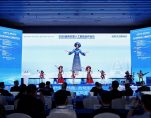
The forum kicked off with Guangxi’s classic ethnic song “Folk Songs like the Spring River”, where human dancers, dancing robots, accompaniment robots, and a digital crowd performing the folk song collaborated across disciplines to perform group collaborations. Relying on millisecond-level cluster scheduling technology, ethnic culture and embodied intelligence were deeply integrated to create an immersive technological audiovisual feast. This forum innovatively adopted a three-party collaborative hosting model of “human host + digital human avatar + intelligent robot”. Yang Yanqing, Professor of ShanghaiTech University, coordinated with her digital human avatar and AGIBOT Lingxi X2 to jointly host the forum, empowering the forum scene through technology, which became a major highlight of the event.
Dr. Padapxay SAYAKHOT, Director-General, Institute of Information and Communication Technology, Ministry of Technology and Communications, Lao PDR, Sun Ruijun, Director-General, China-ASEAN Technology Transfer Center, Secretary of the Party Leadership Group and Director-General, Department of Science and Technology of Guangxi Zhuang Autonomous Region, Secretary of the Party Committee, Guangxi Institute of Industrial Technology, delivered speeches in succession. Both sides stated that they will use this forum as a link to deepen the connection of scientific research and innovation, the implementation of industrial scenarios, and the coordination of policies and mechanisms, gather synergy for digital and intelligent development, and serve the building of a closer China-ASEAN community with a shared future.
Industry authorities gather, anchoring regional AI development directions
The speakers at the forum combined international breadth and professional depth, bringing together industry experts, academic and cutting-edge research forces, industrial technology, and cross-border implementation capabilities from ASEAN countries, forming a core high ground for intellectual exchange and gathering top intellectuals for China-ASEAN AI innovation and development.
Industry experts from ASEAN countries: Dr. Wasan Pattara-atikom, Vice President, National Science and Technology Development Agency, Thailand; Li Haizhou, Fellow of the Academy of Engineering, Singapore (SAEng), Dean of the School of Artificial Intelligence, the Chinese University of Hong Kong, Shenzhen; YAP Hwa Jen, Professor of Universiti Malaya, Managing Director of the UPUM Sdn. Bhd.;
Academic and cutting-edge research forces: Yang Chao, Professor of Peking University, Founder and Chief Scientist of Beijing 1011 Technology Co., Ltd.; Cui Peng, Professor of Tsinghua University and Chief Scientist of Stable AI (Xiong’an) Technology Co., Ltd.; Wang Shisong, Professor of Guangzhou University, Co-founder of Abelian (a quantum-resistant blockchain infrastructure);
Industry technology and cross-border implementation forces: Li Nan, Founder, Chairman, and CEO of Maimai Technology Group; Yao Yuan, Vice President of the Middle East Asia-Pacific Region Division, AGIBOT Innovation (Shanghai) Technology Co., Ltd.; Lyu Jun, Chief Scientist of Shanghai Noematrix Technology Co., Ltd.; Liu Liqi, General Manager of Data Strategy Department, X Square Robot Technology (Shenzhen) Co., Ltd.
The guests focused on three major directions, namely embodied intelligence, AI finance, and data circulation, exploring feasible paths for technological breakthroughs, ecosystem co-construction, and joint innovation. They covered the key stages of artificial intelligence from source research and development and technology transfer to industrial implementation and cross-border cooperation, achieving a two-way dialogue between cutting-edge academic theories and practical industry needs, and providing diverse perspectives and action ideas to bridge the regional digital divide and unlock the inclusive value of AI.
Five achievements released, strengthening the solid foundation for digital intelligence cooperation
At the forum, five scientific and technological innovation achievements were released together, constructing an AI innovation supply system oriented toward ASEAN from multiple dimensions including technology products, platform carriers, talent systems, and decision-making support.
1. The China-ASEAN Cross-Border Industrial Large Language Model: It covers multilingual capabilities and industry knowledge graph for ASEAN, integrates six major agents to collaboratively analyze business scenarios, and serves as a professional intelligent partner for Chinese enterprises to expand into the ASEAN market.
2. Achievements in AI Talent Development for ASEAN: Relying on the Guangxi Academy of Artificial Intelligence, a talent training model of “a dual-mentor system, dual-integrated teaching, dual training tracks, and an integrated master-doctoral program” has been created, achieving an international education pattern of enrolling at one university, earning credits from multiple universities, gaining practical experience in multiple countries, and strengthening talent support for cross-border AI cooperation.
3. “Guikerong” Sci-Tech Finance Digital-Intelligent Foundation Platform: Developed under the guidance of the Department of Science and Technology of Guangxi Zhuang Autonomous Region, it uses data-driven technology credit evaluation to open the value transformation chain of “technology, industry, and finance”, supporting the innovative development of technology-based enterprises.
4. Lao-Language Large Language Model (LLM) for the Energy and Power Sector: China’s first AI overseas project in the power industry, implemented on Electricite du Laos, exploring a new model of “Retaining Computing Power in Guangxi, Exporting Services Globally” for compliant token going global, providing a practical example for cross-border services in the energy sector.
5. “2026 China-ASEAN Artificial Intelligence Industry Development Study Report”: A panoramic overview of regional industrial policy environment, market scale, and application patterns, analyzing core industry development trends, and providing decision-making references for China-ASEAN AI industry cooperation.
Exhibition and negotiation are working together to build a pragmatic platform for exchange and cooperation
The forum adheres to the principles of “promoting research through exhibitions, cooperation through meetings, and implementation through business matchmaking”, simultaneously hosting the Special Session on AI: Bank-Enterprise Matchmaking and the Industry Supply-Demand Matchmaking and Technology Achievement Exhibition, achieving precise coordination between exhibition displays and business negotiations, and building a cross-border cooperation ecosystem deeply integrating industry, academia, research, and application.
The Technology Achievement Exhibition showcased high-tech products such as the General Embodied Intelligent Robot, Fingertip 3D Force Sensors, Integrated Land-Sea-Air Inspection Equipment, Smart Wall-Climbing Industrial Robot, and AI + Embodied Intelligence Teaching and Experiment Platform, covering key tracks like humanoid robots, industrial intelligent equipment, and education and training, demonstrating the innovative strength of domestic AI technology adaptation to ASEAN scenarios.
The venue also set up an immersive AI experience zone, where interactive projects such as coffee-making robots, agile robotic arms, AI customized cultural products, and unmanned retail attracted attendees to stop and experience the vivid effects of AI empowering people’s services up close, highlighting the development philosophy of technology for good and digital intelligence benefiting the people.
Focusing on collaborative win-win cooperation to jointly build a new pattern of regional development
As an international platform for scientific and technological exchange aimed at ASEAN, the Forum on China-ASEAN Artificial Intelligence Cooperation has been held consecutively for four sessions, bringing together more than 4,300 guests from China, foreign government, industry, academia, and research, facilitating the connection of over a hundred industrial projects, and becoming an important platform for the exchange of ideas, interconnection of technologies, and mutual industrial support between China and ASEAN in the field of artificial intelligence.
Looking to the future, China and ASEAN will continue to deepen cross-border joint innovation, promote the orderly flow of AI innovation elements, cultivate a vibrant and inclusive regional digital innovation ecosystem, facilitate digital intelligence benefiting regional industrial upgrading and livelihood development, and jointly build a new mutually beneficial and win-win pattern of China-ASEAN digital economy.
This forum was supported by the Ministry of Technology and Communications of Laos and the ASEAN Secretariat, and co-hosted by Guangzhou University, Guangxi Beibu Gulf Bank, Guangxi Academy of Artificial Intelligence, and Computer Academy of Guangxi.
The issuer is solely responsible for the content of this announcement.
BANGKOK, THAIALND – Media OutReach Newswire – 20 September 2026 – ANGEL has been honored with the Sustainable Tech – Food & Beverage award at the Asian Technology Excellence Awards 2026. The award recognizes ANGEL’s nationwide commercial water purification deployment for KFC Indonesia, which delivers localized, sustainable water treatment solutions across the archipelago’s complex and diverse water conditions.
The Asian Technology Excellence Awards recognise groundbreaking technological projects and innovations across Asia. Presented by Asian Business Review, the programme selects one winner per technology category and industry in each market, with entries judged on uniqueness and innovation, effectiveness and impact, and dynamism.
For ANGEL, the KFC Indonesia project demonstrates a capability that matters across the food and beverage sector. The company begins with on-site water quality testing and assessment, then designs the configuration around actual inlet conditions. That approach is backed by a commercial portfolio that includes microfiltration and UV sterilization, and by local delivery and service teams. It is this combination—not a standard product alone—that allows ANGEL to serve restaurant chains operating across diverse markets.
Sustainability is built into that model in practical ways. ANGEL integrates with existing pre-filtration systems, reducing the need for equipment replacement, water supply modifications and installation waste. Treatment is selected according to actual water quality, so sites receive the configuration they need. The modular design also limits maintenance complexity and supports long-term operating efficiency. For KFC Indonesia, this meant upgrading water quality without interrupting daily operations, while keeping existing infrastructure in service.
The deployment itself follows the same logic. Restaurants with more complex water conditions receive the C11 Microfiltration System together with UV sterilization, while sites with relatively stable inlet water can use UV sterilization alone. This scenario-based approach helps KFC Indonesia maintain consistent water quality across different cities and islands, and reflects how ANGEL works with food and beverage customers more broadly.
Accepting the award, ANGEL’s Assistant Vice President Annie Guo said, “This award recognizes the work of our teams and local partners in turning technology into practical value for customers. It reinforces our approach to international growth: understand local needs, deliver the right solution, and support it properly over time. For ANGEL, the responsibility continues after installation.”
The KFC project reflects ANGEL’s broader commercial strategy. For its global food and beverage business, the project shows that water purification can move beyond a functional utility to become a strategic asset for operators. ANGEL has built a commercial portfolio spanning microfiltration, ultrafiltration, and reverse osmosis, enabling tailored solutions for local conditions and customer needs. In markets where complex water conditions could otherwise constrain expansion, these capabilities support safer operations, greater resource efficiency, and more sustainable growth.
Hashtag: #ANGELGroup
The issuer is solely responsible for the content of this announcement.
About ANGEL
Founded in 1987, ANGEL has become a global leader in water purification. For nearly four decades, the company has dedicated itself to improving drinking water quality through innovation, delivering safe, healthy, and stylish water solutions. ANGEL has earned 11 internationally recognized certifications, including NSF, UL, TUV, SGS, CSA, and HALAL, ensuring compliance with high standards of quality, safety, and environmental responsibility.
Hong Kong has laid out a five-year programme to strengthen its established economic pillars while building new growth engines, with a gold-led commodity trading ecosystem among the centrepieces of its strategy through 2030.
Chief Executive John Lee’s 2026 Policy Address and the city’s first Five-Year Plan for Economic and Social Development set out measures covering finance, trade, shipping, aviation, innovation and technology, alongside efforts to attract capital, companies and skilled workers. The government said the programme is designed to reinforce Hong Kong’s international competitiveness and support longer-term economic development.
Gold will serve as the entry point for a broader commodity trading ecosystem. Hong Kong plans to formally launch its central clearing and settlement system for gold in the first quarter of 2027, following trial operations that began in July. The system is intended to support trading that meets international standards and strengthen links among clearing, settlement, storage and physical delivery.
Hong Kong Exchanges and Clearing will announce details this year of new renminbi-denominated, physically settled gold futures contracts. The government also plans to explore tax concessions for qualifying activities across the gold and commodity trading chain, with proposals expected to be put to the Legislative Council for consultation next year.
The Hong Kong Monetary Authority is studying whether the Exchange Fund should moderately increase its gold holdings and participate in local spot and futures markets. Existing physical gold inventories could gradually be transferred to designated vaults appointed by the Hong Kong Precious Metals Central Clearing Company.
Authorities also plan to expand storage and related infrastructure. Since the London Metal Exchange added Hong Kong to its global warehousing network in 2025, approved storage space has exceeded 60,000 square metres and inventories have risen above 20,000 tonnes of metal. More LME-approved warehouses are planned for the Northern Metropolis.
A half-rate tax concession for physical commodity trading is also being pursued to encourage traders to establish or enlarge operations in the city. A joint working group led by the Secretary for Financial Services and the Treasury will examine market opportunities and possible collaboration between exchanges.
The wider financial strategy seeks to strengthen Hong Kong’s role as an offshore renminbi business hub and an international centre for asset management and risk management. The government plans to deepen green and digital finance, widen financing channels for technology companies and strengthen trade finance, supply-chain finance, clearing, settlement and risk-management services.
A proposed Innovation and Technology Industry-Oriented Fund will receive HK$10 billion in government funding and is expected to reach at least HK$40 billion when market capital is included. Priority areas include life and health technology, artificial intelligence and robotics, semiconductors and smart devices, digitalisation, and sustainable development.
The five-year plan also calls for greater emphasis on high-value maritime services rather than relying mainly on traditional port logistics. Measures include reforms to ship registration, support for ship financing and marine insurance, and further development of maritime arbitration and other professional services.
Hong Kong also intends to build a broader aviation industry ecosystem. Plans include developing aircraft-parts processing and trading, participating in research and certification connected with domestically developed aircraft, and expanding sustainable aviation fuel supply chains across the Greater Bay Area. Authorities aim for sustainable aviation fuel to account for 1% to 3% of fuel used by departing flights at Hong Kong International Airport in 2030.
Trade policy will focus on digitalisation, diversification and higher-value supply-chain services. The government wants more companies to use Hong Kong for international orders, foreign-exchange transactions, treasury operations, trade finance and supply-chain management, while attracting regional and international headquarters.
The plan places innovation alongside the traditional pillars, with support directed towards artificial intelligence, robotics, life sciences, microelectronics and advanced manufacturing. It also identifies aerospace technology, marine technology, quantum technology and embodied intelligence as fields for longer-term development.
Kerala Tourism has stepped up its outreach to Gulf travellers at Arabian Travel Market 2026 in Dubai, using the four-day trade fair to present the state’s backwaters, wellness products, culture, nature and adventure experiences to buyers and industry partners.
Tourism Minister P. C. Vishnunadh visited the Kerala pavilion at the Dubai World Trade Centre and met UAE Minister of Economy and Tourism Abdulla bin Touq Al Marri as the state sought to deepen engagement with one of its most important overseas visitor markets. He was accompanied by Tourism Secretary Biju K.
Vishnunadh said the Middle East remained significant for Kerala because of the state’s longstanding links with the UAE and the region’s importance to its tourism economy. He said Arabian Travel Market provided an opportunity for tourism businesses to understand changing demand, identify emerging opportunities and present packages designed for Gulf travellers.
Kerala Tourism said 26,255 visitors from the UAE travelled to the state in 2025, underlining the market’s value as it looks to expand international arrivals and strengthen demand beyond peak seasons.
The state’s 69-square-metre pavilion, carrying the theme “Green Peace – Yalla Kerala”, used imagery of hill stations and green landscapes alongside displays promoting established and emerging tourism products. The presentation placed emphasis on Kerala as a year-round destination, with Ayurveda and wellness, beaches, backwaters, cultural experiences and adventure travel forming key parts of the pitch.
Vishnunadh also met Sudhir Sreedharan, senior vice-president of flydubai, and officials of the Dubai Police Authority during his visit. The meetings came as Kerala Tourism used the event not only for destination promotion but also for business networking with airlines, tour operators and travel-sector partners.
Six tourism businesses from Kerala joined the pavilion as co-exhibitors: Kairali – The Ayurvedic Healing Village in Palakkad, The Elephant Court in Thekkady, Somatheeram Ayurveda Group, Intersight Tours and Travels, Santamonica Tours and Travels, and Gateway Malabar Holidays. Their participation gave buyers access to accommodation, wellness and tour products directly from operators.
Arabian Travel Market 2026, held from September 14 to 17, brought together tourism authorities, airlines, hospitality companies, tour operators and other travel businesses from the Middle East and overseas markets. Organisers positioned the 33rd edition as a platform for commercial partnerships, destination marketing and discussion of travel trends.
The UAE used ATM to launch “Visit UAE”, its first unified federal tourism identity, bringing the seven emirates under a single national tourism platform. Abdulla bin Touq said the initiative was intended to present the country as an integrated destination and support stronger cooperation across tourism.
Kerala’s Gulf-focused campaign extended beyond the exhibition floor. At a Kerala travel meet in Dubai built around the same “Green Peace – Yalla Kerala” theme, officials and private-sector participants held business-to-business meetings with UAE-based buyers.
Tourism Secretary Biju K presented Kerala’s destination portfolio and invited travel-industry representatives to Kerala Travel Mart 2026, while the state highlighted its appeal across leisure, wellness, culture and nature-based travel. The engagement was designed to convert destination visibility into business links with tour operators and distributors serving Gulf customers.
Kerala has been placing greater emphasis on the Arab market because demand from the region often overlaps with the state’s monsoon and shoulder seasons, when Ayurveda, wellness and nature-based travel can help spread visitor flows more evenly through the year.
That approach also reflects growing competition among destinations for Gulf travellers, who have access to extensive direct and one-stop air connectivity through Dubai, Abu Dhabi, Doha and other regional hubs. Kerala’s strategy at the fair focused on product differentiation rather than a single tourism segment, combining established attractions with experiential offerings.
The Maldives also maintained a presence at the Dubai event, with 165 industry representatives from 74 tourism companies participating alongside official tourism bodies. Its delegation used the fair to pursue airline partnerships and destination marketing agreements aimed at improving connectivity and widening market reach.
Westinghouse Electric is seeking a valuation above $50 billion for a planned US initial public offering, people familiar with the preparations said, as the nuclear technology group moves towards a potential public filing as early as October. The proposed valuation has not been announced by Westinghouse or its owners and could change as preparations advance. The number of shares to be sold, the price range and the […]
Aldar has set Saadiyat Grove, its new luxury retail and fine-dining destination in Abu Dhabi’s Saadiyat Cultural District, for a fourth-quarter 2026 opening, with more than 100 global brands and 20 concepts entering the region for the first time. The development will sit between Louvre Abu Dhabi, Zayed National Museum and Guggenheim Abu Dhabi, with Natural History Museum Abu Dhabi and teamLab Phenomena Abu Dhabi close by. […]
By T N Ashok The passage by the US Congress of the Lindsey O. Graham Sanctioning Russia and Iran Act of 2026 has confronted India with a problem that is simultaneously diplomatic, economic and strategic. The immediate headline is stark: the legislation creates a statutory pathway allowing President Donald Trump to impose tariffs of up […]
By Arun Srivastava It would be politically naive to look at the decision of Trinamool Congress chief Mamata Banerjee to stay out of the Nandigram by-poll purely as a calculated move to avoid a trap set by her opponents. Yet another significant move Mamata has made is of a tactical outreach by offering the Nandigram […]
SpaceX has held informal discussions about buying customer and operational data from troubled or defunct startups to train artificial intelligence models, people familiar with the talks say, as the company looks for lower-cost information beyond material available on the public internet. The discussions are taking place within SpaceXAI, the artificial intelligence operation created after SpaceX acquired Elon Musk’s xAI business in February. No transaction has been announced, […]
The UAE Cyber Security Council and Fortinet have launched a cybersecurity internship programme aimed at developing Emirati talent through structured training, practical experience and industry mentorship. The programme is the first project of its kind under the council’s Cyberani Practical Training Initiative, which was created with the Ministry of Higher Education and Scientific Research to prepare university students for cybersecurity careers. Fortinet is participating as a technology […]
MUNICH, GERMANY – Media OutReach Newswire – 17 September 2026 – Recently, BDStar successfully hosted its 2026 Ecosystem Partner Conference in Munich, Germany. The event aimed to strengthen communication and collaboration and build a more robust industry ecosystem. Customers, distributors, and partners from multiple countries attended the conference.
Under the theme “Ecosystem Synergy for Intelligent Evolution,” the event introduced BDStar’s iLDB® strategy and shared the applications and development roadmap of GNSS Services. Training sessions were also organized for distributors. BDStar and attendees engaged in in-depth discussions on strengthening cooperation and fostering ecosystem synergy.
BDStar Founder and Chairman Zhou Ruxin stated that internationalization is a key strategy currently being implemented by BDStar. The company will continue to increase investment in global markets and build localized teams to provide customers worldwide with not only better products, but also enhanced services and support.
Meanwhile, BDStar also participated in INTERGEO 2026 in Munich, showcasing its GNSS chips, modules, antennas, services, and Chip-Cloud GNSS Solutions for a wide range of applications.
Hashtag: #BDStar
The issuer is solely responsible for the content of this announcement.
Security specialists from the United States and China have proposed a set of nuclear-style safeguards for military artificial intelligence, including red lines around nuclear command systems, mandatory human control over major cyber operations and a dedicated bilateral crisis hotline. The proposals were published on September 9 by Melanie Sisson, a senior fellow at the Brookings Institution, and Tianjiao Jiang, an associate professor at Fudan University. Both participate […]
The Africa Women Innovation and Entrepreneurship Forum has named Rania Al-Mashat, Magda Wierzycka and Judy Dlamini as keynote speakers for its 2026 conference in Cape Town, setting the headline line-up for the annual gathering focused on women-led enterprise and economic participation. The two-day Conference, Expo and Awards will take place on November 10 and 11 at the Cape Town International Convention Centre, with organisers expecting more than […]
The model supports multimodal inputs including text, images and video, and generates high-fidelity 1080p videos of 5 to 20 seconds with natively synchronized audio
BEIJING, CHINA – Media OutReach Newswire – 17 September 2026 – HiDream.ai, an AI company specializing in foundation models and generative AI, announced the launch of HiDream-O1-Video-1.0, or HiDream V1, its native omnimodal video generation model.
Designed around a deeper understanding of creative intent and real-world physics, HiDream V1 supports multimodal inputs including text, images and video. It can generate high-fidelity 1080p videos ranging from 5 to 20 seconds, with enhanced narrative planning, character consistency, physical plausibility and audiovisual synchronization.
In its debut on two independent international benchmarks, HiDream V1 ranked No. 4 globally on the Artificial Analysis Image to Video Leaderboard (With Audio) and No. 8 on the Arena.ai Image-to-Video leaderboard, placing it among the world’s leading video generation models.
A Strong Debut on Two International AI Benchmarks
Artificial Analysis independently evaluates leading AI models through standardized and reproducible benchmark testing. Arena.ai uses anonymous head-to-head comparisons and user voting to assess model outputs. Together, the two platforms provide third-party perspectives on model performance based on both standardized testing and real-world user preferences.
HiDream V1’s results demonstrate its competitiveness across key dimensions including visual quality, prompt adherence, motion quality, narrative coherence and audiovisual coordination.
The global AI video generation market has become increasingly competitive, with models developed by Chinese teams—including Seedance and MiniMax H3—maintaining strong positions on international leaderboards. HiDream V1’s top-tier debut further expands China’s presence among the world’s leading video generation models.
“The next generation of video models will not be defined solely by higher resolution or longer duration,” said Yao Ting, Chief Technology Officer of HiDream.ai. “What matters is whether a model can genuinely understand a creator’s intent and how objects, actions and sounds interact in the real world. HiDream V1 was designed from the outset to represent text, video and audio within a unified framework. Our goal is to move video generation beyond simply looking sharp and moving smoothly toward understanding instructions, sustaining coherent performances and keeping sound aligned with visuals. Its performance on two independent international benchmarks provides encouraging validation of our native omnimodal approach.”
Upgrades in Visual Fidelity, Narrative Coherence and Character Consistency HiDream V1 introduces broad improvements in high-fidelity rendering, narrative continuity and character consistency. Rather than optimizing only for the quality of individual frames, the model is designed to maintain coherence across an entire video sequence.
Once characters, emotions, motivations and physical rules are placed within a continuous sequence, each element can affect the others. HiDream therefore uses a technical framework built around three stages: planning first, followed by joint generation, and then alignment through multimodal reward signals.
Under this approach, the model first plans the narrative and character states at a global level. It then jointly constrains visuals, movement and semantics during generation, before using multimodal reward signals to align visual quality, continuity and physical plausibility.
Native Omnimodal Architecture for Better Intent and Physics Understanding The central challenge in AI video generation is shifting from the quality of individual frames to a broader understanding of complex instructions, continuous motion and the rules governing the physical world.
User prompts often contain multiple layers of information, including characters, actions, settings, camera directions, dialogue and sound. To handle these requirements more effectively, HiDream V1 incorporates multimodal intent understanding and planning. Before generation begins, the model structures the user’s request across elements such as shot duration, setting, character state, movement, facial expression, composition, camera motion, dialogue and ambient sound.
Through this “understand, plan and generate” workflow, HiDream V1 plans narrative development and character states at a global level, while coordinating visuals, motion, semantics and audio during generation. This is designed to improve content completeness, character consistency and continuity between shots.
Physical reasoning is another core capability of HiDream V1. The model incorporates factors such as gravity, inertia, collisions, deformation, materials, lighting and spatial continuity into the generation process. As a result, object movement, character actions and environmental responses can more closely reflect the behavior of the real world.
This approach moves video generation beyond reproducing visual appearances and toward modeling how a dynamic world operates over time.
Content-Adaptive Video Duration Most current video generation models require users to specify a fixed duration in advance, forcing the content to fit within a predetermined time window. This can lead to unnecessary pauses after an action has ended or the use of slow motion to fill the remaining time.
HiDream V1 instead incorporates duration into its narrative planning process. Within a range of 5 to 20 seconds, the model can determine an appropriate video length based on how an event unfolds, how long an action takes to complete and the pacing required by the content.
The capability is not simply a matter of adding or removing frames. It is designed to make duration serve the narrative, producing more natural pacing and more complete sequences. Users can focus on describing the event and intended outcome, while the model plans the corresponding temporal structure.
Joint Modeling of Text, Video and Audio
Conventional AI video generation systems often follow a staged workflow in which visuals are generated first and sound is added afterward. This can lead to mismatches between lip movements, physical actions, ambient sound and sound effects.
HiDream V1 uses a native omnimodal architecture to jointly model text, video and audio signals. The three modalities constrain and inform one another within a single generation process. Visual motion influences sound timing, dialogue and sound effects contribute to the emotional tone of a scene, and text conditions guide the generation process throughout.
This unified approach is designed to improve synchronization across character performance, environmental changes and physical actions.
During post-training, HiDream uses Diffusion Reinforcement Learning and a multimodal reward model aligned with human perception and aesthetic preferences. Generated content is evaluated across multiple dimensions, including visual quality, semantics, motion, physical plausibility and sound, helping improve overall consistency and realism.
Completing HiDream’s Native Omnimodal World Model Portfolio HiDream V1 is not a standalone model. It is a core component of HiDream’s native omnimodal world model strategy.
Built on a unified UiT, or Unified Transformer, foundation, the company’s portfolio now comprises four major model families:
HiDream-O1-Image, for image understanding and generation;
HiDream-O1-Video, for dynamic content generation and temporal storytelling;
HiDream-O1-World, for 3D environment simulation and real-time interaction; and
HiDream-O1-Embodied, for spatial reasoning, action planning and feedback in embodied AI.
Rather than operating as four separate technology stacks, the models are designed to evolve from the same unified architecture. Together, they cover spatial understanding, temporal modeling, 3D interaction and embodied action, creating an integrated system for perceiving, understanding, generating, interacting with and acting upon the physical world.
HiDream’s models have previously achieved leading results on several independent benchmarks. HiDream-O1-Image 1.5, the commercial version of the company’s image model, ranked No. 2 globally and No. 1 among Chinese models on the Artificial Analysis text-to-image leaderboard, while its open-source edition also reached No. 2. HiDream-O1-World ranked No. 1 overall on WBench, a benchmark for interactive world models. HiDream-O1-Embodied achieved first-place results in the disturbance adaptation and spatial reasoning categories of RoboColiseum.
“We are not building four isolated model product lines,” said Dr. Mei Tao, founder and CEO of HiDream.ai. “We are building a native omnimodal system that shares a unified technical foundation and continues to evolve toward a deeper understanding of the real world. Competition among the next generation of foundation models will depend not only on improvements in individual capabilities, but also on whether different modalities can understand, generate and interact within a unified architecture.”
From understanding and generating the world to simulating and acting within it, the launch of HiDream V1 completes a key part of HiDream’s native omnimodal world model portfolio.
HiDream Completes Series C+ Financing
Alongside the launch of HiDream V1, HiDream announced the completion of a Series C+ financing round backed by New Micro Capital, Jiaozi Capital and ICBC Capital. The proceeds will support native omnimodal model research and development, product iteration, AI computing infrastructure and the expansion of industry applications.
New Micro Capital was jointly established by Shanghai New Micro Technology Group, Shanghai Science and Technology Venture Capital Group and its management team. The firm manages nearly RMB 10 billion in assets.
As the corporate venture capital arm of New Micro Technology Group, New Micro Capital is expanding its investments in artificial intelligence. Drawing on the group’s industrial capabilities in specialty integrated-circuit manufacturing, it seeks to advance collaboration across AI infrastructure, model technologies and end-user applications.
Jiaozi Capital is a wholly owned state-backed equity investment platform under Chengdu Jiaozi Financial Holding Group. The firm focuses on artificial intelligence and other strategic technology sectors, using long-term capital and industrial resources to accelerate technology commercialization and ecosystem development.
With the launch of HiDream V1, HiDream’s native omnimodal world model strategy is moving from a technical roadmap toward an integrated system supported by a unified foundation, a coordinated model portfolio and deployable product capabilities.
Availability
HiDream V1 is currently in internal testing and is expected to become available in the near future. Users can learn more at: https://hiharness.ai/
Hashtag: #HiDreamAI
The issuer is solely responsible for the content of this announcement.
About HiDream.ai
HiDream.ai is an artificial intelligence company focused on generative AI and native omnimodal world models. Built on its unified UiT architecture, the company’s model portfolio spans image generation, video generation, interactive world simulation and embodied intelligence. HiDream aims to develop AI systems capable of understanding, generating, simulating and acting upon the real world.
Leaderboard disclaimer: Rankings cited in this release reflect publicly available results at the time of publication and may change as participating models, evaluation data or platform methodologies are updated.
CoinEx will shut its cryptocurrency exchange on December 22 after nine years of operation, citing a prolonged market downturn, falling trading activity and mounting regulatory and compliance costs. The platform began an orderly wind-down on September 15, halting new user registrations and restricting several services, while allowing customers to withdraw assets until 02:00 UTC on December 22. CoinEx said all user assets were fully backed and that […]
Huawei Technologies has laid out plans to launch two new artificial intelligence processors in 2027, strengthening its push to supply the computing power China needs as US export controls restrict access to Nvidia’s most advanced chips.
Rotating chairman David Wang said at Huawei Connect 2026 in Shanghai on Thursday that the company plans to release the 960DT in the first quarter of 2027 and the Ascend 960PR in the third quarter. The roadmap places Huawei’s next generation of accelerators at the centre of its effort to build domestic alternatives for training and running increasingly demanding AI models.
Huawei also unveiled the Ascend 960 SuperPoD and an upgraded version of its UnifiedBus interconnect technology, designed to link large numbers of processors so they can function as one computing system. The company said a combination of UnifiedBus and its Hi-ONE optical system could connect as many as 4,000 processors within a SuperPoD, extending high-speed optical links deeper into the machine.
The strategy reflects a broader shift towards system-level performance rather than relying solely on the capability of individual chips. Advanced AI workloads require thousands of processors to exchange data rapidly, making networking bandwidth, memory access and cluster efficiency increasingly important alongside raw chip performance.
Wang said Huawei has developed 11 semiconductors based on UnifiedBus technology for use across its large computing systems. Its biggest planned superclusters will be able to support up to one million AI processors, he said, while the company has already shipped more than 1,000 smaller supernodes to more than 370 customers.
Huawei did not identify those customers or give a detailed breakdown of shipments. It also did not provide independently verified benchmarks directly comparing the new 960-series chips with Nvidia’s leading accelerators, leaving questions over single-chip performance, software compatibility and manufacturing scale.
The company had previously said the Ascend 960 would offer twice the computing power, memory capacity, memory bandwidth and interconnect ports of the Ascend 950 generation. Huawei has also been developing the Atlas 960 SuperPoD and SuperCluster, with the larger system intended to combine more than one million neural processing units when it reaches the market.
Huawei’s current product roadmap also includes the Ascend 950DT, due in the fourth quarter of 2026. The company has said that processor will use its HiZQ 2.0 high-bandwidth memory, providing 144 GB of capacity and 4 terabytes per second of bandwidth. Those specifications are intended to support both model training and the decode stage of inference workloads.
US restrictions have limited China’s access to cutting-edge Nvidia processors and advanced semiconductor manufacturing equipment, giving domestic suppliers greater room to expand. Huawei has emerged as the most prominent of those suppliers, but Nvidia retains a major advantage through its CUDA software ecosystem and a broad global developer base.
Chinese AI developers have increasingly turned to domestic accelerators for inference, where trained models generate responses, even as many frontier laboratories continue to depend on Nvidia hardware for the most demanding training jobs. That split has made Huawei’s ability to improve both hardware and software a critical test of whether China can reduce its dependence on foreign computing infrastructure.
Huawei is also contending with shortages of high-bandwidth memory, a key component in AI accelerators. The company has designed memory for some newer Ascend products, but supply constraints across the industry have increased costs and complicated efforts to scale production quickly enough to meet demand.
The group is seeking to offset those limitations through architectural changes, advanced packaging, optical networking and tighter integration between chips, systems and software. Its SuperPoD approach is intended to compensate for weaker performance from individual processors by allowing much larger numbers of chips to work together with lower latency.
HONG KONG SAR – Media OutReach Newswire – 16 September 2026 – Hong Kong’s Chief Executive, John Lee, today (September 16) announced his fifth Policy Address, putting forward a series of measures to create development opportunities and enhance the well-being of the people.
“This year marks the opening year of the National 15th Five-Year Plan. In the thick of accelerating global changes not seen in a century, the vibrant momentum driven by our country’s robust strength, enormous market and high-quality development presents Hong Kong with boundless opportunities. We will better develop our economy and boost social well-being, starting a bright new chapter for Hong Kong,” Mr Lee said.
Entitled “A Strategic Vision for a Bright New Era, Driving Reform and Boosting Development, Unleashing Opportunities and Enhancing Livelihood”, the Policy Address takes the First Five-Year Plan for Economic and Social Development of the Hong Kong Special Administrative Region (2026-2030) (Hong Kong’s First Five-Year Plan) as its blueprint, and proposes numerous key measures focusing on five major development opportunities to advance high-quality development.
To attract and retain high-calibre talent, the Hong Kong Special Administrative Region (HKSAR) Government will expedite the development of the Northern Metropolis University Town to strengthen the city’s position as an international education hub. The HKSAR Government will also increase the research postgraduate places by around 30 per cent and the quota for government scholarships by 200, and establish five new major academies for training international talent: the International Clinical Trial Academy, Maritime Academy, Hong Kong International Legal Talents Training Academy, Hong Kong Intellectual Property Academy and Hong Kong International Academy of Policing.
To promote industry development, the Policy Address proposes to accelerate development of an international gold trading market and to explore a proposal to provide tax concessions for qualifying activities within the gold and commodity trading ecosystem. The HKSAR Government will also announce details of the new Renminbi-denominated and physically settled gold futures contracts; explore the possibility of increasing the Exchange Fund’s gold holdings, and gradually transfer its physical gold holdings to designated vaults appointed by the Hong Kong Precious Metals Central Clearing Company Limited.
A number of policies are proposed to promote industry development, including introducing specialty insurance (e.g. commodity, commercial aerospace, etc.); injecting funding into the Artificial Intelligence Subsidy Scheme to support the development of the intelligent computing industry; accelerating the adoption of medical innovation and industry chain development to enable the public to benefit from better and newer drugs; and fostering a new economic landscape for the low-altitude and emerging industries, such as commercial aerospace.
The Government is developing six special industry parks, including the Loop Hong Kong Park, San Tin Technopole, Hung Shui Kiu Industry Park, Sandy Ridge Data Facility Cluster and Hung Shui Kiu/Ha Tsuen modern logistics cluster. Land is also earmarked for building an advanced construction industry park to increase investment opportunities for enterprises.
To attract enterprises to establish a foothold in Hong Kong, tax concessions will be granted on the basis of the value brought by enterprises, instead of solely considering the industry sector. The Government will introduce an amendment bill this year, providing preferential tax rates of 5 per cent, or half-rate, for selected enterprises operating in key sectors such as finance, advanced manufacturing, innovation and technology, as well as research and development, headquarters activities and logistics and supply chain management.
The HKSAR Government will fully support the work of the International Organization for Mediation headquartered in Hong Kong, and build a global capital of mediation. It will also drive the establishment of the International Institute for the Unification of Private Law in Hong Kong, support the Judiciary to advance the development of the International Commercial Court, and establish the “Strategy Committee on Intellectual Property Trading Development” to assist the Government in formulating strategies and support measures for the promotion of intellectual property trading.
Regarding international co-operation, two United Nations (UN) organisations, the centre of excellence on global advanced manufacturing and the Office on Drugs and Crime’s GlobE Network Asia Pacific Regional Bureau, will establish their presence in Hong Kong respectively. Elsewhere, the new WestK Performing Arts Centre, scheduled to open next year, will feature four performance venues built to the highest international theatre standards, while Asian and international sports associations will be encouraged to establish a presence in Hong Kong.
“Today, Hong Kong is at a critical juncture in advancing from stability to prosperity. We are fully aware that formulating a comprehensive, strategic roadmap is integral to our long-term development. The Government has been persistent in mapping our way by driving development through reform. The primary goal of our policies is to enable economic development that can benefit the people of Hong Kong, and meet their aspirations for a better life,” Mr Lee said.
Response by KK Chiu, International Director, Chief Executive, Greater China, Cushman & Wakefield:
Optimising the Housing Ladder and Improving Living Conditions
We welcome the Government’s commitment to increase housing supply, shorten the Composite Waiting Time for public rental housing and further strengthen the housing ladder. The adoption of a long-term housing supply framework comprising 40% public rental housing, 30% subsidised sale housing and 30% private housing, together with the delivery of approximately 196,000 public housing units over the next five years, will provide a clearer housing and homeownership pathway for different income groups.
We believe that increasing the supply of subsidised sale housing and enhancing the housing ladder will help more public housing tenants progress towards homeownership, accelerate housing mobility and enable families with genuine housing needs to gain access to public housing more quickly.
We support the Government’s efforts to increase public housing supply, continue the Light Public Housing programme and implement the Basic Housing Units regime in an orderly manner to phase out substandard subdivided units. This approach is consistent with our long-held view that increasing housing supply is the fundamental solution to improving inadequate housing conditions. With the Government targeting the resolution of substandard subdivided units in domestic buildings by 2030, we expect living conditions for grassroots households to improve progressively.
Urban Renewal Incentives
We support the Government’s more flexible approach to urban renewal, including transferable plot ratio arrangements and measures to unlock redevelopment potential. These initiatives will help enhance market participation, accelerate renewal in areas with pressing redevelopment needs and contribute to overall housing supply growth. We recommend the Government provide clearer guidance on application requirements and further streamline cross-departmental approval procedures to facilitate implementation.
Advancing the Yacht Economy
We welcome the Government’s continued efforts to promote the yacht economy. Beyond increasing marina berth supply and enhancing supporting infrastructure, we believe it is equally important to further facilitate cross-boundary initiatives, allowing greater mobility of yachts within the Greater Bay Area and fostering regional collaboration.
As more superyachts and high-net-worth visitors arrive in Hong Kong, demand is expected to rise across luxury tourism, hospitality, food and beverage, retail, marine services and waterfront commercial facilities, helping unlock the economic potential of Hong Kong’s coastline and island resources. At the same time, Hong Kong has the potential to develop a more comprehensive marine industry ecosystem encompassing yacht repair and maintenance, refitting services and specialised professional services. The development of a holistic marine services value chain will further strengthen Hong Kong’s competitiveness as a regional and international yachting hub.
Response by John Siu, Managing Director, Hong Kong, Cushman & Wakefield:
Planning Ahead for AI and Data Centre Infrastructure
We welcome the Government’s commitment to accelerate the development of the Sandy Ridge Data Facility Cluster, which is expected to provide computing power equivalent to 36 times Hong Kong’s current capacity by 2032, alongside a HK$1 billion injection into the Artificial Intelligence Subsidy Scheme. These initiatives will provide important support for the development of Hong Kong’s artificial intelligence and data centre sectors, further strengthening the city’s position as a regional digital and innovation hub.
However, with rapid advancements in artificial intelligence, large language models and cloud computing, demand for computing power is expected to grow significantly in the coming years. We believe that, in addition to planning data centre sites, the Government should proactively review long-term requirements for power supply, electricity grid capacity and related infrastructure. As AI adoption becomes more widespread, access to reliable power and supporting infrastructure will be a key factor in maintaining Hong Kong’s competitiveness as a technology and data centre hub.
We support the Government’s stated direction of pursuing “high-efficiency computing power, stable electricity supply and low-carbon transition”. Looking ahead, we recommend that the Government regularly review future demand for land, power supply and supporting infrastructure arising from the growth of artificial intelligence and data centre activities, particularly within the Northern Metropolis and other strategic development areas. A coordinated approach to computing, energy and digital infrastructure planning will help attract more data centre operators and technology companies to Hong Kong, while supporting the city’s long-term development as a regional hub for data and artificial intelligence.
Response to the Budget 2026/2027 by Rosanna Tang,Deputy Managing Director, Head of Research, Hong Kong, Cushman & Wakefield:
Clear Industry Positioning for the University Towns
We welcome the Government’s efforts under Hong Kong’s First Five-Year Plan to further define the positioning of the three university towns in the Northern Metropolis University Town, and are encouraged by its strategy to promote synergy among the university towns, the San Tin Technopole and surrounding industry parks. As the only city in the world with five universities ranked among the global top 100, Hong Kong possesses a strong foundation in higher education and research. At the same time, the San Tin Technopole is set to become a key innovation and technology hub. The complementary strengths of these two pillars, both geographically and strategically, provide a solid foundation for building a globally competitive innovation ecosystem in Hong Kong.
We are particularly encouraged by the Government’s emphasis on integrated industry-academia-research collaboration. The university towns should not be viewed merely as educational developments, but as strategic platforms for research commercialisation, international talent attraction and the cultivation of emerging industries. Closer collaboration among universities, research institutes, innovation and technology enterprises and industry parks will help establish a complete innovation value chain covering talent development, scientific research, technology transfer and industrial implementation.
In addition, the Plan proposes approximately 300 hectares of educational facilities as the core of the university towns, connected with adjacent strategic industry areas, distinctive conservation areas, sports and cultural facilities, and surrounding communities, bringing the overall development footprint to more than 1,000 hectares. Such a large-scale integrated education and industry development model is rare in Hong Kong’s urban planning history and clearly demonstrates the Government’s long-term vision of creating a knowledge-based city cluster and an international education hub in the Northern Metropolis.
Attracting Signature Industry Projects and Anchor Institutions to Enhance the Northern Metropolis’ Global Appeal
We welcome the Government’s efforts to establish differentiated industry positioning through the three university towns, while integrating key development nodes such as the San Tin Technopole, the Hong Kong Park of the Hetao Shenzhen-Hong Kong Science and Technology Innovation Co-operation Zone, the Hung Shui Kiu Industry Park and Ta Kwu Ling. This provides a clearer direction for industrial development in the Northern Metropolis and helps address long-standing market concerns regarding overlapping functions and unclear district positioning.
As highlighted in our previous research, we believe the next critical stage for the Northern Metropolis will be its ability to attract influential anchor institutions and leading enterprises. By bringing together universities, research institutes and industry leaders, Hong Kong can foster the clustering of businesses, talent and capital, gradually forming industry clusters with scale and international competitiveness. Hong Kong should also capitalise on its common law system, international financial centre status, intellectual property protection framework and global talent network by focusing on high value-added segments such as research and testing, intellectual property management, fundraising and listing activities, and international accreditation services. This will help Hong Kong establish an irreplaceable role within the Greater Bay Area industrial value chain.
Beyond strategic industries, we believe the Northern Metropolis could also explore internationally recognised and iconic industry projects to further enhance its global profile and attractiveness. For example, the Government may consider developing initiatives around new energy vehicles, smart mobility and advanced technologies, while exploring the feasibility of internationally recognised racing events, testing facilities or technology R&D platforms, such as those associated with Formula One. By leveraging motorsport-related economic activities and innovation-led development, Hong Kong could attract international automotive manufacturers, mobility technology companies and research institutions to establish regional headquarters, R&D centres or testing facilities in the city. This would in turn support the growth of engineering, intelligent transport, advanced manufacturing, tourism, hospitality, retail and convention and exhibition industries, further enriching the Northern Metropolis industrial ecosystem.
Accelerating Land Supply While Advancing Industries and Infrastructure in Parallel
We note that Hong Kong’s First Five-Year Plan proposes a significant acceleration in land and housing supply within the Northern Metropolis. Residential completions are expected to increase substantially from approximately 11,000 units during 2021/22 to 2025/26 to around 70,000 units during 2026/27 to 2030/31. Over the same period, the supply of “spade-ready sites” will rise from approximately 120 hectares to around 900 hectares, representing an increase of around 7.5 times. These figures demonstrate that the Northern Metropolis is transitioning from a planning and land formation phase to a new stage characterised by large-scale development, industrial implementation and population intake.
However, we believe the success of the Northern Metropolis should not be measured solely by the volume of land or housing delivered. As substantial residential, innovation and technology, and industrial sites come on stream, the focus should gradually shift from land supply to city-building. The Government should ensure the coordinated delivery of railway and cross-boundary infrastructure networks, industry parks, commercial facilities, public services and community amenities, while accelerating the introduction of leading enterprises and strategic industries to create sufficient, high-quality employment opportunities and achieve a genuine jobs-housing balance.
In particular, we believe the Northern Metropolis should be driven by industry-led development, with the San Tin Technopole, the Hetao Shenzhen-Hong Kong Science and Technology Innovation Co-operation Zone, the university towns and major industry parks serving as key growth engines. This would create a virtuous cycle in which industry attracts population, population supports consumption, and consumption drives urban development. Only through the coordinated growth of industry, talent, infrastructure and communities can the Northern Metropolis evolve from a large-scale land development project into a modern metropolitan district integrating industry, education, living and international exchange.
Response by Tom Ko, Executive Director, Head of Capital Markets, Hong Kong of Cushman & Wakefield:
New Opportunities for Student Accommodation Market
We welcome the Government’s initiatives to deepen Hong Kong’s development as an international hub for post-secondary education through the “Hong Kong: Your World-class Campus” campaign, expanded global student recruitment efforts and the extension of the Immigration Arrangements for Non-local Graduates pilot arrangement to graduates from Greater Bay Area campuses of Hong Kong universities. These initiatives will further enhance Hong Kong’s attractiveness to overseas students and talent while reinforcing the “Study in Hong Kong” brand.
We are encouraged by the continued progress of the Hostels in the City Scheme. The scheme has already received 41 confirmed applications, providing approximately 10,800 bed spaces and demonstrating strong market confidence in the long-term growth of Hong Kong’s education sector.
The scheme has opened up a new supply channel for converting commercial buildings into student accommodation. At a time when hotel conversion opportunities are becoming more limited as tourism continues to recover, it provides an alternative pathway for investors while helping unlock the value of underutilised commercial assets and meet rising demand for student housing. As the Government prepares to tender the first dedicated student hostel site, we believe purpose-built student accommodation will gradually emerge as a distinct and scalable asset class within Hong Kong’s real estate market.
To further increase supply, we recommend that the Government continue reviewing and refining approval procedures for student hostel conversions. Greater flexibility and streamlined processes, while maintaining appropriate safety and operating standards, would encourage wider market participation and support Hong Kong’s ambition to become a leading international education destination.
The issuer is solely responsible for the content of this announcement.
About Cushman & Wakefield
Cushman & Wakefield (NYSE: CWK) is a leading global commercial real estate services firm for occupiers and investors with approximately 53,000 employees in over 350 offices and nearly 60 countries. In Greater China, a network of 23 offices serves local markets across the region. In 2025, the firm reported revenue of $10.3 billion across its core services of Valuation, Consulting, Project & Development Services, Capital Markets, Project & Occupier Services, Industrial & Logistics, Retail, and others. Built around the belief that Better never settles, the firm receives numerous industry and business accolades for its award-winning culture. For additional information, visit www.cushmanwakefield.com.hk or follow us on LinkedIn (www.linkedin.com/company/cushman-&-wakefield-greater-china).
US midterm elections are emerging as a fresh policy risk for artificial intelligence-linked stocks as President Donald Trump defends rapid AI development while candidates from both parties respond to widening voter resistance to data centres and calls for tighter safeguards. The political pressure intensified this week after Trump rejected demands for a slowdown in advanced AI development and argued that existing laws and enforcement powers were sufficient […]
SUSE has enabled its enterprise real-time Linux platform for LF Energy’s SEAPATH architecture, giving electricity grid operators and equipment vendors a commercially supported operating system option for virtualised digital substations. The integration, developed with open-source engineering specialist Savoir-faire Linux, combines SUSE Linux Enterprise Real Time with Kernel-based Virtual Machine, or KVM, virtualisation and cluster support. SUSE said the work makes it the first enterprise Linux vendor to […]





 https://www.chkmc.com.hk













 https://www.linkedin.com/company/brand-hong-kong/
 https://x.com/Brand_HK/
 https://www.facebook.com/brandhk.isd
 https://www.instagram.com/brandhongkong