News related to
Technology

Health2Sync’s innovative technology empowers patients with diabetes to take control of their health, and this public-private collaboration can further reduce the burden on healthcare systems. Health2Sync’s patient-centric app, combined with automated patient engagement, offers personalized lifestyle recommendations to help people with diabetes live healthier lives. Health2Sync’s partnership with Western Sydney Diabetes is a significant step towards addressing the rising prevalence of diabetes and reducing its associated complications. […]

HANOI, VIETNAM – Media OutReach Newswire – 11 December 2024 – On December 10, 2024, Eximbank proudly joined hands with Visa to officially launch the Visa Direct service, a transformative step in redefining cross-border financial transactions. Held at Eximbank’s Head Office, this prestigious event brought together Eximbank’s leadership, Visa representatives, and distinguished guests to celebrate this innovative milestone. Visa Direct offers an exceptional opportunity for Eximbank customers, […]

Adnoc, in collaboration with 44.01, Masdar, and the Fujairah Natural Resources Corporation, is entering a new phase of its groundbreaking carbon-to-rock initiative in Fujairah. Following a successful pilot using Earthshot prize-winning technology, the project aims to transform carbon dioxide into stable minerals within peridotite rock formations, marking a significant leap in sustainable carbon capture and storage strategies. The initial trial, launched in 2023, achieved the permanent mineralization […]

Faber-Castell champions creativity and sustainability among young Malaysians, empowering environmental awareness and advocacy through art. The Young Artist Award workshops saw a record-breaking four-year high in participation, reaching 77,000 students and 3,456 teachers across Malaysia. PETALING JAYA, MALAYSIA – Media OutReach Newswire – 12 December 2024 – Faber-Castell Malaysia, a renowned advocate for learning and creativity, has successfully concluded the fourth year of its Young Artist Award […]

MACAU SAR – Media OutReach Newswire – 12 December 2024 – The University of Macau (UM) has made significant progress in establishing itself as a leading research hub in the Asia-Pacific region. Since relocating to the Hengqin campus in 2014, UM has enhanced its innovative research capabilities by expanding research facilities, establishing a strategic research layout, developing national and regional research platforms, promoting industry-academia collaboration, and recruiting […]

By Dr. Gyan Pathak India’s flagship Employment Linked Incentive (ELI) scheme announced in the Union Budget 2024-25 for decent job creation in the country did not take off even in mid-December 2024. Union Ministry of Finance is busy in making next Union Budget 2025-26, which will be tabled on February 1, 2025. India Inc is […]

BANGKOK, THAILAND – Media OutReach Newswire – 13 December 2024 – The ACES Awards, organised by MORS, spotlight a dynamic spectrum of leaders and enterprises across Asia that exemplify the power of strategic innovation, sustainability, and community engagement. With a diverse array of honourees—from satellite communications in Brunei and financial services in Hong Kong, to renewable energy in the Maldives and coffee craftsmanship in Vietnam—this year’s recognitions […]

Advertisements

Unveiling Next Year’s Theme – Education: A Shared Future for All HONG KONG SAR – Media OutReach Newswire – 13 December 2024 – The 14th Learning & Teaching Expo 2024 successfully concludes today. This year’s theme, Shaping Education for a World of Change, marks the largest edition in the event’s history. The Expo united government officials, education experts, industry leaders, exhibitors, and educators from across the globe, […]

Forecast Projected Growth of Chinese Luxury Market in 2025: A Shift Towards Experience, Innovation, Chinese Brands and Sustainability HONG KONG SAR – Media OutReach Newswire – 13 December 2024 – MDRi, a leading provider of business insights, today released its China Luxury Consumer Forecast 2025, presenting an in-depth analysis of luxury consumption trends in Mainland China and Hong Kong. The report highlights a market in transition, where […]

Marvell has unveiled a new custom High Bandwidth Memory (HBM) compute architecture aimed at significantly improving memory performance and computational efficiency for cloud AI accelerators. This advanced technology is tailored for the growing demands of eXtensible Processing Units (XPUs), which power AI workloads, offering optimized bandwidth and memory density. The HBM architecture addresses critical performance bottlenecks in cloud infrastructure, specifically in AI acceleration. By providing faster access […]

Raising Over HK$300 Million for Strategic Development HONG KONG SAR – Media OutReach Newswire – 13 December 2024 – International Genius Company (“IGC“, stock code: 0033.HK) is pleased to announce that, has successfully signed Subscription Agreement with independent third parties after trading hours on 12 December 2024. IGC has conditionally agreed to allot and issue 110,000,000 Subscription Shares at the Subscription Price of HK$2.75 per Subscription Share […]

MOSCOW, RUSSIA – Media OutReach Newswire – 13 December 2024 – SIBUR, Russia’s largest producer of polymers and rubbers, has introduced a proprietary catalyst technology for propylene production. The innovation aims to ensure technological independence in the production chain for polypropylene, one of the most in-demand synthetic materials in the market today. SIBUR currently produces approximately 2 million tonnes of polypropylene annually, supplying both the domestic and […]

Step Finance, a pioneering dashboard for Solana blockchain users, has unveiled its strategy to bring tokenized trading of popular stocks, such as Nvidia and Tesla, to the decentralized finance (DeFi) ecosystem. This initiative follows the acquisition of Moose Capital, an early-stage startup specializing in financial licensing and infrastructure. Step Finance aims to launch these services by the first quarter of 2025, positioning itself as a trailblazer in integrating traditional financial instruments with blockchain technology.

The acquisition is poised to address critical regulatory challenges associated with tokenized stocks, a burgeoning sector that links conventional equities to blockchain. By leveraging Moose Capital’s expertise, Step Finance intends to secure the necessary permissions to operate within compliant frameworks. This marks a significant step toward bridging the gap between mainstream financial markets and decentralized platforms.

Tokenized stocks have gained momentum for their potential to democratize access to equity trading, enabling users to buy fractional shares of major companies without requiring traditional brokerage accounts. Step Finance’s entry into this domain could enhance Solana’s appeal as a high-speed, low-cost blockchain, particularly in the DeFi space. The platform is already known for aggregating Solana transactions, serving as a comprehensive interface for managing portfolios.

The move aligns with a broader trend of DeFi platforms exploring interoperability with traditional finance. Solana, recognized for its scalable infrastructure, has seen increasing adoption among developers and investors seeking alternatives to Ethereum, which faces challenges with network congestion and high transaction fees. Step Finance’s plan could further cement Solana’s position as a leading blockchain for financial innovation.

Hong Kong Listed Companies with Increasing Focus on ESG Practices Top Performing Companies Adopted Robust Governance Structure HONG KONG SAR – Media OutReach Newswire – 12 December 2024 – Catherine Leung, Chairperson of the Chamber of Hong Kong Listed Companies (CHKLC) said at the Hong Kong Corporate Governance & ESG Excellence Awards 2024 (Awards) Gala Dinner tonight, “Hong Kong is at the stage of transition faced with […]

BANGKOK, THAILAND – Media OutReach Newswire – 12 December 2024 – Celebrating its 10th year, Chiang Mai Design Week 2024 (CMDW2024), organized by Thailand’s Creative Economy Agency (Public Organization), or CEA, has become a key platform for local creators, designers, artists, and craftsmen. It serves as a hub for talent showcases, knowledge exchange, and innovation, fostering meaningful collaborations among entrepreneurs, designers, and investors. These partnerships create new […]

ADNOC Distribution has unveiled ARIF, an AI-driven chatbot designed to enhance investor relations, during the Abu Dhabi Finance Week. This advanced technology aims to provide a seamless platform for current and prospective investors to access vital financial insights, performance updates, and strategic information, underscoring the company’s commitment to technological innovation and transparency. The launch of ARIF marks a significant step in ADNOC Distribution’s effort to utilize artificial […]

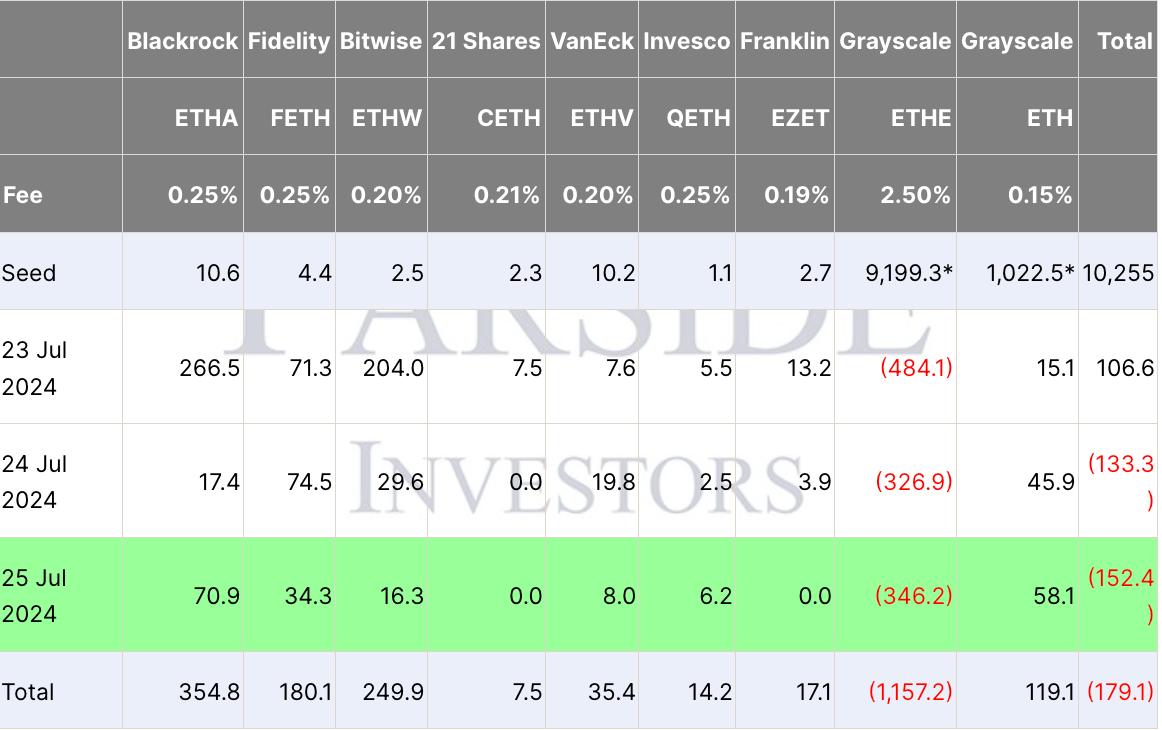
Base, a layer-2 blockchain solution built atop Ethereum, has garnered significant attention due to its robust growth in 2024, securing $2.7 billion in net inflows year-to-date. The surge marks a pivotal moment for the project, reflecting strong investor confidence and the growing appeal of scaling solutions within the crypto ecosystem. In stark contrast, Ethereum itself, despite its dominance in the space, experienced a record $7.4 billion in net outflows over the same period, signaling a shift in investor sentiment away from the original Ethereum blockchain toward alternative platforms like Base.

The disparity in inflows and outflows has drawn attention from market analysts, particularly because both assets are intrinsically linked. Base’s success hinges on the Ethereum blockchain for security, but its tailored scalability and lower transaction costs have attracted considerable investment. Ethereum’s outflows are largely attributed to concerns over its scalability issues, particularly its high transaction fees and network congestion that have persisted despite ongoing updates.

The ongoing battle between layer-1 and layer-2 solutions illustrates a broader trend in blockchain development. Layer-2 solutions like Base aim to alleviate the scalability challenges faced by Ethereum by processing transactions off-chain while leveraging Ethereum’s security. This model has proven to be appealing to decentralized application developers and users who seek lower fees and faster transactions. Investors are increasingly recognizing these advantages, which has driven the substantial inflows into Base.

One of the key factors driving Base’s success has been its integration with Optimism, a layer-2 network that employs Optimistic Rollups. This technology allows transactions to be processed in batches, enhancing speed and efficiency while reducing costs. Optimism’s established track record, combined with the robust infrastructure of Base, has resulted in a growing number of decentralized finance (DeFi) protocols migrating to this ecosystem. These protocols are increasingly shifting their focus to Base, buoyed by its ability to scale and manage higher transaction volumes more effectively than Ethereum.

Ethereum’s struggle to retain investor confidence, on the other hand, can be traced to its long-standing scalability limitations. The Ethereum network, often hailed as the backbone of decentralized finance, has been plagued by network congestion, especially during periods of high transaction demand. While Ethereum’s transition to Ethereum 2.0, which aims to implement a Proof of Stake consensus mechanism, is intended to address some of these issues, many investors remain skeptical of its long-term viability in its current form. High transaction fees continue to plague the network, pushing investors and developers to seek alternatives that offer better scalability.

Despite Ethereum’s ongoing development efforts, including the introduction of sharding and other upgrades to enhance throughput, the market sentiment has leaned toward blockchain solutions that can offer immediate relief. Layer-2 solutions like Base, Arbitrum, and Polygon have benefitted from this shift, offering near-instant transaction finality and negligible fees. These benefits have not only attracted developers but also institutional investors who are looking to capitalize on the emerging layer-2 ecosystem, further driving the inflow into these platforms.

The contrast between Ethereum’s challenges and Base’s growth is particularly notable given the overlap in their underlying technologies. While Base runs on Ethereum’s base layer for security and consensus, its innovative scaling model has managed to sidestep many of the bottlenecks that continue to hinder Ethereum itself. This dynamic has led to the rapid rise of Base in the market, with many speculating that this trend could continue as more applications and investors shift their focus to layer-2 solutions.

A key consideration in the ongoing evolution of blockchain technology is the role of decentralization. Ethereum has long been the poster child for decentralization, emphasizing the importance of a trustless and distributed network. However, as scalability and efficiency have become more pressing issues, layer-2 solutions like Base are offering a middle ground—leveraging Ethereum’s security without burdening its mainnet with excessive transactions. This hybrid approach is increasingly gaining favor among users who value both decentralization and efficiency.

The entry of institutional investors into the blockchain space has played a critical role in shaping the landscape. Many institutional players have expressed interest in blockchain technologies that provide high throughput and minimal latency, qualities that are often found in layer-2 solutions. The inflows into Base reflect this shift, as institutions seek to diversify their portfolios in the rapidly evolving digital asset space. The growing adoption of decentralized finance, non-fungible tokens (NFTs), and other blockchain-based innovations has further cemented Base’s position as a platform that can support these applications with lower costs and faster speeds.

The contrasting trends in Ethereum’s outflows and Base’s inflows have sparked debate about the future of Ethereum’s role in the broader blockchain ecosystem. While Ethereum remains the dominant layer-1 blockchain, its scalability issues have led to increased competition from a range of layer-2 solutions. These developments highlight the evolving dynamics within the blockchain space, where scalability, speed, and cost-efficiency are becoming the key determinants of success.

Brian Quintenz, the head of crypto policy at Andreessen Horowitz, has emerged as a frontrunner for the position of chair at the Commodity Futures Trading Commission (CFTC). This potential appointment has generated considerable attention, particularly in the context of shaping the future of cryptocurrency regulation in the United States. Quintenz’s deep-rooted experience with the regulatory landscape, particularly his tenure at the CFTC under the Trump administration, positions him as a key figure in guiding the U.S. government’s approach to digital assets and derivatives markets.

During his tenure as a commissioner at the CFTC from 2017 to 2021, Quintenz made a significant impact in the world of financial regulation. He was one of the first regulators to recognize the growing importance of digital assets, including cryptocurrencies like Bitcoin and Ethereum, and the need to develop a regulatory framework that both fosters innovation and protects investors. Quintenz was known for his support of the crypto industry, advocating for clearer and more consistent rules governing digital asset markets. His work on derivatives, particularly around crypto futures contracts, laid the foundation for much of the regulatory framework in place today.

Quintenz’s appointment to the CFTC chair could signal a more crypto-friendly regulatory environment in the U.S., one that aligns with the priorities of industry advocates who have long argued for clearer rules to enable innovation without stifling growth. The CFTC, under Quintenz’s guidance, is expected to build upon his prior work, including his advocacy for creating a comprehensive regulatory framework that supports digital asset trading while ensuring financial stability.

Quintenz’s potential leadership is seen as crucial for addressing the growing demand for regulation in the cryptocurrency space, particularly as institutional interest in digital assets continues to rise. The U.S. has been grappling with questions around the appropriate regulatory body to oversee crypto markets, with the CFTC and the Securities and Exchange Commission (SEC) often at odds over jurisdictional issues. Quintenz, however, has long argued that the CFTC is best suited to oversee crypto derivatives and related markets due to its expertise in futures and commodities. If confirmed, Quintenz could play a pivotal role in resolving these jurisdictional disputes and advancing a clear, unified regulatory framework.

Under Quintenz’s leadership, the CFTC could also take a more proactive role in fostering innovation within the digital asset space. His track record at Andreessen Horowitz, one of Silicon Valley’s most influential venture capital firms, shows his keen understanding of the intersection between technology and regulation. At the firm, Quintenz has worked closely with emerging blockchain companies and crypto projects, providing guidance on navigating the complex regulatory landscape. This experience gives him a unique perspective on how to balance the need for regulation with the desire for innovation, making him a natural fit to lead the CFTC as it continues to evolve its approach to crypto.

The crypto industry, which has faced increasing scrutiny from lawmakers and regulators, would likely welcome a more consistent and favorable regulatory framework under Quintenz’s leadership. While some in the industry have expressed concerns about regulatory overreach, many are hopeful that Quintenz’s appointment could provide the clarity and stability needed to drive continued growth. The ongoing battle over cryptocurrency regulations has been marked by conflicting signals from different regulatory bodies, with the SEC taking a more aggressive stance on enforcement, particularly against centralized exchanges. In contrast, the CFTC has been more focused on ensuring that financial markets, including crypto derivatives, function within a legal framework that promotes transparency and market integrity.

One of the key challenges that Quintenz would face as CFTC chair is the evolving nature of the crypto market. With innovations like decentralized finance (DeFi) and non-fungible tokens (NFTs) continuing to gain popularity, the regulatory framework needs to be adaptable enough to keep pace with rapid changes in the industry. Quintenz’s previous work at the CFTC, where he helped craft rules for Bitcoin futures and other digital asset contracts, suggests he understands the importance of staying ahead of market developments and ensuring that regulation evolves in tandem with technological advancements.

Quintenz’s approach to digital asset regulation will likely focus on protecting consumers without stifling innovation. His stance during his time at the CFTC and his work at Andreessen Horowitz indicate that he views regulation as a tool to create a level playing field for all market participants while fostering innovation. This would be in stark contrast to some of the more stringent regulatory approaches favored by other factions within the U.S. government, which seek to impose more controls over the growing crypto market.

His potential appointment also comes at a time when the U.S. is facing mounting pressure to establish a clear and consistent regulatory framework for digital assets. Other countries, such as the European Union, have moved forward with comprehensive crypto regulation, and the U.S. risks falling behind in the global race to regulate emerging financial technologies. Quintenz’s appointment could help solidify the U.S.’s position as a leader in digital asset regulation, ensuring that the country remains competitive while safeguarding the financial system.

HONG KONG SAR – Media OutReach Newswire – 12 December 2024 – MooneyBird, a proptech company specializing in real estate marketing and AI technologies, has launched Hong Kong’s first AI-powered real estate marketing system. This innovative system is specifically designed for small and medium-sized real estate agencies, offering an integrated solution that combines brand website design, automated marketing, and client management tools. This solution strives to facilitate […]

Dubai Islamic Bank (DIB) is open to acquiring other banks and financial technology (FinTech) businesses as part of its strategy to expand its market presence and strengthen its service offerings. CEO of DIB, Adnan Chilwan, highlighted the bank’s interest in further diversifying its portfolio to meet the evolving needs of customers. This approach is in line with DIB’s broader growth strategy, which has already seen significant investments […]

Triton Liquid Fund, a leading player in digital asset hedge fund management, has taken a significant step by obtaining its full Financial Services Permission (FSP) licence from the Abu Dhabi Global Market (ADGM). This development empowers the firm to establish, manage, and operate diversified collective investment portfolios, cementing its position in the region’s expanding digital financial ecosystem. The fund, which has been strategically supported by New York-based […]

The United Arab Emirates has finalized a comprehensive agreement aimed at boosting economic and trade relations with the Eurasian Economic Union (EAEU), marking a significant step in its efforts to diversify trade partnerships and expand its geopolitical influence. The deal, signed by top officials in both regions, is expected to enhance cooperation in sectors such as energy, technology, and logistics, and increase bilateral trade, which has already shown promising growth.

The EAEU, a political and economic union comprising Armenia, Belarus, Kazakhstan, Kyrgyzstan, and Russia, represents a growing market with over 180 million consumers. The agreement with the UAE promises to deepen economic integration between these countries and one of the Middle East’s most dynamic economies. This strategic alignment highlights the UAE’s broader ambition to strengthen its role as a global trading hub, positioning itself as a bridge between East and West.

Trade relations between the UAE and the EAEU have been steadily evolving, with the UAE emerging as a key partner for EAEU nations in recent years. This new pact, formalized after several rounds of negotiation, is designed to capitalize on existing commercial synergies, offering a platform for increased investment flows, joint ventures, and the expansion of supply chains. The agreement sets the stage for a substantial increase in trade volumes, as both parties have agreed to reduce trade barriers and streamline customs procedures, making it easier for goods and services to flow across borders.

In addition to the trade component, the agreement includes provisions for cooperation in technology and innovation. The UAE, already a leader in the tech sector in the Middle East, is looking to export its expertise in fields such as artificial intelligence (AI), renewable energy, and smart infrastructure. EAEU nations, particularly Russia and Kazakhstan, are keen to integrate more advanced technologies into their industries, and the UAE sees this as a prime opportunity to tap into these growing markets. The deal is expected to open up new avenues for collaboration in space technology, fintech, and cybersecurity, sectors in which the UAE has made substantial strides.

Energy remains one of the cornerstone industries in the relationship. The UAE, a member of the Organization of the Petroleum Exporting Countries (OPEC), and Russia, one of the world’s largest oil producers, have long had a robust partnership in the energy sector. This agreement formalizes their commitment to enhancing energy cooperation, particularly in the field of renewable energy. With both nations investing heavily in solar, wind, and nuclear power, the UAE’s clean energy expertise could play a pivotal role in helping EAEU countries achieve their energy transition goals.

The partnership holds significant strategic value for the UAE, which is seeking to diversify its international partnerships and reduce its reliance on traditional Western markets. As geopolitical dynamics shift, particularly with increasing tensions between the West and Russia, the UAE sees the EAEU as an important alternative to expand its global influence. The UAE’s government has been active in seeking closer relations with non-Western powers, building ties with China, India, and Russia in various sectors, including defense, technology, and trade.

For the EAEU, the agreement provides a new dimension to its outward economic orientation, as the bloc looks to reduce its dependence on Europe and enhance its engagement with the Middle East. This new avenue for collaboration is seen as critical for the EAEU’s long-term economic strategy, which aims to bolster ties with countries in Asia and the Arab world. The UAE’s rapidly growing economy and its strategic location between Asia, Africa, and Europe offer a unique gateway for EAEU countries to increase their exports, access global markets, and attract investments.

This agreement is part of a broader trend of the UAE pursuing economic diversification and expanding its trade footprint beyond its traditional partners. The UAE has been actively seeking new trade agreements with nations across the globe, and this deal with the EAEU complements similar initiatives with countries such as India, China, and various African nations. Through these agreements, the UAE is enhancing its position as a regional and global trade powerhouse, and the EAEU pact is a significant component of that vision.

The deal’s signing follows years of diplomatic and economic negotiations, with both sides recognizing the growing potential for collaboration across multiple sectors. The UAE has long prioritized the development of strong, diversified economic relationships, and this agreement with the EAEU is expected to deliver tangible benefits for both regions in the coming years.

While the agreement sets the stage for increased trade and investment, both sides are aware of the challenges involved in implementing such a broad partnership. Differences in regulatory environments, market structures, and political dynamics could present hurdles that need to be navigated carefully. However, the determination on both sides to push forward with these initiatives reflects the shared commitment to strengthening economic ties.


Carlyle Group’s AlpInvest Partners has entered into a strategic partnership with Mubadala Investment Company, marking a significant development in the private equity and alternative investment landscape. The two entities are set to pool their expertise to create a new financing initiative, which is expected to reshape investment strategies in the coming years.

AlpInvest Partners, a leading global private equity firm, and Mubadala, a sovereign wealth fund based in Abu Dhabi, have long been prominent players in the investment world. Together, they are now focusing on expanding their reach across sectors such as technology, healthcare, and energy. The collaboration aims to tap into emerging investment opportunities, leveraging the expertise of both firms to provide flexible financing solutions to companies in need of capital.

The new partnership is expected to create a platform that offers both direct investments and secondary market opportunities, targeting firms across the growth and buyout spectrum. Experts highlight the synergies between Mubadala’s long-term investment approach and AlpInvest’s deep knowledge of the private equity landscape, which could prove to be a winning combination for identifying and nurturing high-growth ventures.

This initiative comes at a time when the global investment market is undergoing significant shifts. The private equity space, especially, has been growing at a rapid pace as more institutional investors look to diversify their portfolios. Analysts point out that this collaboration allows both firms to capitalize on a range of opportunities, from early-stage funding to large-scale buyouts, with a particular emphasis on sectors that are poised for transformative growth.

Mubadala’s significant capital base, bolstered by its vast portfolio of assets, gives the partnership a solid foundation to pursue deals that may otherwise be out of reach for smaller players. The sovereign wealth fund’s diverse holdings in global markets, particularly in sectors such as aerospace, technology, and healthcare, will complement AlpInvest’s extensive network of private equity investments. Together, they aim to target both established companies and innovative startups with high potential for growth.

One key aspect of the partnership is its potential impact on the Middle East and North Africa (MENA) region, where both Mubadala and AlpInvest have been steadily increasing their footprint. The region has seen a surge in private equity activity in recent years, driven by economic diversification initiatives and the growth of regional industries. Experts believe that the collaboration could further strengthen the MENA region’s position as a leading hub for private equity investments, drawing attention from both local and international investors.

The partnership’s approach to financing is seen as a significant shift in how private equity deals are structured. Unlike traditional private equity funds that typically focus on buyouts or growth equity, this collaboration is expected to provide more flexible financing solutions, including debt, equity, and hybrid structures. This flexibility could be a game-changer for companies looking for capital but unwilling to give up full control or ownership stakes.

For AlpInvest, this partnership adds to its growing portfolio of alliances with other institutional investors and private equity firms around the world. As part of the Carlyle Group, AlpInvest has access to a global platform that enables it to tap into high-value deals across North America, Europe, and Asia. This new venture with Mubadala allows AlpInvest to further solidify its position as a key player in the global alternative investments space.

Mubadala’s involvement in the partnership underscores its ongoing strategy to diversify its investments globally. As part of its broader investment strategy, Mubadala has been focusing on both growth and impact, directing funds towards industries that promise long-term value and societal benefits. The new financing venture with AlpInvest is expected to align with these goals, particularly in the fields of sustainable energy and technology, which are central to the UAE’s Vision 2030 and Mubadala’s broader strategic objectives.

The financial terms of the partnership have not been disclosed, but market analysts anticipate that the new venture will unlock a wave of new opportunities for investors and businesses alike. As the demand for alternative financing models continues to rise, the Carlyle-AlpInvest and Mubadala collaboration is poised to take advantage of the growing need for capital across a variety of industries, with a special emphasis on innovation-driven sectors.

Celebrating the Season with Heartwarming Flavors from Across China MACAO SAR – Media OutReach Newswire – 12 December 2024 – Renowned as the Dining Destination in Asia, Galaxy Macau™ integrated resort (referred to as “Galaxy Macau”) continues to redefine culinary excellence with its diverse and innovative offerings. Seamlessly blending tradition and creativity, its restaurants present seasonal specialties year-round, nourishing both the body and the soul. This winter, […]

VISHNU RAJA
RYO YAMADA
HITORI GOTOH
IKUYO KITA