News related to
across

Nigeria has secured a $747 million syndicated loan, led by Deutsche Bank, to fund the initial 47.47‑kilometre phase of its flagship coastal highway spanning from Victoria Island to Eleko Village in Lagos. The Ministry of Finance confirmed the financing on Wednesday, marking a record for road infrastructure funding in the country. Lenders in the syndicate include First Abu Dhabi Bank, African Export‑Import Bank, Abu Dhabi Exports Office, ECOWAS […]

The Indian Institute of Technology Delhi has teamed up with TeamLease EdTech to introduce a 24‑week online executive programme in artificial intelligence for healthcare professionals. With live weekend sessions, hands‑on projects and mentorship from leading faculty, the course is scheduled to begin on 1 November 2025, and admissions are open until 31 July 2025.

The programme aims to equip clinicians, engineers, data scientists and med‑tech entrepreneurs with a robust understanding of AI applications across healthcare domains including diagnostics, imaging, risk scoring, hospital operations and public health analytics. Course modules cover foundational topics such as machine learning, deep learning, big data and IoT monitoring of patient data, before progressing to advanced concepts like natural language processing for electronic health records, predictive analytics and AI‑powered dashboards.

Classes will be conducted entirely online on weekends to accommodate working professionals, and participants will work with real clinical datasets and hospital data systems. A capstone project, mentored by IIT Delhi faculty and experts from AIIMS and the med‑tech industry, will enable learners to build deployable AI tools under guidance.

Fee structure is set at ₹1.20 lakh plus 18 per cent GST, payable in two instalments. Eligibility extends to any graduate professional working in healthcare, research, industry or academia with interest in AI, and no prior coding experience is required.

Officials emphasise that AI has moved from optional to essential in modern medicine. Professor Manav Bhatnagar, Head of the Continuing Education Programme at IIT Delhi, highlighted the institute’s goal to develop “next‑gen capabilities that respond to evolving healthcare needs”, adding that the programme will empower professionals to lead this transformation. Shantanu Rooj, Founder and CEO of TeamLease EdTech, noted that the collaboration bridges clinical knowledge and data intelligence to create impactful healthcare solutions.

External analysts point to broader global trends behind the move. The World Economic Forum estimates that AI could add over US $150 billion annually to global healthcare economies through enhanced efficiency and patient outcomes. In India, NITI Aayog and EY forecast the digital healthcare market—driven by AI diagnostics and telemedicine—to exceed $37 billion by 2030.

The curriculum is divided into several thematic blocks: foundational AI methods; clinical and hospital data analytics; predictive modelling; medical imaging and automation; IoT‑based monitoring; EHR and NLP; public health analytics; and design of dashboards and decision‑support tools. Over 10 case studies and numerous hands‑on exercises will ensure participants not only learn theory but also apply skills to real‑world challenges.

On completion, alumni can explore roles such as AI/ML Engineer developing diagnostic models; Healthcare Data Scientist analysing clinical datasets; Clinical AI Researcher validating AI systems in hospital settings; Digital Health Consultant guiding AI adoption; Medical Imaging Analyst interpreting scans; AI Product Manager in health‑tech; or Regulatory/Data Governance Specialist ensuring compliance.

The weekend‑only format promises greater flexibility for busy professionals, with interactive live sessions and opportunities to network with CIOs, med‑tech founders and industry experts. TeamLease EdTech will support the programme delivery and student success, integrating technology platforms with IIT Delhi’s academic oversight.

Applications close on 31 July 2025. The programme will run from 1 November 2025 through early May 2026. Prospective applicants are directed to IIT Delhi’s Continuing Education Programme portal for registration and scholarship information.

This launch positions IIT Delhi and TeamLease at the forefront of AI‑driven healthcare education, anticipating a future where data intelligence plays a transformative role in patient care, system efficiency and population health outcomes.

Samsung has launched a new generation of Galaxy AI features embedded directly on its smartphones, combining cutting‑edge intelligence with enhanced privacy safeguards. Designed to rival Apple Intelligence and Google Gemini, Galaxy AI now performs tasks such as voice‑to‑text, photo editing, call transcription and real‑time translation entirely on device—only resorting to anonymised cloud support for complex jobs, thus protecting personal data. At the heart of this shift is […]

GATES Inc. is deploying blockchain technology to enable foreign investors to buy stakes in a portfolio of income-generating properties worth US $75 million in central Tokyo through the Oasys network. The initiative is part of a broader strategy to modernise how overseas buyers participate in Japan’s real estate market.

The pilot scheme will issue digital tokens representing fractional ownership in a basket of premium commercial and residential assets, held via an overseas special-purpose vehicle to ensure regulatory compliance. GATES CEO Yushi Sekino described the move as “building next‑generation investment infrastructure that allows global investors easy access to Japanese assets.”

GATES has signalled an ambitious scaling plan to encompass US $200 billion worth of real estate tokens—a fraction but strategic segment of Japan’s entire US $20.5 trillion market. Such a leap reflects growing institutional interest in tokenisation of real‑world assets worldwide, with projections valuing the tokenised bond and equity space at US $18 trillion by 2033.

Blockchain advocates argue this model eliminates traditional intermediaries—brokers, legal firms, language translators—while lowering costs and administrative burdens. GATES will enable the platform to carry out token issuance, secondary trades and compliance checks on-chain. This allows small-scale global investors to transact in real time, without navigating Japanese legal complexities directly.

Oasys, a layer‑1 blockchain originally built with gaming in mind, has repositioned itself toward tokenising real‑world assets, including property and intellectual property rights. Ryo Matsubara, Oasys Representative Director, emphasised that “Japanese content, whether game IP or other cultural assets, commands high global value,” thus reinforcing their pivot to real‑world asset tokenisation.

The first phase focuses on Tokyo, but GATES plans roll‑out to other major international markets including the United States, Europe and Southeast Asia. Future stages may target tokenised rights to Japanese media and entertainment franchises, unlocking new investment channels for cultural IP.

Global benchmarks suggest tokenised real estate is gaining speed: Dubai anticipates a US $16 billion market by 2033, while international banks and tech firms increasingly pilot similar schemes. CoinDesk highlighted that GATES is the first major Japanese real estate company to attempt a tokenisation project of this magnitude.

Yet challenges remain. Japanese regulatory frameworks governing securities—including digital asset classification—are still evolving. Local legal consultation remains essential, especially in structuring overseas vehicles to comply with the Financial Instruments and Exchange Act. Additionally, investor appetite outside Asia and Europe will hinge on clarity in custody, asset valuation methods, and secondary‑market liquidity.

Independent analysts note that tokenisation promises more than simplified access; it may improve transparency, tracking and governance by embedding ownership and contract details onto an immutable ledger. Such benefits could, over time, boost asset yields and reduce fraud risk.

However, critics caution that regulatory and technological bottlenecks, combined with customary conservatism in Japanese real‑estate investment, could slow adoption. So many see the success of this pilot in Tokyo as crucial evidence for scaling up to the US $200 billion target.

With GATES pursuing a Nasdaq listing and reporting revenue of roughly US $145 million in 2024, the company has both resources and strategic backing to drive forward. If Tokyo’s pilot succeeds, the combination of blockchain infrastructure and overseas special‑purpose vehicle structures could point the way for similar strategies across Asia and beyond.

While tokenisation of Japanese real estate may appear niche, the project could presage a broader redefinition of how global capital flows into property markets—promising greater access, efficiency and digital-native investment models.

GUIZHOU, CHINA – Media OutReach Newswire – 10 July 2025 – Capitalizing on its exceptional ecological resources, Zhanjie Town in Qingzhen City, Guizhou Province is actively promoting the optimization of its industrial structure and the integrated development of culture and tourism. The town is forging a new path to high-quality rural revitalization—transforming ecological beauty into prosperity for its residents. In recent years, Zhanjie Town has adhered to […]

Spanish café operator Vanadi Coffee has approved a plan to allocate up to €1 billion of its treasury into Bitcoin, marking a striking pivot from its core hospitality business into crypto‑asset accumulation. The decision, ratified by shareholders on 29 June, seeks to position the firm—currently loss‑making and operating just six outlets—as one of Spain’s largest Bitcoin holders.

Vanadi already owns 54 BTC, acquired at an average price of around €93,444 per coin, valued today at approximately €5.8 million. Its share price surged over 25 per cent following the announcement, a staggering boost for a business that reported €3.3 million in losses during 2024. Market observers note the stock has rallied more than 400 per cent year‑to‑date on hopes that crypto‑oriented balance sheets can act as alternative stores of value.

The strategic shift draws inspiration from established Bitcoin treasury pioneers such as MicroStrategy, which holds nearly 500,000 BTC and has leveraged convertible equity vehicles to fund its crypto purchases. Likewise, Japanese firm Metaplanet is acquiring Bitcoin aggressively as part of its acquisition-backed model. Vanadi’s leadership believes this approach can appeal to institutional investors seeking inflation hedges without disrupting conventional asset portfolios.

Analysts warn the company faces elevated risk. Vanadi operates at a negative equity of around €600,000, and auditors have flagged uncertainty over its going‑concern status. Critics argue a small café chain with slender margins and negligible exposure to financial markets may lack the sophistication to withstand Bitcoin’s volatility and regulatory scrutiny.

Financing the Bitcoin ramp‑up will involve issuing convertible bonds and equity, leveraging commitments from niche funders including Patblasc Software Consulting and Alpha Blue Ocean’s Global Tech Opportunities 10. Some question both the provenance and capacity of these investors, given their prior backing of distressed asset plays such as Intercity and Substrate AI.

Vanadi acknowledges the gamble may redefine its identity: “We aim to become the largest listed Bitcoin‑holding company in Spain,” it said, equating its structural transformation to precedent‑setting players in the sector. Nonetheless, it has had to scale back expansion ambitions, cutting its growth pipeline amid constrained resources and shifting priorities.

Vanadi’s strategy forms part of a broader wave of crypto treasury activity. A growing number of under‑the‑radar firms in Europe—from chipmakers to fintech startups—are joining major players in the US and Asia investing heavily in Bitcoin. Collectively, these firms moved over 10,000 BTC onto their books in late June, totalling several billion dollars in accumulated digital assets.

Experts suggest this trend follows Gartner’s classic hype‑cycle pattern: as Bitcoin becomes easier to acquire and gain public approval, doubt gives way to widespread optimism—driving speculative surges across new sectors. Vanadi’s move, while surprising due to its modest scale, fits squarely within this wave of enthusiasm.

London‑listed Strategy recently launched a $21 billion preferred stock offering to fund more Bitcoin purchases, underscoring how corporate balance sheets are being reconfigured around digital assets. Vanadi hopes to replicate this formula, albeit with far fewer resources and heightened risk exposure.

Vanadi’s management calls the transition a “long‑term bet on a decentralised financial model,” arguing that crypto reserves provide institutional credibility and operational transparency under existing market regulations. Yet, whether this approach offers sustainable upside or represents a peak‑hype miscalculation remains under intense debate among analysts and investors.

MUNICH, GERMANY – NEWSAKTUELL – 10 July 2025 – The Supervisory Board of TÜV SÜD AG has appointed Ishan Palit, former Asia Pacific CEO, as Interim Chief Executive Officer (Chairman of the Board of Management) effective July 15, 2025, following the announcement that Dr. Johannes Bussmann will be stepping down to become CEO of MTU Aero Engines AG. Johannes Bussmann will leave TÜV SÜD on July 14, […]

Advertisements

BEIJING, CHINA – Media OutReach Newswire – 10 July 2025 – As the 11th Nishan Forum on World Civilizations takes place in east China’s Qufu City, CGTN published an article highlighting the importance of dialogue and mutual learning among civilizations to promote harmonious coexistence, shared prosperity, and the safeguarding of traditional values in the face of modern challenges. “Is it not a joy to have friends come […]

A growing number of startup founders are using AI-driven red‑teaming methods to rigorously probe their business concepts, exposing weak spots before costly launches. This combative approach adapts cybersecurity tactics for entrepreneurial due diligence, helping entrepreneurs pre‑empt real‑world failures. AI red‑teaming involves prompting ChatGPT with roles such as “penetration tester”, “ruthless competitor” or “regulatory enforcer”, each tasked with systematically dismantling a business idea. The AI critiques everything from […]

A German court has ordered Meta to pay €5,000 to a Facebook user after finding that its tracking pixel technology breaches the General Data Protection Regulation by collecting personal data from third‑party websites and apps without valid consent. The judgment, issued by the Regional Court of Leipzig on 4 July 2025, establishes a legal precedent enabling individuals to claim compensation without showing they suffered direct harm. Meta’s […]

For the winners of the 2025 Golden Bull Award, the answer is clear: vision, agility, and a drive to challenge the norm. KUALA LUMPUR, MALAYSIA – Media OutReach Newswire – 10 July 2025 – These are high-performing companies and trailblazers. This year’s winners are leading the way through innovation, from adopting AI and strengthening cybersecurity to integrating ESG values into their core operations. They show us that […]

Major technology firms and start‑ups are racing to adopt the Model Context Protocol, the open‑source standard that streamlines communication between large language models and external tools. Since its debut in November 2024, Anthropic’s creation has gained swift endorsement from OpenAI, Google DeepMind, Microsoft and others and is now being adopted to power the next wave of agent‑based AI. However, the protocol’s rapid integration has exposed serious vulnerabilities—forcing […]

Charles Group has entered a $1 billion strategic partnership with the US-based Patel Family Office to co-develop a digital investment platform targeting real estate and infrastructure assets across the UK, GCC, India and the SAARC region. The memorandum of understanding, signed at the Global Wealth Conference 2025 hosted by the Sovereign Wealth Fund Institute at London’s Mansion House, was finalised in the Egyptian Hall and witnessed by over […]

MENA region investment banking fees declined 2 per cent year‑on‑year in the first half of 2025, falling to US$773.7 million, the third‑highest H1 tally since 2000, according to London Stock Exchange Group’s Deals Intelligence data. The dip occurred amid an environment of oil‑price volatility, geopolitical fragmentation and escalating global trade tensions. Debt capital markets underwriting emerged as the growth engine, with related fees rising 20 per cent to US$278.9 million. However, […]

Suhail bin Mohammed Al Mazrouei, Minister of Energy and Infrastructure, reaffirmed the UAE’s full backing for OPEC+ mechanisms, underlining the nation’s commitment to sustaining equilibrium in global oil markets through capacity expansion and coordinated policy.

At the 9th OPEC International Seminar in Vienna on 9 July, Al Mazrouei praised OPEC+ for its collective decision‑making model, which he said ensures production responds to actual market demand rather than price speculation. He noted that the UAE’s strategic investments in expanding production capacity reflect a readiness to release additional oil when consumption trends warrant, providing a stabilising buffer to global supply. The minister highlighted that this expansion aligns with prudent leadership foresight aimed at reinforcing market resilience.

He emphasised that there has been no substantial rise in inventories despite several months of gradual production increases. “Even with the increases…we haven’t seen a major buildup in inventories, which means the market needed those barrels,” he stated. This observation supports broader OPEC+ data showing that successive monthly output increments have been absorbed by demand, a trend that the UAE believes underlines the rationality behind its expanded quota.

Since April, OPEC+ has reversed approximately 2.17 million barrels per day of voluntary output cuts via a phased rollout: 138,000 bpd in April, then 411,000 bpd in each of May, June and July, followed by a proposed 548,000 bpd increase for August – a move reflecting growing market confidence. Notably, the UAE is set to complete a 300,000 bpd quota increase by September, a benchmark reached ahead of the original 2026 timeline as OPEC+ expedited its capacity hike schedule.

Analysts suggest that such robust production gains could recover roughly 2.5 per cent of global demand by September. Al Mazrouei remarked that the UAE’s investments will strengthen its role within OPEC+ and that once additional capacity comes online, it will serve as a crucial stabilising factor during demand shifts.

He further argued that focusing solely on oil price levels is insufficient. Rather, OPEC+ aims to strike a sustainable balance that encourages long‑term investment. “We need the price to be right for investments to happen,” he said, warning of the consequences of underinvestment across producers.

Current market dynamics appear to confirm this approach: data from mid‑June and early July indicate that inventories across OECD nations remained stable despite the production uptick, confirming demand absorption remains robust. That observation, Al Mazrouei suggested, validates the pace of OPEC+ supply restoration and diminishes concern about a looming oversupply.

While output is increasing, policy is cautious. The Group of Eight core OPEC+ members—Saudi Arabia, Russia, UAE, Kuwait, Oman, Iraq, Kazakhstan and Algeria—are proceeding in measured increments. Al Mazrouei underscored that OPEC+ continues to meet monthly via ministerial and committee reviews, carefully calibrating production relative to shifting market fundamentals.

Beyond ensuring balance, the UAE’s production capacity expansion also carries strategic benefits. Having secured a higher individual quota, the country aims to restore and extend its market share. This reinforcement was acknowledged by external observers, including Richard Bronze of Energy Aspects, who noted “the UAE is benefiting from this speeding up of the quota increases” within a context of broader OPEC+ output acceleration.

Despite concerns about slowing economies in key importers, including China, and rising US trade tensions, OPEC+ retains a cautiously optimistic outlook. Prices in July experienced modest one‑per‑cent gains near $69 per barrel following the announcement of the August supply increase—an indicator that demand continues to absorb the additional volumes.

Nevertheless, OPEC+ remains vigilant about macroeconomic risks. Commentators have warned that demand softness later this year, driven by uncertainties in global growth and trade policies, could pressurise prices. Al Mazrouei echoed that view, stressing that short‑term supply increases must be accompanied by stable investment in oil infrastructure to prevent future shortages.

Persistent coordinated production strategy is a central theme from the Vienna seminar. Ministers emphasised OPEC+’s response to shifting fundamentals rather than geopolitical or speculative impulses. With the group moving to complete the unwind of emergency cuts, markets will closely monitor whether global demand continues to match supply advances.


HONG KONG SAR – Media OutReach Newswire – 10 July 2025 – Uweb (University of Web3), a leading digital asset education institute, is pleased to announce the successful completion of a US$3 million angle funding round. The round was led by emerging investment firm Avenir Group, with participation from prominent venture capital firms including Ronin & Quinn Capital, Singchain Capital, and First Merit, as well as several […]

San Francisco–based ZeroEntropy has emerged at the forefront of a crucial yet underrepresented segment in artificial intelligence: retrieval‑augmented generation. The startup, co‑founded by Moroccan engineer Ghita Houir Alami and CTO Nicolas Pipitone, has raised $4.2 million in seed funding to refine how large language models access contextually relevant data. This investment underscores growing investor conviction that LLM performance hinges on the quality of retrieved information, not just model […]

SINGAPORE – Media OutReach Newswire – 10 July 2025 – To celebrate Singapore’s SG60 milestone, Chevron Singapore, which operates the Caltex retail brand, has launched a limited-edition SG60 picnic set comprising a picnic box and two chairs. Designed to enrich Singaporeans’ upcoming National Day celebrations while fostering a sense of local community spirit, these unique items will be available for purchase at all 26 Caltex stations nationwide […]

Accra Regional Police have arrested Emmanuel Akanpatiba, a principal figure in a motorbike theft syndicate accused of stealing at least 12 motorbikes across the region. The arrest marks a significant breakthrough in a complex network operating within Accra’s metropolitan zones. Police said Akanpatiba was detained on 24 June following a tip-off after a red Royal motorbike—registration M‑25 CW 367—was reported stolen from a Madina residence. The arresting team acted […]

On June 19–20, Baku successfully hosted the Baku ID 2025 Innovation Festival. This year’s theme, The Regional Nexus, brought together leading entrepreneurs and technology leaders from the Caucasus, Central Asia, the Middle East, and North Africa, positioning Azerbaijan as the region’s innovation hub. The festival was organized by SABAH.HUB Innovation Center with the support of the Ministry of Science and Education of Azerbaijan, SOCAR, PASHA Holding, and the Center for Analysis and Coordination of the […]

DoubleDown Interactive has struck an agreement to acquire Hamburg-based WHOW Games GmbH for €55 million, plus up to €10 million in performance-linked earn‑outs, in a move to deepen its foothold in Europe’s expanding social casino market. The transaction, financed from existing cash reserves, is slated to finalise in the third quarter of 2025. The licensing deal, part of a Share Purchase and Transfer Agreement with Azerion Tech Holding B. […]

Monday stress is more than a passing feeling—it leaves a measurable imprint on the body, according to a large-scale longitudinal study that has identified elevated cortisol levels in people experiencing anticipatory anxiety at the start of the week. The research, which tracked hair cortisol concentrations over extended periods, offers compelling evidence that societal rhythms and ingrained weekly schedules may biologically reinforce anxiety patterns linked to the beginning […]

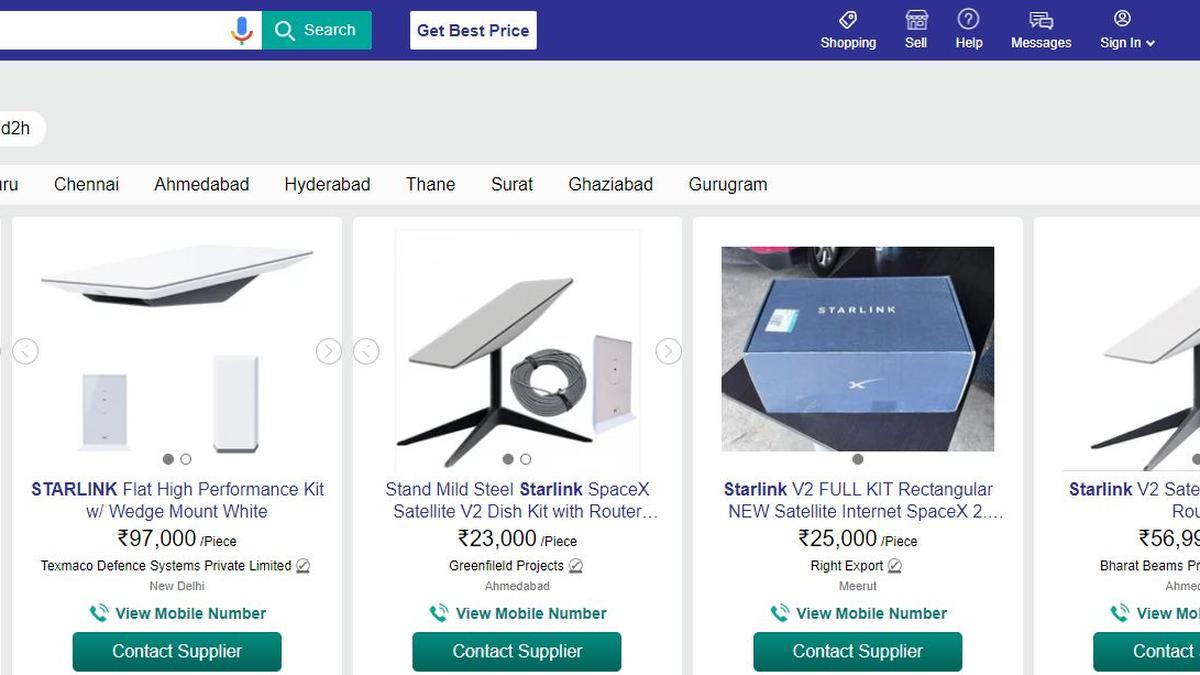
Elon Musk’s satellite‑internet venture has obtained its space regulator’s final approval to launch commercial services, removing the only remaining legal obstacle after securing a telecom licence last month. This paves the way for Starlink to become the third satellite broadband operator in India, alongside Eutelsat‑OneWeb and Reliance Jio‑SES.

The Department of Telecommunications issued Starlink the Global Mobile Personal Communication by Satellite permit in early June, marking a pivotal step towards nationwide commercial deployment. Space regulator IN‑SPACe has now finalised its authorisation—pending Starlink’s formal acceptance and countersignature—bringing the company on par with its established rivals.

Starlink must still secure dedicated spectrum, construct ground infrastructure, and complete stringent security trials before service can commence. Officials indicate the spectrum will be allocated administratively rather than via auction, aligning with Starlink’s position over competing demands that included those from Reliance Jio.

The security evaluation phase remains critical. Indian authorities have insisted that all satellite‑based traffic must transit through domestic gateways and comply with legal interception protocols. Supply chain localisation and gateway siting near international borders will also be mandated. Past concerns over unauthorised Starlink usage in border regions prompted increased scrutiny by the ministry of home affairs and Department of Telecommunications earlier this year.

Starlink joins an increasingly competitive satellite broadband landscape. Eutelsat‑OneWeb received its GMPCS licence in August 2021 and full permissions in late 2023, while Jio‑SES obtained its telecom licence in March 2022 and space clearance by mid‑2024. Meanwhile, Amazon’s Project Kuiper awaits its approvals.

Local telecom giants are now preparing partnerships with satellite providers to enhance connectivity. Bharti Airtel and Reliance Jio signed pacts with Starlink earlier this year to deliver broadband across remote regions once authorisations were finalised. These alliances reflect a broader push by India to extend digital infrastructure to underserved rural and mountainous communities, where roughly 40 percent of the population remains without reliable internet access.

Starlink’s global network now spans over 6,750 satellites and serves diverse markets from Antarctica to developing Asia. In India, the company faces challenges adapting to the country’s famously low data prices, with mobile rates among the world’s cheapest. Each operator must also comply with provisions demanding indigenisation of at least 20 percent of ground infrastructure and multilayered security approval regimes.

As New Delhi aligns satellite spectrum policy—including assigning bandwidth for five‑year terms at a fee capped at 4 percent of adjusted gross revenue—operators will negotiate additional urban or rural levies and infrastructure contributions. Communications Minister Jyotiraditya Scindia’s consultations with SpaceX executives signal sustained governmental interest in leveraging satellite technologies to bolster India’s digital ambitions.

Starlink’s entry marks a significant shift in India’s telecom ecosystem. It promises to elevate broadband penetration in neglected geographies while testing the resilience of India’s stringent regulatory and security frameworks. The speed at which Starlink secures spectrum, builds its ground presence, and satisfies national interception mandates will determine how soon millions of users beyond urban centres experience high-speed satellite internet.

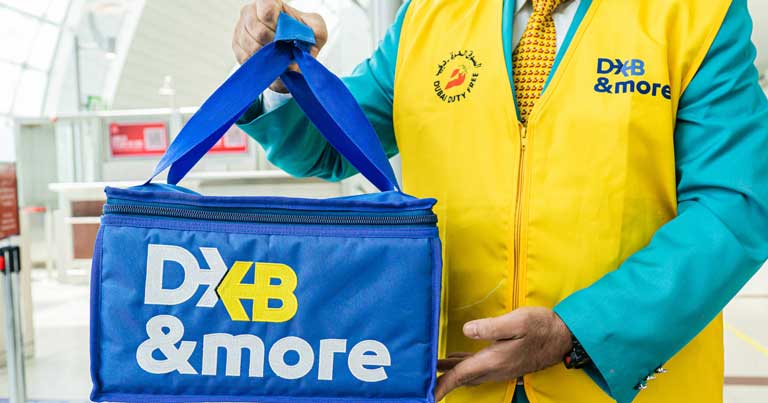
Dubai International Airport has introduced DXB Greet & Go in Terminal 3, revolutionising the way arrivals are greeted. Licensed hotels, tour operators and transport providers can now tap QR codes—replacing traditional placards—to meet guests efficiently in a dedicated arrivals area.

The initiative, officially live since early July, provides an authorised meeting zone designed to improve passenger flow and elevate hospitality standards. Dubai Airports has established this as part of its strategy to ease congestion and reduce stress at peak arrival times.

This digital-first service streamlines the reception experience: instead of waiting among crowds, drivers and host staff now scan pre-shared QR codes, guiding travellers directly to designated areas where they are met by clear signage. The system aligns with security protocols while offering better clarity and comfort.

Industry observers describe DXB Greet & Go as another milestone in Dubai’s automation and smart-performance ambitions. It complements prior enhancements—like biometric Smart Tunnels and QR-code navigation tools—designed to process high passenger volumes more swiftly while preserving a premium touchpoint.

Key regional operators have already registered. A senior operations manager at one of Dubai’s leading hospitality chains noted guest satisfaction has improved, citing fewer missed connections and faster handovers. Dubai Airports spokesperson emphasised that launch partners are primarily “licensed entities” committed to seamless, branded guest engagement.

Compliance and coordination with security teams were paramount in crafting the scheme. The dedicated meeting point follows stringent screening criteria and maintains oversight from airport operations, ensuring guest meets do not impinge on wider terminal safety. It also alleviates footfall in busy corridors, especially during peak periods.

Analysts see branding and service quality benefits. Sharply reducing wait times at arrivals enhances early impressions for high‑value guests, business travellers and VIPs—key revenues for both hotels and airport retail operators. And as QR-based systems gain traction worldwide, DXB’s approach may offer a replicable benchmark for other global gateways.

Passengers have already reported smoother arrivals. A recent poll by a GCC‑based travel blog found that 87 percent of users appreciated the clarity of designated zones and reduced crowding. Several said using the service felt more “personalised and modern”, aligning with expectations for a luxury travel experience.

Onboarding requires minimal effort: partners register via Dubai Airports’ platform, receive official QR codes linked to flight details, and station meeting personnel accordingly. QR scanning synchronises with flight schedules, activating the service only once the flight has landed and passengers have disembarked.

Dubai Airports reports the system has quickly gained traction among boutique hotels and VIP ground handlers, with expansion plans underway. Terminal 3—the main hub for Emirates—is expected to expand the service across other terminals if demand continues.

The move also integrates with existing smart journeys like DXB Express Maps, enabling visitors to navigate lounges, shops and gates by QR scanning digital kiosks. The combined effect is a frictionless experience from landing to departure, supporting ambitions to top 100 million annual passengers.

VISHNU RAJA
RYO YAMADA
HITORI GOTOH
IKUYO KITA