News related to
across

GCC countries secured $3.4 bn from 24 initial public offerings in the first half of 2025, down 6% from $3.6 bn over 23 listings a year earlier, according to a report by Kuwaiti research firm Markaz. Saudi Arabia drove the surge, contributing $2.8 bn through 22 IPOs—an increase of 36% year‑on‑year—while the UAE and Oman saw more subdued performances.

Oil‑price volatility, US tariff threats and global trade uncertainty weighed on market sentiment, but issuance volumes rose. The number of offerings edged higher to 24 from 23 in H1 2024, illustrating issuer appetite amid wider economic headwinds.

Saudi listings captured 85% of the total proceeds, reinforcing its dominance in the regional IPO pipeline. The Kingdom raised $2.8 bn, up from $2.1 bn in the first half of 2024, with 22 issuances compared to 19 a year ago.

The UAE saw a substantial 88% drop in IPO proceeds, with just one public offering—Alpha Data—raising $163 m in Abu Dhabi. Oman followed with the debut of Asyad Shipping Company, generating $333 m on the Muscat bourse. No IPOs were recorded in Kuwait, Qatar or Bahrain during this period.

Sector analysis reveals the industrials segment led with $1.4 bn in proceeds, bolstered by Flynas and Asyad Shipping Company. Real estate followed with demand for development and construction offerings, while healthcare IPOs collected $505 m. Financial services and technology contributed $408 m and $204 m respectively.

Performance after listing was mixed. Ten of the 24 companies saw positive returns by the end of June. Asyad Shipping led the pack, with its stock surging 835% since its March 12 listing. Umm Al Qura in Saudi Arabia recorded a 51% gain. On the downside, Hedab Alkhaleej, Dkhoun National Trading and Service Equipment fell by 30%, 27% and 26% respectively. Flynas edged slightly lower by 0.2%, despite an initial dip.

Wider equity market performance across the region showed divergence. Kuwait’s bourse rose 18.1% year‑to‑date, followed by Dubai, Abu Dhabi and Qatar, while Oman, Bahrain and Saudi Arabia retreated by 1.7%, 2.1% and 7.6% respectively.

Geopolitical shocks—including renewed US tariff threats and oil price fluctuations— exerted pressure on national indices. On Monday, Saudi Arabia’s Tadawul shed 0.2%, while Dubai, Abu Dhabi and Qatar all fell in the range of 0.3–0.5%. Investors are watching US inflation signals and Fed decisions closely, given the peg of Gulf currencies to the dollar.

Despite softer proceeds overall, the strong issuance tally suggests issuers seized a narrow window before heightened uncertainty. A PwC analysis of Q1 showed GCC IPOs rose 33%, raising $1.6 bn from 11 deals, with Saudi Arabia capturing nearly 70% of that total.

Looking ahead, Saudi Arabia is expected to maintain momentum, driven by privatisation efforts and a diverse pipeline of government-linked listings led by the Public Investment Fund. The UAE is projected to ramp up activity in industrials and tech, while Kuwait is implementing regulatory reforms to stimulate listings.

Market analysts caution that global headwinds remain. PwC flagged how tariff announcements and macroeconomic instability continue to disrupt IPO sentiment globally. Within the GCC, sustained oil-price volatility and tightening monetary conditions add complexity.

Nevertheless, Gulf capital markets have demonstrated resilience. Encouraged by diversified sector participation and healthy post-listing gains, policymakers and market participants appear poised to capitalise on remaining windows of stability.
Abu Dhabi’s Mubadala Investment Company, Partners Group, GIC and TPG Rise Climate have agreed a €6.7 billion deal to acquire Techem, the Frankfurt-based energy‑efficiency firm, in a strategic move poised to reinforce digital-first submetering and sustainability in European real estate.

The transaction—set to conclude in the second half of 2025, pending regulatory approvals—will see Partners Group’s infrastructure arm retain a controlling stake, while Mubadala, GIC and TPG Rise Climate take minority positions alongside, marking a rotation in ownership strategy. The sale ends the tenure of the prior consortium including La Caisse and Ontario Teachers’ Pension Plan, which supported Techem since 2018.

Techem, founded in 1952 and based in Eschborn, operates in 18 countries and serves more than 440,000 customers with over 13 million dwellings under its care. Approximately 62 million devices are currently installed across its footprint.

Under Partners Group’s 2018 private equity-led acquisition, Techem grew its sales beyond €1 billion and increased EBITDA by nearly 50%. This expansion solidified its role as a leading provider of submetering services—a crucial component in the decarbonisation of real estate, a sector responsible for around 40% of global CO₂ emissions.

The new ownership strategy aims to deepen digital integration, expand offerings to include smart meters, and capitalise on evolving regulations, rising energy prices and corporate net-zero commitments. “Techem is at the forefront of energy services and is uniquely positioned to drive energy efficiency within the real estate sector,” noted Boon Chin Hau, CIO of GIC Infrastructure, underscoring the group’s confidence in Techem’s strategic outlook.

Abdulla Mohamed Shadid, Head of Energy and Sustainability at Mubadala’s private equity platform, emphasised the importance of helping find solutions to global challenges, reflecting the company’s ongoing shift toward purpose-driven capital deployment. Implementation will include further digitalisation of operations and service expansions tailored to improve building efficiency.

This deal, valued at €6.7 billion, ranks among the year’s largest private‑market transactions globally.

Techem’s technology deploys submetering for heating and water, enabling accurate billing and encouraging lower consumption. Their low‑investment, non‑invasive approach aligns well with landlords and property owners seeking cost-effective energy solutions. Trends in European regulation and growing pressure on emissions reduction give the firm a favourable market tailwind—a factor the new consortium appears ready to exploit.

Despite an earlier attempt by TPG to buy out Techem independently in October 2024, that bid fell through after EU antitrust scrutiny. The current agreement reflects a more collaborative structure that shares risk and maintains continuity under infrastructure stewardship.

Commenting on continuity, Techem’s CEO Matthias Hartmann stated that the company’s strategic direction would remain unchanged, emphasising a steady course under the incoming partners.

The transaction parallels broader investment patterns in smart‑energy firms. Over the past year, GIC has partnered with investors such as EQT to acquire UK smart‑meter provider Calisen—a sign of growing interest in climate‑aligned infrastructure.

With assets under management spanning global private markets, Partners Group leads the infrastructure side with over US$27 billion, while Mubadala and GIC bring sovereign-backed financial clout, and TPG Rise Climate adds dedicated impact‑investment expertise; together they form a powerful alliance geared towards scaling energy efficiency across European real estate.

Globally recognized UI/UX and growth marketing agency Tenet (We Are Tenet) selected to spearhead digital growth initiatives for Yomly, two-time ‘HR Software of the Year’ winner at the Entrepreneur Middle East Tech Innovation Awards, as the company accelerates international expansion & enterprise market penetration. Dubai, UAE — July 14, 2025 — Tenet, an award-winning global growth marketing and UI/UX design agency, today announced its selection as the […]

A tide of tariffs is sweeping across Europe, and the damage is becoming visible just as earnings reports begin to drop. President Trump’s trade decisions are no longer a future threat; they’re now a present force reshaping European corporate performance. The timing is brutal. What was expected to be a modestly positive second quarter for European earnings has shifted into decline, with weakness now concentrated in a […]

Dragon Oil’s board has named Abdulkarim Ahmed Al Maazmi as Acting Chief Executive Officer, entrusting him with steering the company’s strategic trajectory. With a career spanning more than four decades in the oil and gas sector, he succeeds Ali Rashid Al‑Jarwan—CEO since March 2017—in a leadership transition that signals continuity in the firm’s pursuit of global growth.

Al Maazmi joined Dragon Oil, a wholly owned subsidiary of Emirates National Oil Company, in May 2018 as Executive Director of Exploration & New Ventures, overseeing operations across the MENA region. Prior to that, his career included senior roles that shaped key upstream strategies, including serving as President and General Manager of BP UAE in July 2011. There he led partnerships with ADNOC and the Government of Sharjah and oversaw approximately 235,000 barrels per day of oil production.

Board members acknowledged Al Maazmi’s “high‑calibre leadership and strategic vision” as critical to guiding Dragon Oil’s established assets in Turkmenistan, Egypt and Iraq, as well as its commitment to operational excellence, safety and sustainability. The LinkedIn announcement highlights his appointment as “reflecting continued commitment to operational excellence, safety, sustainability, and expanding our global footprint in support of energy security and economic development”.

During his tenure, Al Maazmi steered major strategic projects. In Turkmenistan, he played a pivotal role in projects within the Cheleken Contract Area, consolidating Dragon Oil’s productive presence there since 2000. He also guided initiatives in Egypt’s Gulf of Suez through the GUPCO joint venture and advanced development in Iraq’s Block 9 in partnership with EGPC and KEC.

Stakeholder relations have also been a hallmark of his career. Between 2011 and 2016, Al Maazmi served on the boards of regional energy firms such as ADCO, ADMA, ADGAS, NGSCO and Bunduq Abu Dhabi, and contributed to governance at the Petroleum Institute and the Emirates National Development Program. His track record in negotiating concession renewals and delivering results in multicultural environments underlines his diplomatic and managerial prowess.

In his new leadership role, Al Maazmi inherits a portfolio that includes mature fields like those in Turkmenistan’s Caspian Sea, growth-led projects in the Gulf of Suez, and exploration ventures in Iraq. Observers anticipate his emphasis will include reinforcing localisation and succession planning—as promoted by the UAE government—while also aligning operations with global decarbonisation goals and emerging regional dynamics.

Colleagues report his approach blends technical depth with empowerment of multi‑disciplinary teams, underpinned by an accountability-focused mindset. This ethos was celebrated during a Dragon Oil town‑hall in July 2025 under the theme “One Team, One Vision”, where Al Maazmi emphasised collective effort in achieving strategic aims across Dubai headquarters and field sites.

Industry analysts view the appointment as timely. As upstream players adjust strategies amid evolving energy demand and geopolitical shifts, leadership continuity becomes a critical asset. Al Maazmi’s elevation reflects Dragon Oil’s desire to maintain momentum in long‑standing assets while exploring new areas of growth and innovative technologies.

His stewardship is also expected to further strengthen Dragon Oil’s ties with host governments. A meeting in late 2024 between Al Maazmi and Turkmenistan’s deputy prime minister reinforced state-level confidence in Dragon Oil’s capacity to deliver mutual benefits. Such relationships are vital as the company aims to balance production targets with evolving energy policies.

This leadership transition also aligns with ENOC’s broader strategy to position Dragon Oil as a national champion in upstream operations. As acting CEO, Al Maazmi is likely to champion projects that balance commercial returns with the UAE’s sustainability and security objectives, while also nurturing domestic talent through Emiratisation and professional development initiatives.

With over forty years in the industry and an extensive track record—from field production to corporate governance—Abdulkarim Al Maazmi emerges as a poised leader for Dragon Oil’s next chapter. His appointment signals a commitment to operational resilience, international collaboration and long‑term value creation in a sector grappling with transformation.

Three of the largest integrated resort‑casino operators in the Philippines have reiterated their commitment to legal compliance and responsible gaming, asserting that their online offerings remain firmly regulated under national laws. Their statement arrives amid heightened scrutiny of online gambling platforms by the national government, underlining the intensifying policy debate over the sector’s societal impact. At the heart of the declaration are Solaire Resort, Newport World Resorts […]

BANGKOK, THAILAND – Media OutReach Newswire – 14 July 2025 – Gother, a tourism service platform, operated by Search Engine Optimization, a joint venture between Beacon Venture Capital (venture arm of Kasikornbank) and Krungthai Ventures (venture arm of Krungthai Bank) is showing strong upward momentum following a 300% business growth in just seven months since launch in the past year. Aimed at upgrading its platform, Gother is […]

Advertisements

digiKam’s 8.7.0 update foregrounds artificial intelligence enhancements, integrating tools that tackle everyday pain points in photo management. Key features include bolstered facial recognition workflows, hardware‑accelerated processing, and a novel AI‑driven image auto‑rotation utility — moves that position digiKam as a free contender in the AI photo management space. Face recognition has undergone targeted refinement. The system now initiates automatic scans when a user confirms or tags a […]

Dubai authorities have issued a warning after a surge in phishing emails impersonating companies such as McAfee Security and PayPal. These messages falsely claim that debit transactions of around AED 1,400 or AED 2,200 have been processed, instructing recipients to cancel the payment within 24 hours. The ruse prompts panicked victims to call a provided number, where scammers gain remote access to their computers and harvest sensitive personal and financial data.

Law enforcement agencies in the emirates highlight this scam as a sophisticated iteration of classic technical support fraud. Dubai Police reported nearly 500 arrests related to phone-based fraud last year, while Sharjah Police uncovered another gang that misused remote-access prompts to defraud residents of AED 3 million via 173 bank accounts. Cybercrime units from across the UAE have reiterated that legitimate companies never solicit remote access, issue invoices from personal accounts, or demand immediate cancellation via unsolicited calls.

Cybersecurity experts confirm that such scams operate by embedding urgency and trusted branding within fraudulent invoices. In some cases, genuine McAfee or PayPal logos are used, with phishing emails exploiting official domains like “@paypal. com” to evade security filters. Most alarmingly, McAfee Labs noted that PayPal-related phishing attempts have spiked sevenfold compared to a month earlier, indicating that cybercriminals are increasingly refining their tactics.

These email scams typically follow a multi-stage process. Victims first receive a customised invoice claiming unauthorised charges. Alarmed by the sum, recipients are directed to call a phone number that leads to a scam call centre. Once connected, scammers initiate remote access software—such as AnyDesk—using the pretext of ‘fraud prevention’, and subsequently extract bank details, personal data and in some cases install malware.

Anecdotal evidence from victims underscores the psychological impact of the scam’s design. One government employee from Dubai reported receiving an email from someone named “Jarred” bearing a McAfee invoice. Convinced that she had skipped a subscription renewal, she reached out via the provided number to cancel. Similar stories have surfaced across the UAE, often involving the extraction of remote passwords and sensitive credentials.

Authorities emphasise vigilance. They advise members of the public to verify any invoice or billing-related email by visiting official websites or contacting customer support via verified communication channels. Users should never allow remote access in response to unsolicited calls.

Globally, this scam mirrors trends seen in the UK and North America. Consumer watchdog Which? identified parallel phishing campaigns wherein emails purporting to be from McAfee or AVG warned of antivirus renewals. These messages aimed to persuade users to scan QR codes or download malicious software to seize device control. York University’s Information Security team also identified fake McAfee renewal notices that claimed subscription charges had been processed, urging recipients to call to reverse the transaction, only to be prompted for remote access.

PayPal’s system has also been exploited via its official invoice and address‑confirmation tools. Scammers can trigger legitimate PayPal alerts by entering a user’s email, bypassing email filters and lending credibility to the scam. Subsequent messages urge recipients to call fake “support” phone numbers, leading to remote-control software installation under the guise of account verification.

Security specialists recommend the following countermeasures:
Always verify invoices by logging into the official company site or app rather than interacting with email links or phone numbers.
Inspect email senders carefully to ensure they match legitimate company domains.
Avoid granting remote access or installing software when prompted by unsolicited callers claiming to represent vendors.
Register suspicious emails with relevant authorities—PayPal’s phishing email forwarding service, and McAfee’s scam reporting email addresses are official avenues.

Email marketing firms and cybersecurity analysts also note that the sharp rise in such scams reflects a broader shift by criminals towards hybrid phishing campaigns that combine urgency, trusted branding and remote access elements. Authorities across the UAE continue to intensify public awareness efforts, urging residents to scrutinise any invoices involving unfamiliar charges above AED 1,000.

OpenAI is preparing to unveil a web browser embedded with its flagship ChatGPT interface and “Operator” AI agent, marking a strategic shift directly targeting Google’s Chrome dominance. The forthcoming browser, expected within weeks, promises to streamline browsing by enabling conversational queries, task automation and form-filling without navigating multiple sites, according to Reuters. The browser is built atop Chromium, the open-source foundation behind Chrome, Edge and Opera, ensuring […]

Rumble has unveiled its new “Rumble Wallet” in collaboration with crypto‑payments specialist MoonPay, designed to empower content creators by enabling them to monetise and manage earnings with Bitcoin and other digital assets directly on the platform. The wallet, slated for launch in the third quarter of 2025, will feature seamless on‑ and off‑ramps for buying, selling and swapping cryptocurrency—a move aimed at reducing dependence on traditional banking […]

Overview – Asia Pacific’s Wealth Boom Accelerates HONG KONG SAR – Media OutReach Newswire – 14 July 2025 – The sixth edition of the Julius Baer Global Wealth and Lifestyle Report confirms the ongoing shift from material consumption towards experiences. Jen-Ai Chua, Research Analyst, Asia, Julius Baer, commented: “Asia Pacific remains one of the fastest-growing regions globally. Real GDP grew 4.5 per cent year on year in […]

Linux users can now install Mozilla VPN via Flatpak on Flathub, opening the way for seamless cross‑distribution deployment. The move elevates the privacy-centric VPN’s reach beyond Debian-based systems, where it was previously limited by Debian packages, addressing long-standing accessibility challenges. Bringing Mozilla VPN to Flatpak aligns with growing demand for universal packaging solutions across diverse desktop environments. Previously, users on distros like Fedora, Arch and openSUSE had […]

Emergency crews have paused operations in Kerr County today following a new surge of torrential rain across Central Texas that renewed flood risks and prompted evacuations. Authorities withdrew search teams from river corridors, citing a high likelihood of flash flooding. The decision came as weather alerts signalled up to two inches of rainfall per hour in parts of Kerrville and along the Guadalupe River, overwhelming swollen tributaries […]

A growing number of market analysts predict Ruvi AI’s RUVI token will outperform speculative memecoins like Shiba Inu in the forthcoming crypto bull cycle. They highlight RUVI’s audited smart contracts, real-world AI and blockchain utility, robust presale metrics, and VIP incentives as evidence of its potential to deliver returns far beyond meme-driven tokens.

RUVI recently secured an independent audit from CyberScope, addressing smart-contract vulnerabilities and enhancing investor confidence. The project has also onboarded WEEX Exchange to ensure post-presale liquidity, further bolstering trust among institutional and retail backers. With $2.2–$2.3 million raised and approximately 180–185 million tokens sold to over 2,100 holders in Phase 2, analysts suggest the foundation has been laid for a significant market debut.

RUVI’s utility-first design distinguishes it from memecoins. Integrated AI tools aim to improve marketing campaign efficacy, while blockchain-secured payments support content creators. In finance, the token underpins fraud detection and cross-border payment services. This multifaceted approach suggests sustained demand beyond speculative interest.

Analysts anticipate an increase from the presale price of $0.015 to $0.07 upon listing, yielding an initial ~5× gain. Post-listing projections place RUVI at $1—implying a 66× return from current prices. Some estimate upside reaching 13,500–13,800% over a full bull cycle—figures drawn by comparing RUVI to early-stage tokens like Ripple’s XRP and Cardano’s ADA.

RUVI’s VIP tiers amplify these potential gains. A $750 investment yields 70,000 tokens; a $2,100 stake offers 224,000 tokens; and a $9,600 commitment doubles token allocation with a 100% bonus. At a $1 valuation, these tiers could translate into $70,000, $224,000, and $1.28 million respectively.

Critics caution against early-stage token exuberance. They note reliance on bull market conditions and warn that memecoin popularity can surge unpredictably. Shiba Inu, though lacking intrinsic utility, has navigated volatile market cycles before. Sustainable success for RUVI will depend on seamless platform deployment, AI adoption across industries, and execution of its roadmap.

That said, analysts emphasise RUVI’s structured growth path—completed audits, exchange partnerships, utility-based ecosystem—and contrast it with the hype-centric nature of memecoins. Drawing parallels with Ripple’s early journey, they see RUVI carving out a role among next-gen crypto major players.

As global attention shifts from memecoins to purpose-built crypto infrastructure, RUVI is gaining traction among sophisticated investors seeking risk-reward clarity. With its presale in full swing, the token’s performance will show whether the project can translate early promise into lasting market impact.

UAE’s new Comprehensive Economic Partnership Agreement with Azerbaijan has catapulted bilateral non‑oil trade to unprecedented levels, now accounting for half of Azerbaijan’s commerce with Gulf Cooperation Council countries. This landmark pact promises to mould economic trajectories for both nations by 2031.

Dr Thani bin Ahmed Al Zeyoudi, UAE Minister of Foreign Trade, revealed that non‑oil trade surged by 36.2 percent in 2024, reaching US $2.24 billion—equivalent to 50 percent of Azerbaijan’s trade with the GCC. This accomplishment is underpinned by a robust 4.1 percent expansion in Azerbaijan’s overall GDP and a 6.3 percent rise in its non‑oil sector.

Signed in Abu Dhabi with the presence of UAE President Sheikh Mohamed bin Zayed Al Nahyan and Azerbaijani President Ilham Aliyev, CEPA is expected to inject US $680 million into UAE GDP and US $300 million into Azerbaijan by 2031. It further cements the UAE’s status as Azerbaijan’s top Arab investor, with cumulative UAE investments now exceeding US $1 billion.

The CEPA supports strategic priorities in manufacturing, automotive, agriculture, logistics, and financial services, with planned expansion of UAE investments in energy and renewables via state-owned giants ADNOC and Masdar. Masdar’s portfolio in Azerbaijan is set to exceed 1.2 GW by 2027 following a 4 GW renewables agreement including solar and hydrogen projects.

This accord also aligns with broader UAE ambitions under its CEPA programme, aimed at achieving US $1.1 trillion in non‑oil trade by 2031. Already, the initiative delivered a record US $816 billion in 2024, marking a 14.6 percent year-on-year increase, and positions the UAE as having 27 CEPA agreements with markets comprising over one‑quarter of global population.

Beyond trade figures, CEPA signifies a strategic push to diversify UAE exports and deepen supply‑chain resilience. It enables Azerbaijani goods access to Gulf and global markets, while encouraging UAE capital deployment in Eastern Europe via Azerbaijan’s Gateway logistics advantage. Sectors like food security, real estate, and logistics are flagged for development across both economies.

Financial cooperation is gaining momentum too. Talks between Azerbaijan’s Central Bank and Abu Dhabi Securities Exchange may lay groundwork for capital-market linkages. Additionally, Azerbaijani remittances to UAE saw a 52.1 percent rise in Q1 2025, reaching US $18.8 million.

Humanitarian and environmental collaboration with CEPA includes UAE support for demining through Azerbaijan’s Mine Action Agency and joint efforts during COP summits.

CEPA is poised to enrich private‑sector ties, particularly for SMEs, while also strengthening tourism links—highlighted by over 185 monthly flights connecting the UAE and Azerbaijan. Earlier cooperation has boosted non‑oil trade 43 percent in 2024 to about US $2.4 billion.

In the energy domain, strategic joint ventures have been flourishing. ADNOC holds a 30 percent stake in Azerbaijan’s Absheron project, and SOCAR reciprocated with oil‑field stakes in UAE territory. Renewable efforts include a 445 MW solar plant in Bilasuvar and a 315 MW installation in Neftchala under Saudi-UAE investment.

Goldman Sachs has begun deploying “Devin,” an autonomous coding agent developed by London-based startup Cognition, as part of its technology workforce, Chief Information Officer Marco Argenti confirmed to CNBC. The bank plans to roll out hundreds, potentially thousands, of Devin instances working alongside its approximately 12,000 human software engineers. Argenti described Devin as a “new employee” that will augment rather than replace human programmers, forming what he […]

Perplexity this week introduced Comet, an AI-driven web browser designed to merge search, task automation and seamless browsing into a single interface. Initially accessible to subscribers of its $200‑a‑month Max tier, Comet promises to challenge Chrome and Edge by turning browsing into conversation-led workflows. Built on Chromium, Comet offers familiar browsing mechanics—tabs, navigation bar and extension support—yet stands apart through its sidebar-based “Comet Assistant,” powered by Perplexity’s […]

VinFast Auto India has entered into agreements with 13 dealership groups to open 32 showrooms across 27 cities, aiming to scale up to 35 outlets by the end of 2025. This expansion aligns with the pre-booking launch of its electric SUVs, the VF 6 and VF 7, beginning on 15 July, signalling a strategic push into India’s burgeoning EV market.

Building a strong retail presence, VinFast has engaged partners such as Pasco Group in Delhi, Raja Group in Karnataka, Nanesh Automotive in Telangana and Maansarovar Group in Tamil Nadu. The network spans major urban centres including Delhi, Bengaluru, Chennai, Hyderabad, Pune, Jaipur, Ahmedabad, Kolkata and Thiruvananthapuram, chosen for their growing EV infrastructure and consumer demand.

CEO of VinFast Asia, Pham Sanh Chau, described the venture as foundational to delivering “an elevated EV experience backed by reliability, customer trust, and service excellence”. The company’s approach follows its unveiling of the VF 7 at the Bharat Mobility Global Expo earlier this year and confirms the staging of VF 7 and VF 6 pre-bookings later this month.

Complementing its showroom rollout, VinFast is forging an ecosystem of after-sales and charging infrastructure. A tie-up with myTVS aims to establish 120 service workshops across India, enhancing customer support ahead of the EV launch. Additional alliances include Global Assure for mobile servicing and roadside assistance, myTVS and RoadGrid for charging infrastructure, and BatX Energies for sustainable battery recycling.

VinFast’s manufacturing ambitions are centred on Tamil Nadu’s Thoothukudi facility, expected to commence operations by June 2025. The 400‑acre plant is projected to assemble completely knocked down units initially, with capacity for up to 150,000 EVs annually once fully ramped up. Further discussions are underway with state governments in Andhra Pradesh and Telangana for a potential second manufacturing plant, signalling long-term investment in local operations.

Despite this momentum, VinFast has revised its India sales projections. Initial targets have been reduced by one‑third to approximately 3,000 units in the first year, reflecting measured realism amid market uncertainties and distribution challenges.

VinFast has previously sought reduction of import duties on fully built EVs, aiming to sustain competitive pricing until local assembly becomes fully operational. Domestic automakers have opposed this move, citing concerns over market fairness.

The VF 7, which carries a lithium‑ion battery capacity of approximately 75 kWh and offers up to Level 2 ADAS, was designed by former General Motors designer Lee Jae Hoon. It is expected to debut ahead of India’s upcoming festival season, with the VF 6 following suit.

As VinFast prepares for pre-bookings on 15 July, its strategy integrates showroom proliferation, service infrastructure, local manufacturing and sustainable practices. The expanding dealership network and ecosystem partnerships aim to support customer confidence, while adjustments to sales forecasts and regulatory considerations underscore a pragmatic, long-term approach to entering one of the world’s fastest-growing EV markets.

China’s BYD has pledged to assume full legal and financial responsibility for any accidents involving its new Level‑4 autonomous parking system, marking a decisive shift in automaker liability practices. The commitment, limited to parking scenarios using its “God’s Eye” system, allows drivers to bypass insurance claims entirely: damages will be handled directly through BYD after-sales services. BYD’s announcement follows confirmation that its God’s Eye system has reached […]

Dubai Electricity and Water Authority has accelerated its implementation of artificial intelligence across its energy distribution network, marking a pivotal moment in its broader digital transformation agenda. This strategic push harnesses AI to elevate operational efficiency, boost service reliability, and enhance customer experience in alignment with Dubai’s ambitious smart city vision. At the heart of this effort is DEWA’s Distribution Network Smart Centre, which processes over 15 […]

Masdar City has initiated real‑world testing of Level 4 autonomous vehicles, partnering with smart mobility firm Solutions+, a Mubadala venture. Overseen by Abu Dhabi’s Integrated Transport Centre, the pilot marks a deliberate move in the emirate’s drive to establish itself as a leading smart and sustainable transport hub. The programme involves the registration, safety certification and operational approval of fully autonomous vehicles for deployment across a 2.4 km […]

Greenlogue/AP Morocco is embarking on an ambitious project to construct a 500 megawatt data centre powered entirely by renewable energy in Dakhla, Western Sahara, according to digital transition minister Amal El Fallah Seghrouchni. The facility aims to bolster the protection and localisation of sensitive data infrastructure, reinforcing the kingdom’s drive to establish itself as a key digital hub for Africa. The announcement positions the Dakhla centre as a state-owned flagship in […]

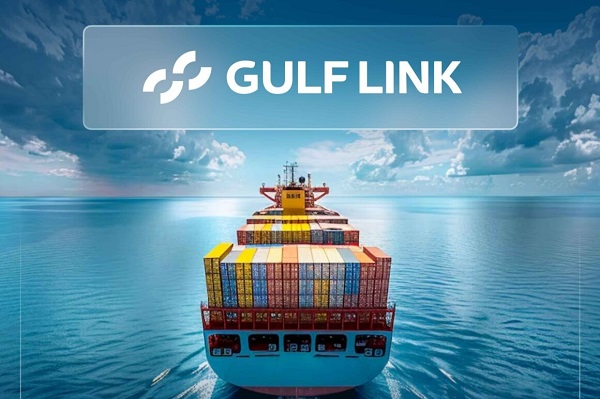
AD Ports Group has initiated operations of GulfLink Ltd, entering a strategic logistics partnership with KTZ Express, the freight arm of Kazakhstan Temir Zholy. This joint venture—51 percent owned by AD Ports and 49 percent by KTZ Express—is designed to enhance connectivity along the Middle Corridor, establishing a vital multimodal supply link between Asia and Europe.

The first shipments through GulfLink began under the leadership of regional CEO Abdulaziz Zayed AlShamsi, who described the venture as “a key link in our strategy to upgrade the Middle Corridor route through Central Asia into a major, commercial East‑West trade artery linking consumers and manufacturers in Asia and Europe”. General Director Damir Kozhakhmetov emphasised that GulfLink delivers “a new level of unique, end‑to‑end connectivity for Kazakhstan regionally and globally”.

Kazakhstan, where rail accounts for approximately 70 percent of freight transit over its 16,000 km network, is central to this development. GulfLink will bolster supply chains by integrating Kazakhstan’s rail infrastructure with routes through Pakistan, Türkiye, the Arabian Gulf and the Indian subcontinent.

As part of AD Ports’s commitment, over US $775 million is earmarked for logistics infrastructure in Kazakhstan. Planned investments include a grain terminal and a multipurpose facility at Kuryk Port, aimed at complementing GulfLink’s multimodal ambitions. The network also encompasses partnerships in Uzbekistan, and facilities on the Black and Caspian Seas via collaboration with KazMorTransFlot.

Industry analysts say GulfLink could significantly reduce China‑to‑Europe transit times. AGBI reports that the route will “cut China‑Europe transit time” by providing direct regional connectivity and bypassing the longer northern rail corridors. This enhancement aligns with global supply chain trends that favour diversification and damper dependency on any single corridor.

CEO Kamal Huseynov stated that GulfLink plans to offer “value added to customers through our relationships, the logistics resources of our shareholders, and our commitment to efficiency, innovation, seamless supply chains and optimised trade”. The venture seeks to become the operating hub for integrated rail, road, sea and air transport in Central Asia.

Reactions from regional stakeholders suggest that GulfLink’s launch may mark a turning point in Eurasian logistics. The joint venture is seen as vital in realising the potential of the Trans‑Caspian International Transport Route—an alternative to the traditional northern rail line through Russia—and is projected to attract new trade volumes via diversified pathways.

AD Ports’s existing regional presence includes a food logistics hub in Uzbekistan and maritime assets in Türkiye and Pakistan. GulfLink’s launch reinforces these assets by contributing to a cohesive network serving Europe, Central Asia and South Asia.

Multimodal trade experts suggest that the GulfLink project addresses a growing appetite among manufacturers and shippers for more resilient and politically diversified supply channels. With geopolitical uncertainties persisting along certain northern corridors, the Middle Corridor’s expansion could offer a strategically advantageous and timely alternative.

The operational phase of GulfLink has commenced with pilot shipments underway, signalling the beginning of active corridor use. AD Ports and KTZ Express intend to progressively scale the venture, adding capacity, routing regularity and service coverage over the coming months.

As GulfLink gains momentum, its success will depend on coordinated infrastructure roll‑out, regulatory alignment across transit jurisdictions, and competitive transit times compared with existing corridors. Analysts agree the venture marks a significant step toward reshaping logistics flows across Eurasia, affirming Kazakhstan’s growing prominence as a logistics hub and AD Ports Group’s strategy to establish itself as a global trade infrastructure enabler.

VISHNU RAJA
RYO YAMADA
HITORI GOTOH
IKUYO KITA