News related to
across

Arabian Post Staff DP World has agreed to manage the logistics operations for Atlantis, The Palm and Atlantis The Royal, overseeing daily on‑demand delivery of perishables, dry goods and speciality items across nearly 7,000 pallets, supported by temperature‑controlled storage, inventory management and real‑time tracking systems. The transaction positions DP World to address the complexity of luxury‑hotel supply chains, enabling the resorts to uphold high service standards as they serve thousands of […]

Football legends and leaders amazed by the city’s dim sum and stunning Victoria Harbour views on top of Hong Kong’s potential as a global sporting hub for industry advancement HONG KONG SAR – Media OutReach Newswire – 4 September 2025 – Hong Kong, has established itself as Asia’s premier showcase for football, having held a series of high-profile events – from Manchester United Tour of Asia 2025 […]

OpenAI has struck an all‑stock agreement to acquire Statsig for about $1.1 billion, appointing the startup’s founder, Vijaye Raji, as chief technology officer of applications, a move poised to accelerate the firm’s product engineering efforts for ChatGPT, Codex, and future AI tools. The acquisition and leadership reshuffle reflect OpenAI’s intensified push into building scalable, safe, and intuitive AI-powered applications amid mounting competition. The acquisition, pending regulatory approval, brings […]

Aspen Pharmacare recorded a full‑year after‑tax loss of 1.1 billion rand in the year to 30 June 2025, a dramatic reversal from the previous year’s profit of 4.4 billion rand. The principal cause of this downturn was a contractual manufacturing dispute concerning an mRNA product agreement, compounded by asset impairments amounting to 4.1 billion rand. Revenue across the group grew marginally by 1 percent to 43 billion rand. However, manufacturing revenue plunged […]

Centrus Energy Corp has delivered 900 kilograms of high‑assay low‑enriched uranium to the Department of Energy, marking the completion of its second phase under a demonstration contract and validating the United States’ ability to produce this critical fuel domestically. This achievement opens the path for expanded reactor fuel supply amid growing demand for advanced nuclear technologies. The enrichment took place at Centrus’s American Centrifuge Plant in Piketon, Ohio, […]

Dubai Chambers, together with the International Chamber of Commerce and its World Chambers Federation, introduced a new digital platform designed to elevate the performance of chambers of commerce worldwide. Unveiled at the 14th World Chambers Congress in Melbourne, the Chamber Benchmarking Tool offers structured data analysis, best-practice comparisons and a repository of global insights to help chambers advance operational standards.

The launch was witnessed by over 1,200 chamber officials representing more than 100 countries, reaffirming the tool’s role as a global platform for strategic exchange.

The Chamber Benchmarking Tool evaluates performance across seven principal functions of chamber institutions—spanning economic research and business intelligence, advocacy and policy representation, trade and investment facilitation, workforce training and support, networking, advisory services and legal or dispute resolution. These are assessed alongside eight dimensions of operational excellence, including strategic alignment, innovation, governance and financial impact.

Mohammad Ali Rashed Lootah, President and CEO of Dubai Chambers, described the initiative as emblematic of the emirate’s ambition to lead in institutional innovation, enabling chambers to elevate their value to business communities through streamlined services and resilient strategies. John W. H. Denton AO, Secretary‑General of the ICC, hailed the tool as a “milestone,” praising Dubai Chambers for their leadership in bringing the platform to fruition.

Built from research examining 19 diverse chambers, the tool rests on a foundation of empirical insight. It offers a data-driven framework of self-assessment, enabling chambers to compare their metrics against anonymised regional and global averages and receive tailored strategic guidance drawn from global case studies.

Developed in confidence under ICC‑WCF’s secure, cloud‑based infrastructure, the platform ensures high standards of data confidentiality. Only aggregated benchmarking results are shared publicly, with each chamber’s data kept private unless explicit consent is granted.

The tool assigns two access roles: the ‘chamber steward’, who leads data submission, assessment completion and case‑study creation; and ‘chamber staff’, who receive view‑only access to performance dashboards, insights and the best‑practice library.

Participation remains voluntary and open to all types of chambers—whether national, regional, thematic or international—particularly those connected to the ICC‑WCF network. Non‑members may apply for membership to gain access.

Chambers that perform well in given categories become eligible to develop case studies, using an integrated creator to document initiative details, global trends addressed, outcomes and lessons learned. Authors may enrich submissions with supporting documents, media, and contact details. Approved case studies are added to the global repository, fostering peer learning and strategic inspiration.

With an emphasis on continuous improvement, the platform allows chambers to refresh their assessments annually—or after major organisational shifts—and to update roles and responsibilities over time, ensuring the tool remains current with evolving strategic priorities.

Beyond benchmarking, the platform is a strategic intelligence system. Chambers gain access to emerging trends, visibility into gaps and growth opportunities, and direction for innovation and future readiness. It fosters cross‑border collaboration, data‑led decision‑making and collective excellence across the global chamber ecosystem.

A federal court’s latest decision in the U. S. v. Google antitrust case means Mozilla can maintain its critical financial arrangement with Google. Judge Amit Mehta has allowed Google to continue making payments to browser makers—among them Mozilla—ensuring that Firefox’s principal revenue stream remains intact. Judge Mehta’s remedy ruling clarifies that while Google must cease exclusive contracts, it may still engage in non‑exclusive deals to position its […]

Advertisements

Cairo will host Ai Everything Middle East & Africa from 10 to 12 February 2026, establishing itself as the region’s premier destination for artificial intelligence innovation and collaboration. Supported by Egypt’s National Artificial Intelligence Strategy and ranking among the top 10 countries globally in AI and machine learning—unique among African nations—Egypt is leveraging this event to consolidate its ambition as a regional AI powerhouse. Organised under the GITEX […]

A wave of profit‑taking sent the Nigerian equities market lower, with the NGX All‑Share Index falling by around 0.7 per cent to approximately 138,737 points on Tuesday—equivalent to a loss of nearly 0.67 per cent in market capitalisation, which dropped to about ₦87.8 trillion. The sell‑off was driven largely by pressure on heavyweight stocks such as Lafarge Africa and Transnational Corporation, while market breadth skewed negative, with far more declines than gains. […]

BruteForceAI accelerates credential testing by automating form discovery and attack workflows with human‑like finesse. Security teams and penetration testers now gain a powerful tool that merges AI‑driven analysis and ethical safeguards, promising deeper insights into authentication weaknesses across web applications. BruteForceAI enables swift parsing of HTML to pinpoint login fields with near‑precise CSS selector generation— reportedly accurate in approximately 95 per cent of real‑world scenarios. Once fields are mapped, […]

Barloworld has concluded an internal examination and submitted a voluntary self‑disclosure report to the U. S. Department of Commerce’s Bureau of Industry and Security, acknowledging apparent breaches of U. S. export control rules—while confirming no violations of U. S. sanctions were identified. The probe focused on the company’s Russian subsidiary, Vostochnaya Technica, responsible for distributing Caterpillar machinery in Siberia. The investigation unearthed potential export control infractions, although […]

Growth in the United Arab Emirates’ non‑oil private sector held above the threshold indicating expansion in August, buoyed by stronger output, even as sales registered their weakest performance in more than four years. The S&P Global UAE Purchasing Managers’ Index edged up to 53.3 from July’s reading of 52.9, affirming ongoing growth but reflecting persistent underlying challenges. Despite the headline PMI maintaining expansionary territory, new orders – […]

Greenlogue/AP SOHAR Port and Freezone has inked an agreement with MoonRock and the Danish firm PowerCon to install shore power infrastructure at its container terminal, enabling berthed vessels to plug into onshore electricity and switch off their auxiliary engines—cutting emissions, fuel use and noise pollution while enhancing efficiency. The ceremony took place during the Gulf Green Mobility Forum, with MoonRock as lead investor and PowerCon providing technical […]

TransBnk has raised $25 million in its Series B funding round, led by Bessemer Venture Partners with support from Arkam Ventures, Fundamentum Partnership as well as existing backers 8i Ventures, Accion Venture Lab, and GMO Venture Partners. The Mumbai‑based transaction banking platform will channel the funds into geographic expansion across Southeast Asia and the Middle East, while strengthening its technology and product development teams. Vaibhav Tambe, co‑founder and chief executive, highlighted a sevenfold increase in the company’s valuation following […]

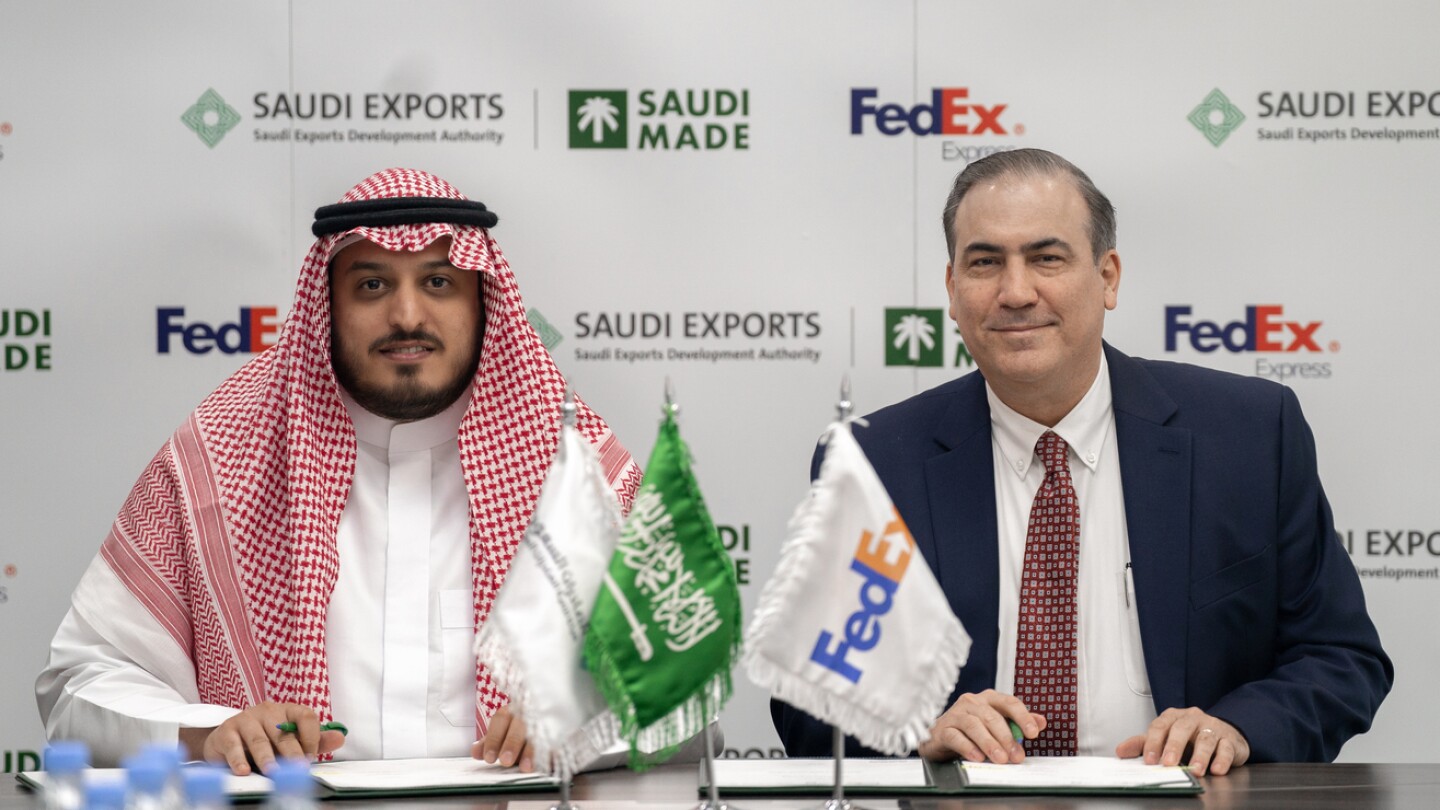
FedEx has gained an economic licence from Saudi Arabia’s General Authority of Civil Aviation to operate as a foreign air carrier, marking a significant expansion of its logistics footprint in the Kingdom. The move equips FedEx to conduct scheduled cargo services via King Khalid International Airport in Riyadh, with plans to operate 24 flights per month from early September 2025, establishing Riyadh as its regional hub linking continents.

The licence, granted on 2 September 2025, grants FedEx the ability to fly directly and to integrate air and ground operations across the Gulf Cooperation Council states. The announcement was made during a ceremony in Diriyah, attended by senior officials including Saleh Al‑Jasser, Minister of Transport and Logistics Services and Chairman of GACA; Abdulaziz Al‑Duailej, GACA President; and Dr Rumaih Al‑Rumaih, Acting President of the Transport General Authority, alongside FedEx executives.

FedEx introduced its first nonstop freighter service from the United States and Europe into Riyadh, operating six times a week with Boeing 777 aircraft. This route is the only express logistics connection offered by FedEx that bypasses other hubs, and continues onward to Guangzhou and Shanghai.

This direct link strengthens trade routes, particularly for high-priority sectors like energy, manufacturing, mining, healthcare and automotive, enabling temperature‑controlled, heavy, oversized or hazardous shipments. FedEx complements this airlift with its FedEx Logistics suite—air, road and sea freight forwarding, customs brokerage, and transit cargo support—aimed at enhancing supply chain resilience across the GCC, South Asia and Africa.

The company has developed end‑to‑end capabilities in the Kingdom, directly managing pickup, delivery and customs clearance through four gateways and four stations, supplemented by digital tools for shipping visibility and efficiency.

FedEx leadership emphasises Saudi Arabia’s role as a strategic logistics hub connecting Asia, Europe and the Americas. Richard Smith, Chief Operating Officer, International and CEO of the Airline at FedEx, cited the Kingdom’s infrastructure as a vital link in their global network. Kami Viswanathan, President of FedEx Middle East, Indian Subcontinent and Africa, underlined the integration of infrastructure, digital innovation and integrated solutions to aid Saudi businesses in competing globally.

These moves align closely with Saudi Vision 2030. The Aviation Programme aims to elevate Saudi Arabia’s aviation sector to the highest regional standards, targeting 330 million passengers, 4.5 million tonnes of air cargo, and air connectivity to 250 destinations by 2030. FedEx’s operations support these objectives by advancing industry capacity and reinforcing Riyadh’s prominence in logistics.

The expansion follows challenges earlier this year, when FedEx suspended economy parcel and freight services to the Kingdom from countries including India, Japan and the UK in March 2025. Service was halted temporarily, with FedEx noting it would resume “as soon as possible.”

Trade levels in Saudi Arabia have surged. The Kingdom posted a trade surplus of US$ 16.8 billion in Q1 2025, up 52 percent on the prior quarter, reflecting strong exports and demand for logistics infrastructure that FedEx is now well‑positioned to serve.

With strategic investments—including the creation of a global head office in Riyadh to oversee operations across Saudi Arabia, Bahrain, Kuwait and Qatar—FedEx reinforces its long‑term commitment to the region.

This expansion signals a departure from reliance on intermediaries or regional hubs outside the Kingdom; FedEx now controls its entire customs-to-delivery chain in Riyadh, laying the groundwork for faster transit, improved service reliability and deeper integration into global trade networks.

Emerging trends include rising demand for integrated logistics services, investment in digital tools for customs and tracking, and regional consolidation of supply chain operations. Key players alongside FedEx include Saudi authorities driving Vision 2030’s transport strategy, while GCC markets and commercial sectors increasingly rely on swift, dependable global connectivity.


MrBeast is set to expand into telecommunications by launching a mobile phone service built using existing carrier networks, positioning himself as a mobile virtual network operator. According to investor materials seen by Business Insider, the YouTube star and his company plan to partner with carriers such as AT&T, T‑Mobile or Verizon, rather than constructing costly infrastructure. The business model mirrors that of Mint Mobile, where Ryan Reynolds […]

Speculative decoding accelerates large language model generation by allowing multiple tokens to be drafted swiftly by a lightweight model before being verified by a larger, more powerful one. This method markedly reduces inference latency while preserving the precision and output quality of traditional autoregressive decoding — a significant breakthrough for real-time applications like conversational agents and code assistants. At the heart of speculative decoding lies a two‑model […]

Yunfeng Financial Group, a Hong Kong‑listed firm with ties to Alibaba’s Jack Ma, has acquired 10,000 ETH—valued at approximately $44 million—using its own cash reserves. The firm intends to list Ether as an investment on its balance sheet as part of a strategic shift towards blockchain-enabled finance.

Yunfeng’s move aligns with its broader blueprint unveiled in July, which sets Web3 technologies, real-world asset tokenisation and artificial intelligence at the heart of its expansion strategy. The company emphasises that including Ether among its strategic reserve assets supports tokenisation efforts and integrates its financial operations with Web3 infrastructure. The firm also plans to explore Ethereum’s uses in insurance services and decentralised finance applications, signalling ambitions beyond treasury diversification.

This step places Yunfeng alongside a growing list of publicly traded firms embracing Ether as a reserve asset. Notable peers include SharpLink Gaming, BitMine Immersion Technologies and Ether Machine, which collectively reflect a broader institutional enthusiasm for Ethereum amid increasing corporate treasury adoption. The trend echoes earlier Fortune 500 strategies for Bitcoin, with Ethereum emerging as a comparable asset in this evolving corporate playbook.

Ether’s market resilience underpins Yunfeng’s strategy. Despite subdued crypto market conditions, ETH continues to trade above the psychologically significant $4,000 threshold, noted by analysts as a key marker of investor confidence. Technical analysis by market watchers, including the chartist CryptoGoos, suggests ETH is maintaining an upward breakout trend from a falling wedge formation, with potential upside targets stretching to $6,000—driven by heightened institutional inflows.

Yunfeng’s approach signals a calculated embrace of digital assets that transcends short‑term speculation. By positioning Ethereum at the foundational level of its Web3 and AI strategy, the company is asserting the utility of the token within financial services, as well as its role as a long‑term reserve option. Ether holdings will offer an alternative to traditional fiat reliance while granting greater operational flexibility across emerging business lines.

Only one-third of insurers in China provide mental health services, despite rising demand Fifty percent of insurers see personalisation as key to the success of health and wellbeing programs SINGAPORE – Media OutReach Newswire – 3 September 2025 – Aon plc (NYSE: AON), a leading global professional services firm, released insights from its inaugural 2025 Insurer Wellbeing Benchmarking Report offering a comprehensive analysis of the health and […]

Nigeria has launched a bold initiative to position itself at the forefront of artificial intelligence on the African continent. The Government Leadership & AI Summit held in Abuja on 1 September brought together policymakers, private‑sector leaders and global tech executives. Minister of Communications, Innovation and Digital Economy, Dr Bosun Tijani, delivered a sharp keynote, warning of the widening productivity gap if Africa fails to collaborate on AI infrastructure and governance. “If […]

A sharp rebound in the Taiwan dollar has intensified financial pressure on exporters, undermining earnings and dampening competitiveness in overseas markets. The appreciation, driven by a blend of strong trade inflows, hedging activities, and speculative pressures, has prompted swift policy attention and heightened concern among industry observers.

Taiwan’s currency surged to its highest level since early 2022—landing near NT$29 per U. S. dollar—amid a weakening U. S. dollar and heightened equity inflows. The rally, measuring around 12 per cent so far this year, has inflicted renewed strain on leading exporters, including Taiwan Semiconductor Manufacturing Company and Foxconn, which report substantial margin erosion when the Taiwan dollar strengthens.

Exporters are finding that every one‑unit appreciation of the currency can slash revenue by roughly 3 per cent and chip away at gross margins—Foxconn estimates its margins dip by 0.1 percentage point per NT$1 gain. Smaller, traditional manufacturers—especially machinery producers—are even more exposed, with limited hedging capacity and tighter operating margins.

Life insurers are not spared. Many hold a sizable portion of assets in U. S. dollars—Fubon Financial, for example, has about 70 per cent of its portfolio in foreign holdings—and face amplified foreign‑exchange losses as the local currency climbs.

Regulators are treading a delicate line. Taiwan’s central bank has urged restraint, discouraging speculative trades through vehicles such as ETFs, and cautioning against exaggerated market commentary. It has also issued warnings to foreign investors who may be circumventing capital controls by not deploying inflows into domestic securities—a move intended to curb volatility without triggering accusations of currency manipulation from Washington.

Policy shifts and trade developments elsewhere may be compounding the pressures. Analysts observe that rapid appreciation could weaken Taiwan’s offerings amid looming U. S. tariffs and a lack of definitive agreements with Washington. Others point to structural shifts: Asian economies, Taiwan included, are unwinding dollar‑heavy positions amid growing concern over U. S. policy and economic fragility. One commentator dubbed this a “reverse Asian crisis,” pointing to a regional transfer of purchasing power back to local currencies.

Reactions continue to unfold across sectors. The logistics industry, for instance, is grappling with imbalances in shipping flows and heightened forex risk; yet it also sees potential growth through import logistics and value‑added FX‑savvy services for clients.

Altogether, Taiwan confronts a complex convergence of forces: strong export volumes feeding currency strength, speculators and hedgers accelerating the appreciation, and policy efforts seeking to stabilise markets without undermining global credibility. With export earnings vulnerable, insurers weighed down by FX losses, and the broader economy exposed to tariff dynamics, the coming months could heighten the stakes if the exchange rate remains elevated, especially in the absence of agreements that mitigate trade frictions.

Journalistic due diligence underscores that the data and figures—such as the currency’s 12 per cent gain, margin impacts for Foxconn and others, and the insurers’ USD-exposure ratios—have been corroborated across reputable sources. Reporting maintains a balanced perspective, acknowledging both the financial risks and policy responses shaping Taiwan’s export-heavy economy.

HONG KONG SAR – Media OutReach Newswire – 2 September 2025 – ZHUOYU Technology (ZYT), a leading advanced driver-assistance systems (ADAS) brand, officially announced its European debut at the (IAA Mobility 2025), opening on September 8, 2025. As a crucial step in its global strategy, ZYT will showcase its full-stack integrated hardware-software proprietary technologies, unveil business plans in Europe, and host technical salons under the theme “Intelligence […]

Pogocache, a new open‑source caching system built in C by Josh Baker—known for creating Tile38—has entered general availability, promising breakthrough performance and seamless integration across multiple protocols. According to benchmarks on AWS c8g.8xlarge hardware, Pogocache delivers around 3.14 million queries per second, leaving behind Memcache, Redis, Dragonfly, Valkey, and Garnet. This cache server distinguishes itself by supporting a range of existing communication standards—Memcache, Redis/Valkey, HTTP, and PostgreSQL wire […]

A team led by Khalil Ramadi at NYU Tandon and NYU Abu Dhabi has unveiled a swallowable, wireless capsule designed to emit light inside the gut, allowing nerve cells to be activated without surgery—a development poised to transform gastrointestinal research and therapy.

The capsule, known as ICOPS, represents a remarkable leap in non‑invasive bioengineering. It employs optogenetic technology, by which specific neurons are genetically modified to respond to light. Once the target cells become light‑sensitive, patients can ingest an LED‑equipped capsule that, when powered externally, delivers precise stimulation to regions of the gut. This allows researchers to observe and influence neuronal circuits involved in digestion with a level of control previously limited to invasive approaches.

ICOPS stands out for its battery‑free design. It receives power wirelessly via magnetic induction from an external transmitter, enabling a compact, rodent‑scale form factor suitable for testing in freely moving animals. Crafted entirely via in‑house 3D printing—micro‑LEDs and custom coils included—this capsule avoids more expensive and restrictive cleanroom fabrication techniques.

Early animal trials suggest ICOPS can target neural circuits governing critical physiological functions, offering potential new avenues for treating gut motility disorders such as gastroparesis, where the stomach fails to empty properly. Simultaneously, the ability to stimulate region‑specific neural activity may trigger metabolic and hormonal responses, hinting at applications in metabolic disease and eating disorder therapies.

ICOPS is part of a broader research portfolio pioneered by Ramadi. Earlier innovations include FLASH, an electroceutical capsule that delivers electrical stimulation to modulate hunger‑related hormones, and IMAG, which uses magnetic fields to track pill location through the gut.

Adoption of ICOPS could revolutionise how scientists study the gut’s ‘second brain’—a vast, complex neural network fundamental to bodily control but historically difficult to study in its natural state owing to the invasive nature of previous optogenetic techniques.

Materials innovation plays a central role in this advancement. By eliminating the battery and using magnetic induction, the capsule remains small and unobtrusive. Its 3D‑printed construction offers scalability, making further adaptation for varied experimental models feasible.

Looking ahead, the implications for human healthcare are significant. The precision offered by ICOPS could enable therapies targeting select neural circuits within the gut, offering fine‑tuned interventions far more sophisticated than current broad‑spectrum prokinetic or antikinetic drugs. Furthermore, the platform may evolve to provide electrical stimulation or even deliver drugs directly to targeted gut regions.

That said, the path to clinical use remains lengthy. At present, ICOPS has demonstrated efficacy in rodent models. Transition to human clinical trials may take a decade or more, as researchers must navigate regulatory approval, safety testing, and scalability concerns.

Still, the research has drawn attention across scientific and media outlets, from Gulf News dubbing it a “Light Pill” capable of unlocking gut‑brain secrets to technical summaries highlighting how light‑activated capsules are revolutionising understanding of gut‑brain interactions.

Behind the innovation is a multi‑disciplinary team including Mohammed Elsherif, Rawan Badr El‑Din, Zhansaya Makhambetova, Heba Naser, Rahul Singh, Keonghwan Oh, Revathi Sukesan, Maylis Boitet, and Sohmyung Ha, working together across divisions at NYU Abu Dhabi and NYU Tandon. The project has benefited from funding awarded by NYU Abu Dhabi and Tamkeen through the CENTMED research centre.

VISHNU RAJA
RYO YAMADA
HITORI GOTOH
IKUYO KITA