News related to
across

FirstRand’s full-year earnings fell as provisions tied to its UK motor finance business offset strong growth across its core operations in South Africa and the rest of Africa. The financial services group said earnings on its previously reported basis declined 5% to R39.7 billion for the year ended June 30, 2026, after it booked an additional provision linked to potential customer redress in Britain. Return on equity […]

Cocoa futures strengthened after Ghana’s cocoa regulator proposed a roughly 6 per cent increase in the price paid to farmers for the 2026/27 season, prompting short covering as traders assessed the implications for supplies and cross-border bean flows. The proposed farmgate price would rise to 2,737 cedis for a 64-kilogram bag from the current 2,587 cedis, according to people familiar with the plan. The change remains subject […]

Cybercriminals behind the Gigabud Android banking trojan are using a weaponised app-cloning tool to isolate fraudulent banking activity from malware alerts, according to research published by Group-IB on September 9. The cybersecurity company said Gigabud is being paired with Vwork, a modified fork of the open-source Android application Shelter, to create a separate Work Profile and place banking applications inside it. Group-IB attributed both Gigabud and Vwork […]

President Lee Jae Myung’s approval rating has fallen to a new low as opposition hardens against sending South Korean military assets to the Strait of Hormuz, intensifying pressure on his government while Washington urges Seoul to contribute to maritime security.

A National Barometer Survey released Thursday showed 43 per cent of respondents approved of Lee’s handling of state affairs, down seven percentage points from two weeks earlier, while 48 per cent disapproved. It was the first time disapproval exceeded approval in the biweekly poll since Lee took office in June 2025.

The same survey found 45 per cent opposed deploying military assets, including maritime patrol aircraft and support ships, to Hormuz, compared with 36 per cent who supported such a move. Opposition was strongest among respondents in their 40s and 50s and among supporters of Lee’s ruling Democratic Party, underscoring the domestic political risk surrounding any military contribution.

Seoul has repeatedly said no final decision has been made. Seong Ghi-hong, senior presidential secretary for public relations and communication, said Wednesday that the government had not finalised its policy and was “cautiously assessing” the issue. A Defence Ministry inspection team sent to the United Arab Emirates to examine conditions returned on Thursday.

The government has described the mission as an assessment rather than preparation for deployment. National Security Adviser Wi Sung-lac also said talks between Lee and French President Emmanuel Macron in Paris focused on possible contributions to maritime security and freedom of navigation, not on an agreement to send troops.

The debate has sharpened as US President Donald Trump presses allies to help secure Hormuz during the prolonged conflict with Iran. Trump has publicly criticised Seoul over its reluctance to support US efforts in the waterway, which carries a major share of the energy supplies used by South Korea and other Asian economies.

South Korean officials have denied that Washington imposed a deadline for a deployment. The presidential office has said Seoul is discussing practical ways to support peace, stability and free navigation with international partners, while weighing military readiness, legal requirements and the risks of deeper involvement in the conflict.

Any dispatch of troops would require approval from the National Assembly, where Lee’s Democratic Party holds a majority. That gives the government procedural room but does not remove the political cost of acting against a sizeable share of public opinion, including voters aligned with the ruling camp.

A separate Hangil Research survey conducted from September 5 to 7 found 47.1 per cent opposed deployment and 43 per cent supported it, a difference within the poll’s margin of error. Opposition rose to 55.5 per cent among Democratic Party supporters and 62.4 per cent among self-described liberals.

Lee’s broader ratings have also weakened for domestic reasons. A Realmeter survey released Monday put his approval at 37.4 per cent, down 1.5 percentage points over the week and the eighth consecutive weekly decline. The pollster linked the fall primarily to disputes over a cabinet reshuffle and housing-related policy changes rather than the Hormuz question alone.

Gallup Korea last week placed Lee’s approval at 40 per cent, with 51 per cent disapproving. Respondents who viewed him negatively most often cited real estate policy, followed by concerns about the economy and livelihoods and dissatisfaction with personnel appointments.

The Hormuz issue nevertheless adds a foreign-policy dilemma at a sensitive moment. South Korea depends heavily on imported energy, and disruption in the strait has already increased the strategic importance of keeping shipping routes open. At the same time, Iran has warned Seoul against military participation, saying such a move could be viewed as siding with US military action.

Shipping through Hormuz remains sharply below pre-war levels as the United States and Iran continue military and economic pressure around the waterway. The conflict has pushed oil prices higher and complicated supply planning across Asia, giving Seoul a direct economic interest in restoring safer passage without becoming drawn further into hostilities.

TechSparks 2026 has expanded its speaker roster for the October summit in Bengaluru, adding technology executives, founders and investors to a three-day programme focused on artificial intelligence, deep technology and digital infrastructure.

The latest additions include Zoho co-founder and chief scientist Sridhar Vembu, Angel One Group chief executive Ambarish Kenghe, Emergent founder and chief executive Mukund Jha and Canva country manager Chandrika Deb. Their participation was announced on September 10, extending a lineup that already includes senior policymakers, fintech founders, researchers, venture investors and enterprise technology executives.

The summit, organised by YourStory, is scheduled for October 13 to 15 at the Sheraton Grand Bengaluru Whitefield Hotel and Convention Center. Its 2026 theme, “The New Tech Order”, centres on how AI, deep technology and new digital infrastructure are changing access to technology, business formation and the distribution of economic and technological power.

Among the previously announced speakers are Priyank Kharge, Karnataka’s Minister for Home, IT, BT and E-Governance; Krishna Byre Gowda, Minister for Greater Bengaluru Development; PhonePe founder and chief executive Sameer Nigam; and Pramod Varma, co-founder and chief architect of Networks for Humanity. The programme also lists Rahul Chari, founder and chief product and technology officer of PhonePe, and Manish Maheshwari, managing director for India at Stripe.

Organisers say the event is expected to draw more than 10,000 attendees, more than 500 speakers and about 300 investors. The official event website also lists more than 1,000 startups, while another event page refers to more than 200 participating startups, indicating that the figures represent different participation categories or programme groupings.

The first day is set to examine shifts in technological power, including AI as infrastructure, computing capacity, semiconductor supply chains, data ownership and the balance between technological sovereignty and globalisation. Other sessions are expected to address enterprise adoption of AI, startup financing, digital public infrastructure, climate technology, product development and the role of Bengaluru as a centre for technology-led businesses.

The breadth of the programme reflects a shift in concerns facing technology companies. Access to capital remains important, but founders are contending with computing costs, pressure to demonstrate AI products, scrutiny of data use and the need to build businesses capable of expanding without relying indefinitely on external funding. Investors are expected to examine those trade-offs as they assess companies operating across software, fintech, climate technology, mobility, health technology and deeptech.

Bengaluru’s civic and policy challenges are part of the agenda. Byre Gowda’s participation brings urban development into the discussion, while Kharge is expected to address the state’s role in supporting emerging technologies, entrepreneurship and digital infrastructure. Their presence links the startup programme with questions about how a technology centre manages infrastructure, talent, regulation and public services.

The speaker list spans established technology companies and younger ventures. It includes Anjali Bansal of Avaana Capital, Ashutosh Sharma of Prosus, Michael Cronin of Couchbase, Nagendra Nagaraja of QpiAI, Geetha Manjunath of Niramai Health Analytix, Nicolas Sauvage of TDK Ventures and Priyanka Agarwal Chopra of IIMA Ventures. Academic and research participants include Ashok Jhunjhunwala of IIT Madras and Shivkumar Kalyanaraman, chief executive of the Anusandhan National Research Foundation.

TechSparks will also host its Tech30 programme, which identifies 30 technology companies for a showcase at the summit. The 2026 selection process moved into its second stage on September 10, with shortlisted companies required to submit a more detailed application. The final cohort is scheduled to be locked by September 30 and presented during the event.

A separate VibeCode30 programme is aimed at AI-native builders, while ActionLabs and masterclasses are designed around hands-on problem solving and practical technology deployment. The event format also includes startup networking zones, an India-international corridor and a government pavilion.

Anthropic has accused Moonshot AI of secretly sending customer requests meant for its Kimi chatbot to Anthropic’s Claude models, alleging that the Beijing-based company concealed the practice from users and presented Claude-generated answers as its own. The US artificial intelligence developer said on Thursday that it identified one ten-day period in which Moonshot routed almost 300,000 requests through a network of 5,380 fraudulent accounts, with much of […]

The third rebuild of Ramco’s platform in thirty years, moving enterprise software from a system of record towards a system of intelligence and action

KUALA LUMPUR, MALAYSIA – Media OutReach Newswire – 11 September 2026 – Ramco Systems, a global enterprise software company offering next-generation SaaS-enabled platform and products, celebrated three decades of powering enterprise transformation in Malaysia. To mark this milestone, Ramco hosted Ramco Now & Next, an event that traced its regional journey, showcased its vision for the future of enterprise software, and brought customers and industry leaders together for forward-looking discussions.

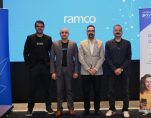
From left to right: Tarun Devasia, Chief Marketing Officer, Subbaraman Ramaswamy, Chief Customer Success Officer (Global Enterprise), Sandesh Bilagi, Chief Executive Officer, Rohit Mathur, Executive VP & SBU Head (Global Payroll & HR, Ramco Systems)

At the event, the company provided a preview of its upcoming AI-native enterprise platform, built to move enterprise software from a system of record to a system of intelligence, and ultimately a system of action. The first two shifts in Ramco’s platform changed how enterprise software was delivered; this one changes what the software is.

The new platform is designed to move away from software that people must log into and interpret, towards a system that surfaces what needs attention and drafts the resulting action for a human to approve. A walkthrough during the keynote showed how the platform would identify a projected stock shortfall across multiple warehouses and prepare the corresponding replenishment requests for approval.

Abinav Raja, Managing Director, Ramco Systems, said, “Nobody running a business today is short of information. They are short of the time to go and assemble it into something they can act on. What we are building is meant to do that assembly for them, and bring the next step with it, while leaving the judgement where it belongs.”

Payroll offers one example of what this looks like in practice: a monthly processing cycle gives way to continuous validation, with anomalies flagged as they arise rather than surfacing at the end of the period. The AI and Machine Learning technology carries out the processing while payroll teams retain the review and the sign-off.

Ramco has operated in Malaysia since 1996 and today processes payroll for more than 100,000 employees every month across more than 50 Malaysian organisations in over 15 industries. Kuala Lumpur serves as one of Ramco’s regional support hubs for HR and Global Payroll, with Singapore as its Asia headquarters.

Sandesh Bilagi, Chief Executive Officer, Ramco Systems, said, “We have spent thirty years in Malaysia solving problems our customers could not afford to get wrong. Some of the organisations we recognised today started with us decades ago. They have been part of our journey and been with us as our platform transformed and modernized over the years. Thirty years is not the achievement. Those relationships are.”

At the event, Ramco recognised its Malaysian clientele, including:

  • Valiram Group, the Kuala Lumpur headquartered luxury retail specialist with more than 600 stores across Southeast Asia and Oceania, was Ramco’s first retail customer in the region. Ramco provided an integrated solution that could replace the disparate HRIS systems in each country, which were working in silos.
  • Hitachi Energy used Ramco to build a unified payroll model spanning 20 countries and 8,000 employees. Ramco enabled Hitachi Energy to supplement and empower its retained payroll resources and amplify its expertise across countries.
  • Aurecon, an Asia Pacific engineering consultancy, went live on Ramco Payce this year, replacing legacy payroll processes across seven Asian markets, including Malaysia, with a single consolidated service. The service covers gross and net pay calculations, retroactive pay and increments, and payslip generation, alongside country-specific statutory compliance. The shift improved payroll accuracy and timeliness and delivered cost efficiencies across payroll and other teams.

Ramco expects the domain knowledge and experience built over three decades in Malaysia to reinforce how the new platform reaches customers across the region.
Hashtag: #RamcoSystems


The issuer is solely responsible for the content of this announcement.

Ramco Systems

Ramco Systems is a world-class enterprise software product/ platform provider disrupting the market with its multi-tenant cloud and mobile-based enterprise software, successfully driving innovation for over 30 years. Over the years, Ramco has maintained a consistent track record of serving 800+ customers globally with 2 million+ users, and delivering tangible business value in Global Payroll, Aviation, Aerospace & Defense, and ERP. Ramco’s key differentiator is its innovative approach to develop products through its revolutionary enterprise application assembly and delivery platform. On the innovation front, Ramco is leveraging cutting edge technologies around Artificial Intelligence, Machine Learning, RPA and Blockchain, amongst the others, to help organizations embrace digital transformation.

For more information, please visit

Follow Ramco on and stay tuned to

Advertisements
SINGAPORE – Media OutReach Newswire – 11 September 2026 – Fresh graduates entering Singapore’s workforce continue to find opportunities across financial and insurance services, professional services, information and communications, healthcare and social services, even as employers become more selective and artificial intelligence reshapes entry-level work.

According to the Ministry of Manpower (MOM), entry-level professional, managerial, executive and technician (PMET) openings increased from 32,500 in December 2025 to 32,800 in March 2026, despite an overall decline in job vacancies. MOM also reported that around nine in 10 university graduates from the 2025 cohort found employment within 12 months of graduation, suggesting that fresh graduate employment has remained relatively resilient.

Financial services, professional services and technology remain active hiring sectors

Financial and Insurance Services, Professional Services, and Information and Communications were among sectors identified by MOM as experiencing active PMET hiring and wage growth. Together, these sectors recorded approximately 14,200 PMET vacancies as of September 2025, compared with 12,600 a year earlier, including roles suitable for fresh graduates.

Opportunities span finance, risk, compliance, accounting, consulting, software, systems and data functions. Increasing digitalisation also means these boundaries are becoming less distinct, with banks and professional services firms increasingly recruiting technology and data talent.

Information and communications continue to require digital capabilities

Singapore’s technology workforce reached 214,000 in 2024, according to the Infocomm Media Development Authority’s Singapore Digital Economy Report 2025, with AI and Data and Cybersecurity among the fastest-growing technology occupations. The latest MOM data also shows concrete entry-level demand. As at March 2026, Information and Communications recorded 200 vacancies for software developers, 130 for IT support technicians and 80 for computer engineers among its entry-level jobs with higher vacancy counts.

Technology graduates are therefore finding opportunities not only within technology companies but also across finance, manufacturing, professional services and other industries.

Financial and professional services are evolving with technology

Singapore’s financial sector continues to provide opportunities across banking, insurance, investment, risk and compliance. As at March 2026, MOM identified financial compliance officer or risk analyst, insurance sales agent or broker, and financial or investment adviser among the entry-level Financial and Insurance Services roles with higher vacancy counts, with 30 vacancies recorded for each occupation. Technology is also changing the nature of financial services, with institutions applying analytics, automation and AI across areas such as fraud detection, customer service and risk management.

Professional Services provides opportunities across both corporate and technical functions. MOM’s March 2026 data identified 100 vacancies for resident technical officers, 60 for auditors and 50 for IT support technicians among the sector’s entry-level jobs with higher vacancy counts. As AI increasingly assists with research, analysis and routine processes, graduates who combine professional knowledge with digital capabilities, communication and judgement may be better positioned for changing roles.

Healthcare and social services continue to offer graduate pathways

Health and Social Services continues to provide entry-level opportunities for graduates. As at March 2026, MOM identified 210 vacancies for social workers, 190 for registered nurses and other nursing professionals, and 80 for social work associates among the sector’s entry-level jobs with higher vacancy counts. These roles demonstrate that graduate demand extends beyond digital careers. Specialised professional knowledge and interpersonal skills remain important in sectors where human interaction and service delivery are central.

AI is changing entry-level roles rather than simply removing them

Generative AI has raised concerns among students and parents about its impact on graduate employment. MOM data presents a more nuanced picture. Among firms that had adopted AI, 6 per cent reported reducing headcount and 8 per cent lowering hiring activity, while 19 per cent redesigned roles and 14 per cent created AI-related jobs. The impact of AI has therefore been more visible in job redesign than broad-based hiring reductions. Fresh graduates may increasingly be expected to use AI tools, interpret data, assess AI-generated information and focus on areas requiring judgement, communication and problem-solving.

Skills-based hiring is changing how graduates compete

Employers are also looking increasingly beyond qualifications alone. MOM’s Job Vacancies 2025 report found that academic qualifications were not the main consideration for 79.6 per cent of vacancies.

This places greater emphasis on what graduates can demonstrate alongside their qualification, including internships, technical capabilities, communication, teamwork and analytical thinking. For students choosing a degree, employability is therefore not only about entering a growing industry but also about developing skills and experience that employers value.

SIM graduate outcomes reflect employment across diverse industries

Graduate employment data provides another way for students and parents to assess career outcomes. According to the Private Education Institution Graduate Employment Survey 2024/2025, 81.0 per cent of SIM fresh graduates surveyed secured employment, while 47.0 per cent were in full-time permanent employment. The median gross monthly salary was S$3,565. Across all private education institutions surveyed, 78.9 per cent of fresh graduates secured employment, with a median gross monthly salary of S$3,500.

SIM’s Graduate Employment Survey also shows graduates entering sectors including banking and financial services, ICT and cybersecurity, consulting and professional services, aviation and engineering, healthcare and social services, logistics and transportation, retail and manufacturing. Employment outcomes remain dependent on factors including programme choice, individual skills, work experience and labour-market conditions.

Parents can consider employability alongside programme fit

For parents supporting higher education decisions, current hiring trends provide useful context, but today’s strongest industry may not necessarily offer the greatest opportunities several years from now. A broader assessment can include a student’s interests and strengths, programme curriculum, awarding university, recognition, fees, career support and graduate employment outcomes.

The SIM Parent Resource Hub brings these considerations together, covering degree pathways, programme recognition, fees and financial support, student care and graduate employability. Its Graduate Outcomes & Employability resource provides information on SIM’s PEI Graduate Employment Survey results, industries and organisations where SIM graduates have worked, and career and internship support available to students.

These resources can help parents consider not only where jobs are available today, but how a higher education pathway can help their child develop relevant knowledge, experience and transferable capabilities.

Career resilience increasingly depends on transferable skills

Singapore’s labour-market data shows that opportunities for fresh graduates remain spread across multiple industries. Financial Services, Professional Services and Information and Communications continue to offer professional opportunities, while Healthcare and Social Services, also show meaningful entry-level demand.

For students entering higher education, career preparation may therefore be less about identifying one “future-proof” industry and more about developing disciplinary knowledge, practical experience and transferable skills that can remain valuable as employment needs change. Parents and students can refer to the SIM Parent Resource Hub, including its Graduate Outcomes & Employability resource, when evaluating degree pathways, employability, recognition, fees and student support.

References

  1. Ministry of Manpower, Singapore. Fresh Graduate Employment – https://www.mom.gov.sg/newsroom/parliament-questions-and-replies/2026/0804-written-answer-to-pq-on-fresh-graduate-employment
  2. Ministry of Manpower, Singapore. Trends in Job Vacancies – https://www.mom.gov.sg/newsroom/parliament-questions-and-replies/2026/0805-written-answer-to-pq-on-trends-in-job-vacancies
  3. Ministry of Manpower, Singapore. Sectors with Active Hiring and Wage Growth – https://www.mom.gov.sg/newsroom/parliament-questions-and-replies/2026/0113-written-answer-to-pq-on-sectors-with-active-hiring-and-wage-growth
  4. Ministry of Manpower, Singapore. Job Vacancies 2025 – https://www.mom.gov.sg/newsroom/press-releases/2026/0320-job-vacancies-report-2025
  5. Manpower Research and Statistics Department, Ministry of Manpower. List of Entry-Level PMET Job Opportunities for Fresh Graduates – https://stats.mom.gov.sg/iMAS_PdfLibrary/List-of-top-entry-level-PMET-job-opportunities-for-fresh-graduates-Q1-2026.pdf
  6. Infocomm Media Development Authority. Singapore Digital Economy Report 2025 – https://www.imda.gov.sg/resources/press-releases-factsheets-and-speeches/factsheets/2025/ar-sgde-2025
  7. Singapore Institute of Management. Parent Resource Hub: Helping Your Child Choose the Right Degree Pathway – https://www.sim.edu.sg/degrees-diplomas/parent-resource-hub
  8. Singapore Institute of Management. Graduate Outcomes & Employability – https://www.sim.edu.sg/degrees-diplomas/parent-resource-hub/graduate-outcome-employability

Hashtag: #SIMGlobalEducation #SIMGE #GlobalEducation #InternationalDegree #CareerReady #FutureSkills

The issuer is solely responsible for the content of this announcement.

About SIM Global Education

SIM Global Education (SIM GE) is a leading private education institution in Singapore and the region. We offer more than 140 academic programmes ranging from diplomas and graduate diploma programmes to bachelor’s and master’s degree programmes with some of the world’s most reputable universities from Australia, Canada, Europe, United Kingdom, and the United States. SIM GE’s cohort is made up of 17,000 full- and part-time students and adult learners, of which approximately 41% are international students hailing from over 50 countries.

SIM GE’s holistic learning approach and culturally diverse learning environment aim to equip students with knowledge, industry skills and employability competencies, as well as a global perspective to succeed as future leaders in a fast-changing, technologically driven world.

For more information on SIM Global Education, visit

Grindstone Ventures has launched a R500 million venture capital fund aimed at technology-enabled African businesses from seed to Series A, seeking to bridge the financing gap between early commercial traction and the larger institutional rounds needed for expansion. The fund, led by Grindstone Ventures chief executive Thandiwe Maqetuka and established with Knife Capital and Thinkroom, is targeting an initial close of R150 million. It plans to invest […]

Snap has introduced a new planning feature inside Snapchat that lets users organise gatherings, invite friends and track responses without moving conversations to another app. The feature, called Plans, is designed for occasions ranging from informal meet-ups and study sessions to birthdays and other group events. Users can create an event, add key details and send invitations directly through Snapchat chats, keeping the planning process within the […]

Arabian Post Staff -Dubai Saudi Arabia told OPEC that its crude production fell to 6.238 million barrels a day in August, the kingdom’s lowest monthly level since 1990, as renewed fighting involving the United States and Iran disrupted export routes. The figure, contained in OPEC’s September monthly oil market report, was almost 1.9 million barrels a day below the 8.135 million barrels reported for July. It also […]

JetBlue Airways has lowered its third-quarter capacity growth forecast after severe weather and air traffic control disruptions hit operations across the northeastern United States, adding cost pressure as the carrier pursues its profitability turnaround. The New York-based airline now expects available seat miles, a standard measure of capacity, to rise 1.5% to 3.5% from a year earlier in the quarter ending September 30. Its previous forecast, issued […]

Arabian Post Staff -Dubai Saudi Arabia’s Public Investment Fund has launched Gulf Coast Development Company to build an integrated residential and tourism destination on the Al-Khafji coast in the Eastern Province, extending a new phase of state-backed urban development to the kingdom’s northern Gulf shoreline. The project will cover about 20 square kilometres and include a 10-kilometre waterfront along the Arabian Gulf, with eight residential neighbourhoods, more […]

Cybercriminals are distributing fake Grand Theft Auto VI downloads that install remote-access trojans, an information stealer and destructive ransomware, putting gamers’ passwords, Discord accounts and cryptocurrency data at risk. Cybersecurity firm Huntress said it identified malicious optical-disc image files masquerading as leaked copies of Rockstar Games’ forthcoming title across search results, gaming forums, social media and torrent sites. Some files exceed 100GB, but researchers found much of […]

Advancing low-altitude economy development across the Belt and Road regions

HONG KONG SAR – Media OutReach Newswire – 10 September 2026 – HKT (SEHK: 6823) – PCCW Global, the international telecommunications service provider under HKT, and Harmony Tech Innovation signed a Memorandum of Understanding (MoU) at the 11th Belt and Road Summit to jointly promote the low‑altitude economy across the Belt and Road regions, facilitating Chinese enterprises and innovative technologies as they expand overseas.

Frederick Chui, CEO, PCCW Global (left) and Jacqueline Kang, Chairman, Harmony Tech Innovation (right) signed a Memorandum of Understanding at the Belt and Road Summit 2026.

PCCW Global plans to leverage its global communications networks and international market resources, together with Harmony Tech Innovation’s low-altitude airspace traffic management technology, to explore and promote low‑altitude airspace traffic management solutions and related smart city solutions in Belt and Road markets. The collaboration will also explore applications in areas such as transportation, logistics, and emergency rescue, to support the development of smart cities and the low-altitude economy in local markets.

Frederick Chui, CEO of PCCW Global, said: “The low-altitude economy is a strategically important emerging industry for the nation, and also a key direction for developing new quality productive forces. As countries along the Belt and Road accelerate urban development, demand for low-altitude airspace management and communications technologies continues to grow. PCCW Global is ready to further extend our network capabilities into the low‑altitude economy, providing efficient and reliable communications support for low‑altitude airspace traffic management. In collaboration with Harmony Tech Innovation, we will help bring Chinese innovative technologies to the global market, and support the advancement of smart cities and the digital economy along the Belt and Road.”

Jacqueline Kang, Chairman, Harmony Tech Innovation said: “Communications networks and management systems are critical foundations for the low-altitude economy. We are delighted to collaborate with PCCW Global, combining our digital management capabilities with PCCW Global’s extensive communications networks to provide robust support for low-altitude operations. Looking ahead, we look forward to continuing our collaboration, driving the practical application of low-altitude technologies, and seizing opportunities in overseas markets.”

Harmony Tech Innovation is a global leading provider of low-altitude airspace traffic management and unmanned aerial vehicle ecosystem, focusing on low‑altitude economy and 3D low‑altitude traffic management platform. Its “Low Altitude Airspace Coordination and Service System”, launched in Zhuhai in 2024, is interconnected with China’s Unmanned Aircraft Integrated Management Platform and offers capabilities including regional remote low‑altitude surveillance, centimetre‑level satellite positioning, providing data support for smart city management and laying the foundation for the development of the low-altitude economy in the Greater Bay Area.

PCCW Global’s network infrastructure spans five continents and is backed by extensive international operational experience, enabling it to actively help drive the overseas expansion of China’s advanced technologies. PCCW Global delivers customised network solutions for low‑altitude economy scenarios, supporting real‑time data transmission and the management of low‑altitude aircraft.

Hashtag: #HKT #PCCWGlobal

The issuer is solely responsible for the content of this announcement.

About PCCW Global

PCCW Global is a leading digital infrastructure provider, empowering businesses with agile, scalable and secure connectivity solutions. By combining a best-in-class network with our award-winning on-demand platform Console Connect, we help businesses navigate the network complexities of the digital world with ease. With extensive reach across international markets, we make it simple to connect and move data between clouds, apps, data centres and devices. At the core of our business is a belief that automated, high-performance network infrastructure has the power to elevate business and society. For more information, visit .

  By R. Suryamurthy India’s trade with BRICS has expanded dramatically, but the numbers reveal an uncomfortable imbalance beneath the rhetoric about a multipolar world and alternative financial architecture. Between FY2021 and FY2026, India’s total merchandise trade with the 11-member grouping more than doubled, from $203.1 billion to $417.5 billion. Yet the expansion was overwhelmingly […]

The article Bricks cannot de-dollarise its way out of India’s huge trade imbalance appeared first on Latest India news, analysis and reports on Newspack by India Press Agency).

Algeria has ended diplomatic relations with the United Arab Emirates after saying all efforts to preserve bilateral ties had been exhausted, marking a sharp escalation in a dispute that had already damaged political and transport links between the two Arab states. The decision was announced on Thursday by Algerian state television, which cited the authorities as saying Algeria had exhausted every avenue available to maintain relations with […]

Nasdaq has invested $100 million in Payward, the parent company of cryptocurrency exchange Kraken, extending a relationship that already spans tokenised equities and digital-market infrastructure. The investment places one of the world’s largest exchange operators directly on Payward’s shareholder register and adds a financial dimension to a strategic partnership announced earlier this year. Payward operates Kraken alongside businesses including NinjaTrader, Breakout, xStocks and CF Benchmarks, using a […]

New report, authored by GSMA Intelligence in partnership with Huawei, released at UNESCO’s Digital Learning Week

  • Digital literacy – not coverage – is the main barrier keeping 3.1 billion people offline.
  • AI could potentially widen the digital literacy gap.
  • Bridging the usage gap could boost global GDP by $3.5 trillion from 2023 to 2030.
  • Citing Huawei’s Skills on Wheels initiative, the report urges policymakers, telcos, and tech vendors to treat AI literacy as critical infrastructure.

PARIS, FRANCE – Media OutReach Newswire – 10 September 2026 – More than one in three (38%) people remains offline despite being covered by mobile broadband – and a lack of digital literacy skills is often to blame, according to new research published today.

Closing Digital Literacy Gap Could Unlock Trillions of Dollars in Global GDP Growth

The new report, “Bridging the Divide: Enhancing Digital Literacy in the AI Era,” authored by GSMA Intelligence and produced in collaboration with Huawei, identifies a digital divide impacting 3.1 billion people caused by a shortage of digital skills, user trust and AI literacy.

AI raises both access and risk

Existing industry projections suggest closing the capability gap could add around $3.5 trillion to global GDP by 2030, with more than 90% of those gains flowing to low- and middle-income countries (LMICs). Physical mobile broadband coverage currently reaches 96% of people worldwide.

The report, unveiled at UNESCO’s Digital Learning Week, suggests artificial intelligence could act as both a bridge and a barrier for underserved communities. AI-powered voice assistants and applications that work with images, audio and video can all help low-literacy users bypass the need to input text. At the same time, they raise the security and critical-thinking standards required to participate safely. However, the study warns that users must now be able to understand data privacy and identify risks such as fraud and deepfakes.

The research cites World Bank statistics that GenAI literacy represents the highest-value skill category, with wage premiums up to 36%, far exceeding returns for both digital and traditional AI skills.

Without targeted interventions in basic digital training, the authors warn, rapid AI adoption risks entrenching existing inequalities even in areas with full network coverage.

Mobile classrooms build skills in remote areas

Digital inclusion initiatives typically target those most at risk of digital exclusion, including rural and remote communities, children and teachers in rural schools, older people, and women and girls.

The report emphasizes the need for community-based delivery models, citing Huawei’s Skills on Wheels initiative as a field-tested example — particularly its solar-powered DigiTruck mobile classrooms, which bring hardware, rural connectivity and hands-on training, including AI literacy, to off-grid regions.

Since 2019, training courses delivered by Skills on Wheels projects have reached more than 130,000 people across 21 countries, with more people benefiting indirectly. DigiTruck trainers encourage trainees to share their new skills, which is shown to occur in practice. A report on DigiTruck by Kenya’s Ministry of Information, Communications and Digital Economy shows that 79% of DigiTruck trainees surveyed had passed on their newly acquired digital skills to family members and peers.

Policymakers urged to treat AI literacy as core infrastructure

To bridge the usage gap, the report urges policymakers, telecom operators and technology vendors to work together and focus on four priorities:

  • Treating practical AI awareness, online safety and information verification as a baseline national qualification.
  • Adopting multilingual voice and conversational interfaces across public services to minimise user-side technical hurdles.
  • Scaling up mobile learning units through cross-sector partnerships that combine operator connectivity, vendor technology and local NGO networks.
  • Measuring performance by independent task completion and fraud resilience rather than trainee numbers.

“Digital literacy can no longer be defined by static thresholds,” said Tim Hatt, head of research and consultancy at GSMA Intelligence. “Connectivity alone is insufficient — capabilities, system design and trust must evolve together. To capture this multi-trillion-dollar opportunity, stakeholders must integrate layered AI literacy directly into daily livelihoods through trusted community channels.”

“Mobile classrooms have demonstrated immense value in helping underserved populations break through physical and psychological barriers to technology,” said Gavin Allen, Executive Editor-in-Chief at Huawei. “We will continue working alongside local governments and industry partners to drive digital literacy, ensuring that no one is left behind as we transition into the AI economy.”

A new DigiTruck program will launch in France this autumn, covering several cities in the Île-de-France region and targeting low-income and underserved communities with digital skills training.

The full report is available on the GSMA Intelligence research portal:
https://www.gsmaintelligence.com/research/bridging-the-divide-enhancing-digital-literacy-in-the-ai-era

FAQ

Q1: What is the main purpose of this report?
A: The report analyzes the critical importance of enhancing digital skills in the AI era, highlighting digital literacy as a layered and evolving capability. It calls on all stakeholders to collaborate in accelerating global digital inclusion and skill development.

Q2: What does it mean for policymakers to treat “AI literacy as core infrastructure”?
A: It means shifting policy focus from just building physical base stations to funding human capabilities. The report urges governments to integrate baseline AI awareness, online security, and media verification into national qualification frameworks, treating digital skills as an essential public utility alongside electricity and broadband.

Hashtag: #Huawei

The issuer is solely responsible for the content of this announcement.

Abu Dhabi-based BlueFive Capital has completed the acquisition of a 30% equity stake in Bugatti Rimac from Porsche, becoming the second-largest shareholder in the producer of Bugatti supercars. The transaction closed on September 9 after regulatory approvals were secured, BlueFive said. Rimac Group retains its 55% controlling stake in Bugatti Rimac, while BlueFive now holds the largest position after the Croatian automotive group. BlueFive will gain a […]

Mubadala Investment Company has agreed to acquire a significant minority interest in Luckin Coffee alongside controlling shareholder Centurium Capital in a transaction valued at about $1 billion, extending the Abu Dhabi sovereign investor’s exposure to China’s consumer sector. The transaction is structured through Success Cup Limited and is expected to give a Mubadala affiliate the right to nominate a director to Luckin Coffee’s board while it maintains […]

Arabian Post Staff -Dubai DP World has priced a dual-tranche international bond offering comprising €750 million of six-year green notes and $750 million of 10-year conventional notes, extending the Dubai-based ports and logistics group’s access to both sustainable and conventional debt markets. The transaction follows a global investor roadshow arranged under DP World’s $10 billion Global Medium Term Note Programme. The euro-denominated tranche is structured as green […]

Arabian Post Staff -Dubai The Boring Company has secured $3 billion in a Series D funding round led by the United Arab Emirates and affiliated investment entities, lifting the Elon Musk-founded tunnelling startup’s valuation to $23 billion. The financing will support an expanded partnership to develop more than 150 kilometres of underground infrastructure across the UAE, building on the company’s Dubai Loop project, as well as hiring […]

Canada has used its lead-nation role at Poland’s MSPO arms fair to push its defence industry more forcefully into European markets, pairing a large trade mission with a renewed defence agreement with Warsaw. Defence Minister David McGuinty and International Trade Minister Maninder Sidhu led Ottawa’s presence at the International Defence Industry Exhibition in Kielce, where Canada was designated the 2026 lead nation. The government said its mission […]

VISHNU RAJA
RYO YAMADA
HITORI GOTOH
IKUYO KITA