Just in:
China Reconciled To U.S. Curbs On Chips Exports, Woos South Korea For Supply // Salik posts Dhs1.045bn profit despite lower toll traffic // UAE crews sustain coastal oil removal as beaches reopen // From Dubai to the EU: how UAE-based crypto firms can expand under MiCA // Woman found dead as bank moves to repossess home // Microsoft restores services gradually but gives no recovery deadline // Yicura BioMed Advances Dual Capital and Industrial Strategy: Completes First Closing of Series B Financing Led by Gobi Partners // Sun World Ba Den Mountain marks Vietnam Culture Day, welcoming Cambodian visitors over Bon Om Touk // 11 Boutique Xinjiang Wineries to Debut in Singapore // Microsoft apologises as Outlook services recover after outage // Hackers falsify NVIDIA GPU readings to mask cryptomining // The Honey Trap Is The Headline, The Chip Pipeline Is The Story // US authorities dismantle North Korean cryptocurrency deception infrastructure // October Food Price Shock Has Far Reaching Consequences // Crescent Enterprises venture arm funds Oyster Therapeutics development // L’OCCITANE Celebrates 50 Years Of Provençal Craftsmanship With Holiday 2026 Collection // Electoral register gains 2.17 lakh voters // IEA forecasts fourth-quarter oil surplus as Gulf shipments rebound // Microsoft outage leaves Outlook and Teams users disconnected // TORRAS Launches Two New iPhone Duo Cases from Its Popular Ostand Series, Addressing Foldable Phone Users’ Concerns About Difficult Stand Positioning and Scratches //

News related to
attack

Arabian Post Staff -Dubai National Human Rights Institution has issued a strong condemnation of Iranian military attacks targeting the United Arab Emirates, describing the strikes as a grave violation of sovereignty and a direct threat to civilian safety and fundamental human rights. The institution said the attacks, which have involved missiles and drones striking or attempting to strike locations across the country since late February, amount to […]

Manchester United secured a 3–1 victory over Aston Villa at Old Trafford, strengthening their hold on third place in the Premier League table after a composed performance that underlined the club’s push for Champions League qualification. Goals at key moments and sustained pressure in the second half allowed the home side to overcome a determined Villa team and extend their advantage in the race for European places. […]

Britain’s counter-drone and air-defence units have shot down multiple Iranian drones across the Gulf theatre as London expands what it describes as a strictly defensive military posture, with ministers arguing the operations are aimed at protecting British personnel, allied states and vital regional infrastructure rather than joining any offensive campaign against Tehran. The latest intercepts come as tensions around the Gulf and the wider Middle East continue […]

Arabian Post Staff -Dubai Flight operations at Dubai International Airport were temporarily suspended after a fire broke out near the airfield, prompting authorities to divert several aircraft to Al Maktoum International Airport while emergency crews brought the blaze under control. Authorities in Dubai halted departures and arrivals at the region’s busiest aviation hub as a precaution after flames were reported in the vicinity of the airport’s fuel […]

Rising oil prices linked to the war involving Iran are creating fresh economic strain for Indonesia just as millions prepare for the annual Eid al-Fitr travel surge, placing President Prabowo Subianto’s administration under mounting pressure to shield consumers from higher fuel costs.

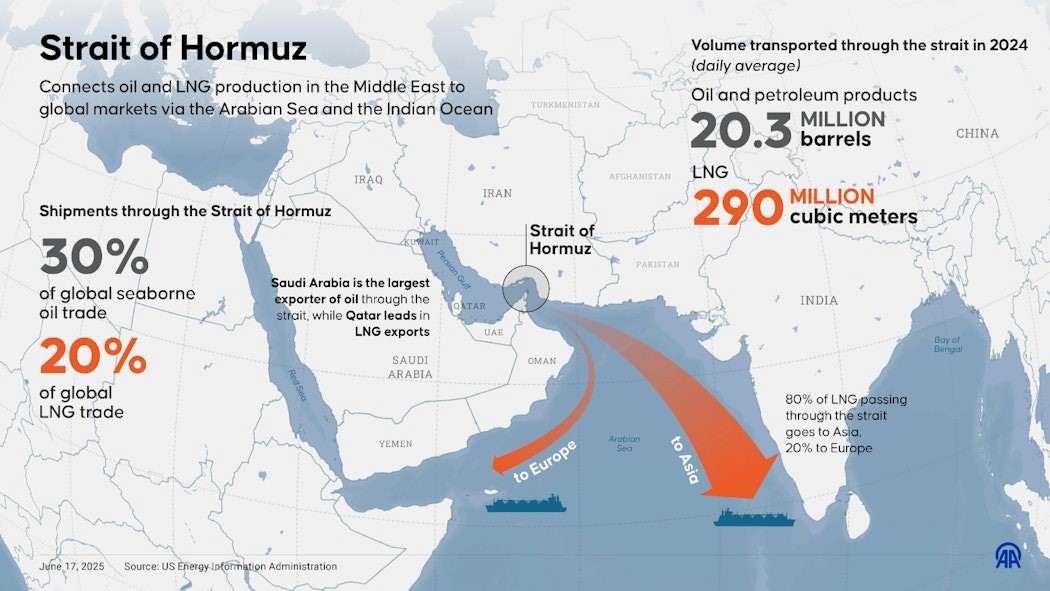
Energy markets have been rattled by escalating conflict across the Persian Gulf, where attacks on shipping routes and oil infrastructure have disrupted global crude supplies. A large share of the world’s petroleum exports passes through the Strait of Hormuz, a narrow maritime corridor connecting Gulf producers with international markets. Disruption to tanker traffic through this chokepoint has pushed benchmark crude prices sharply higher, triggering fuel price increases across Asia and raising fears of supply shortages in import-dependent economies.

Indonesia faces particular vulnerability because it relies heavily on imported energy. Around a quarter of its crude oil and roughly a third of liquefied petroleum gas supplies originate in the Middle East. Shipping disruptions in the Gulf have already complicated trade flows, with tanker movements slowed by security risks and insurance costs rising for vessels operating in the region. Market volatility has driven crude prices beyond the psychological threshold of $100 per barrel, fuelling concern that further escalation could drive them even higher.

The timing of the price shock has heightened the challenge for Jakarta. Eid al-Fitr, marking the end of Ramadan, triggers one of the largest annual travel movements in the country as families journey from major cities to hometowns across the archipelago. State energy company Pertamina anticipates gasoline demand during the holiday period to climb by more than 10 per cent, intensifying pressure on supply chains already strained by global market turbulence.

Authorities have attempted to reassure the public that domestic fuel supplies remain sufficient. Officials say government stockpiles and logistics networks can support the expected surge in consumption during the festive season. At the same time, policymakers have signalled that subsidised fuel prices will remain unchanged until the Eid holidays conclude, a move designed to prevent abrupt increases in transport costs during the peak travel period.

Holding prices steady carries significant fiscal implications. Indonesia already devotes substantial resources to energy subsidies, allocating more than 380 trillion rupiah in the state budget to keep fuel and electricity costs manageable for households and businesses. Sustaining those subsidies while global oil prices rise could widen the fiscal deficit or force adjustments elsewhere in the budget.

Economists warn that prolonged turbulence in global oil markets may reverberate across the broader economy. Higher crude prices increase the cost of imports and can erode Indonesia’s trade balance, particularly because the country has transitioned from being an oil exporter to a net importer over the past two decades. Analysts estimate that each $10 increase in the price of oil could shave hundreds of millions of dollars from the country’s trade surplus while raising domestic inflationary pressures.

Currency markets have already reacted to the geopolitical shock. The rupiah has faced downward pressure amid investor concerns about rising energy import costs and potential fiscal strain from expanded subsidies. A weaker currency makes fuel imports more expensive, compounding the burden on state finances and increasing the risk that domestic prices may eventually need to adjust.

Officials are exploring alternative strategies to mitigate the impact. One approach involves diversifying crude imports away from the Middle East by securing additional shipments from suppliers such as the United States and other regions less affected by the conflict. Authorities are also considering longer-term measures including accelerated blending of biofuels and the expansion of renewable energy capacity to reduce dependence on imported oil.

Energy security has become a central concern for policymakers across Southeast Asia as the Gulf crisis unfolds. Countries throughout the region rely heavily on imported petroleum and have limited capacity to absorb sustained price shocks. Governments have begun introducing conservation measures, adjusting subsidies, and seeking alternative suppliers as they attempt to stabilise domestic markets.

Indonesia’s logistical challenges are magnified by its geography. The archipelago spans more than 17,000 islands, making fuel distribution complex even during stable market conditions. Sudden shifts in global prices can ripple quickly through domestic supply chains, affecting transportation costs, food prices, and broader consumer inflation.

Political pressures add another layer of complexity for the administration. Public sensitivity to fuel prices has historically been high, and previous attempts to reduce subsidies have sparked protests and social unrest. Managing the current crisis therefore requires balancing fiscal prudence with the need to maintain social stability and support economic growth.

Market analysts say the duration of the Middle East conflict will determine how severe the economic impact becomes. If disruptions to shipping lanes and energy infrastructure persist, global crude supplies could tighten further, pushing prices to levels that strain government budgets and household finances alike. A prolonged crisis could also prompt broader shifts in energy policy, encouraging faster investment in domestic energy resources and renewable alternatives.

Pressure from Washington for allies to help secure shipping lanes in West Asia has placed Tokyo in a delicate strategic position, with senior figures signalling that dispatching Japanese military vessels to the Middle East would face formidable political and legal barriers. Takayuki Kobayashi, policy chief of the ruling Liberal Democratic Party, stated that any move to send Japanese naval assets to escort commercial vessels through the Strait […]

Al Habtoor Polo and Jehangiri Polo have secured places in the final of the fourth Dubai Polo Challenge Cup after winning their respective qualifying matches at the Al Habtoor Polo Resort and Club in Dubai, setting up a decisive clash in one of the region’s prominent mid-handicap tournaments. The competition, staged at the sprawling polo grounds on the outskirts of Dubai, features four teams with handicap ratings […]

Advertisements

Greenlogue/AP Thick clouds of smoke rising over fuel depots and refineries in Iran have triggered growing concern among scientists and public-health experts that the environmental impact of the ongoing US and Israeli military campaign could linger for decades. Fires sparked by strikes on energy infrastructure have released a complex mix of toxic pollutants into the atmosphere, raising fears of long-term contamination of air, soil and water across […]

New Delhi has pressed Tehran to allow more India-bound vessels to cross the Strait of Hormuz after two liquefied petroleum gas carriers carrying critical fuel supplies cleared the strategic waterway, highlighting the vulnerability of energy flows through one of the world’s most important maritime chokepoints.

Officials confirmed that two Indian-flagged LPG carriers, Shivalik and Nanda Devi, passed through the strait with cargo bound for ports in Gujarat, transporting roughly 92,700 tonnes of cooking gas. The shipments represent more than a day’s requirement for household LPG consumption, providing partial relief amid tightening supplies.

Government representatives indicated that discussions with Iranian authorities are continuing to secure safe transit for additional tankers waiting in the Persian Gulf. More than twenty vessels carrying crude oil and gas destined for India have been held up near the waterway during the standoff, raising concerns over prolonged disruptions to fuel deliveries.

The Strait of Hormuz, situated between Iran and Oman, handles about a fifth of global oil and liquefied natural gas shipments. Any disturbance along this narrow corridor has the potential to reverberate across global energy markets and shipping routes. Escalating tensions across West Asia have already led to attacks on several vessels and heightened security risks for commercial shipping in the region.

Iran’s decision to permit the two LPG carriers to sail through the strait marked an exception to restrictions imposed after military action targeting Iranian infrastructure triggered a broader confrontation. Tehran has maintained that vessels from most countries can navigate the passage but warned that ships from states viewed as hostile could face restrictions or heightened scrutiny.

Diplomatic engagement between New Delhi and Tehran played a role in securing the initial transit. Conversations between Prime Minister Narendra Modi and Iran’s president Masoud Pezeshkian, along with discussions between foreign ministers, focused on safeguarding energy shipments and the safety of nationals in the conflict-affected region.

India depends heavily on Middle Eastern suppliers for its energy needs. About 90 per cent of the country’s imported LPG originates from the region, while a substantial share of crude oil imports also passes through the Strait of Hormuz. That reliance has made the stability of the shipping lane central to the country’s energy security strategy.

Officials from the shipping ministry confirmed that Indian authorities are coordinating with regional partners and monitoring maritime traffic closely. Naval vessels deployed in the Gulf under Operation Sankalp have been keeping watch over merchant ships heading towards the subcontinent, providing situational awareness and escort support where necessary.

Energy analysts say the partial reopening of the route for Indian cargo illustrates the delicate balance between geopolitical confrontation and commercial necessity. Countries reliant on Gulf hydrocarbons have sought diplomatic channels to keep trade flowing even as military tensions complicate navigation in the region.

Oil markets reacted sharply to the conflict surrounding the strait, with benchmark crude prices surging amid fears of prolonged disruption to supply. Traders remain wary that even isolated incidents could affect tanker movements through the corridor, where narrow shipping lanes and heavy traffic leave little room for error.

The two LPG carriers now sailing toward the western coast highlight the importance of maintaining uninterrupted access to the strait. With domestic demand for cooking gas remaining high, authorities have prioritised household supply chains while assessing contingency measures for industrial users if shipments continue to face delays.

Shipping industry figures note that vessels have increasingly adopted precautionary routes or delayed departures until security conditions improve. Insurance costs for tankers operating in the Gulf have also climbed, reflecting the heightened risk environment created by missile strikes, drone attacks and naval deployments in surrounding waters.

Strategic calculations extend beyond immediate fuel deliveries. India has been strengthening diplomatic engagement with Gulf producers and maritime partners to ensure continued energy access during periods of instability. The country has also expanded storage capacity and diversified crude sources over the past decade to mitigate supply shocks.

Even with those measures, the Strait of Hormuz remains a critical artery for trade between the Gulf and Asia. Any sustained restriction would affect not only India but also large importers such as China, Japan and South Korea, which depend on the same route for oil and gas shipments.


A coordinated international law enforcement operation has dismantled SocksEscort, a large malicious proxy service that enabled cybercriminals to hide their identities while carrying out fraud, ransomware attacks and other online crimes. The operation, codenamed Operation Lightning, targeted infrastructure spread across multiple countries and led to the seizure of dozens of domains and servers used to run the network. Authorities said the proxy service relied on malware that […]

A sophisticated malware operation targeting software developers has expanded its reach by exploiting trusted extension ecosystems, with security researchers uncovering dozens of malicious packages distributed through the Open VSX marketplace. The campaign, known as GlassWorm, now relies on hidden transitive dependencies to introduce malicious code into developer environments, marking a notable shift in tactics within the growing wave of software supply-chain attacks. Security analysts have identified at […]

By K Raveendran #Oil markets have entered a phase of acute uncertainty as military escalation involving strikes on Iran and the resulting closure of the Strait of Hormuz begin to reverberate through global energy supply chains. Within just over a week of the disruption, more than 12 million barrels of oil equivalent per day of […]

The article Analysts See Prolonged War Cutting Up To 70% Of Crude Output appeared first on Latest India news, analysis and reports on Newspack by India Press Agency).

Arabian Post Staff -Dubai Conflict involving Iran, Israel and the United States has entered a second week, prompting heightened caution across financial markets in the Gulf while investment banks operating in the region signal that their local operations remain in place despite escalating security warnings. Financial institutions active in the Gulf Cooperation Council have indicated that dealmaking teams and advisory units will continue functioning as normal even […]

Arabian Post Staff -Dubai Saudi Arabia has cut crude oil production by about two million barrels per day after shutting down major offshore fields as conflict around Iran disrupts shipping through the Strait of Hormuz, forcing the world’s largest exporter to scale back output and reroute supplies. Production has fallen to around eight million barrels per day, down from more than 10 million barrels per day earlier […]

United States military authorities have dispatched thousands of interceptor drones originally refined on the battlefields of Ukraine to the Middle East, aiming to counter Iranian aerial attacks while reducing reliance on expensive missile defences. Officials say about 10,000 drones were moved to the region within days of a joint US–Israeli military campaign against Iranian targets that began in late February. The deployment reflects a broader shift in […]

Google has finalised its $32 billion acquisition of the cloud security firm Wiz, marking one of the largest deals in the cybersecurity sector and underscoring the growing importance of protecting complex cloud infrastructure as companies expand their use of artificial intelligence and distributed computing. The purchase brings Wiz into the Google Cloud division while allowing the company’s technology to continue operating across multiple cloud platforms. Executives from […]

Cybersecurity researchers have demonstrated a method to circumvent safety guardrails embedded in widely used generative artificial intelligence systems, raising concerns about the reliability of protective controls designed to prevent misuse of large language models. A research team from Palo Alto Networks’ Unit 42 disclosed that a specially crafted attack can bypass safeguards in some generative AI platforms by manipulating how the models interpret safety instructions. The technique, […]

Arabian Post Staff -Dubai Brent crude could average more than $100 a barrel in March as escalating conflict and shipping disruptions in the Gulf tighten global supply, according to a revised outlook from Goldman Sachs that underscores mounting volatility in energy markets. The investment bank said benchmark Brent prices are expected to average above the $100 mark during March before easing to around $85 a barrel in […]

  A sophisticated strain of Android malware capable of diverting real-time payments has emerged as a major cybersecurity concern in Brazil, exploiting the country’s widely used PIX instant payment platform and highlighting the risks attached to rapidly expanding digital payment ecosystems. Cybersecurity researchers say the malware, dubbed PixRevolution, hijacks transactions at the exact moment a user sends money through PIX, redirecting funds to accounts controlled by criminals […]

By Nitya Chakraborty As the U.S. Israel war against Iran entered its fourteenth day on Friday March 13, in the diplomatic corridors in the UN headquarters in New York and in other major capitals including the EU headquarters in Brussels, speculation has started on what can be the likely stand of Iran’s two allies China […]

The article China, Russia Join Hands To Move Cautiously In Defending Their Ally Iran In War Against U.S. appeared first on Latest India news, analysis and reports on Newspack by India Press Agency).

Air freight rates have surged sharply across several global trade corridors as the war involving the United States and Israel against Iran disrupts transport routes, closes large portions of Middle Eastern airspace and forces cargo operators to reroute shipments at significantly higher cost. Industry data show some air cargo routes have experienced price increases of up to 70 percent since the escalation of hostilities, with South Asia–Europe […]

Arabian Post Staff -Dubai Saudi Arabia has introduced a sea-to-air logistics corridor linking its western seaports with airports, an initiative aimed at sustaining cargo flows to international markets as disruptions continue to affect major shipping lanes and aviation routes. The programme connects Red Sea ports with key aviation gateways to allow freight arriving by sea to be transferred rapidly onto cargo aircraft, enabling exporters and logistics companies […]

Arabian Post Staff -Dubai   Saudi oil producer Aramco has rejected claims that it is negotiating with Ukrainian companies to acquire interceptor drones to defend its oilfields, pushing back against reports that the energy giant was seeking aerial defence systems amid escalating regional security threats. The company issued a statement saying reports of discussions with Ukrainian manufacturers were inaccurate, after media coverage suggested Aramco was exploring purchases […]

Global medical technology manufacturer Stryker has been hit by a major cyberattack claimed by an Iran-linked hacker collective, triggering widespread disruption to corporate systems and raising fresh concerns about cyber warfare spilling into commercial infrastructure. The group, calling itself Handala, said it carried out a destructive operation that wiped data across more than 200,000 company devices while extracting roughly 50 terabytes of information from internal networks. The […]

VISHNU RAJA
RYO YAMADA
HITORI GOTOH
IKUYO KITA