Google has unveiled a Universal Commerce Protocol designed to allow artificial intelligence agents to search, recommend and complete purchases across multiple retail platforms, marking a strategic push to standardise how online shopping works in an era of increasingly autonomous digital assistants. The announcement was made at the 2026 National Retail Federation conference, where technology providers and merchants gathered to outline priorities for the year ahead. The protocol […]
A large cache of personal information linked to 17.5 million Instagram accounts is being traded on dark web marketplaces, triggering renewed scrutiny of data protection practices at one of the world’s most widely used social media platforms. Cybersecurity researchers say the dataset, advertised by criminal brokers, contains usernames, email addresses, phone numbers and partial location details, information that could be exploited for identity theft, fraud and targeted […]
Arabian Post Staff -Dubai Abu Dhabi’s Ethmar International Holding has partnered with Guggenheim Brothers Media to launch a multi-million-dollar investment fund aimed at backing emerging media and technology companies, positioning the venture at the intersection of capital, content and digital innovation. The new fund, announced by the two groups, is designed to provide growth capital to early- and mid-stage firms developing technologies and platforms that serve film, […]
Arabian Post Staff -Dubai Belkin has unveiled a wireless HDMI adapter that removes the need for Wi-Fi networks, aiming to simplify screen sharing in offices, classrooms and homes where reliability and security often trump convenience. Introduced at CES 2026, the ConnectAir Wireless HDMI Adapter promises stable, low-latency transmission over distances of up to 130 feet, positioning it as a practical alternative to software-based casting systems that depend […]
Brookfield Asset Management is preparing to launch a cloud computing business called Radiant that will lease artificial intelligence chips directly to developers, underpinned by a newly formed $10 billion AI fund as part of its broader strategy to build an integrated AI infrastructure platform. Radiant’s model aims to control key inputs in the AI value chain from land and power to compute, offering an alternative to conventional cloud […]
Coinbase has said a former customer-support agent has been arrested in India following an investigation into a security breach that exposed limited user data on the US-based cryptocurrency exchange, marking a significant step in efforts to trace accountability for one of the platform’s most closely watched incidents. The exchange said the individual, who had worked for a third-party support contractor, was taken into custody by law-enforcement authorities […]
European Space Agency officials are assessing the impact of another cyber intrusion after a criminal group claimed it is offering around 200 gigabytes of agency data for sale on underground forums, raising fresh questions about the resilience of public-sector space infrastructure to sustained digital threats. The alleged breach, disclosed by the attackers through dark-web postings and shared among cybersecurity monitoring firms, is described as involving internal […]
Security researchers have demonstrated how widely deployed service robots can be commandeered without physical contact, raising concerns about safety, surveillance and supply-chain exposure as robots spread across factories, warehouses and public spaces. The findings were showcased at a major hacking conference in Shanghai, where white-hat teams revealed that certain commercial robots could be hijacked through low-cost attacks using voice commands or short-range wireless links. At the event, […]
Thousands of users of Trust Wallet suffered losses estimated at about $7 million after a malicious browser extension masquerading as the official Trust Wallet add-on circulated on Google Chrome’s extension store, prompting renewed scrutiny of security gaps in decentralised finance tools and browser marketplaces. The attack centred on a fake extension designed to mimic Trust Wallet’s legitimate Chrome interface. Once installed, the malicious software harvested private keys […]
Taraf, the real estate arm of Yas Holding, has entered a strategic development partnership with Masdar City to deliver Fay Hills, a 153-acre residential masterplan positioned at the centre of Abu Dhabi’s flagship sustainable urban district. The project reflects a broader shift in the capital’s property market towards low-carbon living, wellness-focused design and long-term community planning. Located within Masdar City, Fay Hills is planned as four interconnected […]
SINGAPORE – Media OutReach Newswire – 22 December 2025 – In today’s fast evolving job market, traditional qualifications alone are no longer sufficient to guarantee career longevity. Employers increasingly value agility, digital fluency, and continuous learning qualities that micro credentials deliver in concise, impactful ways.
Why Micro-Credentials Matter
Micro credentials are short, focused courses designed to equip professionals with in demand skills quickly. Unlike full degree programs, they enable learners to upskill or reskill without disrupting their careers. For industries shaped by rapid technological change such as digital marketing, artificial intelligence (AI), cybersecurity, and sustainability, these credentials are becoming essential for staying relevant.
According to the World Economic Forum’s Future of Jobs Report 2025, 39% of workers’ core skills will change by 2030, and 59% of the global workforce will need reskilling to meet evolving demands. This shift, driven by automation, AI, and sustainability imperatives, makes continuous learning a necessity rather than an option.
Micro credentials bridge this gap by offering industry aligned, stackable learning experiences that can be completed in weeks rather than years. Research indicates that employers are 72% more likely to hire candidates with micro credentials, as these certifications validate practical, job ready skills.
SIM’s Commitment to Career Readiness
SIM Global Education (SIM GE) is at the forefront of lifelong learning, responding to the urgent need for professionals to stay competitive in a rapidly changing economy. Through its Centre for Micro-Credentials (CMC), SIM offers a curated portfolio of short, stackable courses designed to deliver future-ready skills in high-demand areas such as digital marketing, AI, cybersecurity, and sustainability.
These programs are industry-aligned and developed in consultation with employers and global education partners to ensure relevance and practical application. Each course provides actionable knowledge that learners can immediately apply in their roles, making them ideal for busy professionals seeking quick, impactful upskilling.
A distinctive feature of SIM’s micro-credential ecosystem is the integration of digital badges. These secure, verifiable credentials contain metadata about the achievement, issuer, and criteria. Learners can showcase these badges on platforms like LinkedIn, signalling to recruiters and employers that they possess specialized expertise in emerging fields. This visibility supports skill-based hiring, a growing trend among organizations seeking demonstrable competencies rather than just academic qualifications.
SIM also emphasizes flexibility and accessibility. Courses are delivered in bite-sized formats, often online or blended, allowing learners to progress at their own pace without disrupting their careers.
The Bottom Line
Micro-credentials represent a strategic shift in preparing for the future of work. As industries evolve rapidly, the ability to adapt, upskill, and demonstrate verified competencies is essential. Degrees provide a foundation, but they often lack the agility to keep pace with emerging technologies.
SIM’s micro-credential programs offer flexibility, relevance, and recognition, enabling professionals to stay competitive in a skills-driven economy. Learners can customize pathways, focus on areas like AI, cybersecurity, or sustainability, and earn digital badges that employers value in skill-based hiring.
Micro-credentials help professionals future-proof their careers, ensuring resilience amid automation and digital transformation. For organizations, they build a workforce that is agile and ready for tomorrow’s challenges.
The issuer is solely responsible for the content of this announcement.
About SIM Global Education
SIM Global Education (SIM GE) is a leading private education institution in Singapore and the region. We offer more than 140 academic programmes ranging from diplomas and graduate diploma programmes to bachelor’s and master’s degree programmes with some of the world’s most reputable universities from Australia, Canada, Europe, United Kingdom, and the United States. SIM GE’s cohort is made up of 16,000 full- and part-time students and adult learners, of which approximately 36% are international students hailing from over 50 countries.
SIM GE’s holistic learning approach and culturally diverse learning environment aim to equip students with knowledge, industry skills and employability competencies, as well as a global perspective to succeed as future leaders in a fast-changing, technologically driven world.
For more information on SIM Global Education, visit sim.edu.sg
IBM has set out an ambitious plan to equip five million people across India with skills in artificial intelligence, cybersecurity and quantum computing by 2030, deepening its long-running SkillsBuild programme and expanding partnerships with governments, universities and employers to address widening technology talent gaps.
The initiative, led by IBM, centres on scaling IBM SkillsBuild, a free digital learning platform that blends online courses, project-based learning and industry-recognised credentials. The company said the expansion will prioritise job-ready capabilities aligned with fast-evolving enterprise demand, including generative AI applications, cloud security and the foundations of quantum information science.
IBM executives framed the move as a response to structural shifts in the labour market, where automation and AI adoption are reshaping roles faster than traditional education systems can adapt. India’s large and youthful workforce, combined with rapid digitalisation across banking, healthcare, manufacturing and public services, has made skills development a policy and business imperative. Government estimates show millions of new digital roles emerging this decade even as legacy jobs are redefined.
The company plans to deepen curriculum integration with higher education institutions, vocational colleges and secondary schools, embedding SkillsBuild content into coursework while expanding teacher training so faculty can deliver updated material. IBM also intends to widen collaborations with state governments and industry bodies to tailor programmes for local employment needs, particularly in tier-two and tier-three cities where access to advanced training has lagged.
SkillsBuild offers modular pathways that range from introductory digital literacy to advanced certifications, with content developed by IBM practitioners and academic partners. Learners can earn digital badges in areas such as data analysis, AI ethics, cybersecurity fundamentals and cloud computing, alongside exposure to quantum concepts through simulations and guided labs. IBM said it will add more experiential components, including hackathons, internships and employer-linked projects, to strengthen transitions from learning to work.
Cybersecurity has been highlighted as a priority track, reflecting persistent shortages of security professionals and rising risks to critical infrastructure and enterprises. Courses will cover threat analysis, incident response and secure system design, with an emphasis on practical skills that align with global frameworks. In AI, the focus extends beyond coding to include responsible deployment, model governance and sector-specific use cases, areas that employers increasingly cite as gaps among graduates.
Quantum computing, still an emerging field, forms the third pillar of the programme. IBM operates one of the world’s largest fleets of quantum systems accessible via the cloud, and the curriculum introduces learners to quantum mechanics, algorithms and programming tools. While near-term job creation in quantum remains limited, IBM argues that early exposure will build a pipeline of talent capable of supporting research, hardware development and future commercial applications.
The scale of the target reflects IBM’s broader workforce strategy, which has shifted towards skills-based hiring and continuous learning. The company has previously said that formal degrees are no longer the sole proxy for capability, particularly in fast-moving technology domains. By expanding free access to training and credentials, IBM aims to widen participation among women, underrepresented communities and learners from non-traditional backgrounds.
Industry analysts view the plan as part of a competitive race among global technology firms to cultivate ecosystems of skilled users and developers. Cloud providers, software companies and chipmakers have all launched large-scale training commitments, seeking both social impact and long-term commercial benefits as trained professionals tend to adopt familiar platforms. For India, such programmes complement national efforts to boost digital skills and attract high-value investment, though experts caution that quality, relevance and job linkage will determine outcomes.
SINGAPORE – Media OutReach Newswire – 20 December 2025 – Singapore Institute of Management (SIM) introduces CareerSense, an AI-powered career guidance application designed to transform how students plan, prepare, and pursue their careers. This initiative reinforces SIM’s commitment to preparing learners for the future of work in an era where technology is reshaping industries and job roles at unprecedented speed.
CareerSense Matters in Today’s Job Market
The global workforce is evolving rapidly. Automation, digitalisation, and emerging technologies are creating new opportunities while presenting new challenges. Navigating this landscape requires more than academic credentials; it demands self-awareness, adaptability, and strategic planning.
CareerSense addresses these needs by combining artificial intelligence with career development expertise, offering a personalised, data-driven approach to job readiness. It functions as a comprehensive career coach, accessible anytime and anywhere.
Key Features That Set CareerSense Apart
CareerSense offers a comprehensive suite of features designed to empower students throughout their career journey. Its AI-driven VIPS profiling evaluates Values, Interests, Personality, and Skills to deliver personalised career recommendations aligned with individual strengths and aspirations. The smart resume builder provides real-time scoring and improvement tips, while the job-matching algorithm connects students to roles that fit their unique profiles. Through integrated access, students can RSVP for events, schedule advisory sessions, and apply for internships and job listings seamlessly. Additionally, the Employability Index measures job readiness and works alongside skill gap analysis and tailored course recommendations to help students stay competitive in today’s dynamic job market.
The Bigger Picture: Empowering Future-Ready Graduates
The future of work is shaped by constant change, technological disruption, and global connectivity. Employers seek individuals who are adaptable, self-aware, and equipped with relevant skills. CareerSense empowers students to take ownership of their career journey, understand their strengths, identify gaps, and build competencies that matter in the real world.
This initiative reflects SIM’s commitment to lifelong learning and employability, ensuring graduates are not only job-ready but future-ready. In a competitive market, CareerSense positions SIM learners as confident, agile professionals prepared to lead in the digital economy.
The issuer is solely responsible for the content of this announcement.
About SIM Global Education
SIM Global Education (SIM GE) is a leading private education institution in Singapore and the region. We offer more than 140 academic programmes ranging from diplomas and graduate diploma programmes to bachelor’s and master’s degree programmes with some of the world’s most reputable universities from Australia, Canada, Europe, United Kingdom, and the United States. SIM GE’s cohort is made up of 16,000 full- and part-time students and adult learners, of which approximately 36% are international students hailing from over 50 countries.
SIM GE’s holistic learning approach and culturally diverse learning environment aim to equip students with knowledge, industry skills and employability competencies, as well as a global perspective to succeed as future leaders in a fast-changing, technologically driven world.
For more information on SIM Global Education, visit sim.edu.sg
Adobe has unveiled a significant expansion of its Firefly artificial intelligence platform, adding text-based video editing tools, camera controls and 4K upscaling as part of a broader push to embed generative AI more deeply into professional creative workflows. The update positions Firefly as a central layer across Adobe’s video and design ecosystem, with the company arguing that the new features reduce technical friction while keeping creators in […]
Dubai International Financial Centre has taken a further step in positioning Dubai as a key node in the global digital economy by strengthening its privacy governance framework and widening its engagement in cross-border trade initiatives, underscored by its admission as a Member of the Global Forum Assembly. The move signals growing international recognition of the DIFC’s data protection regime and its ambition to shape global standards at a time when data flows, digital services and regulatory trust have become central to economic competitiveness.
The DIFC confirmed its membership of the Global Forum Assembly, a multilateral platform that brings together governments, regulators, international organisations and private-sector stakeholders to advance cooperation on privacy, data protection and digital trust. Membership is extended to jurisdictions that demonstrate mature, enforceable frameworks aligned with international norms, placing the DIFC alongside established financial and digital centres that have made privacy governance a core component of their economic strategy.
Officials at the DIFC said the step reflects the centre’s long-term investment in building a regulatory environment that balances innovation with strong safeguards for personal data. The DIFC’s Data Protection Law, which operates independently from federal frameworks, is designed to mirror global best practices, including principles found in European and other advanced privacy regimes, while remaining tailored to the needs of financial services, technology firms and multinational businesses operating across borders.
The timing is notable as digital trade accelerates across financial services, fintech, artificial intelligence, cloud computing and professional services. Businesses increasingly assess jurisdictions not only on tax efficiency or infrastructure but also on the credibility of their data governance. For Dubai, positioning the DIFC as a trusted hub for data-driven commerce supports broader economic diversification goals and aligns with national ambitions to expand digital exports and attract high-value investment.
Participation in the Global Forum Assembly gives the DIFC a seat in discussions shaping the future of cross-border data flows, adequacy frameworks and interoperability between privacy regimes. These debates have intensified as countries seek to protect citizens’ data while avoiding regulatory fragmentation that can raise costs and deter innovation. By contributing to policy dialogue, the DIFC aims to influence standards that enable data to move securely between markets without undermining individual rights.
Regulatory specialists note that the DIFC’s framework has evolved steadily, with enforcement powers, clear obligations for data controllers and processors, and mechanisms for redress. This institutional depth has been a key factor in gaining international credibility. Businesses operating in the centre are required to comply with detailed rules on consent, lawful processing, breach notification and cross-border transfers, creating a predictable environment for global firms managing complex data operations.
The emphasis on inclusive cross-border trade also reflects a shift in how digital economy hubs define competitiveness. Rather than focusing solely on domestic regulation, leading centres are investing in compatibility with other regimes to ensure that companies can scale across regions. The DIFC has positioned its privacy framework as an enabler of such compatibility, supporting firms that serve clients in multiple jurisdictions while maintaining high standards of protection.
Technology policy analysts point out that privacy governance is increasingly intertwined with trust in emerging technologies such as artificial intelligence. Robust data protection regimes are seen as foundational to responsible AI development, particularly in financial services where algorithmic decision-making relies heavily on personal and transactional data. By reinforcing its privacy credentials, the DIFC strengthens its appeal to AI-driven firms seeking a stable regulatory base.
The move also has implications for regional competition. Financial centres across the Middle East and beyond are racing to attract digital businesses, often through regulatory innovation. The DIFC’s membership of the Global Forum Assembly distinguishes it within this landscape, signalling alignment with international norms rather than regulatory isolation. This approach may resonate with multinational firms that prioritise consistency across markets.
For policymakers, the development illustrates how sub-national jurisdictions can play an outsized role in global digital governance. Although operating within a broader national framework, the DIFC’s independent legal system and regulator allow it to engage directly with international bodies and contribute expertise drawn from its experience overseeing a diverse ecosystem of banks, asset managers, fintechs and technology companies.
TAIPEI, TAIWAN – Media OutReach Newswire – 17 December, 2025 – CyCraft Technology has been identified as a Gartner® Sample Vendor in both Preemptive Exposure Management (PEM) and Unified Exposure Management (UEM) solutions. With our External Attack Surface Management (EASM) platform and XecGuard LLM firewall, CyCraft continues to integrate AI innovation into cybersecurity strategies at forefront.
With AI reshaping cybersecurity landscapes, it is pivotal to adopt unified management that preemptively leverages and secures AI. Integrating AI into cybersecurity defense is one of the emerging trends to combat AI-enabled or affiliated risks. C-suite executives and IT leaders must transit from the traditional detect-and-respond model to an AI-informed, proactive security governance.
Unified Exposed Assets and Attack Surface Management “The complexity of modern environments leads to fragmented data and isolated visibility. Unified exposure management enables holistic visibility through unified telemetry, enabling comprehensive attack surface visibility, accurate risk assessment and prioritization of remediation efforts.” Gartner, Emerging Tech: AI Vendor Race: Unified Exposure Management Will Drive Displacement of Fragmented Point Solutions, 29 September 2025.
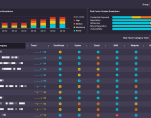
CyCraft External Attack Surface Management (EASM) automatically discovers potential external threats, correlates multiple intelligence and provides an overview of digital assets from the attacker’s perspective. Constantly discovering exposed credentials on surface web, dark web or public markets, this module mobilizes early warning and leakage tracing. Moreover, with the exclusively trained AI model, EASM offers mitigation and audit recommendations tailored to various compliance requirements.
Caption: CyCraft EASM integrates multi-sourced intelligence and asset management, automating attack path simulation and impact analysis.
AI-empowered Model Safety, Application Security and Posture Governance “The emerging AI-enabled threat landscape demands more than just faster detection and response; it requires predictive threat intelligence combined with AI-driven analytics and preemptive action. AI and machine learning (ML) technologies must be used to anticipate attack paths and predict where an adversary is likely to strike to more effectively neutralize potential attacks before they begin.” Gartner, Emerging Tech Impact Radar: Preemptive Cybersecurity, 7 October 2025.
LLM inherent and related risks are not virtual shadows but substantial threats that jeopardize everyday existence. Since GenAI or LLM outputs are difficult to control, the continuous verification of both input and output is the only way to ensure the validity of a solution.
Built on this logic, CyCraft’s XecGuard is an easily deployable Guardrail module, including cybersecurity, compliance and ethical Guardrails. Defending against Prompt Injection, Jailbreak and Prompt Extraction, XecGuard tackles AI-enabled threats without compromising its performance.
Caption: Compared with other LLMs, CyCraft XecGuard presents more robust model safety.
To assess your LLM safety range with quantifiable standards, CyCraft XecArena provides different attack scenarios to compare their performance. Users need to coax the LLM to break its System Prompt or leak confidential information. Join this multi-round testing on XecArena now!
CyCraft continues driving AI innovation in enterprise cybersecurity. In our opinion, this research momentum has further been witnessed by the reception of NeurIPS and EMNLP.
“We believe, being acknowledged in these influential Gartner reports validates our strategic vision and technological innovation,” said Dr. Benson Wu, CEO and Co-Founder of CyCraft Technology. “We’ve consistently invested in AI-driven, preemptive capabilities that enable organizations to stay ahead of invisible threats.”
Evaluation Application For organizations seeking full functionality, CyCraft is offering a limited evaluation program for 50 qualified enterprises. Participants will receive two External Exposure Analysis Reports, enabling security and governance teams to quantify external attack surface risks and establish data-driven priorities for remediation.
Gartner, Emerging Tech: AI Vendor Race: Unified Exposure Management Will Drive Displacement of Fragmented Point Solutions, 29 September 2025.
Disclaimer
Gartner does not endorse any company, vendor, product or service depicted in its publications, and does not advise technology users to select only those vendors with the highest ratings or other designation. Gartner publications consist of the opinions of Gartner’s business and technology insights organization and should not be construed as statements of fact. Gartner disclaims all warranties, expressed or implied, with respect to this publication, including any warranties of merchantability or fitness for a particular purpose. GARTNER is a trademark of Gartner, Inc. and its affiliates.
The issuer is solely responsible for the content of this announcement.
About CyCraft
CyCraft is a leading AI cybersecurity company, dedicated to automating cybersecurity with AI technology. With a proven track record in government, finance, high-tech semiconductor, and other industries, and strong recognition from international institutions, CyCraft continues to build Asia’s most advanced AI Security Operations Center, fully committed to safeguarding enterprise digital resilience.
CyCraft’s product suite encompasses AI Red Teaming for automated validation of Large Language Model (LLM) security and strengthening cloud and on-premise AI models with AI Guardrail technology—aiming to build multi-layered cybersecurity resilience for the entire AI ecosystem. The XCockpit AI platform integrates three pillars of XASM (Extended Attack Surface Management): EASM, IASM, and automated endpoint protection, providing enterprises with proactive, preventative, and real-time deep defense.
Federal authorities in Washington have issued a fresh warning to consumers and financial institutions as cyber-enabled fraud intensifies during the year-end shopping season, highlighting a sharp rise in sophisticated scams powered by artificial intelligence and automation. The U. S. Department of the Treasury’s Office of Cybersecurity and Critical Infrastructure Protection said the scale and complexity of digital fraud now pose systemic risks to household finances and payment […]
IHBMSU and The Digital School have formalised a memorandum of understanding aimed at accelerating digital education initiatives, widening access to cross-border learning programmes and building structured pathways that connect education to employment, according to statements issued by the two institutions.
The agreement outlines cooperation across curriculum design, online delivery platforms and faculty collaboration, with a stated focus on making accredited learning more accessible to learners who face economic or geographic barriers. Officials involved in the partnership said the MoU is intended to combine IHBMSU’s academic framework with The Digital School’s digital infrastructure to support scalable, internationally oriented education models.
Under the terms of the arrangement, the two entities will jointly develop online and blended courses aligned with industry demand, covering areas such as business management, technology, data literacy and applied digital skills. Programmes are expected to be structured to allow flexible pacing and modular certification, enabling learners to accumulate credentials that can be stacked towards full degrees or professional qualifications.
Representatives from both sides said a core pillar of the collaboration is the creation of “learning-to-earning” pathways, particularly for underserved communities. This includes aligning course content with employer needs, embedding practical projects into curricula and facilitating links with industry partners for internships, apprenticeships and job placements. The aim is to reduce the gap between academic training and labour-market outcomes, an issue that has drawn growing attention from policymakers and education providers worldwide.
The MoU also commits the partners to mobilising technical and financial resources to ensure the long-term sustainability of joint initiatives. This may involve co-investment in digital platforms, outreach programmes and learner support systems, as well as engagement with philanthropic organisations, development agencies and corporate sponsors interested in workforce development and social impact education.
IHBMSU officials said the partnership reflects a broader shift within higher education towards digitally enabled delivery and international collaboration. Universities across regions have been under pressure to modernise teaching methods, expand access beyond traditional campuses and respond more quickly to evolving skill requirements. By working with a digital-first education provider, IHBMSU aims to extend its reach to learners outside its conventional geographic footprint while maintaining academic standards.
The Digital School, for its part, said the collaboration strengthens its mission to provide affordable, technology-driven education at scale. The organisation has positioned itself as a platform that blends online instruction, adaptive learning tools and partnerships with accredited institutions. Executives involved in the MoU said working with IHBMSU would allow it to offer learners recognised qualifications alongside practical, employment-focused training.
Education analysts note that such partnerships have become more common as institutions seek to balance quality assurance with the need for speed and flexibility. Digital platforms can lower delivery costs and reach large audiences, but questions around accreditation, assessment integrity and learner outcomes remain central. Collaborations with established universities are often seen as a way to address these concerns while retaining the benefits of digital scale.
The agreement also places emphasis on global learning opportunities, including cross-border classrooms, virtual exchange programmes and collaborative projects involving students from multiple countries. Advocates argue that exposure to international peers and perspectives can enhance employability and cultural competence, particularly in sectors where remote and distributed work has become standard.
While financial terms of the MoU were not disclosed, both parties indicated that pilot programmes would be rolled out in phases, with feedback from learners and employers used to refine course offerings. Metrics such as completion rates, job placement outcomes and learner satisfaction are expected to play a role in evaluating the partnership’s impact.
The move comes against a backdrop of heightened demand for reskilling and upskilling, driven by technological change and shifting labour markets. Employers in fields ranging from information technology to digital marketing and business analytics have reported difficulties finding candidates with job-ready skills, even as large numbers of graduates struggle to secure suitable employment. Education providers have been under pressure to demonstrate that qualifications translate into tangible economic opportunities.
Nikken Sekkei has unveiled an architectural vision for Trump Tower Dubai that signals a renewed push to blend global branding with locally grounded urban design, positioning the project as a high-profile addition to the city’s luxury real-estate landscape. The proposal introduces a vertically articulated tower intended to integrate hospitality, branded residences and curated public spaces, reflecting Dubai’s continued appeal to international developers and design houses. The Japanese […]
Advanced Micro Devices has reshaped its standing in the global semiconductor industry under chief executive Lisa Su, evolving from a company once associated mainly with cyclical PC demand into a diversified supplier central to the artificial intelligence build-out now reshaping data centres, cloud computing and high-performance workloads. AMD’s market capitalisation has hovered around the $200bn mark during 2024 and 2025, reflecting investor confidence that the company can […]
A coordinated cyber campaign using artificial intelligence to disguise malicious code is targeting researchers, developers and security professionals by exploiting trust in GitHub repositories, raising concerns about the resilience of open-source supply chains relied upon across academia and industry. Security analysts have identified a network of polished repositories seeded with a previously undocumented backdoor, dubbed PyStoreRAT, which is being distributed through reactivated GitHub accounts that had lain […]
Australia’s attempt to block under-16s from accessing major social media platforms was immediately challenged as teenagers bypassed the new restrictions within hours, surfacing concerns over the policy’s design, its rapid rollout, and the possibility that younger users could drift towards platforms with fewer safeguards. The ban, introduced as part of a national response to mounting concerns over online harm, requires platforms including Meta’s Instagram and Facebook, TikTok, […]
HONG KONG SAR – Media OutReach Newswire – 11 December 2025 – Skychakra Group recently held a grand inauguration ceremony at the Hong Kong International Center, announcing the official acceleration of its globalization strategy. With a mission to “enhance individual energy, empower enterprise growth, and promote asset capitalization,” Skychakra simultaneously launched three major international initiatives: a cross-border listing incubation system, an RWA (Real World Assets) technology ecosystem, […]
YouTube has moved to strengthen its presence in the UAE’s digital health landscape by developing programmes that place licensed medical professionals at the forefront of its educational content, signalling a determined push to make verified advice more accessible across the platform. The company’s strategy targets growing demand for trustworthy health information online, as concerns over misinformation continue to shape global discussions around digital media governance.
Executives overseeing the initiative said the platform aims to build a space where users can reliably distinguish expert-led guidance from unverified commentary, a challenge amplified by the scale and diversity of YouTube’s audience. The expansion forms part of a wider effort to elevate authoritative creators working in fields where accuracy is critical, particularly as the Gulf region deepens its investment in digital transformation of public services, including healthcare, teleconsultation and patient education tools.
YouTube’s managing teams have pointed to the UAE as a priority market due to its strong uptake of digital services, rapid population growth and the increasing role of online platforms in shaping consumer behaviour. Company representatives noted that the health programme supports licensed doctors and specialists in producing explanatory content on topics ranging from chronic disease management to preventative care, with a focus on clarity and cultural relevance. The aim is to ensure that users searching for guidance on everyday health queries encounter information grounded in established medical understanding.
The regional rollout also follows the platform’s broader global commitment to responsible content curation, which includes labelling health sources, collaborating with regulatory bodies and strengthening partnerships with hospitals and academic institutions. Executives highlighted that user trust depends not only on removing harmful material but also on amplifying credible voices. This shift reflects wider trends across major technology firms, which are under increasing pressure to address misinformation while supporting creators who offer value through expertise.
During discussions about the programme, YouTube’s leadership emphasised that the future of digital platforms lies in empowering diverse creator communities. A senior executive cited the example of a Dutch knitting creator whose channel grew from a small personal project into a global community hub, illustrating how storytelling and authenticity can generate engagement across borders. The reference underscored the platform’s belief that healthcare content, too, should be driven by relatable human narratives, not only clinical explanations.
Doctors participating in the UAE initiative have described the programme as a chance to reach audiences who might hesitate to seek medical advice through traditional channels. Specialists working in fields such as cardiology, paediatrics and mental health say that video content enables them to clarify misconceptions, guide viewers toward evidence-based treatment options and encourage early intervention. Several practitioners have noted that the platform provides a unique opportunity to communicate complex issues in a visually engaging format, which can support better understanding among younger users.
Market analysts observing YouTube’s strategy say the platform’s focus aligns with the UAE’s national priorities, particularly its long-term digital health agenda. Authorities across the Gulf have invested in AI-enabled diagnostics, electronic health records and telemedicine infrastructure, creating a parallel demand for trusted educational material that helps residents navigate an evolving healthcare environment. Analysts also point to the competitive landscape, where global platforms are working to differentiate themselves through credible content partnerships.
The company’s decision to bring more clinical professionals onto the platform reflects research showing that users often rely on video explanations when confronted with health queries. Executives acknowledge that this behaviour carries both opportunities and risks, as misinformation can spread rapidly when content appears authoritative. To address this, YouTube has been refining its ranking systems to elevate licensed practitioners and institutions, ensuring visibility for creators whose credentials and communication standards have been verified.
Creators involved in the new initiative have stressed the responsibility that accompanies such visibility. Several participants noted that working on the platform requires balancing accessibility with professional rigour, avoiding oversimplification while keeping content digestible for general audiences. These doctors have described the process as an extension of public health education, albeit through a digital medium that demands nuanced storytelling and sensitivity to cultural context.




 https://www.sim.edu.sg/






 https://www.linkedin.com/company/cycraft
 https://www.facebook.com/cycrafttechnology