News related to
credentials

The DFA Design for Asia Awards 2025 has opened its submission window for entries, signalling a heightened push to elevate Asian-led design onto the global stage. Organised by the Hong Kong Design Centre in partnership with the Cultural and Creative Industries Development Agency of the Hong Kong Special Administrative Region, the awards target projects that demonstrate innovation, social impact and cross-border relevance. The entry period runs from 1 April to 7 July 2025, allowing participants to apply across six design disciplines and 30 diverse categories.

The competition spans Communication Design, Digital & Motion Design, Fashion & Accessory Design, Product & Industrial Design, Service & Experience Design, and Spatial Design. Eligibility is specified for projects launched in one or more Asian markets between 1 January 2023 and 31 May 2025, signalling a forward-looking emphasis on design influenced by the region’s evolving markets. A 50 per cent early-bird discount on the entry fee is offered for submissions by 30 April, roughly halving the cost to HKD 1,100 from the standard HKD 2,200 per entry.

The competition’s organising body emphasises that submitted projects should go beyond aesthetic appeal to reflect cultural values, social responsibility and human-centred innovation. The awards platform is positioned as a launchpad for designers and companies to gain international recognition, network globally and exhibit work in both online and physical showcases. The judging panel comprises design professionals from across the world, applying rigorous assessment criteria including creativity, usability, sustainability, aesthetic quality, and impact in Asia.

Key strategic shifts in this edition include an extended submission deadline and an expanded suite of benefits for winners, which include trophies, certificates, inclusion in an awards publication, eligibility for exhibitions and an online gallery, as well as invitations to high-profile events such as the Business of Design Week. This broadening of value-added rewards underscores the awards’ intent to deepen its role not merely as a recognition mechanism but as an accelerator of design careers and commercial opportunities.

Emerging design hubs across Asia stand to gain elevated visibility through this platform. Analysts observe that as demand grows for design solutions rooted in local culture yet globally scalable, events like these help bridge creativity with market viability. One jury member from a previous edition noted that a winning spatial design in Hong Kong “interprets what a library should be architecturally” and “brings the outdoor space indoor,” illustrating how design can engage both aesthetic and functional concerns.

Challenges persist for participants, particularly in meeting the criteria of “impact in Asia” while maintaining global relevance. Designers must navigate a competitive field: in the 2024 edition, 215 awardees were recognised across Grand, Gold, Silver, Bronze and Merit levels. The ability to demonstrate both commercial success and societal benefit is increasingly important, underscoring the awards’ focus on real-world outcomes rather than purely conceptual achievements.

Corporate and design-studio entrants will need to align submissions with multiple review dimensions: geographical market launch, human-centred innovation, sustainability credentials, and cultural resonance. A deeper trend is evident in how the awards reflect the evolving design ecosystem in Asia: beyond Hong Kong and major capitals, secondary cities and cross-border design collaborations are gaining traction. The judging criteria explicitly reward cross-market impact and innovation that resonates beyond local boundaries.

For the design industry, participation offers strategic advantages. Winning projects receive global exposure through awards publications and exhibitions, enabling both established studios and emerging talent to secure business leads and partnerships. The inclusion of the online showcase platform ensures that award-winning work reaches a wider audience beyond the physical event footprint. Observers suggest that for design firms seeking to expand internationally, a credential from this awards programme adds credibility in a crowded market.

Financially, the fee structure and early-bird promotion lower barriers to entry, but entrants must commit to a publication and promotion fee if selected as winners. This consideration means designers must evaluate the return on investment in terms of exposure and business potential. The awards’ transparency around deliverables and eligibility criteria signals a mature stage in its evolution since its launch in 2003.

Organisers have emphasised that the awards welcome designs with “deep Asian cultural roots” yet global aspirations, underscoring a dual objective of cultural preservation and market expansion. As the platform attracts entries from across the Asia-Pacific region, this edition could reveal emerging trends in spatial design, sustainable product systems, inclusive services and motion design. The overarching theme is that design is not simply aesthetic but a tool for transformation—economically, socially and culturally. Entrants are therefore expected to present work that balances form and function, local context and global relevance.

Swiss privacy firm Proton AG has unveiled its new “Data Breach Observatory”, a live-monitoring platform designed to track organisations’ data leaks by scanning hacker-forums and underground marketplaces on the dark web. According to the company, the tool has already identified 794 unique breach incidents in 2025 alone, exposing over 300 million records linked to identifiable companies. If broader data-compilations are included, the number of incidents rises to […]

Greenlogue/AP Abu Dhabi Future Energy Company PJSC – Masdar has secured two large-scale solar photovoltaic projects in Saudi Arabia, with a combined capacity of 2 gigawatts, under the country’s sixth round of the National Renewable Energy Programme. One facility, located in Najran Province, will deliver 1,400 megawatts, and the other, in Jizan Province, will provide 600 MW. Both projects will operate on a build-own-operate basis and are […]

A wave of advanced phishing campaigns is exploiting a novel combination of social engineering and browser-cache manipulation to infiltrate systems without triggering typical security alerts. The technique begins when a user is tricked into visiting a phishing webpage that pretends to be a trusted application—such as a VPN compliance checker. The danger lies in the instruction to copy and paste a network path into the Windows File […]

Cybersecurity firm Sophos has unveiled its new solution, Sophos Identity Threat Detection and Response, offering organisations continuous monitoring of identity risks, dark-web credential tracking and automated response capabilities within its Sophos Central platform. The UK-headquartered company positions the product as a strategic response to the “never-ending” rise of identity-based attacks. The new ITDR module integrates with Sophos’ existing Extended Detection and Response and Managed Detection and Response […]

The company formed by Hyperliquid Strategies Inc. has filed a registration statement with the U. S. Securities and Exchange Commission, seeking to raise up to US$1 billion by issuing up to 160 million shares of common stock. According to the filing, the share-offering will be handled underwritten by Chardan Capital Markets LLC, acting as financial advisor for the transaction.

HSI is the combined entity formed via the business combination between Sonnet BioTherapeutics, Inc. and Rorschach I LLC, a special-purpose vehicle affiliated with Atlas Merchant Capital LLC and Paradigm Operations LP. That merger agreement valued HSI at approximately US$888 million, comprising roughly US$583 million in the native token HYPE and at least US$305 million in cash.

In its S-1 filing, HSI states the capital will support “general corporate purposes, including the acquisition of HYPE tokens and other digital-asset treasury activities.” Analysts interpret this as an indication that HSI intends to deepen its exposure to the HYPE ecosystem and position itself as a publicly-listed vehicle for crypto-asset treasury management.

Leadership for the combined company is drawn from the sponsors behind Rorschach I. At closing, the board will include Bob Diamond and David Schamis. Current independent directors from Sonnet will also roll over into the new board structure.

Market observers point out that the transaction marks a significant shift from the biotech credentials of Sonnet to a crypto-treasury focus at HSI. At the time of the agreement, the value of HYPE tokens held by HSI was based on a spot price of approximately US$46.37. The shift has drawn scrutiny: one investor-rights law firm is investigating whether the minority stakes to legacy Sonnet shareholders create equity fairness issues.

The $1 billion raise is notable for several reasons. First, it underscores the trend of publicly-listed companies forming or converting into crypto treasury vehicles, providing regulated-market access to digital-asset exposure. Second, by aligning its strategy around HYPE token accumulation, HSI is building a sector-specific reserve, akin to what several other companies have done with Bitcoin in prior years. Third, the timing — amid heightened regulatory discussions around crypto infrastructure and token-linked public entities — places HSI at a crossroads of capital-markets innovation and regulatory risk.

Cybersecurity firms have uncovered a sophisticated backdoor dubbed ChaosBot, written in the Rust programming language, that uses the chat-and-voice platform Discord for command-and-control traffic, marking a distinct shift in how threat actors are orchestrating cyber-intrusions. The campaign appears to have begun in a financial-services environment, with attackers leveraging compromised credentials and advanced evasion methods to sidestep detection. According to reports from the vendor eSentire, the incident first […]

Advertisements

Greenlogue/AP The 28th edition of the trade-fair and conference platform Ecomondo 2025 will convene from 4 to 7 November at the Rimini Expo Centre, Italy, with a reinforced international agenda that organisers expect will draw more than 1,000 exhibitors and upwards of 100,000 visitors. This year’s event is emphasising several strategic growth areas: climate-tech innovation, digitalisation in resource management, blue economy and Mediterranean-Africa partnerships. The organising body, […]

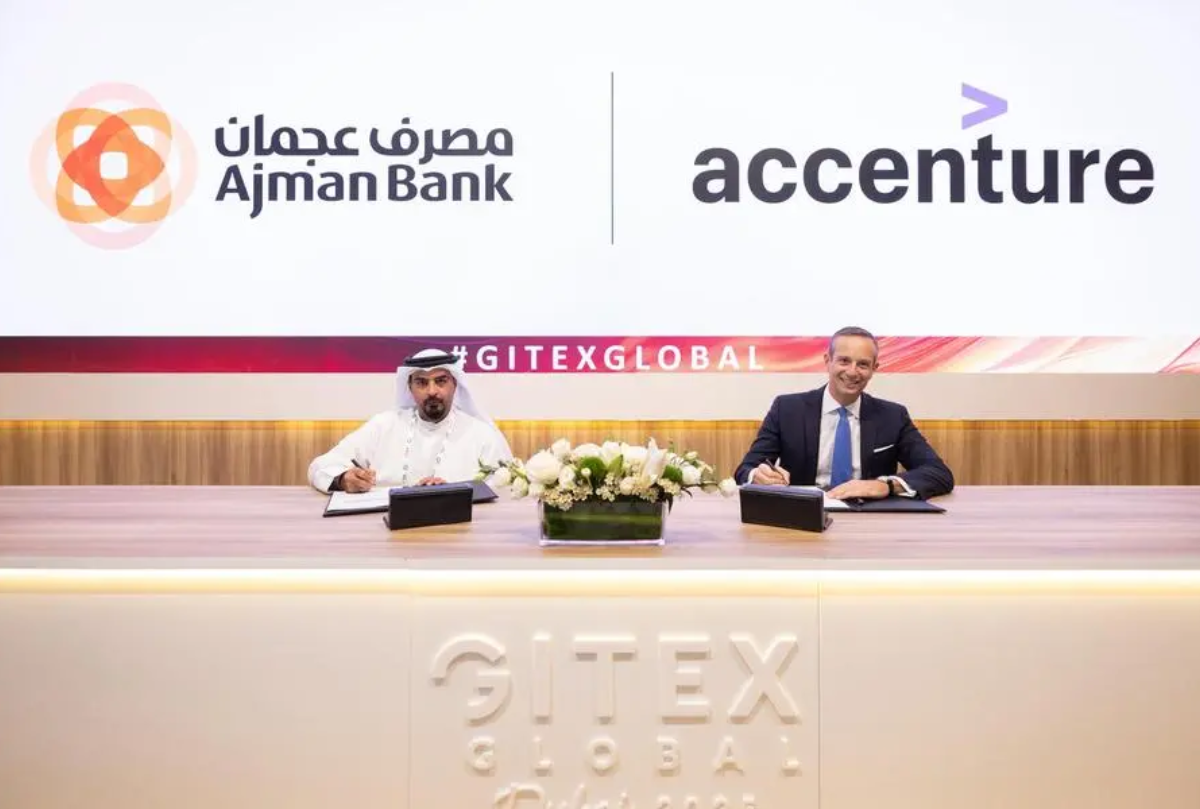
The Ajman Department of Finance unveiled a suite of smart payment services at GITEX Global 2025, signalling its bid to position the emirate at the forefront of digital government finance solutions. The offerings include integration of the UAE’s national payment card “Jaywan”, a buy-now-pay-later option via its AjmanPay portal, and a unified financial management platform dubbed “Estidama system”.

Marwan Ahmed Al Ali, Director General of the Department of Finance in Ajman, said the new services aim to provide “flexible payment options” tailored to “all segments of society” and boost the emirate’s digital transformation agenda. The launch was attended by senior government and private-sector officials during the event.

The Jaywan card—launched by the Central Bank of the UAE to reduce reliance on global card networks—has now been linked with AjmanPay, allowing users to make payments via ATMs, e-commerce platforms and point-of-sale terminals. The Department also launched a zero-interest instalment option to facilitate fee payments and transactions in instalments or deferred payments.

The Estidama system is presented as a next-generation cloud-based platform comprising four interconnected modules that manage budgeting, initiative planning, financial execution and reporting. It promises to unify financial operations across the Ajman government, enhancing transparency and control over public spending.

Officials emphasised that these steps align with broader national efforts to digitise financial infrastructure. By integrating Jaywan into Ajman’s government payments, the emirate is tapping into the UAE’s goal of financial sovereignty and reducing dependence on foreign card networks.

Partnership with First Abu Dhabi Bank underpins the linking of Jaywan with AjmanPay, showcasing public–private collaboration in driving fintech infrastructure. The Department described the move as a qualitative addition to its digital ecosystem, reflecting its commitment to “innovation in government payment systems”.

During GITEX, Ajman’s government platform is also showcasing AI, data analytics, and other advanced technologies in financial resource management. The participation underscores the emirate’s aim to benchmark itself in the regional competition over smart city and digital government credentials.

South Korea’s Financial Intelligence Unit has authorised a change in GOPAX’s executive leadership, clearing the way for Binance’s acquisition of 67 per cent of the local exchange and formally restoring its presence in the country. The decision comes after over two years of regulatory review and internal scrutiny.

The executive registration approval by the FIU establishes Binance as the controlling shareholder of GOPAX, resolving a key hurdle that had delayed the deal since its initiation in early 2023. By acquiescing to the change, South Korean authorities have allowed Binance’s re-entry into one of Asia’s most active cryptocurrency ecosystems.

When Binance first acquired the majority stake in GOPAX in February 2023, it sought to stabilise the exchange following a liquidity crisis tied to frozen customer deposits connected to the GoFi yield product. That crisis was traced to exposure to Genesis Global Capital, whose own collapse triggered withdrawals being halted. Binance undertook a capital injection to support GOPAX’s recovery while awaiting formal regulatory sign-off on executive changes.

The FIU’s prior hesitancy centred on concerns that Binance’s international compliance record could clash with South Korea’s anti-money laundering oversight. Legal pressure from U. S. authorities, including enforcement actions and substantial fines, had raised red flags among domestic regulators. But the FIU’s acceptance now signals that uncertainties over Binance’s compliance credentials have been sufficiently addressed.

Under South Korean law, exchanges must report changes in executive or representative roles to the FIU, which effectively acts as a gatekeeper in approving foreign capital in the local crypto sector. No separate screening mechanism exists for major shareholders, making the executive registration process a de facto test of suitability. Delays in this case were reportedly driven by repeated demands for supplemental documentation by regulators.

GOPAX is one of only five exchanges in South Korea authorised to conduct cash-crypto transactions under strict regulatory norms. With Binance now in control, GOPAX could compete more aggressively against dominant local players such as Upbit and Bithumb. Yet entrenched banking relationships and compliance frameworks will still pose barriers to market share gains.

The approval reflects a shift in Korea’s regulatory posture toward greater openness—especially for exchanges that have resolved international legal disputes. Binance’s own settlements regarding AML and market conduct issues appear to have alleviated domestic regulatory apprehension. The acceptance also underscores the FIU’s judgment that Binance’s structural changes and compliance assurances now align with South Korea’s regulatory expectations.

A new wave of supply-chain assaults has seen North Korean hackers publish more than 300 malicious npm packages, infecting developer systems with sophisticated malware that steals credentials and crypto assets. The campaign, known as “Contagious Interview,” exploits the trust developers place in open-source tools by cloaking malware inside packages mimicking legitimate ones.

The Socket Threat Research Team disclosed that attackers uploaded 338 malicious npm modules, collectively downloaded over 50,000 times, many featuring a newly observed loader named XORIndex. About 27 of them remain active in the npm registry. Within those packages, XORIndex collects host metadata and downloads a second-stage payload, BeaverTail, which in turn leverages a backdoor called InvisibleFerret to maintain persistence and exfiltrate data. This expansion follows a preceding June surge of 35 malicious modules using a HexEval loader.

Researchers emphasise that Contagious Interview is not a static campaign but a dynamic interplay between defenders and adversaries. As packages are taken down, attackers quickly reissue variants under fresh aliases or change loader techniques. The latest 67-package load pushed last month illustrates this cat-and-mouse escalation: the new modules alone exceeded 17,000 downloads. Attackers have mixed XORIndex and HexEval in parallel deployments, suggesting modular development and adaptability.

The campaign’s social engineering backbone remains key. Actors pose as recruiters or HR contacts on platforms like LinkedIn, targeting software engineers or job-seekers. They offer interview assignments that require cloning a GitHub or Bitbucket repository, with the malicious npm module embedded deep in the project. Because many developers run these projects outside sandboxed environments, the malicious loader quietly executes and bridges the gap to full system compromise.

Analysts attribute Contagious Interview to DPRK-aligned threat groups tracked under names such as CL-STA-0240, DeceptiveDevelopment, Tenacious Pungsan and Void Dokkaebi. The methodology aligns with patterns shown by the Lazarus Group and its affiliates, as attackers continue to weaponise open source ecosystems for espionage and financial theft. XorIndex and HexEval share infrastructure and tactics, including encrypted communication with command-and-control servers. In several cases, submitters of the malicious packages have crafted repository names containing “interview,” reflecting the campaign motif.

Beyond npm, the campaign’s reach extends: some modules reference Bitbucket repositories, and similar tactics have appeared in PyPI package attacks. The broader goal appears dual: accessing developer environments to steal intellectual property or credentials and siphoning cryptocurrencies from wallets detected on compromised machines.

Security firms and registry maintainers have responded with takedown requests and account suspensions. Socket reported removing six live HexEval-based modules earlier this year, and the npm security team has collaborated to suspend associated accounts. But defenders admit the reactive posture is fragile; attack waves resurface within hours.

MAF Sukuk Ltd is launching a US$500 million, 10-year sukuk under Regulation S, with initial price thoughts set around US Treasuries plus 125 basis points. The securities will be backed by Majid Al Futtaim Properties as the obligor, while parent Majid Al Futtaim Holding offers a guarantee.

The offering adopts a wakala/murabaha structure and is expected to carry credit ratings of “BBB/BBB”, aligned with those of the guarantor. HSBC is acting as lead structuring bank, with the purpose of the funding geared towards expansion and refinancing of property development activities.

Majid Al Futtaim Holding, in its most recent credit review, retains its BBB rating and stable outlook, reflecting its scale of operations and diversified asset base. Fitch affirmed the rating in November 2024, citing growth across revenue and EBITDA. Majid Al Futtaim’s internal guidance confirms that capital allocation remains within the thresholds consistent with its BBB leverage metrics.

Investors familiar with corporate sukuk in the Gulf region view the 125 basis point spread as moderately tight for a 10-year tenor, particularly for a non-sovereign issuer in the real estate sector. The parent guarantee is crucial to bolster credit comfort, given that the issuer is a property development arm.

In recent years, Majid Al Futtaim has deployed Islamic capital markets for its financing needs. Its 2023 green bond issuance of US$500 million was aimed at refinancing an AED 800 million bond commitment, underlining a strategy to blend sustainability credentials with its capital structure. The group similarly has historically issued hybrid capital securities and sukuk in its debt portfolio.

The latest sukuk will be listed via MAF Sukuk Ltd, which already carries a BBB long-term rating. The listing via a special purpose issuer isolates the structure from direct group operations, while the parent guarantee transfers credit risk back to the overarching entity.

Major risks for the deal rest on cyclical pressures in real estate markets, tenant defaults, and development cost inflation. Majid Al Futtaim Properties has disclosed in its base prospectus the possibility of cost overruns, land title constraints, and tenant concentration as material risks. The group also faces competitive dynamics in its markets where some rivals are state-backed.

Mohamed Futtah, a regional fixed-income strategist, commented that “a 10-year sukuk at T+125bp for a BBB group guarantee is ambitious, but could succeed under strong demand, especially from Gulf and Asia Islamic investors seeking yield in a rate environment that is otherwise compressed.”

At least 30 major U. S. news organisations, including The New York Times, The Associated Press, Reuters, and Newsmax, have refused to endorse the Pentagon’s newly imposed rules for press access, positioning themselves for a possible mass withdrawal of reporters from the Pentagon. The Department of Defense’s policy requires journalists covering the Pentagon to sign a document acknowledging restrictions on access, including the possibility of having their […]

Dubai Healthcare City Authority has unveiled a Dhs1.3 billion development programme for Phase 1 of Dubai Healthcare City, marking an aggressive expansion that aims to elevate its global standing in health infrastructure. Construction is set to start in December, with a targeted completion window by November 2027.

At the heart of the initiative lies a triple-pronged buildout: a LEED Platinum-certified office block, a purpose-built medical complex, and supporting infrastructure—each tailored to attract health-related investors and operators. The office building, designed by P&T Architects & Engineers, spans some 13,000 sqm across nine levels and includes flexible workspaces and ground-floor retail zones. The medical complex, by Design & Architecture Bureau, covers 5,800 sqm, with two basements and five floors, and is planned to accommodate surgical units, diagnostics, outpatient services and lab facilities.

Beyond buildings, the infrastructure scope includes multi-storey parking with electric vehicle charging points, integration with Salik for smart parking, and accessibility enhancements. The aim is to strengthen the underlying ecosystem so that the healthcare precinct becomes not just a cluster of clinics, but a fully serviced global health hub.

Issam Galadari, DHCA’s CEO, asserted that these projects reflect the authority’s ambition to combine sustainability, global investment appeal and design excellence, aligned with Dubai’s Economic Agenda and the UAE’s Net Zero Strategy 2050. Allae Almanini, COO, added that the works will “boost confidence for healthcare providers and investors” by improving efficiency, accessibility and sustainability across the community.

Phase 1 of DHCC, located in Oud Metha, currently operates within a 4.1 million sq ft footprint dedicated to medical services and education. Phase 2, by contrast, spans around 19 million sq ft at Al Jaddaf, and is oriented more toward wellness and mixed support services.

This new investment signals a sharpened focus on physical infrastructure as a differentiator. In recent years, DHCC has emphasised partnerships and innovation: its free-zone model already supports over 400 licensing entities and more than 168 clinical facilities. Earlier this year, DHCA collaborated with AI Quantum Intelligence Institute to launch an AI healthcare innovation lab in the free zone, and formed an agreement with AirMed International to deepen medical transport capabilities.

Analysts see the move as a bid to compete not only regionally, but globally. Healthcare infrastructure, especially when linked with sustainability credentials such as LEED Platinum certification, is increasingly a factor in investors’ decisions. The new build will position DHCC among the few healthcare zones worldwide that combine clinical, administrative and research capacity within one contiguous ecosystem.

However, the scale and timeline carry risks. Dubai’s construction sector is already navigating supply-chain pressures, labour constraints, and rising material costs. Ensuring timely delivery and quality control in a high-performance project will demand rigorous project management. Meanwhile, the authority must ensure that demand from healthcare operators, both local and international, matches the expanded real estate supply, lest vacancy rates rise.

More immediately, the December commencement date — just weeks away — will test DHCA’s readiness in securing contractors, tendering work packages and coordinating certifications. Delays in permitting or approvals could cascade into missed target windows. Yet, if executed successfully, the project will enable DHCC to present itself as an integrated health campus offering offices, clinical space, and support services under one sustainable umbrella.

Observers note that medical tourism in Dubai already commands significant weight, drawing patients from the GCC, the broader Arab world, Europe, and Asia. DHCA’s bet is that infrastructure sophistication will amplify that pull, especially for high-end specialty and precision medicine segments.

A newly observed wave of attacks is using the cutting-edge Single Executable Application capability in Node. js to deliver the Stealit malware to Windows systems, marking a strategic shift by threat actors to evade detection. Security analysts say the move underscores how attackers are co-opting development frameworks to bypass conventional defences. FortiGuard Labs security researchers discovered that this campaign packages malicious payloads using Node. js SEA, an […]

Dubai — DOOGEE is rolling out a bold “Tech For Nature” showcase at GITEX GLOBAL 2025, positioning itself at the intersection of rugged devices and sustainability. From 13 to 17 October, the company will host its exhibit at booth A40 in Hall 13, where its outdoor-oriented hardware and eco-aware design features will be on full display.

DOOGEE describes the exhibit as centred around its “Tech Impact” zone, a curated space meant to demonstrate how its devices can withstand extreme conditions while serving the needs of explorers, scientists, and rescue personnel. The lineup includes models engineered for shock, heat, immersion, and drops — with features aimed at bridging utility and resilience.

Among the highlight products is the V Max Play, which pairs a high-capacity battery with a 200 MP main camera and integrates a mini projector for on-the-go displays. DOOGEE also plans to exhibit the S200 Ultra, built with aluminium-titanium alloy framing and a rear display for rapid glanceable information. Wearables and peripheral devices are similarly designed for outdoor resilience: the Anywise W1 Pro watch offers dual-band GPS, 5ATM water resistance, and offline map capability, while BoneAir Swim provides bone conduction audio under IP68 waterproof rating.

The firm frames “Tech For Nature” as both a mission and a product philosophy—suggesting that its devices should “coexist with nature” rather than merely tolerate it. In its public communications, DOOGEE emphasises use of sustainable materials and energy-efficient design elements. For instance, it references the use of recycled coffee grounds in casing composites and UV-responsive surfaces that shift hues with ambient light.

DOOGEE is no stranger to rugged or niche technology showcases. Earlier in 2025, the company participated in GITEX Europe, where it spotlighted AI-enhanced rugged devices and wearables built for industrial and outdoor environments. The Dubai event, by contrast, marks its largest commitment yet to the consumer-facing “outdoor tech” narrative.

Analysts note that DOOGEE is entering a competitive space where brands like CAT, Ulefone, and Blackview already target the rugged market segment. To distinguish itself, DOOGEE appears to lean into hybrid positioning: ruggedness plus eco credentials. “The idea is to appeal to users who don’t want to sacrifice environmental sensibility for durability,” commented one industry observer.

GITEX GLOBAL 2025 is itself a major platform: this 45th edition of the event draws participants across AI, quantum, data centres, and startup ecosystems. DOOGEE’s exhibit is aligned with the trend of hardware firms emphasizing sustainability, resilience, and experience-driven product showcases.

Visitors at booth A40 will have hands-on access to the full “Tech For Nature” suite, including tablets, phones, wearables, and audio gear. DOOGEE is also promoting discounts on first orders for attendees and encouraging media and partners to trial devices on-location. Beyond demonstration, the firm is signalling intention to gear up distribution and service channels in regions where demand for rugged outdoor gear is rising.

A fresh campaign deploying SnakeKeylogger is targeting users with weaponized emails that lead to the execution of PowerShell scripts and ultimately exfiltrate sensitive data. Security analysts warn that the threat now blends social engineering with native Windows scripting to evade detection. Emails purporting to be from “CPA-Payment Files” or similar remittance services carry attachments—most often ISO or ZIP files. Once opened, these contain a malicious BAT file […]

The UAE Space Agency has rolled out a new digital platform designed to deliver space licences and permits entirely online via a smartphone app, enabling applicants to sign in using UAE PASS and monitor their application status. The launch took place in Dubai ahead of the GITEX Global 2025 tech expo.

This platform replaces traditional paper-based workflows with an integrated, automated system. Submissions, approvals and tracking are now consolidated into a user interface that aims to reduce processing times and increase transparency. Companies, start-ups and investors across the space sector will access the full lifecycle of licensing digitally, including renewals, amendments and compliance reporting.

UAESA’s chairman, Khalifa Al Shamsi, emphasised that the move aligns with the UAE’s ambition to become a regional space hub. “This platform reinforces our commitment to efficiency, sustainability and innovation,” he said. The agency expects that the system will eliminate redundancy, reduce human error and allow for better data analytics to guide policy decisions.

The system ties into UAE PASS, the country’s national digital identity service, meaning users can authenticate securely with existing credentials. Once logged in, applicants will receive real-time updates at each processing stage and be able to respond to requests or queries via the interface.

Behind the scenes, UAESA integrated the platform with multiple government entities—such as telecommunications regulators, frequency management and national security agencies—to ensure licensing decisions can access requisite data without repeated manual handovers. This interoperability was cited as a major technical hurdle during development, but UAESA says the system passes all requisite security audits.

Space industry observers see multiple competitive advantages. By cutting weeks or even months from licence cycles, the platform may attract foreign investment and accelerate project deployment. It also lowers the barrier for smaller actors — including universities or start-ups — to obtain permitting for satellite launches, ground stations or frequency allocations.

That said, challenges remain. Some firms have flagged concerns over the transition, especially those with legacy processes, noting that training and system migration will require internal adjustments. Also, regulatory complexity in cross-border space operations is unlikely to disappear entirely, so coordination with other national and international space authorities will still demand institutional engagement.

Logitech will unveil a range of AI-enabled collaboration tools at GITEX Global 2025 in Dubai from 13 to 17 October, aiming to show how hardware and software can merge to support hybrid and human-centred work environments.

Under its “AI-Enabled Collaboration” theme, the company plans live demonstrations of its next-generation video conferencing, audio, and workspace peripherals. These products are designed to deliver equitable meeting experiences, seamless plug-and-play deployment, and sustainability throughout the product lifecycle.

Murad Ali, Head of GCC for Logitech for Business, says GITEX offers a stage to highlight innovations in “smart collaboration” that address evolving work trends in the Middle East, and that the company is committed to sustainable design practices. Logitech will host customers and partners at its Hall 3-C30 booth to showcase these developments.

A key highlight is the Rally Board 65, an all-in-one mobile conferencing device tailored to simplify complex meetings. The system combines a 65-inch touchscreen with built-in AI features such as RightSight 2 auto-framing, Depth Blur to reduce visual distractions, and sensors that measure occupancy and room health parameters. When unused, it can automatically shift into a lower power state to conserve energy—part of Logitech’s drive to embed sustainability into its hardware.

Logitech’s approach is underscored by statements from Moninder Jain, VP & Head of Global Emerging Markets. He notes that Logitech views AI not merely as a productivity tool, but as a means to deliver “more equitable collaboration experiences.” According to him, AI is embedded in features that equalise participation between in-room and remote contributors, including consistent audio/video quality, auto framing, and cloud-based device management that lets users carry settings across devices.

In recent months, Logitech has pushed AI integration further across its product lines. It has expanded its portfolio of Intel Evo-verified peripherals, reinforcing its strategy to support high-performance, low-latency user experiences. The company continues to evolve its Rally and video bar offerings, embedding AI to enhance meeting dynamics and reduce friction for IT teams managing hybrid environments.

Logitech’s sustainability credentials also receive attention in its corporate activities. The company’s “Future Positive” programme continues to support innovation in circular design. Past initiatives include collaborations on AI-powered e-waste recycling bins and exploration of alternative magnet materials to reduce reliance on rare earth elements.

Dubai has issued Law No. of 2025 to regulate the professional practice of engineering consultancy firms, forbidding unlicensed operations and introducing a tiered classification system.

Under the law, no individual or office may conduct consultancy across fields such as architectural, civil, mechanical, electrical, chemical, geological or coastal engineering in the emirate without proper authorisation. Firms must hold a valid trade licence, register with Dubai Municipality, and submit detailed disclosures regarding their licensed scope, classification, and technical staff credentials.

A unified electronic platform, to be integrated with “Invest in Dubai,” will centralise firm registration, classification, issuance of competency certificates, and updates to consultancy qualifications.

A permanent “Committee for the Regulation and Development of Engineering Consultancy Activities” will be established under the law, chaired by a Dubai Municipality representative and comprising stakeholders from relevant authorities, tasked with overseeing implementation and resolving sectoral disputes.

The legislation classifies eligible firms into several categories: local Dubai-based companies; branches of UAE-based consultancies with at least three consecutive years of experience; branches of foreign consultancies with at least ten years of global experience; joint ventures between local and foreign players with at least a decade of consultancy track record; advisory offices led by registered engineers with a decade of experience; and engineering audit offices providing third-party evaluations.

Firms are barred from operating beyond their licence scope, hiring unregistered engineers or subcontracting to unlicensed entities. Violations can attract fines up to AED 100,000, stricter penalties for repeat breaches, suspension, downgrading classification, removal from the registry, licence cancellation, or revocation of professional certificates. Affected parties may file appeals within 30 days and decisions must be issued within 30 days, communicated within five working days.

Existing regulations under Local Order No. 89 of 1994 and its amendments will remain effective until new implementing regulations are issued, provided they do not conflict with the new law.

Consultancy firms and staff will have one year from the law’s effective date to regularise their status; extensions may be granted, and expired registrations can be renewed by committing to full compliance.

Dubai’s move mirrors the emirate’s broader legal recalibration of the infrastructure sector. In July 2025, Law No. 7 of 2025 was enacted to regulate contracting activities, consolidating prior laws and mandating registration, classification, subcontracting oversight and ethics codes across construction and engineering services. The new consultancy law can be seen as a complementary measure to ensure that consultancy services feeding into contracting projects meet defined quality and governance standards.

Industry stakeholders have expressed cautious optimism about the changes. Some consultancy firms believe the law will reduce unfair competition by eliminating unlicensed operators, thus raising standards overall. Others warn of compliance costs, especially for smaller local consultancies that may struggle to meet classification thresholds or hire adequately certified staff.

Regional and international firms see opportunity in the rule clarity and the potential to compete more transparently. Observers expect the new digital registry and classification framework to influence government procurement and tenders by favouring higher-ranked consultancies.

Broadcom has issued patches for a VMware vulnerability—CVE-2025-41244—that was already under exploitation by a China-linked hacking group, but failed to disclose that fact in its public advisory. The flaw allows a non-administrative user in a virtual machine to escalate privileges to root, provided VMware Tools is installed and Aria Operations is managing the VM with the Service Discovery Management Pack enabled. Broadcom’s advisory, published on 29 September, […]

A hitherto unidentified Chinese-aligned advanced persistent threat group named Phantom Taurus has escalated cyber-espionage activities against government and telecommunications targets across Asia, Africa and the Middle East, employing a newly uncovered. NET malware suite called NET-STAR to penetrate Internet Information Services servers. Researchers say its refined tactics and stealthy architecture make it among the most sophisticated China-linked spy campaigns to date. Security analysts attribute Phantom Taurus to […]

Harrods has informed certain customers that their names and contact details were exposed after a system belonging to one of its third-party service providers was compromised, though account passwords and payment information remain unaffected. The luxury retailer emphasised the breach was isolated and has been contained, reiterating that Harrods’ core internal systems remained untouched. The compromised data is said to be limited to basic identifiers. The company […]

The UAE Ministry of Finance, acting as issuer with the Central Bank of the UAE as issuing and payment agent, has completed the September 2025 auction for dirham-denominated Islamic Treasury Sukuk, issuing AED1.1 billion in two tranches.

Investor appetite proved robust: total bids reached AED5.1 billion, representing an oversubscription rate of 4.6 times. The two tranches mature in August 2028 and May 2030. Yields to maturity were set at 3.64 percent for the 2028 tranche and 3.72 percent for the 2030 tranche, with spreads of up to 5 basis points over comparable US Treasuries. The new Sukuk are now listed under the UAE Treasury Islamic Sukuk Programme on Nasdaq Dubai, bolstering their tradability in secondary markets.

This issuance is part of the 2025 T-Sukuk programme designed to deepen the UAE’s domestic Islamic capital market and to help establish a dirham yield curve. Authorities view it as a tool for liquidity management and as a mechanism to broaden investment options for both regional and international investors participating in the UAE’s fixed-income markets.

Market observers note that the oversubscription signals confidence in the UAE’s fiscal credentials and its commitment to injecting dynamism into its debt capital markets. The tight pricing relative to US Treasuries is seen as competitive and attractive for institutional players seeking yield in the Gulf region.

In recent months, the UAE has steadily pursued domestic sovereign Islamic issuances as a complement to conventional instruments, seeking to accommodate demand from Islamic financial institutions as well as conventional banks’ Shariah-compliant units. The coordination between the Ministry of Finance and the Central Bank ensures that these issuances are integrated into broader monetary and financial stability objectives.

Across the Gulf, sovereign issuers have increasingly leaned into domestic currency Islamic instruments to reduce dependence on external funding, develop local capital markets, and provide alternative yield playbooks for investors. Within that context, the UAE’s T-Sukuk programme is gaining traction as a benchmark vehicle.

Primary dealers participating in the auction included eight banks, all mandated under the program to support both primary and secondary market activity. Their participation is key to maintaining liquidity and encouraging wider investor participation beyond the initial subscription.

VISHNU RAJA
RYO YAMADA
HITORI GOTOH
IKUYO KITA