

News related to
financial

  • US$8 billion ultra-premium integrated commercial property debuts new lifestyle destination located along Shanghai’s iconic Huangpu River waterfront
  • New “Enjoy Life” brand theme highlights premium tenant mix of designer retail and lifestyle brands

HONG KONG SAR – Media OutReach Newswire – 4 May 2026 – Hongkong Land Holdings Limited (“Hongkong Land” or the “Company”) marked a key milestone with the opening of Phase Two at Westbund Central, its flagship ultra-premium integrated commercial property in Shanghai’s Xuhui District that is one of the largest mixed-use developments in the world. This stage of the US$8 billion project’s rollout is complemented by its new “Enjoy Life” brand theme, reinforcing the district’s role as a dynamic environment for work, living and leisure.

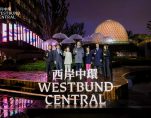
Photo 1: (From left to right) Mr. Raymond Wong, Director & Head of Property Development, Westbund Central; Mr. John Simpkins, General Counsel, Hongkong Land; Ms. Alfreda Zeng, Chief Operating Officer, Ping An Real Estate; Mr. Stuart Grant, Chief Executive, Westbund Central; Ms. Gan Jin, Vice Chairman, Shanghai West Bund Development Group; Mr. Craig Beattie, Chief Financial Officer, Hongkong Land and Ms. Vera Wu, Director & Head of Commercial Property, Westbund Central.

The Phase Two commercial launch introduces a diverse mix of global first stores, designer labels, and flagship concepts that reinforce Westbund Central’s position as a new downtown in Shanghai. New tenants include international icons such as Issey Miyake, the multi-brand boutique SND, Leica Store & Gallery, artisanal Swiss chocolatier House of Läderach, and design houses HAY and Paulmann.

With a planned total gross floor area of more than 1.7 million square metres, Westbund Central is the Company’s largest-ever single investment and brings together a diversified commercial mix that includes more than 600 international retail and lifestyle brands, 180 food and beverage operators, more than 50,000 square metres dedicated to cultural and art facilities, as well as 650,000 square metres of premium Grade A offices that will house occupiers including globally renowned companies such as adidas and lululemon.

While Phase One centred on food and beverage, cafes, and sports and leisure facilities, Phase Two enhances the district’s prestige by focusing on designer lifestyle brands. Looking ahead, Phase Three will introduce a cluster of global luxury maison flagships to further boost the district’s international appeal. Around 12,000 square metres of retail space is already open, with an additional 30,000 square metres opening within this year.

Michael T. Smith, Group Chief Executive of Hongkong Land, said: “Westbund Central is a fresh and dynamic example of our strategic focus to develop ultra-premium, integrated commercial districts in Asia’s leading gateway cities. As Hongkong Land’s largest single investment to date and our flagship China property, Westbund Central is one of the most significant projects in the company’s portfolio and designed to deliver sustained long-term value.”

Stuart Grant, Chief Executive of Westbund Central, said: “Westbund Central is being shaped as Shanghai’s new downtown and we are incredibly proud to build one of the largest mixed-use properties in the world that redefines modern urban living. We are creating a globally renowned ‘city within a city’ where the finest quality office, retail, residential and hospitality components converge in a single vibrant destination where people can truly enjoy life.”

As further phases are delivered, Westbund Central will continue to reinforce its position as one of Shanghai’s most significant integrated commercial districts and a cornerstone of the company’s long-term growth strategy in its portfolio.
Hashtag: #HongkongLand

The issuer is solely responsible for the content of this announcement.

Westbund Central

Hongkong Land’s Westbund Central is the Group’s largest-ever single investment. Scheduled to complete in phases up until 2028, it is an US$8 billion development encompassing approximately more than 1.7 million sq. m. of prime mixed-use property strategically located at Shanghai’s Xuhui Waterfront. It is a flagship development of Hongkong Land’s prime commercial properties’ CENTRAL Series. The ultra-premium integrated commercial property includes 240,000 sq. m of retail space, 650,000 sq. m. of premium Grade A offices, 160,000 sq. m. of high-end waterfront luxury residences, two hotels (55,000 sq. m.) and over 50,000 sq. m. of cultural and art venues.

Hongkong Land

Hongkong Land is a major listed property development, investment and management group. It focuses on developing, owning and managing premium and ultra-premium mixed-use real estate in Asian gateway cities, featuring Grade A office, luxury retail, residential and hospitality products. With over US$50 billion in assets under management, Hongkong Land’s ultra-premium mixed-use real estate footprint spans over 1.97 million sq. m. lettable area in operation and 1.43 million sq. m. lettable area under development, with flagship mixed-use projects in Hong Kong, Singapore and Shanghai. Its properties hold industry leading green building certifications and attract the world’s foremost companies and luxury brands. Established in 1889, Hongkong Land takes a long-term view, investing significantly alongside its capital partners and concentrating its portfolio where it can create the most value for tenants, customers and investors. Hongkong Land Holdings Limited has a primary listing on the London Stock Exchange, with secondary listings in Singapore and Bermuda. Hongkong Land is a member of the Jardine Matheson Group.


Beijing has moved from denunciation to direct legal defiance of US sanctions, ordering companies and financial institutions under its jurisdiction not to recognise or comply with American penalties imposed on five refiners accused of involvement in Iranian oil trade.

The order, issued by the Ministry of Commerce on 2 May, marks China’s first known use of a formal blocking mechanism against US sanctions on domestic companies. It targets measures against Hengli Petrochemical Refinery Co, Shandong Shouguang Luqing Petrochemical Co, Shandong Jincheng Petrochemical Group Co, Hebei Xinhai Chemical Group Co and Shandong Shengxing Chemical Co. The firms had been placed under US restrictions linked to alleged purchases or processing of Iranian crude, including asset freezes and transaction bans.

The move places banks, insurers, commodity traders and shipping intermediaries in a difficult position. Compliance with Washington’s restrictions may now expose them to legal risk in China, while compliance with Beijing’s order may expose them to penalties under the US sanctions regime. For large Chinese banks with international operations, the dilemma is particularly acute because access to dollar clearing, correspondent banking and global capital markets remains central to their business.

China has long rejected unilateral US sanctions as illegitimate, especially when they apply beyond American territory. Until now, however, Beijing had often allowed major financial institutions and state-linked enterprises to quietly reduce exposure to sanctioned entities to avoid jeopardising access to the US financial system. The latest order changes that balance by instructing domestic parties not to recognise, enforce or comply with the penalties.

The legal basis lies in China’s blocking rules against what Beijing describes as unjustified extraterritorial application of foreign laws. Those rules, introduced in 2021 and strengthened by additional countermeasure regulations, allow authorities to prohibit compliance with foreign restrictions that impair normal business with third countries. The 2 May order says the US measures against the refiners improperly restrict lawful trade and harm the rights of Chinese entities.

The immediate trigger is Washington’s renewed pressure on Iranian oil revenues. Hengli’s Dalian refinery, with capacity of about 400,000 barrels per day, is among the most prominent privately owned refining assets to be targeted. US authorities have accused it of buying large volumes of Iranian crude. Hengli’s parent has denied trading with Iran and said operations remain normal.

Other sanctioned firms are part of China’s independent refining sector, often described as “teapot” refiners, clustered mainly in Shandong and surrounding provinces. These companies have become central to China’s discounted crude imports, including oil from Iran and Russia, as state refiners have generally been more cautious in handling cargoes exposed to sanctions risk.

The financial implications extend beyond the refiners themselves. Banks processing payments, lenders providing working capital, insurers covering cargoes, shipowners transporting crude and brokers arranging trades could all face competing legal obligations. International banks are likely to adopt a more conservative stance, while smaller domestic institutions may come under pressure to maintain services to companies protected by Beijing’s order.

Hengli has already moved to limit operational disruption. Its Singapore trading unit was restructured after the US designation, with a majority stake transferred to a company linked to a local government entity in Dalian. The shift has not fully reassured counterparties, as brokers and financial institutions remain wary of dealing with entities connected to sanctioned operations.

The confrontation comes as energy markets are adjusting to tighter enforcement against Iranian crude flows. China remains Iran’s largest oil customer, with independent refiners attracted by discounted barrels at a time when domestic margins are under pressure. Traders have reported that cargoes are often routed through complex shipping arrangements, with documentation obscuring origin and payments settled through non-dollar channels.

For Beijing, the order is also a political signal. It asserts that China will not automatically absorb the costs of US secondary sanctions when strategic commodities, energy security and private industrial champions are involved. It also offers reassurance to domestic firms that the government is prepared to use legal instruments rather than limit itself to diplomatic protest.

For Washington, the step complicates enforcement. Sanctions work most effectively when banks and intermediaries avoid designated firms without needing direct prosecution. If China compels non-compliance at home, US authorities may have to decide whether to escalate against financial institutions that continue servicing the refiners, a move that could widen the dispute from energy trade into the banking system.

Arabian Post Staff -Dubai OPAQUE has acquired cryptographic AI technologies developed in Abu Dhabi, expanding its confidential AI platform into model training, agentic workflows and post-quantum protection for enterprises handling highly sensitive data. The deal links OPAQUE, a San Francisco-headquartered confidential AI company founded by researchers from UC Berkeley’s RISELab, with the Technology Innovation Institute, the applied research arm of Abu Dhabi’s Advanced Technology Research Council. The […]

Swiss lawmakers are opening a politically charged debate in Bern that could determine how much capital UBS Group must hold after its takeover of Credit Suisse, setting the stage for a confrontation between financial stability concerns and fears over Switzerland’s competitiveness as a banking centre. A 13-member parliamentary panel is meeting on Monday to begin work on proposed changes to the Banking Act, a legislative package shaped […]

  Chainlink has drawn fresh attention from digital-asset investors after a string of institutional tie-ups strengthened its claim to be a core infrastructure layer between traditional finance and blockchain-based markets. The latest push centres on the integration of market data from SIX Swiss Exchange and BME Exchange, bringing equities with a combined value of more than €2 trillion on-chain through Chainlink’s DataLink service. The move gives decentralised […]

By Saifur Rahman The total value of 139.55 million payments through UAE FTS and ICCS last year exceeded Dh25.9 trillion (US$7.06 trillion), according to the UAE Central Bank. This includes the processing of 23.78 million physical cheques valued at Dh1.5 trillion through the UAE Central Bank’s Image Cheque Clearing System (ICCS) in 2025. A large chunk of these payments are linked to sale and purchase transactions by […]

Palo Alto Networks has agreed to acquire Portkey, a Bengaluru-founded AI infrastructure startup, as the cybersecurity group pushes further into securing autonomous software agents now moving from pilot projects into business-critical systems. The Santa Clara-based company said the deal is expected to close in its fourth quarter of fiscal 2026, subject to customary conditions. Financial terms were not disclosed, though market estimates place Portkey’s potential valuation at […]

Advertisements

  Microsoft detected about 8.3 billion email-based phishing threats in the first quarter of 2026, exposing a sharp shift in attacker behaviour as criminal groups moved deeper into QR codes, fake CAPTCHA pages, phishing-as-a-service kits and file-based payloads to bypass conventional email defences. The volume eased from about 2.9 billion threats in January to 2.6 billion in March, but the decline in headline numbers masked a more […]

NEGERI SEMBILAN, MALAYSIA – Media OutReach Newswire – 1 May 2026 – Methodist College Kuala Lumpur (MCKL) has formalised a strategic collaboration with MILA University through the signing of a Memorandum of Agreement (MoA), marking a significant step in enhancing academic progression pathways for students.

This partnership reflects a shared commitment to supporting diploma graduates in continuing their studies at degree level, while ensuring a smoother and more structured transition into higher education.

A Strategic Collaboration for Student Progression

The agreement was formalised by Dr. Chua Ping Yong, Chief Executive Officer of MCKL, and Mr. Cao Qi, Deputy Chief Executive Officer of MILA University, in the presence of representatives from both institutions.

Through this collaboration, a clear articulation pathway is established for MCKL students to continue their academic journey at MILA University, enabling a smoother transition into undergraduate studies with greater confidence and direction.

Expanding Opportunities Through Articulation Pathways

As part of this collaboration, students from selected MCKL diploma programmes have the opportunity to progress into MILA University’s bachelor’s degree programmes in Computer Science and Business Management.

The pathway covers diploma fields such as Computer Science, Information Technology, Digital Business, Digital Marketing, and Financial Technology, ensuring that students from diverse academic backgrounds have access to relevant progression pathways.

Strengthening Industry-Relevant Education Through Collaboration

Beyond academic progression, this collaboration underscores a mutual commitment to delivering industry-relevant education that equips students with practical skills and real-world competencies. By aligning curriculum pathways and fostering closer engagement between both institutions, MCKL and MILA University aim to ensure that graduates are not only academically prepared but also adaptable to evolving industry demands. This partnership creates opportunities for enhanced learning experiences, bridging the gap between classroom knowledge and professional application, and ultimately empowering students to thrive in a competitive global workforce.

For over four decades, MCKL has built a strong reputation for nurturing students who not only excel academically but also develop the values, character, and critical thinking skills needed to thrive in an ever-changing world. With a student-centred approach, the college emphasises holistic education, balancing academic rigour with personal growth, leadership development, and community engagement, so that graduates are well-prepared for both university and life beyond the classroom.

MCKL provides prospective students and parents with valuable opportunities to explore its diverse programmes, interact with lecturers, and gain insights into campus life and progression pathways. Whether students are seeking a strong academic foundation, clear progression routes, or a supportive learning environment, MCKL continues to position itself as a trusted launchpad for future success. To learn more, visit mckl.edu.my or connect with the MCKL team at upcoming events.

Original Source: MILA University
Original Article: MILA University Strengthens Academic Pathways Through Collaboration with MCKL
Website: https://www.mila.edu.my

Hashtag: #mckl #methodistcollegekualalumpur #mou


The issuer is solely responsible for the content of this announcement.

Methodist College Kuala Lumpur (MCKL)

Methodist College Kuala Lumpur (MCKL) was founded by the Methodist Council of Education in 1983, its campus sitting in the heart of Kuala Lumpur and branch campus in Pykett, Penang, known as the MCKL College (Penang, Pykett Campus). MCKL is now an QA Approved Centre delivering Advanced Diplomas focusing on Business and Computing: Software Development. It also offers programmes in the pre-university pathway for subjects including Cambridge A-Level, Australian Matriculation; the American Degree Transfer, Diploma courses Digital Business, Digital Marketing, IT (Internet of Things Focused), Computer Science (data science focused), Early Childhood Education, Social Work, and Financial Technology. Over the years, MCKL has been highly recognised for its track record and gold standard achievements of its pre-university programmes and its overseas degree pathways.

For additional information, please visit the .

Oil at $80 would once have been considered elevated. Now it would be interpreted as stability, and that shift alone reveals how fundamentally the market has changed. Brent crude moving beyond $120 this week is widely being described as a spike driven by geopolitical tension. That interpretation is too narrow. Price action reflects something deeper and more consequential: a structural reset in how energy is priced, traded, […]

Apple is turning restraint into a strategic advantage as rivals pour record sums into artificial intelligence infrastructure, betting that a narrower, device-centred approach can protect margins while keeping investors focused on earnings rather than data-centre bills. The iPhone maker’s latest quarterly performance has strengthened that argument. Apple reported March-quarter revenue of $111.2 billion, up 17 per cent from a year earlier, with diluted earnings per share rising […]

Arabian Post Staff -Dubai Uber Technologies has agreed to acquire FlyTaxi, strengthening its position in Hong Kong’s fast-changing point-to-point transport market as the city prepares to bring ride-hailing platforms under a formal licensing regime. The deal gives Uber control of one of Hong Kong’s main remaining independent taxi-hailing apps and adds to its earlier acquisition of HKTaxi, deepening its reach into the licensed taxi trade. FlyTaxi is […]

The current trend creates increased demand for tangible assets which provide investors with actual possession and permanent worth. The market has started to recognize rare diamonds as a valuable investment option. The current financial climate presents traders with an attractive investment opportunity through diamonds because their limited supply and high fundamental value create a trading asset that operates outside normal banking systems. The main advantage of rare […]

A fake video meeting can now be enough to breach a Web3 company, with North Korea-linked BlueNoroff hackers using bogus Zoom calls, clipboard tricks and fileless PowerShell malware to steal credentials from cryptocurrency targets across multiple countries. The campaign marks a sharper turn in social engineering against the digital assets sector, where attackers are no longer relying only on malicious attachments or crude phishing pages. Instead, they […]

Cyber literacy has become the leading global people risk as employers confront ransomware, AI-enabled fraud, technology skills gaps and fragile workforce readiness, Marsh’s 2026 People Risks survey has found. The report, based on views from 4,517 human resources and risk professionals across 26 markets and 12 industries, places inadequate cyber threat literacy at the top of the global risk list. Technology skills shortages, including cyber and artificial […]

  • New strategy highlights synergy among Global Payment, Global Account and Inclusive and Embedded Finance services built on progress in AI and interoperability.
  • As a foundation to the business, Ant International’s global payment services support over 300 payment methods, including more than 10 national QR systems and 50 digital wallets and bank apps, and exceed 20 million daily transactions on average.

KUALA LUMPUR, MALAYSIA – Media OutReach Newswire – 30 April 2026 – Ant International now connects over 150 million global merchants with more than 2 billion user accounts globally, the company disclosed at its flagship MoMents 2026 fintech executive forum in Kuala Lumpur, Malaysia.

Ant International CEO Peng Yang shares the company's global strategy for the era of AI commerce
Ant International CEO Peng Yang shares the company’s global strategy for the era of AI commerce

Ant International is a leading global digital payment, digitisation and financial technology provider. The company now supports 300+ payment methods in over 220 markets, including all card schemes, 50 mobile payment partners and more than 10 national QR systems, including Singapore’s SGQR, Malaysia’s DuitNow, South Korea’s ZeroPay, Thailand’s PromptPay, Indonesia’s QRIS, Sri Lanka’s LankaPay, and more. It recently onboarded more leading global e-wallets and bank apps such as iFAST Global Bank from the UK, KBank and SCB from Thailand, barq from Saudi Arabia and ShopeePay from Southeast Asia.

With an average of over 20 million transactions daily, Ant International is building broader market reach through new licenses and partnerships in Asia, Latin America and EMEA. In Vietnam, it partners with NAPAS and Vietcombank to roll out cross-border QR payment service, and is also working with the Ho Chi Minh City government on the development of an international financial centre. In Latin America, it formed a strategic partnership with Mexican fintech company R2 in late 2025, supporting the expansion of SME lending across the region. In the Middle East, Ant International collaborates with the Saudi Central Bank (SAMA) and national payment network mada, with plans to introduce Alipay+ cross-border QR payments in 2026. Its recent initiatives also include plans to roll out Islamic finance programs in Southeast Asia and other emerging markets.

While serving businesses in their global expansion, Ant International also ranks in first place in terms of the number of global accounts it has been managing for businesses, particularly SMEs, engaged in cross-border commerce.

“New models of financial interoperability and AI commerce give us powerful tools to help global giants as well as mom-and-pop shops to increase resilience and expand revenue streams,” said Peng Yang, CEO, Ant International. “A broader and deeper network means we can work with more partners on more levels to deliver more innovative, trusted, and high ROI fintech solutions in the world’s fastest growing markets.”

Layered solutions for enterprises, SMEs and emerging markets to achieve inclusive growth

Yang underlined a strategy to combine the forces of its four main businesses – Alipay+, Antom, Bettr and WorldFirst – to offer more connected growth solutions for businesses of all sizes.

  • Global payment: Making payments a growth engine for businesses of all sizes to thrive in the global digital economy.
  • Global account: Enabling AI-powered borderless global accounts for businesses of all sizes, and serving as the ticket to digital trade and commerce. This makes ‘born global’ a reality for all businesses from day one.
  • Strategic value boosters: Leveraging innovation and technology to deliver embedded financing, credit and treasury solutions that power inclusive growth.
  • Innovation and technology leadership: Grounded in extensive expertise in supporting global payments and businesses of all sizes, Ant International’s leading AI and blockchain solutions are co-developed with customers, partners and regulators to deliver real impact while ensuring security and compliance.

Go-to-market FinAI solutions for real-world problem solving

Working with top LLMs, card schemes and other fintechs, Ant International builds out FinAI capacities and solutions for merchants and financial institutions to tackle real-world growth and security challenges. Key examples include:

Agentic Mobile Protocol (AMP)

At MoMents 2026, Ant International has introduced the open-sourced AMP – the world’s first agentic payment framework designed for mobile interfaces – to help drive AI commerce. The protocol enables secure, AIOps-native agentic payment connection to mobile services including digital wallets, banking apps, super apps, and mobile portals from phones to wearable devices.

AI-as-a-Service Platform

Ant International’s AI-as-a-Service platform GenAI Cockpit equips fintech partners with tools to build a wide range of agentic solutions, from customer-service assistants to sales copilots. Malaysia’s leading e-wallet TNG eWallet, and easypaisa, Pakistan’s first digital bank, are using the platform to deliver better customer experiences with AI.

AI SHIELD

Ant International’s 3-in-1 risk management transformer maintains trust in the ecosystem by providing a robust security layer underpinning all transactions processed by the company. The model is supported by over 7 billion parameters, and combines graph, sequential and tabular data to identify high-risk transactions with over 95% precision, while improving payment success rates by up to 13.5%.

Falcon TST AI FX model

The industry-first MoE-based AI FX model makes long-term forecasts with prediction accuracy of up to 93%, leveraging over 8.5 billion parameters. Deployed internally at Ant International to manage cashflow and FX exposure on an hourly, daily and weekly basis, Falcon TST has helped to cut the company’s FX costs by up to 60%. The model was open-sourced in 2025 to expand access to its capabilities and invite collaboration to advance time-series learning.

EPOS360

A pioneering AI-powered SME app, EPOS360 integrates practical AI tools with POS system, payments, banking, financing and growth operations for small businesses. The suite of AI-powered tools and payment capabilities was launched in Singapore, and is also available to merchants in Malaysia as a mini-programme via TNG eWallet.

Antom Copilot

Antom Copilot provides automation and assistance for merchants based on learnings from real-world cases, improving efficiency of services such as chargeback dispute handling by up to 46%. Within a year of its launch, 72% of Antom-onboarded merchants completed self-service payment integration with the copilot.

At the MoMents 2026 fintech executive forum held in Kuala Lumpur, Malaysia, executives from global payment networks, banks, fintechs, tech companies, and governors came together to discuss the future of financial services in the era of AI commerce. Conversations focused on new forms of payment transformation, multi-layer global interoperability, super app evolution with AI-native tech, innovation of Islamic financing and initiatives around trust and security.

Ant International launched its Digital Business Center in Kuala Lumpur in 2024.
Hashtag: #AntInternational

The issuer is solely responsible for the content of this announcement.

About Ant International

Ant International is a leading global digital payment, digitisation and financial technology provider. Through collaboration across the private and public sectors, our unified techfin platform supports financial institutions and merchants of all sizes to achieve inclusive growth through a comprehensive range of cutting-edge digital payment and financial services solutions. To learn more, please visit

US President Donald Trump has urged Iran to “get smart soon” and sign a deal, sharpening pressure on Tehran as efforts to end the conflict remain stalled and Washington weighs keeping a naval blockade of Iranian ports in place for months. Trump used a Truth Social post on Wednesday to accuse Iran of failing to reach what he called a “non-nuclear deal”, saying Tehran “couldn’t get its […]

Blockchain investigator ZachXBT has sharpened scrutiny of Sam Altman-linked World, accusing the biometric identity and crypto project of using a low-float token structure and incentives that placed poorer users at the centre of a controversial data-gathering model. The criticism, posted on X and amplified across crypto markets, focused on Worldcoin’s WLD token distribution, its iris-scanning sign-up system and the risk that verified accounts could be traded through […]

Hong Kong recorded its widest visible trade deficit since comparable records began in 1952, as imports outpaced a powerful export rebound driven by demand for artificial intelligence-related electronics and high-value technology goods.

The city’s merchandise trade gap widened to HK$89.1 billion in March 2026, equal to 12.6 per cent of the value of imports. Total exports rose 35.8 per cent year on year to HK$618.4 billion, while imports jumped 41.2 per cent to HK$707.5 billion, underscoring the unusual scale of the surge in cross-border goods flows through one of Asia’s main trading hubs.

The figures point to a mixed signal for Hong Kong’s externally oriented economy. Export growth was the strongest since early 2021, reflecting robust global demand for electronic components, telecommunications equipment, semiconductors and related supply-chain goods. Yet the sharper rise in imports left the city with a deficit larger than any monthly gap recorded over more than seven decades, highlighting the pressure created by front-loaded purchases, supply-chain repositioning and higher input costs.

For the first quarter of 2026, total exports climbed 32 per cent from a year earlier, while imports increased 37 per cent. The visible trade deficit for the quarter reached HK$168.4 billion, equivalent to 9.8 per cent of imports. On a seasonally adjusted basis, exports rose 18.4 per cent from the previous quarter, while imports advanced 20 per cent.

The most striking gains came from technology-linked categories. Exports of electrical machinery, apparatus, appliances and related parts rose by HK$99.8 billion, or 47.9 per cent, in March from a year earlier. Telecommunications and sound recording equipment exports increased by HK$40.2 billion, or 94.7 per cent, while non-ferrous metals shipments rose by HK$10.2 billion, or 175.9 per cent.

Imports showed a similar pattern, but with larger absolute increases in several categories. Purchases of electrical machinery and related parts grew by HK$106.2 billion, or 49.5 per cent. Telecommunications and sound recording equipment imports rose by HK$45.3 billion, or 93 per cent. Non-ferrous metals imports surged by HK$30.4 billion, a rise of more than 400 per cent, suggesting strong demand for materials used in electronics, data-centre infrastructure and advanced manufacturing supply chains.

The widening deficit also reflects Hong Kong’s role as a re-export centre rather than a conventional manufacturing economy. Goods imported into the city often move onwards to mainland China, Southeast Asia, the United States and Europe after financing, logistics, testing, repackaging or redistribution. During periods of strong global technology demand, import values can rise faster than exports if companies build inventories, reroute shipments or accelerate procurement to avoid transport delays.

Geopolitical tensions have added another layer of volatility. The war in the Middle East has pushed up energy prices, raised shipping risks and complicated trade routes linking Asia with Europe and the Gulf. Higher freight and insurance costs can lift the recorded value of imports, while uncertainty over maritime routes may encourage companies to bring forward shipments or diversify logistics channels. Hong Kong, with its deep financial links and dense regional supply-chain networks, is exposed to those shifts even when final demand originates elsewhere.

The export destination data showed broad-based strength across Asia and beyond. Shipments to Singapore more than doubled, while exports to Malaysia, Thailand, Taiwan and mainland China recorded strong gains. Exports to the United States also rose sharply, reflecting resilient demand for electronics and technology-linked goods despite continuing trade friction and tariff risks. Shipments to the United Kingdom declined, indicating uneven demand across advanced markets.

On the import side, increases were recorded from most major suppliers. Purchases from the United Kingdom, Korea, India, Vietnam, the United States and mainland China all rose substantially, underlining the geographically diverse nature of the procurement surge. Mainland China remained central to the city’s trade flows, both as a supplier and destination, while Southeast Asian economies continued to gain prominence in electronics and component supply chains.

The data suggest that Hong Kong is benefiting from the global investment race in artificial intelligence, cloud computing and advanced electronics, but the gains come with greater exposure to external shocks. Demand for AI servers, chips, networking equipment and related components has lifted trade volumes across Asia, while higher energy prices and shipping uncertainty are adding costs and complicating timing decisions for importers.

A hardcoded API key embedded in ClickUp’s public website exposed 959 corporate and government email addresses and more than 3,000 internal feature flags for over a year, intensifying scrutiny of security controls at widely used software-as-a-service platforms. The exposure was tied to a production JavaScript bundle that loaded before authentication, allowing anyone inspecting the page source to extract a third-party SDK token and send an unauthenticated request […]

Arabian Post Staff -Dubai Abu Dhabi’s Modon has sold out Tara Park on Reem Island, generating about AED 2 billion in sales and underscoring the depth of buyer appetite for well-located residential projects in the capital. The sell-out followed strong demand for the development, which is positioned as a freehold residential community connected to Reem Mall and close to Abu Dhabi Global Market, Al Maryah Island, Downtown […]

Abu Dhabi’s decision to leave OPEC and the wider OPEC+ alliance from May 2026 is set to redraw the balance of influence inside the oil producers’ bloc, with the first market impact likely to be muted while Gulf export routes remain constrained by the war around Iran. The move removes one of OPEC’s biggest producers from a system built on coordinated supply limits, voluntary cuts and quota […]

BlueNoroff has intensified its campaign against cryptocurrency executives by combining fake Zoom meetings, AI-generated video lures and fileless PowerShell malware in an intrusion that gave attackers access to a North American Web3 company for 66 days. The operation, first detected after an intrusion began on 23 January 2026, marks a sharper turn in North Korea-linked cyber activity against digital asset businesses. Instead of relying on crude phishing […]

Arabian Post Staff -Dubai Emerging-market assets came under pressure as investors moved towards the dollar, cutting exposure to riskier currencies and equities before the Federal Reserve’s policy decision and amid rising doubts over artificial intelligence spending and stalled Middle East peace efforts. MSCI’s emerging-market currency gauge fell 0.3 per cent, with most major developing-economy currencies weakening against the greenback. The Philippine peso, the rupee and the Thai […]

VISHNU RAJA
RYO YAMADA
HITORI GOTOH
IKUYO KITA




