By K Raveendran The Supreme Court vacation bench’s observation that the “heavens are not going to fall” if petitions seeking an independent investigation into the alleged misappropriation of donations to the Ayodhya Ram Temple waited for the regular judicial process was an unfortunate choice of words. The bench may have been procedurally justified in declining […]
The United States has sharply loosened export controls on the UAE, opening wider access to advanced artificial intelligence chips, military equipment, commercial satellites and other sensitive technologies. The Department of Commerce reclassified the UAE under the Export Administration Regulations on Friday, placing it in a group that receives broader licence exemptions for controlled military and dual-use goods. The decision marks a significant upgrade in economic, defence and […]
Interpol has announced 5,811 arrests and the interception of $293 million in illicit assets following a sweeping operation against cyber-enabled fraud across 97 countries and territories. Operation First Light 2026 targeted social engineering scams and related money laundering networks between January 15 and April 30. Authorities identified more than 142,000 victims, analysed 152,808 cases and blocked 31,014 bank accounts linked to suspected criminal proceeds. The China-funded operation […]
Arabian Post Staff -Dubai Abu Dhabi-based technology group e& has agreed to sell its entire 16.21% holding in Vodafone Group to an investment vehicle controlled by French telecommunications entrepreneur Xavier Niel’s family for about AED21.8 billion. The transaction covers 3,944,743,685 Vodafone ordinary shares, representing 17.13% of the company’s voting rights. Vega, the Niel family’s acquisition vehicle, will pay about 110.5 pence in cash for each share. E& […]
Infoblox has agreed to acquire network observability specialist Kentik, bringing together core internet infrastructure data and real-time traffic intelligence as enterprises seek greater control over increasingly complex digital operations. The companies announced a definitive agreement on July 8, with completion subject to regulatory approvals and customary closing conditions. Financial terms were not disclosed. Kentik will continue operating under its existing contracts, pricing, account teams and support arrangements […]
Apple has sued OpenAI and two former employees, accusing them of stealing trade secrets to accelerate the ChatGPT maker’s push into consumer hardware. The lawsuit, filed on Friday in the US District Court for the Northern District of California, marks a sharp escalation in tensions between companies that began working together two years ago. Apple alleges that OpenAI systematically obtained confidential product, manufacturing and supplier information by […]
HONG KONG SAR – Media OutReach Newswire – 13 July 2026 – The Chinese University of Hong Kong (CUHK) has climbed 14 places in the latest Quacquarelli Symonds (QS) World University Rankings 2027 to rank 18th globally, entering the global top 20 for the first time. This milestone reflects significant improvements across key indicators, including employer reputation, international research network, and international student ratio, while retaining a full score in international faculty ratio.
CUHK climbs 14 places to enter the global top 20 for the first time.
CUHK’s Academic Excellence and Global Research Impact
CUHK’s academic rigour is further recognised in the 2026–27 Best Global Universities Rankings by U.S. News & World Report, where it ranks 28th globally and 5th in Asia, remaining Hong Kong’s top university for the fourth consecutive year. The University features 15 subjects in the global top 50, including five in the top 10, such as Education and Educational Research (#1), Gastroenterology and Hepatology (#2), Computer Science (#7), and Arts and Humanities and Artificial Intelligence (both ranked #9).
CUHK: Where Bold Ideas Become Impactful Research
CUHK provides an exceptional environment for impactful research, supported by approximately 300 research institutes and centres, alongside four state key laboratories approved by the Ministry of Science and Technology of China. Reflecting on the academic environment, Zhamilya Zhirenova, a PhD student in Biomedical Science from Kazakhstan, has deepened her expertise through her involvement with the Centre for Neuromusculoskeletal Restorative Medicine (CNRM), an InnoHK research centre CUHK established with Sweden’s Karolinska Institutet.
Unlike traditional research pathways, where students are often confined to a single university laboratory, Zhamilya gained extensive experience at Hong Kong Science Park, a dynamic setting that closely resembles industry. “It feels more like an industrial company,” she reflected, “and that experience has been invaluable.” For researchers with ambitions beyond academia, such early exposure to the pace and expectations of the biotech industry provides a distinct advantage.
Nurturing the Next Generation of Scientific Innovators
Many of CUHK’s scholars are globally renowned experts who have made significant breakthroughs in their respective fields. These experts provide valuable mentorship, cultivating an intellectually stimulating environment for innovative research.
At the Centre for Novostics, an InnoHK research centre dedicated to advancing molecular diagnostics, Yasine Malki, a Chemical Pathology PhD student from Hong Kong, highlighted mentorship as a defining aspect of his experience at CUHK. Benefiting from the mentorship of Professor Dennis Lo, CUHK’s Vice-Chancellor and President, and a pioneer in molecular diagnostics, Yasine collaborates with specialists in molecular technologies, bioinformatics, and clinician-scientists, exemplifying CUHK’s dynamic, multidisciplinary approach to medical science.
Through the latest global rankings, CUHK continues to demonstrate the impact of its research and scholarship. The University offers robust financial support to attract top-tier global talent, such as the Hong Kong PhD Fellowship Scheme (HKPFS) for the 2027–28 intake, which provides over HK$1.81 million (approximately US$232,420) in funding. Applications open on 1 September 2026.
Hashtag: #CUHK
The issuer is solely responsible for the content of this announcement.
About CUHK
Founded in 1963, The Chinese University of Hong Kong (CUHK) is a leading comprehensive research university with a global reputation and world-leading rankings. Located in the heart of Asia, CUHK has a vision and a mission to combine tradition with modernity, and to bring together China and the West. The University has eight faculties: Arts, Business Administration, Education, Engineering, Law, Medicine, Science, and Social Science. Together with the Graduate School, the University offers over 300 undergraduate and postgraduate programmes. All faculties are actively engaged in research in a wide range of disciplines, with an array of research institutes and research centres specialising in interdisciplinary research of the highest quality.
By Nitya Chakraborty China is hosting the World Artificial Intelligence Conference (WAIC) in Shanghai on July 17 to 20 the deliberations of which are expected to decide the course of AI development globally as also the scope of AI governance as also collaboration for assisting AI growth in the developing countries. The four day session […]
Arabian Post Staff -Dubai Ajman Bank has opened a corporate office on Sheikh Zayed Road in Dubai, strengthening its capacity to serve companies, institutions, business owners and wealth-management clients across the UAE’s largest commercial centre. The 7,565-square-foot office has been designed as a specialised hub for corporate, business and wealth banking. It combines private meeting areas with digital screens, advanced audiovisual systems and smart technology intended to […]
The United States says technical negotiations with Iran are continuing despite renewed military strikes that have weakened a fragile ceasefire and raised fears of another prolonged conflict across the Gulf. US officials said no additional strikes had been launched for several hours, while diplomatic contacts remained active through technical teams and regional intermediaries. The talks are focused on restoring maritime security in the Strait of Hormuz, implementing […]
Arabian Post Staff -Dubai Digital Dubai and the Emirates Group have signed a collaboration agreement to widen the aviation group’s access to Dubai’s government digital services, shared platforms and data. The agreement is designed to improve employee experience, accelerate internal processes and strengthen operational efficiency across a workforce of more than 130,000 people. It also creates a framework for systems integration, secure data exchange and wider use […]
By Paul Murray, CEO Life & Health Reinsurance, Swiss Re
SINGAPORE – Media OutReach Newswire – 9 July 2026 – Op-ed by Paul Murray, CEO Life & Health Reinsurance, Swiss Re.
Ten years.
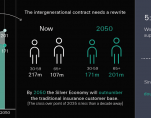
That is roughly how long we have before many societies reach one of the most defining demographic tipping points of our era: the point at which the “new” silver economy (over 65’s) outnumber people aged 30-59 who have traditionally been the bedrock of the life and pensions system.
The intergenerational contract needs a re-write
The significance of this shift goes far beyond demographics.
It represents a symbolic moment that forces us to rethink the intergenerational contract: how we provide care and financial security for people as they move into later life – and how we finance a new set of needs.
The demographic evidence is already visible across major economies. In the US, adults aged 65 and over already outnumber children in 11 states. Singapore’s over-65 population has nearly doubled in a decade to 21%. Japan is approaching 30%. The UK, France and Germany are not far behind
These numbers are well-known. But their meaning is not yet fully reflected in our industry’s existing product strategy.
The tipping point is also more than a statistical curiosity. We will experience it through the decisions we make coming into retirement and to secure the future of the generation coming after us. We will need to make new choices on how we fund care. We will need to make new assumptions about when to retire. And we will face a new reality around how much of the financial burden falls on the state, families or the individual.
Families have always carried the weight of old age, even as pensions, healthcare systems and social care programmes have broadened that responsibility across society.
But the arithmetic underpinning the system is breaking. Globally, the ratio of working-age people financially supporting each person over 65 is projected to fall from around five-to-one in 2021 to three-to-one by 2050. Across developed markets, debates about pension reform, healthcare funding and retirement ages reflect the same underlying question: how do we maintain security and dignity later in life when there are fewer hands to carry the weight?
It’s not a crisis of demographics. It’s a crisis of design – our systems were built for shorter lives and larger workforces, and they haven’t been rebuilt for the world we are actually entering.
That insight matters because it challenges how we think about insurance’s role. I believe we have less than a decade to develop the products that the older consumers who make up the Silver Economy – and their families – will need.
There will be no silver bullet. We cannot return to a single solution based around family care versus public provision. The individual retiree will be the focus, but our thinking will need to be based on a more collaborative model in which families, governments, communities and the private sector work together.
Recent Swiss Re consumer research in France and Germany revealed something striking. People don’t think about later life in terms of pensions or insurance policies. They think about practical outcomes: staying independent, being resilient when health shocks hit, not becoming a burden to their children.
Our industry has spent decades optimising for wealth accumulation and income protection during working years. Ageing societies demand we apply the same rigour to what happens after.
That does not mean the intergenerational contract has failed. It means it is evolving.
We are already seeing what that evolution looks like in practice.
Senior health products in Asia are closing a real gap —The median age of cancer diagnosis is 67, yet many critical illness policies expire before retirement even begins. The result is high out-of-pocket expenses, stressed public healthcare, and increased burden on families. With dedicated products to cover later life illnesses, such as senior cancer products we are effectively closing a protection gap.
Long term care in France has had some success with private solutions alongside public provision. With over 1.4 million people covered by private long term care insurance, France has built a strong risk pool that directly addresses one of the strongest concerns expressed by consumers: not becoming a burden on the next generation.
Deferred annuities offer a third path beyond the binary “draw-down versus annuity” thinking. By combining flexibility today with guaranteed income later, they help transform longevity from an individual financial risk into one that can be shared more broadly.
At first glance these solutions appear very different. In reality, they are pieces of the same puzzle. Each expands the circle of support around the individual. They help families carry less of the burden alone, and they complement the work of state safety nets.
That is what the next evolution of the intergenerational contract looks like in practice.
Ageing societies are one of humanity’s great achievements. But if our products and institutions stay built for a demographic reality that no longer exists, achievement curdles into liability.
We have a decade to close that gap. Let’s treat it as a product-development window, not a deadline.
Disclaimer Certain statements and illustrations contained herein are forward-looking and are made for informational purposes only. These statements (including as to plans, objectives, targets, and trends) and illustrations provide current expectations of future events based on certain assumptions and include any statement that does not directly relate to a historical fact or current fact. Readers are cautioned not to place undue reliance on forward-looking statements. Swiss Re undertakes no obligation to publicly revise or update any forward-looking statements, whether as a result of new information, future events or otherwise. Further information on forward looking statements and the use of information contained in this publication can be found in the Legal Notice section on Swiss Re’s website.
The issuer is solely responsible for the content of this announcement.
About Swiss Re
The Swiss Re Group is one of the world’s leading providers of reinsurance, insurance and other forms of insurance-based risk transfer, working to make the world more resilient. It anticipates and manages risk – from natural catastrophes to climate change, from ageing populations to cyber crime. The aim of the Swiss Re Group is to enable society to thrive and progress, creating new opportunities and solutions for its clients. Headquartered in Zurich, Switzerland, where it was founded in 1863, the Swiss Re Group operates through a network of around 70 offices globally.
By Arun Srivastava The Loot of the huge funds and jewelleries from the coffers of Ram Mandir Trust has led to intensification of factional battles between the VHP and the RSS on the one hand and the RSS-BJP on the other. Interestingly, insiders say that Prime Minister Narendra Modi has taken his position supporting the […]
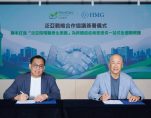
HONG KONG SAR – Media OutReach Newswire – 9 July 2026 – HealthMutual Group (HMG), a leading healthcare management group in the Asia-Pacific region, and OncoCare , a subsidiary of the internationally renowned integrated oncology-focused group Tamarind Health, officially signed a Pan-Asian Strategic Cooperation Agreement today. This agreement represents a significant milestone, building upon the Memorandum of Understanding (MOU) signed by both parties last November. It expands the service scope from its initial focus on local medical services in Hong Kong to fully enabling HMG’s clients to access OncoCare’s top-tier oncology teams and professional nursing services across the Pan-Asian region. This premium healthcare offering spans a comprehensive, full-cycle, one-stop quality medical care model—including early screening, multidisciplinary team (MDT) diagnoses, and cross-border referrals.
Mr KC Chan, Founder of HealthMutual Group (right) and Mr Lim Eng Seng, Group CEO of Tamarind Health, the parent company of OncoCare (left) at the signing ceremony.
HMG is a premier leader in healthcare management in the Asia-Pacific sector, having established an extensive and mature multinational medical network across the region. The group has long been dedicated to optimizing medical administration and claims processes through digital transformation and cutting-edge technology. Serving over 700,000 clients of its insurance partners, HMG provides comprehensive, transparent, and high-quality healthcare solutions. In 2025 alone, the total medical expenses processed through HMG exceeded HKD 150 million.
OncoCare is a leading private oncology institution that firmly believes in and practises “patient centric” care. Its aim is to add years and quality of life to all patients through highly efficient, knowledge-based integrated cancer diagnosis and personalised treatment. OncoCare brings together a team of clinical oncologists, and in combination with the robust specialist network of Tamarind Specialists, a member of the same group in Hong Kong, provides patients with medical services across fields such as colorectal surgery, cardiothoracic surgery, breast surgery, respiratory medicine, and family medicine. Patients have access to cross-disciplinary medical assessments, precision cancer treatment plans and personalised cancer care, ensuring they and their families receive the most reassuring support during challenging times.
The core highlight of this Pan-Asian Strategic Cooperation Agreement lies in the deep integration of HMG’s pan-Asian service network with OncoCare’s Asia-leading oncology expertise. Together, they will build Asia’s premier “Pan-Asian Closed-Loop Medical Ecosystem.” With Singapore, Hong Kong, and Malaysia serving as the core hub locations, the key highlights include:
Integrated Closed-Loop Service: From initial medical record review and cross-border “green channels” to clinical treatment and financial settlement, patients will experience seamless services within the joint management system of HMG and OncoCare. Coupled with transparent medical billing, this ensures the highest standard of medical quality control.
Cross-Border Multidisciplinary Team (MDT) Diagnosis: Using OncoCare’s Singapore headquarters, its Hong Kong flagship centers in Central and Tsim Sha Tsui, and its Malaysia branch as central hubs, the ecosystem brings together experienced specialists from all three regions to provide international-grade second medical opinions for cancer patients in need.
Seamless Network Integration & Financial Transparency: HMG’s 700,000+ clients can instantly connect with OncoCare’s healthcare teams. Furthermore, both parties have introduced personalised treatment plans for common cancers, offering clear financial predictability and budget protection.
HMG and OncoCare will join hands to build a “Pan-Asian Closed-Loop Medical Ecosystem”, providing one-stop, full-cycle care for cross-border cancer patients. Pictured at the signing ceremony are (from left to right): Mr. Keith Mo, General Manager of OncoCare (Hong Kong); Mr. Lim Eng Seng, Group CEO of Tamarind Health, the parent company of OncoCare; Mr. KC Chan, Founder of HMG; and Ms. Virginia Wong, HMG Chief Customer Services Officer.
Mr. Chan Kin-chung, Founder of HMG, stated: “We are deeply honored to partner with OncoCare. Through the Pan-Asian Closed-Loop Medical Ecosystem, we have successfully aligned top-tier resources across Hong Kong, Singapore, and Malaysia. Clients can enjoy treatment plans jointly formulated by regional experts within a single secure and transparent system, fulfilling our highest cross-border commitment to ‘patient centric’ healthcare.”
Mr Lim Eng Seng, Group CEO of Tamarind Health, the parent company of OncoCare, added, “As a patient centric oncology-focused group, we recognise the challenges cancer patients face in navigating increasingly complex private and cross-border healthcare systems. Through this integrated ecosystem, we will leverage the collective strengths of our multidisciplinary teams and directly managed centres across Singapore, Hong Kong and Malaysia to deliver seamless, high-quality cancer care. Looking ahead, we remain committed to making expert oncology services accessible anytime, anywhere, while elevating patient experience and improving treatment outcomes.”
Looking ahead, the Pan-Asian Closed-Loop Medical Ecosystem plans to further introduce green channels for the latest overseas medications, personalised genetic testing, and cross-border post-operative rehabilitation management, continuously pioneering a more comprehensive and forward-looking landscape for private cancer care for patients in Asia.
Riau Complex Sets a New Standard for Employee Living, Supporting Asia Pacific Rayon’s Workforce and Families
Media Inquiries, please contact: HMG Tracy Ng Email: [email protected]
OncoCare Marketing & Communications Karen Ng Email: [email protected]
BingX has launched a global community initiative after Enzo Fernández scored Argentina’s stoppage-time winner against Egypt, turning a World Cup comeback into a marketing moment for the cryptocurrency exchange and Web3-AI platform. Fernández’s goal completed Argentina’s 3-2 victory in Atlanta after the defending champions had trailed 2-0 deep into the last 16 tie. Cristian Romero began the recovery in the 79th minute, Lionel Messi levelled four minutes […]
President Donald Trump has sharpened his public embrace of Bitcoin, calling cryptocurrency “very powerful” and saying the scale of Bitcoin use is still not fully understood, remarks that have placed digital assets back at the centre of Washington’s financial policy debate. The comments, made during a CNBC interview at the White House, marked another shift for a president who once dismissed Bitcoin as a threat to the […]
Finding the right attorney begins with understanding which law firm is best suited to your specific legal needs. From recovering after a serious injury and resolving family disputes to protecting your business, planning your estate, or defending against criminal charges, working with an experienced legal team can make the process more manageable. St. Louis is home to many respected law firms, each offering different areas of legal […]
Arabian Post Staff -Dubai Keyper has raised US$11 million in Series A funding to expand its monthly rent payment platform and digital property infrastructure across the UAE, as tenants and landlords adjust to a housing market under pressure from high demand, rising rents and changing payment expectations. The round was backed by Speedinvest, Mashreq’s NeoVentures, Middle East Venture Partners, Dubai Future District Fund, Property Finder and other […]
Compelling path to $1billion ARR and public offering, fueled by product market fit in the agentic AI age, explosion of identities and related threats, and accelerating growth
SINGAPORE – Media OutReach Newswire – 9 July 2026 – Keeper Security (“Keeper” or “we”), the identity security platform for humans, machines and AI agents, today announced a major milestone in its journey to become the market standard for AI-native identity security, having reached $225 million in Annual Recurring Revenue (ARR). Since 2021, Keeper’s ARR has grown over 3x.
Keeper protects over 95,000 organizations, which includes many Fortune 500 enterprises and public sector agencies. The company is quickly emerging as the market standard for AI-native identity security for enterprises globally with its leading zero-trust and zero-knowledge identity security platform. In 2025, leading analyst firm Gartner recognized Keeper as the second-fastest-growing security software competitor globally, second only to Google.* This recognition underscores Keeper’s rapid market expansion in addressing identity security challenges created by cloud transformation and artificial intelligence adoption across enterprise infrastructure and endpoints.
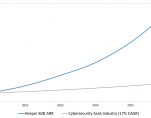
Keeper is now growing at over 4x the industry average.
This market-leading growth is driven by the explosion of identities in the agentic AI age and relentless focus on innovation to protect customers, as evidenced by the release of its unified privileged access management and identity security platform, KeeperPAM®, which protects both human and Non-Human Identities (NHIs), including service accounts, machine identities, databases, AI agents and agentic workloads. Since the launch of KeeperPAM in February 2025, KeeperPAM revenue has exhibited 10x year-over-year growth and Keeper has seen industry-leading new customer growth, adding an average of 850 new organizations every month. In the last fifteen months, Keeper added over 400 innovative features and products to KeeperPAM.
“Identity is the new security perimeter,” said Darren Guccione, CEO and Co-founder of Keeper Security. “As enterprises increasingly deploy AI agents and autonomous systems, the number of privileged identities and machine credentials is growing exponentially. Organizations need a modern, unified platform that secures every identity – human and non-human – and governs every privileged interaction. Our growth reflects the market’s demand for a platform purpose-built to address these challenges.”
Keeper’s cloud-native cybersecurity platform delivers a comprehensive approach to identity security and privileged access management by unifying enterprise password management, secrets management, privileged session management, database management and endpoint privilege management in a single platform. Keeper’s AI-native identity security strategy seamlessly extends these capabilities to non-human identities and agentic AI environments, enabling organizations to discover, manage and secure machine credentials and autonomous workloads with the same rigor applied to human users.
As enterprises adopt AI technologies at scale, the proliferation of non-human identities is rapidly outpacing that of human identities by 150:1, according to reports, thereby creating new attack surfaces and operational complexity. Keeper’s platform helps organizations establish identity-first security strategies that provide security, visibility, governance and least-privilege controls across their entire identity ecosystem.
“Autonomous agents, frontier LLMs and machine-to-machine workflows are operating inside enterprise environments right now – without adequate governance, secrets management or access controls,” said Craig Lurey, CTO and Co-founder of Keeper Security. “Keeper is purpose-built to solve this problem at scale.”
The company’s continued growth and market recognition reinforce its position as one of the cybersecurity industry’s most innovative and fastest-growing providers of AI-native identity security and privileged access management solutions. Keeper’s financial profile combines best-in-class growth, profitability and a debt-free capital structure and is an asset positioned to efficiently lead identity security in the agentic AI age.
“Surpassing $225 million in ARR confirms what we’ve heard in every enterprise conversation – that securing non-human identities is the defining security challenge of the AI era,” said Darren Guccione, CEO of Keeper Security. “We have established an accelerated path to $1 billion in ARR which, coupled with our technology roadmap, will provide optionality for a public offering.”
Gartner is a trademark of Gartner, Inc. and/or its affiliates.
Gartner does not endorse any vendor, product or service depicted in its research publications and does not advise technology users to select only those vendors with the highest ratings or other designation. Gartner research publications consist of the opinions of Gartner’s Business and Technology Insights Organization and should not be construed as statements of fact. Gartner disclaims all warranties, expressed or implied, with respect to this research, including any warranties of merchantability or fitness for a particular purpose.
Hashtag: #KeeperSecurity
The issuer is solely responsible for the content of this announcement.
About Keeper Security
Keeper Security is the leading zero-trust and zero-knowledge identity security solution, trusted by millions of people and thousands of organizations globally. KeeperPAM® is Keeper’s privileged access management platform that unifies password and passkey management, secrets management, privileged session management and endpoint privilege management in a single cloud-native platform, protected with quantum-resistant encryption. KeeperAI delivers real-time, AI-native threat detection across every privileged session. As AI agents proliferate and identity becomes the defining attack surface, Keeper governs access for humans, machines, non-human identities and AI agents, serving as the unified control plane for access, compliance and visibility across the enterprise. For more information, visit KeeperSecurity.com.
President Trump’s declaration on Wednesday that the ceasefire with Iran is over immediately pushed oil prices higher, lifted Treasury yields and revived concerns about the security of the Strait of Hormuz. Markets responded in familiar fashion, with traders reassessing energy supplies, inflation expectations and monetary policy. Another consequence deserves equal attention. Higher oil prices strengthen the fiscal position of the Gulf’s major energy exporters. Over time, stronger […]
Microsoft Corp. is moving more artificial intelligence work inside its own systems, replacing some OpenAI and Anthropic models in products such as Excel and Outlook as pressure grows to reduce the cost of running generative AI at scale. The shift marks a notable change for one of the technology industry’s biggest AI spenders. Microsoft has relied heavily on OpenAI’s models to power Copilot features across its software […]
Arabian Post Staff -Dubai Almarai’s second-quarter revenue rose 11 per cent year on year to SAR5.87 billion, as stronger demand for dairy, poultry and bakery products helped the Riyadh-listed food group absorb higher shipping, energy and raw material costs. The company’s first-half revenue reached SAR12.03 billion, up 9 per cent from the same period last year, reinforcing its position as one of the Gulf’s most closely watched […]
Cybercriminals are using fake cracked-software downloads to infect consumers and smaller businesses with a double payload that steals credentials and mines Monero, underscoring how commodity malware operators are combining immediate data theft with longer-running attempts to profit from compromised machines. The campaign delivers Vidar, a widely used information stealer, alongside XMRig, an open-source cryptocurrency miner often abused in cryptojacking attacks. Victims are lured through malvertising into downloading […]
DXC Technology has opened a 200,000-square-foot Customer Experience Centre in Bengaluru, placing the city deeper into the global race to move enterprise artificial intelligence from pilot projects into live, measurable business systems.
The facility, announced on 7 July, is one of DXC’s largest global delivery hubs and brings together customer collaboration areas, an AI Hub, cybersecurity facilities, forensics labs, a Security Operations Centre and a Network Operations Centre. The centre is designed to help clients identify high-value AI use cases, test prototypes, integrate them with legacy platforms and operate them at scale.
The move comes as large companies are under pressure to modernise complex technology estates without disrupting core systems that run banking, insurance, manufacturing, public sector services, travel and healthcare operations. For global IT services firms, the most valuable opportunity now lies not only in building new AI tools, but in attaching them safely to ageing systems of record, cloud platforms, data pipelines and cybersecurity controls.
DXC said the Bengaluru site includes immersive Customer Experience Zones, Fluid Collaboration Hubs, Ideation Studios, Co-Creation Labs and Partner Experience Zones. The structure signals a shift in IT outsourcing from back-office delivery to co-engineering, where clients, consultants and technology partners work together on proof-of-value projects before wider deployment.
Ramnath Venkataraman, president of consulting and engineering services at DXC Technology, said the centre would bring engineering talent closer to customers and partners. He said the objective was to “co-create, engineer, and scale AI-powered solutions” that address complex business challenges and move clients faster from ideas to outcomes.
Rob Le Busque, DXC’s president for Asia Pacific and Japan, described the centre as a base for AI innovation, engineering and customer collaboration. He said DXC was aiming to help customers build connected enterprises where people work alongside AI agents to engineer and run systems of record.
The investment reflects Bengaluru’s continuing pull as a global technology hub. The city hosts a dense base of engineering talent, multinational technology development centres, enterprise software teams and start-up ecosystems. DXC already employs about 38,000 people in the country, making the new facility a strategic addition rather than a symbolic office expansion.
For DXC, the centre also arrives at a critical phase in its own turnaround. The company reported revenue of $12.64bn for fiscal 2026, down 1.8 per cent year on year, while adjusted EBIT stood at $970m. Fourth-quarter revenue was $3.13bn, down 1.2 per cent year on year, though bookings reached $3.3bn and the book-to-bill ratio stood at 1.07 times. Those figures underline both the pressure on legacy IT services revenue and the importance of higher-value modernisation work.
The enterprise AI market has moved beyond experimental chatbots and isolated productivity pilots. Large organisations are now seeking systems that can automate service operations, assist software engineering, improve fraud detection, support call-centre workflows, optimise supply chains and strengthen cyber response. The challenge is that many of these functions depend on decades-old enterprise platforms, heavily customised databases and compliance-heavy workflows.
That is where Bengaluru’s new DXC centre is positioned. Its AI Hub is intended to support hands-on development and testing, while the cyber and operations facilities allow clients to evaluate whether AI tools can be monitored, secured and maintained after deployment. This full-lifecycle approach is becoming central to enterprise modernisation, especially in sectors where downtime, data leakage or flawed automation can carry heavy financial and regulatory consequences.
The facility also strengthens DXC’s partner-led model. Its Partner Experience Zones are expected to support work with software, cloud, cybersecurity and platform companies. For IT services providers, alliances with hyperscalers and enterprise software vendors have become essential as clients seek hybrid solutions rather than single-vendor transformation programmes.






 https://www.swissre.com/
 https://www.linkedin.com/company/swiss-re/