News related to
financial

SHANGHAI, CHINA – Media OutReach Newswire – 22 June 2026 – The 2026 China International Financial Exhibition opened in Shanghai on June 16-18. UnionPay, together with 15 global ecosystem partners, showcased its latest achievements in global network development, core technological capabilities, open AI ecosystem, consumption growth solutions, and ecosystem collaboration.

Building a Global Payment Network

Amid a diverse and competitive global payments landscape, UnionPay continues to strengthen its global payment network by advancing three strategic pillars: merchant acceptance, local card issuance, and cross-border QR interoperability.

UnionPay’s acceptance network now spans 183 countries and regions, covering over 100 million merchants outside China’s mainland. UnionPay mobile payment services are available in more than 100 markets, while cards have been rolled out across 84 countries and regions outside the Chinese mainland. As of May 2026, transaction volumes generated by international cards and wallets in China rose by 54% and 62% respectively year-on-year. A real-time transaction dashboard at the exhibition area continuously updated cumulative transaction volumes, highlighting the sustained growth of UnionPay’s global business.

Cross-border QR payment interoperability is a centerpiece of UnionPay’s international section. The company has accelerated partnerships with local payment networks across Southeast Asia, the Middle East, Central Asia, Latin America, and Africa to enable QR payment connectivity. On June 11, 2026, the China-Indonesia cross-border QR linkage officially went live, witnessed by central bank governors of both countries. The milestone increased the total number of overseas merchants accepting UnionPay QR codes to more than 46 million.

To showcase services catered to inbound visitors, UnionPay has set up a dedicated booth for Nihao China, demonstrating the one-stop service app jointly developed with China’s Ministry of Culture and Tourism. With over 200,000 registered users, the Nihao China app integrates a wide range of travel-related services, including QR payment, public transit, voice translation, and tax refunds. The user interface has been fully localized to suit international users.

UnionPay has been working with global partners to build a cross-border payment ecosystem featuring unified standards, orderly development, and shared success. Five international partners have joined UnionPay at this year’s exhibition, namely, ASPI from Indonesia, ZeroPay from South Korea, Dialog Finance from Sri Lanka, Halyk Bank from Kazakhstan, and Banco do Brasil.

Expanding the Ecosystem and Advancing Fintech Innovation

As digital transformation accelerates, UnionPay remains committed to strengthening independent and secure fintech capabilities. The company has been investing in computing infrastructure, artificial intelligence, privacy protection, and smart payments. By fostering collaborative innovation among members, universities, technology companies, and government agencies, UnionPay expands the ecosystem and supports the development of new productive forces in the financial industry.

The AI exhibition area highlights the progress of UnionPay’s National AI Application Pilot Base in the financial sector, the only one of its kind in China. UnionPay has established a “1+1+N” large language model architecture consisting of an L0 foundation model, an L1 financial payments model, and multiple L2 models specific to different use cases. The architecture is supported by a computing resource pool with over 1,000 GPUs and a high-quality 2TB open financial dataset. Leveraging a comprehensive payment data infrastructure covering merchants, industry stakeholders, users, and use cases, UnionPay delivers robust data support for model training, consumer insights, and intelligent decision-making. More than 120 AI applications have been deployed across four key verticals: inclusive finance, consumption growth, risk management and compliance, and operational efficiency. To address critical data security challenges in the financial sector, UnionPay has pioneered privacy protection technologies for large language model and introduced an innovative edge-cloud synergy approach, enabling secure AI services without exposing sensitive data. The innovation facilitates broader AI adoption while safeguarding partner data.

UnionPay’s open AI platform brings together the innovative capabilities of ecosystem partners, including banks, payment institutions and technology companies. By providing payment, data, and AI-powered services, the platform empowers industry participants and fosters collaborative innovation. The exhibition area for smart payments features UnionPay’s APOP (Agentic Payment Open Protocol), an open framework for agent-based payments. Built on user consent and robust risk controls, APOP explores new models for intelligent agents to access payment capabilities. To date, UnionPay has partnered with 19 industry players to deploy applications including travel assistants, overseas hotel reservations, in-vehicle payments, and utility payments.

Fudan University, Huawei, Baidu AI Cloud, HYGON, and KUPAS.AI have joined UnionPay as technology partners at the exhibition, demonstrating collaborative achievements in computing power, large language models, and cybersecurity. Together, they have showcased UnionPay’s open innovation ecosystem and its commitment to driving the evolution of the payments industry through technological progress.

Delivering Payment Services that Better Serve Consumers, Businesses, and the Real Economy

Using Shanghai as a case study, live dashboards at the booth present data insights, including foot traffic heat maps of key commercial districts and consumer profiles of domestic and international visitors. Data showed that tourists from outside Shanghai account for 55% of total spending in the Nanjing East Road commercial area, making them a key driver of consumption. Distinct spending patterns were also observed among inbound travelers: visitors from the US favor local street food, South Korean tourists prefer popular lifestyle destinations, and Thai travelers show strong interest in shopping. These insights provide valuable support for commercial district operations and cultural tourism promotion.

At this year’s China International Financial Exhibition, UnionPay showcases its extensive global network, solid business foundation, and leading technological capabilities through a wide array of immersive exhibits. Moving forward, UnionPay will continue to grow its global payment network, develop self-reliant digital and intelligent infrastructure, and deliver value to consumers.Hashtag: #UnionPay

The issuer is solely responsible for the content of this announcement.

Arabian Post Staff -Dubai Botim Money has launched IBAN-enabled wallets in the UAE, allowing eligible users to receive salaries, direct deposits and domestic bank transfers directly inside the Botim app. The service gives qualifying customers a Virtual IBAN in their own name, extending regulated account access to segments of the population that have often relied on cash wages, exchange houses or limited-purpose wallets. The rollout has been […]

United States and Iranian negotiators ended their first round of high-level talks in Switzerland on Monday with an agreement to pursue a final settlement within 60 days, easing immediate fears of a wider regional confrontation after a volatile opening shaped by threats, maritime disruption and pressure from Gulf mediators. A joint statement by Qatar and Pakistan said the two sides had accepted a roadmap for technical negotiations, […]

Investcorp has agreed to acquire a majority stake in Smart Managed Solutions, a London-based mechanical and electrical facilities management specialist, in a deal that deepens the Bahrain-based alternative investment firm’s exposure to resilient business services in the UK. The financial terms of the transaction were not disclosed. Smart’s co-founders, Lee Bainbridge and Alex Wilkin, will retain a meaningful minority holding, keeping the founders aligned with the company […]

Platform delivers “Agentic Risk Intelligence Under Your Team’s Command” – transforming fraud, AML, KYC, and dispute operations for financial institutions

MUMBAI, INDIA – NewsVoir – 22 June 2026 – Wibmo, a PayU company and leading provider of payment security solutions, unveiled Wibmo Agentic Risk Intelligence Assistant (ARIA), an AI-powered platform designed to transform financial crime operations, at its flagship industry event ‘Securing Digital Payments: Innovation, Intelligence & Trust’ held at Jio World Convention Centre, Mumbai.

Unveiling ARIA in Mumbai: Wibmo's Agentic Risk Intelligence Assistant brings the power of AI to fraud, AML, KYC, and dispute operations.
Unveiling ARIA in Mumbai: Wibmo’s Agentic Risk Intelligence Assistant brings the power of AI to fraud, AML, KYC, and dispute operations.

ARIA is designed to support risk teams at banks and PSPs, combining AI-driven analysis with human decision-making and accountability. This is highly relevant now, as digital payment fraud challenges becoming increasingly complex. With the sustained growth in the payments ecosystem, financial institutions are focused on improving operational risk efficiency while maintaining strong governance and oversight.

Early modelling shows ARIA achieving over 70% reduction in investigation time through agents acting in real-time, enabling teams to process significantly more cases per FTE per day. ARIA targets delivering recommendation accuracy close to 90%, designed to improve quality metrics across risk operations teams.

ARIA represents a fundamental shift in how financial institutions approach risk operations by introducing specialized AI agents that support data aggregation, analysis, and draft recommendations, while preserving human decision-making authority and governance controls at every critical juncture.

ARIA combines capabilities across investigation, decision support, and operational actioning. The platform gathers signals from transactions, risk models, customer and merchant history, linked transactions, and historical fraud patterns to automate data aggregation that typically consumes significant analyst bandwidth. Using frontier AI models, ARIA generates evidence-referenced verdicts, identifies emerging patterns through multi-signal reasoning, and provides transparent, auditable recommendations. The platform also enables SOP-driven resolutions, customer and merchant communications, reduction of false alerts, and proactive defence mechanisms against emerging anomalies.

Shailesh Paul, CEO, Wibmo, said,“As fraud becomes more sophisticated and regulatory expectations continue to evolve, risk operations teams must manage growing complexity with limited resources. ARIA is designed to help institutions scale intelligently by combining the speed and analytical capabilities of AI with the judgment, oversight, and accountability of human expertise. While AI agents assist with data analysis and recommendations, every critical decision continues to remain firmly under human control.”

Unlike fully autonomous AI systems, Wibmo’s Agentic Risk Intelligence Assistant is built with a governance-first architecture designed for enterprise financial institutions. Every recommendation continues to flow through existing approval mechanisms without autonomous production actions, while all analyses are supported by transparent reasoning chains and comprehensive audit trails. The platform brings together specialized agents across fraud, AML, KYC, and disputes within a unified framework, alongside replayable audits and complete operational provenance for every agent action.

The launch event brought together more than 50 senior leaders from banks, fintechs, payment networks, and technology organizations to discuss evolving challenges in digital payment security and the future of AI-led fraud prevention. Speakers from PayU, NPCI Bharat Billpay, Visa, Mastercard, Flipkart, CSB Bank, Jio Payment Solutions, and Network International participated in discussions around acquiring fraud risk management, authentication technologies, and risk-based decisioning.

Hashtag: #Wibmo

The issuer is solely responsible for the content of this announcement.

About Wibmo

Wibmo, a PayU company, operates across entities in India, the US, and Indonesia. As a global full-stack PayTech company and an industry leader in payment security and digital payments in emerging markets, Wibmo stands out for its innovation and impact.

In addition to being India’s largest authentication service provider in one of the leading digital payment markets globally, Wibmo offers comprehensive fraud and risk management solutions, digital financial services, prepaid solutions, and a broad range of merchant-acquiring services. Learn more at:

Arabian Post Staff -Dubai Abu Dhabi-backed artificial intelligence investor MGX has explored a potential acquisition of Singapore-based data centre operator DayOne, a move that would deepen the emirate’s push into global digital infrastructure as demand for computing capacity accelerates across Asia, Europe and the United States. The discussions remain preliminary and may not lead to a transaction. DayOne has also been preparing for a possible public listing […]

Arabian Post Staff -Dubai Dubai International Financial Centre has opened a 30-day public consultation on proposed amendments to its data protection regulations, seeking tighter safeguards for organisations using artificial intelligence and data-driven systems to process personal information. The proposed changes are aimed at strengthening governance, accountability and privacy protections across the financial free zone as banks, asset managers, insurers, fintech firms and professional services companies expand the […]

Advertisements

Apple is set to work with Intel on designing and manufacturing chips in the United States, President Donald Trump said, signalling a potential breakthrough for Intel’s foundry ambitions and a fresh shift in Washington’s effort to bring advanced semiconductor production closer to home. The announcement, made through Trump’s social media account, has not yet been publicly confirmed by either Apple or Intel. Both companies have declined to […]

Tokyo-listed game developer Gumi has moved to deepen its exposure to XRP, positioning the token at the centre of a broader restructuring that shifts the company further beyond mobile games and into blockchain-linked financial infrastructure. The Shinjuku-based company is consolidating digital asset operations under a “Neo Crypto Business” pillar, alongside its “Neo Media Entertainment Business”, as it seeks to become one of Japan’s most prominent corporate holders […]

Abu Dhabi Investment Authority and a group of institutional investors have bought a 7.3 per cent stake in Corona Remedies for ₹777 crore, marking a sizeable secondary market transaction in the Ahmedabad-based drugmaker months after its stock market debut.

The shares changed hands through block deals on the National Stock Exchange, with the transaction executed at ₹1,730 a share. The deal involved about 44.9 lakh shares, with private equity investor ChrysCapital, through its affiliate Sepia Investments, and Anchor Partners selling part of their holdings. ADIA bought 39,130 shares, while other buyers included Aberdeen Group, Factory Mutual Insurance Company, HDFC Mutual Fund, Kotak Mahindra Mutual Fund, Ashoka WhiteOak and other funds.

Corona Remedies’ shares rose nearly 3 per cent after the transaction, trading around ₹1,840 on the NSE, as the market read the entry of large domestic and overseas institutions as a vote of confidence in the company’s branded formulations business. The block deal valued the stake at a premium to the company’s public issue price band of ₹1,008-₹1,062 a share in December 2025, underlining the strong post-listing performance of the stock.

Sepia Investments sold 43.28 lakh shares, equal to about 7.07 per cent of Corona Remedies’ equity, for around ₹748.9 crore. Anchor Partners offloaded 1.61 lakh shares, or 0.26 per cent, for about ₹28 crore. Sepia’s stake fell to 12.69 per cent from 19.76 per cent after the sale, while the wider ownership base brought more institutional depth to the company’s shareholder register.

The transaction is also a partial exit for early financial investors who backed Corona Remedies before its public listing. For buyers, the attraction lies in a domestic formulations franchise with established brands across women’s healthcare, cardio-diabeto, pain management, urology and other therapeutic categories. The company has positioned itself in segments with higher repeat prescription potential and relatively stronger pricing resilience than low-margin commodity generics.

Corona Remedies reported revenue growth of about 17 per cent in the financial year ended March 2026, while profit after tax rose about 33 per cent. Its full-year revenue crossed ₹1,400 crore, supported by growth in chronic and sub-chronic therapies, brand-led marketing and wider distribution. The company’s earlier public offer was entirely an offer for sale, meaning the proceeds went to existing shareholders rather than to the company.

The drugmaker was ranked among the top 30 pharmaceutical companies in the domestic pharmaceutical market by sales before its listing. Women’s healthcare is one of its strongest verticals, followed by cardio-diabeto, pain management and urology. Its brand portfolio includes products targeted at specialist doctors, a strategy that has helped it command higher prescription visibility in selected therapies.

The stake purchase comes at a time when pharmaceutical companies with strong domestic franchises are drawing investor interest. Companies focused on branded formulations have benefited from rising healthcare consumption, deeper insurance penetration, higher diagnosis rates for chronic conditions and stronger prescription volumes in urban and semi-urban markets. The domestic pharmaceutical market has also been less exposed to some of the pricing and regulatory volatility faced by export-heavy generic drugmakers.

ADIA’s participation fits a broader pattern of Gulf sovereign capital seeking exposure to healthcare, pharmaceuticals, financial services, infrastructure and consumer platforms across growth markets. The Abu Dhabi fund has built a diversified global portfolio and has been active in private equity, listed equities, real estate and alternatives. Its entry into Corona Remedies, though modest in percentage terms, adds to institutional interest in healthcare businesses with predictable cash flows and long-term demand visibility.

For Corona Remedies, the deal improves public float quality and may support market liquidity. Greater institutional ownership can also bring closer scrutiny of margins, product concentration, compliance, capital allocation and future acquisition strategy. The company’s next phase will be measured against its ability to maintain growth while protecting profitability in a market where promotional expenses, field-force productivity and doctor engagement remain critical.

The transaction also highlights how block deals have become an important route for private equity funds to monetise stakes after listings. Rather than waiting for gradual market sales, large shareholders can exit or pare exposure through negotiated exchange transactions that allow institutional buyers to acquire sizeable positions in a single trading window. Such deals can reduce overhang when executed cleanly, though they also put focus on valuation sustainability after the initial market response.

Abu Dhabi Investment Authority has emerged among institutional buyers in a ₹777 crore open-market transaction involving a 7.3 per cent stake in Corona Remedies, marking another Gulf-linked investment in the country’s fast-growing listed pharmaceutical space. The transaction was executed through block deals on the National Stock Exchange at ₹1,730 per share, with shares sold mainly by Sepia Investments, an affiliate of ChrysCapital, and Anchor Partners. ADIA purchased […]

Amazon Web Services has unveiled AWS Continuum, an AI-powered vulnerability management platform designed to discover, prioritise, validate and remediate code security flaws as enterprises struggle with rising software risk and expanding backlogs. The platform, announced on June 17, 2026, is available in gated preview and begins with code vulnerabilities, covering first-party and third-party code before AWS expands it to other areas of security. It uses multiple frontier […]

Dubai’s commodities market is preparing to launch a same-day physically settled gold contract, giving bullion dealers, refineries and institutional traders a regulated route to execute, clear and settle physical gold transactions within a single trading day. The Dubai Gold and Commodities Exchange will introduce its Gold Spot T+0 Contract on Monday, 22 June, positioning the emirate as one of the few global centres offering exchange-based same-day settlement […]

Cybersecurity investigators have exposed a cryptocurrency theft campaign that used fake GitHub popularity, AI-narrated YouTube videos, manipulated download figures and favourable platform comments to make malicious software appear safe before victims installed it. The operation centred on a Rust-based clipboard hijacker, known in cybercrime circles as a clipper, that monitors copied wallet addresses and silently replaces them with addresses controlled by the attacker. The malware was built […]

Brussels has narrowed its artificial intelligence infrastructure plan by opening the way for smaller and phased data centre projects, signalling a more cautious approach to Europe’s bid to compete with the United States and China in advanced computing. The European Union’s tender framework for AI gigafactories now allows bidders to propose facilities that can grow in stages rather than committing immediately to the largest scale originally envisaged. […]

Dubai International Financial Centre has opened a 30-day consultation on proposed amendments to its Data Protection Regulations, setting out tougher governance requirements for artificial intelligence systems that process personal data across the financial centre. The proposals, published under Consultation Paper No. 3 of 2026, are aimed at reinforcing the framework for autonomous and semi-autonomous systems, clarifying certification obligations and defining the responsibilities of Autonomous Systems Officers. Stakeholders […]

Dubai’s main commodities exchange is preparing to launch a same-day settlement gold contract on Monday, seeking to strengthen the emirate’s role in bullion trading as investors, dealers and refineries demand faster execution, tighter price certainty and reliable access to physical delivery. The Dubai Gold and Commodities Exchange, part of Dubai Multi Commodities Centre, will introduce the Gold Spot T+0 Contract for bullion dealers, refineries, brokers, clearing members […]

Arabian Post Staff -Dubai MENA mergers and acquisitions are expected to recover only gradually after war-driven volatility hit confidence, even as bankers say the region’s strategic deal pipeline remains alive. Bank of America expects activity lost during the first half of the year to take months, rather than days or weeks, to return, with transactions delayed by the conflict involving Iran, the US and Israel. The bank’s […]

By R. Suryamurthy India’s economy is supposedly doing remarkably well. Growth remains among the fastest in the world. Stock markets continue to flirt with record highs. Billionaires are multiplying. Airports are expanding. Bullet trains are advancing. Defence exports are reaching new milestones. The nation is speaking confidently about becoming a $10 trillion economy and a […]

The article The Great Dichotomy Of The Growing Indian Economy Haunts Millions appeared first on Latest India news, analysis and reports on Newspack by India Press Agency).

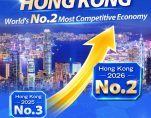
HONG KONG SAR – Media OutReach Newswire – 18 June 2026 – Hong Kong jumped one place to become the world’s second most competitive economy, according to the 2026 World Competitiveness Ranking published today (June 18) by the Swiss-based International Institute for Management Development (IMD). It is Hong Kong’s highest ranking since 2019, and builds on three consecutive years of improvement.

Welcoming the report, a spokesperson for the Hong Kong Special Administrative Region (HKSAR) Government said, “The World Competitiveness Yearbook (WCY) 2026 reaffirms Hong Kong as one of the most competitive economies in the world, and notes that Hong Kong’s rise to second sustains the strong upward trajectory from 2024 and 2025.”

Hong Kong ranks No.2 globally in 2026 IMD World Competitiveness Ranking

In announcing the results, the IMD noted that, amid rising geopolitical tensions, competitive advantage hinges on credible institutions, predictable rules, enforceable commitments and public trust.

According to WCY 2026, Hong Kong’s rise reflects sustained performance across the four competitiveness factors measured. Among these factors, Hong Kong ranks second in “Government efficiency” and third in “Business efficiency”. “Infrastructure” and “Economic performance” rank eighth and 11th respectively.

As regards the various competitiveness sub-factors, Hong Kong tops the rankings in “Tax policy” and “Business legislation”, ranks second in “Finance”, third in “International trade”, “International investment”, “Management practices” and “Education”, and fourth in “Public finance” and “Basic infrastructure”.

“In the competitiveness factor ‘Government efficiency’, Hong Kong continues to rank second globally, reflecting the HKSAR Government’s ongoing efforts to promote free and open, stable, predictable and business-friendly economic policies, as well as the international community’s trust in Hong Kong’s legal and regulatory environment,” the spokesperson said.

“Hong Kong’s ‘Business efficiency’ is ranked third globally, reflecting the strong support for industry development rendered by our robust financial ecosystem, as well as the seamless alignment of the city’s business practices and environment with international best standards.”

Hong Kong has become a "value hub" that offers both security and growth opportunities
Hong Kong has become a “value hub” that offers both security and growth opportunities

Amid rapidly evolving geopolitical dynamics, Hong Kong, with its close connectivity to both the Chinese Mainland and the world under the “one country, two systems” principle, and its sound institutions, open markets and sustained investments in innovation, has become a “value hub” that offers both security and growth opportunities.

In fact, Hong Kong continues to excel in various international rankings including those for economy, finance, and talent. The International Monetary Fund has also given positive recognition to Hong Kong in recent months, and major credit rating agencies have successively reaffirmed Hong Kong’s credit ratings and ‘stable’ outlook.

“All these echo the WCY 2026 results,” the spokesperson said.

Currently, Hong Kong is formulating at full speed its first Five-Year Plan, to proactively align with the National 15th Five-Year Plan.

“With the staunch support of our country, the HKSAR Government will work together with all sectors of society to strengthen our role and function as a ‘super connector’ and ‘super value-adder’, with a view to better integrating into and serving the overall national development, achieving our own high-quality development, creating more new room for development for our people and businesses, as well as opening up new opportunities for global investors and enterprises,” the spokesperson said.

Hashtag: #HongKong #BrandHongKong #Global #Competitiveness


The issuer is solely responsible for the content of this announcement.

Gulf economies are forecast to stage a sharp rebound in 2027 after a conflict-driven contraction this year, as energy exports recover, travel demand returns and business confidence improves across the six-member Gulf Cooperation Council. The latest ICAEW-Oxford Economics Economic Insight report projects GCC gross domestic product to shrink 2.4 per cent in 2026, before expanding 8.1 per cent in 2027. The forecast marks one of the starkest […]

SINGAPORE – Media OutReach Newswire – 18 June 2026 – Seafood Expo Asia/Seafood Processing Asia, organized by Diversified, announces its 2026 conference program ahead of the fourteenth edition of the event, taking place 2–4 September at the Sands Expo & Convention Centre, Singapore. Free to attend to all registered visitors, this year’s program brings leading voices from the industry and across technology and policy to address the defining challenges and opportunities shaping seafood’s future across Asia and beyond.

Consumer Trust & Market Dynamics

A session titled Seafood in the Spotlight: Trust. Taste. Tomorrow’s Consumer will present findings from a GlobeScan bi-annual survey commissioned by the Marine Stewardship Council (MSC), tracking consumer attitudes across 20+ global markets. Fresh from its debut at Seafood Expo Global in April, the research lands in Singapore at a critical moment. Attendees will explore how rising sustainability expectations, cost-of-living pressures and shifting retail dynamics are reshaping purchasing decisions and what it takes to build durable consumer trust.

The most pressing issues facing the Asian shrimp trade will be discussed in a session around rebalancing export-dependent supply as demand and price signals shift across major markets. Amid reduced China import pull, elevated US tariffs and uneven farm output trends, these forces are already reshaping trade flows, pricing power and production planning decisions and will determine which Asian producers can protect margins and maintain market access in 2026–2027.

Innovation & Technology

A panel of industry insiders will discuss the rapid rise of recirculating aquaculture systems across the region in RAS Fish Farming: Why is Asia Leading the Way. The panel will deliver an honest assessment of real-world challenges alongside compelling results already being achieved in markets across Asia, and what this leadership position means for the future of sustainable fish production worldwide.

A session around Asia’s growing demand for seafood processing will discuss how advanced automation, productivity gains and a sharper focus on consumer trends are significantly changing the industry across Asia. Challenging market conditions are driving the industry to rethink the future of the processing environment, with innovative tools and precise systems now enabling processors to optimize resource utilization and promote sustainability to drive maximum profit. The session features Marcel Franz, Managing Director of BAADER Asia and Nils Rabe, Global Sales Director Fish at BAADER.

Eric Enno Tamm, CEO of ThisFish Inc. will map the practical and transformative applications of AI across seafood supply chains in The Definitive Guide to AI & the Tuna Value Chain. From machine learning and computer vision to generative AI and AI agents, Tamm will outline how these technologies are already reshaping operations and offer a forward-looking vision of what an AI-optimized tuna value chain could look like from boat to plate.

Food Integrity & Digital Resilience

FAO GLOBEFISH convenes a timely session on Aquatic Food Fraud: Mislabeling, Market Demand and Consumer Trust. Drawing on FAO’s recent technical paper on food fraud in the fisheries and aquaculture sector, the session will examine a problem of significant scale: up to 20% of fisheries and aquaculture products may be mislabeled globally, with fraud particularly prevalent in processed products, restaurants and catering. The session will examine how price incentives, supply chain complexity and governance gaps interact to enable fraud, and what governments, industry, retailers and standard-setting bodies are doing to address it.

The Invisible Net: Securing the Digital Integrity and Resilience of the Asian Seafood Supply Chain is a session led by the President of the Cyber Security Alliance for the Seafood Industry (CSAFI) that will discuss the emerging risk for the sector. As seafood supply chains become increasingly powered by IoT-enabled processing plants, AI-driven logistics and blockchain-backed traceability, they also become vulnerable to cyberattack. With incidents on global logistics networks rising over 900% in five years, a single breach can trigger immediate product spoilage, financial loss and reputational damage.

The session will present a 2026 roadmap for protecting operational technology, defending traceability data against digital fraud and making the business case for cybersecurity as a core ESG and trade compliance imperative.

Learn More & Register to Attend

Seafood industry professionals can learn more about Seafood Expo Asia/Seafood Processing Asia, find information on the conference program and other special events, and register to attend for free by visiting www.seafoodexpo.com/asia.

To register as media/press, please visit the press center.

Hashtag: #SEASIA26

The issuer is solely responsible for the content of this announcement.

About Seafood Expo Asia/Seafood Processing Asia

is a trade event where buyers from across Asia and industry suppliers from around the world come together to network and conduct business in the lucrative Asian market. The event is produced by Diversified and takes place annually in Asia. SeafoodSource is the exposition’s official media covering industry news year-round.

Follow on Social
LinkedIn @Seafood Expo Asia
Instagram @seafoodexpoasia
Facebook @SeafoodExpoAsia

About Diversified

Diversified is a global B2B events and media company that strengthens business communities by fostering a space, in person and online, for professionals and businesses to connect and grow. The company serves as a trusted partner across several industries including active lifestyle, business management, clean energy, commercial marine, healthcare, seafood, technology and more. The company’s global seafood portfolio of expositions and media includes Seafood Expo North America/Seafood Processing North America, Seafood Expo Global/Seafood Processing Global, Seafood Expo Asia/Seafood Processing Asia and SeafoodSource.com. Established in 1949 and headquartered in Portland, Maine, the global company has divisions and offices around the world in Australia, Canada, Hong Kong and the United Kingdom. Diversified is a third-generation, family-owned business. For more information, visit: .

A long-running phishing operation has turned GitHub Pages into a low-cost staging ground for fake banking portals aimed at customers of financial institutions operating in Mexico, harvesting logins, payment card details and customer identifiers through a modular kit built for fast redeployment. The campaign, tracked as GitBait, has been active for nearly three years and has impersonated at least a dozen banks and financial services providers. Its […]

Oman and Sri Lanka have opened a new channel of investment cooperation centred on special economic zones, free zones and industrial cities, adding momentum to efforts by both countries to attract long-term capital into logistics, real estate, services and manufacturing.

Qais Mohammed Al Yousef, Chairman of the Public Authority for Special Economic Zones and Free Zones, held talks in Muscat with Harsha Amarasekera, Chairman of the Colombo Port City Economic Commission, on opportunities to link the two countries’ zone-development strategies. The discussions covered commercial and real estate development, mechanisms to improve the business environment, and ways to draw high-quality investments into projects designed to support sustainable growth.

The meeting marks a targeted attempt to move bilateral economic ties beyond conventional trade into the management, promotion and regulation of investment destinations. Both sides reviewed experience in developing and administering special economic zones and examined international practices that could raise operational efficiency, improve investor services and strengthen competitiveness.

For Oman, the engagement fits a wider policy push to make economic zones central to diversification under Vision 2040. OPAZ, established in 2020, supervises key destinations including the Special Economic Zone at Duqm, Sohar Free Zone, Salalah Free Zone and Al Mazunah Free Zone, while promoting a network of industrial estates and logistics-led investment sites. The zones offer incentives such as full foreign ownership, capital and profit repatriation, customs advantages and tax exemptions that can run up to 30 years for qualifying projects.

The policy framework was reinforced by Royal Decree 38/2025, which brought special economic zones and free zones under a unified law that took effect in April 2025. The legislation replaced separate legal regimes for free zones and Duqm, introduced clearer provisions for foreign ownership and licensing, and strengthened the case for a one-stop system to cut procedural delays for investors.

Duqm has become the most visible test of that strategy. Oman signed ten agreements and memoranda this month for projects in the zone with estimated investments of $7.5 billion, including a $4.2 billion green hydrogen development by ACME Group. The package underlines how Muscat is using zone-based infrastructure to capture capital in clean energy, downstream industry, logistics and export-linked production.

Sri Lanka approaches the talks from a different but complementary position. The island’s post-crisis recovery has made investment promotion a policy priority, with foreign direct investment crossing $1 billion in 2025. The Board of Investment approved 146 projects worth about $1.9 billion during the year, with manufacturing, port development and tourism accounting for the largest shares of inflows.

Colombo Port City gives Sri Lanka a flagship platform for the dialogue with Oman. Built on 269 hectares of reclaimed land next to Colombo’s central business district, the project is structured as an international service-oriented special economic zone, with an initial investment of $1.4 billion and expected overall investment of about $20 billion when fully developed. Its commission acts as a single-window facilitator for investors and grants incentives for businesses of strategic importance.

The Omani-Sri Lankan conversation also highlighted small and medium-sized enterprises, an area where both economies are seeking wider participation in export growth and innovation. Sri Lanka’s SME base is tied to apparel, services, technology, tourism and light manufacturing, while Oman is trying to deepen local supply chains around ports, industrial estates and energy projects. Collaboration could extend from investor promotion to training, supplier development and zone management systems.

The timing is significant. Sri Lanka remains under an IMF-backed reform programme after its 2022 financial crisis, with fresh financing approved in May to support reserves and policy stability. Growth remains exposed to external pressures, including energy-price volatility and climate shocks, making durable foreign investment more important than short-term inflows. Oman, meanwhile, is positioning itself as a stable Gulf logistics and production base as investors reassess supply chains.

VISHNU RAJA
RYO YAMADA
HITORI GOTOH
IKUYO KITA
Just in:
Dubai approves airport Metro link for 2031 opening // Singapore introduces AI scam alerts for messaging conversations // Prudential announces title sponsorship of “Prudential Hong Kong Winter Wonderland in Tsim Sha Tsui”, lighting up Victoria Harbour this winter // California electorate defeats proposed levy on billionaire wealth // Toyota Land Cruiser 2025 and 2026. What Each Trim Costs in the UAE // North Korean hackers channel Binance funds through fake tokens // Flydubai Dammam cancellations persist as Etihad extends suspensions // Google school AI search policy draws Senate challenge // FinCEN identifies $8 billion in suspect overseas payments // FAB takes full ownership of Bahrain fund administrator Yasira // Moonless skies improve stargazing conditions across northern Saudi Arabia // Iran displays school strike memorial at COP31 summit // Allianz Insurance Singapore Encourages Homeowners to Strengthen Their Home Protection as Residential Fires Continue to Rise // US relocates tankers from second British base amid threats // GCC defence ministers discuss military coordination amid Iran conflict // Canada seeks tariff easing following US election upheaval // New Two Way Trade Momentum Highlighted at China-Africa Cooperation Forum in Yiwu // North Korean hackers widen drone and software attacks // France identifies Iranian Guards as supermarket hacking suspects // The MICHELIN Guide Thailand Celebrates Its Landmark 10th Edition with Record Numbers of Entries and MICHELIN-Starred Dining Venues //