Mistral AI and Saudi Arabia’s HUMAIN have agreed a strategic collaboration worth hundreds of millions of euros, linking local computing infrastructure with model development and enterprise deployments across the kingdom and the wider Middle East. The agreement, announced on August 24, will see Paris-based Mistral explore using HUMAIN’s data centre infrastructure to meet growing local computing demand while the companies jointly develop and localise advanced artificial intelligence […]
A Japanese industry consortium has begun full operations at a shared humanoid-robot training facility in Chiba Prefecture, pooling costly equipment, staff and industrial data to accelerate factory and logistics automation.
J-HRTI, short for Japan Humanoid Robot Training & Implementation, opened its Kanto Data Factory in Narashino on August 26 with 35 humanoid robots across about 1,400 square metres. The centre can expand to 40 machines and is designed to generate, label and test the physical data needed to train robots for practical industrial work.
The consortium says the facility is Japan’s first physical-AI and robot data factory operated by a group composed solely of private companies. Its model is intended to reduce the cost and duplication involved when manufacturers try to build large robot-training systems independently, while allowing participating businesses to share common training data and testing infrastructure.
Operators telecontrol the humanoids to create imitation-learning data from tasks such as gripping, moving and handling objects. Cameras mounted on the robots record movements while motor parameters are also collected. Specialist staff then annotate the footage and motion information so AI systems can distinguish actions, errors and acceptable performance before the robots are tested in environments designed to resemble participating companies’ workplaces.
J-HRTI says members divide the cost of equipment and data generation while contributing real-world tasks from their own operations. Common datasets can be reused across companies, reducing the thousands or tens of thousands of training repetitions that an individual business might otherwise need to undertake from scratch. Sensitive company-specific work can be handled separately in a secure area, where information is not shared with other members.
That approach could widen access to humanoid development beyond the largest manufacturers, although J-HRTI has not published membership fees or a standard deployment price for factories. Claims that the system makes humanoids broadly affordable for mid-sized manufacturers therefore remain difficult to quantify. What is established is that participating companies can spread investment and technical risk rather than financing a dedicated data facility alone.
The operating group includes machinery trader Yamazen, pharmaceutical manufacturer Tsumura, direct-mail and logistics company DMS and Fuyo General Lease, alongside another participant that was not publicly identified in the August 26 announcement. INSOL-HIGH serves as the consortium secretariat and operates the data platform and overall system design.
J-HRTI’s programme is aimed initially at straightforward industrial duties. The group plans to place humanoids into workplaces for tasks such as material transport during the 2026 financial year, which ends in March 2027. It then intends to broaden the range of tasks and improve autonomy as more operational data becomes available.
The consortium is also developing a physical-AI foundation model using data collected at the Chiba site. Several thousand datasets had already been accumulated and annotated by the time full operations began, according to INSOL-HIGH officials. Participating companies are expected to use the model and return additional operating data and feedback, creating a cycle in which the shared training resource is continually updated.
Plans call for the data-factory network to expand to 10 locations nationwide during the 2027 financial year. The Chiba facility is intended to serve as the first “mother” site, with future centres positioned closer to industries that can supply specialised tasks and operational conditions. J-HRTI has said those regional facilities could also support maintenance after robots are deployed.
By the 2028 financial year, the group aims to provide foundation models specialised for sectors including manufacturing and logistics. The timetable remains a target rather than a guaranteed commercial rollout, and performance will depend on whether robots trained in controlled environments can operate safely and reliably in varied workplaces.
Nepal could need $4 billion to $5 billion to rebuild after catastrophic Himalayan floods, Finance Minister Swarnim Wagle has said, putting the preliminary bill at nearly a tenth of the country’s economy. Wagle said the estimate remained provisional while authorities conduct a detailed assessment of losses from the August 26 disaster, which devastated settlements and infrastructure along river systems descending from the Nepal-Tibet border. He said the […]
Russia’s largest lender Sberbank is preparing to expand corporate lending secured by cryptocurrencies, with plans to accept Bitcoin, Ethereum and Tether’s USDT as collateral once the country’s new digital-asset rules take full effect and regulators permit the assets’ public circulation. Anatoly Popov, deputy chairman of Sberbank’s management board, said the bank intends to continue developing loans backed by digital assets and broaden the collateral it accepts beyond […]
SpaceX shares ended Friday at $141.50 after Elon Musk said the rocket and satellite company could generate about $3.5 trillion in annual revenue by 2033, setting out a growth expectation seven years ahead of Morgan Stanley’s long-range estimate. The Nasdaq-listed stock gained 0.45 per cent on August 28, closing above the previous session’s $140.87 but remaining well below its post-flotation peak above $225. The shares have nevertheless […]
Ripple is moving ahead with a four-phase programme to prepare the XRP Ledger for post-quantum cryptography, targeting a transition to quantum-resistant signatures by 2028 while testing security mechanisms before a large-scale quantum threat becomes practical. The roadmap, set out by Ripple in April and detailed by its engineering team, is designed to protect accounts and transactions if powerful quantum computers eventually become capable of breaking the elliptic-curve […]
The United States and Cameroon have outlined about $7 billion in American investment and trade opportunities spanning energy, infrastructure, critical minerals, technology, forestry and logistics after their first bilateral Economic and Commercial Dialogue in Yaoundé. Officials said the portfolio, valued at nearly 4 trillion CFA francs, contains new and expanding projects at different stages of development rather than a single package of committed capital. The August 27 […]
China’s data industry expanded to 6.78 trillion yuan in 2025, registering 15.7 per cent annual growth as artificial intelligence drove demand for specialised datasets, software and data-processing services.
Figures unveiled at the 2026 China International Big Data Industry Expo in Guiyang, Guizhou province, showed that data-related software products, including AI application software, and data-resource products involving token services generated a combined 4.99 trillion yuan. The two categories accounted for 73.6 per cent of the industry’s total output, underlining the growing commercial connection between data resources and AI development.
The number of data enterprises operating across China reached 482,000 by the end of 2025, an increase of 17.9 per cent from a year earlier. The eastern regions remained the largest concentration of activity, with their data industry valued at about 5.23 trillion yuan.
Growth has accelerated steadily over the past three years. China’s data industry was valued at 5.06 trillion yuan in 2023 and 5.86 trillion yuan in 2024 before climbing above 6.7 trillion yuan last year. Expansion has increasingly shifted from basic data collection and processing towards higher-value services designed for AI models, intelligent agents and industry-specific applications.
High-quality datasets have emerged as a particularly important segment. By August 2026, more than 126,000 such datasets had been established nationwide, containing more than 1,815 petabytes of data. Their combined volume has risen by more than 89 per cent since March, reflecting rapidly expanding demand from developers training and refining AI systems.
The broader supply of digital information is also growing sharply. China generated 52.26 zettabytes of data during 2025, up 27.28 per cent from the previous year and representing roughly 27.4 per cent of global data production. Enterprises accounted for about nine-tenths of the increase, with manufacturing, transport and logistics, software and information technology services recording especially strong gains.
That expansion is occurring alongside rapid growth in AI itself. China’s core AI industry exceeded 1.2 trillion yuan in 2025, with more than 6,200 specialised AI enterprises operating nationwide. More than 30 per cent of large manufacturing enterprises had adopted AI technologies by the end of the year, widening demand for industrial datasets capable of training systems for production, quality inspection, predictive maintenance and automation.
AI development is also changing the composition of the data market. Large language models initially depended heavily on publicly accessible text and image material, but developers are increasingly seeking proprietary industrial, scientific, financial, medical and operational data. The expansion of intelligent agents and embodied AI is adding demand for video, three-dimensional information, sensor readings, physical interaction records and synthetic data.
Intelligent-agent innovation has become another growth area. More than 3,400 patents associated with agent technologies were authorised during 2025, with the pace of growth more than doubling from the previous year. Commercial platforms are simultaneously combining access to multiple AI models with tools that allow companies to select, adapt and deploy systems without developing every component internally.
Policy is increasingly focused on turning China’s vast quantity of information into commercially usable AI resources. A national programme launched this year calls for high-quality industry datasets covering areas including scientific research, manufacturing, agriculture, energy, transport, financial services, healthcare, education, e-commerce, tourism, meteorology, urban governance, autonomous driving, embodied intelligence and biotechnology.
The programme is intended to expand dataset supply, improve annotation and quality assessment, encourage controlled circulation and connect dataset development more closely with practical AI applications. Authorities are targeting significant progress by the end of 2028, including industry datasets tested through real-world applications and specialised companies capable of developing tools and standards around them.
Arabian Post Staff -Dubai Gulf companies are pouring money into artificial intelligence, but many are finding that rapid adoption is not translating into measurable financial returns as weak data foundations, fragmented technology systems and governance gaps constrain deployment at scale. Around 84% of organisations across the Gulf are using AI in some form, yet only about 11% have reached a level where scaled deployments are producing clearly […]
US Immigration and Customs Enforcement is preparing to spend as much as $2 million on robotic dogs, extending a technology push accompanying the Trump administration’s drive to sharply increase immigration arrests and deportations. Federal procurement records show ICE is seeking Boston Dynamics’ four-legged Spot robots and accessories for law-enforcement and public-safety operations. The planned purchase has an estimated value of between $1 million and $2 million. The […]
Forest City Special Financial Zone has clarified that its incentive for qualifying fintech and technology-enabled financial services is a 5% corporate tax rate rather than a blanket tax exemption, drawing a distinction between the Johor-based programme and Malaysia’s separate national digital incentives.
The clarification sets out the eligibility framework for companies considering operations in Pulau 1 of Forest City, where qualifying fintech businesses, Financial Global Business Services operations and foreign-owned payment system operators can apply for the special rate. The incentive runs for 10 consecutive years of assessment and may be extended for another 10 years if the company continues to meet the stipulated conditions.
Malaysia Digital Economy Corporation, or MDEC, is the government agency appointed to process applications, while approvals are subject to the national investment assessment framework. Eligibility does not arise simply from locating a technology business within Forest City.
Qualifying activities must incorporate at least one designated technology enabler. These include artificial intelligence or big data analytics, the Internet of Things, cybersecurity, cloud computing, blockchain, creative media technology, robotics or automation, and advanced network connectivity or telecommunications technology.
The framework therefore covers AI where the technology supports an eligible financial or business-service activity. A general AI developer or technology company does not automatically qualify for the Forest City incentive merely because it uses artificial intelligence.
Applicants must be companies incorporated under Malaysia’s Companies Act and resident in the country, with minimum paid-up capital of RM50,000. The qualifying business must be conducted in Pulau 1, Forest City. Companies must also comply with requirements covering employment, knowledge workers, operating expenditure, economic substance, environmental, social and governance commitments and any regulatory approvals applicable to their activities.
The Forest City incentive is separate from Malaysia Digital Status and the Malaysia Digital tax incentive administered by MDEC. Companies do not need Malaysia Digital Status to apply for the Forest City programme, and an applicant generally cannot receive another tax incentive for the same qualifying activity.
That distinction has become important because the national Malaysia Digital scheme includes figures of up to 100%, potentially creating confusion over whether technology and AI businesses can obtain complete corporate tax exemption in Forest City.
Under the Malaysia Digital tax incentive, companies making new investments can apply for a zero per cent reduced tax rate on qualifying intellectual-property income, subject to the applicable intellectual-property nexus rules. Qualifying non-IP income may receive a 5% or 10% reduced rate for up to 10 years, depending on whether the relevant conditions are met.
Alternatively, eligible new investments can choose an investment tax allowance of 60% or 100% of qualifying capital expenditure, which can be set against up to 100% of statutory income for a period of up to five years. The 100% figure refers to the investment tax allowance and does not constitute a general declaration that all income earned by an eligible company is tax-free.
Companies undertaking qualifying expansion investments face a different structure. The national digital programme provides a 15% reduced tax rate on qualifying IP and non-IP income for up to five years, or an investment tax allowance of 30% or 60% of qualifying capital expenditure, subject to the conditions attached to the scheme.
Applications for the Malaysia Digital tax incentive remain open until December 31, 2027. Applicants for that programme must first secure Malaysia Digital Status. Forest City’s programme has a longer application window, running to December 31, 2034 under the existing guidelines.
Forest City’s financial-zone incentives were formally unveiled by the government in September 2024 as part of an effort to establish Johor as a competitive financial and services hub close to Singapore. The package also includes separate arrangements for single family offices and knowledge workers.
Qualifying single family office vehicles operating under the Forest City framework can obtain a zero per cent tax rate on chargeable income from approved holding and investment activities, subject to Securities Commission Malaysia requirements. That concession is distinct from the 5% regime covering fintech, Financial Global Business Services and foreign payment system operators.
Forest City also sits within the wider Johor-Singapore Special Economic Zone, strengthening its role in Malaysia’s strategy to attract cross-border investment, advanced financial services and digital businesses. Johor has emerged as a major destination for digital infrastructure and technology investment, supported by its proximity to Singapore, expanding data-centre capacity and improving regional connectivity.
More than 100 technology, financial and security organisations have warned that the world has only months to strengthen digital defences before increasingly capable artificial intelligence systems make sophisticated cyberattacks cheaper, faster and far easier to scale. OpenAI, Anthropic, Google, Microsoft, Amazon Web Services, Oracle and IBM are among the companies backing a global call for governments and businesses to treat cyber defence as an immediate priority. The […]
Arabian Post Staff -Dubai Emirati women held shares worth about Dh39 billion on the Abu Dhabi Securities Exchange at the end of July, accounting for 94 per cent of the value of all shares owned by women on the market and underscoring their growing weight in the UAE’s capital markets. Close to 125,000 active Emirati women investors participate on ADX, placing them at the centre of an […]
The United States has revoked the visa of former Iraq finance minister Taif Sami Mohammed Al Shakarchi after she was placed on the FBI’s terrorism watchlist, marking an extraordinary reversal in Washington’s treatment of an official it honoured four years ago for fighting corruption. The State Department confirmed on Friday that Mohammed’s visa had been cancelled following her placement on the Federal Bureau of Investigation’s Terrorist Screening […]
Arabian Post Staff -Dubai Americana Restaurants International Plc has signed an exclusive development agreement to bring Taco Bell back to the UAE, opening the way for a phased expansion of the Mexican-inspired quick-service restaurant brand into additional GCC markets. The UAE will be the first market developed under the agreement with Taco Bell UK and Europe Ltd, a subsidiary of Yum! Brands Inc. The partners have not […]
PayPal-linked exchange-traded funds suffered steep losses on Friday after Stripe and Advent International abandoned their pursuit of the payments company, wiping out much of the takeover premium that had built into PayPal-related investments. PayPal Holdings shares closed 12.7% lower at $53.66 on August 28 after reports that the consortium had stopped pursuing a transaction valued at more than $50 billion. The sell-off was amplified in leveraged ETFs […]
Forest City SFZ sets out who may qualify for its 5% special corporate tax rate, how the separate Malaysia Digital tax incentive works, and which activities and conditions apply to each scheme.
JOHOR, MALAYSIA – Media OutReach Newswire – 29 August 2026 – Forest City has, over the past decade, built a recognised track record in green-building and sustainability credentials. Since the Malaysian Government announced the Forest City Special Financial Zone (“SFZ”) incentive package on 20 September 2024, the development has added a financial-services and digital-economy dimension. The Forest City Special Financial Zone (“FC-SFZ”) Tax Incentive offers a 5% special corporate tax rate for 10 consecutive years of assessment, extendable for a second 10-year period, to eligible companies undertaking qualifying fintech, Financial Global Business Services (“FGBS”) or Foreign Payment System Operator (“FPSO”) activities in Pulau 1, Forest City. Malaysia Digital Economy Corporation (“MDEC”) is the appointed government agency to process applications, which are assessed by the National Committee on Investment (“NCI”).
Forest City at night, looking across the Strait of Johor towards Singapore. Forest City lies approximately 2 km from Singapore at its nearest point.
The FC-SFZ Tax Incentive is separate from Malaysia Digital (“MD”) Status and the MD Tax Incentive. A company does not need MD Status to qualify for the FC-SFZ Tax Incentive. Under MDEC’s current rules, an FC-SFZ applicant must also not have been granted another tax incentive for the same qualifying activity. Eligible MD Status companies may separately apply for the MD Tax Incentive, subject to the applicable criteria and approval process.
Key Incentives at a Glance
Forest City’s first decade was defined in part by its green-building and sustainability record. Forest City reports nearly 40 international awards and certifications as at August 2026, including LEED for Core and Shell (“LEED-CS”) Gold pre-certification and GreenRE Gold ratings. On 20 September 2024, the Malaysian Government announced the Forest City SFZ incentive package, adding a financial-services and digital-economy dimension to the development.
The current incentive landscape has four main components:
Forest City SFZ corporate tax rate: Eligible companies undertaking qualifying fintech, FGBS or FPSO activities in Pulau 1 may receive a 5% special corporate tax rate for 10 consecutive years of assessment, extendable for a second 10-year period, subject to approval and continued compliance. The qualifying activity must use at least one promoted technology enabler specified by MDEC.
Single Family Office (“SFO”) Scheme: A qualifying Single Family Office Vehicle (“SFOV”) may receive a 0% tax rate on chargeable income from its qualifying holding and investment activities for an initial 10 years, with a possible extension for a further 10 years, subject to the Securities Commission Malaysia (“SC”) requirements.
Knowledge workers: Eligible knowledge workers working within the Johor-Singapore Special Economic Zone (“JS-SEZ”), which includes Forest City as a designated flagship area, may qualify for a special 15% personal income tax rate for 10 years, subject to the applicable conditions.
Malaysia Digital tax incentive: This is a separate national incentive administered by MDEC. For New Investment, eligible companies may choose between a reduced tax rate — 0% on qualifying intellectual-property (“IP”) income, subject to the modified nexus approach, and 5% or 10% on qualifying non-IP income for up to 10 years — or an Investment Tax Allowance (“ITA”) of 60% or 100% of qualifying capital expenditure for up to five years. Different rates apply to the Expansion Incentive. Applications are open until 31 December 2027.
Taken together, these measures position Forest City SFZ as a potential regional base for qualifying financial-services and technology-enabled businesses assessing Malaysia’s tax framework, proximity to Singapore and access to ASEAN markets. However, the schemes are separate and should not be treated as automatically cumulative.
Forest City Tax Framework for Fintech and Technology-Enabled Financial Services
The FC-SFZ Tax Incentive is not a blanket 100% tax exemption for fintech, AI or technology companies. It is a 5% special corporate tax rate for qualifying activities under the FC-SFZ framework. MDEC is the appointed agency to process applications, while applications are assessed by the NCI.
The 5% rate applies to qualifying fintech activities, FGBS and FPSO activities carried out in Pulau 1, Forest City. The qualifying activity must utilise at least one promoted technology enabler: artificial intelligence (“AI”) or big data analytics (“BDA”); Internet of Things (“IoT”); cybersecurity; cloud; blockchain; creative media technology, including extended reality (“XR”) or mixed reality (“MR”); robotics or automation; or advanced network connectivity or telecommunications technology. Eligibility is not automatic based on location alone; companies must also satisfy the applicable corporate, activity, substance, regulatory and compliance conditions.
The “up to 100%” figure sometimes cited in relation to Malaysia Digital refers to the ITA available under the MD New Investment Incentive. It is an allowance on qualifying capital expenditure, not a 100% income tax holiday. The MD Tax Incentive is also separate from the FC-SFZ Tax Incentive and should not be assumed to stack with it for the same qualifying activity.
Comparison table:
Scheme
What it covers
Headline rate / benefit
Authority & key note
Forest City SFZ — fintech / FGBS / FPSO incentive
Qualifying fintech, FGBS and FPSO activities in Pulau 1 using at least one promoted technology enabler
5% special corporate tax rate for 10 consecutive years of assessment; extendable for a second 10-year period
MDEC processes applications; NCI assessment. Applications open 1 Sep 2024–31 Dec 2034.
Forest City SFZ — Single Family Office
Qualifying SFOV holding and investment activities
0% tax rate for an initial 10 years; possible extension for a further 10 years
Securities Commission Malaysia; SFO tax rules gazetted on 3 Oct 2025.
JS-SEZ — eligible knowledge workers
Eligible knowledge workers working within the JS-SEZ, including qualifying roles in Forest City
15% personal income tax rate for 10 years
Ministry of Finance / JS-SEZ incentive package; subject to eligibility conditions.
Malaysia Digital Tax Incentive — New Investment
Eligible MD Status companies undertaking qualifying Malaysia Digital Activities
0% on qualifying IP income and 5% or 10% on qualifying non-IP income for up to 10 years; OR 60% or 100% ITA for up to 5 years
MDEC; MD Status required before tax-incentive application. Applications open until 31 Dec 2027.
Malaysia Digital Tax Incentive — Expansion
Eligible MD/MSC Malaysia Status companies undertaking qualifying new or expansion activities
15% reduced tax rate for up to 5 years; OR 30% or 60% ITA for up to 5 years
MDEC; subject to the Expansion Incentive criteria. Applications open until 31 Dec 2027.
Malaysia standard corporate rate
Companies not qualifying for a lower or special rate
24% headline corporate income tax rate
Inland Revenue Board of Malaysia (LHDN); lower tiered rates may apply to qualifying SMEs.
For accurate and current policy information, companies should refer directly to official sources, including:
Malaysia Digital Status and Tax Incentive: A Separate National Framework
MD Status is granted nationally by MDEC. An MD Status company may then be eligible to apply separately for the MD Tax Incentive, subject to the relevant criteria. Under MDEC’s current framework, qualifying Malaysia Digital Activities comprise the research, development or commercialisation of solutions, or the provision of services, using promoted technology enablers such as AI or BDA, IoT, cybersecurity, cloud, blockchain, drone technology, creative media technology, integrated-circuit design with embedded software, robotics or automation, and advanced network connectivity or telecommunications technology.
Under the current MD Tax Incentive, the available options differ between New Investment and Expansion:
New Investment: A 0% reduced tax rate on qualifying IP income, subject to the modified nexus approach, and a 5% or 10% reduced tax rate on qualifying non-IP income, for up to 10 years; or an ITA of 60% or 100% of qualifying capital expenditure against up to 100% of statutory income, for up to five years.
Expansion: A 15% reduced tax rate on qualifying IP income, subject to the modified nexus approach, and non-IP income, for up to five years; or an ITA of 30% or 60% of qualifying capital expenditure against up to 100% of statutory income, for up to five years.
The “100%” figure therefore refers to the ITA rate under the New Investment Incentive. It does not mean that all company income is tax-free.
The MD Tax Incentive is open for applications until 31 December 2027. A company must first obtain MD Status before submitting an application for the MD Tax Incentive.
MD Status also provides access to non-tax benefits under the MD Bill of Guarantees, including the ability to apply for foreign knowledge-worker quotas and passes, subject to the relevant immigration requirements. MDEC’s Expats Service Centre administers the related Foreign Knowledge Worker processes for eligible companies.
Eligibility Summary: Entities, Sectors and Permitted Activities
Forest City SFZ 5% rate
Activity-based: Qualifying services are limited to fintech-related activities, FGBS and FPSO activities.
Technology condition: The qualifying activity must utilise at least one promoted technology enabler specified by MDEC, including AI or BDA, IoT, cybersecurity, cloud, blockchain, creative media technology, robotics or automation, or advanced network connectivity or telecommunications technology.
Location condition: The qualifying activity must be carried out in Pulau 1, Forest City.
Substance and compliance conditions: Approved companies must meet the conditions set out in their approval letter, including commitments relating to full-time employees, knowledge workers, annual operating expenditure, ESG requirements, relevant regulatory approvals or licences, and annual compliance reporting verified by an independent auditor.
Malaysia Digital (MD) Status and MD Tax Incentive
Activity-based: MD eligibility is tied to Malaysia Digital Activities that use the promoted technology enablers specified by MDEC. Merely operating an AI, cloud, fintech or digital business does not automatically confer tax-incentive eligibility.
Status and tax-incentive process: MD Status is granted by MDEC. The MD Tax Incentive is a separate application available to eligible MD or MSC Malaysia Status companies, depending on the relevant incentive category.
Geographic scope: MD Status is a national programme and does not require a company to be located in Forest City.
No automatic stacking: MDEC states that an FC-SFZ Tax Incentive applicant must not already have been granted a tax incentive for the same qualifying activity. MDEC also confirms that MD Status is not required to apply for the FC-SFZ Tax Incentive.
Accordingly, companies should assess the FC-SFZ and MD frameworks separately. Any proposed structure involving different activities, income streams or incentive programmes should be verified with MDEC and qualified tax advisers before any combined tax outcome is assumed.
Strategic Rationale: Proximity, Talent Incentives and Regional Access
Forest City’s location proposition is based on three interlocking factors: proximity to Singapore, targeted talent incentives and early investor interest.
Proximity as operational leverage: Forest City lies approximately 2 km from Singapore at its nearest point, placing qualifying operations close to one of Asia’s major financial and technology hubs. The Johor Bahru-Singapore RTS Link will connect Bukit Chagar in central Johor Bahru with Woodlands North in Singapore. MRT Corp has stated that service is targeted to commence on 31 December 2026. The RTS Link does not serve Forest City directly, so onward road transport between Forest City and central Johor Bahru will still be required.
Talent as a bundled enabler: Eligible knowledge workers in the JS-SEZ may qualify for a special 15% personal income tax rate for 10 years, while eligible MD Status companies may apply for foreign knowledge-worker quotas and passes through MDEC’s expatriate facilitation framework. These are separate benefits with their own eligibility and approval requirements.
Decision Framework: Two Pathways and a Diligence Caveat
The incentive structure is best assessed through two distinct pathways, with a separate due-diligence lens for investors and advisers.
Pathway A – FC-SFZ presence on Pulau 1: This is relevant to eligible fintech companies, FGBS providers and FPSO businesses that can satisfy the physical-location, activity, substance and compliance requirements. The 5% special corporate tax rate is available for 10 consecutive years of assessment and may be extended for a second 10-year period, subject to continued compliance and approval.
This route may suit businesses that value proximity to Singapore while maintaining qualifying operations in Pulau 1. The RTS Link is expected to improve connectivity between central Johor Bahru and Singapore, but it does not remove the requirement for companies to maintain the approved substance and qualifying activities in Forest City.
Pathway B – MD Status and MD Tax Incentive nationwide: This pathway may be relevant to eligible digital companies operating elsewhere in Malaysia. MD Status is granted nationally by MDEC, and eligible companies may subsequently apply for the MD Tax Incentive. The applicable reduced tax rate or ITA depends on whether the company applies under the New Investment or Expansion category and on the conditions it meets.
Investors and advisers should note that headline rates are not the same as effective tax rates. The outcome for any entity depends on qualifying activities and income, approved commitments, substance conditions and the specific incentive secured. Groups with annual consolidated revenue of EUR750 million or more may also be subject to Malaysia’s domestic top-up tax rules where the relevant effective tax rate falls below 15%. Tax outcomes should therefore be modelled only after verification against current primary sources and professional advice.
The Verdict
Forest City’s proposition to fintech and technology-enabled financial-services companies is specific and condition-based: a 5% special corporate tax rate for qualifying fintech, FGBS and FPSO activities carried out in Pulau 1 using promoted technology enablers. The incentive runs for 10 consecutive years of assessment and may be extended for a second 10-year period, subject to compliance and approval. It is neither a blanket 5% rate for all AI or technology companies nor a 100% income tax exemption.
Alongside this are the separate SFO Incentive Scheme, which may provide a 0% tax rate for up to 20 years subject to SC requirements; the JS-SEZ’s special 15% personal income tax rate for eligible knowledge workers for 10 years; and the national MD Tax Incentive, which offers different reduced tax rates or ITA options depending on whether an applicant qualifies under the New Investment or Expansion category. Applications for the MD Tax Incentive are open until 31 December 2027.
Reported traction includes 260 cumulative investor enquiries recorded by Invest Johor by June 2026 and six families granted conditional approval under the SFO Incentive Scheme, with indicative assets under management close to RM400 million as reported by the SC in October 2025. Forest City also benefits from proximity to Singapore, while the RTS Link is targeted to commence service on 31 December 2026 between central Johor Bahru and Woodlands North.
For companies and investors, the key question is not simply whether these incentives exist, but whether their exact activities, income streams, location, substance commitments and corporate structure satisfy the conditions required to access them in practice. Current official guidance and qualified tax advice should be obtained before any investment or structuringHashtag: #ForestCity
The issuer is solely responsible for the content of this announcement.
Anthropic has agreed to spend about $45 billion over six years to secure artificial intelligence computing capacity from British infrastructure company Nscale, deepening the Claude developer’s push to lock in scarce power and advanced chips ahead of an anticipated stock market listing. The agreement covers roughly 460 megawatts of computing capacity at Nscale’s Monarch Compute Campus in Mason County, West Virginia. Nvidia’s next-generation Vera Rubin systems are […]
India’s foreign-exchange reserves climbed to an all-time high of $729.33 billion as strong dollar inflows boosted the country’s external buffer and gave the Reserve Bank of India greater room to manage currency volatility.
The reserves increased by $12.42 billion in the week ended August 21, extending their rise for an eighth consecutive week. The latest accumulation pushed the stockpile above the previous record of about $728.5 billion reached in February and marked an increase of roughly $63 billion over eight weeks.
Foreign currency assets, which form the largest part of the reserves, rose by $9.48 billion during the week to $591.33 billion. Gold reserves climbed by $2.80 billion to $114.22 billion, reflecting valuation gains as well as changes in reserve holdings.
Special Drawing Rights increased by $112 million to $18.85 billion, while the country’s reserve position with the International Monetary Fund rose by $26 million to $4.93 billion. Total reserves were $38.22 billion higher than at the end of March and about $38.61 billion above their level a year earlier.
The sharp build-up follows measures introduced by the Reserve Bank of India in June to strengthen capital inflows during a period of pressure on the rupee and heightened uncertainty in global financial and energy markets. The steps provided favourable foreign-exchange swap arrangements for overseas deposits and borrowing programmes, encouraging banks and companies to bring additional dollars into the country.
Nearly $73 billion was mobilised through the programmes between early June and August 21, with foreign currency non-resident bank deposits accounting for about $65 billion. The scale of the response prompted the central bank to bring forward the closure of the special swap facility linked to these deposits.
Deposits mobilised until August 31 remain eligible under the scheme, while banks can complete qualifying swaps with the central bank until September 11. Facilities supporting external commercial borrowings and overseas foreign currency borrowing are scheduled to remain available until December 31.
The programme allows eligible foreign-currency funds to be swapped with the Reserve Bank of India, enabling the central bank to absorb dollars while supplying rupee liquidity to participating institutions. The structure reduces hedging costs for banks and borrowers and has made overseas fund-raising more attractive at a time when global borrowing conditions remain demanding.
Banks have also stepped up offshore debt issuance. Union Bank of India returned to the dollar bond market this month after a 12-year absence, raising $600 million through three-year and five-year securities. State Bank of India and Bank of Baroda have also raised dollar funds, while other lenders have used international financial centres and overseas markets to secure foreign-currency financing. Banks collectively raised more than $11 billion through offshore bond issuance from June into August.
The inflows have helped stabilise the rupee after months of pressure from portfolio withdrawals, elevated oil prices and uncertainty surrounding global interest rates. The currency ended Friday at about 95.38 to the dollar, gaining around 0.3% over the week as dollar supplies increased ahead of the closure of the deposit window.
The Reserve Bank of India has continued to intervene in foreign-exchange markets to limit excessive movements rather than defend a specific exchange rate. Its enlarged reserves provide greater capacity to sell dollars when needed while absorbing incoming foreign currency when supply becomes unusually heavy.
The strengthened reserve position is particularly significant because India remains dependent on imported crude oil and other commodities priced in dollars. A larger foreign-exchange buffer can soften the impact of sudden increases in energy prices, capital outflows or global market disruption, although sustained intervention can also influence domestic liquidity.
External risks remain substantial. Oil prices have stayed elevated amid geopolitical disruptions, while changes in US monetary policy could influence capital flows towards emerging markets. A stronger dollar or higher US interest rates could again increase pressure on the rupee and other Asian currencies.
For policymakers, the surge in reserves also creates a balancing challenge. Large dollar purchases add rupee liquidity to the financial system, potentially requiring the central bank to absorb excess funds through other instruments. At the same time, allowing the rupee to strengthen too sharply because of temporary inflows could affect exporters and create greater currency volatility once those flows diminish.
Boston Scientific is battling a worldwide operational disruption after a cyberattack disabled key information systems used to process and ship medical-device orders, raising concerns over delays in equipment needed for cardiac and other hospital procedures. The Massachusetts-based medical technology group detected the attack on August 25 and activated its incident-response protocols, bringing in outside cybersecurity specialists to investigate and contain the intrusion. Systems supporting customer orders and […]
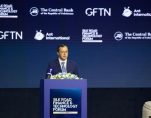
Issac John The Silk Road Finance & Technology Forum concluded in Tashkent with a proposition that carries important implications for the UAE: Central Asia wants its historic trade routes transformed into new corridors for money, payments, technology and investment. For a country whose prosperity has been built partly on functioning as the commercial and financial crossroads between East and West, that raises an intriguing question. Does the […]
HONG KONG SAR – Media OutReach Newswire – 28 August 2026 – For many aspiring business leaders in Southeast Asia, Hong Kong represents more than a study destination; it is a gateway to global markets. For Clarrence Mae, a first-year student from Jakarta, that vision is already taking shape at The Chinese University of Hong Kong (CUHK).
Indonesian Student Clarrence Mae Charts Her Future at CUHK Integrated BBA
Hong Kong: A Strategic Choice for Global Ambitions
A recipient of two prestigious entrance scholarships, Clarrence is currently enrolled in CUHK’s Integrated Bachelor of Business Administration (IBBA) programme. A graduate of SMAK 1 BPK Penabur Jakarta, she saw the city as a gateway to global opportunity. “I think of Hong Kong as a financial hub, a bridge between countries. For someone who wants to study international business or finance, Hong Kong is the answer.”
She first encountered CUHK at her secondary school’s education fair and was drawn to itsworld-class standing (ranked second in Hong Kong and 18th globally). “I fell in love with CUHK’s environment, the buildings, the nature and all the diversity. The various organisations and events sealed it. For me, CUHK is just right.” On top of her University Admission Scholarship and top-up scholarship by the CUHK Business School, her commitment was further recognised with two scholarships upon admission: the Shum Wai Yau and Kong Fook To Belt and Road First-in-the-Family Tertiary Education Admission Scholarship and the United College CUHK Golden Jubilee First-in-the-Family Tertiary Education Admission Scholarship.
Building Belonging in the CUHK Community
Since arriving on campus, the transition was not without challenges. Language barriers initially meant she missed updates and campus events, but CUHK’s support network for international students helped her find her footing. The atmosphere, she says, is family-like, giving students space to stay connected to home while building friendships across borders. A mentorship programme also gave her early exposure to Hong Kong’s professional landscape. “It really opened my eyes to the real job market here,” she said.
From Classroom to the Global Stage
Clarrence’s ambitions are clearly defined: a Big Four internship, an exchange semester, and a career in Hong Kong before returning to make her mark in Indonesia. “For business, Hong Kong is the answer, and CUHK’s reputation as one of the top universities in the world says it all. With the scholarship opportunities on top of that, it’s truly a win-win.”
CUHK’s Integrated BBA Programme
Offered by the region’s first business school, CUHK’s Integrated BBA programme gives students the freedom to shape a curriculum around their ambitions. Key highlights include:
Unmatched Flexibility: Nine concentration areas with no intake limits, plus options for double majors, dual degrees and minors.
A Truly Global Community: Students from over 19 nationalities, fostering cross-cultural exchange and an international outlook.
Real-World Readiness: 89% of students complete at least one internship before graduating, and 93% access global experiential learning opportunities.
Comprehensive Support: A dedicated mentorship programme, partnership courses and internship placements prepare students for an ever-changing business landscape.
Graduates leave with analytical, communication and ethical decision-making skills, and access to a network of over 45,000 Business School alumni worldwide.
By TN Ashok India has built fighter aircraft, warships, tanks and some of the world’s most sophisticated missiles, but one weakness has repeatedly haunted its defence-industrial ambitions: engines. The country has been able to design and manufacture airframes, yet propulsion technology has remained heavily dependent on foreign suppliers. The latest agreement between the state-owned Hindustan […]
Arabian Post Staff Independent financial advisory firm deVere Group has built and launched live pricing and analysis pages across all four markets, designed for investors managing money across borders and currencies rather than sitting inside a single market. “We built these pages because our investors are living across dozens of countries, and they were checking four different markets through four different sources just to get a full […]