News related to
platform

TOKYO, JAPAN – Media OutReach Newswire – 29 October 2025 – Creww Inc. (Japan Office: Shibuya-ku, Tokyo, Representative: Sorato Ijichi, hereinafter “Creww”), Japan’s leading open innovation platform provider, and Real Madrid Next are pleased to announce the selection of 6 startups for the “Real Madrid Next Accelerator for Asia” Batch 2. About “Real Madrid Next Accelerator for Asia” Batch 2 “Real Madrid Next Accelerator for Asia” Batch […]

Forum invites businesses to Lead with Smart Tech towards Innovation, Resilience, and Growth in today’s digital-first economy KUALA LUMPUR, MALAYSIA – Media OutReach Newswire – 29 October 2025 – Canon today announced its upcoming Think Big Klang Valley Series, happening on 12 November 2025 at the Sheraton Petaling Jaya Hotel. Under the theme of ‘Future-Ready Malaysia: Innovation, Resilience, Growth’, the forum will bring together industry leaders and […]

The cryptocurrency exchange WazirX will resume trading from 24 October, offering zero-trading-fees for a 30-day window as it restarts operations in phases through 27 October, according to the company’s announcement. The move follows regulatory and judicial approval of its restructuring scheme, signalling a fresh push to restore market presence and user confidence.

The phased rollout is structured across four days beginning 24 October, with around 25 per cent of listed tokens becoming tradeable each day until full functionality is reached by 27 October. The USDT markets will be enabled first, followed by INR trading pairs as part of the gradual reactivation. Trading will commence on each live token at 10:00 a. m. IST, with order-matching set to begin at 5:00 p. m. IST. The company emphasises that the fee-free period will be assessed for extension depending on user engagement and stability of the restart.

The zero-fee offer is designed to attract traders back to the platform and rebuild liquidity, at a time when trust in crypto exchanges remains fragile. WazirX management states that this incentive, coupled with a careful phased launch, is intended to “restore liquidity safely, confirm technical stability, and ensure a gradual and reliable return to normal trading across all market pairs.”

The relaunch arrives after the Singapore High Court sanctioned the restructuring scheme of WazirX’s parent entity, clearing a major regulatory hurdle. The process involved creditor-votes and considerable restructuring oversight, reflecting the seriousness of the platform’s operational freeze. The court approval is expected to pave the way for potentially unlocking user funds that had remained frozen since the suspension.

The exchange’s suspension followed a major cybersecurity incident in July 2024, when approximately US$230 million was reportedly lost in one of the country’s largest crypto-hacks. The outage left the platform offline for over a year and a half, creating uncertainty for users and creditors. The company signals that its collaboration with a third-party custody provider is intended to strengthen asset security, responding to one of the principal criticisms that emerged from the hack.

Analysts say the relaunch is significant for India’s broader crypto ecosystem, which has witnessed growing regulatory scrutiny and pressure for tighter security and transparency standards. The move by WazirX could act as a bellwether for other exchanges, in terms of operational restoration and user-trust rebuilding efforts. However, the stakes remain high: many users still await clarity on withdrawals, disputing the timeline and adequacy of asset recovery efforts.

While the trading disruption is over, questions persist about how quickly WazirX can rebuild liquidity across its markets, re-list tokens that were delisted or migrated during the shutdown, and reassure the user-base that past vulnerabilities have been addressed. Some tokens have already been delisted or swapped in line with the exchange’s due-diligence review, further complicating the relaunch.

BARCELONA, SPAIN – Media OutReach Newswire – 28 October 2025 – OPPO’s global launch of the Find X9 Series reinforces its continued commitment to the high-end segment. This move coincides with the brand’s global user base exceeding 740 million, reflecting its success in engaging new generations through user-centric innovation. “OPPO is advancing its brand and user experience with a clear focus on the new generation of global […]

Horizon English School has announced the establishment of an all-through campus in the Town Square community of Dubai, signalling a strategic expansion of the institution’s British curriculum offering to ages 3-18. Under a joint venture between education group Cognita and developer Nshama, the new facility is scheduled to open in August 2027 and will begin with Foundation Stage 1 through Year 8, expanding to Year 13 in […]

Scientists at Ohio State University have transformed dehydrated specimens of the edible mushroom Lentinula edodes into functioning memristors—electronic components that “remember” past current states—offering a paradigm-shifting approach to memory hardware that could usher in greener computing systems. The device achieved switching speeds of up to about 5,850 signals per second, operating with approximately 90 % accuracy under laboratory conditions. The researchers grew the fungus, dehydrated the tissue […]

Showed Growing Interest in Healthcare Technology Event Featured a 30-second AI Retinal Imaging to Screen 55 Health Risks Instantly HONG KONG SAR – Media OutReach Newswire – 28 October 2025 – “Prevention is better than cure” is a common saying that reflects the concept of “preventive healthcare,” which advocates for citizens to proactively manage their health in daily life to reduce the future financial burden of treating […]

Advertisements

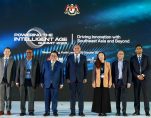
Powering the Intelligent Age Summit announced the ASEAN AI Safety Network and Sustainable AI White Paper, aligning regional collaboration with sustainability and trust KUALA LUMPUR, MALAYSIA – Media OutReach Newswire – 28 October 2025 – The Ministry of Digital, through the Malaysia Centre for the Fourth Industrial Revolution (MYCentre4IR), in collaboration with the World Economic Forum (WEF), today hosted the Powering the Intelligent Age: Driving Innovation with […]

Data-resilience specialist Veeam Software has struck a definitive agreement to acquire Securiti AI for approximately US$1.725 billion in cash and stock, marking a significant expansion of its capabilities into data security posture management, privacy, governance and AI-trust technologies. The transaction is expected to close in the fourth quarter of 2025, pending regulatory and customary approvals. Veeam’s move aims to fuse its established strength in backup, recovery and […]

Arabian Post Staff -Dubai Apple plans to equip its next-generation iPad Pro with a vapor chamber cooling system, marking a significant step for heat management in the tablet line. The upgrade is expected to accompany the launch of the M6 chip, built on TSMC’s 2-nanometre process, with a product refresh anticipated in spring 2027. The change responds to increasing thermal demands as the iPad Pro evolves into […]

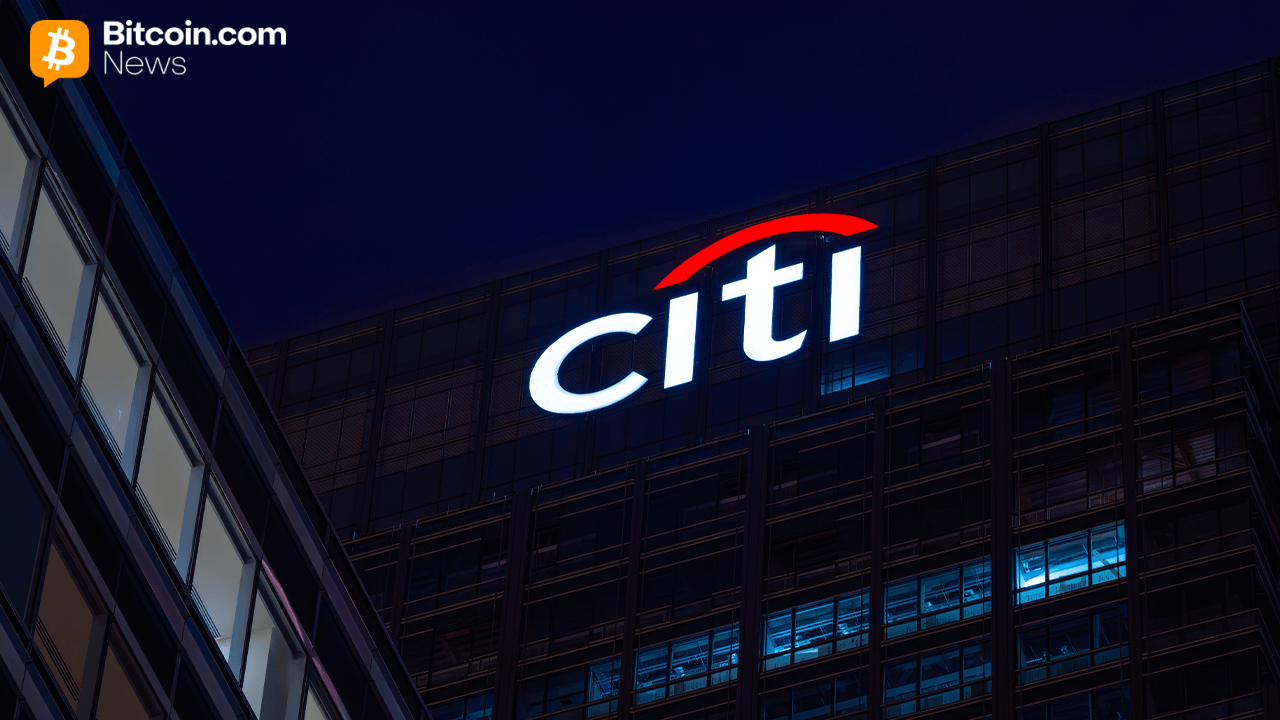
Citigroup Inc. and Coinbase Global Inc. have announced a collaboration to expand digital-asset payment services for the bank’s corporate clients, signalling a deeper institutional embrace of blockchain-based money transfers. The partnership will first focus on facilitating conversions between fiat currencies and digital assets, including stablecoins, and improving access to on- and off-ramps for firms that move large volumes of funds.

The deal between Citi and Coinbase addresses a prominent pain point in global payments: the cost, time and complexity of moving funds across borders or between fiat and crypto systems. Under the agreement, the participants will work on streamlining pay-ins and pay-outs for institutional clients, simplifying the flow between traditional bank accounts and Coinbase’s digital-asset platform.

“With more than 300 payment-clearing networks across 94 markets globally, we see collaborating with Coinbase as a natural extension of our ‘network of networks’ approach,” said Debopama Sen, Citi’s head of payments and services. Brian Foster, global head of crypto-as-a-service at Coinbase, added that the collaboration “reflects our commitment to building the infrastructure needed for the next generation of financial services.”

Analysts view the move as part of a broader trend in which leading financial institutions are shifting from cautious observation of digital assets to actively integrating crypto and stable-coin infrastructure. Citi had already signalled interest earlier this year in issuing its own stablecoin and providing custody services for crypto assets backing investment funds.

Stablecoins—cryptocurrencies pegged to fiat currencies—currently serve mostly trading and settlement within crypto markets. The new collaboration suggests an ambition to extend their use into cross-border payments, treasury operations and institutional settlements. In this case, the plan explicitly includes exploring mechanisms to directly link fiat balances to on-chain stable-coin payouts for corporate clients.

While the partnership presents opportunity, it also raises regulatory and operational challenges. Financial regulators have increased scrutiny of stable-coin issuance, backing reserves and the potential risks to payments stability. Traditional banks entering the crypto space must manage compliance, money-laundering controls and cyber security in new systems. For instance, a consortium of ten major banks—including Citi—are together exploring stable-coin issuance tied to G7 currencies, with regulatory oversight a key consideration.

From an operational standpoint, integrating digital-asset infrastructure into a global bank’s existing payments network is complex. Citi’s model involves multiple clearing networks and real-time settlement expectations; adding 24/7 on-chain rails demands robust coordination, governance and risk management frameworks. The collaboration acknowledges this by focusing first on institutional clients and later expanding to broader corporate use.

For Coinbase, this partnership enhances its positioning as a trusted infrastructure provider for institutions. The firm has made several moves to support institutional adoption, including acquiring technology to expand capital markets presence and forming strategies around tokenised credit products. By joining forces with a major bank like Citi, Coinbase gains access to a wide international payments network and the bridge between traditional finance and digital assets.

Market reaction has been positive; following the announcement, Coinbase’s shares rose, reflecting investor appetite for digital-asset infrastructure deals with legacy banks. For corporate clients of Citi, the collaboration means access to a potentially faster, lower-cost payment model that combines fiat and crypto rails and the possibility of 24/7 global transfers.

In examining trends, the deal fits into a pattern where banks are no longer sidelined observers of cryptocurrency innovation but active participants. As one executive at Citi observed, the financial-services landscape is changing fast, and institutional demand for real-time, border-less payments is driving innovation. That said, the extent and pace of adoption will depend on regulatory clarity, technological readiness and client acceptance.


The trail blazed by Hamza, founder of Hexona Systems and the architect of one of the world’s largest AI automation communities, is leading him back to the Middle East, a region that played a significant role in his past. Hamza’s journey is that of a visionary who travelled across the globe to gain wisdom and novel experiences but eventually came back to his homeland with a more […]

HONG KONG SAR – Media OutReach Newswire – 27 October 2025 – The China Tennis Tour CCB (Asia) Hong Kong Open 2025 (hereafter “CTA1000 CCB (Asia) Hong Kong Open”) will return to Victoria Park Tennis Court from 23rd to 30th November 2025. The eight-day tournament will gather more than 150 of the China’s top players, competing across Men’s Singles, Women’s Singles, Men’s Doubles, and Women’s Doubles for […]

A comprehensive study from the initiative at Massachusetts Institute of Technology reveals that only about 5 per cent of enterprise generative-AI pilot projects deliver measurable profit or transformative impact, while the remaining 95 per cent yield little to nothing in terms of return on investment. The analysis covers 150 executive interviews, a survey of 350 employees and evaluation of some 300 public AI-deployments. The report attributes the […]

A flurry of strategic manoeuvres has placed Warner Bros. Discovery at the heart of one of the media industry’s most consequential displacement moves, as multiple major technology and entertainment companies evaluate possible acquisition bids. The company said it has opened a formal review of strategic alternatives after receiving unsolicited interest for its full or partial business, setting the stage for what may become a landmark consolidation. Executives […]

India is positioning itself as a global food supplier using Dubai as the logistical gateway, according to statements made by Chief Minister N. Chandrababu Naidu of Andhra Pradesh during his visit to the UAE. He declared that India’s strengths in agriculture, horticulture, aquaculture and logistics will enable the country to serve “the global community” through Dubai’s market access.

Naidu spoke of the UAE city’s strategic connectivity and global reach as ideal for scaling Indian-food exports. He noted that the Andhra Pradesh government is aiming to reduce logistics costs by integrating inland waterways, railways, road and seaports, and by spending around 14 per cent of the state’s GDP on logistics infrastructure as part of the drive to increase efficiency. His role as chief minister of Andhra Pradesh places him at the centre of an ambitious push to offer the state as a manufacturing and supply-chain hub with Indian agriculture at its core.

The announcement comes amid a broader investment road-show in which Naidu met with senior policymakers and business leaders in the UAE to discuss partnerships across multiple sectors, including food processing, green energy, AI and infrastructure. During a dialogue in Dubai the chief minister stated that India will supply food to the global community through Dubai as a hub, adding that he met ministers, family-business leaders and airlines executives during the visit. He praised the Indian diaspora for their contributions and flagged the state’s goal of making the new capital Amaravati a “green and blue city” built around water, greenery and advanced infrastructure.

Andhra Pradesh’s food-processing ambitions are a central plank of the strategy. The state government has invited investment from UAE food-conglomerates to scale cocoa cultivation, chocolate manufacturing, aquaculture and related logistics. The Chinese food-industry trend of “value-added exports” is echoed by India’s attempt to move beyond raw agricultural exports towards packaged, processed and high-logistics-integrated supply chains.

From a trade perspective, positioning Dubai as a re-export hub can offer Indian producers quicker access to Middle East, African and European markets. Dubai’s status as a global logistics and trading hub gives India the opportunity to piggy-back on existing infrastructure and reach. It also offers investors assurances of regulatory, financial and physical connectivity.

However, a number of challenges stand in the way. India already faces structural issues in agriculture: fragmented landholdings, variable productivity, post-harvest losses, and high domestic logistics costs. While Naidu cites a logistics cost of about 14 per cent of GDP for Andhra Pradesh, the national average remains higher and such a figure implies major optimisation ahead. The use of Dubai as a hub also raises questions of tariff regimes, transit duties, warehousing handling cost and competition from other international producers using the Gulf as re-export platforms.

Critics also point to the risk of over-promising on export capacity. India’s agriculture export ratio remains modest relative to the size of its production, and moving up the value chain into globally competitive processed foods will require investment in cold-chain infrastructure, quality standards and market-specific certifications. The reliance on a single state’s announcement may also raise concerns about federal coordination and falling short of expectations if broader national agricultural reforms lag.

Microsoft has introduced a new avatar named Mico to lead its latest update of the Copilot assistant, marking a strategic move in how the company presents AI interactions. The Mico character joins an array of twelve new enhancements in the Copilot Fall Release, positioning the assistant as more expressive, collaborative and user-friendly. The visual identity of Mico is intentionally playful—an abstract, floating shape capable of changing colour […]

US-based data-centre specialist Crusoe Energy Systems LLC has secured approximately $1.38 billion in a Series E funding round, raising its valuation to more than $10 billion underlining the intensity of demand for artificial-intelligence infrastructure. The equity fundraising was co-led by Mubadala Capital and Valor Equity Partners, and attracted backing from major investors including Nvidia Corporation, Fidelity Management & Research Company and Founders Fund. Crusoe, founded in 2018, […]

Dubai-based Emirates Integrated Telecommunications Company PJSC announced that its third-quarter results delivered a 7.9 per cent year-on-year jump in revenues to AED 3.87 billion, underpinned by growth in mobile, fixed and ICT businesses. The company reported an EBITDA of AED 1.85 billion, which equated to a margin of 47.8 per cent, while normalised net profit rose by 25.8 per cent to AED 732 million. Chief Executive Fahad […]

Gulf states are emerging as influential players in digital assets, with governments across the region intensifying efforts to regulate cryptocurrencies, tokenisation and Web3 innovations. A growing number of jurisdictions are introducing licensing frameworks for virtual asset service providers, stablecoin regimes and asset-tokenisation structures, signalling a shift in strategy from reactive oversight to proactive design.

The Central Bank of the United Arab Emirates has introduced a Payment Token Services Regulation that obliges issuers, distributors and custodians of payment tokens to maintain full reserve backing, undergo mandatory licensing and meet robust anti-money-laundering and cybersecurity standards, thereby positioning the UAE as a regulatory pioneer in the region. Across the region, countries such as Bahrain and Saudi Arabia have developed layered digital-asset frameworks, with Bahrain’s central bank among the earliest movers and Saudi launching fintech sandboxes and pilot token-asset schemes under its Vision 2030 plan.

Market data underline these developments. Analysis shows that between July 2023 and June 2024 the Middle East and North Africa region handled some US$338.7 billion in on-chain crypto value, accounting for approximately 7.5 per cent of global transaction volume. Institutional flows dominate: about 93 per cent of value transferred in the region came in amounts of US$10,000 or more.

Several regional platforms have obtained new licences under this regulatory push. The region’s first licensed crypto-asset service provider, Rain Financial Inc., has expanded its services under licence from both Bahrain’s regulator and Abu Dhabi’s ADGM-FSRA. In Bahrain, over 50 firms including nearly half focused on digital-assets are in discussions to establish operations under the Central Bank’s regime.

The tokenisation of real-world assets is gaining traction, with banks and global institutions exploring issuance of token-backed bonds, real estate and commodity-linked tokens. According to consultancy research, tokenisation could add as much as US$230 billion annually to MENA-region GDP. Major international exchanges and asset-managers are establishing footholds: for instance, the global exchange Binance uses the UAE as its regional base and has obtained a licence under Dubai’s Virtual Assets Regulatory Authority.

Despite this momentum, the region faces challenges. Implementation remains uneven: regulatory capacity across jurisdictions varies, local consumer-protection rules are still emerging and cybersecurity vulnerabilities in wallet providers and exchanges pose material risk. Energy-use and environmental impacts of crypto-mining have also drawn regulatory scrutiny: in one Gulf city, electricity consumption fell by over fifty per cent after enforcement of mining curbs.

Taxation and corporate-governance issues are also under development. In Saudi Arabia individuals currently pay no capital-gains tax on crypto, though businesses may face up to 15 per cent tax with corporate income taxed at 20 per cent plus a 2.5 per cent zakat levy. Given the youth-skewed demographics of Gulf markets and high smartphone penetration, regulators see digital-assets as both a diversification lever and a conduit to broader fintech innovation.

For global crypto and Web3 players the Gulf region offers a combination of clear regulation, large capital pools and government-driven ambition. However firms must navigate rigorous licensing conditions, reserve-backing rules, AML frameworks and evolving governance standards. The regulatory focus on stability and consumer protection underscores that the region expects digital-asset innovation to be embedded in mainstream finance rather than existing outside it.

The Ministry of Finance has introduced the “Retail Sukuk” programme enabling citizens and residents to purchase government-backed Treasury Sukuk via participating banks with a minimum investment of AED 4,000. The first bank partner will be announced on 3 November 2025.

The move directly expands access to sovereign Islamic finance instruments previously reserved for institutional investors. According to the announcement, the scheme permits investment in Shariah-compliant Islamic treasury securities through fractionalised digital platforms operated by the banks. Leader Sheikh Maktoum bin Mohammed bin Rashid Al Maktoum described the initiative as “translating our leadership’s vision of empowering individuals, promoting a culture of saving and developing government investment instruments that enhance individual participation in economic growth and provide a direct opportunity to contribute to the national development journey.”

The initiative aligns with the nation’s financial-inclusion agenda and the strategy to deepen local capital markets. By lowering the threshold to AED 4,000, the scheme reduces entry barriers for retail investors and broadens the investor base for the domestic sovereign debt market. Analysts point out that universal access to such instruments represents a structural shift in how governments engage with individual savers.

Industry experts say this development reflects emerging trends in the Gulf’s Islamic finance sector, particularly the fractionalisation and tokenisation of Sukuk products. A legal-advisory report on the Gulf Cooperation Council’s Sukuk market noted that digital platforms and smaller tickets are “redefining how Sharia-compliant capital is structured, distributed and accessed.” The Abu Dhabi Islamic Bank earlier launched a “Smart Sukuk” platform allowing retail investment from about USD 1,000 in fractionalised Sukuk.

Governance stakeholders emphasise that the retail programme remains denominated in dirhams and linked to sovereign-backed Sukuk already traded in the market, ensuring exposure to high-quality government assets rather than untested structures. The Ministry reaffirmed that the rollout will follow the “highest standards of transparency and quality.”

Financial institutions stand to benefit from expanded customer-base growth and increased assets under management, while retail investors gain a compliant savings vehicle offering diversification beyond deposits and conventional investments. Yet risks remain. While sovereign-backed, Sukuk carry credit, liquidity and market-risk dimensions; beginners may require enhanced education around profit-sharing-based returns, Shariah-compliance nuances and secondary-market liquidity.

Some market participants caution that the success of the scheme will depend on the secondary-market functioning and investor confidence in digital platforms. Previous fractional-Sukuk roll-outs in the region flagged the need for robust regulatory oversight, clear smart-contract frameworks, and standardised product terms to build long-term participation.

A partnership between the investment firm Orion Resource Partners, the U. S. International Development Finance Corporation and sovereign investor ADQ has launched a major critical-minerals fund, mobilising an initial $1.8 billion in capital with a target of up to $5 billion to support supply-chain development of essential raw materials. The initiative, known as the Orion Critical Mineral Consortium, aims to invest in and scale near-term producing assets for minerals such as copper, cobalt and rare earths, in line with partner-government industrial and security goals. The DFC has confirmed its cornerstone commitment, matched by funds managed by Orion and ADQ, creating the foundation of the expanding pool of capital.

The fund emerges amid heightened concern in Washington over the concentration of critical-minerals processing in rival economies and the lag in Western investment, with deferred permitting, falling ore grades and decelerating mine-development pipelines cited as systemic pressures. Orion, which manages around $8 billion in assets and has global mining-finance experience, brings its platform into the consortium, while ADQ’s prior joint venture with Orion—announced earlier this year for $1.2 billion—provides a blueprint for the strategic partnership. The fresh consortium will prioritise assets capable of delivering supply within a shorter timeframe rather than frontier exploration, signalling a shift towards faster-payback, lower-development-risk opportunities.

The strategic calculus ties directly into U. S. national-security and industrial-policy ambitions. “Securing critical minerals is a paramount matter of U. S. strategic interest and economic prosperity,” said DFC CEO Ben Black. Orion founder and CEO Oskar Lewnowski described the consortium as a “bridge” between emerging-market production jurisdictions and advanced-manufacturing demand in the U. S. and among allies. The fund will focus on eligible jurisdictions for DFC investment and will integrate production, processing and offtake structures.

The $1.8 billion commitment represents the current scale of the vehicle, with Orion CMC envisaged to grow further as aligned investors join. Observers note that while the headline target is $5 billion, execution will depend on securing suitable assets, navigating permitting and securing host-nation partnerships. The model mirrors the earlier ADQ-Orion joint venture launched in January, which committed to deploy $1.2 billion over its first four years across metals-and-mining investments in Africa, Asia and Latin America.

For Orion and ADQ, this represents an expansion of their earlier alliance: the Abu Dhabi-based JV served both to secure long-term resource links and to align with ADQ’s infrastructure-and-critical-minerals cluster. For the U. S., the consortium marks one of the largest private-sector-linked initiatives in the critical-minerals domain, aligning DFC’s mandate of mobilising private capital abroad with the administration’s aim to reduce strategic vulnerabilities in supply chains.

Challenges remain. Mining projects are long-horizon endeavours, and merely committing funds does not guarantee results. Host-country regulatory regimes, permitting timelines, environmental and social governance constraints and market-price volatility all play roles in investment outcomes. Industry analysts caution that while the push for supply-chain resilience is timely, the gap between intent and delivery is sizeable. Even with $5 billion in capital, global demand for some critical minerals is projected to outstrip supply capacity.

Operationally, the consortium’s emphasis on “existing or near-term producing assets” rather than early-stage exploration is intended to accelerate results and mitigate development risk. That strategy reflects frustration in industry circles with projects that take a decade or more to bring into production. The presence of sovereign-wealth capital, allied-government backing and private-sector mining-finance expertise may create a differentiated pathway for this fund compared with earlier, traditional mining-investment funds.

MANILA, PHILIPPINES – Media OutReach Newswire – 24 October 2025 – Green GSM has been honored with the E-Mobility Award for Technology Adoption by the Electric Vehicle Association of the Philippines (EVAP), recognizing its outstanding contribution to promoting electric mobility and supporting the country’s transition to sustainable transportation. Green GSM honored with E-Mobility Award at the 13th Philippine Electric Vehicle Summit (PEVS). The 13th Philippine Electric Vehicle […]

Emirates National Oil Company and Amazon UAE have signed a memorandum of understanding to broaden customer access and enhance shopping experiences across the country by combining ENOC’s extensive retail footprint with Amazon’s advanced logistics and digital-retail technologies. The agreement allows Amazon to leverage ENOC’s fuel-station and convenience-store network, converting selected locations into quick-fulfilment hubs aimed at shortening last-mile delivery times and reducing urban traffic congestion. Amazon also […]

VISHNU RAJA
RYO YAMADA
HITORI GOTOH
IKUYO KITA