News related to
power

ASUS has confirmed that it will spotlight a broad suite of AI-enabled products and infrastructure at GITEX Global 2025, framing its participation around the theme “Ubiquitous AI. Incredible Possibilities.” The corporation aims to demonstrate how artificial intelligence can permeate devices, enterprise systems and urban environments.

The company’s exhibit will cover four core domains: AI-first design, cloud integration, sustainability and education technology. On the hardware front, ASUS plans to showcase the B5405 ergonomic laptop, the P5405 with a 47 TOPS NPU, and the B9403 weighing under 1 kg with all-day battery life. Chromebook models such as the CX5403 Plus and Windows devices like the BR1204 will cater to education users.

In its infrastructure tier, ASUS will highlight its AI POD, HGX servers and the Ascent GX10 platform powered by the NVIDIA GB10 Grace Blackwell superchip. Workspace innovation will include compact offerings such as the NUC 15 Pro and NUC 14 Pro AI. On the edge side, embedded systems for smart cities and autonomous systems—such as the PE2200U, PE6000G, and PE2100N—are also in the lineup.

ASUS emphasises the role of partnership in its vision. It plans to accentuate cooperation with NVIDIA via its “Enterprise AI Factory” programme, which supports AI-ready racks and POD designs tuned for large language models and immersive workloads. The company will also underline measures in security, durability and ease of maintenance across its product line.

Tolga Özdil, Regional SYS Commercial Director for META at ASUS, remarked that the Middle East is positioned at a digital inflection point, with AI shaping institutional and economic evolution. He framed GITEX as a platform to bring the company’s latest innovations into conversation with regional stakeholders. ASUS’s Regional Director for Middle East & Africa, Senic Chiu, added that the event offers opportunity to show how intelligent tools can reshape industries and daily life.

ASUS’s timing comes against the backdrop of an intensifying global push for AI infrastructure. GITEX 2025 is expected to draw more than 6,800 tech firms and 2,000 startups from 180 countries. Key event themes include advancements in quantum, biotech, data centres and robotics.

Beyond individual exhibitors, the show underscores the rapid expansion of the global AI economy. According to organisers, investment in data centres alone is forecast to surpass US$500 billion in 2025. Meanwhile, GITEX’s startup track, Expand North Star, will run in parallel and feature over 1,200 investors managing US$1.1 trillion in assets.

ASUS’s introduction of its AI roadmap at this scale signals that device manufacturers are no longer content to remain at the periphery of the AI stack. As more process layers—from silicon to application—are exposed to AI optimisation, hardware firms are positioning themselves to own more of the value chain. However, challenges remain: power efficiency, thermal constraints, ethical AI integration and data security are frontlines ASUS must navigate.

AMD signed a long-term agreement with OpenAI to supply six gigawatts of AI chips over multiple years, with the first delivery of its Instinct MI450 GPUs slated for the second half of 2026. In tandem, OpenAI will have the right to acquire up to 160 million AMD shares—roughly 10 percent of the company—subject to performance and stock-price milestones. Under the pact, AMD will act as a core […]

When Jane Goodall ventured into the forests of Tanzania in 1960, she carried no formal zoological degree, just a fierce curiosity and letters of introduction to Louis Leakey. She was 26 years old and stepping into what was then a largely uncharted world of primate behaviour. Over the next six and a half decades, she would not only reshape our understanding of chimpanzees, but also become one […]

Omnix International will unveil its HOT Systems suite—built in collaboration with PNY—at GITEX Global Dubai from 13 to 17 October, spotlighting AI workstations, liquid-cooled laptops and a new system-monitoring tool dubbed HOT Guard.

Visitors to the Hall 5, Booth 30 installation will see across-industry demonstrations—architecture, engineering, media, research—illustrating how tailored hardware accelerates digital transformation, reduces thermal throttling, and boosts reliability under sustained loads. HOT Guard introduces a continuous monitoring layer that oversees thermal behaviour, utilisation and system health, integrated with Omnix’s Hardware Optimization Technology stack.

The partnership with PNY ensures integration of high-performance memory and NVIDIA RTX graphics. PNY’s regional manager for MEA, Talus A Arukalil, emphasised that this collaboration positions the company to deliver “technology that doesn’t just keep pace with the future but defines it in the region.” On the HOT Systems side, Joseph John, Regional Sales Manager, asserted that the hardware is engineered “for today’s demands and tomorrow’s innovation,” targeting sectors where sustained compute power and system stability matter most.

According to Omnix’s own announcements, the new laptop models under the HOT Systems brand will be equipped with cutting-edge silicon—Intel Core Ultra 9 200HX or AMD Ryzen 9000 HX—matched with NVIDIA RTX 5080/5090 GPUs, DDR5 memory up to 128 GB, PCIe Gen 5 SSDs, Wi-Fi 7 and optional liquid cooling. These designs aim to balance high thermal headroom with energy efficiency and sustained performance even under intense workloads such as CAD, simulation and AI/ML inference.

Liquid cooling in a laptop format is still relatively rare. During previews, the company has framed this design choice as essential for holding consistent clock speeds over long renders or training sessions, reducing throttling under heat stress. As TBreak put it, the “pitch is stable clocks over flash specs,” targeting firms that can’t afford dips in performance mid-job.

With the industry steadily shifting from experimental AI use cases to full deployment, enterprises are increasingly looking for turnkey, dependable solutions—not just proof-of-concepts. In this environment, Omnix seeks to differentiate itself by offering not just hardware, but optimised stacks, monitoring, service support and aligned component integration.

GITEX Global 2025 is expected to host over 6,800 exhibitors from around 180 countries, showing advances across semiconductors, data centres, quantum computing, biotech and AI infrastructure. With global AI infrastructure investments accelerating sharply, regional companies and integrators are keen to showcase solutions tailored to local conditions—particularly in arid climates and metropolises with high operating temperatures.

The Co-Hosted With The World Economic Forum, The Summit Is Set To Launch Regional Initiatives on Sustainable and Safe AI and the Transitioning Industrial Cluster KUALA LUMPUR, MALAYSIA – Media OutReach Newswire – 7 October 2025 – The Malaysia Centre for the Fourth Industrial Revolution (MYCentre4IR) together with the World Economic Forum (WEF) will co-host the Powering the Intelligent Age: Driving Innovation with Southeast Asia and Beyond […]

Filestack has launched a sweeping upgrade to its core platform, introducing a fully integrated Digital Asset Management system, a comprehensive Event Logger, and a revamped Filepicker 4.0 with advanced upload control features. The move is aimed at giving developers stronger tools to manage file workflows, versioning, and audit trails—all without building these systems from scratch. At the heart of the update is the DAM, which allows users […]

Port Louis: MCB Capital Markets has advised CIEL Limited in issuing a MUR 1.45 billion sustainability-linked bond, marking a milestone in African sustainable finance as the first time a diversified investment holding company has tapped this structure on the continent. The issuance was oversubscribed by 1.5 times and is credited with bringing foreign investors into the Mauritian local currency debt market for the first time through the […]

Advertisements

Wikimedia Deutschland has introduced a new vector database designed to make Wikidata’s knowledge graph directly usable by AI systems. The initiative, known as the Wikidata Embedding Project, aims to convert structured facts into vector representations so that large language models and related AI tools can conduct semantic queries grounded in verified data. Under this system, the 119 million or more entries of Wikidata are embedded into high-dimensional […]

Perplexity now offers its AI-enabled browser Comet free to users worldwide, removing its earlier US$200/month subscription restriction. The company also launched Comet Plus, a paid tier offering curated news content and revenue sharing with publishers. Comet integrates Perplexity’s AI directly into the browsing experience, combining the firm’s answer-engine with an assistant that can summarise pages, complete tasks, and guide users across tabs. It was first released in […]

The Labour Fund, Tamkeen, has confirmed it will organise the Kingdom of Bahrain’s pavilion at GITEX Global 2025 in Dubai, featuring 14 Bahraini technology start-ups and small and medium enterprises alongside the Economic Development Board and ARRAY Innovations.

The event, scheduled from 13 to 17 October 2025, promises to provide the participating firms with access to global investors, partners and industry networks. The pavilion’s aim is explicit: to boost the international visibility of Bahrain’s ICT ecosystem and facilitate business growth.

Tamkeen’s announcement places it firmly in a leadership role for the pavilion’s curation and operations. The decision aligns with its 2025 strategic priorities, which emphasise supporting enterprise growth, promoting digitalisation, strengthening private-sector competitiveness and fostering sustainability.

Officials from Tamkeen and the Economic Development Board have highlighted that the selection of the 14 entities spans multiple subsectors within ICT, including software, data analytics, cybersecurity, and emerging technologies. They say the mix is intended to reflect both Bahrain’s current strengths and its ambitions for diversification.

In past editions of GITEX, Bahrain’s pavilion drew attention from regional and international delegations. During GITEX Global 2024, the pavilion was credited with facilitating multiple memoranda and partnership discussions. Tamkeen’s continued involvement signals its belief that sustained pavilion presence is critical to maintaining momentum in Bahrain’s tech diplomacy.

Some observers note that Bahrain’s tech infrastructure and regulatory environment are increasingly seen as competitive in the Gulf region. Over the past few years, the kingdom has liberalised foreign ownership rules in certain sectors and introduced incentives for startups and innovation funds. This pavilion engagement is viewed by analysts as part of a broader soft-power strategy to position Bahrain as a hub for digital investment.

However, challenges remain. For many Bahraini startups, scaling beyond domestic markets continues to be difficult. Access to international capital, navigating cross-jurisdictional regulation, and building brand recognition are persistent hurdles. Critics caution that pavilion exposure does not always translate into long-term market entry, and that stronger post-exhibition support is needed to ensure sustained growth.

Tamkeen has stated that it plans to accompany pavilion exposure with mentorship, investor matchmaking and export facilitation services for participating firms. The hope is that a combination of showcase visibility and structural support will help convert leads into lasting collaborations.

Already, the pavilion has generated interest among regional stakeholders. Several Gulf regional delegations and venture capital firms have expressed intent to engage with Bahrain’s teams during the event. The EDB is reportedly coordinating bilateral sessions between Bahrain’s entrants and visiting foreign trade missions.

For the 2025 edition, organisers have introduced a more structured schedule for pitch sessions, one-on-one meetings and thematic forums. This signals learning from past editions, where informal networking sometimes overshadowed targeted client engagement. Tamkeen officials have emphasised tighter alignment of startup offerings with investor interest sectors like fintech, AI and cloud services.

Within Bahrain’s domestic ecosystem, private sector associations and incubators have welcomed the announcement. Some have pushed for better curation, arguing that selecting firms with proven traction or clear roadmaps increases the chance that pavilion participation yields concrete contracts or investment.

Google has chosen Saudi startup Lahint for inclusion in its Growth Academy: AI for GovTech 2025 cohort, positioning the company among 24 global government-technology innovators supported by Google. The move aims to strengthen Lahint’s capacity to deliver AI-enabled public services and further Saudi Arabia’s push for digital transformation under Vision 2030.

Lahint, established in 2023 by Ahmed Saber and Mohamed Ibrahim, secured a $1 million pre-seed investment earlier this year to scale its AI and automation offerings in government services. The platform currently manages more than 60 digital government services and serves over 200 businesses, integrating robotic process automation and AI to streamline licensing, permits and administrative workflows.

By integrating Lahint into its accelerator, Google pledges technical support, mentorship and access to cloud infrastructure—tools that could accelerate Lahint’s roadmap to full automation of priority public services. Lahint has already earned multiple ISO certifications and is accredited by the Saudi Data & AI Authority with a Waee badge for AI ethics compliance.

Lahint has advanced its internal timeline for key automation milestones. The company is now targeting completion of its GovTech automation program by early 2026, a shift from an earlier 2027 target. This acceleration comes alongside newly signed partnerships with government entities to deploy real-time status reporting and predictive compliance tools covering domain areas such as licensing, taxation and corporate registration.

Saudi Arabia’s broader AI landscape is scaling rapidly. In 2025, the kingdom announced over $14.9 billion in investments at LEAP and pursued MoUs under SDAIA to reinforce its data and AI infrastructure. The establishment of HUMAIN, a state-backed AI company under the Public Investment Fund, is central to that strategy. HUMAIN, launched in May 2025, has already inked collaboration agreements with Nvidia, AMD and Qualcomm to develop AI factories and Arabic large language models.

Google’s AI programme in Saudi Arabia is part of a wider arrangement. A $10 billion joint investment by Google Cloud and the Public Investment Fund backs a national AI hub to reinforce the local ecosystem and serve regional demand.

HANOI, VIETNAM – Media OutReach Newswire – 7 October 2025 – The mega concert G-DRAGON 2025 WORLD TOUR [Übermensch] will take place on November 8 at 8Wonder Ocean City, with tickets officially opening for sale on October 7, 8, and 9. Prices range from VND 2 million to VND 8 million, offering a variety of exclusive benefits. With such anticipation, ticket sales are expected to spark an […]

Glencore has entered a 20-year agreement with Discovery Green to supply renewable energy for four of its South African mining operations, beginning 2027. The deal is expected to deliver over 290 GWh annually to mines in the eMalahleni area, replacing the bulk of their existing power demand with wind and solar energy. Under the terms of the agreement, renewable power will be delivered from Discovery Green’s contracted […]

Logitech will unveil a range of AI-enabled collaboration tools at GITEX Global 2025 in Dubai from 13 to 17 October, aiming to show how hardware and software can merge to support hybrid and human-centred work environments.

Under its “AI-Enabled Collaboration” theme, the company plans live demonstrations of its next-generation video conferencing, audio, and workspace peripherals. These products are designed to deliver equitable meeting experiences, seamless plug-and-play deployment, and sustainability throughout the product lifecycle.

Murad Ali, Head of GCC for Logitech for Business, says GITEX offers a stage to highlight innovations in “smart collaboration” that address evolving work trends in the Middle East, and that the company is committed to sustainable design practices. Logitech will host customers and partners at its Hall 3-C30 booth to showcase these developments.

A key highlight is the Rally Board 65, an all-in-one mobile conferencing device tailored to simplify complex meetings. The system combines a 65-inch touchscreen with built-in AI features such as RightSight 2 auto-framing, Depth Blur to reduce visual distractions, and sensors that measure occupancy and room health parameters. When unused, it can automatically shift into a lower power state to conserve energy—part of Logitech’s drive to embed sustainability into its hardware.

Logitech’s approach is underscored by statements from Moninder Jain, VP & Head of Global Emerging Markets. He notes that Logitech views AI not merely as a productivity tool, but as a means to deliver “more equitable collaboration experiences.” According to him, AI is embedded in features that equalise participation between in-room and remote contributors, including consistent audio/video quality, auto framing, and cloud-based device management that lets users carry settings across devices.

In recent months, Logitech has pushed AI integration further across its product lines. It has expanded its portfolio of Intel Evo-verified peripherals, reinforcing its strategy to support high-performance, low-latency user experiences. The company continues to evolve its Rally and video bar offerings, embedding AI to enhance meeting dynamics and reduce friction for IT teams managing hybrid environments.

Logitech’s sustainability credentials also receive attention in its corporate activities. The company’s “Future Positive” programme continues to support innovation in circular design. Past initiatives include collaborations on AI-powered e-waste recycling bins and exploration of alternative magnet materials to reduce reliance on rare earth elements.

Organisers have confirmed that Future Blockchain Summit x Fintech Surge will take place at Dubai Harbour from 12 to 15 October 2025, positioning the event as a central nexus for blockchain, digital assets, and fintech innovation across the MENA region. The four-day gathering, held alongside Expand North Star and powered by GITEX GLOBAL, aims to attract regulators, investors, entrepreneurs and technologists to shape emerging frameworks for finance.

Attendance is expected to exceed 70,000, with over 1,200 investors and more than 225 speakers scheduled to participate, alongside 150 exhibitors showcasing new products and solutions. A feature highlight is the Digital Assets Forum, which brings regulators, banks, and innovators together for intensive discussions on topics such as CBDCs, stablecoins, tokenised capital markets, cross-border regulation and the role of AI in compliance.

Speakers confirmed include Jimmy Su, Lily Liu, Eric Piscini, Oliver Stauber, Helen Liu and Kevin Lee. The event also features the Supernova Challenge, a startup pitch competition offering equity-free prizes totalling US$214,000 to finalists presenting to global judges and investors. Corporations such as Ruya, OKX and DKK Partners anchor the sponsorship tiers, while YPAY backs the Digital Assets Forum.

Dubai has been steadily reinforcing its position in the digital asset ecosystem. Earlier this year, the DAMAC Group signed a $1 billion contract with blockchain platform MANTRA to tokenise its real-world assets, a move aligned with the UAE’s aspirations to become a global digital assets hub. The country has been actively implementing regulatory frameworks, particularly in free zones like ADGM and DMCC, to attract blockchain firms and promote tokenisation of assets.

Investment momentum in the broader crypto and fintech sphere in the UAE has been robust. In the first quarter of 2025, global venture capital funding into cryptotech startups reached $5.4 billion, its highest quarterly total since 2022. Dubai has hosted major conferences such as TOKEN2049, drawing tens of thousands of participants and signalling regional leadership, though industry sentiment currently balances optimism with caution amid regulatory uncertainty and macro-economic pressures.

Technology trends driving this year’s agenda include the convergence of AI and blockchain, regulatory clarity for digital assets, tokenised infrastructure, and embedded finance. A newly published academic framework proposes integrating blockchain with Zero Trust security models to improve protection against insider threats in fintech ecosystems — a demonstration of how research is intersecting with commercial deployment.

Organisers emphasise that the event’s format is more than a conference: it is designed to enable deal-making, pilot launches and real partnerships. One-to-one investor matchmaking, live product demonstrations, and structured labs are scheduled to convert ideas into actionable projects. Startups exhibiting at Expand North Star receive automatic inclusion in the Supernova Challenge, deepening integration between the startup and blockchain-fintech community.

Regulators from the MENA region and beyond are expected to engage at the forum. Discussions will centre on harmonising cross-border rules, interoperability of digital asset legislation, and pathways for institutional adoption of tokenised assets. Several central banks may share updates on central bank digital currency explorations.

BitMine Immersion Technologies has disclosed crypto and cash holdings amounting to $13.4 billion, with 2,830,151 ETH tokens forming the bulk of its position, according to its latest statement.

The company’s portfolio also includes 192 Bitcoin, $113 million in “moonshot” equity investments such as Eightco Holdings, and $456 million in unencumbered cash, positioning it as one of the largest public crypto treasuries by ETH exposure.

BitMine’s ETH stash represents roughly 2 percent of total Ethereum supply, underscoring the firm’s aggressive accumulation strategy. In its announcement, the company reaffirmed its ambition to reach a “5 percent alchemy” threshold—i. e., to hold 5 percent of ETH’s total circulation.

Thomas “Tom” Lee of Fundstrat, chairman of BitMine, framed ETH as the “premier choice” for its reliability, 100 percent uptime, and alignment with institutional and AI adoption in blockchain infrastructure. He argued that as Wall Street and AI increasingly anchor on the blockchain, Ethereum offers structural advantage.

The disclosed holdings mark a dramatic acceleration in BitMine’s pivot from bitcoin mining toward becoming a major Ethereum treasury vehicle. The firm claims it now leads all publicly traded companies in ETH holdings, and ranks second globally in treasury scale behind Strategy, Inc.

Investors and markets responded swiftly to BitMine’s disclosures and related developments. In July, shares soared following a regulatory filing revealing that Peter Thiel’s Founders Fund had taken a 9.1 percent stake in the company, making him its largest known institutional shareholder. That news helped drive BitMine’s stock to near-record intraday gains.

Analysts view the firm’s strategy as part of a broader trend: smaller-cap crypto and blockchain firms are increasingly diversifying beyond bitcoin into ETH-focused treasury allocations. BitMine’s velocity of accumulation and the high liquidity of its stock have drawn comparisons to Michael Saylor’s bitcoin strategy at MicroStrategy.

Regulatory and market timing factors may amplify or constrain BitMine’s ambition. The U. S. SEC’s evolving posture toward digital asset teams—including Project Crypto and the so-called “GENIUS Act” proposals—could shape the framing of Ethereum as a mainstream institutional asset, or alternatively intensify scrutiny of crypto treasury holdings.

Sceptics point to concentration risk and valuation vulnerability. Holding such a large share of a single token leaves BitMine exposed to ETH price swings, smart contract risks, network upgrades, and macro-crypto sentiment downturns. As the firm presses toward its 5 percent goal, it will also face growing attention from regulators, market participants, and the Ethereum community around centralisation concerns.

Still, BitMine’s approach stands out for its bold scale and speed. The company argues that the “power law benefits” favour large holders of ETH, and that a discount between ETH price and its future utility—particularly under rising AI and blockchain convergence narratives—makes accumulation compelling.

Teams at GITEX Global 2025 in Dubai will put liquid-cooled AI laptops under extreme thermal stress, testing whether advanced cooling systems can uphold sustained performance in one of the world’s harshest climates. Omnix International’s HOT Systems division, in partnership with PNY, will unveil a lineup of AI workstations, liquid-cooled laptops and the new HOT Guard monitoring suite, aiming to prove that these machines can maintain stability in high ambient temperatures.

At the heart of the exhibit is the challenge posed by regional heat: daytime temperatures in Dubai frequently exceed 40 °C, while indoor exhibition halls still pose cooling constraints. For high-performance AI workloads—particularly those involving CAD, BIM and machine learning—thermal throttling can cripple throughput. HOT Systems claims its integrated cooling and hardware optimisation can circumvent that performance drop. The accompanying HOT Guard software will monitor temperatures, fan and pump behaviour and security in real time on site.

Liquid cooling is no novelty in high-density server enclosures, but applying it in portable form factors presents a tougher engineering problem. In data centres, the shift from air to liquid systems has accelerated because conventional cooling struggles to keep up with power densities above 10–15 kW per rack. Liquid systems offer reduced power use, higher thermal headroom and often reclaimed waste heat reuse. But translating that to mobile form demands compact and robust fluid paths, efficient pumps, and risk control against leakage.

Advances in chip cooling are reinforcing that liquid systems represent more than a marginal improvement. Microsoft engineers have developed a microfluidics cooling technique that embeds coolant channels within the silicon substrate itself, enhancing heat removal efficiency at the chip level. That suggests future AI hardware may increasingly rely on liquid solutions at a micro scale.

Regional data centre operators are already embracing the shift: Khazna Data Centres, active across the UAE, has rolled out the country’s first liquid-cooled AI data centre and is developing more AI-optimised campuses. The move reflects recognition that standard cooling infrastructure cannot scale profitably with AI workloads.

Technical design choices behind liquid cooling include direct-to-chip systems, which place cold plates atop CPUs or GPUs, and immersion cooling, where liquid envelops hardware. The former is more suited for modular, retrofit deployments; the latter can offer full heat removal but introduces maintenance and material challenges, especially for localised devices. A recent review in AI systems architecture emphasises single-phase direct cooling as a flexible compromise for power levels below extreme thresholds, though it demands high reliability in fluid delivery and sealing.

Within the exhibition context, the HOT Systems demo will likely emphasise sustained throughput rather than peak benchmarks. The company plans real-world workflows—such as rendering, simulation and AI model inference—to demonstrate how the cooling system maintains clock speeds under load. PNY’s involvement underlines the reliance on qualified memory, GPUs and driver support, ensuring that thermal gains translate into usable computing stability.

End-users in architecture, media, engineering and AI fields are closely watching such developments. If heat throttling can be mitigated in this climate, portable AI rigs could expand in markets previously constrained to air-conditioned labs. But adoption depends on how well the solutions resist failure under harsh dust, vibration and heat cycles inherent to Gulf environments.

Unlocking Africa’s Growing Payment Corridors for UAE Enterprises UAE now has a payment partner that unlocks Africa’s growing economic opportunity Verto today announced its official launch in the UAE. With over $25 billion processed annually for clients such as Unilever, and Maersk, the company’s platform is designed to address the unique challenges of cross-border payments between UAE and emerging market currency corridors (particularly in Africa), offering businesses […]

Rania Gule Over the past few months, silver prices have witnessed a strong rally — not only as a safe-haven asset alongside gold, but also due to fundamental factors rooted in industrial supply and demand dynamics. As of early October 2025, silver is trading around $48.65 per ounce in spot market data, while ETFs such as iShares SLV show a slightly lower net asset value (NAV), reflecting […]

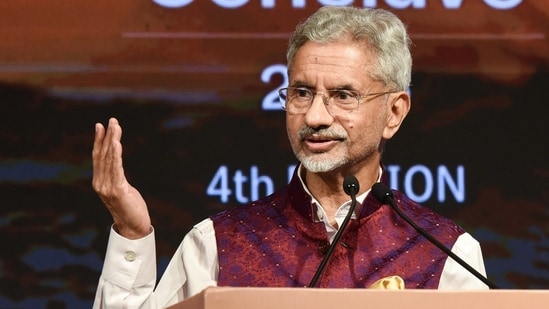
By Nitya Chakraborty Indian foreign policy makers have at last showing some mature understanding of the geopolitics of the post-Trump.2 months if the external affairs minister Dr. S Jaishankar’s observations at the concluding session of Kautilya Economic Conclave in New Delhi on Sunday, are any indication. The minister was quite candid in explaining the complexity […]

The article EAM Jaishankar Is Right: Trump Has To Respect India’s Red Lines appeared first on Latest India news, analysis and reports on Newspack by India Press Agency).

HANOI, VIETNAM – Media OutReach Newswire – 6 October 2025 – This November, for the very first time, Vietnamese audiences will be immersed in an unprecedented music event: the global superstar G-DRAGON’s world tour, landing right on the Eastern bank of Hanoi. Few realize that securing the nod from G-DRAGON required 8Wonder, the mega-festival brand of Vingroup, to overcome the incredibly stringent standards set by this S-tier […]

DP World has signed a memorandum of understanding with PayPal to roll out a digital payments solution meant to accelerate cross-border trade, bringing settlement times down from days to minutes. The agreement is part of DP World’s broader Digital Payments programme, targeting merchants, shippers, exporters, importers and marketplaces with a more transparent, lower-cost infrastructure. Under the deal, DP World will not itself act as a regulated payments […]

Annual leadership business series by Canon Singapore equips business leaders with strategies and a resilience-ready toolkit to navigate global and economic shifts impacting Singapore SINGAPORE – Media OutReach Newswire – 6 October 2025 – Canon today announced the return of the highly-anticipated annual Think Big Leadership Business Series in Singapore, designed to help businesses tackle challenges in an era of global uncertainty and technological disruption. This year’s […]

OpenAI chief executive Sam Altman is leading a high-stakes campaign across East Asia and the Middle East to secure investment and bolster chip supply for the company’s AI infrastructure push. He has held talks since late September in Taiwan, South Korea and Japan with leading hardware suppliers to prioritise OpenAI’s orders and expand capacity.

Altman has met with Taiwan Semiconductor Manufacturing Company and Foxconn, as well as Samsung and SK Hynix, pressing them to accelerate production and give OpenAI preferential access. In South Korea, Samsung and SK Hynix have signed letters of intent to supply memory chips for OpenAI’s data centres. Meanwhile, OpenAI plans further fundraising discussions in the United Arab Emirates.

The urgency of Altman’s mission reflects the intensifying global competition for advanced computing resources. OpenAI projects it will spend around US$16 billion this year on renting computing servers, with long-term forecasts stretching to US$400 billion by 2029 as AI models grow ever more complex.

Industry analysts note that the semiconductor supply chain remains highly constrained. TSMC dominates GPU chip production, and memory manufacturing is largely concentrated in East Asia, creating significant strategic leverage for the manufacturers approached by Altman.

As part of his tour, Altman is also pressing Japanese firms to contribute to infrastructure support. Hitachi has entered discussions to provide power transmission and distribution systems for OpenAI’s data centres, while sharing technical resources under joint development agreements.

Sources familiar with the process say Altman pushed for direct prioritisation in chip delivery schedules, asking that OpenAI receive top-tier production slots. In some cases, he proposed co-investment or co-development of next-generation AI hardware to bind partner incentives more closely.

In South Korea, early architecture proposals include planned data centres of 20 megawatts in collaboration with Samsung and SK Hynix. Altman is reportedly exploring “floating” data centre designs to manage land constraints and cooling demands.

The UAE leg of his mission is expected to involve negotiations with sovereign investment firms such as MGX and Mubadala, with the aim of funding both OpenAI’s expansion and joint infrastructure ventures in the region. In past rounds, UAE investors have already taken part in funding OpenAI operations.

Challenges remain significant. The sheer scale of chips and memory required for stacked AI model training is pushing the boundaries of global wafer fabrication capacity. Market watchers point to the high capital expenditure and long lead times in the semiconductor industry as obstacles to rapid scaling. Some of Altman’s proposals—for example, co-development of bespoke ASICs—are still in preliminary stages and face technical risk.

OpenAI’s valuation and investor backing give the company leverage. Earlier this year, it closed deals that valued it at about US$500 billion, with new capital injections from investors including SoftBank and UAE entities. Those moves have fortified its position in negotiating upstream deals with manufacturers.

VISHNU RAJA
RYO YAMADA
HITORI GOTOH
IKUYO KITA
Just in: