News related to
profit

Arabian Post Staff -Dubai Dubai has frozen private school fees for the 2026-27 academic year, giving families relief from education cost pressures as the emirate moves to balance household affordability with the stability of a fast-growing private education sector. Knowledge and Human Development Authority confirmed that schools under its regulation will not be permitted to raise tuition fees in the next academic year. The decision follows directives […]

Revenue Up 35.4% Year-on-Year API Token Call Volume Surges Nearly 6 Times

HONG KONG SAR – Media OutReach Newswire – 22 May 2026 – Phancy Group Co., Ltd. (“Phancy” or “The Company”, stock code: 6682.HK), a leading general artificial intelligence company, today announced its unaudited consolidated results for the first quarter ended 31 March 2026.

During the period, Phancy achieved revenue of approximately RMB1.458 billion, representing a 35.4% year-on-year increase. Gross profit margin remained at 35.1%. Phancy leveraged its deep expertise in full-stack AI cloud services, to capitalize on the accelerating adoption of localized computing power and strong enterprise demand for AI solutions. The Company achieved robust growth in its core businesses, accelerated product innovation, and secured several major partnerships, sustaining strong operational momentum.

2026 First Quarter Business Highlights:

Unified Enterprise AI Platform Drives Explosive Core Business Growth

Global computing resources remain constrained, while demand for both private enterprise AI deployments and API-based model calls continues to grow rapidly. Phancy’s enterprise-grade AI platform is built on a unified core architecture that seamlessly supports both API calling scenarios and dedicated private deployments. This significantly boosts AI application efficiency and resource utilization. Supported by a mature computing power supply chain developed over many years, Phancy’s deployable computing power resources have increased by over 200%. This enables the Company to effectively meet surging Token demand and consistently deliver stable, high-quality AI services to its customers.

In the first quarter of 2026, API Token call volume surged nearly 6 times compared to the same period in 2025, and already accounted for nearly 40% of the full-year 2025 total. Meanwhile, the Agentic AI business expanded rapidly, with deepening commercial adoption. Orders on hand grew nearly 100% compared to the end of 2025, emerging as a major growth driver for the Company.

AI Technology Iteration Accelerates, Commercialization Beats Expectations

Building on its continued push into digital employee applications and AI empowerment across business units, Phancy has significantly shortened the product development cycle from R&D to commercialization, enhancing overall operational efficiency and customer satisfaction.

As of mid-May 2026, ModelHub XC has completed adaptation and optimization for over 70,000 AI models on domestic chips, achieving more than 70% of its full-year target – well ahead of schedule.

In May, Phancy launched PhanthyMovie, a professional-grade AI video generation platform designed to enhance creativity, control, and stability in video production, enabling standardized and large-scale content creation for the industry.

Leveraging its advanced technology and proven execution capabilities, PhanthyMovie achieved rapid commercial traction. Just days after launch, the Company entered into a strategic cooperation agreement with Huanxi Media, covering approximately US$200 million in AI Token usage. The two parties will also collaborate on the development of a next-generation AI-powered film and television content production platform, further strengthening Phancy’s position in the AI-driven cultural and creative sector.

Core Products Align Closely with Policy Trends, Strengthening Compute-Model Integration

Since May 2026, China’s AI sector has seen a series of positive policy developments focused on computing infrastructure, data element circulation, and open-source compliance governance. Phancy’s core products, including HAMi vGPU and ModelHub XC, are well-aligned with national policy directions and mainstream industry trends.

In terms of computing resource allocation, policies emphasize cross-regional collaboration and broader access to computing power. Phancy’s HAMi vGPU offers unified scheduling and fine-grained resource partitioning, effectively improving utilization rates, optimizing data center energy efficiency, and supporting unified management across multiple chips to boost single-card efficiency.

In data and model governance, the government continues to promote high-quality dataset development and compliance management. ModelHub XC supports multi-model adaptation and optimization, incorporates data traceability and security certification features to help enterprises reduce compliance risks, and uses the EngineX engine for batch adaptation of domestic chips and models. This significantly improves compatibility while enhancing Token output efficiency through targeted model tuning.

Through deep integration of its computing and model layers, Phancy has built a comprehensive “Compute–Model” integrated solution. This addresses key industry needs such as efficient computing utilization, secure data supply, enterprise compliance, and domestic substitution, while strengthening its technological moat. The Company is well positioned to capture policy dividends and industry opportunities, supporting enterprises in their digital and intelligent transformation.

Hashtag: #PhancyGroup

The issuer is solely responsible for the content of this announcement.

About Phancy Group

Phancy Group (6682.HK) is a leading full-stack AI cloud services platform, providing comprehensive solutions for the AI 2.0 era. Our offerings include SageAIOS, HAMi vGPU and ModelHub XC, delivering efficient and scalable AI infrastructure with end-to-end capabilities. We provide a complete solution from heterogeneous compute resource management and optimization to the deployment of intelligent agent models. These solutions empower digital transformation across a wide range of industries, supporting our vision of building a large-scale and efficient “Token Factory.”

Guided by the mission of “AI for Everyone” and positioned as the “Navigator of AI,” Phancy Group is committed to becoming a global leader in Artificial General Intelligence.

Dubai motorists will pay 5 per cent value-added tax on public parking and Salik toll services from June 1, 2026, in a shift that will raise daily transport costs while accelerating the emirate’s move towards digital payments. Parkin Company PJSC, Dubai’s main paid parking operator, will apply VAT across its services, including on-street parking, off-street parking, seasonal cards, permits and reservation services. Salik Company PJSC will apply […]

Hyperliquid’s HYPE token has pushed beyond its former record, turning a sharp 24-hour rally into one of the most closely watched moves in the digital-asset market as trading volumes, exchange activity and listed-product demand converge around the decentralised derivatives platform. HYPE traded above $62 after gaining strongly through the week, surpassing the previous peak near $59 set in September 2025. The move lifted the token into the […]

Singapore business leader Teo Siong Seng has been accused by US prosecutors of taking part in a multi-year conspiracy to restrict output and fix prices of standard dry shipping containers, a case that places one of the city-state’s most prominent maritime figures at the centre of a major antitrust action. The indictment names four container manufacturing companies and seven executives in an alleged scheme that prosecutors say […]

SpaceX is pitching its planned public listing as a bet on artificial intelligence as much as rockets, telling prospective investors that AI services could open a $26.5 trillion market opportunity and transform the company from a launch-and-satellite operator into a global computing platform. The shift marks a striking turn for Elon Musk’s space company as it prepares for what could become the largest stock-market debut on record. […]

HO CHI MINH CITY, VIETNAM – Media OutReach Newswire – 21 May 2026 – Vietnam International Financial Center in Ho Chi Minh City (VIFC-HCMC), in collaboration with Gemadept Corporation and the Ho Chi Minh City Institute for Development Studies, today hosted a high-level forum to officially launch the International Maritime Financial Ecosystem (IMFE) — one of the four strategic pillars of VIFC-HCMC.

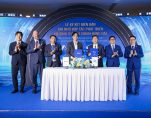
Assoc. Prof. Dr. Nguyen Huu Huan (left), Vice Chairman of VIFC-HCMC, and Mr. Nguyen Thanh Binh, General Director of Gemadept Corporation, at the official launch ceremony of the International Maritime Financial Ecosystem (IMFE) in Ho Chi Minh City.

The forum, themed “Developing the International Maritime Financial Ecosystem within the Vietnam International Financial Center in Ho Chi Minh City,” took place at the VIFC-HCMC Building, 08 Nguyen Hue Street, District 1, and drew more than 100 senior delegates. Attendees included leaders from central ministries and agencies, the Ho Chi Minh City People’s Committee, representatives from coastal provinces (Da Nang, Khanh Hoa, Kien Giang), domestic and international financial institutions, port and logistics enterprises, and international organisations.

The day’s agenda focused on three headline moments: a strategic industry report by Roland Berger, titled “Vietnam Maritime Industry: A Strategic Opportunity for Breakthrough Growth,” which benchmarked leading global maritime financial hubs and mapped a roadmap to raise Vietnam’s domestic value retention from the current 4–5% to 15% by 2035; the official launch ceremony of the IMFE initiative within VIFC-HCMC; and a memorandum of understanding signed between VIFC-HCMC and Gemadept Corporation, owner and operator of Gemalink International Port in Cai Mep – Thi Vai, formalising Gemadept’s role as a founding lead of the initiative. The forum also saw the introduction of the first maritime financial products and initiatives to be developed within the VIFC-HCMC framework.

A seaport system of growing global weight

The ambition behind IMFE is grounded in the rapid rise of southern Vietnam’s port infrastructure. Ho Chi Minh City is home to Cat Lai Port — ranked among the world’s top 21, handling approximately 7.5 million TEUs annually — and Gemalink International Port in Cai Mep – Thi Vai, capable of receiving ultra-large container vessels. These existing assets are set to be joined by the Can Gio International Transshipment Port, a 571-hectare project with a projected capacity of 17 million TEUs per year, further deepening the city’s integration into global logistics and trade networks.

In 2025, the Ho Chi Minh City port system handled over 24 million TEUs, ranking 8th globally according to Lloyd’s List, and was associated with approximately USD 200 billion in import-export turnover, accounting for around 20% of Vietnam’s total trade value. Surrounding this physical infrastructure, a broad ecosystem of supporting services has expanded significantly, spanning cargo handling, warehousing, freight forwarding, customs clearance, and supply chain management. The total annual trade transaction value flowing through the region — encompassing goods, logistics services, and related financial demand – is estimated at over USD 1 trillion.

The financial gap: billions flowing through offshore centers

However, the scale of this physical activity stands in sharp contrast to the financial value Vietnam currently retains. Despite enormous cargo volumes, most high-value maritime financial services generating the largest profit margin including trade finance, ship financing, marine insurance and reinsurance, international payments, and logistics risk management continue to flow through developed offshore maritime financial centers. Vietnam currently captures only around 4–5% of these financial transaction values domestically, leaving an estimated USD 6–8 billion in potential value accessible but unrealised. To complete the maritime value chain and retain these economic benefits onshore, Vietnam must evolve beyond purely physical cargo transshipment. The gradual development of a comprehensive maritime financial ecosystem is an essential and inevitable strategic step.

IMFE: from vision to institutional launch

Against this backdrop, the IMFE initiative took shape as a core component of VIFC-HCMC, with Gemadept Corporation serving as a founding lead. The initiative was first introduced on September 12, 2025, during the symposium “Ho Chi Minh City – A Modern, High-End, High-Value Service Hub,” where Gemadept presented a strategic vision of integrating Vietnam’s deep-sea port infrastructure with a dedicated maritime financial ecosystem. To materialise that vision, the corporation cooperates with the Ho Chi Minh City People’s Committee, leading to its official designation as a Strategic Member of VIFC-HCMC on February 11, 2026, at the Center’s Launching Ceremony. Today, as the operator of Gemalink — a major deep-sea gateway at Cai Mep – Thi Vai — Gemadept is focused on channeling high-value capital flows and advanced financial services directly into Ho Chi Minh City’s real maritime economy.

With this foundation in place, today’s forum pursues three concrete objectives: to officially launch the IMFE as a strategic platform designed to localise maritime financial capital and services, laying the groundwork for Ho Chi Minh City to emerge as one of the region’s leading maritime hubs; to connect financial institutions, banks, insurance companies, shipping lines, logistics enterprises, and international organisations within an integrated ecosystem, bringing the port-to-finance model to life in Vietnam; and to introduce the first maritime financial products and initiatives, creating mechanisms for Vietnamese enterprises to access financing, insurance, and risk management tools domestically rather than through foreign intermediaries.

“Ports such as Can Gio and Cai Mep-Thi Vai are transshipment hubs for cargo flows — VIFC-HCMC must become the transshipment hub for capital flows serving Vietnam’s maritime economy,” said Assoc. Prof. Dr. Nguyen Huu Huan, Vice Chairman of VIFC-HCMC.

Hashtag: #VIFC

The issuer is solely responsible for the content of this announcement.

Advertisements

Samsung Electronics is preparing one of the largest employee bonus packages in the global technology sector after a last-minute wage agreement with unions averted a threatened strike at its South Korean chip operations, where soaring demand for artificial intelligence memory has transformed the company’s earnings outlook. The tentative deal could channel about 40 trillion won, or roughly $26.6 billion, to semiconductor employees this year, implying an average […]

British Airways has pushed back the return of flights to Dubai, Doha and Tel Aviv to August 1, extending disruption on three strategically important Middle East routes as airlines continue to adjust schedules around security risks, airspace limits and uneven demand across the region. The one-month delay, shown on the carrier’s booking systems and reflected in its travel updates, affects passengers who had expected services to resume […]

Meta Platforms has told employees it does not expect further company-wide layoffs this year after cutting about 8,000 jobs and shifting thousands more workers into artificial intelligence projects. Chief Executive Mark Zuckerberg delivered the assurance in an internal memo on Wednesday, the same day the Facebook, Instagram and WhatsApp owner carried out one of its largest reorganisations since the post-pandemic technology downturn. The cuts affect about 10 […]

Arabian Post Staff -Dubai Emirates has completed the first reconfiguration of a two-class Airbus A380, turning one of its high-density aircraft into a three-class jet as the Dubai carrier accelerates a $5 billion cabin renewal programme across its long-haul fleet. The upgraded aircraft, registered A6-EUX, has entered service on the Dubai-Birmingham route as EK39/40, carrying 76 business class seats, 56 premium economy seats and 437 economy class […]

Afreximbank’s partnership with Plot Enterprise Ghana is placing cocoa processing, rural employment and African creative exports at the centre of a wider push to keep more value from the continent’s resources within local economies. The collaboration, highlighted through the bank’s impact programming, links Ghana’s cocoa belt to global markets at a time when volatile cocoa prices, climate shocks and financing strains are reshaping one of West Africa’s […]

Elon Musk has lost a major legal battle against OpenAI after a federal jury in Oakland, California, found that he waited too long to bring claims accusing the artificial intelligence company and its leaders of abandoning its founding mission. The unanimous verdict delivered a significant courtroom victory to OpenAI, chief executive Sam Altman, president Greg Brockman, the OpenAI Foundation and Microsoft, all of whom were targeted in […]

Gautam Adani has secured a major legal reprieve in the United States after federal prosecutors moved to drop criminal fraud charges tied to allegations that his group misled investors over a solar energy bribery scheme in India.

The decision marks a sharp turn in a case that had weighed on the Adani Group’s global ambitions since November 2024, when prosecutors in Brooklyn accused Adani, his nephew Sagar Adani and other executives of concealing alleged payments to officials in India to secure power supply contracts. The case had centred on claims that investors in US-linked bond offerings were misled about anti-bribery controls at Adani Green Energy.

Prosecutors have asked a federal judge in New York to dismiss the criminal charges, citing enforcement discretion and resource allocation. The dismissal still requires judicial approval, but the move effectively signals that the Justice Department no longer intends to pursue the securities fraud, wire fraud and conspiracy counts against Adani and the other defendants covered by the request.

Adani Group has consistently denied wrongdoing, describing the allegations as baseless. The conglomerate said the development vindicated its position that it had acted in compliance with applicable laws and governance standards. The group’s listed companies gained in Mumbai trading as investors assessed the legal relief and its implications for overseas borrowing, infrastructure partnerships and expansion plans.

The original indictment alleged that more than $250 million in bribes had been promised to officials in India to obtain solar energy contracts projected to generate substantial profits over two decades. Prosecutors had also alleged that Adani Green Energy raised capital from international investors while withholding information about the alleged scheme. Defence lawyers challenged the case on both evidentiary and jurisdictional grounds, arguing that the alleged conduct had insufficient connection to US markets and that key elements of the government’s theory were unsupported.

The Justice Department’s move follows a separate civil settlement with the US Securities and Exchange Commission involving Gautam Adani and Sagar Adani. The settlement was reached without admission or denial of wrongdoing and included monetary penalties and undertakings. A separate sanctions-related matter involving Adani Enterprises was also resolved through a civil settlement with the US Treasury Department over alleged purchases of fuel linked to Iran-origin supply chains.

The legal shift comes as Adani Group seeks to restore full access to global capital markets after a turbulent period that included short-seller allegations in 2023, regulatory scrutiny and questions from lenders and partners. The group has maintained that its balance sheet remains resilient, pointing to continued operations across ports, airports, electricity transmission, renewable energy, cement, logistics and data centres.

The criminal case had created reputational and commercial strain beyond the courtroom. Some international partners reviewed contracts, and projects outside India faced heightened scrutiny after the indictment. Kenya cancelled major deals linked to Adani entities, while other governments and financiers reassessed exposure to the group. The dropping of criminal charges could ease some of that pressure, although investors are likely to continue watching governance disclosures, leverage levels and regulatory filings.

Adani’s legal relief also intersects with broader US enforcement policy under President Donald Trump’s administration, which has shown a more selective approach toward certain foreign corruption and corporate cases inherited from the previous administration. The decision has prompted debate among legal specialists over whether the move reflects a reassessment of weak evidence, a shift in enforcement priorities, or the diplomatic and commercial weight of large cross-border investment plans.

For Adani, the immediate benefit is clear. The collapse of the criminal case removes the most serious legal threat facing the billionaire outside India and reduces the risk of travel restrictions, arrest proceedings or prolonged litigation in a US federal court. It may also strengthen the group’s ability to refinance debt and pursue infrastructure partnerships involving American investors and technology providers.

Arabian Post Staff -Dubai ADNOC Distribution and Americana Restaurants International PLC have agreed to open up to 200 quick-service restaurants across fuel and mobility sites in the UAE, Saudi Arabia and Egypt, deepening a push to turn service stations into broader dining, retail and convenience destinations. The strategic partnership announced on Tuesday will bring brands from Americana Restaurants’ portfolio into ADNOC Distribution locations, including standard service stations […]

New medical plan combines cashless inpatient protection across Hong Kong and Mainland China with embedded outpatient and preventive care in Hong Kong

HONG KONG SAR – Media OutReach Newswire – 18 May 2026 – Bupa Hong Kong today announced the launch of Bupa Care Bridge Health Insurance Scheme, a new medical insurance solution designed to support Hong Kong residents whose lives increasingly span Hong Kong and Mainland China, and who are seeking affordable, practical health protection that covers both major medical events and everyday healthcare needs.

Bupa Hong Kong Launches Bupa Care Bridge as an Affordable Health Insurance Solution for Cross-border Living

Cross‑border healthcare has become a growing reality for many Hong Kong people. In 2024 alone, Hong Kong residents made approximately 700,000 medical visits in Shenzhen, reflecting rising familiarity with receiving medical services across the border for efficiency, convenience and follow‑up care. At the same time, most continue to rely on Hong Kong for routine outpatient consultations, ongoing care and long‑term health management.

Bupa Care Bridge is designed around this reality. The scheme provides inpatient coverage across Hong Kong and Mainland China, while anchoring outpatient and preventive care in Hong Kong, where everyday healthcare is most frequently accessed. Designed with affordability in mind, the scheme offers two plan levels and flexible deductible options that allow customers to balance premium levels with the degree of protection they need, making the plan relevant to young adults, cross‑border professionals and retirees, including those managing healthcare costs over the long term.

Rather than positioning outpatient care as an optional add-on, Bupa Care Bridge embeds outpatient services within the medical plan itself, helping customers manage everyday healthcare costs more predictably while maintaining comprehensive inpatient protection.

Key features of Bupa Care Bridge include:

  • Cashless inpatient care at designated hospitals, subject to pre-authorisation, with entitlement to standard private room accommodation in Mainland China and semi-private room accommodation in Hong Kong, providing greater certainty and comfort during hospital stays.
  • Inpatient coverage across Mainland China or Greater China (Hong Kong, Macau, Mainland China and Taiwan), based on plan level, with worldwide coverage for emergency treatment to support major medical needs wherever they arise.
  • Embedded outpatient care in Hong Kong, supporting everyday healthcare needs and follow-up care outside hospital settings (only applicable to Bupa Care Bridge Health Insurance Scheme Plus Plan). Covered services include general practitioner and specialist consultations, traditional Chinese medicine, physiotherapy, and X-ray and laboratory tests.
  • Clear, predictable co‑payments for outpatient services, helping customers manage routine healthcare costs — with GP consultations from HK$40 per visit, specialist consultations from HK$60 per visit, and defined co‑payments for other outpatient services.
  • Simplified underwriting with a streamlined health questionnaire, reducing friction at enrolment.
  • Guaranteed lifetime renewal, providing long‑term certainty as healthcare needs evolve.
  • Care coordination support for cross-border hospital treatment, including assistance with arranging transportation at discharge from hospital to home in Hong Kong and Shenzhen.

The scheme also supports preventive care, offering access to health check‑ups to encourage early detection and ongoing health monitoring, helping customers take a more proactive approach to managing their health rather than reacting only when serious illness occurs.

By combining affordable everyday outpatient care in Hong Kong with cashless inpatient protection across borders, Bupa Care Bridge supports both short‑term healthcare needs and longer‑term health planning in a more connected region.

Bupa Care Bridge Health Insurance Scheme is now available for enrolment. For more information, please visit www.bupa.com.hk/en/care-bridge.

Hashtag: #保柏香港 #BupaHongKong #跨境醫療 #CrossBorderHealthcare #GreaterChina

The issuer is solely responsible for the content of this announcement.

Bupa – An international health insurance specialist

Established in 1947, Bupa’s purpose is helping people live longer, healthier, happier lives and making a better world. We are an international healthcare company serving over 68 million customers worldwide. With no shareholders, we reinvest profits into providing more and better healthcare for the benefit of current and future customers. Bupa has businesses around the world, principally in Australia, the UK, Spain, Poland, Chile, Hong Kong SAR, India, Türkiye, Brazil, Mexico and New Zealand. We also have associate businesses in Saudi Arabia.

Bupa has been a health insurance specialist in Hong Kong since 1976, offering one-stop solutions across domestic and international health insurance, and healthcare services. Our comprehensive medical insurance schemes are tailored to meet individual needs, and we provide health solutions for companies of all sizes. We also have a team of registered nurses, health management professionals, and doctors who provide various expert healthcare support.

Our healthcare provision arm, Quality HealthCare Medical Services (QHMS), became part of Bupa in October 2013. QHMS offers Western Medicine, Traditional Chinese Medicine, Diagnostics & Imaging, Physiotherapy, Mental Health and Wellness services via a network of over 1,650 provider service points in Hong Kong.

For more information, visit .

Tech Giants Microsoft, Adobe, BytePlus, HP, and iFLYTEK Headline the Event; Over 10,000 Professional Visits Expected to Bridge the “Deployment Gap” through High-Impact Exhibitions, Strategic Summits, and Hands-on Skills Labs

HONG KONG SAR – Media OutReach Newswire – 18 May 2026 – 2026 represents a definitive turning point as Artificial Intelligence transitions from experimental “pilot” phases to industrialized, enterprise-scale implementation. AI+ Power 2026, Hong Kong’s premier exhibition & conference for commercial AI applications, returns to the Hong Kong Convention and Exhibition Centre (HKCEC) from 4-5 Jun 2026. Now in its sixth edition, the event actively responds to the HKSAR Government’s “AI+” development strategy. Under the theme “AI+ Power in Action,” the expo focuses on how AI creates value and unlocks new market opportunities for enterprises. By showcasing a diverse array of AI solutions on-site, the event empowers businesses to remain competitive in an increasingly challenging business environment.

The 2026 Enterprise Imperative: Beyond Prompting – Agentic AI Enters the Era of Autonomous Execution

For today’s business leaders, the challenge is no longer understanding AI — it is choosing the right tools and applying them effectively. According to Gartner’s 2026 Strategic Trends, the enterprise landscape has moved beyond the initial GenAI hype into the era of Agentic AI — autonomous systems capable of independent decision-making and workflow execution. While most enterprises have begun AI deployment, the ultimate differentiator for 2026 is achieving the transition from “conversation to execution” and securing a measurable Return on Investment (ROI).

Culsin Li, Founder and Chief Visionary Officer of AI+ Power, noted: “In 2026, the most critical executive skill is becoming leaders who can strategically direct AI adoption. With AI applications entering the ‘no-code’ era, technical implementation is no longer the primary hurdle; the focus for leadership returns to the core of business: identifying operational pain points and defining strategic needs. AI+ Power 2026 serves as a premier platform where attendees can gain insights from expert-led case studies and source ready-to-deploy AI solutions to immediately resolve bottlenecks. We provide a comprehensive one-stop ecosystem, enabling decision-makers to transition seamlessly from strategic inspiration to procurement and final implementation.”

AI+ Power 2026 features six high-impact pillars designed to accelerate AI adoption:

Pillar 1: AI+ Summit – Strategic Roadmaps for Vertical Transformation

The AI+ Summit features a formidable roster of global pioneers, including Microsoft, HP, Adobe, BytePlus, and iFLYTEK, who will dissect the shift from smart office revolutions to autonomous AI agents.

To address the critical pillars of corporate governance and financial practice, the Summit has curated two flagship strategic forums:

  • CEO Panel: AI Transformation for Hong Kong’s Legacy Leaders — Moderated by Dr. Toa Charm, Chairman of the Data and AI Literacy Association (DALA), this session explores how C-suites navigate AI strategy and talent governance while balancing technological innovation with business value creation. It also examines how leaders can accelerate the scalable adoption of AI across Hong Kong, the Greater Bay Area (GBA), and Asia to ensure AI visions translate into tangible organizational impact.
  • FinTech 2.0: From Future of Work to Agentic Workflows — Moderated by Mr. Peter Koo, Convenor, FinTech Specialist Group of Hong Kong Computer Society. Partners from the “Big 4” (EY, Deloitte, KPMG, and PwC) will share the stage for a rare joint session to dismantle how Agentic AI automates KYC and risk monitoring, and explores “Data-to-Revenue” pathways. The forum will also address the convergence of AI with Tokenisation, Stablecoins, Digital Assets, and RegTech.

The Summit will also cover MarTech, enterprise productivity, retail, and education, featuring leaders from MTR Lab, HSBC, Maxim’s Group, Hong Yip, HKT, PrimeCredit, and Logitech, alongside academic representatives.

Pillar 2: AI+ Expo – The Modern Workplace & Smart Living Revolution

Industry leaders Canon HK, Logitech, Shure, and iFLYTEK will demonstrate how AI-driven hardware eliminates operational friction, allowing teams to focus on core creativity.

Pillar 3: AI+ Skills Lab — Zero-Barrier Mastery for Decision Makers

To address the enterprise talent gap, the AI+ Skills Lab has been launched this year to provide hands-on, practical training. Led by a team of veteran practitioners including Arik Chan from GDG HK (CISSP-certified), Frankie Wu from GDG HK and also Founder of Nexamind AI, and Roland Leung, Director of Datality Lab, the lab is tailor-made for non-technical decision-makers. It emphasizes a “small-class, laptop-ready” approach; featured highlights include OSINT-driven fraud detection using Google Gemini, the deployment of privacy-safe enterprise AI agents, and rapid AI-powered commercial video creation using Seedance 2.0 and KlingAI 3.0. This practical experience empowers participants to “Learn Today, Apply Tomorrow,” transforming AI into real-world productivity.

Pillar 4: Embodied AI & Robotics — The First “Smart Living Experience Zone”

Breaking away from pure software solutions, the event debuts the first “Smart Living Experience Zone,” presenting the physical manifestation of AI integrated with robotics in environmental management, medical rehabilitation, and gerontech. Highlights include environmental robots capable of automatic waste classification and autonomous cleaning; medical assistant systems for physical therapy and ward delivery; and non-invasive “passive fall detection” care solutions. These innovations are setting new benchmarks for automated operations across the property management, healthcare, and social welfare sectors.

Pillar 5: AI Strategic Advisory Hub & Industry Networking — Unlocking New Business Opprtunities

The event proudly presents the “AI Strategic Advisory Hub,” a flagship initiative designed to disrupt the traditional one-way nature of business matching. Technical experts from leading providers will transform into “Consultants”, offering decision-makers immediate diagnostics and tailored deployment advice. Navigating a vast array of technical choices can be overwhelming; this “Advisory Hub” is dedicated to helping enterprises pinpoint high-ROI implementation pathways, ensuring that technology investments translate directly into tangible profitability. Furthermore, the two-day event features exclusive industry networking sessions to foster deep dialogue and strategic exchanges between technology pioneers and enterprise leaders.

Pillar 6: AI+ Power Awards 2026 — Recognizing the Future Leaders of Commercial AI

The AI+ Power Awards 2026, a highly anticipated flagship event, returns to honor the region’s most innovative, impactful, and commercially viable AI applications. This year has seen an unprecedented level of competition, and the first-round finalists have officially been announced. Shortlisted organizations in key categories such as “AI+ in Business” and “AI+ Project of the Year” include industry pioneers such as Maxim’s Group, CITIC Telecom CPC, iFLYTEK, ASTRI, and Lingnan University. The final winners will be grandly unveiled in late May.

Capturing the Momentum of AI Scaling: Building a New Era for Innovation

AI+ Power 2026 responds proactively to the HKSAR Government’s “AI+” strategy, embodying the core spirit of “AI+ Power in Action.” We are committed to transforming policy vision into commercial reality, helping enterprises successfully transition from AI “observers” to “active practitioners.”

Through high-level summit exchanges, immersive exhibition experiences, step-by-step practical training, and prestigious award recognition, we empower every attendee to seize first-mover advantages in the age of AI scaling. Together, we are driving Hong Kong’s evolution into the premier Asia-Pacific hub for commercial AI innovation.

Secure Your Advantage: Register Now

Online pre-registration for AI+ Power 2026 is now officially open. Trade visitors and industry professionals are invited to register for free admission and pre-book seats for keynote summits and hands-on Skills Lab workshops. Please note that workshop seating is limited and available on a first-come, first-served basis.

Register Now: https://bit.ly/3R9W3fC

Event Details:

  • Date: 4-5 June 2026 (Thursday–Friday)
  • Venue: Hall 5FG, Hong Kong Convention and Exhibition Centre (HKCEC)
  • Admission: Free for trade visitors (Pre-registration required; group registration available)
  • Official Website: www.aipluspower.com

Hashtag: #AIPower #AIPower2026

The issuer is solely responsible for the content of this announcement.

About AI+ Power’s Organizer – Baobab Tree Event Management Co., Ltd.

Baobab Tree Event Management Co., Ltd. (BTE) is a Hong Kong–based event and exhibition organizer founded in 2011, with offices in Guangzhou, Shanghai, and Beijing. With over 20 years of industry experience, the company specializes in event management, exhibition operations, marketing, sales, and on-site delivery.

The company manages the delivery of Hong Kong’s signature mega events, including the Hong Kong Chinese New Year Parade and the Hong Kong Wine & Dine Festival, both organized by the Hong Kong Tourism Board, while also developing and managing professional exhibitions across multiple industry sectors such as AI and digital technology, Food & Beverage, Veterinary, Non-Woven, Professional AV, and PCB & electronics manufacturing, serving regional and international markets.

Committed to sustainable development, the company integrates ESG principles into its operations and has completed an independent ESG assessment, achieving Level 1 status under an assessment framework developed by the The University of Hong Kong and ESG Development Co., Ltd.

Official website:

Samsung Electronics and its largest labour union will return to negotiations on Monday in a high-stakes attempt to prevent an 18-day strike that could disrupt semiconductor production, unsettle global technology supply chains and deepen pressure on South Korea’s export-led economy. The talks, to be held with government mediation, follow days of failed discussions over pay, performance bonuses and transparency in reward structures at the world’s largest memory […]

SpaceX is moving towards a record-breaking stock market debut that could value Elon Musk’s rocket, satellite and artificial intelligence empire at about $1.75 trillion, placing public investors before one of the most ambitious and complex listings ever attempted on Wall Street. The company is preparing to list on Nasdaq under the ticker SPCX as early as June, with plans that could raise roughly $75 billion. Such a […]

China’s market regulator has set 34 priorities for 2026 aimed at strengthening private sector growth, placing fair competition, legal safeguards and more efficient supervision at the centre of Beijing’s effort to restore business confidence.

State Administration for Market Regulation said the agenda would focus on removing market barriers, promoting a unified national market, improving law enforcement practices and curbing destructive price wars that have weighed on corporate margins. The measures form part of a broader policy push to reassure entrepreneurs after years of regulatory tightening, weak domestic demand, a property downturn and intense competition across technology, retail and manufacturing.

Private firms remain central to China’s economic model, accounting for more than half of tax revenue, over 60 per cent of economic output, about 70 per cent of technological innovation, more than 80 per cent of urban employment and the bulk of registered enterprises. Beijing’s latest move signals that policymakers see the sector as essential to stabilising growth, sustaining jobs and advancing innovation under the 2026–2030 development blueprint.

The 34-point programme places particular emphasis on equal treatment for private and state-backed enterprises. Regulators are expected to expand checks on local protectionism, discriminatory procurement rules, hidden entry restrictions and administrative practices that prevent companies from competing across provincial borders. The objective is to make China’s internal market function more like a single national marketplace rather than a patchwork of local systems shaped by regional preferences.

Fair competition has become a sharper policy concern as price wars spread across food delivery, electric vehicles, e-commerce and consumer services. Authorities have described extreme discounting and subsidy battles as “involution-style” competition, a term used in China to describe intense rivalry that consumes resources without producing sustainable gains. Regulators are now seeking to distinguish legitimate competition from practices that damage suppliers, workers and smaller rivals.

The plan also strengthens the legal dimension of private sector support. It follows the Private Economy Promotion Law, which came into force in May 2025 and formally placed protections for private business within the legal system. That law sought to address long-standing complaints over unequal access to finance, arbitrary penalties, delayed government payments, inconsistent enforcement and barriers to participation in infrastructure and public procurement.

Beijing is under pressure to show that those commitments can be enforced beyond policy slogans. Private entrepreneurs have frequently complained that local officials apply rules unevenly, with smaller companies facing heavier compliance burdens than larger state-linked groups. The latest regulatory agenda calls for more standardised enforcement, fewer unnecessary inspections and better coordination among agencies, reducing the risk that overlapping regulatory demands disrupt business operations.

The emphasis on efficient regulation also reflects a change in tone after the sweeping crackdowns that reshaped China’s platform economy from 2020 onwards. Internet groups, education providers, fintech companies and delivery platforms faced tighter controls, large fines and abrupt policy shifts, weakening investor sentiment. Although authorities continue to insist that capital must operate within defined boundaries, the current message is more focused on predictability, confidence and growth.

Financial support remains another pillar of the wider policy framework. China has encouraged banks and financial institutions to increase lending to private firms, particularly in advanced manufacturing, artificial intelligence, green technology, biotechnology and other strategic sectors. Large banks have announced multi-year financing pledges for the private economy, while policymakers have called for broader fundraising channels and lower financing costs for smaller enterprises.

The regulatory agenda fits into China’s 2026 economic strategy, which prioritises stable growth, stronger domestic demand, technological self-reliance and risk control. The government has set a growth target range of 4.5 to 5 per cent for 2026, lower than earlier expansion rates but still demanding at a time of weak household confidence, subdued inflation and pressure from external trade frictions.

Private firms are especially important in technology and advanced manufacturing, where China is seeking to reduce reliance on foreign supply chains. Companies such as Huawei, BYD, CATL, Tencent and Alibaba remain closely watched as indicators of the relationship between the state and enterprise sector. Beijing’s message to these firms is twofold: innovation is encouraged, but expansion must align with national priorities and regulatory boundaries.

Foreign investors will watch whether the new priorities translate into measurable changes. China has pledged to widen market access and improve the business environment, but concerns remain over data rules, cross-border flows, procurement access, security reviews and policy transparency. For multinational companies and domestic entrepreneurs alike, the credibility of the 34-point programme will depend on implementation by local authorities as much as central-level messaging.

The market regulator’s plan also gives Beijing a mechanism to address deflationary pressures caused by excessive competition. Food delivery platforms, online retailers and electric vehicle producers have all faced pressure from aggressive pricing campaigns. While consumers may benefit from lower prices, sustained discount battles can weaken profitability, reduce wages across supply chains and discourage investment in quality improvements.

Revolut has offered employees across its global workforce a £1,000 payment for helping bring new business customers to the digital bank, signalling a sharper push into corporate banking as Chief Executive Officer Nik Storonsky seeks to sustain rapid growth ahead of a planned public listing. The incentive, communicated to staff on Friday, places business customer acquisition at the centre of the London-based fintech’s next phase. Employees across […]

California has barred Kars4Kids from airing its familiar vehicle-donation jingle in its current form after a court found the campaign misled donors about who benefited from their contributions. The ruling by Orange County Superior Court Judge Gassia Apkarian found that the long-running radio and television advertisements violated California’s false advertising and unfair competition laws by omitting material information about the charity’s mission, geographic focus and beneficiaries. Kars4Kids […]

Seoul’s benchmark Kospi crossed 8,000 for the first time on Friday, powered by a surge in artificial intelligence-linked shares that has turned South Korea into one of the world’s strongest equity markets this year.

The Korea Composite Stock Price Index touched 8,001.40 in early trade at about 9.15am, extending a rally that has accelerated since early May as investors crowded into semiconductor, memory-chip and data-centre supply chain stocks. The move marked another symbolic milestone for a market that only passed 7,000 seven trading sessions earlier, reflecting the speed with which capital has moved into companies expected to benefit from the AI infrastructure boom.

Traders at Hana Bank’s dealing room in Seoul marked the 8,000-point breakthrough with a ceremony, underscoring the psychological importance of the level for domestic investors. Yet the celebration was tempered by sharp volatility later in the session, as profit-taking and foreign selling hit several of the same technology and auto counters that had led the advance.

Samsung Electronics and SK Hynix remain at the centre of the rally. The two chipmakers have benefited from global demand for high-bandwidth memory, advanced storage and server components used in artificial intelligence training and inference. SK Hynix has strengthened its position in high-bandwidth memory supplied to leading AI chip platforms, while Samsung has drawn renewed investor attention as it pushes to close the gap in next-generation memory products and expand foundry capacity.

The broader appeal of South Korean equities has also been reinforced by expectations that the country’s corporate governance reforms will improve shareholder returns. Measures aimed at narrowing the long-standing valuation discount on local shares, including stronger pressure for dividends, buybacks and more transparent capital allocation, have encouraged investors to look beyond chipmakers into financials, industrials and holding companies.

Market participants said the scale of the advance has created a difficult balance for policymakers and investors. Strong earnings momentum and the AI investment cycle provide support for valuations, but the pace of gains has left the Kospi vulnerable to sudden reversals whenever global technology sentiment weakens. Concerns over crowded positioning, high expectations for AI-related revenue and the concentration of gains in a small group of heavyweight stocks have grown more visible as the index moved through successive records.

The Kospi’s rise has unfolded against a favourable global backdrop. Wall Street’s major indices advanced overnight, led by technology shares, while investor confidence was helped by signs of diplomatic engagement between Washington and Beijing. South Korea’s export-driven economy remains closely tied to global electronics demand, making its equity market highly sensitive to sentiment around chips, cloud computing, smartphones and consumer electronics.

Foreign flows have played a decisive role. Overseas investors have treated Seoul as a liquid way to gain exposure to AI infrastructure without relying solely on US-listed software and chip-design companies. That has lifted trading volumes and strengthened the won at times, although the currency remains exposed to shifts in US interest-rate expectations and geopolitical risks in the Middle East.

Domestic retail investors have also returned to the market in force. The rapid climb has revived comparisons with earlier speculative cycles, but the current rally is more closely tied to corporate earnings upgrades in semiconductors and technology hardware. Brokerages have raised target prices for key chip stocks, citing memory pricing, AI server demand and stronger capital expenditure by global technology companies.

Still, risks are building. A sharp fall after the 8,000-point breach showed how quickly sentiment can turn when valuations look stretched. Heavy foreign selling, particularly in technology and auto shares, pointed to caution after months of gains. Analysts have warned that any slowdown in AI spending, weaker guidance from major US technology firms or delays in high-bandwidth memory certification could trigger further volatility.

Jurors in Oakland are set to begin deliberations on Monday in a closely watched trial over whether OpenAI’s leadership broke charitable-trust obligations as the maker of ChatGPT shifted from its nonprofit origins into a profit-seeking artificial intelligence powerhouse. The nine-person jury will consider claims brought by Elon Musk against OpenAI, chief executive Sam Altman and president Greg Brockman after three weeks of testimony that exposed deep divisions […]

VISHNU RAJA
RYO YAMADA
HITORI GOTOH
IKUYO KITA
Just in:
California examines possible criminal breaches in Nvidia investigation // PayerMax and ShopeePay Strengthen Strategic Partnership to Advance Digital Payment Collaboration in Southeast Asia // US military rebuts Iran’s Gulf F-16 strike allegation // Toward a Shared Future for Humanity: Rethinking Civilizational Exchange // Saudi defences destroy three Houthi missiles targeting Riyadh // Bahrain demands UN action after Iranian industrial strike // ED searches five districts in probe against hawala // Fungal toxins detected across 212 UK plant-based products // CrowdStrike explores Zscaler takeover amid cybersecurity dealmaking // FirstBank expands LIT app with integrated financial services //
Centre grants aircraft cabin access for Sabarimala pilgrims’ irumudi
// Yeebo Announces Interim Results for FY26/27 Revenue Increases by 45.5% to HK$806.7 Million Profit Attributable to Owners Surges 87.6% to HK$2,284.7 Million // Singapore regulator cautions against AI access to bank logins // UN arms talks sidestep binding autonomous weapons rules // Balagopal challenges CM over tax revenue // Energy Markets Find Little Substance In Shenzhen Summit Promises // Promoting Common Human Development Through Exchanges and Mutual Learning Among Civilizations // Technology at Work, Heritage for All: The “Chinese Approach” to Safeguarding the Leshan Giant Buddha // Crypto market loses $150 billion amid broad sell-off // Vinhomes Green Paradise: An ESG++ Megacity and the Future of Sustainable Urban Living //