News related to
profit

Iron ore prices have continued their downward trend, heading towards their most significant weekly decline since February. The ongoing drop in prices is being driven by sluggish demand for steel in China and the tightening profit margins faced by steel mills. These factors have raised concerns about the overall stability of the global iron ore market, particularly in the world’s largest consumer, China.

Steel mills in China, which are the primary drivers of iron ore demand, are facing significant challenges due to rising input costs and tighter margins. The country’s construction and manufacturing sectors, which consume a large portion of steel, have struggled to gain momentum amid slower economic growth. With high input costs and a slowdown in industrial activity, many steelmakers have been forced to curb production, leading to reduced demand for iron ore.

At the same time, steel prices have also been under pressure, further exacerbating the squeeze on mill margins. While there were hopes for a recovery earlier in the year, the anticipated rebound in steel demand has yet to materialise, as economic conditions in China remain uncertain. The country’s industrial output has shown signs of stagnation, with infrastructure projects failing to meet expectations and housing activity continuing to struggle.

In addition to weak demand, iron ore prices have also been affected by rising supply levels. Brazilian mining giant Vale, one of the largest iron ore producers globally, has increased production in recent months, adding to the market’s supply glut. Vale’s expansion of its operations has helped to further ease supply concerns that have plagued the market over the last few years. However, this has created a situation where the supply of iron ore is outpacing demand, particularly given the subdued consumption from China’s steel mills.

The combination of oversupply and weakening demand has led to a decline in iron ore futures. The most actively traded contracts have experienced a significant fall in recent trading sessions, reflecting the broader bearish sentiment in the market. Prices have dropped by as much as 6% this week, marking a notable setback for an industry that had previously seen strong growth due to the post-pandemic recovery phase.

Global iron ore producers are feeling the impact of these declines as well. Companies such as Rio Tinto and BHP have faced a slowdown in earnings growth, despite their dominance in the market. Lower iron ore prices have put pressure on the profitability of these companies, leading to recalibrated forecasts for the rest of the year.

China’s role in the iron ore market remains critical, with the country accounting for over half of global iron ore consumption. However, the shift in the country’s steelmaking practices, including a push towards cleaner and more sustainable steel production, has led to concerns that long-term demand may not be as robust as previously expected. Furthermore, the government’s increasing focus on reducing emissions could eventually affect steel production levels in the country.

Despite these challenges, analysts believe that iron ore prices are unlikely to fall precipitously in the coming months. While demand from China may remain subdued, global steel production is expected to recover in other regions, such as Europe and North America. This could provide some support for iron ore prices, although the pace of recovery remains uncertain.
Abu Dhabi-based alternative investment group Ittihad International Investment LLC has priced a benchmark five-year, non-call two years, Reg S sukuk of USD 550 million at par, with a coupon of 7.375 per cent. It carries a make-whole call provision at T+50 basis points. The final book exceeded USD 2 billion, excluding lead manager interest, signalling strong investor demand. The issuance marks a significant milestone for Ittihad, which […]

Shareholders of Tesla, Inc. approved a landmark compensation package for CEO Elon Musk that could ultimately be worth as much as $1 trillion, should the firm hit a series of ambitious milestones over the coming decade. Over 75 % of shares were cast in favour of the plan during the company’s annual meeting in Austin, Texas, signalling continued investor faith in Musk’s leadership. The package ties Musk’s […]

CEOs across Africa are signalling substantial confidence in their firms’ growth prospects, driven by plans for increased hiring and investment in artificial intelligence, according to a newly published survey by KPMG. The study shows that 79 % of surveyed executives believe their own organisations will grow, while 88 % plan staff increases within the next year. The survey, covering more than 130 executives across the continent, reveals […]

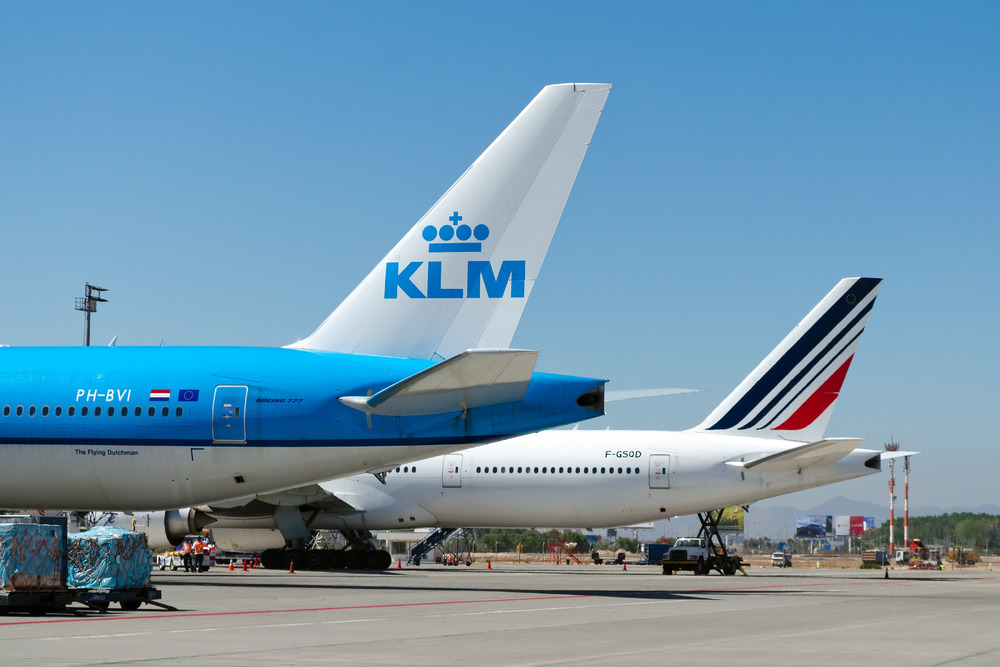
The group led by Air France‑KLM has announced that its Dutch subsidiary KLM Royal Dutch Airlines is under significant pressure as rising charges at Amsterdam’s Schiphol Airport and broad inflation in the Netherlands compel a strategic review of the carrier’s business model. Chief Executive Officer Ben Smith confirmed that “all options are on the table,” noting that the carrier needs to adjust aircraft numbers, fleet types, destinations and staffing to protect profitability.

Group results for the third quarter of 2025 showed an operating profit of €1.203 billion, with an operating margin of 13.1 per cent on revenues of €9.2 billion. While passenger numbers rose 4.7 per cent year-on-year to 29.2 million, unit revenue fell slightly by 0.5 per cent, driven by weaker cargo yields and low-cost operations. The results underscore the contrast between growth in traffic and growing cost headwinds.

KLM, based in the Netherlands and anchored at Schiphol, is especially impacted by local cost escalation. Airport fees at Schiphol jumped by 41 per cent in 2025, the sharpest increase among major European hubs, with KLM publicly calling the rise “unreasonable and unwise”. The carrier is also dealing with inflation-related wage and maintenance cost growth, and declining demand on trans-Atlantic routes.

Smith emphasised that despite the encouraging group-level numbers, KLM’s cost base demands structural adjustment. The carrier must better align capacity with demand, rationalise fleet composition and improve productivity in order to align with the group’s broader “premiumisation” strategy that emphasises long-haul and premium-cabin growth.

Analysts observe that KLM’s challenges reflect a wider trend in the European airline industry, where legacy carriers are grappling with elevated airport charges, staffing pressures and higher regulatory burdens. In KLM’s case, this has triggered management to explore “all levers” including fleet contraction, network rebalancing and even staff reductions. Union leaders and employee groups will be closely monitoring any announcements on workforce adjustments.

From the group’s vantage point, the operational resilience of Air France and its low-cost subsidiary Transavia provide some buffer. For example, the premium cabins at both carriers continue to outperform, supporting higher yields. But the cost pressures at KLM threaten to dilute this upside. With unit costs increasing and revenue growth modest, the margin dynamics at KLM are now a key risk factor for the entire group’s profitability outlook.

Regulatory and competitive contexts complicate the path ahead. Schiphol’s high fees make it less attractive compared with other European hubs and could drive traffic to rivals. That undermines KLM’s hub-based model. At the same time, global demand uncertainties—particularly for business travel to the United States—add another layer of complexity to the group’s planning.

KLM is now said to be accelerating its reviews of aircraft utilisation, evaluating whether older, less efficient models should be retired sooner and whether some routes should be scaled back or handed to Transavia or other affiliates. Management expects that such changes will take time to yield full benefits, while the cost drag remains in place in the interim.

Crypto markets experienced a sharp upheaval as the price of Bitcoin slid below the US $100,000 mark for the first time in approximately six months, while Ethereum plunged to levels near US $3,000. As a result, leveraged positions totalling around US $2 billion were liquidated within a 24-hour period.

The downturn began when Bitcoin fell to about US $99,000, triggering a cascade of forced unwinds in futures and perpetual contracts. According to data providers, more than 80 per cent of these losses stemmed from long bets, amounting to approximately US $1.6 billion. Ethereum’s drop—exceeding 20 per cent over two days—added nearly US $1 billion in liquidations in the same timeframe. The broader crypto market capitalisation slipped to roughly US $3.4 trillion, marking its lowest level in four months.

Analysts point to a confluence of factors driving the sell-off. The Federal Reserve’s cautious comments about future policy signalled the end of easy money for risk assets and prompted a rise in the US dollar index and treasury yields—both typically adverse for cryptocurrencies. Weakening institutional demand compounded the problem, as cumulative outflows from spot Bitcoin exchange-traded funds and related vehicles exceeded US $1.3 billion in the days leading to the crash. Algorithm-driven trades amplified the move: Bitcoin breached its 200-day exponential moving average near US $109,800 and touched technical support around US $100,000, triggering automated sell orders.

The liquidation event has wider implications for investor sentiment and the structure of the crypto market. The so-called Fear & Greed index plunged into the “extreme fear” zone, while open interest in perpetual futures contracts dropped as many leveraged players exited. On-chain metrics show historic wallets transferring tens of thousands of Bitcoin to exchanges, signalling profit taking by long-term holders. Yet some argue the correction could serve as a cleansing phase for the market: by flushing out excessive leverage, the environment may become healthier for the next leg of the cycle.

Despite the turbulence, there are signs that structural demand remains intact. Large-scale buyers such as MicroStrategy continue to accumulate Bitcoin—its holdings now exceed 641,000 BTC. Meanwhile, infrastructure-oriented developments in decentralised physical infrastructure networks and the convergence of blockchain with artificial intelligence are still attracting investor interest. Nevertheless, the immediate path forward is fraught. Analysts now identify a failure to hold US $100,000 for Bitcoin as potentially opening a decline toward the US $92,000–US $94,000 range. For Ethereum, a slide toward US $2,700–US $2,800 is on the radar if momentum fails to stabilise around current levels.

By Salah Uddin Shoaib Choudhury For decades a shadow economy of drugs, counterfeit currency and illicit cash flows has threaded its way across South Asia, North Africa and beyond. What makes this underground economy especially dangerous is not only its scale but the way statecraft, organized crime and violent Islamist militancy appear to intersect – creating a self-reinforcing funding loop for groups that seek to destabilize societies […]

Advertisements

Kyoto-based gaming giant Nintendo has raised its sales projection for the Switch 2 console to 19 million units for the fiscal year ending March 2026, up from a previous estimate of 15 million. The upward revision reflects stronger-than-expectations demand since the hardware’s launch in June. The company reported that as of the end of September, 10.3 million Switch 2 units had been sold globally. Sales momentum has […]

Wall Street’s surge in equity valuations, largely driven by a small group of technology giants, has raised concerns about the shallow nature of the rally and the potential risks that may follow. Leading the pack are companies such as Nvidia, Microsoft and Amazon. com, whose combined market capitalisations and dominant positions in artificial-intelligence-driven sectors are exerting an outsized influence on the broader market. Analysts note that the […]

Dubai’s fuel-retail market marked a shift this week as Emirates Petroleum Company opened its 158th service station, the “Al Buhaira” site in Barsha South, incorporating what the company describes as the GCC’s first dedicated Electric Vehicle Service Centre. This move underscores Emarat’s response to evolving mobility trends as electric vehicles gain traction across the region. Located in Dubai’s New Dubai zone, the Al Buhaira station not only […]

HCM CITY, VIETNAM – Media OutReach Newswire – 4 November 2025 – Ho Chi Minh City Development Joint Stock Commercial Bank (HDBank, stock code HDB) reported consolidated 9M2025 profit before tax of VND14.8 trillion (US$562.4 million), up 17% YoY. Customers conduct transactions at an HDBank branch in HCM City. Profitability indicators remained among the highest in the banking sector, with Return on Equity (ROE) at 25.2% and […]

The dominance of the Magnificent 7 now defines the shape of global markets. Apple, Microsoft, Alphabet, Amazon, Meta, Nvidia, and Tesla account for more than a third of the S&P 500’s total value, up from about 12% a decade ago. Their performance has lifted the index even as most of the remaining companies have moved sideways. The question for investors is whether these firms are overvalued or […]

Istanbul flagged-carrier Turkish Airlines has completed a five-year financing agreement worth 2.9 billion yuan with Bank of China, under the coordination of its Türkiye unit and Macau branch. The deal positions the airline to accelerate fleet expansion, enhance infrastructure at Istanbul Airport and diversify its funding strategy.

The financing aligns with Turkish Airlines’ strategic ambition to raise its fleet to more than 800 aircraft by 2033. The carrier currently operates some 512 aircraft, including 26 freighters, and serves 353 destinations across 131 countries, making it the airline with the broadest country-reach globally.

Chief Financial Officer and board member Murat Şeker described the transaction as a strengthening of the airline’s financial structure and noted it would contribute to deeper economic and cultural collaboration between Türkiye and China. The lender, Bank of China Türkiye, collaborated with its Macau branch to deliver this cross-regional funding solution.

Analysts view the move as a sign of increasing Chinese willingness to facilitate offshore financing in yuan for non-Chinese corporates. Xinhua reports that the loan will also support cargo-business growth and the construction of a new simulator training centre within Istanbul Airport’s ecosystem.

For Turkish Airlines, the financing serves as a milestone in its drive to broaden funding channels beyond traditional Western banking and leasing markets. It arrives after the airline announced major aircraft purchase agreements, including 150 of the Boeing 737 Max family and up to 75 Boeing 787 wide-bodied jets, although final engine supply details remain subject to negotiation.

The infrastructure element stands out: part of the funding is earmarked for new facilities at Istanbul Airport, underscoring Turkish Airlines’ ambition to solidify Istanbul as a global aviation hub. The airline notes that the deal supports “core development initiatives including fleet expansion, business growth, new facility investments and infrastructure projects”.

In a broader context, Türkiye’s aviation sector faces rising costs—fuel, labour and regulatory compliance among them—so locking in a yuan-denominated facility may serve as a hedging mechanism against currency volatility and reliance on US-dollar debt. For Chinese finance, this deal further reinforces the Belt and Road Initiative’s financial architecture and the internationalisation of the yuan.

Despite the positives, risks remain. While Turkish Airlines has grown rapidly—its fleet jumped from about 100 aircraft in 2006 to 500 by 2025—the aggressive expansion strategy faces pressure from global economic uncertainties, competition in the MEA region, and potential over-capacity. Analysts caution that long-term debt commitments must be matched by sustained profitability and disciplined cost control.

Aircraft-financing environments have grown more complex since the pandemic, with lessor appetite curtailed and interest rates trending higher. By turning to a Chinese state-bank facility, Turkish Airlines is signalling both innovation and urgency in addressing its funding needs—but the source and terms of this financing will remain closely watched by investors and market participants.

For Bank of China, the arrangement opens the door to further cross-border deals with regional air-carriers and strengthens the bank’s credentials in aviation market financing outside its traditional geography. Observers say it may trigger similar deals as airlines seek diversified sources of capital and navigate constrained global leasing markets.

Major banks in Nigeria posted solid earnings in the quarter ending September 30 as elevated interest rates and assets repricing lifted income streams, though underlying risks linger. Leading the pack, United Bank for Africa Plc recorded a profit after tax of ₦537.53 billion, up 2.3 per cent from the same period last year. Gross earnings rose 3.0 per cent to ₦2.469 trillion while net interest income climbed […]

BYD Co. has reported another significant dip in its quarterly profit, a trend that highlights growing challenges for the Chinese electric vehicle manufacturer. The company’s financial struggles are attributed to increasing domestic competition and intensified scrutiny within the rapidly expanding electric vehicle market.

The latest figures reveal a sharp drop in profit, signalling a tough period for BYD as it grapples with shifting market dynamics. The EV giant, which has long been a leader in China’s electric car market, is now confronting a series of pressures that have raised questions about its ability to maintain its leading position in the industry.

BYD’s financial results for the latest quarter show a marked decline compared to previous years. While the company has seen significant sales growth, the rapid expansion of competitors and the tightening regulatory environment have severely impacted its profitability. Analysts point to these factors as the key contributors to the company’s poor performance, with increasing competition from both domestic and international manufacturers.

Several key rivals in the Chinese market have ramped up their EV production, offering more affordable models and aggressively targeting a broader consumer base. This surge in competition has intensified the pressure on BYD, forcing it to lower prices and increase marketing efforts to retain market share. However, such strategies have led to reduced margins, contributing to the company’s profitability issues.

Meanwhile, the regulatory landscape for EV manufacturers in China has become more stringent. The government has introduced new policies aimed at tightening emissions standards and ensuring greater transparency in the EV supply chain. These regulations, while necessary for the long-term sustainability of the sector, have added another layer of complexity for companies like BYD, which are already grappling with increasing competition.

Despite these challenges, BYD has maintained its status as one of China’s largest producers of electric vehicles. The company’s leadership has made efforts to pivot and adapt to changing conditions by focusing on new technology and improving vehicle quality. However, analysts suggest that its ability to sustain growth at its current pace may be compromised unless it can effectively manage both competition and regulatory pressures in the coming months.

The company’s performance also highlights a broader trend in the Chinese EV market, where competition is becoming fiercer as both established players and new entrants seek to capitalise on the booming demand for electric cars. International brands are also increasing their presence in the market, further intensifying the competitive pressure on domestic companies like BYD.

The global economic environment is adding to the uncertainty, as supply chain disruptions and fluctuating material costs affect car manufacturers worldwide. For BYD, the cost of raw materials, including lithium, a crucial component for batteries, has surged, further eroding its profitability.

BYD’s management is reportedly focusing on cutting operational costs, improving manufacturing efficiency, and exploring new international markets to counter the pressure it faces at home. The company has already made moves to expand its footprint in Europe, where demand for electric vehicles is steadily increasing. However, this shift to international markets will require significant investment in infrastructure and brand development, which may take time to yield results.

A memecoin tied to a golden statue of Changpeng Zhao, founder of Binance, erected near the U. S. Capitol, plunged roughly 99 per cent after he publicly disowned it. The token, dubbed “CZStatue”, surged by more than 27,000 per cent in a single day before crashing from around 17.5 cents to near zero. It recorded approximately $1.2 billion in trading volume during its brief high—raising red flags around market manipulation and the underlying token contract.

Zhao labelled the project a “quick-buck” scheme and urged his followers not to buy the token, writing: “While I want to appreciate the gesture, the fact that there is a meme coin associated with this means the creator probably just wanted to make a quick buck off an interaction from me. This is something I don’t appreciate. Don’t buy the meme.” Analysts say this public warning triggered a swift loss of confidence among retail investors.

Blockchain data reveals the token contract restricted selling only to the creator, effectively creating a honeypot scenario in which buyers were unable to exit their positions. More than 1,100 wallets remain stuck holding near-worthless tokens, prompting concerns of investor harm and potential regulatory scrutiny. One observer remarked that the episode bore the hallmarks of a “pump and dump” disguised as a fan-driven initiative.

The statue, reportedly a four-metre high golden representation of Zhao making his signature “ignore FUD” gesture, was commissioned by his fan community with plans to gift it to Zhao or auction it for his charity project. The token’s launch capitalised on the statue event, tying the hype to Zhao’s personal brand and the physical monument’s publicity. Zhao issued a social-media statement clarifying he had neither authorised the token nor requested the statue, and reaffirmed his disapproval of profit-driven uses of his likeness.

Cryptocurrency analysts warn that this incident spotlights broader vulnerabilities in the memecoin ecosystem: a blend of social-media hype, celebrity association and unregulated token mechanics. One metrics firm noted that more than 80 per cent of new memecoins in 2025 displayed non-standard contract features that favour insiders and restrict liquidity for retail investors. Regulators in several jurisdictions are stepping up monitoring of such tokens, given concerns around investor protection and potential financial losses.

Net Profit Surges over 25%, Proposed an Interim Dividend of HK 1.0 cent per share Financial Highlights For the six months ended 31 Aug HK$’000 2025 2024 Change Profit before taxation 44,696 35,962 +24.3% Profit for the period attributable to shareholders 38,381 30,535 +25.7% Net profit margin 46.8% 35.1% +11.7 p.p Basic earnings per share (HK cents) 2.0 1.6 +25.0% HONG KONG SAR – Media OutReach Newswire […]

Tech giant Google has announced a $2.85 million funding package to support artificial-intelligence skills development, education, online safety and cybersecurity in South Africa. The funding was disclosed at the AI Expo Africa event in Johannesburg and forms part of Google’s broader continental strategy to cultivate an AI-ready workforce and digital ecosystem. The funding will be channelled through Google. org, the company’s philanthropic arm, and it builds upon […]

Shareholders of the Zurich-listed skincare company Galderma Group AG have secured approximately SFr 2.6 billion through a sale of an 8.4 per cent stake via accelerated book-building, making it the largest secondary share placement since the firm’s IPO. The sale by the consortium led by the private-equity house EQT AB along with the Abu Dhabi Investment Authority and Auba Investment Pte. Ltd. comes after the Swiss dermatology […]

Dubai-listed developer Emaar Properties is sharpening its global expansion strategy by placing a stronger emphasis on India while exercising caution over entry into China’s troubled housing market, according to chief executive and founder Mohamed Alabbar.

Alabbar told the Future Investment Initiative conference in Riyadh that India would be “our next big step,” citing two decades of operations in the country and significant growth potential. He emphasised that, while Emaar remains “very interested in China,” it is holding off until the market shows clear signs of recovery, noting that “it is a different world. Let them recover.”

The directive comes after Emaar posted strong financial results: net profit jumped 25 per cent to AED 18.9 billion last year and rose a further 34 per cent in the first half of 2025, conditions that Alabbar says position the firm to target large market acquisitions rather than start-ups abroad. Emaar’s land-bank footprint already spans more than 1.87 billion sq ft globally, including a 122 million sq ft stake in India and around 175 million sq ft outside the UAE.

In India the driver is rising urbanisation, youthful demographics and a housing deficit that Emaar believes it is well placed to address. Alabbar signalled that the company is pursuing joint-venture partnerships with local groups rather than divesting its Indian operations, dismissing reports of a sale to one of the country’s major conglomerates. By contrast, China presents multiple headwinds including a pronounced housing market slump: new-home prices in 63 out of 70 major Chinese cities fell in September, reflecting a 0.4 per cent month-on-month drop and a 2.2 per cent year-on-year fall.

Analysts say Emaar’s bifurcated strategy makes sense in the context of broader market dynamics. India’s economy is forecast to grow about 6.7 per cent in fiscal 2025-26, according to a Reuters poll, while China is projected to expand by roughly 4.8 per cent amid real-estate weakness. Alabbar noted that the company sees China’s environment as “still suffering with their housing problem, but they’ll come up with it,” stating that Emaar wants to be ready rather than reactive.

Emaar’s preferred mode of overseas expansion appears to be acquiring significant stakes in existing developers, upgrading business models and rolling out its integrated real-estate offering rather than green-field launches. “Maybe you go and buy a majority stake in a developer and then change the way they do business … or maybe they already do good business and we learn from them,” Alabbar explained. That approach aligns with Emaar’s low net debt, elevated cash position and willingness to invest in large markets such as the US, Europe and China.

Critics caution that while India holds promise, foreign developers often face regulatory, land-title and partner-alignment risks. Emaar’s long-standing Indian venture, launched in 2005, endured partner disputes and execution delays, a history that Alabbar acknowledged when he said “we’ve been there 20 years. That’s big for us.” He further noted that successful growth in India depends on selecting the proper location and product mix. Meanwhile, China’s structural property problems are deep-rooted: unsold inventory and falling valuations continue to impair home­buyer confidence, raising questions about the timing of any major developer expansion into the market.

Poland-based defence company WB Electronics SA is exploring a listing on the Warsaw stock exchange as it ramps up investment to exploit expanding European defence funding under the bloc’s new joint armaments initiative. The firm, recognised as the European Union’s largest drone producer by sales, is seeking to convert significant state-backed financial support into production capacity and future growth. Founded in 1997 and led by founder-chief executive […]

By K Raveendran New Delhi appears to be recalibrating its crude-oil sourcing strategy under mounting pressure from Washington, signalling what may be a strategic shift away from Moscow in favour of deeper ties with the United States. Over the past few months, Indian refiners, including the major private player Reliance Industries, have ceased or paused […]

The article India’s Energy Pivot Under Donald Trump’s Tariff Pressure appeared first on Latest India news, analysis and reports on Newspack by India Press Agency).

The US stock market continues to surge, its strength underpinned by robust earnings and an easing policy stance from the Federal Reserve. AI remains the defining force, lifting productivity expectations and propelling capital spending. Wall Street is still the engine of global growth, but attention is beginning to turn elsewhere. A growing number of market participants see the next major wave forming in Asia, led by China […]

Showed Growing Interest in Healthcare Technology Event Featured a 30-second AI Retinal Imaging to Screen 55 Health Risks Instantly HONG KONG SAR – Media OutReach Newswire – 28 October 2025 – “Prevention is better than cure” is a common saying that reflects the concept of “preventive healthcare,” which advocates for citizens to proactively manage their health in daily life to reduce the future financial burden of treating […]

VISHNU RAJA
RYO YAMADA
HITORI GOTOH
IKUYO KITA
Just in:
Russia permits retail cryptocurrency purchases under regulated framework // Padmini follows Padmaja for ‘ghar vapsi’ // Egypt’s African Union trade climbs to $8.2 billion // Technology at Work, Heritage for All: The “Chinese Approach” to Safeguarding the Leshan Giant Buddha // Jaiedco and Golden Bridge Announce Strategic Collaboration for a New Dubai Islands Development // Diabetes Malaysia And Alpro Pharmacy Set National Record With 11,007 Most Blood Glucose Screenings Conducted Across Malaysia In Just 48 Hours // Bail refused to 17-year old in Abhiram murder // Ex-minister named accused in Messi visit fraud case // Sabarimala booking discrepancies prompt sabotage angle probe // Phancy Announces Business Performance for the Nine Months Ended September 30, 2026 // Balagopal challenges CM over tax revenue // ED searches five districts in probe against hawala // Saudi Arabia schedules multinational top-up tax for 2027 // Dubai Introduces SHARH, an AI-Powered Platform Helping Entrepreneurs Buy, Sell and Manage Businesses in the UAE // Dalilk Academy reaches 27 million, targets 100 million by 2030 // US military rebuts Iran’s Gulf F-16 strike allegation // Yeebo Announces Interim Results for FY26/27 Revenue Increases by 45.5% to HK$806.7 Million Profit Attributable to Owners Surges 87.6% to HK$2,284.7 Million // Singapore regulator cautions against AI access to bank logins //
Centre grants aircraft cabin access for Sabarimala pilgrims’ irumudi
// Saudi defences destroy three Houthi missiles targeting Riyadh //