Wizz Air’s first-half net profit plunged 66.6 per cent as higher jet fuel prices and disruption to Middle East operations outweighed strong passenger growth, the European budget airline announced on Thursday. The London-listed carrier reported net profit of €108.1 million for the six months ended 30 September, down from €323.5 million a year earlier. Fuel expenditure climbed 33.7 per cent to €1.24 billion, while revenue increased 13.8 […]
South Korea’s Fair Trade Commission has imposed a record 1.63 trillion won ($1.2 billion) in penalties on 15 banks and securities firms for colluding in government bond auctions over three and a half years.
The competition watchdog announced on Wednesday that the institutions exchanged confidential bidding information across 150 Treasury bond auctions between January 2020 and June 2023. It found that participants went beyond sharing information to coordinate specific bids in 145 auctions, undermining competition in a market central to government borrowing.
The penalties, totalling precisely 1.626575 trillion won, are the largest imposed by the commission in a single case. The regulator also issued corrective orders and decided to refer seven of the institutions for criminal investigation over their involvement in the arrangements.
Those facing referral are Mirae Asset Securities, NH Investment & Securities, Industrial Bank of Korea, KB Securities, Kiwoom Securities, Korea Development Bank and Korea Investment & Securities. The referrals are separate from the financial penalties and do not themselves constitute criminal convictions.
KB Securities received the largest individual penalty, approximately 332.18 billion won, followed by NH Investment & Securities at about 242.79 billion won and Mirae Asset Securities at roughly 214.83 billion won. Seven institutions were each assessed penalties exceeding 100 billion won.
The commission said traders at competing institutions contacted one another by telephone and messaging applications shortly before auction deadlines, exchanging intended yields and bidding quantities. Some discussions occurred just one or two minutes before bids closed, leaving little time between the coordination and submission of offers.
Investigators found that information sharing had become an established practice among participating dealers. Contact details for counterparts at rival institutions were passed to replacement staff during handovers, while internal operating instructions documented arrangements for comparing prospective bidding yields.
Kim Geun-seong, a standing commissioner at the Fair Trade Commission, said the institutions had restricted competition through agreements or exchanges involving bidding yields and quantities. The watchdog determined that the conduct artificially increased successful auction yields, reducing bond prices and raising the government’s financing costs.
A higher yield means the state must offer investors a greater return to borrow money. The commission considers competitive price formation particularly important because government bond yields influence the pricing of other debt instruments and wider financial market interest rates.
The regulator did not disclose a definitive monetary estimate of the additional borrowing costs attributable to the conduct. Its findings therefore establish the direction of the alleged market distortion without assigning a precise fiscal loss to the auctions examined.
The sanctioned group comprises 10 securities companies and five banks. Alongside the seven institutions referred for investigation, the securities firms include Kyobo Securities, Daishin Securities, Meritz Securities, Samsung Securities and Shinhan Securities. The other banks are KB Kookmin Bank, NongHyup Bank and Hana Bank.
All 15 were primary dealers, institutions authorised to participate directly in competitive Treasury bond auctions. Their status gives them a significant role in distributing government securities and establishing prices in the primary market. The investigation covered 15 of the 18 primary dealers operating during the period concerned.
The commission’s decision follows an extended examination of conduct under South Korea’s competition legislation. Its assessment distinguished the exchange of sensitive bidding information from explicit agreements on the terms submitted, while treating both as restrictions on independent competition.
Financial institutions have questioned whether the penalties adequately reflect the structure of the government bond market, where primary dealers purchase securities at auction before distributing them to investors. One representative of a sanctioned institution indicated that the company would consider its response after receiving the regulator’s written decision.
The final penalties were substantially below amounts considered at an earlier stage of the proceedings. The commission took account of the dealers’ intermediary role and the margins available from transactions, rather than treating the entire value of bonds handled as profit from the conduct.
The commission said agreements could be reached within seconds, illustrating how routinely the traders communicated. Its examination also identified one auction involving an agreement on bidding quantities, alongside the broader pattern of directly coordinated yields that affected the competitive process.
The regulator said it would maintain strict enforcement against collusion affecting public-sector transactions. Separately, the finance ministry’s November issuance plan provides for approximately 12 trillion won in Treasury bond sales through competitive bidding, underscoring the continuing importance of the auction mechanism.
Arabian Post Staff -Dubai ADNOC Gas posted third-quarter net profit of $1.34 billion, a 101 per cent increase from the preceding three months, and raised its annual earnings forecast as domestic demand and recovering exports supported its operations. The Abu Dhabi-listed company said on Tuesday that net income rose from $665 million in the second quarter, while earnings before interest, tax, depreciation and amortisation increased 70 per […]
Arabian Post Staff -Dubai First Abu Dhabi Bank has acquired 100 per cent of Bahrain-based Yasira Financial Services, extending its fund administration and trust services business to serve investment managers across public and private markets. The Abu Dhabi lender announced the acquisition on Monday, saying Yasira would be rebranded and incorporated into its Securities Services division. Financial terms were not disclosed, and the bank did not specify […]
The Bank of England has warned that elevated artificial intelligence share valuations could trigger a sharper market correction, potentially spreading losses across financial markets as borrowing to fund the technology’s expansion accelerates. The central bank’s Financial Policy Committee said investors remained vulnerable to disappointment over AI earnings, adoption and infrastructure spending. Its September assessment, published on 30 September, identified growing links between technology shares, debt markets and […]
Arabian Post Staff -Dubai An Abu Dhabi court has found NMC Health founder BR Shetty and former chief executive Prasanth Manghat liable for fraudulent and wrongful trading, setting $5.397 billion as the starting point for assessing their financial responsibility. Justice Sir Andrew Smith delivered the judgment on November 5 in the Abu Dhabi Global Market Court of First Instance, finding that both men knowingly participated in fraudulent […]
Alphabet’s $15 billion investment plan for Malaysia has brought its expanding artificial intelligence infrastructure budget into sharper focus, as investors assess whether surging spending can translate into sustained earnings and cash flow.
Google announced on 4 November that it would invest the money during 2027 and 2028, developing data centre campuses alongside clean energy, water security and workforce programmes. The commitment comes as parent company Alphabet forecasts capital expenditure of $195 billion to $205 billion for 2026 and a further significant increase next year.
The scale of those commitments is central to the debate surrounding Alphabet shares. Demand for AI computing is accelerating, but building capacity requires substantial upfront expenditure on servers, specialised chips, electricity and facilities. Higher depreciation and operating costs could put pressure on profitability before the investments generate their expected returns.
Alphabet has not disclosed how the Malaysian commitment will be divided between its various projects or how much represents spending already incorporated into its group forecasts. The $15 billion therefore cannot simply be added to its published capital expenditure guidance as an entirely separate obligation.
The company’s third-quarter results nevertheless demonstrate the commercial opportunities supporting its investment programme. Revenue rose 25 per cent to $127.6 billion in the three months ended September, while Google Cloud revenue increased 103 per cent to $30.7 billion. Alphabet reported net income of $26.2 billion and an operating margin of 31.8 per cent.
Management has said cloud demand is stretching available computing capacity. It expects sales of its tensor processing unit systems to expand further in 2027, although using third-party computing resources to bridge supply shortages is expected to weigh on cloud margins in the nearer term.
Alphabet’s financial disclosures show that capital expenditure reached $132 billion during the first nine months of 2026, compared with $63.6 billion in the corresponding period of 2025. Depreciation on property and equipment increased to $22 billion from $15.1 billion over the same periods, illustrating how infrastructure investment is already affecting expenses.
The company also disclosed $130.5 billion in future payments associated with leases not yet commenced, primarily involving data centres and energy infrastructure. Those commitments extend across multiple years and are distinct from the cash capital expenditure recorded during the reporting period.
Google’s Malaysian programme includes additional campuses in Selangor and Negeri Sembilan. Its first campus at Elmina Business Park in Selangor is already operating, while computing capacity there will support a planned Google Cloud region serving enterprise customers.
Ruth Porat, president and chief investment officer of Alphabet and Google, said the expansion would provide computing capacity while adding local power and water resources as operations grow. Google said it would pay for all electricity consumed by its campuses and the direct costs of connecting them to the grid.
The company plans to enable more than one gigawatt of additional clean energy capacity on Malaysia’s national grid. Its initiatives include collaboration with Tenaga Nasional Berhad on new generation projects and exploration of electricity supplies capable of meeting demand throughout the day.
Malaysia’s government has welcomed the investment while emphasising the need for domestic economic benefits. Digital Minister Gobind Singh Deo said on 5 November that he had invited Google to explore further cooperation on AI-enabled cities and AI safety, including support for the Malaysian AI Safety Institute. Details of any additional partnership remain pending.
Google estimates that construction of the new campuses during 2027 and 2028 will contribute an annual average of $1.1 billion to Malaysia’s gross domestic product and support more than 37,000 jobs each year. These are company projections rather than employment or economic outcomes already achieved.
Once operational, the facilities are projected to support more than 9,000 jobs annually, including employment connected to local suppliers and services. Google is working with more than 80 Malaysian entities across construction, engineering, logistics and other activities.
Water management is another element of the expansion. Google has announced river basin restoration initiatives and rainwater harvesting systems for four schools in Selangor. It says independent specialists will audit the water benefits, while site-level consumption figures will be disclosed through environmental reporting.
The company has also outlined four training programmes intended to reach approximately 800,000 people between 2027 and 2031. They cover educators, small businesses, public-sector workers and vocational trainees, including planned data centre training institutes at selected polytechnics in Selangor and Negeri Sembilan.
By K Raveendran Wall Street was waiting for an excuse to punish the technology sector, whose extraordinary valuations had increasingly defied conventional measures of profitability and risk. The sweeping defeat of Donald Trump’s Republicans in the American midterm elections provided the trigger, unleashing a sell-off that exposed the fragility beneath the artificial intelligence boom. Yet […]
By Dr. Gyan Pathak Industrial Development Bank of India (IDBI) will soon be placed in a foreign hand, which the nationalist prime minister Narendra Modi’s BJP led NDA government said doing it in the national interest of the country. Employees and officers of IDBI on the other hand went on two days nationwide strike on […]
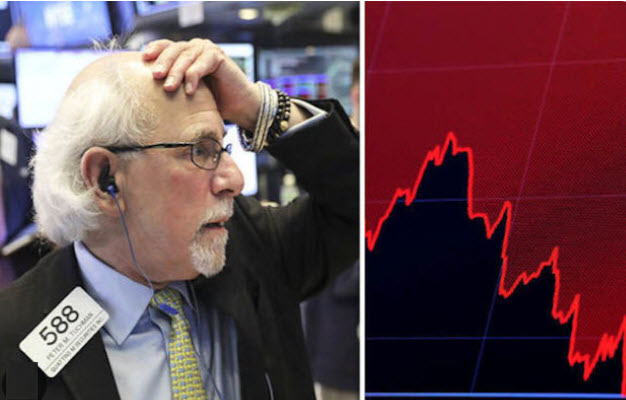
Wall Street suffered a sweeping technology selloff on Thursday as fears over artificial intelligence spending and possible restrictions on data centres drove the Nasdaq Composite into correction territory. The technology-heavy index dropped 5.5 per cent to 24,315, closing nearly 12 per cent below its October peak. The S&P 500 lost 4.4 per cent to 7,353.73, its steepest daily decline since April 2025, while the Dow Jones Industrial […]
Arabian Post Staff -Dubai Dubai’s Emaar Properties has approved a cash offer to acquire the remaining shares in Emaar Development, paving the way for the subsidiary’s potential delisting from the Dubai Financial Market in a transaction worth approximately Dh11.9 billion ($3.24 billion). The board-backed proposal offers minority shareholders Dh15 per share for the 19.8387 per cent stake not already controlled by Emaar Properties and its indirectly wholly […]
Arabian Post Staff -Dubai The Emirates Group posted AED 4.1 billion ($1.1 billion) in pre-tax profit for the six months ended September, as the Gulf conflict and higher fuel costs sharply reduced earnings from a year earlier. The Dubai aviation group said on Thursday that profit before tax fell from AED 12.2 billion in the corresponding period of 2025-26. Profit after tax declined by 66 per cent […]
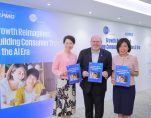
New research from KPMG China and GS1 Hong Kong highlights three key priorities for retailers: building trust in AI, delivering market-specific strategies for the growing silver economy, and strengthening brand confidence across Hong Kong and other cities in the Greater Bay Area
HONG KONG SAR – Media OutReach Newswire – 4 November 2026 – Consumer confidence in artificial intelligence is rising across Hong Kong and other cities in the Greater Bay Area (GBA), but new research from KPMG China and GS1 Hong Kong shows that retailers will need markedly different strategies to convert that confidence into growth. While consumers in other GBA cities show greater openness to personalised experiences and Chinese Mainland brands, Hong Kong consumers place more emphasis on value for money.
The Growth Reimagined: Building Consumer Trust in the AI Era report identifies three themes which have emerged as a roadmap for future growth:
Trusted AI builds consumer confidence: AI can enhance personalisation and speed up service delivery, but privacy, accuracy, transparency and a human touch will determine consumer adoption.
Silver shoppers diverge by market: To capture the growing silver economy, brands must prioritise price in Hong Kong, and brand reputation and engaging experiences in other GBA cities.
The low-cost-only label no longer fits Chinese Mainland brands: Their advances in quality and innovation are forcing competitors to rethink where future brand advantage will come from.
AI trust is rising but a transparency gap persists, creating new opportunities for growth
Trust in AI has risen significantly since last year’s survey. In Hong Kong, 48% of consumers now trust AI at least somewhat, up from 28%, while trust in other GBA cities has increased from 59% to 76%. Yet growing trust has not translated into the same willingness to share personal data: just 10% of Hong Kong consumers who trust AI are comfortable doing so, compared with 32% in other GBA cities.
The difference in AI trust between Hong Kong and other GBA cities is particularly pronounced among silver shoppers, defined in the report as consumers aged above 55. Just 38% of Hong Kong silver shoppers trust AI, compared with 76% in other GBA cities, underscoring the challenge retailers face in building AI confidence among older Hong Kong consumers.
To bridge this gap, retailers in Hong Kong need to demonstrate clear value before asking consumers to share more data, while providing transparency and control over how their data is used. Consumer confidence should extend across the entire retail journey: from payment and product authenticity to returns and customer support. AI should help consumers find what they need more easily, while maintaining accuracy, fairness and access to human support.
Anna Lin, Chief Executive, GS1 Hong Kong, says: “AI is increasingly shaping how consumers discover and evaluate products, and it tends to recommend those backed by data it can readily interpret and trust. Businesses with trusted, standardised product data that is structured for machines to understand and use and traceable to an identifiable source will be best positioned to earn consumer confidence and influence future purchasing decisions.”
The silver economy is not a single consumer market
Across all age groups, value remains a priority for 73% of Hong Kong consumers, compared with 45% in other GBA cities.
When asked to describe their shopping style, 57% of silver shoppers in Hong Kong identify primarily as value shoppers, compared with only 23% in other GBA cities, where brand reputation, at 37%, and shopping experience, at 27%, emerge as their leading considerations.
The findings suggest that age alone is not enough to define the silver shoppers. Retailers looking to capture the opportunities created by the region’s ageing population will need to understand how expectations differ by market, and develop propositions that reflect those differences.
Alice Yip, Partner, Head of Consumer & Retail, Hong Kong SAR, KPMG China, says: “Growth in the silver economy depends on recognising that shoppers’ priorities differ across markets. Hong Kong’s silver shoppers prioritise competitive prices, while those in other GBA cities place greater emphasis on brand reputation and shopping experiences. Capturing this opportunity involves understanding what matters locally and tailoring the retail offer accordingly, rather than treating the silver economy as one uniform market.”
Chinese Mainland speed raises the stakes for Hong Kong and global brands
Chinese Mainland brands are emerging as a stronger force in innovation and speed. In other GBA cities, that progress is already reflected in consumer perceptions: 64% choose them for value for money, 58% for safety and reliability and 50% for brand reputation.
In Hong Kong, however, they are still seen primarily through the lens of value. While 81% of consumers choose Chinese Mainland brands for value for money, fewer cite safety and reliability (39%), higher quality (33%) or brand reputation (31%). Their next opportunity is to turn Chinese Mainland speed and improving quality into stronger brand confidence.
Hong Kong brands retain a clear advantage in trust. Consumers in Hong Kong (74%) and other GBA cities (61%) cite safety and reliability as the leading reason for choosing Hong Kong brands. Among Hong Kong consumers, preference for Hong Kong brands is particularly strong in airlines (78%) and food and beverages (71%).
But trust cannot be taken for granted. As Chinese Mainland brands strengthen their safety and reliability credentials, Hong Kong brands will need to combine their reputation for reliability with greater innovation, sharper value and faster execution.
Anson Bailey, Head of Consumer & Retail, Asia Pacific, KPMG China, says: “Any brand that still sees Chinese Mainland competitors as a low-cost threat is looking in the rear-view mirror. Chinese Mainland speed is now producing better products, sharper design and faster innovation at a scale few markets can match. The real shift is that Chinese Mainland brands are learning to build brand equity at the same pace as they have built scale through value and speed. This is increasingly influencing who can win – not only in the GBA, but in consumer markets worldwide.”
Hashtag: #KPMG #GS1HongKong
The issuer is solely responsible for the content of this announcement.
About KPMG
KPMG in China has offices located in 31 cities with over 14,000 partners and staff, in Beijing, Changchun, Changsha, Chengdu, Chongqing, Dalian, Dongguan, Foshan, Fuzhou, Guangzhou, Haikou, Hangzhou, Hefei, Jinan, Nanjing, Nantong, Ningbo, Qingdao, Shanghai, Shenyang, Shenzhen, Suzhou, Taiyuan, Tianjin, Wuhan, Wuxi, Xiamen, Xi’an, Zhengzhou, Hong Kong SAR and Macau SAR. It started operations in Hong Kong in 1945. In 1992, KPMG became the first international accounting network to be granted a joint venture licence in the Chinese Mainland. In 2012, KPMG became the first among the “Big Four” in the Chinese Mainland to convert from a joint venture to a special general partnership.
KPMG is a global organisation of independent professional services firms providing Audit, Tax and Advisory services. KPMG is the brand under which the member firms of KPMG International Limited (“KPMG International”) operate and provide professional services. “KPMG” is used to refer to individual member firms within the KPMG organisation or to one or more member firms collectively.
KPMG firms operate in 138 countries and territories with more than 276,000 partners and employees working in member firms around the world. Each KPMG firm is a legally distinct and separate entity and describes itself as such. Each KPMG member firm is responsible for its own obligations and liabilities.
About GS1 Hong Kong
GS1 Hong Kong is the local chapter of GS1®, a global, not-for-profit data standards organisation represented in over 120 countries. Through globally recognised standards such as GTIN (barcodes), we enable businesses to identify, capture and share trusted data across physical and digital supply chains, helping them accelerate digital transformation, access global markets, strengthen supply chain resilience and efficiency, and advance transparency, safety and sustainability.
Building on global data standards, GS1 Hong Kong provides solutions including ezTRADE for B2B data exchange, ezTRACK for supply chain traceability, and 1QR, powered by GS1 Digital Link, connecting 2D barcodes to rich product information such as certifications and sustainability data.
The trusted data infrastructure also supports emerging business needs, from trade finance to Scope 3 emissions reporting and ESG compliance. In an AI-driven economy, we provide the foundation for high-quality data that is accurate, visible, linkable, searchable, shareable and traceable.
GS1 Hong Kong supports close to 8,000 corporate members across 20 sectors, including retail and consumer goods, food and beverage, healthcare, apparel and footwear, logistics and ICT.
Binance has drawn down roughly half the bitcoin held in its emergency customer protection fund, leaving assets worth about $580 million following a $6.3 billion cryptocurrency theft. Blockchain records show that the exchange’s publicly identified Secure Asset Fund for Users, known as SAFU, held slightly more than 7,500 bitcoin on Tuesday, compared with 15,000 in February. Four transactions on 31 October sharply reduced the balance, with Binance […]
Austria’s bank99 is expanding into small-business banking with a new range of accounts, savings products and payment cards, using the country’s extensive postal network to reach companies beyond major cities. The Austrian Post-controlled lender announced the business99 offering on Monday, targeting sole traders, partnerships and incorporated companies. Its strategy combines digital account opening with access to banking assistance and cash services at post offices and postal partners […]
Arabian Post Staff -Dubai BYD has designated the Gulf Cooperation Council its leading international expansion priority, announcing plans for additional investment, a regional spare-parts hub and broader technology operations beyond vehicle sales. Executive vice-president Stella Li said the Chinese automotive group intends to strengthen its dealership network and after-sales services while exploring opportunities in battery storage, autonomous driving and robotics across Gulf markets. “The GCC is my […]
Crypto. com and OG. com have begun offering cryptocurrency perpetual futures to eligible US traders, introducing round-the-clock contracts with leverage of up to five times through federally regulated derivatives infrastructure. The rollout, announced on 27 October, gives retail customers access through the Crypto. com App, while institutional and advanced traders can use the Crypto. com Exchange. The contracts have no fixed expiry date and allow participants to […]
Britain has defended public backing for Rolls-Royce’s return to the narrowbody aircraft engine market, arguing that international competition and the need to protect aerospace employment justify government involvement despite the manufacturer’s strong profits. Industry Minister Blair McDougall said on Friday that governments had traditionally shared the risks associated with developing aircraft engines. His comments followed an agreement between Rolls-Royce and the government on a proposed £2.5 billion […]
US President Donald Trump’s description of Norway as a “shithouse country” has prompted a pointed response from its tourism agency, which is promoting the country’s scenic public toilets after his attack over the Nobel Peace Prize. Visit Norway has circulated a campaign highlighting unusual and picturesque lavatories under the slogan “Norway makes shithouses great again”, turning the president’s remarks into an opportunity to advertise the country’s landscapes. […]
Arabian Post Staff -Dubai Nasdaq Dubai marked the listing of a $500 million sukuk from Sharjah Islamic Bank on Thursday, following an offering that attracted $1.3 billion in investor orders, more than twice the amount available. The five-year, senior unsecured Islamic financing instrument, issued through SIB Sukuk Company III Limited, carries a profit rate of 5.850 per cent and matures in September 2031. The securities are listed […]
Arabian Post Staff -Dubai Abu Dhabi Judicial Department (ADJD) has secured four awards at the 23rd International Business Awards 2026, including one gold and three silver distinctions, recognising its performance in judicial administration, institutional governance and public service innovation. The department received the Gold Stevie Award in the Large Legal Organisations category, alongside Silver Stevie Awards for Innovation in Public Administration and Governance, Operational Excellence, and Large […]
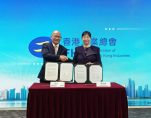
HONG KONG SAR – Media OutReach Newswire – 29 October 2026 – From October 19 to 20, an economic and trade delegation from Hainan Province paid a visit to Hong Kong. The delegation signed memoranda of cooperation respectively withThe Chinese Manufacturers’ Association of Hong Kong(CMA)and the Federation of Hong Kong Industries(FHKI) to advance pragmatic cross-border collaboration between Hainan and Hong Kong in trade and investment, manufacturing industrial chains and professional services.
Signing ceremony for the cooperation memoranda
During its stay in Hong Kong, the delegation visited the CCPIT Representative Office in Hong Kong. It held discussions with CMA and co-hosted the Hainan Free Trade Port (Hong Kong) Economic and Trade Cooperation Exchange Meeting with FHKI. The event showcased the policies, key industrial layout and investment opportunities of the Hainan Free Trade Port (FTP), and arranged one-on-one business matchmaking between Hainan and Hong Kong enterprises.
Wang Yuyuan, Vice President of the China Council for the Promotion of International Trade Hainan Sub-council (CCPIT Hainan) and China Chamber of International Commerce Hainan Chamber of Commerce, noted that since the official launch of island-wide special customs operations at the Hainan FTP on December 18, 2025, 174,000 new enterprises have been registered, representing a year-on-year surge of 95.9 percent. Newly established foreign-invested enterprises rose by 35.8 percent year on year. In the first half of this year, inbound and outbound tourist arrivals exceeded 70 million, up 28 percent year on year, with the number of visa-free entry countries expanding to 88. From January to August, the province’s total goods import and export volume hit 250 billion yuan, growing by 61.5 percent year on year. Hainan is rapidly emerging as a critical gateway connecting China with the rest of the world and a prime channel for two-way investment.
According to CCPIT Hainan, Hong Kong ranks as a major source of foreign investment for Hainan. In the first half of this year, Hainan registered 1,303 new foreign-invested enterprises, an increase of 38.62 percent year on year, with Hong Kong-funded enterprises accounting for the lion’s share. Hainan has issued offshore RMB local government bonds in Hong Kong for four consecutive years, with a cumulative issuance volume reaching 18 billion yuan.
CMA is one of Hong Kong’s most representative non-profit industrial and commercial bodies, with around 3,000 member enterprises. It has long provided members with business services including exhibitions, brand promotion, testing and certification. FHKI, one of Hong Kong’s four major chambers of commerce, has approximately 2,000 corporate members. It focuses on boosting the sustained development of Hong Kong industry and manufacturing through policy advocacy, business matchmaking, certification services and youth talent cultivation.
The two memoranda explicitly stipulate that the two sides will establish a regular liaison mechanism, build a long-term cooperation platform covering information sharing, business matchmaking, exhibition collaboration and professional services, and provide solid support for pragmatic business cooperation between Hainan and Hong Kong enterprises.
Source: China Council for the Promotion of International Trade Hainan Provincial Committee (CCPIT Hainan)
Hashtag: #CPITHainan
The issuer is solely responsible for the content of this announcement.
Personal information concerning more than 40,000 employees and contractors of the US Department of Homeland Security has been published online, exposing staff involved in surveillance, intelligence gathering and undercover operations. Distributed Denial of Secrets, a nonprofit organisation that publishes leaked material, announced the release on Wednesday. The records contain names, work telephone numbers, email addresses, job titles and internal group memberships across several federal security agencies. The […]
Opposition leader Pinarayi Vijayan on Wednesday accused the Kerala government of pursuing a sustained campaign against the Kerala Infrastructure Investment Fund Board (KIIFB), alleging that Chief Minister V D Satheesan was disregarding its contribution to infrastructure development. Addressing a press conference in Th…






 www.gs1hk.org