News related to
profit

By Saifur Rahman The Emirates Group, which operates the world’s largest airline Emirates and its ground handling and ticketing arm Dnata, reported a 7 percent growth to record $6.6 billion (Dh24.4 billion) profit before tax in its 2025-26 financial year ending March 31, 2026, despite a disruption of flight operations during the US-led attach on Iran and its fall-out on the regional aviation industry from February 28, […]

Snap has confirmed the quiet end of its $400 million artificial intelligence partnership with Perplexity, removing a high-profile growth lever from its 2026 outlook just as the Snapchat parent faces pressure from uneven advertising demand, geopolitical disruption and a deeper push for cost discipline. The agreement, announced in November 2025, was designed to bring Perplexity’s conversational answer engine into Snapchat’s Chat interface, allowing users to ask questions […]

Greenlogue/AP Climate campaigners have accused Shell of turning wartime turmoil into a fossil-fuel windfall after the group reported first-quarter adjusted earnings of $6.9bn, lifted by higher oil and gas prices, stronger trading and improved refining margins. The London-listed energy major’s profit was more than double the $3.26bn recorded in the final quarter of last year and above market expectations of about $6.36bn. The figures have sharpened scrutiny […]

Tether is positioning USDT as a core payments and liquidity layer for the Bitcoin economy, with chief executive Paolo Ardoino framing the stablecoin issuer’s strategy as a long-term infrastructure project rather than a conventional crypto trading business. Ardoino has likened the company’s approach to Isaac Asimov’s Foundation series, arguing that durable systems must be built before periods of financial stress expose weaknesses in existing institutions. The comparison […]

Ethereum Foundation has sold another 10,000 ETH to BitMine Immersion Technologies through an over-the-counter transaction, extending a series of treasury sales that has drawn scrutiny from the crypto market as staking withdrawals climb and institutional ETH accumulation intensifies. The latest deal was priced at an average of $2,292.15 per ETH, raising about $22.9 million for the non-profit organisation behind Ethereum’s core development ecosystem. It followed a 10,000 […]

China’s push into humanoid robots is emerging as a new test of its ability to convert industrial policy, supply-chain depth and scale manufacturing into export power, with Morgan Stanley research arguing that the sector could help lift the country’s share of global manufacturing by the end of the decade.

Economists led by Chetan Ahya have drawn a parallel with electric vehicles, where early policy support, component localisation and aggressive production expansion turned China from a fast follower into the world’s dominant exporter. Their research projects China’s share of global manufacturing could rise to 16.5 per cent by 2030, from about 15 per cent now, as advanced automation and embodied artificial intelligence move from demonstration projects into factory and logistics use.

The bullish case rests on China’s widening lead in humanoid robot production. Industry estimates show the country produced about 12,800 humanoid robots in 2025, close to 90 per cent of global output, though the market remains tiny compared with conventional industrial robotics. China also remains the world’s largest industrial robot market, accounting for more than half of global factory robot installations in 2024, with an operational stock above 2 million units.

That foundation matters because humanoid robots require the same manufacturing strengths that supported China’s rise in solar panels, batteries and electric vehicles: precision motors, sensors, actuators, batteries, control systems, machine vision and low-cost assembly. Local companies are building ecosystems around these components, while provincial governments are offering subsidies, industrial parks and procurement support to accelerate commercial deployment.

Beijing has identified humanoid robots as a strategic industry, setting targets for mass production and global leadership while integrating robotics into wider plans for artificial intelligence and advanced manufacturing. The 15th Five-Year Plan framework is expected to place AI-powered robots near the centre of industrial upgrading, although large-scale commercialisation is more likely toward the later part of the plan period than immediately.

The sector’s momentum has drawn major private capital. Start-ups such as Unitree, UBTech, AgiBot and Fourier Intelligence have moved quickly from stage demonstrations to pilot factory and warehouse deployments. Linkerbot, a fast-growing maker of dexterous robotic hands, is seeking a valuation of about $6 billion after building a strong position in high-degree-of-freedom robotic hands used in humanoids and industrial systems. Its modular products point to an important feature of the market: some of the earliest profits may come from components rather than complete humanoid machines.

Automakers and electronics groups are also moving into the field. Xpeng has said humanoid robotics could become a long-term investment area alongside electric vehicles, while other manufacturers are testing robots for inspection, sorting, materials handling and repetitive shop-floor tasks. The logic is clear. China faces an ageing workforce, rising labour costs in coastal manufacturing hubs and growing pressure from tariff barriers. A successful humanoid robotics industry could help preserve competitiveness even as low-cost labour advantages fade.

The export implications are broader than robot sales. If humanoids improve productivity in Chinese factories, they could lower production costs across electronics, machinery, appliances and consumer goods. That would reinforce the country’s position in global supply chains at a time when the United States, Europe and several Asian economies are trying to reduce dependence on Chinese manufacturing. It could also create a new export category in robots, components, software and maintenance services.

Yet the constraints remain substantial. Humanoid robots are still expensive, often have limited battery life and struggle with unstructured environments. Many can perform scripted tasks in controlled settings but fall short when asked to handle the speed, judgement and dexterity of human workers. Even executives in China’s robotics industry acknowledge that factory humanoids remain less efficient than people in many jobs. Safety certification, liability rules, data protection and workplace integration will also affect adoption.

Dependence on high-end chips and advanced software ecosystems is another weakness. US restrictions on AI semiconductors have pushed Chinese firms to localise more hardware, but training and deploying capable embodied AI systems remains compute-intensive. Without steady access to cutting-edge chips, progress may be uneven, particularly in models that require real-time perception, movement planning and continuous learning.

Arabian Post Staff -Dubai   Almarai has signed a one-year agreement in Riyadh to provide essential medication for children living with rheumatism, widening private-sector support for families facing long-term treatment costs and limited access to specialised care. The agreement with the Charitable Association for Rheumatism Patients is aimed at children whose health can deteriorate when diagnosis, medication and follow-up care are delayed or interrupted. The initiative is […]

Advertisements

Arabian Post Staff -Dubai ADNOC Drilling is targeting an equal revenue split between its core drilling business and manufacturing-linked oilfield services within five years, signalling a deeper push into local industrial capacity as Abu Dhabi’s energy sector widens its role beyond upstream operations. Youssef Salem, Chief Financial Officer of ADNOC Drilling, said the company aims to generate about 50 per cent of revenue from drilling and 50 […]

A war that threatens the flow of one-fifth of the world’s oil supply should be dominating market pricing. It isn’t. President Donald Trump has pushed the US deeper into confrontation with Iran, locking policy into a narrow and dangerous path. The Strait of Hormuz remains under constant threat, energy flows are disrupted, and, as a result, oil has surged above $110 a barrel at points in recent […]

Arabian Post Staff -Dubai   Abu Dhabi’s family business ecosystem is set for a new layer of banking support after the Abu Dhabi Family Business Council signed a memorandum of understanding with Abu Dhabi Islamic Bank to provide tailored financial services, priority banking access and dedicated digital channels for member companies. The agreement establishes a structured framework for cooperation between ADFBC and ADIB, bringing together a council […]

Arabian Post Staff -Dubai AD Ports Group has signed a memorandum of understanding with CMA Terminals Khalifa Port and CMA CGM Group to extend container logistics beyond Khalifa Port into inland markets across the UAE and the wider region, sharpening Abu Dhabi’s bid to become a more integrated trade and distribution hub. The agreement, signed on Tuesday, brings together AD Ports Group’s consolidated inland intermodal network with […]

Arabian Post Staff -Dubai London-listed Man Group is moving to establish an office in Abu Dhabi, adding fresh momentum to the UAE capital’s drive to become a larger global centre for hedge funds, alternative assets and private capital. The firm, one of the world’s biggest publicly traded hedge fund managers, has applied for a Category 3A licence at Abu Dhabi Global Market, the emirate’s international financial centre. […]

Wall Street’s latest rally is being driven less by relief over geopolitics than by a force investors can measure more easily: earnings. Morgan Stanley strategists say the strength of US corporate profits, led by technology companies, is giving equities enough support to look beyond the market risks created by the Iran conflict and the disruption around the Strait of Hormuz. The bank’s team, led by Michael Wilson, […]

Tether is sharpening its claim that USDT has become core financial plumbing for the Bitcoin economy, as chief executive Paolo Ardoino frames the world’s largest stablecoin as a long-duration infrastructure project rather than a trading token built for crypto cycles. Ardoino has compared Tether’s approach to Isaac Asimov’s Foundation universe, using the analogy to stress resilience, preparation and systems designed to outlast political and financial disruption. The […]

Swiss lawmakers are opening a politically charged debate in Bern that could determine how much capital UBS Group must hold after its takeover of Credit Suisse, setting the stage for a confrontation between financial stability concerns and fears over Switzerland’s competitiveness as a banking centre. A 13-member parliamentary panel is meeting on Monday to begin work on proposed changes to the Banking Act, a legislative package shaped […]

Ooredoo has launched Smart Wi-Fi Analytics in Qatar, giving large venues and enterprises a tool to convert everyday wireless connectivity into real-time operational intelligence for business, customer experience and network management. The service has been introduced as an add-on to Ooredoo’s existing Smart Wi-Fi portfolio and is designed for high-density environments such as shopping malls, universities, large office buildings, hospitality venues and other sites where thousands of […]

Asian equities advanced sharply on Monday as artificial intelligence-linked chipmakers in South Korea and Taiwan drove regional benchmarks back towards record territory, erasing the losses triggered by the Iran war and restoring investor appetite for technology-heavy markets.

The MSCI Asia Pacific Index rose as much as 2.3 per cent on May 4, its strongest intraday gain since April 8, while the MSCI Asia Pacific excluding Japan Index climbed as much as 2.9 per cent. Benchmarks in South Korea and Taiwan, both heavily exposed to the semiconductor supply chain, gained more than 4 per cent each as investors moved back into companies seen as central to the global AI build-out.

The rally was led by the region’s dominant AI hardware suppliers, including Taiwan Semiconductor Manufacturing Co, Samsung Electronics and SK Hynix. These companies sit at crucial points of the AI infrastructure chain, from advanced foundry production to high-bandwidth memory chips used in data centres and graphics processors. Strong earnings from US technology groups have reinforced expectations that capital spending on AI servers, accelerators and cloud infrastructure will remain elevated through 2026.

TSMC has become the clearest symbol of that shift. The world’s largest contract chipmaker posted a 58 per cent jump in first-quarter net profit to a record level, supported by demand for AI processors, and guided second-quarter revenue to $39 billion to $40.2 billion. Its first-quarter revenue rose 35 per cent from a year earlier to about $35.7 billion, underlining the scale of orders tied to advanced computing.

Samsung’s semiconductor division also delivered a major earnings rebound, reporting 53.7 trillion won in operating profit for the first quarter on 81.7 trillion won in revenue. The group said memory sales were lifted by AI-related demand and tight supply, even as its mobile and display businesses faced margin pressure from higher component costs.

SK Hynix has benefited from its strong position in high-bandwidth memory, a category that has become central to AI accelerator performance. Demand from data centre operators and chip designers has pushed memory makers into long-term supply arrangements, with shortages expected to extend into 2027 as customers reserve capacity years ahead.

Taiwan’s broader market has also gained from the AI trade. The island’s economy expanded 13.69 per cent in the first quarter, its fastest annual pace in nearly four decades, supported by a surge in exports tied to AI hardware. Taiwan has overtaken Canada to become the world’s sixth-largest stock market by value, helped by TSMC’s rise and investor demand for companies embedded in advanced chip manufacturing.

Investor confidence has been strengthened by Nvidia’s expanding Asian supply chain. Its partners now span foundries, memory suppliers, electronics assemblers and companies linked to robotics and so-called physical AI. The shift has widened the rally beyond a handful of chip names, lifting component makers and specialist suppliers that provide substrates, packaging, power management and memory-related technologies.

The rebound also reflects a broader reassessment of geopolitical risk. The Iran war initially prompted investors to cut exposure to export-oriented and energy-importing markets, particularly those vulnerable to shipping disruptions and higher fuel costs. Yet the scale of AI-related earnings growth has helped offset those concerns, with funds favouring economies that are directly tied to semiconductor demand and less dependent on domestic consumption.

South Korea’s Kospi has been one of the year’s standout performers, supported by Samsung, SK Hynix and other technology exporters. Taiwan’s Taiex has also outperformed as investors price in continued demand for advanced nodes, AI servers and high-performance computing. The concentration of gains, however, has increased concerns that regional indices are becoming more dependent on a narrow set of semiconductor companies.

Valuations remain a key risk. Share prices in several AI-linked companies have risen faster than earnings forecasts, leaving markets exposed to any slowdown in capital expenditure by US cloud providers or delays in chip production. Memory supply shortages may support pricing in the near term, but they could also raise costs for downstream electronics makers and intensify competition among suppliers expanding capacity.

Currency movements have added another layer to the market response. A weaker won has supported earnings translation for South Korean exporters, while Taiwan’s market has drawn stronger foreign inflows on expectations that AI-linked exports will keep growth elevated. Japan’s yen strengthened during Monday’s regional trading, reflecting a mix of safe-haven demand and shifting expectations around monetary policy.

Matein Khalid As the world’s leading trading power, China’s vast export engine fuelled a $1.2 trillion current account surplus in 2025. At the same time, it is the largest importer of crude oil globally, with around 40 percent sourced from the Middle East. This exposure gives Beijing a clear stake in Gulf stability – prioritising secure maritime transit through energy chokepoints and uninterrupted access to the GCC’s trillion-dollar development […]

Arabian Post Staff -Dubai Samsung Electronics has signalled plans to expand its wearable device ambitions into AI glasses, even as it warned that a deepening global memory shortage could intensify through 2027 and raise costs across consumer electronics, servers and mobile devices. The remarks came during the company’s first-quarter 2026 earnings call, where executives linked the squeeze in RAM and storage supply to the rapid build-out of […]

Blockchain investigator ZachXBT has sharpened scrutiny of Sam Altman-linked World, accusing the biometric identity and crypto project of using a low-float token structure and incentives that placed poorer users at the centre of a controversial data-gathering model. The criticism, posted on X and amplified across crypto markets, focused on Worldcoin’s WLD token distribution, its iris-scanning sign-up system and the risk that verified accounts could be traded through […]

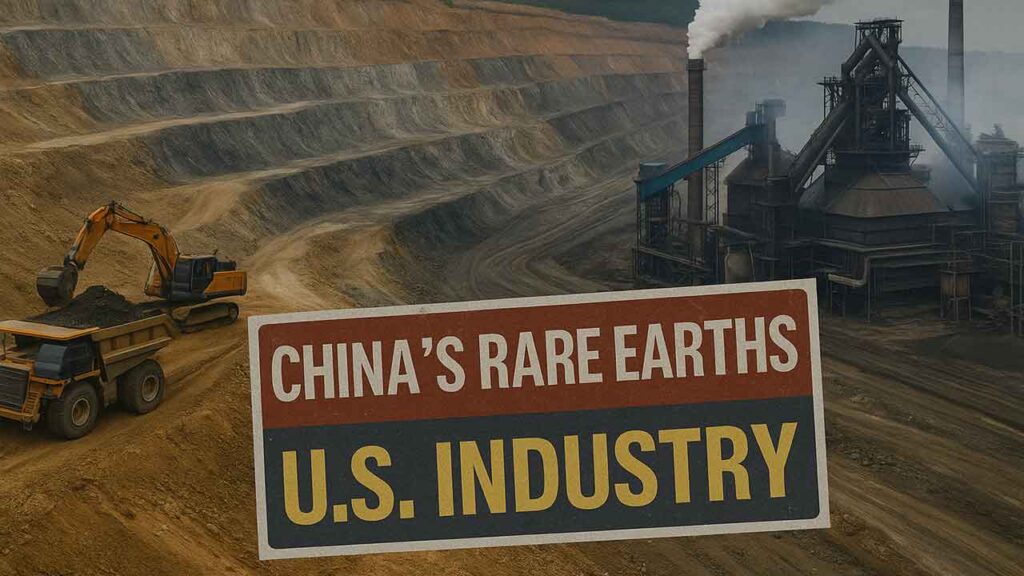
Beijing’s move to sharpen penalties for unauthorised rare earth production sent shares of major producers higher, as investors assessed a tougher enforcement regime that could curb illegal supply and reinforce China’s control over a sector central to clean energy, defence and advanced manufacturing.

China’s Ministry of Industry and Information Technology has opened public consultation on detailed penalty benchmarks under the Rare Earth Management Regulations, setting out how authorities should punish breaches involving mining, smelting, separation, product circulation and data reporting. The draft rules target companies and individuals that exceed state production quotas, operate without approval, process illicit raw materials, falsify traceability data or obstruct inspections.

The consultation runs until 28 May, adding another layer to a regulatory structure that took effect on 1 October 2024. The framework places rare earth mining, smelting and separation under a “total control” system, giving Beijing formal authority to set production limits and police flows across the supply chain. The new penalty table is designed to narrow discretion in enforcement by grading violations according to value, volume, frequency and consequences.

Rare earth-linked equities climbed in Shanghai and Shenzhen after the announcement. China Northern Rare Earth, China Rare Earth Resources and Technology, Huahong Technology and other names tied to mining, processing and permanent magnets moved sharply higher during Wednesday trading. The rare earth permanent magnet segment also advanced, helped by firmer prices for praseodymium-neodymium products and stronger first-quarter earnings from leading producers.

Investors read the draft as a supply-side signal. Stricter penalties could reduce unapproved output that has historically weighed on pricing during periods of weak demand. For larger quota-holding groups, tighter enforcement may support margins by giving compliant producers a stronger position in pricing and procurement. China Northern Rare Earth reported a first-quarter net profit of about 918 million yuan, more than double the level a year earlier, helped by higher average prices for core rare earth products. China Rare Earth Resources and Technology also posted a sharp rise in quarterly profit as prices for selected products improved.

The proposed penalties are substantial. Unauthorised smelting and separation, misuse of rare earth mineral products by recycling or comprehensive utilisation companies, and trading in illegal rare earth products can lead to confiscation of products, unlawful income and related equipment. Fines may reach five to 10 times unlawful gains, while cases with no gain or gains below defined thresholds can still attract penalties running into millions of yuan. Serious breaches can result in business licence revocation.

Traceability is a central element of the enforcement push. Companies that fail to record, upload or maintain data on product flows face fines and possible suspension if they refuse to rectify violations. The system is intended to make it harder for illegal ore, semi-processed products or recycled materials to enter formal supply chains undetected. It also strengthens the state’s ability to align domestic output with industrial policy, export controls and strategic stockpiling objectives.

Rare earths comprise 17 elements used in permanent magnets, electric vehicles, wind turbines, smartphones, robotics, missile guidance systems, radar, drones and precision equipment. China accounts for roughly 70 per cent of global rare earth mining and an even larger share of processing, refining and magnet manufacturing. That position gives Beijing significant influence over a supply chain that remains difficult and costly for other economies to replicate.

The policy shift comes against a backdrop of heightened competition over critical minerals. Export controls introduced in 2025 placed rare earth materials and related technologies at the centre of trade negotiations and industrial security planning. Licensing delays and tighter availability of high-performance magnets have already affected downstream manufacturers, particularly in automotive, electronics and defence-linked industries.

Western governments and companies are trying to build alternative supply chains, but progress remains uneven. Mining projects in the United States, Brazil, Australia, Greenland and parts of Africa have attracted capital, while magnet-making and separation capacity outside China remains limited. Processing is the central bottleneck, requiring specialised technology, environmental safeguards and long approval timelines. New ventures can take years to move from exploration to commercial output, leaving buyers exposed to Chinese policy decisions.

Environmental enforcement is also part of the equation. Illegal mining and poorly controlled processing have caused soil, water and radioactive waste concerns in several producing regions. Tougher penalties can be framed not only as an industrial strategy but also as an attempt to reduce pollution, consolidate smaller operators and push production towards state-backed or better-capitalised firms.


Arabian Post Staff -Dubai Gulf bourses posted modest gains on Sunday even as hopes of a diplomatic breakthrough in the US-Israeli conflict with Iran weakened, leaving investors to balance fragile ceasefire expectations against higher oil prices, inflation risks and slowing global growth. Trading was cautious across the region, with market moves reflecting selective buying rather than broad confidence. Saudi Arabia’s benchmark index rose 0.1 per cent, supported […]

Arabian Post Staff -Dubai QNB Egypt has signed an EGP 5.5 billion medium-term facility agreement with MARAKEZ to finance part of the investment cost for residential and commercial expansion at District 5, strengthening one of East Cairo’s major mixed-use developments at a time when developers are turning increasingly to structured bank financing. The agreement covers funding for District 5, a 268-acre project in New Katameya that combines […]

Dubai’s flagship carrier expects demand to recover quickly once the Iran conflict eases, with president Sir Tim Clark signalling confidence that operational disruption will not leave a lasting dent in the airline’s growth trajectory. Speaking by videolink at the CAPA Airline Leader Summit in Berlin on Thursday, Clark said Emirates could regain momentum by the end of the summer if a political or military settlement emerges within […]

VISHNU RAJA
RYO YAMADA
HITORI GOTOH
IKUYO KITA
Just in:
Dalilk Academy reaches 27 million, targets 100 million by 2030 // Energy Markets Find Little Substance In Shenzhen Summit Promises // Saudi Arabia schedules multinational top-up tax for 2027 // Ex-minister named accused in Messi visit fraud case // Technology at Work, Heritage for All: The “Chinese Approach” to Safeguarding the Leshan Giant Buddha // 2026 Tropical Rainforest Ecosystem Partners Conference Kicks off in Hainan // Diabetes Malaysia And Alpro Pharmacy Set National Record With 11,007 Most Blood Glucose Screenings Conducted Across Malaysia In Just 48 Hours // Yeebo Announces Interim Results for FY26/27 Revenue Increases by 45.5% to HK$806.7 Million Profit Attributable to Owners Surges 87.6% to HK$2,284.7 Million // ED searches five districts in probe against hawala // Sui activates Hashi Bitcoin lending across partner network // Toward a Shared Future for Humanity: Rethinking Civilizational Exchange // Bail refused to 17-year old in Abhiram murder // Saudi defences destroy three Houthi missiles targeting Riyadh // Balagopal challenges CM over tax revenue // PayerMax and ShopeePay Strengthen Strategic Partnership to Advance Digital Payment Collaboration in Southeast Asia // Dubai Introduces SHARH, an AI-Powered Platform Helping Entrepreneurs Buy, Sell and Manage Businesses in the UAE //
Centre grants aircraft cabin access for Sabarimala pilgrims’ irumudi
// Phancy Announces Business Performance for the Nine Months Ended September 30, 2026 // Padmini follows Padmaja for ‘ghar vapsi’ // Jaiedco and Golden Bridge Announce Strategic Collaboration for a New Dubai Islands Development //