Arabian Post Staff -Dubai Saudi lenders are expected to extend between $65 billion and $75 billion in new corporate loans in 2026, underpinned by sustained investment flows into real estate and utilities and a broad pipeline of state-backed projects, according to an assessment by S&P Global. The projection points to another year of robust balance-sheet expansion as banks continue to finance the kingdom’s economic transformation agenda. […]
Mozambique has secured a fresh boost for its offshore gas ambitions after the Board of Directors of the African Development Bank approved a $150 million senior loan for the Coral North floating liquefied natural gas project. The decision, taken on January 14, signals renewed momentum for the country’s flagship gas developments and underlines lender confidence in large-scale energy infrastructure anchored in the Rovuma Basin. The financing is […]
Electric motorbike maker Matter has outlined a $150 million investment programme running through the 2028 calendar year, signalling a sharp acceleration in its manufacturing capacity, product development and market reach as competition intensifies in the electric two-wheeler segment. The company has set an annual sales target of between 1.50 lakh and 1.80 lakh electric motorbikes by 2028, positioning itself among the more aggressive growth players in the […]
Wall Street trading desks are quietly reducing exposure to one of the most dependable strategies in the digital-asset universe, signalling a shift in how large financial players view risk and reward in crypto markets. The so-called bitcoin basis trade, long prized for delivering steady, low-volatility returns, is showing signs of strain as funding costs rise, spreads compress and market dynamics evolve. The basis trade involves exploiting the […]
President Donald Trump has moved to reshape how the United States pays for the explosive growth in electricity demand driven by artificial intelligence, backing a plan to use 2026 capacity auctions in the PJM Interconnection to force large technology companies to shoulder a greater share of grid expansion costs. The proposal, framed as a way to protect households and small businesses from higher power bills, places AI […]
Copper prices slid in late morning trade on Tuesday as investors locked in profits after a strong run and renewed scrutiny fell on consumption prospects in China, the world’s largest user of the industrial metal. The pullback left the market near its lowest point in a week, underscoring how quickly sentiment can turn when demand signals soften. Benchmark three-month copper on the London Metal Exchange was down […]
Global investors are being urged to rethink long-held assumptions about United States stock market dominance after Goldman Sachs projected that emerging market equities and select European stocks are positioned to deliver stronger returns over the next five years. The investment bank’s outlook points to a combination of lower valuations, stronger economic growth prospects and a gradual narrowing of the earnings gap with the US, challenging strategies that […]
A landmark judicial ruling on the taxation of foreign investments routed through Mauritius has sent ripples across global financial markets, unsettling investors who have long relied on the island nation as a preferred gateway into India. The decision, delivered by the Supreme Court of India, upholds the government’s right to tax certain capital gains arising from indirect transfers and treaty-based structures, reinforcing a tougher stance on what authorities describe as aggressive tax planning.
India’s decisive stand on Mauritius-linked investments has revived debate over the balance between sovereign tax powers and investor certainty. Government data underline the scale of what is at stake. Over the 23 years leading up to 2023, cumulative foreign direct investment routed from Mauritius amounted to about $171 billion, making it the single largest source of inflows. For decades, the India–Mauritius Double Taxation Avoidance Agreement enabled investors to claim capital gains tax exemptions, helping fuel equity investment, private equity deals and strategic acquisitions.
The court’s ruling addresses disputes that intensified after New Delhi amended tax laws and renegotiated treaties to curb what it saw as treaty abuse. While the revised tax treaty signed in 2016 had already limited exemptions for new investments, the judgment clarifies that authorities may scrutinise older structures if they lack commercial substance. Tax officials argue the decision closes loopholes without violating treaty commitments, while investors warn it introduces uncertainty for legacy holdings.
Officials from the finance ministry maintain that the ruling aligns with international norms promoted by the Organisation for Economic Co-operation and Development, particularly the Base Erosion and Profit Shifting framework. They stress that genuine investors with demonstrable economic substance in Mauritius have little to fear. However, fund managers say the practical test will lie in how tax authorities interpret “substance” and whether retrospective demands emerge through reassessments.
Market reaction has been cautious. Legal advisers report a spike in queries from foreign portfolio investors and multinational corporations reassessing exposure to India-linked assets held through Mauritius vehicles. Some funds have begun exploring alternative jurisdictions such as Singapore or the Netherlands, though treaty benefits in those routes have also narrowed over time. The broader concern is not a single treaty, but a pattern of assertive tax enforcement that could complicate exit planning.
Mauritius itself faces strategic implications. The island has worked to reposition its financial sector beyond treaty advantages, emphasising regulatory credibility, compliance standards and links to African markets. Authorities in Port Louis have reiterated that the country remains committed to transparency and cooperation, noting that the revised treaty framework already reflects shared objectives with New Delhi.
Economists note that India’s investment landscape has changed markedly since the era when Mauritius structures dominated. Domestic capital markets are deeper, startup funding has diversified, and manufacturing-linked incentives are attracting strategic investors less dependent on tax arbitrage. Even so, foreign capital remains critical for sectors such as infrastructure, renewable energy and technology, making predictability in tax policy a sensitive issue.
Corporate leaders caution that while sovereign governments have the right to protect revenues, abrupt shifts can affect perceptions of stability. Several high-profile disputes in the past decade, including cases involving telecom and energy companies, continue to shape investor memory. The latest ruling, they say, reinforces the need for clear administrative guidance to avoid prolonged litigation.
From the government’s perspective, the judgment strengthens its hand in ongoing tax assessments and signals continuity in policy direction. Officials argue that aligning domestic law with treaty intent ultimately supports fair competition and long-term growth. They also point to dispute resolution mechanisms and advance rulings as safeguards for investors seeking clarity.
Apple will pay an estimated $1 billion a year for access to Gemini’s large language models, instantly extending Google’s AI reach across one of the most powerful consumer ecosystems on the planet. I believe the Apple-Google AI alliance marks the moment artificial intelligence stops being a story about potential and starts becoming a story about profits. For more than a decade, investors rewarded ambition, vision and experimentation. […]
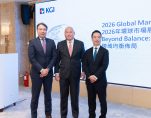
HONG KONG SAR – Media OutReach Newswire – 13 January 2026 – Today, KGI has released its 2026 Global Market Outlook, covering markets in the US, Mainland China, Hong Kong, Taiwan, and Singapore.
(From left) James Chu, Chairman at KGI Securities Investment Advisory; James Wey, Head of International Wealth Management at KGI; Cusson Leung, Chief Investment Officer at KGI
After a turbulent year of trade disruptions and policy uncertainty under President Trump, investors face new questions. China has unveiled its 15th Five-Year Plan, as policymakers aim to support domestic growth amid global challenges. The market outlook for 2026 is shaped by interest rate decisions, economic resilience, and shifting international dynamics.
Under this backdrop, we propose the “LEAD” strategy for 2026:
Liquidity Shift
Earnings Focused
Adding Credit
Diversified Assets
Cusson Leung, Chief Investment Officer at KGI, says: “Looking ahead to 2026, investors can adopt a LEAD strategy: L stands for Liquidity Shift, benefiting from a weakening US dollar and interest rate cuts, with funds expected to flow to non-US dollar and Asian currencies; E stands for Earnings Focused, focusing on earnings growth to support valuations and allocating to US, European, and Japanese stocks; A stands for Adding Credit, locking in the credit of leading companies and increasing holdings of A-rated investment grade bonds; and D stands for Diversified Assets, responding to the upward trend in both stocks and bonds by including alternative assets to optimize asset allocation.”
Macro & US Markets The US economy will experience a more pronounced downturn in 4Q25, which will extend into 1H26, and this will have a negative impact on consumption, slowing investment activity. Nevertheless, AI-driven productivity gains should provide some support, with US GDP growth in 2026 forecast at 2.2%. The eurozone will see moderate growth, with Germany benefiting significantly from fiscal expansion and economic improvement. Japan’s economy will strengthen on domestic demand, aided by additional fiscal stimulus. China has demonstrated resilience under trade protectionism in 2025. With inflation risks easing and labor market risks rising, the US Fed cut the interest rates in September 2025, with a total reduction of 75 bps in 2025, followed by an additional 50-75 bps in 2026.
Regarding US stocks, AI-driven productivity gains and cost reductions should sustain solid profitability, with S&P 500 earnings projected to grow by 13.55% year-on-year (YoY) in 2026. However, higher risk premiums may cap valuation upside, leading us to project a year-end target of 7,650 points. Market performance will reflect risk-driven declines in 1Q26, stabilize and recover in 2Q26, and rally significantly around the midterm elections in 4Q26. By sector, among AI-related themes we favor technology, semiconductors, utilities (on higher power demand), machinery for advanced manufacturing, and industrial REITs. Non-AI beneficiaries include aerospace and defense (on higher military spending), pharmaceuticals (on tariff benefits), and capital market segments (supported by active investment banking). As for fixed income, US economic weakness and Fed rate cuts will drive Treasury yields lower, with 10-year yields expected to fall to 3.5-3.7% by 2Q26. We recommend allocating to US Treasuries or high-rated investment-grade corporate bonds in 1H26, then rotating into high-yield bonds in 2H26 as policy rates and economic conditions reach a bottom.
James Chu, Chairman at KGI Securities Investment Advisory, says:“AI is triggering a new productivity revolution, supporting economic growth and strengthening corporate earnings. While the US economy is expected to slow, a recession remains unlikely, and the short-term impact of tariff policies should gradually fade by the first quarter of 2026. Although the Fed may shift from cutting rates at every meeting to cutting at alternating meetings, the overall environment remains a rate-cutting cycle. In a non-recession backdrop, lower interest rates should continue to support equity market performance.”
Mainland China and Hong Kong Markets In terms of the macroeconomy, with the conclusion of trade agreements among many countries, risks have subsided. However, due to external drag, China’s GDP growth is expected to slow slightly to 4.6% in 2026. In 2026, investors should focus on four key areas for Hong Kong and mainland China markets: (1) In the consumption sector, domestic demand continued to be the core growth driver, contributing more than half of GDP. As the “trade-in” effect diminishes, the central government is expected to implement the “15th Five-Year Plan” and economic conference plans, launching a new round of subsidies covering culture, entertainment, and sports to continuously boost consumer spending. (2) In the financial market, risk appetite has increased. Given the narrowing spread between bond yields and fixed deposit rates, large amounts of savings are flowing into the capital market seeking returns. The fundamentals of the banking and insurance industries have bottomed out, and the credit structure is accelerating its shift from real estate to supporting the real economy. (3) Regarding the issue of “anti-involution,” the PPI remains weak, and capacity reduction has become a focus. Compared to 2015, this round involves more downstream private enterprises and needs to consider employment, presenting greater challenges. While industry consolidation is expected to be lengthy, the impact is controllable and beneficial for long-term healthy development. (4) Regarding new quality productive forces, this will replace real estate and infrastructure as the main investment focus. Digital infrastructure supports AI and embodied intelligence, and humanoid robots are expected to see commercialization in 2026, “iPhone moment.” Leading companies with core technological autonomy in innovative drugs will enjoy higher valuation premiums.
Overall, we are optimistic on Hang Seng Index. We expect the Federal Reserve’s interest rate cuts to drive fund inflows to the Hong Kong and mainland stock markets. Based on an upward revision of the forward PE ratio to 13.5x and 8% earnings growth, we set a target of 30,000 points for the Hang Seng Index by the end of 2026, representing a potential upside of approximately 14%. As confidence recovers, the investment style is expected to shift from defensive to growth stocks. Recommended 12 stocks: XPeng Motors (9868), UBTECH (9880), Tencent Holdings (700), Alibaba (9988), China Hongqiao (1378), AIA Group (1299), Ping An Insurance (2318), China Merchants Bank (3968), Akeso Biopharma (9926), Pop Mart (9992), Tencent Music (1698), and Sino Land (83).
Cusson Leung, Chief Investment Officer at KGI, says: “2026 marks a crucial turning point for the Chinese economy. While the market anticipates GDP growth to slow to 4.6%, “new quality productive forces,” resembling humanoid robots, is taking over as a new growth engine. The most critical signal in the market is the “awakening” of idle cash—massive savings are flowing from low-interest fixed deposits to the capital market seeking returns. With risk appetite returning and policy support intensifying, now is the time to shift investment strategies from “defensive” to “growth.” Driven by both valuation repair and earnings growth, we are optimistic that the Hang Seng Index will reach 30,000 points, and the allocation value of Hong Kong and mainland China stocks has reappeared.”
Taiwan Market Compared to the dot-com era bull run, which lasted almost five years, the current AI frenzy has been around for about three years, suggesting that the uptrend is still in its middle phase and could extend through 2026.
AI plays are trading at high PEs, such valuations are backed by strong fundamentals. In fact, the PEG ratio of Taiwan’s AI supply chain has yet to surpass 1x. We estimate that aggregate earnings of AI plays will grow by 21% YoY in 2026, following impressive upticks of 35% in 2024 and 43% in 2025. AI stocks now account for more than 60% of TAIEX earnings, and with the ongoing AI arms race, overall TAIEX earnings growth is projected to accelerate from 14% in 2025F to 20% in 2026.
Although the AI frenzy should keep the bull market intact, volatility will rise in tandem due to: (1) substantial cumulative gains, and the fact that valuations are approaching historic highs; (2) policy and political uncertainty surrounding the US midterm elections; and (3) potential changes in the US Fed’s rate-cut pace. We expect the TAIEX to repeat a “smile-curve” pattern, featuring continued strength in 1Q26, followed by healthy corrections in 2Q-3Q26 before closing the year with a renewed upswing.
We think investors need to pay attention to two major themes. The first is a broad-based product spec upgrade trend across the AI supply chain, which will drive the industry into a new growth phase, with beneficiaries including foundries, GPU and ASIC designers, advanced packaging (such as CoWoS), and ODMs, as well as testing interfaces, memory, thermal solutions, CCL, ABF substrates, PCBs, switches, and power component suppliers amid strong AI computing demand and ongoing GPU platform upgrades. The second is diversification and defensive asset allocation. Innovations in consumer electronics, such as foldable iPhones and smart wearables, will provide growth opportunities, while companies with resilient domestic demand and stable high dividend yields offer a balanced strategy combining growth and income. Overall, investors should strike a balance between growth and resilience against volatility in their portfolios, in the face of market fluctuations.
James Chu, Chairman at KGI Securities Investment Advisory, says:“The solid earnings growth driven by AI and still reasonable valuations form a strong foundation for the ongoing bull market in Taiwanese equities. With AI adoption accelerating across enterprises and consumers, demand for computing power is rising rapidly. Yet supply remains constrained by chip and power bottlenecks, meaning hardware suppliers are likely to face continued shortages through 2026. Taiwan’s AI supply chain is set to remain a key beneficiary, particularly those tied to next-generation specification upgrades.”
Singapore Market In 9M25, the overall performance of Singapore’s economy was better than expected as the global trade tensions eased after the US pivoted on its reciprocal tariffs and reached deals with its major trading partners. The manufacturing, wholesale trade and finance & insurance sectors remained the growth pillars of the Singapore economy, and each sector delivered decent growth. In particular, manufacturing’s growth has been robust, driven by the electronics, transport engineering and biomedical manufacturing clusters. The full year outlook is upbeat, as the growth momentum shall continue till the end of the year.
Looking ahead, the global economic outlook for 2026 suggests slower GDP growth for most of Singapore’s key trading partners, including China and the Eurozone, largely due to the impact of US tariffs, which will temper demand for Southeast Asian exports, though US growth is expected to remain resilient from AI investment. Consequently, Singapore’s outward-oriented sectors, particularly manufacturing and trade-related services, are projected to expand at a slower pace than in 2025, although the electronics and related sectors will benefit from AI demand, while some precision engineering and biomedical output may moderate domestically, the construction sector is set to grow, but consumer-facing sectors are likely to remain subdued. However, the relatively low interest rates and continuous government support shall buffer the impact of the slowdown, and the capital market will still benefit from the upward re-rating catalysts.
Chen Guangzhi, Head of Research at KGI Singapore, says: “Thanks to trade de-escalation and the AI wave, Singapore experienced significant economic expansion in 2025. Proactive government initiatives turbo-charged the equity bull run, and this strong momentum is expected to deliver an optimistic economic outlook for 2026.” Hashtag: #KGI #MarketOutlook
The issuer is solely responsible for the content of this announcement.
KGI
KGI* has been a leading financial institution in Asia since 1997. Our scope of business encompasses wealth management, brokerage, fixed income, and asset management. We are committed to offering a comprehensive range of financial products and services to corporate, institutional, and individual clients throughout Asia. Backed by KGI Financial Group, we have a robust footprint in Asia, covering Taiwan, Hong Kong, Singapore, Indonesia, and Thailand^.
*KGI refers to KGI Asia Limited and its affiliates. ^an investee enterprise of KGI Securities, not a subsidiary.
DISCLAIMER
All the information contained in this document is not intended for use by persons or entities located in or residing in jurisdictions which restrict the distribution of this document by KGI Asia Limited (“KGI”), or any other affiliates of KGI. Such information shall not constitute investment advice, or an offer to sell, or an invitation, solicitation or recommendation to subscribe for or invest in any securities, insurance or other investment products or services nor a distribution of information for any such purpose in any jurisdiction. In particular, the information herein is not for distribution and does not constitute an offer to sell or the solicitation of any offer to buy any securities in the United States of America, or to or for the benefit of United States persons (being residents of the United States of America or partnerships or corporations organised under the laws of the United States of America or any state, territory or possession thereof). All the information contained in this document is for general information and reference purpose only without taking into account of any particular investor’s objectives, financial situation or needs and may not be redistributed, reproduced or published (in whole or in part) by any means or for any purpose without the prior written consent of KGI. Such information is not intended to provide any legal, financial, tax or other professional advice and should not be relied upon in that regard.
All investments involve risks. The prices of securities fluctuate, sometimes dramatically. The price of a security may move up or down, and may become valueless. It is as likely that losses will be incurred rather than profit made as a result of buying and selling securities.
Bond investment is NOT equivalent to a time deposit. It is NOT protected under the Hong Kong Deposit Protection Scheme. Bondholders are exposed to a variety of risks, including but not limited to: (i) Credit risk – The issuer is responsible for payment of interest and repayment of principal of bonds. If the issuer defaults, the holder of bonds may not be able to receive interest and get back the principal. It should also be noted that credit ratings assigned by credit rating agencies do not guarantee the creditworthiness of the issuer; (ii) Liquidity risk – some bonds may not have active secondary markets and it would be difficult or impossible for investors to sell the bond before its maturity; (iii) Interest rate risk – When the interest rate rises, the price of a fixed rate bond will normally drop, and vice versa. If you want to sell your bond before it matures, you may get less than your purchase price. Do not invest in bond unless you fully understand and are willing to assume the risks associated with it. Please seek independent advice if you are unsure.
You are advised to exercise caution and undertake your own independent review, and you should seek independent professional advice before making any investment decision. You should carefully consider whether investment is suitable in light of your own risk tolerance, financial situation, investment experience, investment objectives, investment horizon and investment knowledge.
No representation or warranty is given, whether express or implied, on the accuracy, adequacy or completeness of information provided herein. In all cases, anyone proposing to rely on or use the information contained herein should independently verify and check the accuracy, completeness, reliability and suitability of the information. Simulations, past and projected performance may not necessarily be indicative of future results.
Information including the figures stated herein may not necessarily have been independently verified, and such information should not be relied upon in making investment decisions. None of KGI, its affiliates or their respective directors, officers, employees and representatives will be liable for any loss or damage of any kind (whether direct, indirect or consequential losses or other economic loss of any kind) suffered or incurred by any person or entity due to any omission, error, inaccuracy, incompleteness or otherwise, or any reliance on such information. Furthermore, none of KGI, its affiliates or their respective directors, officers, employees and representatives shall be liable for the content of information provided by or quoted from third parties.
Members of the KGI group and their affiliates may provide services to any companies and affiliates of such companies mentioned herein. Members of the KGI group, their affiliates and their directors, officers, employees and representatives may from time to time have a position in any securities mentioned herein.
Arabian Post Staff -Dubai Shares of Larsen & Toubro fell sharply in early trading on January 13, extending losses after reports indicated that Kuwait is weighing the cancellation of oil and gas project tenders with an estimated value of $8.7 billion, a development that unsettled investors exposed to the company’s hydrocarbons order book. The stock dropped close to 3 per cent during morning deals, touching a one-month […]
African carriers outperformed global peers as air travel demand climbed to a November peak, underscoring a broad-based recovery in cross-border movement and a steady recalibration of airline capacity. International travel drove the expansion, with revenue passenger kilometres rising 7.7% year on year, while total international capacity increased 7.1%, lifting the load factor to 84.0%, the highest recorded for the month. The data point to a market where […]
Chainlink’s token LINK is showing signs of technical strain as chart patterns point to a bearish pennant forming against a backdrop of fading institutional demand for exchange-traded crypto products tied to the oracle network. The setup has drawn attention across digital-asset desks at a time when broader crypto markets remain sensitive to shifts in liquidity, regulatory signals and risk appetite. LINK has spent several weeks consolidating after […]
Samsung Electronics has warned that a tightening supply of memory chips risks pushing up prices for televisions, smartphones and home appliances, broadening the impact of a global shortage driven by surging demand for artificial intelligence hardware. The caution underscores how constraints in a core component are rippling across consumer electronics at a time when manufacturers are racing to invest in AI-centric products. Speaking on the outlook […]
A prediction market investor banked more than $400,000 by wagering on the ousting of Venezuelan President Nicolás Maduro shortly before U. S. forces captured him, thrusting opaque online betting platforms into the spotlight and renewing debate over insider trading and regulatory oversight. The anonymous trader placed significant bets on Polymarket, a crypto-based prediction market, in the days leading up to the dramatic U. S. intervention in Venezuela’s […]
Changpeng Zhao, the former chief executive of Binance, has drawn attention to what he describes as a widening divide in the Bitcoin market, with large United States banks and institutional players accumulating the cryptocurrency while many retail investors sell amid price volatility and regulatory uncertainty. His remarks, circulated widely across market circles, have intensified debate about whether another structural shift is under way in the digital […]
Bangkok’s long-held reputation as the “Detroit of the East” is under strain as the global shift towards electric vehicles reshapes South-East Asia’s industrial map, with Vietnam emerging as a more agile rival built around a powerful domestic champion. For half a century, Thailand’s automotive sector has been the backbone of its manufacturing economy, contributing about a tenth of national output and supporting hundreds of thousands of jobs […]
GameStop has begun shutting down hundreds of brick-and-mortar outlets across the United States, signalling another sharp contraction in the physical videogame retail business as consumer spending patterns and distribution models continue to evolve. The videogame retailer, once a ubiquitous presence in shopping malls and high streets, has confirmed that a significant number of stores have been closed or earmarked for closure as part of an ongoing rationalisation […]
African policymakers and market operators are accelerating efforts to deepen trade within the continent by leaning on digital payment systems that promise faster settlements, lower costs and broader access for businesses of all sizes. The push comes as governments and private players seek to convert the African Continental Free Trade Area from a legal framework into a functioning commercial ecosystem that moves goods, services and capital more […]
President Donald Trump pressed executives from major oil companies on Friday to commit at least $100 billion of private capital to rebuild Venezuela’s depleted oil industry, but several leaders voiced deep reservations about the risks and structural barriers to doing business in the South American country. The meeting, held in the East Room of the White House and attended by representatives from ExxonMobil, Chevron, ConocoPhillips and other […]
President Donald Trump announced the cancellation of a planned second wave of military attacks on Venezuela, pointing to improved cooperation from the country’s interim leadership and gestures such as the release of political prisoners and discussions on oil infrastructure. The decision marks a shift in the U. S. approach after its forces ousted Venezuelan President Nicolás Maduro earlier this month, and underscores Washington’s focus on stabilising relations […]
Crypto exchange OKX has cut a significant portion of staff from its institutional business as part of a wider global restructuring, people familiar with the matter said, marking one of the most substantial internal overhauls at the company since it began expanding beyond retail trading. According to one source with knowledge of the changes, roughly one-third of the institutional sales team has exited, either through redundancies or […]
Abu Dhabi National Insurance Company occupies a pivotal place in the UAE’s insurance sector, combining longevity with scale as it navigates a market shaped by regulatory tightening, rising claims costs and growing demand for specialised cover. Founded in 1972 and headquartered in the capital, the company was the first insurer licensed in the emirate, a distinction that continues to inform its market stature more than five decades […]
Republic of Korea delivered its largest current account surplus ever recorded for a November, underpinned by a sharp rebound in exports led by semiconductors, according to data released by the central bank, reinforcing signs that Asia’s fourth-largest economy is benefiting from a global technology upcycle.
Figures published by Bank of Korea showed the surplus widened markedly from a year earlier, driven primarily by goods exports as overseas demand for memory chips and advanced components strengthened. The milestone November result adds to a sequence of solid monthly balances this year and signals improving external resilience after a period of volatility linked to energy prices and weaker global trade.
Exports rose at a double-digit pace year on year, with semiconductors once again the dominant contributor. Chip shipments, which had slumped during the global downturn in memory prices, rebounded strongly as inventories normalised and orders increased from data-centre operators and manufacturers deploying artificial intelligence workloads. Analysts said demand for high-bandwidth memory and advanced logic chips has been particularly supportive for Korean producers.
The current account surplus, which measures the balance of trade in goods and services alongside income flows, was also supported by a narrower energy import bill. Lower prices for crude oil and liquefied natural gas compared with last year reduced the cost of imports, amplifying the positive effect of export growth. Services remained in deficit, reflecting outbound travel by residents, but the shortfall was smaller than earlier in the year.
Economists link the export recovery to the improving cycle in global technology spending. Korean chipmakers, led by Samsung Electronics and SK Hynix, have benefited from rising prices for dynamic random-access memory and NAND flash products, as well as from long-term contracts tied to AI infrastructure. Both firms have announced higher capital expenditure plans focused on advanced memory and packaging technologies, moves that are already filtering through trade data.
Beyond semiconductors, shipments of automobiles, machinery and petrochemical products also contributed positively. Vehicle exports remained robust despite softer demand in some advanced economies, reflecting competitive pricing and the growing popularity of electric and hybrid models produced by Korean manufacturers. Machinery exports gained from infrastructure and energy projects across the Middle East and parts of Southeast Asia.
Income from overseas investments added another layer of support. Dividend and interest receipts from Korean companies’ foreign assets increased, offsetting profit repatriation by foreign firms operating domestically. This helped keep the overall current account firmly in surplus despite the persistent services deficit.
Policy makers view the November outcome as confirmation that the economy is on a steadier footing. The central bank has previously signalled that a sustained export-led recovery would ease pressure on monetary policy, even as it remains cautious about household debt and property-market risks. A strong external balance also provides a buffer against currency volatility, a concern earlier in the year when the won weakened amid global interest-rate uncertainty.
Still, officials and analysts warn that risks remain. The export outlook is closely tied to the durability of the global technology rebound and to geopolitical developments that could disrupt supply chains or dampen investment sentiment. Slower growth in major trading partners or renewed trade frictions could weigh on momentum in coming months. Services exports, particularly tourism, have yet to return to levels seen before the pandemic, limiting diversification of the external balance.





 https://www.kgi.com.hk/en/
 https://www.linkedin.com/company/kgi-hongkong/
 https://www.facebook.com/KGI.HongKong?mibextid=JRoKGi&rdid=a4NoCGXY72nFghtQ&share_url=https%3A%2F%2Fwww.facebook.com%2Fshare%2F15kKKLreMr%2F%3Fmibextid%3DJRoKGi#

 https://www.instagram.com/kgi.hongkong?igsh=MTI5ems1ZzNlZ3YyMQ==