News related to
profit

A leading enterprise-artificial-intelligence firm, Fractal Analytics, is preparing to launch a public share sale of around ₹4,900 crore and is targeting a market valuation near US $3 billion. The move comes as the company positions itself at the forefront of the AI-analytics sector and seeks to capitalise on growing investor demand for technology listings. The proposed offering would comprise fresh shares worth about ₹1,280 crore and an offer-for-sale by existing investors totalling approximately ₹3,620 crore as part of its entry into public markets.

Fractal Analytics was founded in 2000 by five graduates of the Indian Institute of Management Ahmedabad. Today only two of the original founders remain with the company: Group Chief Executive Officer Srikanth Velamakanni and Chief Executive Officer Pranay Agrawal, each holding roughly 10 per cent of the company’s equity and not looking to sell in the upcoming offering. The firm achieved unicorn status in 2022 and generates more than 90 per cent of its revenues outside its home market, meaning its exposure to global enterprise clients is strong.

Advising banks on the share sale include major names such as Axis Bank, Goldman Sachs, Kotak Mahindra Capital and Morgan Stanley, signalling the IPO is being positioned among marquee listings. Industry data show that new-listing proceeds in the Indian market have already approached US $16 billion in 2025, with expectations that this year could surpass the US $21 billion record set in the prior year.

In financial terms, Fractal has posted a turnaround in performance. According to regulatory disclosures, its revenue rose from about ₹2,043.7 crore in FY23 to approximately ₹2,816.2 crore in FY25, reflecting a compound annual growth rate of around 17.4 per cent. Meanwhile, profitability returned in FY25 with a net profit of ₹220.6 crore after a loss of ₹54.7 crore in the previous year. The firm’s adjusted EBITDA margin improved from 6.8 per cent in FY23 to 17.4 per cent in FY25, and operating cash-flow rose substantially to ₹397 crore in FY25 from the previous year.

Fractal’s service model is built around large global enterprises, which in FY25 included 113 “must-win clients”—companies with annual revenues in excess of US $10 billion or customer bases over 30 million. About 65 per cent of the firm’s FY25 revenues were derived from the United States, underlining its dependence on Western markets. To maintain growth momentum the company intends to channel IPO proceeds into further research and development, strategic acquisitions, expansion of its R&D centres in locations such as Bengaluru, Gurugram, Pune and Noida, and boosting its sales-and-marketing capabilities.

Despite the strong metrics the IPO plan carries risks. The business remains heavily concentrated: its top ten clients contributed 53.8 per cent of revenue in the Fractal. ai segment in FY25. Losing a major client could have a disproportionate impact on its results. The firm is also operating in a rapidly evolving global AI landscape dominated by large diversified IT-service providers as well as specialist startups. Its heavy reliance on the U. S. market exposes it to foreign-exchange volatility and regulatory shifts abroad. Analysts comment that an IPO valuation near US $3 billion may leave little margin for error if market sentiment weakens or growth decelerates.

Mlak Finance has completed the sale of its subsidiary in Egypt to Al Baraka Bank Egypt for EGP 400 million, marking its full exit from the Egyptian market. This strategic divestment aligns with the company’s broader objectives of streamlining operations and refocusing on other regions. The sale, as disclosed by Mlak Finance, will have a significant impact on its financial position, particularly affecting its retained earnings by […]

A comprehensive study from the initiative at Massachusetts Institute of Technology reveals that only about 5 per cent of enterprise generative-AI pilot projects deliver measurable profit or transformative impact, while the remaining 95 per cent yield little to nothing in terms of return on investment. The analysis covers 150 executive interviews, a survey of 350 employees and evaluation of some 300 public AI-deployments. The report attributes the […]

Dr Imran Khalid In an era when the global economy staggers under the weight of inflation, trade wars, and geopolitical fractures, China’s Communist Party has just unveiled a roadmap that feels less like a policy document and more like a quiet revolution. The fourth plenary session of the 20th Central Committee, which wrapped up in Beijing on October 23, adopted recommendations for the 15th Five-Year Plan, covering […]

Dubai-based Emirates Integrated Telecommunications Company PJSC announced that its third-quarter results delivered a 7.9 per cent year-on-year jump in revenues to AED 3.87 billion, underpinned by growth in mobile, fixed and ICT businesses. The company reported an EBITDA of AED 1.85 billion, which equated to a margin of 47.8 per cent, while normalised net profit rose by 25.8 per cent to AED 732 million. Chief Executive Fahad […]

The Ministry of Finance has introduced the “Retail Sukuk” programme enabling citizens and residents to purchase government-backed Treasury Sukuk via participating banks with a minimum investment of AED 4,000. The first bank partner will be announced on 3 November 2025.

The move directly expands access to sovereign Islamic finance instruments previously reserved for institutional investors. According to the announcement, the scheme permits investment in Shariah-compliant Islamic treasury securities through fractionalised digital platforms operated by the banks. Leader Sheikh Maktoum bin Mohammed bin Rashid Al Maktoum described the initiative as “translating our leadership’s vision of empowering individuals, promoting a culture of saving and developing government investment instruments that enhance individual participation in economic growth and provide a direct opportunity to contribute to the national development journey.”

The initiative aligns with the nation’s financial-inclusion agenda and the strategy to deepen local capital markets. By lowering the threshold to AED 4,000, the scheme reduces entry barriers for retail investors and broadens the investor base for the domestic sovereign debt market. Analysts point out that universal access to such instruments represents a structural shift in how governments engage with individual savers.

Industry experts say this development reflects emerging trends in the Gulf’s Islamic finance sector, particularly the fractionalisation and tokenisation of Sukuk products. A legal-advisory report on the Gulf Cooperation Council’s Sukuk market noted that digital platforms and smaller tickets are “redefining how Sharia-compliant capital is structured, distributed and accessed.” The Abu Dhabi Islamic Bank earlier launched a “Smart Sukuk” platform allowing retail investment from about USD 1,000 in fractionalised Sukuk.

Governance stakeholders emphasise that the retail programme remains denominated in dirhams and linked to sovereign-backed Sukuk already traded in the market, ensuring exposure to high-quality government assets rather than untested structures. The Ministry reaffirmed that the rollout will follow the “highest standards of transparency and quality.”

Financial institutions stand to benefit from expanded customer-base growth and increased assets under management, while retail investors gain a compliant savings vehicle offering diversification beyond deposits and conventional investments. Yet risks remain. While sovereign-backed, Sukuk carry credit, liquidity and market-risk dimensions; beginners may require enhanced education around profit-sharing-based returns, Shariah-compliance nuances and secondary-market liquidity.

Some market participants caution that the success of the scheme will depend on the secondary-market functioning and investor confidence in digital platforms. Previous fractional-Sukuk roll-outs in the region flagged the need for robust regulatory oversight, clear smart-contract frameworks, and standardised product terms to build long-term participation.

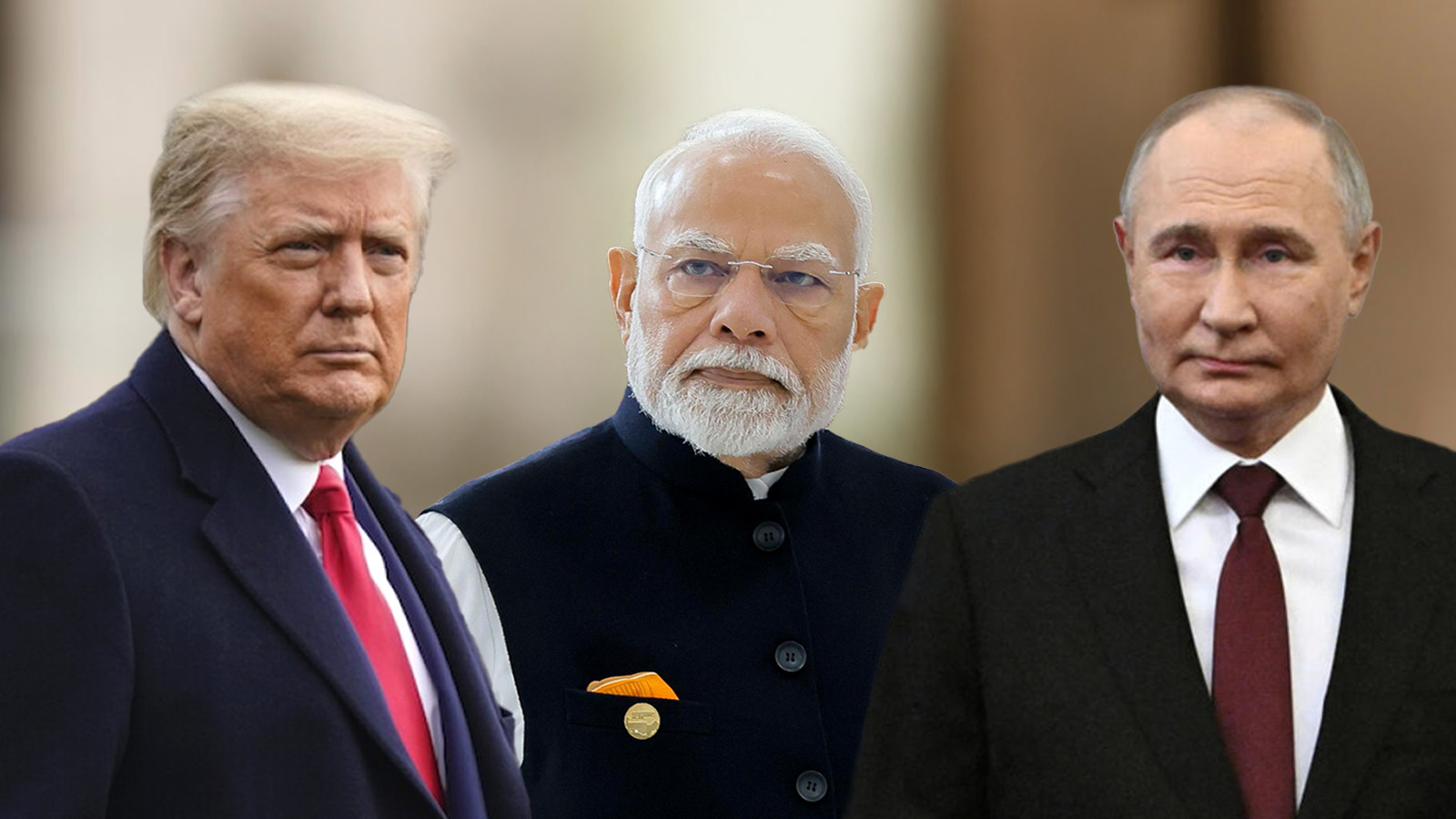
   By K Raveendran   The market seems to have already done its arithmetic on the new US sanctions on two major Russian oil companies, Rosneft PJSC and Lukoil, gauging the immediate and medium-term consequences for energy supply lines stretching from Moscow to Mumbai. In a matter of hours, crude prices spiked, reflecting not just […]

The article Latest Trump Sanction On Russian Oil Companies Gives Escape Route To India appeared first on Latest India news, analysis and reports on Newspack by India Press Agency).

Advertisements

Unveils Bold Innovations, Strategic Partnerships, and a Vision for a Sustainable Tomorrow Revolutionary Vision: Michelin showcases its strategy to become a world-leading manufacturer of life-changing composites and experiences, driven by its All-Sustainable framework: People × Profit × Planet. Powerful Partnerships: Industry leaders and KOL joined Michelin in a panel discussion to share real-world sustainability collaborations and measurable impact. Culinary Innovation: GOAT Bangkok, a One MICHELIN Star restaurant, […]

LAGOS – Fintech company Moniepoint Inc. announced yesterday that it has raised more than US $200 million in a Series C equity financing round aimed at accelerating its expansion across Africa and into diaspora markets. The round was led by British private equity firm Development Partners International through its African Development Partners III fund, with participation from impact-investor LeapFrog Investments, Google Africa Investment Fund, global payments giant […]

Cape Town — South Africa’s agricultural exports to the United States rose sharply in the second quarter of 2025, hitting US$161 million and marking a 26 per cent year-on-year increase despite the imposition of heavy tariffs by the U. S. administration. The growth is attributed to strong harvests and increased shipments of high-value produce, but concerns linger over how sustainable the trend is given the trade headwinds. […]

The automaker Tesla, Inc. is recalling 63,619 units of its Cybertruck in the United States after regulatory scrutiny identified a software-driven fault that causes the front parking lights to exceed allowable brightness levels, potentially impairing the vision of on-coming drivers. The recall covers vehicles produced between November 13, 2023 and October 11, 2025 and running software versions earlier than 2025.38.3. Federal safety regulators including the National Highway […]

The implied volatility of Bitcoin has remained unusually elevated even as the equity-market gauge of fear, the S&P 500 Volatility Index, has receded to its usual levels. Data show Bitcoin’s 30-day implied volatility hovering above 50 % after the October 10 market shake-up, while the VIX slipped back below 20 %. This divergence signals a significant recalibration of risk within crypto markets.

Analysts point to a cluster of structural pressures within the crypto ecosystem that are now being priced in: chief among them are auto-deleveraging mechanisms on exchanges, thinning liquidity depth, and offshore funding stress. According to Wintermute co-founder Yoann Turpin, “Bitcoin volatility was subdued earlier… It has now become clear that new risks … such as ADL were underestimated and are now being fully priced in.” In practice, when an exchange triggers ADL it forces closure of profitable offsetting positions when an insurance fund is depleted—this introduces an additional risk vector not present in the mainstream equity markets. The residual impact of a major liquidation event on October 10–11, estimated at over billion, has sharpened market caution.

Liquidity concerns are compounded by the behaviour of market-makers during the crash. According to a recent study, market makers withdrew roughly million from key order-books within hours of the triggering event, creating a vacuum in bid-ask depth and amplifying price moves. Participants say that while the VIX drop reflects a return of calm to equity markets after the shock, Bitcoin’s elevated IV suggests the market is in a higher-volatility regime rather than merely bouncing back. Liquidity in offshore markets, which heavily influences Bitcoin trading, appears particularly tight: for example, the Hong Kong Interbank Offered Rate has returned to pre-May levels even as the U. S. dollar index has risen, signalling funding stress that tends to feed into crypto volatility.

Another factor cited is the rapid growth of exchange-traded funds and over-the-counter desks absorbing Bitcoin supply, creating a supply-shock risk for derivatives and making hedging more expensive. A report warned of a potential “liquidity crisis” within six months for Bitcoin ETF structures unless infrastructure adapts. Meanwhile, the macro backdrop of easing interest-rates and previously abundant liquidity has given way to tighter conditions, which amplify volatility across leveraged assets.

Institutional interest in hedging Bitcoin risk has surged. Following the liquidation that knocked Bitcoin from about to roughly, investors rushed into options contracts that bet on further price drops—put-buying spiked as a hedge against renewed turbulence. Such demand for protection keeps implied volatility elevated even if spot prices settle. At the same time, the VIX’s retreat suggests equity investors believe the shock has passed; crypto markets apparently disagree.

The divergence is significant because implied volatility represents the market’s expectation of future price swings. A 50 % annualised IV for Bitcoin implies expected one-month moves of roughly; by contrast, a 20 % IV for the S&P 500 implies one-month moves of around. Such a gap underscores the unique risk environment in which crypto operates—where leverage, thin liquidity and exchange-specific infrastructure risk matter significantly. Academic research supports this: a recent study found Bitcoin’s risk-premia vary across volatility regimes, and that downside risk is significantly more priced in than with equities.

Market makers and trading desks are adapting. Some are widening spreads, reducing inventory and limiting exposure during volatile episodes—actions that in effect undermine liquidity further and contribute to the “sticky” implied volatility. One trader said that “no one slept” during the weekend of October 10–11, as the cascade of liquidations forced hedge funds and desks to scramble for cover amid evaporating depth.

Eight Democratic senators, led by Adam Schiff of California, have formally asked Steve Witkoff—the U. S. Special Envoy to the Middle East—for detailed explanations regarding his continued involvement with crypto assets tied to World Liberty Financial, a venture he co-founded with the family of Donald Trump. The lawmakers’ letter highlights potential conflicts of interest stemming from Witkoff’s dual role as a diplomat and investor.

Their concerns centre on Witkoff’s asset disclosures, which indicate he still holds stakes in entities tied to World Liberty and other crypto businesses as of his 13 August 2025 financial report. The senators press him to clarify whether he has divested these holdings, whether he has obtained ethics waivers, and whether his official capacities have overlapped with personal financial interests.

World Liberty Financial launched the stable-coin USD1, and in May 2025 a firm linked to the Abu Dhabi sovereign investment arm reportedly committed around US$2 billion to the venture. The same Gulf-state entity is connected to high-level U. S. export approvals of advanced semiconductor chips, a situation that lawmakers see as raising grave ethical questions.

Witkoff, a New York real-estate magnate and longtime Trump associate, was appointed envoy in early 2025 despite limited experience in diplomacy. While his defenders say he has taken steps to divest and comply with regulation, critics say he remains financially tied to ventures that stand to benefit from his government role. The administration has signalled it is reviewing his disclosures and ethics compliance.

In their letter, the senators request responses to seven key questions by 31 October 2025. They ask how Witkoff could sell off a real-estate holding of about US$120 million while retaining crypto interests; whether he or his family hold additional digital assets beyond those disclosed; when he divested, if at all; whether he holds any interests in Trump-family business ventures; whether he has obtained ethics guidance from the U. S. Office of Government Ethics; and whether any waiver was granted allowing him to participate in matters in which he had a financial interest.

Separately, lawmakers highlight the chronology of events: after World Liberty received the Gulf-state investment commitment, the White House approved export of advanced U. S. chips to the United Arab Emirates—raising the appearance of intertwined public and private interests. Ethics experts say this conflation of diplomacy and private profit may run afoul of federal rules under 18 U. S. C. § 208 and the constitutional emoluments clause, which bars public officials from participating in matters in which they have a financial interest.

Dubai – The classifieds operator Dubizzle Group announced its decision to postpone its initial public offering on the Dubai Financial Market, citing the need to evaluate optimal timing for the listing. The company, which had filed an IPO prospectus around ten days ago, was preparing to open the book-building phase when it elected to defer the listing. The group had proposed offering approximately 30.34 % of its […]

Lagos-based fintech firm Moniepoint Inc. has secured more than USD 200 million in its Series C equity funding round, a move that underscores its rapid growth, profitability at scale and continental ambition. The funding was led by Development Partners International’s African Development III fund and included heavyweight participation from LeapFrog Investments, Visa Inc., Google LLC’s Africa Investment Fund, the International Finance Corporation, Proparco, Swedfund and others. Moniepoint […]

For years, the cryptocurrency debate has centred on price. Every discussion returned to charts, volatility, and market speculation. The fixation on value swings has distracted from a much more important story. The future of digital finance is not about price movement. It is about infrastructure. Regulated stablecoins are emerging as the foundation of a new global financial system. They combine the trust of established currencies with the […]

Dubai-headquartered digital operator VEON Ltd. is set to acquire full ownership of classified-ads platform OLX Kazakhstan through its Kazakh subsidiary Beeline Kazakhstan for US$75 million, marking a strategic push into Central Asia’s digital services ecosystem. The deal expands Beeline’s footprint beyond connectivity into online marketplace operations at a time when Kazakhstan’s internet penetration and e-commerce engagement are advancing. Under the terms, Beeline Kazakhstan will acquire 100 per cent of […]

Gold continues its ascent worldwide as festival-driven demand collides with macroeconomic turbulence. Spot prices have broken past $4,300 an ounce, prompting Indian domestic rates to reach ₹1,31,699 per 10 grams and record premiums in key markets. HSBC, recalibrating its outlook, now forecasts average gold at $3,355 for 2025 and $3,950 for 2026, citing sustained safe-haven interest. Buyers in India are shifting patterns: instead of heavy gold jewellery, […]

Abu Dhabi’s MDGH GMTN priced a one-billion dirham Reg S five-year bond at par, carrying a coupon of 4.20 per cent. The issuer tightened guidance from an initial 4.45 per cent, and book orders surpassed AED 4.7 billion, not counting joint lead manager interest, signalling strong investor demand.

The unsecured bond is guaranteed by Mamoura Diversified Global Holding, with settlement set for 23 October and a planned listing on the London Stock Exchange Main Market. Fitch is expected to assign an “AA” rating in line with Mamoura’s sovereign backing. The issuance was led by a syndicate including Abu Dhabi Commercial Bank, Bank of China, Citi, Emirates NBD Capital, First Abu Dhabi Bank, Goldman Sachs International, HSBC, Industrial and Commercial Bank of China, National Bank of Kuwait and Standard Chartered.

This city-currency issue follows a $750 million ten-year dollar bond issued less than ten days earlier by MDGH, priced at about 55 basis points over U. S. Treasuries under the same guarantee structure. That transaction underlined the group’s growing presence in global markets.

MDGH is wholly owned by Mubadala Investment Company and plays a central role in Abu Dhabi’s strategy to diversify its economic base. In its 2024 financials, the company reported revenues of AED 39,528 million and a net profit attributable to owners of AED 37,376 million, with total assets reaching AED 596,168 million.

Credit agencies currently align Mamoura’s rating with the sovereign, with Fitch affirming an “AA” rating and stable outlook in late 2023. Moody’s and S&P assign comparable ratings of Aa2 and AA respectively.

Analysts note that the new issue shows how Abu Dhabi-linked issuers are able to tap demand for high-grade Gulf debt amid tighter global credit markets. The bond’s tight pricing and oversubscription point to strong appetite among fixed-income investors for Gulf credits backed by sovereign guarantees.

SINGAPORE – Media OutReach Newswire – 16 October 2025 – Primech Holdings Ltd. (“Primech” or the “Company”), a leader in AI-powered hygienic robotics, today announced the signing of a strategic Memorandum of Understanding with GAIB, the economic layer for AI infrastructure. The partnership establishes a framework to tokenize Primech’s HYTRON autonomous cleaning robots and enable next-generation AI Robotics-as-a-Service (ARaaS) business models that open new capital pathways and […]

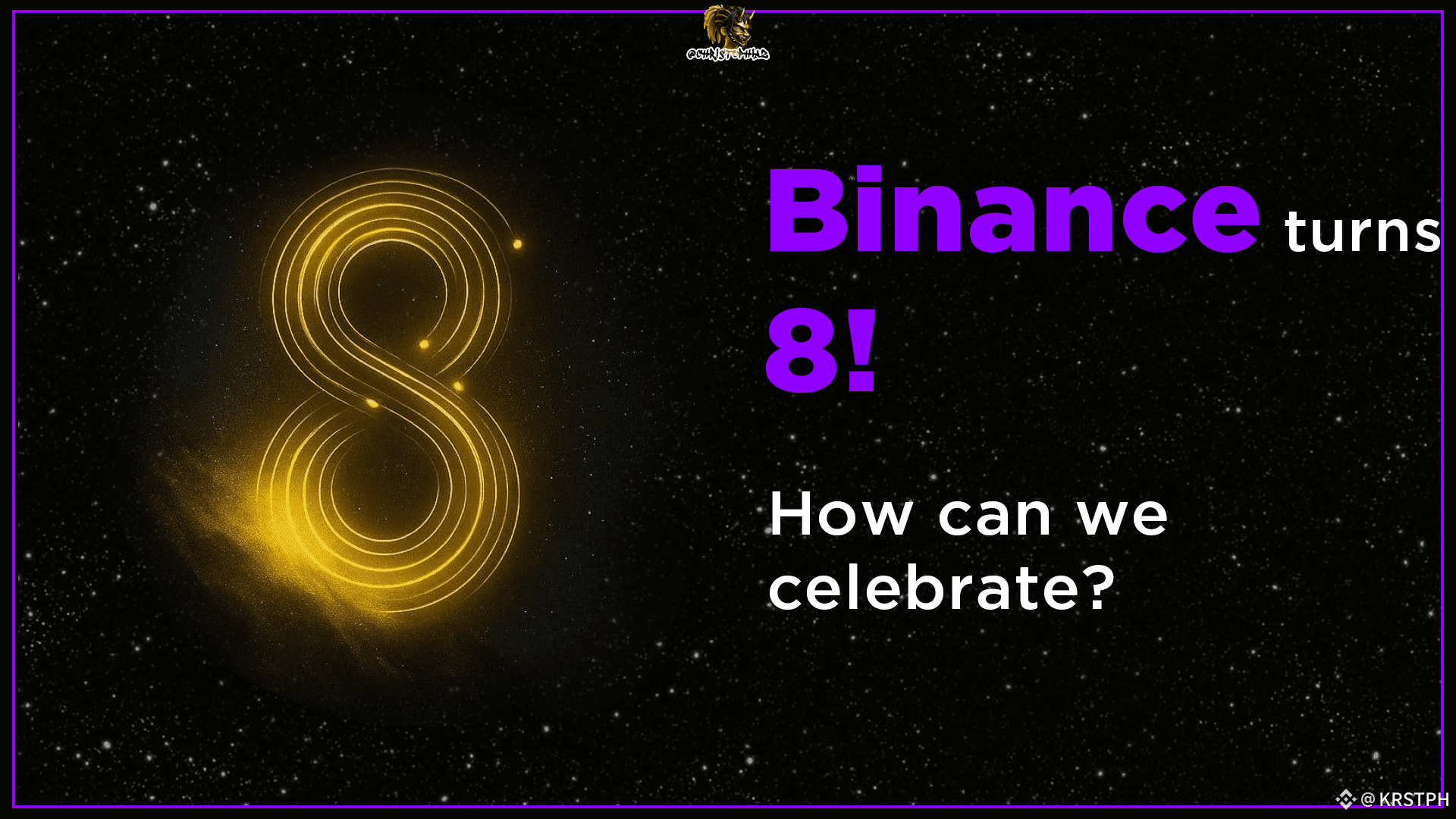
CJ Hetherington, CEO of Limitless Labs, has accused Binance of demanding 8 per cent of his project’s token supply and a multimillion-dollar deposit as conditions for listing. Binance, in a forceful rebuttal, called the allegations false and defamatory, and hinted at legal recourse.

Hetherington shared purported internal communications that outlined Binance’s demands: 1 % of the token supply for a day-one airdrop, 3 % for subsequent airdrops over six months, 1 % reserved for marketing, and another 3 % allocated to the BNB HODLer programme. He claimed Binance also asked for a $250,000 security deposit and required around $2 million in BNB as collateral. In total, he argued, these terms effectively extracted 8 % of total tokens in exchange for a listing.

Binance responded swiftly via its official X handle, stating it “does not profit” from token listings and that the content of Hetherington’s posts is “false and defamatory.” The exchange emphasised that it does not charge listing fees and that any required security deposits are typically refundable within one to two years. Binance also denied allegations of token dumping by its executives, calling them “entirely untrue and unsubstantiated.”

The exchange further asserted that Hetherington’s disclosures breached confidentiality, undermining trust and transparency in industry processes. It reserved the right to pursue legal action for what it characterised as unauthorised disclosures.

The dispute has drawn responses from industry observers. Mike Dudas, founder of 6MV, stated on X that he has seen Binance listing proposals with nearly identical terms in the past month and was able to talk about them because he did not sign a nondisclosure agreement. He implied the arrangement described by Hetherington reflects a recurring model.

Crypto analyst Howard Peng, by contrast, criticised Hetherington for publicising the discussions and labelled the move immature. Peng urged projects dissatisfied with listing proposals to walk away and suggested exploring alternative exchanges.

Binance founder Changpeng “CZ” Zhao also weighed in, arguing that successful projects should attract listings without paying “fees.” He wrote that if a project must “beg an exchange to list,” it indicates weak demand and could invite scrutiny from within the community.

The exchange’s defence comes amid broader regulatory scrutiny of centralised exchanges and their listing practices. Some market participants argue that hidden costs and opaque listing criteria undermine fairness and can stifle innovation, especially for emerging projects. Others maintain that exchanges are entitled to protective mechanisms—such as collateral or token commitments—to mitigate risk and ensure project stability.

Multiple posts flooding social media demand accountability—users call for a regulator-led probe, the CEO’s arrest, and deep scrutiny of Binance’s internal systems. The outcry follows recent chaos around synthetic tokens USDe, BNSOL, and wBETH, which lost their pegs on Binance amid massive liquidations. Compensation is flowing, but the narrative now centers on whether the crash was a desperate scramble or a deeply orchestrated exploit.

When Binance announced it would pay $283 million to users affected by depegging and associated liquidations, it framed the move as a goodwill gesture to restore stability. The payout applies to users whose positions used USDe, BNSOL, or wBETH as collateral between 21:36 UTC and 22:16 UTC on October 10. The exchange said compensation covers the difference between liquidation price and market price at 00:00 UTC on October 11, plus fees. It also promised to improve its risk-control systems and change how its indices weigh collateral assets..

These remedial steps, however, have not assuaged skeptics. Analysts at Uphold argued the event was no accident: they see the crash as a coordinated exploit of a vulnerability in Binance’s unified margin system, in which USDe, BNSOL, and wBETH were accepted as collateral. Because the exchange valued collateral based on internal order-book data instead of aggregated external prices, they say the system could be manipulated from within the venue itself. That, they believe, allowed an attacker to locally crash prices and trigger a cascade of liquidations.

One widely cited theory points to timing. Binance announced on October 6 it would update its pricing mechanisms to rely more on external oracles, with the changes scheduled for October 14. The incident happened on October 10—right in the middle of that eight-day window. In effect, critics argue, the exchange had acknowledged the flaw but had not yet implemented the fix, leaving a vulnerability no one should have touched. On-chain data shows USDe dropped to as low as $0.65 on Binance while remaining near parity across other markets, and wBETH and BNSOL showed similar divergence. The fact that only these three tokens—and only on Binance—were massively disrupted raises the specter that this was a targeted strike, not a systemic weak spot.

The theory gains further support from social media researchers. A thread by a user called “ElonTrades” describes how roughly $60–90 million of USDe was dumped on Binance to manipulate its order book, triggering forced liquidations in unified-account positions. That thread also links to outsized short positions opened elsewhere in anticipation of a broad market drop. Combined, the strategy would allow the attacker to profit while setting off mayhem across crypto markets.

Binance has rejected claims of an external exploit. In its public statement, the company argues that extreme market volatility predated the depegs, and that local platform issues amplified rather than initiated the crash. It also suggests some of the price distortions stemmed from interface display glitches—tokens with very small values were rendered as zero on users’ screens—while others reflect execution of long-dormant limit orders. The company contends liquidation volume occurring on its platform was only a fraction of broader market activity.

Even some industry voices have pushed back against blanket condemnation of Binance. One analyst told reporters that attributing the crash entirely to internal failure is premature, and that extreme leverage and macro market turmoil may have interacted with, not originated from, the exchange’s anomalies.

Yet the optics are harsh and the damage is real. The crypto community remains intensely uneasy. Many traders point to how precisely the exploit—or crash—focused on three collateral tokens, how it preceded a planned patch, and how quickly the stains were cleaned up by compensation. To many, the $283 million seems less like accountability than a strategic PR move to calm markets and buy time.

BNB, the exchange’s native token, soared after the compensation announcement, reaching a high near $1,370. That rally suggests some market participants interpreted the payout as a signal that Binance could backstop risks if needed. But it has not quelled deeper anxieties: users are now demanding full transparency about trades, collateral decisions, and the CEO’s role in risk oversight.

Amanda, a margin trader who lost funds in the incident, told crypto forums: “This wasn’t a market tantrum. The order flow was too precise, too surgical. It felt like someone pulled the plug on us.” Other users posted examples of margin calls executed within fractions of seconds after the depeg, with little time or warning to react.

The sequence of events presents too many coincidences: a pricing flaw known and scheduled for repair, large collateral-related token dumps executed mid-window, massive liquidations cascading in an insular system, and a rapid compensation move. Taken together, the evidence aligns with a narrative of design-level risk exploited rather than location-level chaos.

If the worst scenario proves true—that Binance’s unified margin design was manipulable from inside its own infrastructure—the implications ripple far beyond a single crash. Centralized exchanges, hailed for their convenience and liquidity, might now be exposed as fragile ecosystems. Traders could demand stricter oversight, regulators more frequent audits, and entire collateral frameworks could be reassessed.

Aryaka Partner Program strengthens partner engagement, improves ease of onboarding, and positions company for accelerated channel-led growth SINGAPORE – Media OutReach Newswire – 16 October 2025 – Aryaka®, the leader in and first to deliver Unified SASE as a Service, today announced the launch of a revamped channel program. The new Aryaka Parter Program delivers added simplicity, support, and structure to Aryaka’s growing Distributor and VAR ecosystem, […]

Matein Khalid Real estate occasionally provides prescient investors the ability to make serious capital gains with minimal or even zero risk. Take the Empire of the Rising Sun and the sinking yen, also known as Japan. The ruling LDP has shed its Komeito coalition partner and is all set to embrace Sanae Takaichi as Lady Shogun or Dai Nippon’s first elected woman Prime Minister. This means higher […]

VISHNU RAJA
RYO YAMADA
HITORI GOTOH
IKUYO KITA
Just in:
2026 Tropical Rainforest Ecosystem Partners Conference Kicks off in Hainan // Russia permits retail cryptocurrency purchases under regulated framework // Ex-minister named accused in Messi visit fraud case // Promoting Common Human Development Through Exchanges and Mutual Learning Among Civilizations // Balagopal challenges CM over tax revenue // Dalilk Academy reaches 27 million, targets 100 million by 2030 // Energy Markets Find Little Substance In Shenzhen Summit Promises // Crypto market loses $150 billion amid broad sell-off // PayerMax and ShopeePay Strengthen Strategic Partnership to Advance Digital Payment Collaboration in Southeast Asia // Dubai Introduces SHARH, an AI-Powered Platform Helping Entrepreneurs Buy, Sell and Manage Businesses in the UAE // Phancy Announces Business Performance for the Nine Months Ended September 30, 2026 // Jaiedco and Golden Bridge Announce Strategic Collaboration for a New Dubai Islands Development // Saudi Arabia schedules multinational top-up tax for 2027 // Toward a Shared Future for Humanity: Rethinking Civilizational Exchange // Fungal toxins detected across 212 UK plant-based products // Yeebo Announces Interim Results for FY26/27 Revenue Increases by 45.5% to HK$806.7 Million Profit Attributable to Owners Surges 87.6% to HK$2,284.7 Million // Sui activates Hashi Bitcoin lending across partner network // Singapore regulator cautions against AI access to bank logins //
Centre grants aircraft cabin access for Sabarimala pilgrims’ irumudi
// Padmini follows Padmaja for ‘ghar vapsi’ //