Just in:
Valarmathi restarts fast as teachers defy police // Rooftop solar planning gaps behind power shortages // U.S. Democratic Leadership Starts Dialogue With Progressive Bloc For Joint Strategy // How A Newly Elected Democratic Congress Could Reshape US–India Relations? // China Reconciled To U.S. Curbs On Chips Exports, Woos South Korea For Supply // Microsoft restores services gradually but gives no recovery deadline // Lego restores BrickLink marketplace after security investigation // LANDMARK Presents ‘Destination CENTRAL’: A District-Wide Celebration Inviting Global Travellers to Explore the Dynamism, Luxury, and Soul of Central // Court reinstates Police association rejig order // Yicura BioMed Advances Dual Capital and Industrial Strategy: Completes First Closing of Series B Financing Led by Gobi Partners // October Food Price Shock Has Far Reaching Consequences // ONYX Hospitality Group Unveils Plans for Amari Samui Resort and Villas, Elevating Its Premium Resort Offering on Koh Samui // Ration dealers seek GPS aided grain deliveries // December Is the Last Window for $800,000 U.S. Residency Investment // The Honey Trap Is The Headline, The Chip Pipeline Is The Story // Saudi fund assets forecast to cross $400 billion // 11 Boutique Xinjiang Wineries to Debut in Singapore // High Court orders scrutiny of Thachankary hospitalisation // MG Motor presents four electrified vehicles at Dubai exhibition // L’OCCITANE Celebrates 50 Years Of Provençal Craftsmanship With Holiday 2026 Collection //

News related to
profit

Prosus NV has raised its holding in Urban Company Ltd to 7.35 per cent, after acquiring roughly an additional 4 percentage points by investing about $139 million, ahead of the home services startup’s Initial Public Offering. This move positions Prosus as one of Urban Company’s largest shareholders and signals strong institutional faith in the firm’s prospects.

Urban Company’s IPO drew overwhelming demand — it was subscribed over 103 times — and its shares listed at a premium of about 57.5 per cent over the issue price on the National Stock Exchange, opening at ₹162.25 versus the ₹103 issue price. The listing surged the company’s market valuation to nearly $2.8 billion.

According to Ashutosh Sharma, head of Prosus India Ecosystem, the firm increased its stake during the IPO allotment. Prosus first backed Urban Company in 2021; this latest acquisition underscores its continued appetite for stakes in Indian startups with domestic consumer and service-led business models.

Urban Company, founded in 2014 by Abhiraj Singh Bhal, Varun Khaitan, and Raghav Chandra, operates across home services such as beauty, cleaning, appliance repair and plumbing. It has expanded into over 50 cities in India and also operates in international markets including UAE and Singapore. The company reported strong financial performance in its fiscal year ending 2025, with revenue growth of around 36 per cent year-on-year and its first net profit of approximately ₹239–₹240 crore.

Investor enthusiasm was evident in the IPO process. Qualified Institutional Buyers led the subscription with particularly strong bids. The grey market premium, which reflects expectations ahead of listing, had risen to over 50 per cent above the issue price, signalling investor confidence in an upward listing trajectory.

Prosus’s move comes amid a broader trend of institutional investors increasing their exposure to Indian startups ahead of IPOs, particularly those in consumer-facing, service-oriented sectors. Earlier urban and tech-led listings have attracted robust demand, and IPOs that show solid unit economics—strong margins, revenue growth, steps toward profit—are being favoured by capital.

Urban Company’s stock market debut saw a steep rise: the shares not only opened with a 57.5 per cent premium on NSE, but trading surged further, reflecting both investor optimism and perceived underpricing in its IPO offer.

Prosus, headquartered in the Netherlands and known for its early stake in Tencent Holdings, has invested over $8-9 billion in the Indian startup ecosystem. It has backed firms such as Swiggy, Meesho, and PayU. Its amplified investment in Urban Company exemplifies a strategy of anchoring bets on firms that combine growth potential with improving financial metrics.

Matein Khalid Mauritius, an island archipelago state in the Indian ocean, has long maintained extensive economic and cultural ties with the GCC. Thanks to tax treaties with India, Mauritius is a favourite domicile for wealthy Indian expatriate residents of the UAE and Saudi Arabia. GCC citizens and residents are prominent investors in some of Africa’s most expensive luxury beach resorts located in the island nation, where property […]

Hesai Group’s shares surged in their Hong Kong debut, trading above its IPO price after the lidar‐sensor maker raised approximately HK$4.16 billion in its secondary listing.

Trading under code 2525, the stock opened at HK$229.20, about 7.7 per cent above the offer price of HK$212.80. Demand was strong: the international tranche was oversubscribed around 14 times, while the Hong Kong public tranche drew nearly 168.65 times subscription. Six cornerstone investors including HHLR Advisors, Taikang Life, and WT Asset Management committed some US$148 million worth of shares, agreeing to hold them for at least six months.

Hesai’s second quarter performance helped set the stage. Its revenue rose by 54 per cent year-on-year, shipments more than tripled, and the company reported a net profit of roughly RMB 44.1 million, reversing a loss from the year before. These results support its strategy to scale lidar sensor shipments, especially for advanced driver-assistance systems and autonomous driving applications.

A key driver is Hesai’s plan to cut manufacturing costs and selling prices. CEO David Li stated that the company is working to reduce the cost of its sensors dramatically, targeting a price of about US$200 per unit from previous models that sold for tens of thousands of dollars. To assist this, production expansion is underway, and Hesai is also pursuing international customers and counterparties in the autonomous vehicle and robotics sectors.

Geopolitical and regulatory pressures are also shaping Hesai’s approach. The dual listing in Hong Kong while retaining its U. S. listing on Nasdaq reflects efforts to strengthen capital access amid U. S.-China tensions. Hesai had earlier denied accusations of misleading investors over revenue and alleged military links; the company stated its operations are independent and compliant with regulations.

HONG KONG SAR – Media OutReach Newswire – 16 September 2025 – After trading hours on 15 September 2025, DL Holdings Group Limited (HKEX: 1709) announced a major strategic cooperation with Fortune Peak Limited. DL Holdings will acquire the latest-generation, top-efficiency Bitcoin mining machines via the issuance of Convertible Bonds, fully entering the Bitcoin mining sector with the aim of becoming the Hong Kong capital market’s leader […]

The Freedom Plaza proposal, led by Soloviev Group in partnership with Mohegan, is positioning itself as a front‐runner among eight competing bids for one of New York State’s three downstate casino licences. The plan would redevelop a 6.3‐acre site between East 38th and 41st Streets east of First Avenue into a mixed‐use complex featuring affordable housing, nearly five acres of public parkland and a subterranean casino. Set […]

Matein Khalid I go into purdah for Wednesday’s FOMC D-Day secure in the knowledge, based on CME futures probability that the most important central bank in the world will cut its overnight borrowing policy rate by at least 25 basis points on Wednesday. Yet there are also “known unknowns” with the Fed’s decision that will haunt and reshape the financial markets as well as America’s toxic politics […]

Bitcoin mining operations are undergoing a transformation as firms leverage their substantial electricity capacity and infrastructure to meet booming demand for artificial intelligence compute. Companies that once focused solely on mining are now converting parts of their facilities into AI data centres, pressing for more stable revenue amid tightening profit margins in crypto. CoreWeave’s $9 billion acquisition of Core Scientific stands out as a major move in […]

Advertisements

Mall of the Emirates will undergo a Dhs5 billion transformation aimed at reshaping the destination into a next-generation, multi-sensory retail, culture and lifestyle hub, as its operator, Majid Al Futtaim, continues to post strong financials for the first half of 2025. Majid Al Futtaim reported revenue of Dhs17.3 billion for the six months ending 30 June, up 3 per cent over the same period in 2024. EBITDA […]

Binghatti Holding Ltd, a Dubai-based developer, has initiated steps toward an initial public offering in the United Arab Emirates, as it looks to harness momentum from a strong real estate market climb. The company is in discussions with banks to assist in going public, according to persons with knowledge of the matter who spoke under condition of anonymity. A spokesperson declined to comment, calling the IPO talk “market rumour and speculation.”

Earnings performance is underpinning the move. For the first half of 2025, Binghatti reported a net profit of AED 1.82 billion, up 172 percent year-on-year. Total sales rose 60 percent to AED 8.8 billion, while revenue jumped about 189 percent to AED 6.3 billion. These figures reflect strong demand for its residential offerings.

Non-resident buyers are accounting for a growing share of Binghatti’s business, with about 61 percent of sales in H1 2025 coming from outside the UAE. That shift underscores Dubai’s continued appeal to international investors.

This potential IPO follows recent capital market activity by Binghatti. It issued a USD 500 million Sukuk under its USD 1.5 billion Trust Certificate Issuance Programme; the offering was oversubscribed by five times, with orders exceeding USD 2.5 billion from regional and global investors.

In June, Binghatti launched an asset management arm, Binghatti Capital, based in Dubai International Financial Centre and regulated by the DFSA. The new entity is targeting roughly USD 1 billion in assets under management, focused on Sharia-compliant real estate investment and private credit strategies.

Several analysts view the IPO bid as a strategic move to broaden funding sources beyond debt and sukuk, enable more institutional investment in the company, and leverage its rising profile. Real estate analysts note that the surge in demand—both domestic and foreign—is creating a favourable window for property players to tap equity markets. Oversupply concerns persist in some segments of Dubai’s housing market, but differentiated developers like Binghatti, known for branded luxury residences and fast construction delivery, appear well positioned.

South African bank FirstRand has reported a 10 percent increase in full-year net income, reaching 41.82 billion rand for the fiscal year ended 30 June, despite absorbing a 2.7 billion rand pre-tax provision tied to a UK motor finance claim. The provision stems from fallout over a UK Supreme Court ruling and proposed redress scheme by Britain’s Financial Conduct Authority, aimed at motorists who allege they were […]

Singapore is gearing up to reveal a comprehensive “value unlock” package by the end of the year aimed at reviving the nation’s stock market, regulators said. Key initiatives will likely build on the Equity Market Development Programme, stronger listing incentives, streamlined regulations and enhanced shareholder rights, intended to improve liquidity, listings and investor confidence.

The EQDP, a S$5 billion programme announced earlier in the year, will see its first tranche of S$1.1 billion allocated to three asset managers—Avanda Investment Management, JP Morgan Asset Management and Fullerton Fund Management—to invest in Singapore-listed equities. These selections were made partly based on alignment with objectives to broaden participation beyond large-cap stocks and strengthen asset-management capabilities.

Alongside co-investment funding, tax incentives are being offered for primary and secondary listings. A 20 per cent corporate income tax rebate applies for qualifying new primary listings, and a 10 per cent rebate for secondary ones. There is also pressure to ease regulatory requirements around prospectus disclosures, shorten IPO-approval timelines, and allow earlier investor outreach in IPOs.

Regulatory reforms under consideration include reducing the profit requirement for Mainboard listings, aligning secondary listing rules with international disclosure standards, and possibly removing the financial watch-list mechanism for loss-making firms while increasing the role of disclosure over prescriptive reporting.

Market analysts welcome the measures but caution that they may not address deeper structural weaknesses. Singapore’s exchange has seen more delistings than IPOs in many months, a low number of growth-stage listings, a prevalence of companies with weak profitability, and low free floats among many issued shares. These factors have limited trading depth and made it harder for mid-caps to attract institutional investors.

Insolvency reform is also part of the picture. Proposed changes to Singapore’s Companies Act would broaden the so-called cross-class “cram-down” powers, letting restructuring plans be imposed even over dissenting shareholders in certain cases. The proposals include streamlining processes for issuing new shares or disposing of assets during restructuring, and revising compensation frameworks for restructuring managers.

Regulatory agencies such as the Monetary Authority of Singapore, Singapore Exchange Regulation, and the Equities Market Review Group are all involved in shaping the yet-to-be-announced package. Public consultations on many proposals have taken place or are underway, especially around IPO rules, listing thresholds, and listing admission criteria.

Shares of Orascom Construction leapt sharply when the company began trading on the Abu Dhabi Securities Exchange, underscoring investor appetite for infrastructure-linked growth in the Gulf. The stock closed its first session up about 27 per cent at AED 38.10, having opened near AED 30.15, valuing the company at approximately AED 4.2 billion. Orascom Construction shifted its primary listing from Nasdaq Dubai, while maintaining its secondary listing […]

Infosys Ltd cleared a share buyback plan worth ₹18,000 crore, its biggest to date, offering ₹1,800 per share under a tender‐route offer. The price represents a 19% premium over closing levels on the BSE and NSE.

The company intends to repurchase roughly 10 crore shares, amounting to about 2.41% of its equity. Approval came through a board resolution disclosed in regulatory filings.

Infosys’s share price had been under pressure, falling more than 1% on the day prior. The buyback announcement triggered mixed reactions: U. S.‐listed ADS shares edged up marginally, while shares in Mumbai closed lower, reflecting investor caution.

Company financials show free cash flow at ₹7,533 crore for the quarter ending 30 June, down about 17.7% year-on-year, though still exceeding net profit by a small margin. The firm held cash and investments totalling ₹45,204 crore at that date.

Analysts view the buyback as a signal of confidence in long-term cash flows, but also warn that slowing revenue growth in some verticals could weigh on future performance. The move follows pressure from investors for IT companies to not just return capital but also step up investments in cloud, AI, and product development.

Nearly 90% of Chinese companies plan expansion across the Middle East, with Saudi Arabia and the UAE emerging as the most favoured para­l­lel investment destinations, according to a PwC survey of 136 firms. The findings show that 84% of respondents are targeting Saudi Arabia and 79% favour the UAE. The study, conducted between April and May 2025, reveals that 44% of these companies have already formalised business […]

Senator Ron Wyden is pressing the Federal Trade Commission to investigate Microsoft over what he terms its “gross cybersecurity negligence,” asserting that inherent weaknesses in Microsoft’s security framework enabled a damaging ransomware attack on a hospital system. Wyden’s letter, dated 10 September 2025, identifies how default encryption settings and flawed user-interface design played pivotal roles in the infiltration of Ascension, one of the largest non-profit health systems […]

Matein Khalid Klarna hits the IPO hit parade in New York on Wednesday and the grapevine suggests that the Swedish fintech IPO is oversubscribed by at least 10X. The investment bankers priced Klarna last night at $40, even above the 35-37 range where Sequoia capital, Silver Lake and lesser grandees on Sand Hill Road, Dai Nippon, Sing and Oz will now pocket a multi-billion dollar paydirt as […]

Greenlogue/AP Sobha Realty has achieved a milestone with its largest-ever issuance of a $750 million green sukuk, marking the highest such issuance by any real estate developer globally. The five-year Islamic bond, issued under a $1.5 billion Trust Certificate Issuance Programme, attracted orders worth approximately $2.1 billion—nearly 2.8 times the issue size—allowing pricing to tighten by 50 basis points from initial guidance. The sukuk carries a profit […]

Gold in Dubai opened trading on Tuesday with the 22K grade touching Dh408 per gram, setting a fresh all-time high and elevating investor and shopper concerns alike. The 24K variety climbed to Dh440.5, while 21K inched ever closer to the key Dh400 level, trading at Dh391.0 per gram.

Global and regional market dynamics are fueling this surge. The international spot price of gold has consistently pushed new heights, recently nearing $3,600 per ounce, with August seeing an approximate 31 per cent year-to-date gain. In part, this reflects growing expectations of US Federal Reserve rate cuts, which traditionally support gold’s safe-haven appeal.

Experts caution that the Dh408 per gram summit for 22K gold may not mark a plateau. Elevated global demand, festival-season jewellery purchases, and sustained investor appetite are converging. Yet there is also speculation about a pullback. Some analysts interpret current levels as ripe for partial profit-taking, while others expect continued momentum if support holds.

The 상승 in gold prices is reshaping shopper sentiment. With Dubai gold surges; 22K at Dh408 now firmly established, affordability becomes a pressing issue for consumers, particularly those buying for weddings, gifts, or as long-term stores of value. Jewellery retailers, in turn, are adapting by promoting lighter ornament designs and gold savings schemes to manage demand amid elevated prices.

Buyers may face a strategic dilemma: delay purchases in hopes of a correction, or lock in gold at historically high prices before potential further rises. The combination of geopolitical tensions, inflationary pressures, and currency fluctuations continues to bolster gold’s attractiveness.

As the UAE moves deeper into its peak gold-buying season, Dubai gold surges; 22K at Dh408 encapsulates the shifting dynamics at play: strong upward trajectory, global economic tension, and consumer caution all intersecting in a market where every dirham counts.

Matein Khalid My readers and friends know that I have been a boring perma-bull on gold since early 2024, when it became obvious that the People’s Bank of China was accumulating gold bullions as a hedge against an overvalued King Dollar and a capricious White House, which had just seized $300 billion in Russian central bank reserves to punish Putin’s invasion of Ukraine. The bullish gold trade […]

By Nantoo Banerjee One’s pain could be another’s gain. The phrase aptly describes those big business gainers across the world out of the three-and-a-half-year-old Russia-Ukraine war, killing thousands of soldiers and civilians on both sides. The list of such gainers may be short but very impressive. They include some of the giant US defence manufacturers […]

Detroit’s legacy automakers are poised to reap enormous financial benefits under federal rollback of emissions rules and EV incentives. General Motors, Ford Motor Company, and Stellantis are redirecting billions of dollars previously earmarked for electric-vehicle development and regulatory compliance back into production of internal combustion engine vehicles and hybrids. Ford, for example, has already saved approximately $1.5 billion in regulatory credits this year alone, a sum that […]

Net profits for banks listed across the Gulf Cooperation Council surged to an unprecedented $16.6 billion in the second quarter, marking the second straight quarter of gains and a sequential increase of roughly 3.7 %, with year-on-year growth at a robust 9.2 %, according to Kamco Invest. This performance was driven by broadly higher revenues and a lower cost-to-income ratio that more than compensated for a rise in impairments. Lending activity remained resilient, underpinned by strong economic fundamentals and a pipeline of projects in the region.

Banks across the GCC achieved strong growth, with net profits rising 10.3 % year-on-year to $16.6 billion in Q2 2025, according to the latest Kamco Invest analysis. The sequential increase of about 3.7 % was fuelled by a broad-based rise in revenues, while a leaner cost-to-income ratio offset the impact of elevated impairments. Lending growth persisted, reflecting healthy demand and continued economic momentum.

Abu Dhabi led regional outperformers as its banks posted aggregate Q2 earnings of $3.2 billion—a 23.1 % rise compared to the year before. First Abu Dhabi Bank stood out with a 29.4 % surge in quarterly net profits to $1.5 billion, supported by stronger non-interest income and lower impairment charges. Abu Dhabi Commercial Bank and Abu Dhabi Islamic Bank also delivered solid gains, buoyed by elevated interest and fee income.

Dubai’s banks, by contrast, experienced a contraction: aggregate city-listed earnings fell by 6.4 % to $3.2 billion, weighed down by increased impairments at major lenders such as Emirates NBD. Some resilience came from Commercial Bank of Dubai, which posted a 15.4 % rise, alongside a surge in real-estate and utilities profits—Emaar Properties and DEWA among the top performers.

Among other GCC markets, Q2 net profits for Oman-listed banks were around $1 billion, while those in Qatar also posted gains, contributing to the overall strength in the banking sector.

The headline figure—$16.6 billion in quarterly profit for GCC banks—captures the scale of the region’s banking sector resilience. This strong performance highlights how GCC banks post record-high quarterly profits, powered by sustained credit growth and operational efficiencies even amid higher impairments.
—

African Rainbow Minerals has suspended all mining activity at its unprofitable Bokoni platinum mine while it refines a scaled-down development proposal. The decision comes amid sharply declining earnings and a substantial impairment charge, underscoring the mine’s failure to deliver expected returns. ARM announced a 2.2-billion-rand impairment for Bokoni, attributing the write-down to delays in ramping up operations and a shift in mining methodology. This loss dragged the […]

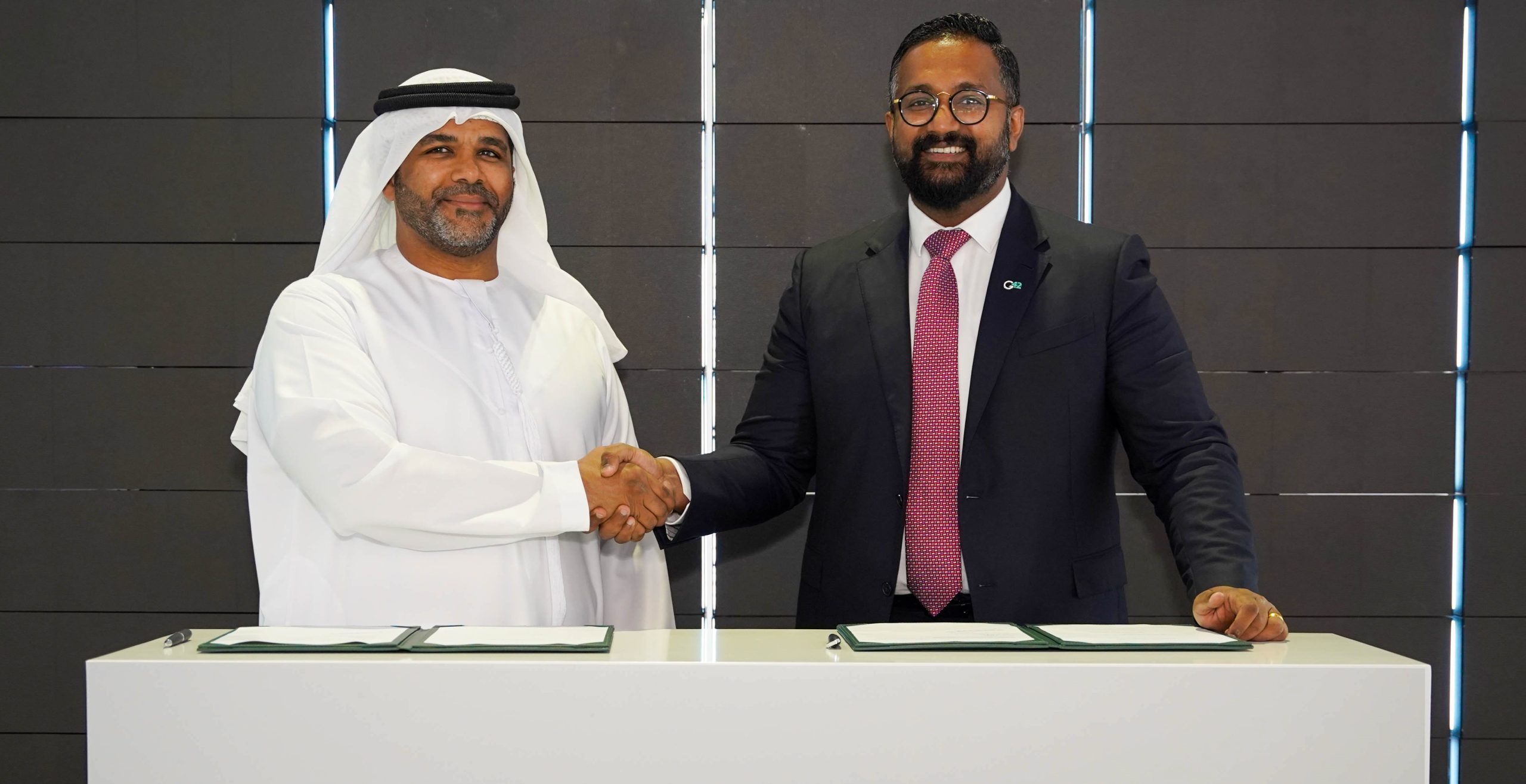
Abu Dhabi’s G42 is offering 2 % of its shareholding in its subsidiary, Presight AI, to institutional investors through an accelerated book-build, aiming to raise slightly more than $100 million. The transaction will reduce G42’s holding in the analytics group from 70.5 % to 68.5 %, while retaining majority control. First Abu Dhabi Bank and Jefferies are acting as joint global coordinators and joint bookrunners, with International Securities serving as joint bookrunner.

Demand for the placement has been strong, with books reportedly fully covered ahead of finalisation. Settlement is expected around 10 September 2025, following final terms being set by 4 September. G42 has also committed to a 180-day lock-up period before any further sale of its Presight shares.

The strategic purpose behind G42 lowers Presight AI stake via ABB is to broaden and institutionalise Presight’s investor base, enhance liquidity, and strengthen its case for inclusion in the FTSE Emerging Market Index. Greater free float and international institutional ownership would increase trading activity and appeal to passive investment funds.

Presight AI, which listed on the Abu Dhabi Securities Exchange in 2023, has posted strong financials through 2025. Its share price has risen by approximately 67 % year-to-date, closing recently at AED 3.47. In the first half of 2025, organic revenue grew by 33.5 %, supported by new domestic contracts. In the second quarter, group net profit rose by nearly 8 % to Dh77 million, with revenue up by over 53 % to Dh523.9 million. International markets now contribute 26.8 % of revenue, up from just 4.9 % a year earlier.

G42 group CFO Ricky Thirion described Presight as “a critical pillar of the G42 ecosystem and a cornerstone of our Intelligence Grid offering,” noting that its performance reflects consistent growth and strong leadership.

Regionally, secondary offerings like this one are gaining traction. In 2025, follow-on sales across the Middle East have raised roughly $3.7 billion, surpassing IPO proceeds—a sign of deepening market maturity.

The placement’s proceeds will go entirely to G42, with no dilution or impact on other shareholders or Presight’s operations.

Abu Dhabi’s G42 has therefore engineered a measured recalibration of its ownership in Presight AI—G42 lowers Presight AI stake via ABB—while securing capital, expanding its shareholder base, and positioning the company for broader market inclusion and visibility.

VISHNU RAJA
RYO YAMADA
HITORI GOTOH
IKUYO KITA
Just in:
MG Motor presents four electrified vehicles at Dubai exhibition // Ladakh Ban On Protests Ahead Of Election Is Uniquely Contentious // The Honey Trap Is The Headline, The Chip Pipeline Is The Story // Saudi fund assets forecast to cross $400 billion // Ration dealers seek GPS aided grain deliveries // L’OCCITANE Celebrates 50 Years Of Provençal Craftsmanship With Holiday 2026 Collection // How A Newly Elected Democratic Congress Could Reshape US–India Relations? // EBANX and Eneba strengthen partnership in Latin America with 138% YoY growth in payment volume // LANDMARK Presents ‘Destination CENTRAL’: A District-Wide Celebration Inviting Global Travellers to Explore the Dynamism, Luxury, and Soul of Central // ONYX Hospitality Group Unveils Plans for Amari Samui Resort and Villas, Elevating Its Premium Resort Offering on Koh Samui // December Is the Last Window for $800,000 U.S. Residency Investment // October Food Price Shock Has Far Reaching Consequences // U.S. Democratic Leadership Starts Dialogue With Progressive Bloc For Joint Strategy // Hackers falsify NVIDIA GPU readings to mask cryptomining // Rooftop solar planning gaps behind power shortages // Court reinstates Police association rejig order // China Reconciled To U.S. Curbs On Chips Exports, Woos South Korea For Supply // UAE crews sustain coastal oil removal as beaches reopen // Crescent Enterprises venture arm funds Oyster Therapeutics development // Yicura BioMed Advances Dual Capital and Industrial Strategy: Completes First Closing of Series B Financing Led by Gobi Partners //