News related to
profit

HONG KONG SAR – Media OutReach Newswire – 31 March 2026 – Phancy Group Co., Ltd. (“Phancy” or the “Company”, Stock Code: 6682.HK), a leading Artificial General Intelligence (AGI) company, today announced its annual results for the year ended December 31, 2025 (the “Reporting Period”).

In 2025, Phancy reported total revenue of RMB7.135 billion, representing a strong year-on-year increase of 35.6%. Adjusted net profit attributable to the parent company reached RMB17.84 million, a milestone reflecting significant advance in operational efficiency, business model strength, and resilience. During the reporting period, the three core business segments — AI Platform, API, and Agentic AI — delivered synergistic growth, with revenues of RMB6.552 billion, RMB79.9 million, and RMB503 million respectively, representing year-on-year increases of 32.0%, 129.2%, and 93.2%. The company has a total of over 1,000 contracted clients with deep penetration across more than 20 high-value industries, including energy, manufacturing, finance, retail, and telecommunications. Order on hand amounted to over RMB8.9 billion, surpassing the Company’s total revenue in 2025.

Dr. Dai Wenyuan, Founder, Chairman of the Board, and Chief Executive Officer of Phancy Group Co., Ltd. said, “2025 was a landmark year for Phancy. We completed a comprehensive strategic upgrade from ‘Fourth Paradigm’ to ‘Phancy Group’, signifying our transformation from an enterprise AI platform to a full-stack AI ecosystem and officially entering the AI 2.0 era. This performance breakthrough validates the development philosophy and strategic vision we have long pursued, demonstrating our forward-looking industry insight and long-term value creation capabilities. As we embrace the next wave of AI, we will continue to focus on ‘AI Agent + World Model’ as our core technology path, strengthen computing power and foundational capabilities, drive deeper value realization of AI, and work with ecosystem partners to build a sustainable intelligent future.”

Performance Highlights:

  • Total revenue reached RMB7.135 billion, up 35.6% year-on-year; adjusted net profit amounted to RMB17.84 million, marking the first full-year profitability.
  • According to IDC, Phancy ranked first in China’s machine learning platform market for seven consecutive years, with a 34% market share.[i]
  • Orders on hand amounted to over RMB8.9 billion, surpassing the Company’s total revenue in 2025.
  • AI Platform contributed RMB6.552 billion in revenue, up 32.0% year-on-year, accounting for 91.8% of total revenue and serving as the core growth pillar.
  • API business, driven by a token-based model, became the fastest-growing segment with revenue of RMB79.9 million, representing explosive year-on-year growth of 129.2%.
  • Agentic AI business, centered on a “Result-as-a-Service” model, achieved revenue of RMB503 million, up 93.2% year-on-year, demonstrating strong momentum and sustainable scalability.

Business Highlights:

In 2025, Phancy’s three core business segments — AI Platform, API, and Agentic AI — established a multi-engine growth model, creating a cycle of synergy and mutual reinforcement.

AI Platform: Sustained Growth Driver

Driven by strong domestic demand for localization and the national “AI+” initiative, the AI Platform remained the Company’s core growth engine. With its full-stack product portfolio and leading market position, the segment delivered deep integration between computing power and platform services, lowering barriers to AI adoption. Supported by a comprehensive technology framework and a strong customer base, the AI Platform effectively boosted performance and contributed to the Company’s profitability breakthrough.

The Company continued to drive technological iteration, with a strategic focus on three core offerings: PhanthyCloud, HAMi vGPU, and ModelHub XC.

  1. PhanthyCloud – the backbone of the full-stack AI PaaS cloud service, integrating diverse AI capabilities to provide efficient, cloud-based services. Seamlessly connected to ModelHub XC and HAMi vGPU, PhanthyCloud delivers model adaptation and computing power scheduling, while maintaining broad compatibility with mainstream domestic chips to support digital transformation.
  2. HAMi vGPU – a core GPU resource management product that allows GPUs to be flexibly shared and scheduled. Customers can tailor GPU configurations to their business needs, significantly improving utilization rates.
  3. ModelHub XC – China’s largest ITAI (information technology application innovation) model community, designed to promote deep adaptation between domestic chips and AI models. The number of adapted and certified models has now surpassed 30,000. The Company had initially planned to scale the number of adapted models to the hundred-thousand level within a year, a milestone it has already achieved ahead of schedule.

API Business: Fastest Growth Engine

With the rapid adoption of AI Agents, token consumption has grown exponentially. Phancy’s API business, built on a flexible pay-as-you-go model and a comprehensive ecosystem, achieved leapfrog growth, and became the Company’s fastest growing segment. Token revenue for the first quarter of 2026 alone has already surpassed the full-year total for 2025.

The API business is anchored by the Phanthy platform, complemented by PhanRouter and PhanClaw, creating a comprehensive token ecosystem in synergy with the Sage Platform:

  1. Phanthy – the core platform of the token-based ecosystem. It integrates cloud services with more than 30,000 adapted models and industry-specific vertical models, delivering accessible API capabilities that reach over 100 million of terminal products and support the large-scale deployment of AI capabilities.
  2. PhanRouter – a unified API gateway for large models. It enables developers and enterprises to seamlessly connect with dozens of mainstream model providers, it is compatible with the OpenAI standard and major domestic chips, and supports both private deployment and token-based payment, reducing customer costs and easing operational complexity.
  3. PhanClaw – an agent platform deeply integrated within PhanthyCloud and serves as an extension of the OpenClaw ecosystem. It is designed to provide users with secure, controllable, and cost-efficient digital assistant services. Working in synergy with Phanthy and PhanRouter, PhanClaw manages the token lifecycle, including risk control, permission management, and log auditing, meeting the stringent security and compliance requirements of industries, such as finance and government affairs.

Agentic AI: Long-Term Sustainable Growth

Agentic AI serves as the Company’s revenue cornerstone and a “value multiplier” for empowering a wide range of industries. Operating under a Result-as-a-service model and aligned with national “AI+” energy development policies, this segment expanded rapidly across high-value industries, achieving economies of scale and strong growth momentum. Working in synergy with the AI Platform and API businesses, Agentic AI provides long-term support for revenue and contributes to the high-quality development of the Company’s operations.

In terms of business expansion, the Company is focusing on core scenarios in spot electricity trading and medium- to long-term electricity trading. It has developed a full-chain AI solution encompassing forecasting, decision-making, risk control, and post-trading review. This solution has already been deployed in multiple pilot provinces and recognized by key customers, effectively improving efficiency and profitability in wind power, photovoltaics, and energy storage. This model is now being rapidly extended to other industries, including manufacturing and finance.

Future Outlook:

Looking ahead to 2026, Phancy will continue to advance its four strategic priorities: deepening its AI 2.0 roadmap, accelerating the deployment of industrial-grade AI Agents, driving international expansion, and further extending into the consumer market.

In terms of the AI 2.0 roadmap, the Company will continue to pursue its core philosophy of “AI for Everyone”, focusing on foundational technology R&D and real-world deployment. By refining its end-to-end technology system, Phancy aims to lower barriers to AI adoption and enable more enterprises and users to benefit from AI. For industrial-grade AI Agents, the Company will accelerate deployment under a Result-as-a-service model, deepening its presence in key sectors such as energy and finance, and developing replicable, scalable industry solutions, to expand business scale and profitability. On international expansion, Phancy will strengthen partnerships with overseas brands and channels, building a robust global operations framework to support worldwide growth. In the consumer market, the Company will focus on core consumer needs by launching high-experience smart terminal products, further expanding its customer base and establishing a dual-driven growth model powered by both technology and market reach.

Hashtag: #PHANCY

The issuer is solely responsible for the content of this announcement.

About Phancy Group

Phancy Group (Stock Code: 6682.HK) is a leading artificial general intelligence technology company. Guided by its mission of “AI for Everyone”, the Company is committed to empowering industries across the board through its “AI Agent + World Model” technology approach. Founded in 2014, the Company underwent a comprehensive restructuring in 2025, establishing multiple business divisions including Enterprise Services (Fourth Paradigm), Large Models & AGI (Pantheon), Consumer Electronics (Paradigm Pilot), Smart Energy (PhancyArc), and Smart Sports (Phancy Wonder). To date, the Company has successfully deployed over 10,000 AI applications across sectors such as finance, retail, and healthcare, consistently striving to advance the democratization of AI and help enterprises achieve sustainable growth.

By Nantoo Banerjee The central excise duty cut on petrol and diesel oil to help petro-fuel producers and marketeers partly cover their losses on account of the rising crude oil import prices is an internal government matter. It is not meant to have any impact on retail prices which continue to be very high and […]

The article Petrol, Diesel Levies Need Drastic Cuts For Inflation Control, Economic Growth appeared first on Latest India news, analysis and reports on Newspack by India Press Agency).

Arabian Post Staff -Dubai Sharjah Islamic Bank is seeking to raise as much as AED2.59 billion through a rights issue that would give the lender more room to expand its balance sheet, reinforce capital buffers and support the next stage of growth after a year of stronger profit and asset gains. The plan would lift issued capital from about AED3.24 billion to about AED4.31 billion through the […]

India’s rupee surged on Monday after the Reserve Bank of India tightened banks’ foreign-exchange position limits, forcing lenders to cut dollar holdings and unwind arbitrage trades that had built up as the currency slid to a record low at the end of last week. The rupee rose as much as 1.4% in early trade and was quoted around 93.48 to 93.85 per US dollar, marking its sharpest one-day gain since February.

The immediate trigger was the RBI’s March 27 directive capping banks’ net open rupee positions in the onshore deliverable market at $100 million by the close of each business day from April 10. That replaced a looser framework under which banks’ boards could set limits up to 25% of total capital. Traders said the order prompted a burst of dollar selling as banks moved to reduce exposures that had become profitable while the rupee was weakening.

The rebound followed a bruising stretch for the currency. On Friday, the rupee hit a record low of about 94.84 to the dollar after heavy pressure from higher crude prices, risk aversion and foreign outflows. Reuters reported the rupee had fallen more than 4% in March, putting it on course for its worst monthly performance in more than seven years, while broader anxiety over the Middle East conflict and its implications for energy markets deepened concern over India’s import bill and external balance.

At the centre of the RBI’s move is the gap between the domestic market and the offshore non-deliverable forward, or NDF, market. Banks had been exploiting pricing differences between the two venues, building large arbitrage books that were profitable during the rupee’s slide. Estimates for those positions vary, but Reuters and other market reports put them broadly in the $25 billion to $50 billion range. By suddenly tightening the rules, the central bank appears to have targeted not only volatility in the spot market but also the speculative mechanics that were amplifying pressure on the currency.

That has given the rupee breathing room, but it has also shifted the strain onto banks. Lenders have warned that rapid compliance could force a disorderly unwinding of positions and crystallise losses in treasury books. Several banks have asked the RBI for three months to comply, arguing that a phased adjustment or permission to hold existing trades to maturity would reduce the risk of market disruption. Equity investors appeared to register that concern, with banking shares falling amid estimates that mark-to-market losses could run into thousands of crores if the unwind is abrupt.

The central bank’s intervention is being read in dealing rooms as one of its strongest attempts in years to reassert control over rupee pricing. Market participants said the RBI has already been active in local and offshore markets, using reserves and liquidity tools to keep the currency from sliding too quickly. The new cap adds a regulatory weapon to that defence. It also sends a signal that the central bank is prepared to curb trading strategies it sees as destabilising, even at the cost of squeezing bank profitability in the short term.

Whether the rupee can hold on to these gains will depend less on technical unwinding and more on the backdrop that pushed it down in the first place. Brent crude has climbed sharply, with Reuters reporting a move above $115 a barrel on Monday and a monthly gain of nearly 60%. For an economy that imports the bulk of its oil, that raises the risk of a wider current account deficit, imported inflation and renewed pressure on the currency. Bond yields also edged higher, indicating that traders remain alert to the wider macroeconomic fallout even as the rupee recovers ground.

TAIPEI, TAIWAN – Media OutReach Newswire – 30 March 2026 – More than half of Taiwan’s small businesses recorded growth in 2025, while confidence heading into 2026 climbed to its highest level since 2020, according to the Asia-Pacific Small Business Survey 2025–26 conducted by global professional accounting body CPA Australia.

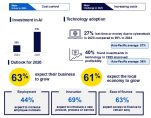
SBS Infographic 2026 Taiwan Eng

The survey found that 53 per cent of Taiwanese small businesses grew in 2025, slightly below the 57 per cent recorded in the previous survey. Looking ahead, business sentiment strengthened notably. In 2026, 63 per cent of respondents expect their business to grow, while confidence in the local economy also improved, with 61 per cent anticipating economic growth, the highest level recorded since Taiwan was first included in the survey in 2018.

Taiwan’s small and medium‑sized enterprises (SMEs) continue to play a vital role in creating new jobs. In 2025, 31 per cent of SMEs increasing staff numbers, while 44 per cent plan to hire additional employees in 2026.

With rising costs identified as the biggest challenge facing Taiwan’s SME in 2025, many businesses identified cost control as the most positive contributor to business performance last year.

Mr Elic Lam FCPA (Aust.), Honorary Taiwan Advisor at CPA Australia, said Taiwan’s economic fundamentals continue to support small business resilience, “Rising global demand for semiconductors and AI related chips continues to create opportunities for exporters and suppliers across Taiwan’s value chain,” Mr Lam said. “While geopolitical tensions and intensifying competition are adding uncertainty, government support measures for SMEs, including targeted subsidies and tax incentives, together with Taiwan’s resilient domestic demand, are helping to lift business confidence.”

Technology adoption, particularly artificial intelligence (AI), is becoming increasingly widespread among Taiwanese small businesses. The survey found that 33 per cent of small businesses identified AI as the technology they invested in most heavily invested in 2025, up from 29 per cent in the previous year.

Cyber risk among Taiwanese small businesses fell markedly. The share of small businesses reporting losses of time or money due to cyber incidents declined sharply from 59 per cent in 2024 to 27 per cent in 2025, reflecting stronger awareness and the uptake of basic protective measures across the sector.

However, the survey also indicates there is room to strengthen the returns from digital investment. Only 40 per cent of respondents reported that their technology investment in 2025 improved profitability, compared with the survey average of 56 per cent.

Mr Lam noted that Taiwan’s SME sector is undergoing a generational transition that is influencing technology adoption patterns, “Many SMEs in Taiwan are moving from first generation ownership to second or third generation leadership, and technology adoption remains cautious and practical,” he said. “The increase in AI investment reflects both external drivers, such as changing customer expectations and government policy support for digital transformation, as well as internal factors, including younger owners’ familiarity with AI tools and rising operating and staffing costs.”

“To improve profitability, SMEs should focus on applying digital solutions in areas with the greatest impact. For example, as rising costs were identified as the most negative factor affecting performance in 2025, investing in ready-to-use and AI enabled accounting or financial management tools can help reduce operating expenses and lift productivity.”

Access to finance is another notable finding. Financing conditions in Taiwan improved significantly in 2025, even as borrowing softened. Two-thirds of businesses (66 per cent) I said it was easy to access external finance, placing Taiwan among the top three surveyed markets and representing a sharp increase from 28 per cent in 2024. Looking ahead, financing conditions are expected to remain supportive, with 63 per cent anticipating easy access to finance in 2026.

Despite the marked improvement in financing conditions, demand for finance was more subdued. In 2025, 54 per cent of SMEs sought external finance, down from 72 per cent in 2024.

“The Taiwan government has expanded inclusive and guaranteed financing mechanisms to support SMEs, including higher guarantee ratios under the SME Credit Guarantee Fund and preferential loans offered through state affiliated banks,” Mr Lam said. “These measures have made bank financing more accessible for small businesses.”

“Even so, many SMEs remain cautious about taking on new debt. In a stable domestic environment, businesses can maintain steady growth, but external uncertainties drive them to take a prudent approach to borrowing. This aligns well with the government’s policy focus on gradual and resilient SME transformation rather than rapid, high risk expansion.”

Lam concluded, “To navigate international uncertainty and intensifying market competition, Taiwan’s small businesses should make better use of government policy support to upskill their workforce through AI adoption, foster innovation, and diversify export markets by strengthening online sales channels.”

The Asia Pacific Small Business Survey 2025–26 gathered views from 4,166 small businesses across 11 markets in the region, including Singapore, Chinese Mainland and Australia. The Taiwan survey sample comprised 311 small businesses.

Hashtag: #CPAAustralia

The issuer is solely responsible for the content of this announcement.

About CPA Australia

CPA Australia is Australia’s leading professional accounting body and one of the largest in the world. We have more than 176,000 members in over 100 countries and regions, including more than 22,500 members in Greater China. Our core services include education, training, technical support and advocacy. CPA Australia provides thought leadership on local, national and international issues affecting the accounting profession and public interest. We engage with governments, regulators and industries to advocate policies that stimulate sustainable economic growth and have positive business and public outcomes. A CPA is a Certified Practising Accountant. More at

Banks are pressing the Reserve Bank of India to soften a new foreign-exchange rule that dealers say could force the unwinding of large arbitrage positions, deepen trading losses and add fresh strain to the rupee at a fragile moment for the currency market. The central bank has told lenders to keep their net open rupee positions in the onshore deliverable market within $100 million by the end of each business day from April 10, replacing a far more flexible regime under which banks’ boards could set limits linked to capital.

The pushback from lenders has grown because the rule change lands after weeks of pressure on the rupee from higher oil prices, foreign portfolio outflows and war-driven risk aversion across global markets. The rupee touched a record low of 94.84 against the US dollar after a sharp slide this week, underscoring the urgency with which the central bank is trying to contain volatility and regain influence over price formation in the domestic market.

At the heart of the dispute is a trading structure that banks have used to profit from differences between the onshore market and the offshore non-deliverable forward, or NDF, market. Under the earlier framework, dealers could offset positions across the two venues without breaching broader exposure limits. The new rule narrows that room sharply by capping end-of-day net open rupee exposure in the onshore deliverable market, regardless of how positions are balanced elsewhere. Traders told Reuters that arbitrage books likely to be affected are worth about $10 billion to $18 billion, while Bloomberg reported that banks see total unwinding pressure building toward roughly $30 billion.

That distinction matters because the RBI appears to be targeting a channel through which offshore pricing has increasingly spilled back into the domestic market. By tightening end-of-day exposure, the central bank is seeking to reduce the ability of banks to transmit volatility from the NDF market into onshore rupee trading, while making its own intervention in the domestic market more effective. That objective fits with a broader pattern this month, as the RBI has been active in spot, futures and non-deliverable forward markets to steady the currency.

Banks, however, argue that the speed of implementation could be costly. Treasury officials have warned that compressing positions before the April 10 deadline may force disorderly exits, widen onshore-offshore spreads and crystallise mark-to-market losses on trades that had previously been profitable. The immediate complaint is not only about tighter oversight but also about the lack of transition time for legacy positions built under the old regime. Reports from the domestic financial press say lenders have asked the central bank to reconsider or provide relief, reflecting concern that a hard cap applied uniformly across banks does not distinguish between speculative bets and market-making activity.

The central bank’s tougher line comes as India’s external buffers, while still substantial, have been tested by intervention. RBI data cited in a Reuters report showed foreign-exchange reserves at $709.76 billion as of March 13, enough to cover 11.2 months of imports and about 95 per cent of outstanding external debt. Even so, reserves had fallen notably over the month as the central bank sold dollars to smooth rupee moves. That means policymakers are trying to balance two goals at once: preserving confidence in India’s macro-financial resilience while discouraging trading structures that may amplify pressure during periods of external shock.

Another layer of complexity is that the RBI had, only weeks earlier, proposed broader reforms that would ease some foreign-exchange transaction norms for authorised dealers and give market participants greater flexibility in hedging and balance-sheet management. That makes the present clampdown look less like a reversal of liberalisation and more like a targeted response to extraordinary market conditions. For banks, though, the contrast has sharpened frustration: one arm of the regulatory agenda promises flexibility, while another has suddenly imposed a hard operational ceiling on rupee positions.

Arabian Post Staff -Dubai Exeed has opened a new showroom in Jeddah through Arabian Heritage Motors, part of Al Ghurair Mobility, extending the premium vehicle brand’s physical presence in Saudi Arabia as competition intensifies among Chinese carmakers across the Gulf. The Jeddah launch was disclosed by Al Ghurair in a corporate post and comes after Exeed appointed Al Ghurair as its exclusive distributor in the Kingdom in […]

Advertisements

Intercontinental Exchange, the parent of the New York Stock Exchange, has expanded its push into prediction markets with a fresh $600 million investment in Polymarket, tightening a partnership that could take its total commitment to almost $2 billion and further pull event-based trading into the financial mainstream. ICE said the new cash injection forms part of a previously announced arrangement and does not expect to materially affect […]

Arabian Post Staff -Dubai Mezza, a new hospitality platform in the UAE, has launched with a model aimed at giving restaurants upfront capital in exchange for future food and beverage credit, offering operators an alternative to bank debt or equity fundraising while also promising a pipeline of diners over time. The company says partner venues can access between AED 20,000 and AED 10 million, with the credit […]

HONG KONG SAR – Media OutReach Newswire – 28 March 2026 – In 2025, Meitu, Inc. (Meitu) adhered to its “Productivity and Globalisation” strategy, with total revenues from continuing operations surging 28.8% YoY to RMB 3.86 billion. The company’s core business – Photo, Video and Design Products – generated RMB 2.95 billion in revenue, a robust 41.6% YoY increase, accounting for 76.6% of total revenues. Non-IFRS Adjusted Net Profit – a key indicator of core operational performance – soared 64.7% YoY to RMB 965 million. The revenue and profit growth were primarily driven by the rapid adoption of AI Agents integrated into its product portfolio, leading to a significant surge in global paying subscribers.

As of December 31, 2025, total paying subscribers reached an all-time high of 16.91 million, a substantial 34.1% YoY increase, with a subscription rate of 6.1%, up 1.4 percentage points from 2024.

AI Agent-Integrated Products Gain Explosive Popularity, Driving Strong Penetration and Monetization Growth

Following the July launch of RoboNeo (Meitu’s flagship AI visual design agent), Meitu integrated AI Agent capabilities across most of its product portfolio to enhance workflow automation and user experience.

As such, Meitu’s productivity tools segment achieved an all-time high 9% subscription rate, up 3.1 percentage points YoY. Paying subscribers of this segment grew to 2.16 million, representing a significant 67.4% YoY growth, with international paying subscribers more than doubling.

The segment comprises three core tools: DesignKit specializing in AI workflows for e-commerce design,Kaipai and Vmake specializing in AI workflows for video production.

Backed by AI Agent empowerment, in 2025, DesignKit established strategic partnerships with leading global e-commerce platforms including Alibaba, JD.com, and Amazon. Kaipai focuses on verticals including healthcare, education, beauty, insurance, and real estate, empowering industry users to create professional talking videos. In 2025, Kaipai’s MAU nearly doubled, and paying subscribers tripled. Vmake targets fitness and wellness markets, achieving rapid MAU growth in the U.S., with Annual Recurring Revenue (ARR) reaching approximately USD 3 million.

Meitu’s leisure product segment including the Meitu app, BeautyCam and Wink maintained robust user engagement. The paying subscribers for the leisure segment grew 30.3% YoY to 14.75 million, driving the segment’s subscription rate to a solid 5.9%.

Globalisation Milestones: Expanding Footprint in High-ARPU Regions

Meitu’s Globalisation strategy achieved significant progress, with MAU in markets outside Mainland China surpassing the 100 million milestone, a 6.3% YoY increase. International paying subscriber growth accelerated in the second half of 2025, with the majority of new additions coming from high-ARPU regions including Europe, the Americas and East Asia, enhancing the sustainability of international monetization.

AI Technology Advancement & Industry Recognition

Following the training of its self-developed large vision model’s foundational capabilities in 2024, the company has since shifted its R&D priorities towards vertical-specific model training and application-level optimization to better address targeted user needs, consistent with its model-agnostic strategy. In 2025, the company’s total R&D expenses grew moderately by 3.8% YoY.

Meanwhile, on Andreessen Horowitz (a16z)’s “Global Top 50 Gen AI Mobile Apps” list, Meitu ranked first in the photo, video and design category by the number of featured products, with four apps selected. This external recognition reinforces Meitu’s position as a leading global AI application company in imaging, video and design.

Fueled by sustained R&D investment, Meitu is systematically deploying AI Agents into scalable productivity workflows. Going forward,Meitu will continue expanding diverse imaging skills to empower global developers and users with professional-grade AI creation experiences.

Hashtag: #Meitu

The issuer is solely responsible for the content of this announcement.

Arabian Post Staff -Dubai Abu Dhabi Commercial Bank has secured regulatory approval to establish a wholly owned subsidiary in Kazakhstan, opening the way for one of the UAE’s biggest lenders to deepen its footprint in Central Asia and broaden access to conventional and Islamic banking services in one of the region’s most closely watched financial markets. The approval was granted by Kazakhstan’s Agency for Regulation and Development […]

Hundreds of organisations using Microsoft 365 are facing a fast-growing phishing threat that sidesteps conventional multi-factor authentication controls by abusing a legitimate Microsoft sign-in process rather than breaking it. Security researchers tracking the activity say more than 340 organisations across the United States, Canada, Australia, New Zealand and Germany have been affected, with attacks accelerating through March after the first known cases were detected on February 19. […]

Reflection, an artificial intelligence startup supported by Nvidia, is seeking to raise $2.5 billion at a valuation of about $25 billion, positioning itself as a high-profile contender to China’s rapidly advancing open-source AI ecosystem led by DeepSeek. The fundraising effort, still under discussion with investors, underscores intensifying competition between proprietary AI models backed by large capital pools and open-source alternatives gaining traction across Asia and beyond. Reflection’s […]

Revenue Achieved Over 40% Growth Y-o-Y

Highlights:

  • Revenue increased by 41.3% to approximately HK$8,572.2 million.
  • Gross profit increased by 37.6% to approximately HK$486.2 million.

Financial Highlights:

For the year ended 31 Dec
HK$’ million 2025 2024 Change
Revenue 8,572.2 6,066.0 +41.3%
  • Building Construction Works

  • Repair, Maintenance, Alteration and Addition (“RMAA”)

  • Environmental Operations
7,697.8

718.9

155.5

5,414.5

512.0

139.5

+42.1%

+40.4%

+11.5%

Gross profit 486.2 353.2 +37.6%
Gross profit margin 5.7% 5.8% -0.1 p.p.

HONG KONG SAR – Media OutReach Newswire – 27 March 2026 – CR Construction Group Holdings Limited (“CR Construction” or the “Company”, together with its subsidiaries, the “Group”; stock code: 1582.HK), a building contractor in Hong Kong, announced its annual results for the year ended 31 December 2025 (“FY 2025”). During FY 2025, the revenue recorded by the Group amounted to approximately HK$8,572.2 million representing an increase of approximately 41.3% as compared to approximately HK$6,066.0 million for the year ended 31 December 2024 (“FY 2024”). Profit for the year of the Group during FY 2025 was approximately HK$42.2 million.

In FY 2025, gross profit of the Group was approximately HK$486.2 million, representing an increase of approximately 37.6% as compared to approximately HK$353.2 million for FY 2024. The Group’s gross profit margin was approximately 5.7% and 5.8% for the year ended 31 December 2025 and 2024, respectively. During the Reporting Period, earnings per share of the Group was approximately HK7.84 cents (FY 2024: HK10.74 cents).

BUSINESS REVIEW
Construction Operations
As at 31 December 2025, the Group had 50 projects on hand with an aggregate original contract sum of approximately HK$32.6 billion. During FY 2025, the Group had been awarded 15 new projects with an aggregate original contract sum of approximately HK$5.6 billion and had completed 17 projects with an aggregate original contract sum of approximately HK$6.1 billion.

Building Construction Works
In FY 2025, the revenue generated from the building construction works was HK$7,697.8 million, representing an increase of approximately 42.1% as compared to approximately HK$5,414.5 million for the FY 2024. The increase was mainly due to the increase in revenue generated from new projects and existing projects during the year.

During FY 2025, the gross profit of building construction works was approximately HK$334.6 million, representing an increase of approximately HK$96.5 million as compared to approximately HK$238.1 million for FY 2024. The gross profit margin decreased slightly to approximately 4.3% (2024: 4.4%).

Repair, Maintenance, Alteration and Addition (“RMAA”)
The revenue generated from the RMAA works increased by approximately 40.4% from approximately HK$512.0 million for FY 2024 to approximately HK$718.9 million for FY 2025.

The gross profit of RMAA works was approximately HK$93.3 million, representing an increase of approximately HK$22.4 million from the gross profit of approximately HK$70.9 million for FY 2024. The gross profit margin decreased to approximately 13.0% for FY 2025. The increase in gross profit and decrease in gross profit margin was mainly due to increase in revenue from RMAA work projects with lower gross profit margin in FY 2025.

Environmental Operations
As at 31 December 2025, the Group had 8 projects with an aggregate original contract sum of approximately HK$158.4 million and 28 projects relating to service concession arrangements and operation services.

During FY 2025, the Group demonstrated its capacity for market expansion by securing its first wastewater treatment construction contract outside of Zhejiang Province in Gaoping City, Shanxi. Furthermore, the Company strategically formed a joint venture with Tiantai Construction and the Group to pursue new opportunities in environmental services and sewage treatment, thereby enhancing its existing business.

The revenue generated from the environmental operations in FY 2025 was approximately HK$155.5 million, representing an increase of approximately 11.5% as compared to approximately HK$139.5 million for FY 2024.

In FY 2025, the gross profit was approximately HK$58.3 million, representing an increase of approximately HK$14.1 million as compared to approximately HK$44.2 million in FY 2024. The gross profit margin increased to approximately 37.5% in FY 2025. This is mainly due to increase in revenue from sewage and reclaimed water treatment services, which contributed higher gross profit margin during FY 2025.

CONTRACT COSTS
The Group’s contract costs primarily consisted of subcontracting costs, material costs, direct staff costs and site overheads. The contract costs of the Group in FY 2025 were approximately HK$8,086.0 million, representing an increase of 41.5% compared to approximately HK$5,712.8 million in FY 2024, which was in line with increase in revenue, and was mainly attributable to the increase in subcontracting costs, material costs, direct staff costs and site over heads for new and existing projects in FY 2025.

TECHNOLOGICAL INNOVATION
During FY 2025, the Group placed significant emphasis on technological innovation to enhance its core competitiveness in the construction industry. The total expenditure for research and development was approximately HK$23.3 million.

The Group continued to implement its enhanced Smart Site Safety System (4S), reinforcing our safety management framework and maintain our ISO 27001 certification. The Group has also integrated a range of digital solutions – including BIM, 4S, RPA, and the MaiaAI System – into project management and daily operation, significantly improving both efficiency and safety standards. The Group’s AI Tower Crane System received with 2025 CIC Construction Innovation Award – Local Award (Construction Safety 2nd Prize).

PROSPECTS
Subsequent to 31 December 2025, the Group has been further awarded 3 new projects relating to 1 building construction works contracts with original contract sum of approximately HK$3,590 million; and 2 RMAA works contract with an aggregate original contract sum of approximately HK$9.3 million.

The proactive measures outlined in 2025 Policy Address to accelerate infrastructure and stimulate industry growth present a significantly positive outlook for the local construction sector.

The commitment to major projects such as the Northern Metropolis, the Hong Kong-Shenzhen Innovation and Technology Park, and new transportation infrastructure is expected to generate substantial momentum for the Group’s business.

The Group will actively support and leverage government initiatives. We will remain focused on securing new and profitable project opportunities. Building on our proven expertise, the Group is strategically positioned to explore and pursue suitable construction business ventures both in Hong Kong and overseas.
Hashtag: #CRConstruction #華營建築 #AnnualResults

The issuer is solely responsible for the content of this announcement.

CR Construction Group Holdings Limited

CR Construction Group Holdings Limited, which is carrying out construction business for over 55 years locally, is one of the leading building contractors in Hong Kong. The Group principally act as a main contractor in building construction works and RMAA works projects across public and private sectors in Hong Kong. As a main contractor, the Group is responsible for (i) overall management of the projects; (ii) formulating work programmes; (iii) engaging subcontractors and supervising their works; (iv) sourcing construction materials; (v) communication and coordination with the customers and their consultant teams; and (vi) safeguarding compliance with safety, environmental and other contractual requirements.

Arabian Post Staff -Dubai Shareholders of Al Ansari Financial Services have approved a full-year dividend for 2025 at the company’s Annual General Meeting, reinforcing a payout approach that signals stability in earnings and confidence in cash flow generation. The approved distribution includes a final dividend of AED 148.5 million, equivalent to 2 fils per share, for the second half of the financial year. This follows an identical […]

High-Quality Growth with Improved Gross Profit Margin, increasing R&D Investment and Strategic Focus on Trustworthy Agents Ecosystem

HONG KONG SAR – Media OutReach Newswire – 27 March 2026 – Voicecomm Technology Co., Ltd. (“Voicecomm Technology” or the “Company“, Stock Code: 2495.HK), a core technology provider and ecosystem operator of trustworthy conversational AI in China, announced its annual results for the year ended December 31, 2025. Leveraging its deep technological expertise and forward-looking strategic initiatives in trustworthy conversational AI, the Company achieved steady revenue growth, continuous improvement in profitability, and a significant enhancement in operating cash flow, further strengthening its competitive edge in the enterprise-level trustworthy Agent sector.

Gross Profit Margin Steadily Improves, Operating Cash Flow Turns Strongly Positive

In 2025, the Company’s total revenue successfully exceeded the RMB1 billion mark, reaching RMB1,006.9 million, representing a year-on-year increase of 7.0%. Gross profit amounted to RMB551.2 million, increased by 8.0% from the previous year, while the gross profit margin increased by 0.5 percentage point to 54.7% from 54.2% in the same period last year, reflecting the high-value-added products and technical services of the Company, as well as effective cost control.

Notably, the Company’s net cash generated from operating activities turned strongly positive, reaching a net inflow of RMB212.5 million, compared to a net outflow of RMB129.2 million in the same period last year. This improvement underscores enhanced operational efficiency and reflects strengthened receivables management, which accelerated cash collection.

Profit for the year amounted to RMB140.2 million. The significant increase in net profit compared to the same period last year was mainly attributable to eliminating the impacts of changes in carrying amount of redeemable capital contributions, an accounting adjustment arising from financing agreements entered into with shareholders prior to the Listing and completion of the Global Offering.

Increasing R&D Investment to Strengthen the Trustworthy Agent Technology Foundations

As a technology-centric product company, Voicecomm Technology remains committed to the independent R&D and innovation of underlying technologies. In 2025, the Company’s research and development expenses reached RMB224.3 million, representing a substantial year-on-year increase of 67.7%. The investment was primarily directed towards developing Agents with continuous learning capabilities and a technical framework for Multi-agent collaboration, aiming to enhance technological capabilities and elevate the level of product innovation. This reinforces our trustworthy Agent technical architecture composed of three layers: “Multimodal Perception + Multi-model Thinking + Multi-agent Collaboration”.

This architecture takes the “meta-model” as the core to effectively alleviate the common pain points of in enterprise-level implementation, such as hallucinations, controllability and data security, by integrating the generalization capabilities of large language models with the precision of vertical domain knowledge. On this basis, the Company have formed a deliverable and operable trustworthy Agent product system, to ensure that the Agents are usable, manageable, and controllable in enterprise environments, thereby powering the intelligent upgrade of six core application scenarios: City management and administration, Automotive and transportation, Telecommunications, Finance, Healthcare, and Energy management.

Productization Strategy Drives Deep Application across Six Core Scenarios

Voicecomm Technology focuses on empowering various industries through superior products and technologies. In 2025, leveraging its mature product matrix, the Company successfully established replicable benchmark standards across multiple application scenarios.

City Management and Administration: As a leading solution provider in the smart government sector in China, the Company’s business has covered more than 130 prefecture-level cities. The “Smart Government Agent” deeply integrates the capacities of large language models, enabling more intelligent and automated government services with standardized and intelligent applications in scenarios such as government hotlines and city governance.

Automotive and Transportation: The Company successfully established benchmark autonomous driving projects in cities such as Mianyang, Zibo, and Ezhou, building a successful and replicable “Smart Transportation Agent” solution. For the Mianyang Science and Technology New City project, a total of 96 autonomous vehicles have been deployed, and the project was successfully selected as a National AI Application Pilot Testing Base in the transportation sector. In January 2026, the Company newly won the bid for the “Ezhou Huahu Airport Smart Port” autonomous driving bus procurement and operation project, further expanding its application boundaries.

Healthcare: In January 2026, the Company successfully won the bid for the “Chuannan Smart Valley AI Vertical Large Model Innovation Platform – Silver Economy Construction and Operation Project” in Neijiang City, Sichuan Province, with a total contract value of nearly RMB300 million. This project represents the Company’s first “AI + Elderly Care” city-level benchmark demonstration project. It adopts a closed-loop collaborative model of “online platform + offline service network + home terminals,” integrating Agents capabilities with the Company’s “vertical small model microservices” system in areas such as Health Early Warning, Cognitive Ability Assessment, and emotional companionship into a productized solution, thereby establishing rapidly replicable city-level smart elderly care operational benchmark.

Telecommunications, Finance, and Energy Management: The Company continues to deepen collaborations with leading enterprises in the telecommunications and finance sectors, leveraging the “Telecommunication Service Agent” and “Financial Service Agent” to enhance service efficiency and user service value. Meanwhile, its AI-powered smart charging solution has been progressively integrating charging pile networks in China and across several Southeast Asian countries.

Benefiting from the successful implementation of the Company’s productization strategy and the high level of market recognition for its trustworthy Agent solutions, as of December 31, 2025, the Group’s project pipeline and orders in hand saw significant growth. The number of ongoing projects at year-end increased to 320, representing a year-on-year increase of 41.6%, while the outstanding contract sum at year-end rose to RMB1,048.9 million, a year-on-year increase of 57.4%, reflecting the continued expansion of the Company’s business.

Future Outlook: Focusing on the Trustworthy Agents Ecosystem with Four Strategic Priorities

Looking ahead, the Company will firmly focus on its goal of “building a trustworthy conversational AI ecosystem” and will advance the following strategic priorities:

Overall and Technology Strategy: Continue to focus on R&D and innovation in frontier technologies such as multi-modal fusion and trustworthy intelligence, promoting the deployment of trustworthy agents across more application scenarios. By creating open technology platforms and standards, the Company will attract more developers and partners to jointly build a prosperous and win-win industrial ecosystem.

Market Strategy: Establish benchmarks for quality and innovation within the industry and deepening partnerships with various service channels. At the same time, the Company will actively expand into the C-end market, extending cutting-edge technologies to a wider user base, thereby expanding the influence and commercial value of the ecosystem.

Regional Strategy: Domestically, the Company will continue to deepen its partnerships with major cooperating cities to create smart city benchmark cases. Internationally, the Company will actively respond to the “Belt and Road” initiative, grasp the tremendous potential of emerging markets, and promote the Company’s trustworthy Agent products and services globally to enhance its international brand image.

Investment Strategy: Through prudent strategic investments and M&A, the Company will optimize the layout of the upstream and downstream industry chains and consolidate the stability and competitiveness of the ecosystem.

DR.Tang Jinghua, Chairman ofVoicecomm Technology Co., Ltd., said: ” 2025 was a landmark year for Voicecomm Technology. We not only achieved a strong turnaround in operating cash flow and a steady increase in gross profit margin financially, but we also completed a strategic leap at the technological and business level towards becoming a ‘a core technology provider and ecosystem operator of trustworthy conversational AI.’ We deeply understand that the essence of enterprise-grade AI lies in creating replicable and reliable products and technology foundations. During the year, we significantly increased R&D investment and successfully applied our trustworthy Agents across six core scenarios, particularly in city-level benchmark projects in emerging fields like smart elderly care, showing the strong competitiveness of our productization strategy. Looking to the future, we will continue to pursue the goal of ‘building a trustworthy conversational AI ecosystem,’ leveraging an open platform to gather ecosystem partners and empowering diverse industries with innovative technology, thereby creating long-term sustainable value for our shareholders and society. ”

Hashtag: #Voicecomm

The issuer is solely responsible for the content of this announcement.

Voicecomm Technology Co., Ltd.

Founded in 2005 and headquartered in Wuhan, Voicecomm Technology is one of the leading core technology providers and ecosystem operators of trustworthy conversational AI listed on the Main Board of the Hong Kong Stock Exchange, and obtained the qualification as National-level SRDI, Technology Little Giant and High-Tech Enterprise. Leveraging its proprietary trustworthy Agent,the Company overcomes pain points in the commercialization of large language models, such as hallucinations and compliance issues, ensuring AI is usable, manageable, and controllable in enterprise environments. For enterprise-level customers, the Company provides AI services covering the entire process of “communication –decision – execution”. Its trustworthy Agent solutions have been widely deployed across multiple scenarios, including City management and administration, Automotive and transportation, Telecommunications, Finance, Healthcare, and Energy management, and it is dedicated to empowering the intelligent transformation of diverse industries.

Democracy is on the defensive. This is shown by the Bertelsmann Stiftung’s Transformation Index 2026 (BTI). The BTI was first surveyed twenty years ago, when democracies were still in the majority. Today, 56 percent of the 137 countries surveyed by the BTI are ruled autocratically. However, this rarely leads to better governance. Autocracies are more susceptible to corruption, less capable of shaping the future, and less consensus-oriented. However, examples such as Poland and Brazil show that social resistance and political competition can pave the way back to democracy.

GÜTERSLOH, GERMANY – Newsaktuell – 26 March 2026 – A majority of 77 of the 137 states surveyed by the BTI are now ruled autocratically and are taking increasingly repressive action against the opposition, the media and civil society. Of these countries, 52 are hard-line autocracies in which fundamental rights are completely disregarded – more than at any time since the survey began in 2006. But autocratic tendencies are also gaining ground in numerous democracies. “Many elected governments have undermined core democratic institutions in order to stay in power, and this paves the way for autocracy,” says democracy expert Sabine Donner.

In 54 percent of the countries, elections no longer meet minimum standards. In some countries, such as Gabon or Niger, they were suspended after military coups, while in Belarus, Russia and Rwanda they are strictly controlled legitimizating rituals. However, numerous free and fair elections also led to peaceful changes of government. In Madagascar, Tanzania and Venezuela, mass protests following rigged elections were violently suppressed, but strengthened political mobilization beyond the election date.

Examples such as El Salvador, Serbia and Turkey show that the repeatedly touted promise of authoritarian efficiency is rarely fulfilled. Corruption is insufficiently combated in more than 100 countries, two thirds of which are autocracies. “In autocracies, loyalty must be rewarded and positions secured,” says BTI expert Hauke Hartmann. “The supposed efficiency of authoritarian regimes is a myth.”

However, persistent grievances continue to ensure that protests by dissatisfied citizens show no sign of abating. In Bangladesh, Nepal and Sri Lanka, protests forced a democratic opening, while a democratic turnaround was achieved in Brazil and Poland. “The BTI shows how much pressure democratic institutions are coming under – at the same time, we are seeing remarkably lively resistance to their erosion in many places,” says Daniela Schwarzer, Member of the Executive Board, Bertelsmann Stiftung. “This ability to mobilize, which comes above all from an active civil society, is a key potential for democratic renewal.”

www.bti-project.org

Additional information:
Since 2006, the Bertelsmann Stiftung’s Transformation Index has analyzed the quality of democracy, market economy and governance in 137 countries every two years. Currently, 23 OECD countries, such as Germany and the USA, are not part of the study. The study was carried out between February 1, 2023 and January 31, 2025.

The issuer is solely responsible for the content of this announcement.

About the Bertelsmann Stiftung

The Bertelsmann Stiftung is committed to ensuring that everyone can participate in society – politically, economically and culturally. We put people at the center of everything we do. Because it is people who can move the world, change it and make it a better place. To this end, we develop knowledge, impart skills and develop solutions. The non-profit Bertelsmann Stiftung was founded in 1977 by Reinhard Mohn.

Emaar Properties has approved a dividend payout of AED8.8 billion following a strong financial performance for 2025, signalling confidence in its cash flows and long-term growth strategy. The decision was endorsed at the company’s annual general meeting, where shareholders backed a distribution equivalent to 100 per cent of capital. The approval underscores Emaar’s position as one of the Gulf’s most profitable real estate developers, supported by sustained […]

Arabian Post Staff -Dubai Etihad Airways has launched its first direct service to Charlotte, marking a strategic expansion into the southeastern United States as the Abu Dhabi-based carrier seeks to strengthen transatlantic connectivity and tap into a growing business travel market. The inaugural flight landed at Charlotte Douglas International Airport on March 20, operated by the Airbus A350-1000, one of the airline’s most advanced long-haul aircraft. The […]

Arabian Post Staff -Dubai Gross assets held by banks in the United Arab Emirates climbed to AED 5.41 trillion by the end of January 2026, reflecting steady expansion in the country’s financial system amid sustained credit growth and resilient liquidity conditions. Data released by the Central Bank showed assets rose by 1.4 per cent from AED 5.34 trillion at the close of December 2025, extending a pattern […]

Messaging platform Telegram has fully repaid bonds issued five years ago, marking a significant financial milestone as the company signals sustained profitability and stronger investor confidence, according to a statement from its founder Pavel Durov. Durov confirmed that the debt raised in 2021 has now been cleared in full, underscoring a turnaround in the platform’s financial trajectory. The repayment follows a period during which Telegram introduced a […]

A sharp wave of liquidations swept through cryptocurrency markets after comments by Donald Trump signalling progress in talks with Iran triggered a rapid shift in investor sentiment, forcing traders betting on falling prices to unwind positions at speed. Market data showed that more than $265 million worth of short positions were liquidated within minutes as major digital assets surged. Bitcoin and Ethereum both recorded abrupt upward movements, […]

A network of coordinated social media accounts has been identified exploiting geopolitical tensions linked to the Iran conflict to manipulate cryptocurrency markets, funnelling unsuspecting users into pump-and-dump schemes that have generated substantial on-chain profits. Blockchain investigator ZachXBT detailed how at least 11 accounts on X, formerly Twitter, orchestrated a campaign designed to manufacture panic-driven narratives around developments involving Iran. These accounts, often appearing credible or posing as […]

Bitcoin miners are facing a widening gap between production costs and market prices, yet data shows a marked slowdown in selling activity, raising questions about strategy and resilience across the sector. Bitcoin has been trading near $68,000, while estimates of the average cost to mine a single coin have climbed towards $85,000 or higher for many operators. The divergence has been driven largely by a sharp rise […]

VISHNU RAJA
RYO YAMADA
HITORI GOTOH
IKUYO KITA
Just in:
Microsoft outage leaves Outlook and Teams users disconnected // How A Newly Elected Democratic Congress Could Reshape US–India Relations? // ONYX Hospitality Group Unveils Plans for Amari Samui Resort and Villas, Elevating Its Premium Resort Offering on Koh Samui // Turkish Airlines adds Chengdu to mainland China services // U.S. Democratic Leadership Starts Dialogue With Progressive Bloc For Joint Strategy // MG Motor presents four electrified vehicles at Dubai exhibition // Nvidia appoints Colette Kress interim chief after Huang departure // Modi ally flags youth opportunities gap despite growth // Yicura BioMed Advances Dual Capital and Industrial Strategy: Completes First Closing of Series B Financing Led by Gobi Partners // Musk expresses willingness to recruit Nvidia chief Huang // DP World transports million containers through UAE corridors // LANDMARK Presents ‘Destination CENTRAL’: A District-Wide Celebration Inviting Global Travellers to Explore the Dynamism, Luxury, and Soul of Central // Fujairah highway pile-up leaves 14 dead and 30 injured // Ajman University MBA climbs to joint 13th regionally // Valarmathi restarts fast as teachers defy police // From Dubai to the EU: how UAE-based crypto firms can expand under MiCA // Saudi fund assets forecast to cross $400 billion // L’OCCITANE Celebrates 50 Years Of Provençal Craftsmanship With Holiday 2026 Collection // Uforce reaches $6 billion valuation with British backing // Electric and hybrid interest rises at Sharjah car market //