Abu Dhabi has unveiled two collaborations with the Massachusetts Institute of Technology to strengthen cancer research, artificial intelligence-enabled oncology and faster translation of laboratory discoveries into patient care. The initiatives, announced during BIO International Convention 2026 in San Diego, bring together the Department of Health – Abu Dhabi, Future Health – A Global Initiative by Abu Dhabi, and MIT’s Koch Institute for Integrative Cancer Research. The move […]
Opera has rolled out Paste Protect, a built-in browser defence designed to stop malicious clipboard commands before users can paste them into terminals, run boxes or other command-line tools. The feature, launched on 2 July 2026 and switched on by default in Opera’s desktop browsers, targets a fast-growing class of social engineering attacks known as ClickFix. These scams usually begin with a familiar-looking prompt: a failed video […]
Adani Enterprises has expanded its qualified institutional placement to ₹150 billion after demand from large investors exceeded the original ₹100 billion target, giving Gautam Adani’s flagship company a sizeable pool of equity capital for its next phase of infrastructure and industrial expansion.
The share sale, opened to institutional investors this week, drew bids of about ₹380 billion, or roughly 3.8 times the base offer. The indicative price was set at ₹2,883 a share, below the regulatory floor price of ₹3,034.68 and at a discount to the stock’s previous close, reflecting the typical pricing structure used to secure large-block institutional participation.
The enlarged issue marks one of Adani Enterprises’ biggest equity-raising exercises since the group was hit by a market rout in 2023 following allegations by US short-seller Hindenburg Research. The conglomerate denied wrongdoing, and group companies have since rebuilt access to capital through a mix of equity, debt, asset recycling and strategic partnerships.
The strong response to the placement signals that institutional investors are again willing to back the group’s growth strategy, even as they continue to price in governance, leverage and execution risks. The investor book included global funds and domestic asset managers, with demand high enough for the company to lift the deal size by 50 per cent.
Adani Enterprises is the incubator of the group’s newer businesses. Its portfolio spans airports, roads, data centres, green hydrogen, mining services, defence, solar manufacturing and other infrastructure-linked ventures. The company has been central to the group’s plan to build large operating platforms before eventually listing or separating mature units.
The latest fundraising comes as the group accelerates capital spending across transport, energy transition and materials. Its airports business operates eight airports and is preparing for the opening of Navi Mumbai International Airport, a project expected to strengthen the group’s presence in aviation infrastructure. Data centres and green hydrogen remain capital-intensive bets that require long gestation funding and steady access to institutional capital.
The timing also follows Adani Enterprises’ rights issue of about ₹250 billion completed in late 2025, which was oversubscribed. That offer was used to support capital expenditure, debt repayment and shareholder loan obligations. The new placement gives the company additional flexibility at a time when infrastructure companies are competing for long-duration capital amid rising demand for logistics, power, digital infrastructure and manufacturing capacity.
The share sale is also significant because it reduces reliance on borrowings for the next leg of expansion. Equity funding can ease pressure on balance sheets and improve investor perception of leverage, particularly for companies pursuing several projects at once. At the same time, the discounted pricing means some dilution for existing shareholders, a common trade-off in large institutional placements.
Market reaction was measured. Adani Enterprises shares initially faced pressure after pricing details emerged but later stabilised, suggesting investors had largely anticipated a discount. The stock has recovered substantially from its 2023 lows, though it remains closely watched because of the group’s debt profile, promoter holdings and regulatory scrutiny around past allegations.
The company’s investment cycle has broadened further with plans linked to a major aluminium project in Odisha in partnership with Abu Dhabi’s International Holding Company. The proposed project, valued at about $11.5 billion, is expected to include bauxite mining, alumina refining, aluminium smelting and downstream capacity. The partnership underscores the group’s continuing effort to deepen industrial manufacturing alongside infrastructure.
IHC has been a notable backer of the group through periods of market volatility. Its involvement provides strategic weight to Adani’s expansion into metals, a sector that requires heavy upfront investment, access to raw materials, power security and strong execution discipline. Aluminium demand is being driven by transport, packaging, power transmission, construction and renewable energy infrastructure.
Adani Enterprises’ fundraising also fits a broader trend across the equity market, where companies have used qualified institutional placements to raise growth capital while valuations remain supportive. QIPs allow listed companies to place shares with large investors without the longer timelines associated with some other public offerings. For issuers, the format is faster; for institutions, it provides access to sizeable allocations in liquid companies.
Abu Dhabi Investment Authority has joined a large group of cornerstone investors in Luxshare Precision Industry’s Hong Kong share sale, giving the Apple supplier stronger institutional backing as it seeks to raise up to $3.1 billion in what could become the city’s biggest listing of 2026. The Shenzhen-listed manufacturer is offering 383.5 million H-shares at a maximum price of HK$63.28 each, with trading expected to begin on […]
Arabian Post Staff -Dubai Abu Dhabi has launched a maritime investment guide aimed at drawing global companies, entrepreneurs and specialist service providers into the emirate’s expanding ports, logistics and shipping ecosystem. The guide, titled Abu Dhabi’s Compass for Maritime Businesses: Your Gateway to Global Opportunity, has been introduced by Maritime Hub Abu Dhabi, the sector collaboration platform operated by Abu Dhabi Maritime and led by the Integrated […]
By Satyaki Chakraborty The U.S.-China high tech battle for supremacy has reached a new peak after the China manufactured Supercomputer LineShine was adjudged the best among the Top 500 supercomputers made by various nations including the USA, at the International Supercomputing Conference in Hamburg, Germany held on June 23.China got this top slot recognition after […]
Scientists have identified a possible route by which Alzheimer’s disease advances through the brain, after finding that a protein normally involved in neuron-to-neuron communication may also carry toxic Tau from damaged cells into healthy ones. The discovery centres on Arc, a brain protein known to support learning, memory and synaptic plasticity. New laboratory research in mice indicates that Arc can package Tau into tiny extracellular vesicles, allowing […]
A Brazil-linked banking trojan has shifted its focus to Spain and Portugal, using fake PDF files, hidden code and location checks to reach banking customers while keeping analysts and automated security tools away from its payload. The malware, known as Ousaban or Javali, has long been associated with attacks on financial users in Brazil. Its latest campaign shows a more selective and evasive operation aimed at Windows […]
A fileless malware framework is abusing Google’s Blogspot platform to deliver PureLog Stealer directly into computer memory, sharpening concerns that trusted web services are being turned into staging grounds for credential theft. The campaign, tracked as Veil#Drop, begins with a JavaScript file disguised as a document, such as “transcript. pdf. js”. Once opened on a Windows system, the file runs through Windows Script Host and launches PowerShell […]
Abu Dhabi Investment Authority has emerged as a cornerstone investor in Luxshare Precision Industry’s planned $3.1 billion Hong Kong listing, giving the Apple supplier heavyweight backing as the city’s equity market stages its strongest first-half fundraising run in five years. The Shenzhen-listed electronics manufacturer opened the Hong Kong public offer on Tuesday, seeking to sell 383.5 million H shares at a maximum price of HK$63.28 each. At […]
by Alexandra Govorukha Between 70% and 95% of digital transformation efforts fail. That’s not a technology problem. Boston Consulting Group research reveals roughly 70% of challenges in AI projects stem from people and process issues, not technical ones. Yet most organisations continue to treat transformation as a deployment challenge, not a communications one. My Executive Master’s in Digital Transformation and Innovation Leadership from IE Business School gave me […]
The Image-Makers Look in the Mirror, and Like What They See (Mostly)
HONG KONG SAR – Media OutReach Newswire – 30 June 2026 – The Hong Kong public relations industry has a renewed sense of optimism, driven by the revival of the IPO market and expanding opportunities in technology and travel, according to the results of the 2026 PRHK Benchmark Survey. While agency leaders rated the 2025 business environment as a muted 2.50 out of 5, sentiment for 2026 climbed significantly to 3.08 out of 5.
Some key findings:
The “GBA Paradox”: While there is a lot of talk about the Greater Bay Area’s promise, an overwhelming 73.3% of Hong Kong PR agencies currently generate no revenue at all from the GBA. The Hong Kong government’s recent launch of the GoGlobal connect platform, which can also connect agencies to Chinese companies, is one example of an opportunity to redress the situation.
AI Adoption Gap: The PR sector has moved quickly to adopt AI: 81.3% of agencies now use ChatGPT, but 75% of agency leaders still flag AI as a top industry issue, struggling to bridge the gap between experimenting with tools and building disciplined, enterprise-wide operational workflows.
Culture Trumps Cash: Defying the “revolving door” stereotype of agency life, the industry boasts a remarkably healthy median retention rate of 84.5%. When asked what keeps talent from leaving, 87.5% of leaders cited company culture as their number-one retention driver, completely eclipsing base compensation (43.8%).
Produced by Public Relations Hong Kong (PRHK) in collaboration with the Centre for Communication and Public Opinion Survey at The Chinese University of Hong Kong, the report captures an industry successfully navigating structural challenges while keeping a firm eye on renewed growth.
Financial Services, Tech, and Tourism Lead Growth When forecasting growth for the next 12 months, 75.0% of agency leaders identified financial services, specifically banking, insurance, and fintech, as the sector with the most potential. This optimism is largely fueled by the anticipated revival of Hong Kong’s IPO market, which is expected to generate significant communications mandates. Technology and travel/tourism tied for second, each cited by 56.3% of respondents as key growth drivers for the year ahead.
Penn Leung, Chairperson of PRHK, noted: “The Hong Kong PR industry is demonstrating remarkable resilience. While budget pressures and talent challenges remain, our agencies are adapting and showing a renewed sense of cautious optimism for 2026. The expected return of financial market activity and the structural expansion of tech and tourism prove that strategic communications counsel is more relevant than ever.”
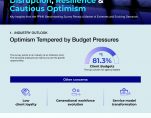
Budget Pressures and the Threat of Fee Discounting Pricing and client budgets remain the industry’s most pressing vulnerabilities. An overwhelming 81.3% of agency leaders cited shrinking client budgets as their number-one challenge for the coming year. Consequently, 68.8% of Hong Kong PR agencies admitted to discounting their professional fees in the last financial year to win assignments. The report warns that discounting at this scale carries compounding consequences, pushing down market fees and threatening the perceived value of strategic PR as a premium service.
David Ketchum, Research Chair of PRHK, commented: “The data reveals critical insights that agency leaders must address head-on. The disparity between ambitions in the Greater Bay Area and actual revenue generation is stark. Furthermore, the prevalence of fee discounting poses a structural threat to our industry. Agencies that will thrive in 2026 are those that firmly defend their value and operationalize new technologies to enhance their consulting-led strategies.”
Download the full 2026 PRHK Benchmark Report HERE Download the Summary Infographic HERE
Hashtag: #PRHK
The issuer is solely responsible for the content of this announcement.
About PRHK
Public Relations Hong Kong (PRHK) is the city’s premier network for PR and communications professionals, dedicated to driving industry standards and representing the voice of the local market.
Hawaii’s effort to turn discarded fishing nets and household plastic into asphalt has moved from laboratory promise to road trials, offering the island chain a possible new use for marine debris while researchers test whether the material can be used without worsening microplastic pollution. The project, led by researchers at the Center for Marine Debris Research at Hawaiʻi Pacific University with the Hawaii Department of Transportation and […]
Alibaba Cloud has been named a Leader in Omdia’s Market Radar for Agentic AI Cloud Titans in Asia & Oceania, 2026, strengthening its position in a fast-expanding field where cloud providers are racing to turn generative AI into autonomous enterprise systems.
The ranking places Alibaba Cloud among the region’s most advanced providers of agentic AI infrastructure and development platforms. The company achieved the highest scores across six of nine evaluation dimensions, with its full-stack agentic AI approach highlighted as a key differentiator. That framework spans infrastructure, foundation models, model services, enterprise development tools and deployment systems designed to help companies build AI agents capable of planning, reasoning and executing tasks across business workflows.
The recognition comes as agentic AI shifts from experimental pilots to enterprise adoption. The Asia and Oceania market for agentic AI software is projected to grow from $782 million in 2025 to $11.2 billion by 2030, implying a compound annual growth rate of about 94 per cent. The surge reflects demand from banks, retailers, logistics companies, manufacturers and public-sector organisations seeking systems that can automate multi-step work rather than merely generate text, code or images.
Alibaba Cloud’s pitch rests on a vertically integrated stack. Its Qwen foundation models underpin a growing range of cloud services, while Model Studio gives developers access to Qwen-Max, Qwen-Plus, Qwen-Turbo, Qwen-VL, Wan and other model families. The company has also been expanding Platform for AI, Lingjun infrastructure and agent-building toolkits intended to make AI deployment easier for enterprises that lack large in-house research teams.
The company’s Singapore push has become central to its international AI strategy. At its first international Qwen Conference in Singapore in May, Alibaba Cloud introduced Qwen3.7-Max through Model Studio in the Singapore region, unveiled Qwen Cloud as an AI-native platform, and launched agent products aimed at helping companies build and manage autonomous systems. The Skills portal converts capabilities across more than 60 cloud products into agent-callable functions, allowing AI agents to interact with databases, security tools, big-data services and operations systems.
Alibaba Cloud’s commercial momentum has also improved. Cloud Intelligence Group revenue rose 38 per cent year on year to RMB41.63 billion in the January-March quarter, while external cloud revenue grew 40 per cent. AI-related products accounted for about 30 per cent of external cloud revenue and delivered triple-digit growth for the eleventh consecutive quarter. Annualised AI-related product revenue surpassed RMB35.8 billion, indicating that enterprise demand has moved beyond proof-of-concept budgets.
The company is investing heavily to defend that position. Alibaba has indicated that spending on AI and cloud infrastructure will exceed its earlier three-year plan of up to RMB380 billion, as executives prioritise market share and capacity expansion over near-term margins. That strategy carries risks. The group’s earnings have been pressured by high capital expenditure, competition in commerce and infrastructure costs linked to advanced computing demand.
The broader market remains intensely contested. Regional and global cloud providers are building agentic AI platforms that combine foundation models, orchestration layers, retrieval systems, governance tools and specialised compute. Amazon Web Services, Microsoft Azure, Google Cloud, Huawei Cloud, Tencent Cloud and Baidu AI Cloud are all competing for enterprise workloads tied to automation, coding agents, customer-service agents and industry-specific decision systems.
Alibaba Cloud’s advantage in Asia rests partly on its ability to link AI models with commerce, logistics, finance, cloud and developer ecosystems. Its Qwen family has gained traction among developers because of open-source releases and multilingual capabilities, while its enterprise services are being positioned for customers that need lower latency, data-residency options and region-specific compliance controls. The company also benefits from its leadership in Asia-Pacific infrastructure-as-a-service revenue, where it held a 22.5 per cent regional share in 2025.
The agentic AI market, however, faces unresolved issues around reliability, accountability and security. Autonomous agents can call tools, access corporate data and act across software systems, raising concerns over permission controls, audit trails, hallucinated actions and exposure of sensitive information. Enterprise buyers are increasingly looking for guardrails, monitoring, role-based access and human approval mechanisms before allowing agents to handle financial, legal or operational decisions.
OpenAI has begun a tightly controlled preview of GPT-5.6 Sol, a new flagship artificial intelligence model with stronger cybersecurity, coding and scientific capabilities, restricting access to vetted partners while it works with US authorities on safeguards for frontier systems. The rollout covers three models under the GPT-5.6 family: Sol, the most advanced tier; Terra, a lower-cost model designed for everyday work; and Luna, a faster and cheaper […]
A major supply-chain attack has hit ClawHub, exposing deep security gaps in the fast-growing market for AI-agent skills after scans identified 1,184 malicious packages linked to 247,693 installations. The campaign, tracked as ClawHavoc, targeted ClawHub, the official skill marketplace for OpenClaw, an open-source AI agent platform that allows users to install add-ons for tasks such as browser automation, file handling, coding support, messaging, crypto tracking and productivity […]
A Telegram-controlled remote access trojan called Millenium RAT has compromised more than 62,000 Windows devices across over 160 countries, exposing how low-cost malware subscriptions are widening access to intrusive cyber tools once limited to more skilled operators. The campaign has accelerated sharply this year, with about 39,700 infections recorded during the first quarter of 2026 alone. The scale points to an expanding malware-as-a-service operation in which attackers […]
Cincinnati has long been recognized as one of Ohio’s most dynamic cities, blending a strong business community with historic neighborhoods, growing startups, major healthcare systems, and family-owned enterprises. As the city continues to evolve, legal needs have expanded in areas such as estate planning, family law, business formation, criminal defense, employment disputes, and personal injury. The city’s legal community includes firms that have spent decades serving local […]
Seven in 10 expatriates living in the UAE were found to have insufficient life insurance cover during comprehensive financial reviews conducted by deVere Acuma over the past 12 months, exposing a major financial protection gap among one of the world’s largest and most affluent expatriate populations. The findings emerged from financial planning assessments undertaken with prospective and newly onboarded clients across the UAE in the last year […]
SYDNEY, AUSTRALIA – Media OutReach Newswire – 29 June 2026 – As sustainability requirements and operational performance expectations evolve, building performance modelling is becoming increasingly important across Australia’s construction sector. Afogreen Build, an Environmentally Sustainable Development (ESD) consultancy, has observed growing demand for integrated modelling approaches that help architects and building owners evaluate factors like energy efficiency, occupant comfort, and sustainability outcomes.
Building Performance Modelling as a Strategic Tool Integrated modelling uses computer-based simulations to predict how a building will perform even before it is constructed. By analysing factors such as energy consumption, indoor comfort, daylight access, airflow, and operational efficiency, it helps project teams understand how design decisions may affect a building’s long-term performance.
Traditionally, this approach has been used to support compliance with building regulations and sustainability certification frameworks. However, its role is expanding as project teams increasingly seek data-driven insights during the design process.
One factor contributing to this trend is the growing focus on measurable operational outcomes. Frameworks such as NABERS Commitment Agreements and Section J Performance Solutions require project teams to demonstrate expected building performance before construction begins. As a result, modelling is becoming an increasingly valuable tool for evaluating whether design targets can realistically be achieved.
The approach is already widely adopted across Australia’s construction sector. Research indicates that approximately 90% of new residential developments and 85% of non-office commercial projects now incorporate building performance modelling. At the same time, around 53% of standard projects and 49% of premium projects are using modelling primarily for compliance-based assessments.
“Modelling is increasingly viewed not just as a compliance requirement, but as a practical tool for evaluating whether design targets can realistically be achieved,” shared Erika Yuniarti, Managing Director of Afogreen Build.
Integrated Modelling Provides a Broader View of Building Performance Many project teams are also moving beyond assessments that focus on a single performance metric.
Integrated modelling evaluates multiple aspects of building performance together, including:
Energy use
Thermal comfort
Daylight access
Ventilation
Occupant experience
This approach allows stakeholders to better understand how different building systems and design decisions interact with one another.
By identifying potential issues earlier in the design process, project teams can make more informed decisions before significant design resources are committed. This can help reduce design revisions, improve overall efficiency, and provide greater confidence that performance objectives can be achieved once the building is operational.
Applications Across Multiple Sectors The growing adoption of building performance modelling can be seen across a variety of project types. Recent projects undertaken by Afogreen Build highlight how simulation-based assessments are helping project teams evaluate performance, improve design outcomes, and support sustainability objectives.
a. Large-Scale Hotel Development One project involved the transformation of a former police station site into a two-tower hotel complex with a gross floor area of approximately 25,000 sqm. The development combines a 131-room boutique luxury lifestyle hotel with a 451-room budget-friendly hotel, creating a diverse hospitality offering designed to serve different traveller segments.
To support both guest comfort and sustainability objectives, Afogreen Build conducted integrated daylight, glare, and energy modelling throughout the project. Daylight simulations showed that approximately 94% of guest rooms met daylight performance requirements, while glare assessments helped optimise visual comfort within occupied spaces.
Energy modelling indicated an overall reduction in energy consumption of 30.2% compared to baseline building performance. The analysis also identified key areas of energy use, providing valuable insights that can support future operational and system optimisation efforts.
b. Train Station Project For a train station project, Afogreen Build adopted an integrated modelling approach to evaluate factors such as daylight access, thermal comfort, glare, and natural ventilation across key passenger areas, including the concourse and platforms.
The simulations helped project stakeholders better understand how environmental conditions would affect the passenger experience throughout the day. Findings from the study informed façade design strategies, balancing natural daylight with measures to reduce excessive glare and solar heat gain in occupied spaces.
The assessments also identified opportunities to improve thermal comfort and air movement within the station, supporting a more comfortable environment for commuters while maintaining energy-efficient design principles.
c. High-Performance Data Centre Afogreen Build also applied building performance modelling to a 50 MW data centre project, where energy efficiency was a key design consideration.
The study evaluated the interaction between IT equipment, cooling systems, power distribution infrastructure, and other supporting building systems. By analysing how these components work together under operational conditions, the project team was able to gain a clearer understanding of the facility’s overall energy performance and identify opportunities for optimisation.
The modelling contributed to an optimised Category 2 Power Usage Effectiveness (PUE) range of 1.19 to 1.31, reflecting a highly efficient approach to managing energy consumption within a large-scale, energy-intensive facility.
Together, these projects demonstrate how building performance modelling can be applied across diverse sectors, each with its own operational requirements and performance priorities.
The Future of Performance-Driven Design As sustainability frameworks and performance expectations continue to evolve, Afogreen Build expects modelling to become an increasingly important part of project planning and design across a wide range of sectors.
“There is increasing emphasis on understanding how buildings are likely to perform before they are built, rather than waiting until they are operational to identify challenges,” said Ms. Erika. “The ability to evaluate performance early in the design process is becoming increasingly valuable as projects face more complex sustainability and operational requirements. The team should work closely with project stakeholders to establish realistic assumptions and evaluate likely performance outcomes from the outset. This process helps reduce unnecessary design iterations, improve modelling efficiency, and increase the likelihood of achieving targeted performance objectives. By integrating performance considerations earlier in the design process, project teams are better positioned to deliver buildings that meet both compliance requirements and long-term operational goals.”
For more information about building performance modelling and sustainability consulting services, visit Afogreen Build’s website. Hashtag: #AfogreenBuild
The issuer is solely responsible for the content of this announcement.
Afogreen Build
Afogreen Build is a building sustainability consultant in Australia specialising in sustainability advisory, environmental simulations, and performance modelling. Its services include building energy simulation, daylight analysis, thermal comfort assessments, CFD modelling, and green building certification consulting for projects across the Asia-Pacific region. The company supports project teams in designing buildings that prioritise energy efficiency, occupant comfort, and long-term.
SINGAPORE – Media OutReach Newswire – 29 June 2026 – Bracell congratulates Fernando Branco, the company’s Treasury Manager, on his appointment as President of the Board of Directors of the Bahia Association of Forestry-Based Companies (ABAF) for the 2026 – 2028 term. The appointment reflects Bracell’s longstanding commitment to advancing the sustainable development of Brazil’s planted-forestry sector through collaboration, innovation, responsible governance and stakeholder engagement.
With more than two decades of experience in the pulp and paper industry and a decade of service on ABAF’s Fiscal Council, Branco brings extensive expertise in governance, finance and institutional engagement to the role. Under his leadership, ABAF will continue promoting dialogue among industry, government, communities and civil society to support the sustainable growth of Bahia’s forestry sector.
“The forestry sector plays a critical role in generating employment, supporting regional development, fostering innovation and contributing to environmental conservation,” said Fernando. “Through constructive dialogue, transparency, legal certainty and shared governance, we can strengthen the sector’s positive contribution to Bahia’s economy and sustainable development,” he added.
As one of the world’s leading producers of dissolving pulp and specialty cellulose, Bracell believes that sustainable forestry is fundamental to addressing global challenges such as climate change, biodiversity conservation and the transition to a low-carbon economy. The company has consistently invested in sustainable forest management practices, research and development, biodiversity protection, carbon monitoring initiatives and partnerships that promote responsible land use and environmental stewardship.
Bracell’s forestry operations are guided by a long-term sustainability strategy that combines productive eucalyptus plantations with the conservation of native vegetation, protection of water resources and preservation of biodiversity. Through its 1-for-1 commitment, the company has expanded its conservation efforts and strengthened its contribution to climate and nature-positive outcomes.
The company also recognises that the sustainable development of the forestry sector extends beyond environmental stewardship. Bracell, a member of the RGE group of companies founded by Sukanto Tanoto, works closely with local communities through initiatives focused on education, income generation, environmental awareness and social development, helping create lasting value in the regions where it operates. In Bahia alone, tens of thousands of people have benefitted from the company’s social programmes.
Branco’s appointment comes at a time when the forestry sector is increasingly called upon to contribute solutions for sustainable economic growth and climate resilience. Fernando’s leadership at ABAF represents an important opportunity to further strengthen collaboration across the sector and advance shared sustainability goals for Bahia and Brazil, the company said.
Through ABAF, Bracell will continue supporting initiatives that strengthen the competitiveness, transparency and sustainability of Bahia’s forestry value chain while contributing to a sector that generates renewable products, supports local economies and helps build a more sustainable future.
The issuer is solely responsible for the content of this announcement.
About Bracell
Bracell is a global leader in the production of dissolving pulp and specialty cellulose with two main mill operations in Brazil in Bahia and São Paulo. In addition to its operations in Brazil, Bracell has a management office in Singapore and sales offices in Asia, Europe and the U.S.
Please visit Bracell’s website for more information.
Spacebiz in Hong Kong – a golden opportunity for Professional Services and STEM
HONG KONG SAR – Media OutReach Newswire – 29 June 2026 – Space Economy Association (Hong Kong) Ltd, or “SEA”, officially formed in the midst of the space economy boom. It is an independent membership-based non-government organisation dedicated to connecting and facilitating space-related industries, businesses, investors, educators, experts, and governments worldwide in their pursuit for businesses and technology in commercial space. SEA helps establish Hong Kong as a super-connector hub in the international space ecosystem by capitalising on our professional services, led by finance.
The new renaissance is in the space economy. The US$630 billion global space economy is set to triple to US$1.8 trillion[1] by 2035. With launch costs dropping 10-fold in the last 20 years, private and public sectors will soar with all humanity set to benefit. Space economy is ubiquitous and creating value beyond rocketry and satellites, everyone will flourish as the space economy grows 9% per annum. China is the world’s second largest player in space, highlighting it as one of the four emerging strategic industries in its 15th National Five-Year Plan. Its commercial space sector has already launched 81 rockets and 336 satellites into orbit, with over 100 space start-ups and companies raising around US$6.5 billion. Hong Kong, as a key international financial centre practicing Common Law with international arbitration system and robust insurance, data and intellectual property protection capabilities, uniquely stands to serve China and other countries to pursue capital, business, technology and talent in commercial space.
“From Hong Kong’s perspective, the NewSpace economy is not simply about rockets or satellites; it is about the commercial possibilities they create for our professional services community. As the nation advances its aerospace ambitions, Hong Kong’s strengths in finance, insurance, law and related fields equip the city to support activities ranging from project financing and initial public offerings to risk management and crossborder transactions. Our bankers, insurers, accountants and lawyers are ideally positioned to help turn space initiatives into viable enterprises — and to participate directly in the value they generate.” said the Honourable Bernard Charnwut Chan, GBM, GBS, JP. Patron of SEA.
“Hong Kong’s top-class professional services would facilitate the processes from research and innovation to startup, scale-up and successful space business. Besides a hub for IPOs, Hong Kong offers funding from seed and angel, to private equity, venture capital, mergers and acquisitions, in debt, equity, and lease financing. This space economy would contribute plentiful job and business opportunities to become a key pillar of Hong Kong in terms of economy and quality opportunities for our young generation,” said Professor Richard Leung, Chairman of SEA. “SEA’s global network of partners grows beyond Asia, North America and Europe to include the UNOOSA ecosystem. SEA is a platform that empowers astropreneurs to launch towards humanity’s collective space dream.”
SEA is governed by a Board of 19 members and supported by nine committees. SEA is also strongly supported by a Patron and five Fellows who share the vision to position Hong Kong as a leading hub in the international space economy. The Honourable Bernard Charnwut Chan, GBM, GBS, JP is SEA’s Patron with Fellows Dr. Anthony Neoh, KC, SC, JP, Chairman, Asian Academy of International Law, Prof. Jin-Guang Teng, BBS, JP, President, The Hong Kong Polytechnic University, Mr. Jimmy Tsang, General Manager, Goldlion, Mr. Roger Tong, Chief Executive Officer, AsiaSat, and Prof. Gregg Li, Adjunct Professor at the Laboratory for Space Research, The University of Hong Kong.
As this new economy requires education first, SEA began as the Orion Astropreneur Space Academy or OASA, with an aim to herald and teach this new economy. OASA was formed in 2020 to accelerate the awakening of young executives and professionals through action-learning and Artificial Intelligence, preparing them for the NewSpace economy. OASA has made important strides in advancing NewSpace awareness, talent development, and ecosystem building. It has engaged more than 200,000 visits, worked with over 50 partner organisations, and organised more than 60 courses and activities. As OASA evolves into SEA, the OASA remains the brand for school development programmes and youth-focused education.
SEA membership is a community of 100 co-founders, 150+ active members, 250+ student members, and 40+ industry partners shaping the future of NewSpace in the Greater Bay Area. Members connect with leading innovators, world-class institutions, global mentors, and industry leaders at the forefront of the commercial space. SEA provides a trusted platform for dialogue, collaboration, and engagement through events and direct connections. Members can access closed-door industry dialogues, international delegations, early opportunities for partnerships, and connect with an internationally respected network.
SEA’s membership framework has full, associate, and fellow membership options to serve this diverse community. All members benefit from preferential event rates, networking opportunities, curated market intelligence, professional development, and selected business support services. Full Members enjoy governance rights at general meetings, while higher-tier and charter members receive additional recognition and priority access.
[1] World Economic Forum, Insight Report, April 2024 – “Space: The $1.8 Trillion Opportunity for Global Economic Growth“
Hashtag: #SpaceEconomyAssociation #SEA
The issuer is solely responsible for the content of this announcement.
About Space Economy Association (Hong Kong) Ltd
Space Economy Association (Hong Kong) Ltd (SEA) is an independent, membership-based NGO dedicated to connecting and facilitating space-related industries, businesses, investors, educators, experts, and governments worldwide in their pursuit of commercial space business and technology. SEA aims to help establish Hong Kong as a super-connector hub within the international space ecosystem by capitalising on its strengths in professional services, led by finance. SEA’s membership comprises a community of 100 co-founders, over 150 active members, more than 250 student members, and 40+ industry partners, all contributing to shaping the future of NewSpace in the Greater Bay Area. Members benefit from access to closed-door industry dialogues, international delegations, early partnership opportunities, and connections with a respected global network, including the UNOOSA ecosystem. SEA’s growing global network of partners spans Asia, North America, and Europe.
Anthropic has restored limited access to Claude Mythos 5 for selected U. S. organisations involved in protecting critical infrastructure, easing a two-week suspension that had disrupted cybersecurity work across major companies and public-sector partners. The decision allows more than 100 vetted organisations to resume use of the company’s most advanced cyber-focused artificial intelligence model. The approved users are understood to include major enterprises, government-linked agencies and institutions […]
A threat actor exploited a severe Cisco Catalyst SD-WAN vulnerability at least two months before public disclosure, intensifying concern over attacks targeting the network control systems that connect large organisations across branch offices, cloud services and data centres. The flaw, tracked as CVE-2026-20245, affects Cisco Catalyst SD-WAN Controller, Catalyst SD-WAN Manager and Catalyst SD-WAN Validator, formerly known as vSmart, vManage and vBond. It allows an authenticated local […]







 https://www.afogreenbuild.com/au/