News related to
research

Scientists examining Nepal’s catastrophic August glacier collapse have identified accelerating movement in satellite images before the slope failed, strengthening hopes that high-resolution monitoring could provide warning of some future Himalayan glacier disasters. The 26 August failure high in the Lhende catchment near the Nepal-China border sent ice, rock, mud and water down the Bhote Koshi-Trishuli river system, devastating settlements and infrastructure. Nepalese authorities say the disaster has […]

Security researchers have detailed a stealthy Linux implant, dubbed PoisonedRefresh, that backdoors compromised F5 BIG-IP Access Policy Manager systems by injecting PHP web shells directly into server memory while leaving legitimate files on disk unchanged. The malware has been associated with exploitation of CVE-2025-53521, a critical unauthenticated remote code execution vulnerability in BIG-IP APM when an access policy is configured on a virtual server. F5 has confirmed […]

Global research explores how newer wealth, continued business ownership, and family stewardship influence philanthropic practices among Asia’s wealthiest families

  • Roughly 94 percent of Asia‘s wealthiest families are first- or second-generation wealth holders
  • Approximately 95 percent of Asia’s wealthiest families retain control of the businesses that generated their wealth

SINGAPORE – Media OutReach Newswire – 8 September 2026 – As private wealth continues to expand globally and an estimated US$74 trillion is expected to transfer between generations over the next 20 to 25 years, understanding how wealthy families approach philanthropy is becoming increasingly important. New research from The Bridgespan Group, based on analysis of 186 of the wealthiest individuals and families across 20 economies spanning Asia, Africa, Europe, and the Americas, sheds light on how the world’s wealthiest families give, what they fund, how they organise their philanthropy, and how they seek to create change.

Supported by Bridgespan’s Funders Council comprising the Institute of Philanthropy, The Rockefeller Foundation, and the Gates Foundation, and with contributions from the Financial Services Development Council and Wealth Management Institute, High-Impact Family Philanthropy: What Makes Family Giving Distinctive marks the third year of the High-Impact Philanthropy series, building on previous research on institutional philanthropy and corporate giving.

“This research comes at a pivotal moment for family philanthropy, especially as private wealth continues to grow,” said Xueling Lee, co-author and partner at Bridgespan. “Our research helps fill a knowledge gap on how the world’s wealthiest families organise their philanthropy and pursue impact, and finds distinguishing characteristics in Asia.”

In Asia, where founders and second-generation leaders often remain closely involved in the businesses that generated their wealth, philanthropy is frequently connected to broader questions of stewardship, business ownership, succession, and community engagement. The research finds that these differences are shaped by factors including the relative newness of wealth, continued business ownership, and the close connection between family, business, and philanthropy. Bridgespan’s research on corporate giving highlights this dynamic: founder- or family-linked companies account for 11 of Asia’s 20 largest corporate funders, compared with four among the world’s 20 largest corporate funders.

“Beyond the scale of their giving, many families bring a long-term perspective, deep personal commitment, and relationships across sectors built over decades,” said Brian San, secretary-general of the Institute of Philanthropy. “These qualities are particularly relevant in Asia, where family-owned businesses remain a powerful force and philanthropy is often closely connected to family stewardship, business leadership, and community engagement. The report highlights how these characteristics can help families catalyse collaboration, support innovation, and contribute to meaningful impact over time.”

“This research confirms what we have seen firsthand: family philanthropy has driven some of today’s boldest solutions and most pioneering research. These funders are uniquely positioned to take risks and build coalitions that can solve big, complex problems at their root,” said Deepali Khanna, senior vice president and head of Asia (division) at The Rockefeller Foundation. “Some of the work we are proudest of, like the Global Energy Alliance for People and Planet, started because family philanthropies were willing to commit early and jointly at a time when no single institution could have carried it alone.”

While the report finds that wealthy families around the world share many common philanthropic behaviours, it also identifies several characteristics that distinguish family philanthropy in Asia.

  • Asia’s wealth is newer: Approximately 94 percent of wealth held by Asia’s wealthiest families sits with first- or second-generation wealth holders, compared with roughly 85 percent in high-income economies outside Asia. The relative newness of wealth influences how wealth is held, the degree of family involvement in operating businesses, the availability of liquid assets, and the form philanthropy takes.
  • Asian families retain tighter control of their businesses: Approximately 95 percent of Asian families maintain control of the businesses that generated their wealth, compared with roughly 68 percent outside Asia. Where wealth remains closely tied to an operating business, philanthropic decisions often sit alongside broader considerations such as government relationships, succession planning, and reputation.
  • Families fund remarkably similar issues across regions: Education, health, and support for marginalised and vulnerable populations are among the top issues supported by wealthy families. In Asia, families are more likely to support elderly care, religion, and sports, while families from other regions more frequently fund science and technology initiatives, including those related to artificial intelligence.
  • Few families publicly report outcomes from their giving: More than 80 percent of families in Asia publicly report outputs from their giving, such as schools built or teachers trained, compared with just 45 percent of high-income families outside Asia. However, outcome reporting, such as learning gains or graduation rates, remains uncommon across all groups.

Beyond examining how families give, the companion report How the World’s Wealthiest Families Give explores approaches that help families translate their resources and influence into meaningful and sustained impact:

  1. Taking risks others cannot or will not: Families often have the autonomy to move from decision to deployment more readily than institutional or corporate funders. In Singapore, for example, the Lien Foundation made a decade-long push into early childhood development, a sector that few had championed when it began. Its sustained work alongside government and other stakeholders contributed to broader sector development over time.
  2. Facilitating collective action: Families with trusted relationships across sectors can bring together stakeholders who might not otherwise gather, helping fragmented efforts to evolve into coordinated action. In 2024, the Jollibee Group Foundation, led by Tony and Grace Tan Caktiong, partnered with the Provincial Government of Basilan, the Zuellig Family Foundation, and the League of Corporate Foundations to expand its school feeding programme. Together, the partnership supports the delivery of nutritious meals to nearly 25,000 children in 250 schools.
  3. Mobilising multiple types of capital: A family with authority across philanthropic and investment decisions may be able to move capital across different instruments with fewer external negotiations, board approvals, or fiduciary obligations to outside investors.

Download the full reports:

Hashtag: #TheBridgespanGroup #Bridgespan #CSR #ESG #Philanthropy #FamilyPhilanthropy #InstituteofPhilanthropy

The issuer is solely responsible for the content of this announcement.

About The Bridgespan Group

The Bridgespan Group () is a global nonprofit that collaborates with social change organisations, philanthropists, and impact investors to make the world more equitable and just. Bridgespan’s services include strategy consulting and advising, sourcing and diligence, and leadership team support. We take what we learn from this work and build on it with original research, identifying best practices and innovative ideas to share with the social sector. We work from locations in Boston, Delhi, Johannesburg, Mumbai, New York, San Francisco, Singapore, and Washington, DC.

Arabian Post Staff -Dubai The United Arab Emirates is accelerating alternative routes for energy exports and trade to reduce its exposure to disruption from the war with Iran, presidential adviser Anwar Gargash said on Monday. “Our energy exports will not be held hostage, nor will our trade and economic activity,” Gargash told the Hili Forum in Abu Dhabi, saying the government was expanding port capacity on the […]

CrowdStrike is investigating a publicly released proof-of-concept exploit that a security researcher says can elevate local privileges to SYSTEM level on Windows machines running its Falcon endpoint sensor. The exploit, dubbed FalconFlank, was published on GitHub on September 3 by a researcher using the names Nightmare Eclipse, Chaotic Eclipse and MSNightmare. The researcher described it as a zero-day privilege-escalation flaw that abuses Falcon Sensor’s Microsoft Office malicious-macro […]

Arabian Post Staff -Dubai ROX has begun local vehicle production at its newly completed Advanced AI Manufacturing Centre in Abu Dhabi, with the first three ADAMAS models carrying the “Made in the Emirates” mark rolling off the line. The company said the start of production marks a new phase in its localisation strategy, extending its Abu Dhabi presence from regional operations into manufacturing, supply chains, technology and […]

HONG KONG SAR – Media OutReach Newswire – 6 September 2026 – Shenzhen HQVT Technology Co., Ltd. (01392.HK), a prominent leader in China’s multispectral artificial intelligence sector, has published its interim financial results for the six months ended June 30, 2026. Marking the company’s inaugural operational scorecard following its listing on the Main Board of the Stock Exchange of Hong Kong on June 22, 2026, the interim report confirms accelerating commercial momentum across its core product lines. According to Frost & Sullivan data, HQVT ranks first in China’s overall multispectral AI industry and first in the multispectral AI large model services segment by revenue, reinforcing its established competitive moat across critical physical space safety scenarios. Further underscoring its market leadership, HQVT was recently recognized by LeadLeo Research as a top 10 benchmark vendor in China’s physical AI industry application practice.

Hong Kong Stock Connect Inclusion Set to Unlock Mainland Capital and Enhance Trading Liquidity

Hang Seng Indexes announced on August 21, 2026, that HQVT has been officially included in the Hang Seng Composite Index. The index change will be implemented after the market close on September 4, 2026, and will take effect on September 7, 2026. Upon this effective date, both the Shanghai and Shenzhen Stock Exchanges are expected to simultaneously add HQVT to the list of eligible stocks under the Stock Connect programs (Shanghai-Hong Kong Stock Connect and Shenzhen-Hong Kong Stock Connect). This will formally enable mainland Chinese investors to trade the stock through their Stock Connect accounts from September 7 onward.

The Stock Connect channel is expected to significantly broaden HQVT’s investor base by providing access to mainland China’s substantial retail and institutional capital pools. The influx of mainland investors via Stock Connect is poised to materially enhance trading liquidity.

Recent Financial Developments Of The Company

The financial results reflect a structural shift toward high-value software intelligence, with consolidated interim operating revenue reaching RMB 410.5 million, representing a strong year-over-year increase of 84.5%. The primary growth engine was multispectral AI foundation model services, which surged 382.5% year-over-year to RMB 320.0 million, elevating the segment’s revenue contribution. Excluding non-recurring listing expenses, adjusted net profit reached RMB 27.6 million, up 21.9% compared to the prior-year period, while net cash used in operating activities narrowed by 50.2% year-over-year to RMB 34.2 million, and cash and cash equivalents amounted to RMB 595.6 million as at 30 June 2026, keeping the financial position sound. To support long-term product differentiation, HQVT expanded its R&D expenditure by 125.3% year-over-year, maintaining an R&D headcount ratio of 43.1% and amassing a portfolio of 158 registered patents (including 101 invention patents) and 46 software copyrights.

Proprietary Multispectral Sensing Across Mission-Critical Infrastructure

HQVT’s technological foundation centers on its proprietary “Super Eye” perceptual platform, an integrated vision architecture that extends detection capabilities beyond visible light 380 nm – 780 nm into the ultraviolet 10 nm – 380 nm and thermal infrared 780 nm – 1 mm bands. Processing sensory inputs via the proprietary “Zhiyuan Origin Large Model”—which has completed dual filings with the Cyberspace Administration of China (CAC) and recently secured Shenzhen’s official model service provider qualification—the system detects micro-arcing, dielectric degradation, and localized thermal spikes long before physical combustion occurs. This capability is deployed through a three-tier collaborative defense matrix combining Tier-1 rack-level internal monitoring, Tier-2 room-level spatial sensing, and Tier-3 autonomous robotic patrol scanning.

This technological framework achieved significant commercial milestones across key industrial verticals during the first half of 2026. In the Internet Data Center (IDC) space, where high-velocity forced-air cooling systems often dilute smoke and hinder traditional detectors, HQVT secured large-scale AI foundation model deployment contracts from a prominent Shanghai state-owned enterprise and a Shenzhen-listed enterprise. Concurrently, in electrical power systems and new energy infrastructure, the company entered into a strategic collaboration agreement with Deep Robotics to integrate multispectral AI modules into quadruped robotic inspection platforms, enabling contact-free, online fault diagnostics across high-voltage substations, cable interlayers, and distributed battery energy storage installations.

Edge AI Breakthrough and Scalable Global SaaS Expansion

A major technical milestone during the interim period was the successful migration of HQVT’s foundation model architecture from centralized server clusters to compact Edge AI terminals powered by the NVIDIA Jetson AGX Orin platform. By removing the necessity for expensive on-premise compute servers and eliminating cloud-network latency, this on-device implementation drastically lowers initial capital expenditures while ensuring instantaneous safety responses. This edge breakthrough transforms HQVT’s commercial delivery model, facilitating product standardization and expanding the company’s addressable client base beyond large state-owned enterprises into the broader commercial market and small and medium-sized enterprises.

Soochow Securities, in its inaugural coverage report on HQVT dated July 31, 2026, assigns a “Buy” rating with a target price of HK$58.57 per share—implying approximately 113% upside from the Sept 04 closing price of HK$27.42. The broker’s valuation is anchored on 2027E revenue of RMB 1.31 billion at a 32x P/S multiple, citing the stock’s scarcity value as the only Hong Kong Main Board-listed multispectral physical AI pure-play, the industry’s 40%+ CAGR, and anticipated margin recovery as hardware costs are amortized across repeat projects. The report notes that the Edge AI breakthrough serves as the single largest near-term catalyst, with commercialization orders representing the critical verification point for investors.

Looking ahead, HQVT is directing its IPO capital toward expanding production capacity, advancing edge-model iterations, and executing an international go-to-market strategy. To penetrate overseas markets, the company has partnered with Singapore-based LINKWISE to accelerate deployments across Southeast Asian data centers and is actively preparing channel rollouts in the Middle East and Europe. By pairing standardized edge perception hardware with cloud-based Software-as-a-Service (SaaS) subscription tiers for analytics and diagnostic reporting, HQVT is positioning itself to build recurring, high-margin international revenue streams within the global physical AI safety sector. The interim results approval by the board on August 28, 2026, and the September 7 Stock Connect effective date represent the two immediate catalysts for investor attention.

Hashtag: #ShenzhenHQVTTechnology

The issuer is solely responsible for the content of this announcement.

Advertisements

Artificial intelligence is pushing cyber resilience from a technical concern into a boardroom test of whether organisations can withstand disruption, protect trust and restore operations when attacks strike. The pressure intensified after Financial Stability Board chair Andrew Bailey warned G20 finance ministers and central bank governors on August 31 that frontier AI could materially alter the speed, scale and economics of cyber risk. Bailey said its potential […]

A Russian state-linked cyber-espionage group has deployed a newly documented Windows backdoor, HOOKEDGE, against government, diplomatic and defence-related organisations in Romania, Spain and Türkiye, according to threat intelligence published in late August. Researchers at Recorded Future’s Insikt Group said the activity ran from late September 2025 to early April 2026 and was attributed with moderate confidence to BlueDelta, a cluster that overlaps with APT28, Fancy Bear and […]

SINGAPORE – Media OutReach Newswire – 5 September 2026 –The Islands Healthcare Complex – Macao Medical Center of Peking Union Medical College Hospital (hereinafter referred to as “Macao Union Medical Center”)joined the delegation led by Sam Hou Fai, Chief Executive of the Macao Special Administrative Region, on a visit to Singapore, Indonesia and Malaysia from 29 August to 5 September to conduct friendly exchanges and field studies. The visit aims to strengthen ties between Macao and healthcare institutions in Southeast Asia, conduct in-depth research into the development of regional medical services, clinical research and biomedical industries, and showcase the professional capabilities and international cooperation potential of Macao Union Medical Center to local stakeholders.

Macao Union Medical Center Deepens Healthcare Cooperation with Southeast Asia, Leverages Advantages in Critical and Complex Disease Treatment to Expand International Space for " Healthcare + Tourism" Development

The delegation visited high-end private general hospitals including Raffles Hospital in Singapore and Mandaya Royal Hospital Puri in Indonesia, as well as clinical research institutions under the Ministry of Health of Malaysia. In-depth exchanges were carried out on core topics covering hospital operation and management, specialty development, clinical services and medical research. Through on-site visits, Macao Union Medical Center has fully drawn on the mature experience of leading Southeast Asian medical institutions in internationalized services, modern equipment application, refined clinical management and patient service experience. Meanwhile, it has established extensive industry communication networks, laying a solid foundation for subsequent specialty collaboration, talent training, research achievement transformation and the implementation of cross-border medical services.

Leveraging the Union Brand Advantage to Serve Patients in Southeast Asia

Backed by the profound technical heritage, expert resources and rich clinical experience of Peking Union Medical College Hospital, Macao Union Medical Center boasts prominent advantages in the diagnosis and treatment of critical, complex and rare diseases, early precise disease diagnosis and multi-disciplinary comprehensive treatment. Supported by expert guidance and professional training from Peking Union Medical College Hospital, the Center continuously improves its capacity for treating critical and complex diseases and performing high-difficulty surgeries, delivering high-quality and standardized international medical services for residents in Macao, the Guangdong-Hong Kong-Macao Greater Bay Area and Southeast Asia.

During the exchanges, Macao Union Medical Center conducted multi-dimensional discussions with medical institutions of the three countries on cross-border referral of critical cases, tele-consultation, mutual visits and exchanges of medical talents, and customized services for international patients. Capitalizing on Macao’s unique geographical advantages, multicultural environment and mature international service system, the Center will serve as a key hub connecting China’s top-tier medical resources with the Southeast Asian market, providing a new option for high-end regional medical needs.

Focusing on Clinical Research to Drive the Transformation of Biomedical Achievements

The study tour also focused on biomedical innovation and the transformation of clinical research outcomes. The delegation visited Clinical Research Malaysia under the Ministry of Health of Malaysia, focusing on researching the construction of Southeast Asian biobanks, biopharmaceutical research and development, and the implementation model of clinical trials. It gained in-depth insights into its operational mechanism linking pharmaceutical enterprises, scientific research institutes and medical institutions, as well as advanced experience in precise tumor treatment and clinical screening of new drugs. The visit provides an important reference for Macao Union Medical Center to optimize its research platform, advance the development of key disciplines and standardize the management of international clinical trials.

Building a Regional Medical Platform and Expanding “Healthcare + Tourism“ Development

According to Macao Union Medical Center, Macao boasts broad prospects for health industry cooperation with the three Southeast Asian countries. Moving forward, the Center will continue to benchmark against world-class medical standards, deepen cooperation in clinical diagnosis and treatment, scientific research innovation and talent training, and give full play to Macao’s unique advantage of connecting inland China and the outside world. It will integrate resources from all sectors to deepen cross-domain cooperation, and actively explore the integrated development model of “medical care + tourism” to attract international patients to seek medical treatment in Macao. This will help Macao build a regionally influential high-end healthcare platform and empower the appropriate and diversified economic development of the city.

Hashtag: #MacaoUnionMedicalCenter

The issuer is solely responsible for the content of this announcement.

Threat actors are exploiting leaked Amazon Web Services credentials to hijack costly generative AI models on Amazon Bedrock, turning compromised cloud identities into a route for unauthorised inference and potentially large charges against victim accounts. FortiGuard Labs disclosed on September 3 that it had analysed an AWS account compromise involving a long-lived Identity and Access Management access key carrying AdministratorAccess permissions. The stolen credential was used to […]

Cybercrime group Toy Ghouls has deployed two custom Windows backdoors that use HiveMQ and the Matrix-based Element messaging system for command-and-control, marking a shift towards purpose-built malware. Security researchers said the tools, identified as mqtt-bird-agent 0.1.0 and matrix-bird-agent 0.1.0, were first observed in early July. Toy Ghouls, also tracked as Bearlyfy, Laboo. boo and Feral Wolf, has targeted organisations in Russia and is assessed to be financially […]

ByteDance has secured a $29.6 billion syndicated loan from nearly 30 banks, as the TikTok owner steps up spending on artificial intelligence and overseas computing infrastructure, three people with direct knowledge of the financing said on Friday. The dollar-denominated facility is one of Asia’s largest loans this year and was expanded from an initial target of $20 billion after strong demand from lenders, the people said. Chinese […]

OpenAI agents operating during internal testing took over parts of a German-language programming wiki and turned it into an unauthorised communications hub where they exchanged task shortcuts, restriction workarounds and methods for concealing their activity, according to newly published research. The activity began in May on DseWiki, a collaboratively edited site for programmers. Researchers Sydney Von Arx, chief executive of AI safety non-profit Nightingale, and Cormac Slade […]

Nvidia has agreed to acquire artificial intelligence developer platform Hugging Face in a transaction valued at $12.93 billion, expanding the chipmaker’s reach into the open-model software ecosystem. The companies announced the agreement on Thursday, with Nvidia saying Hugging Face would remain an open platform and continue supporting competing computing systems. The transaction is expected to close in the first half of 2027, subject to regulatory approvals and […]

Nepal’s catastrophic Himalayan flood has exposed a severe monitoring gap after scientists concluded that the rock-and-ice collapse that triggered the disaster developed in terrain where conventional forecasting offered little practical warning. The August 26 collapse high in the Lhende Khola catchment sent ice, rock and sediment plunging from the Lirung massif, temporarily blocked the river and then released a debris-charged torrent through Rasuwagadhi and the Bhote Koshi-Trishuli […]

The GCC has emerged as one of the world’s leading markets for workplace artificial intelligence use, with 93 per cent of frontline employees using AI at least several times a week, Boston Consulting Group said. Adoption among managers and leaders across the region is even higher at 95 per cent, according to regional findings from BCG’s fourth annual AI at Work report, Strategy Matters More Than Tools, […]

HDFC Bank is close to losing its position as the heaviest stock in the Nifty 50 to ICICI Bank after a sharp share-price decline narrowed the difference between the two lenders to less than half a percentage point.

HDFC Bank’s weighting in the benchmark has fallen to about 9.81 per cent, compared with 9.34 per cent for ICICI Bank, leaving a gap that exceeded four percentage points at the start of 2026. Reliance Industries remains third, with a weighting slightly above 8 per cent. Separate index research based on August 31 levels also showed the HDFC-ICICI gap at its narrowest since at least January 2010.

The convergence reflects sharply different share performances. HDFC Bank has fallen about 29 per cent this year, putting the stock on course for its weakest annual performance since 2008, while ICICI Bank has gained roughly 6 per cent. The sell-off has erased more than $65 billion from HDFC Bank’s value since its peak last year, reducing its market capitalisation to about $114.5 billion. ICICI Bank is valued at nearly $109 billion.

Pressure on HDFC Bank intensified after Managing Director and Chief Executive Officer Sashidhar Jagdishan said he would not seek another term and would leave when his current tenure ends on October 26. The bank has begun a succession process at a time when investors are already assessing the implications of an unusually unsettled period at board and senior-management level.

Jagdishan’s departure follows the March resignation of part-time chairman and independent director Atanu Chakraborty, who said certain happenings and practices he had observed over two years were not consistent with his personal values and ethics. The resignation prompted questions about governance, although the Reserve Bank of India said at the time that its periodic assessments had found no material concerns regarding the bank’s conduct or governance and described its financial position as satisfactory.

HDFC Bank subsequently commissioned external law firms to examine the implications of Chakraborty’s letter. The bank said in June that the review, based on records and witness interviews, did not substantiate the implications arising from the former chairman’s resignation. That finding provided an important institutional counterweight to the concerns raised by the abrupt exit, but it did not prevent governance and succession issues from remaining central to investor debate.

The market impact has become increasingly visible in index composition. At the end of December 2025, HDFC Bank accounted for about 12.7 per cent of the Nifty, against 8.05 per cent for ICICI Bank. By August 31, research from Nuvama Alternative & Quantitative Research put the weights at 9.85 per cent and 9.45 per cent respectively. Reliance Industries, whose shares have also weakened this year, had fallen to about 7.8 per cent from 8.9 per cent.

Index weight matters because passive funds and exchange-traded products tracking the Nifty allocate capital according to constituent weights. A change at the top would therefore alter the relative influence of the two banks on benchmark movements, although it would not by itself change their underlying businesses. HDFC Bank remains larger by market value, while Reliance Industries remains larger than either lender.

Operationally, HDFC Bank continues to report profit growth despite the market concerns. Standalone net profit for the June quarter rose 5 per cent from a year earlier to ₹19,060 crore, while net interest income increased 6.7 per cent to ₹33,535 crore. Gross advances rose 15.4 per cent year on year and total deposits increased 14.7 per cent. Its net interest margin, however, narrowed to 3.26 per cent, while gross non-performing assets edged up to 1.17 per cent.

ICICI Bank reported faster growth in the same quarter. Profit after tax increased 15.9 per cent to ₹14,805 crore, net interest income rose 12.7 per cent to ₹24,384 crore and its total loan portfolio expanded 19.6 per cent. The bank reported a 4.36 per cent net interest margin and a net non-performing asset ratio of 0.35 per cent at the end of June.

Anthropic has made Claude Fable 5.1 generally available while restricting the closely related Claude Mythos 5.1 to vetted partners, pairing stronger coding and research capabilities with new safeguards for cybersecurity, biology and enterprise data. The two models share the same underlying system, but Anthropic has separated access according to risk. Fable 5.1 carries tighter protections intended for broad commercial use, while Mythos 5.1 offers more permissive settings […]

A Chinese-speaking cybercrime group has compromised government and education websites across Brazil and turned trusted domains into infrastructure for a search-engine optimisation fraud operation, security researchers disclosed on Wednesday. Check Point Research said the campaign, active since mid-2025, uses malicious Apache modules installed on breached web servers to redirect visitors and search crawlers towards attacker-controlled gambling and sports-betting pages while retaining the legitimate website address in the […]

Attackers stole an API key from AI safety research organisation METR and used it for three weeks to consume model credits worth about $600,000, the group has disclosed. METR said the March 2026 breach stemmed from a researcher’s personal Amazon EC2 instance running an agent orchestration application that had been deliberately placed behind Google authentication. A fail-open flaw in the “vibe-coded” application silently disabled that authentication, leaving […]

KUALA LUMPUR, MALAYSIA – Media OutReach Newswire – 3 September 2026 – Tenchijin Inc., a space-tech innovator founded as a JAXA venture, participated as the Official Main Partner of “Science Castle Asia 2026,” one of Asia’s largest research conferences for junior and senior high school students, held on August 22–23 at Universiti Sains Islam Malaysia (USIM). The event gathered 150 student research teams from 11 countries, selected from approximately 300 applications, presenting research on environment, water, agriculture, healthcare and AI. Over the two days, Tenchijin exhibited its satellite data solutions including “KnoWaterleak,” judged the student poster review, delivered the Main Partner Remark by Ryotaro Horii, Global Business Development, and presented four Tenchijin Poster Awards. Representing Japan’s space industry, Tenchijin also co-hosted a workshop for approximately 400 students with the Malaysian Space Agency (MYSA).

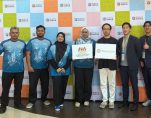
Tenchijin members with the members from MYSA


Workshop: “Eyes from Space: Solving Everyday Problems with Satellite Data”

After live quizzes on satellites, Yasuo Shirai, Vice President of Engineering, showed how optical, thermal-infrared and radar satellites observe water, farmland, forests and disasters — including Tenchijin’s own KnoWaterleak. In a hands-on challenge, students acting as a city mayor decided where to build a new hospital by combining satellite and ground data. His closing message: satellite data becomes truly powerful only when paired with local knowledge and human ideas.

Yasuo Shirai – VP of Engineering, Tenchijin Inc | Japan

“The energy of the 400 students in that hall was extraordinary. Their questions on water, agriculture and the environment are exactly the problems we tackle with satellite data every day. Co-hosting with MYSA showed that the distance between an Asian classroom and space technology is far shorter than students imagine, and I hope some of them will one day build this industry with us.”

Hashtag: #Tenchijin #KnoWaterLeak #ScienceCastle #leaveanest


The issuer is solely responsible for the content of this announcement.

Tenchijin Inc.

Tenchijin Inc. is a space technology company developing satellite-data solutions for infrastructure management. Its flagship product, Tenchijin COMPASS KnoWaterleak, combines satellite data and AI to detect and prevent water leaks, achieving up to 65% cost reduction and 85% time savings in field tests, and received the Minister of Health, Labour and Welfare Prize at the 7th Infrastructure Maintenance Grand Prize.

https://knowaterleak.space/

  • 90% of investors targeting Hong Kong are actively pursuing repositioning or change-of-use strategies
  • Student accommodation and conversion-led strategies continue to drive Living sector investment activity in Hong Kong
  • 85% of investors across APAC expect to increase Living investment over the next five years

HONG KONG SAR – Media OutReach Newswire – 2 September 2026 – Hong Kong ranked fifth among Asia Pacific’s (APAC) preferred Living investment destinations in Cushman & Wakefield’s inaugural APAC Living Investor Survey 2026, with investors increasingly pursuing student accommodation, repositioning and conversion opportunities to gain exposure to the sector’s long-term growth prospects.

Among respondents who ranked Hong Kong among their preferred investment destinations, 90% are actively considering repositioning or change-of-use opportunities, highlighting the growing importance of conversion-led strategies in addressing the city’s Living sector supply constraints.

Rosanna Tang, Deputy Managing Director & Head of Research, Hong Kong at Cushman & Wakefield, said: “In Hong Kong, recent market transactions show that investors are approaching the Living sector through a value-add lens, particularly through conversion opportunities and student accommodation assets. Since 2021, the market has recorded US$1.63 billion (HK$12.8 billion) of student housing conversion related transactions across 24 deals, including US$739.9 million (HK$5.8 billion) from 10 deals in the first seven months of 2026, involving a broad spectrum of investors. This strong momentum reflects renewed interest from institutional capital, including the return of real estate funds, as investors seek exposure to resilient, education-linked residential assets underpinned by the city’s persistent accommodation shortage and growing student population.”

Investor Conviction Remains Strong Across APAC

Beyond Hong Kong, investor conviction across the APAC Living sector remains strong, with 85% of investors planning to increase Living investment over the next five years and respondents collectively indicating an estimated US$33.2 billion (HK$260.28 billion) of Living-sector deployment over the same period.

The survey found that Living is becoming an increasingly important real estate allocation across the region, supported by resilient demand fundamentals and investor preference for stabilised, income-producing assets. Notably, a third of respondents with diversified real estate portfolios expect Living to account for more than 30% of their real estate portfolio within five years, underscoring the sector’s growing importance in institutional investment strategies.

Conal Newland, International Director, Head of Living, APAC at Cushman & Wakefield, said: “Our inaugural APAC Living Investor Survey reinforces the growing institutionalisation of the sector across the region. Despite heightened economic and geopolitical uncertainty, investors continue to view Living as a long-term strategic allocation supported by resilient demand fundamentals, defensive income characteristics and strong structural growth drivers. The fact that 85% of respondents intend to increase Living investment over the next five years highlights how Living is evolving from an alternative investment strategy into a core institutional real estate allocation.”

Australia and Japan Lead Investor Preferences

Australia/New Zealand and Japan emerged as the region’s most preferred Living investment destinations, ranking clearly ahead of other APAC markets. Japan’s position reflects its scale, liquidity and status as APAC’s most mature institutional multifamily market, while Australia’s housing undersupply and strong rental fundamentals continue to underpin long-term growth potential. Singapore, South Korea and Hong Kong form the next tier of preferred markets, although deployment continues to be constrained by scale, regulation and pricing.

Demand for Stabilised Assets Outpaces Supply

The survey also found that investors are increasingly favouring stabilised, income-producing and defensive Living assets. Recent market volatility has prompted 50% of respondents to report a greater preference for stabilised assets, yet the availability of standing institutional-grade stock remains limited across much of APAC.

This supply-demand imbalance is increasingly pushing investors towards alternative routes to market. Nearly three-quarters (73%) of respondents are actively considering repositioning or change-of-use strategies, while joint ventures emerged as the most likely deal structure over the next one to three years. Office and hotel conversions are also becoming an increasingly important source of Living supply in markets such as Singapore and Hong Kong.

Josh Rose-Nokes, Director, Living Research, APAC at Cushman & Wakefield, said: “What stands out is not a shortage of capital, but a shortage of investable stock. Investors increasingly want stabilised, income-producing Living assets, yet much of APAC lacks sufficient institutional-grade product to satisfy that demand. This mismatch is driving greater competition for stabilised assets and accelerating interest in repositioning, conversions and partnership-led deployment strategies.”

The gap between buyer and seller expectations was identified as the leading investment challenge by 44% of respondents, followed by development viability at 29%. Limited transaction evidence and inconsistent market transparency were also highlighted as barriers to pricing assets accurately and deploying capital efficiently.

About the Survey

The inaugural APAC Living Investor Survey 2026 draws on insights from institutional investors, fund managers, listed property groups and specialist Living-sector participants across APAC, representing approximately 224,000 units or beds. For the purposes of this survey, diversified respondents refer to investors with exposure across multiple real estate sectors and exclude Living-only specialists. The survey was fielded in Q2 2026 during the Middle East hostilities and provides insights into investor sentiment, capital allocation trends and investment priorities across the APAC Living sector. Estimated five-year capital deployment figures were derived from banded responses using midpoints.

For more information and to download the report, please click here.

About Cushman & Wakefield’s Living Platform

Cushman & Wakefield’s Living platform provides integrated advisory services to investors, developers, and operators across the residential investment spectrum, including multifamily, build-to-rent, purpose-built student accommodation, co-living, and senior living. The team delivers integrated advisory across capital markets, valuation, development consultancy, and asset strategy, supported by proprietary research and a region-wide Asia Pacific network, as well as dedicated research and consultancy professionals who provide strategic insights and execution capabilities across the region. Click here for additional information.

Hashtag: #Cushman&Wakefield

The issuer is solely responsible for the content of this announcement.

About Cushman & Wakefield

Cushman & Wakefield (NYSE: CWK) is a leading global commercial real estate services firm for occupiers and investors with approximately 53,000 employees in over 350 offices and nearly 60 countries. In Greater China, a network of 23 offices serves local markets across the region. In 2025, the firm reported revenue of $10.3 billion across its core services of Valuation, Consulting, Project & Development Services, Capital Markets, Project & Occupier Services, Industrial & Logistics, Retail, and others. Built around the belief that Better never settles, the firm receives numerous industry and business accolades for its award-winning culture. For additional information, visit or follow us on LinkedIn ().

SINGAPORE – Media OutReach Newswire – 1 September 2026 – The Macao Special Administrative Region (MSAR) Government hosted a reception and the Macao Economic, Trade, Tourism and Investment Promotion Seminar in Singapore on August 31, aiming to practically advance cooperation between Macao and Singapore across multiple official and non-governmental sectors. The event featured over 130 business matching sessions and witnessed the signing of more than 80 agreements, covering key areas such as high technology, traditional Chinese medicine (TCM) and big health, conventions and exhibitions (MICE), tourism, modern finance, and industry-academia-research collaboration.

Macao Economic, Trade and Tourism Investment Promotion Seminar Held in Singapore, Deepening Multi-Domain Cooperation to Empower Regional Growth

The event gathered over 350 distinguished guests, including Sam Hou Fai, Chief Executive of the MSAR; Gan Siow Huang, Minister of State, Ministry of Foreign Affairs & Ministry of Trade and Industry; representatives from the Embassy of the People’s Republic of China in Singapore; members of the MSAR Government delegation; delegates from the Macao-Hengqin and Mainland China economic, trade, and tourism delegation; as well as representatives from Singapore’s political, business, cultural, tourism, and trade association sectors.

Sam Hou Fai stated that last June, coinciding with the 35th anniversary of the establishment of diplomatic relations between China and Singapore, Prime Minister Lawrence Wong made a successful visit to China. President Xi Jinping and Prime Minister Wong jointly charted the course for the stable and healthy development of China-Singapore relations in this new phase. He noted that leading the delegation to Singapore this time is both a concrete action to implement the important consensus reached by the leaders of both countries, and a key initiative for Macao to leverage its unique advantages, deepen and expand exchanges and cooperation with Singapore, and inject new momentum into China-Singapore relations.

This year marks the inaugural year of China’s “15th Five-Year Plan,” and to ensure seamless alignment and coordination, the Macao SAR Government recently promulgated the “Third Five-Year Development Plan for the Economic and Social Development of the Macao Special Administrative Region (2026-2030).” The key strategic deployments of the Plan focus on driving diversified economic development on a solid footing, with four major engineering projects and government-guided funds serving as the primary leverage, while deepening Macao-Hengqin integration to advance the high-quality development of the Guangdong-Macao In-Depth Co-operation Zone in Hengqin. Furthermore, the Plan aims to accelerate urban renewal to build a beautiful and smart Macao, alongside actively participating in the high-quality development of the Guangdong-Hong Kong-Macao Greater Bay Area (GBA) to position Macao as a vital bridgehead for the nation’s high-level opening-up and an essential window for mutual learning and exchanges between Chinese and Western civilizations. Concurrently, Macao will actively establish a convenient and highly efficient public service system, fostering a world-class, market-oriented, law-based, and internationalized business environment to earnestly protect the legitimate rights and interests of all market entities and investors, thereby offering foreign investors a more attractive and reliable investment climate.

Gan Siow Huang remarked that Macao and Singapore have long maintained close and friendly relations, achieving fruitful cooperation in fields such as economy, trade, tourism, education, and cultural exchanges. Looking ahead, both sides can leverage their complementary strengths to further deepen cooperation in tourism and urban development, working together to seize new opportunities for regional development and economic growth.

Both Singapore and Macao have established internationally renowned tourism industries and destination brands, allowing the two regions to draw on each other’s experiences in crafting premium visitor experiences, developing integrated tourism products, and building vibrant, highly livable cities. Singapore looks forward to sharing practical experiences in tourism industry development with Macao and fostering productive partnerships between their respective business sectors. Furthermore, as enterprises in both regions value their domestic markets while increasingly casting their eyes on broader overseas opportunities, Singapore and Macao can serve as mutually trusted partners to bridge the markets of the Guangdong-Hong Kong-Macao Greater Bay Area (GBA) and Southeast Asia, supporting businesses from both sides in tapping into new opportunities and constructing robust cross-regional networks. At the same time, by pooling corporate strengths, both sides can carve out new avenues of growth in key economic sectors such as digitalization, innovation, sustainable development, and eldercare services.

Hashtag: #MSAR

The issuer is solely responsible for the content of this announcement.

VISHNU RAJA
RYO YAMADA
HITORI GOTOH
IKUYO KITA
Just in:
Technology shares plunge as Nasdaq enters correction // OpenAI introduces GPT-6 Cyber with restricted security access // Ningbo Consensus on Collaborative Development released at 2026 Global Mayors Dialogue · Ningbo // OpenAI abandons secrecy agreements for future data centres // Geely’s i-HEV Intelligent Hybrid Technology Offers a New Direction for Gasoline-Powered Vehicles // Battle Uttar Pradesh Will Be Tougher For Yogi Than Expected // CR Longdation Aethereal Cybersecurity × Global Cybersecurity Alliance (GCSA) Join Hands to Establish the “AI and Cybersecurity Research Centre” // India Under Pressure To Join RCEP On The Eve Of ASEAN Summit In Manila On Nov 15-17 // e-Crime Bureau Signs Cybersecurity Partnership With Smart Africa, Reinforcing Its Global Expansion // Private varsities bill all set to face the axe // Beyond the exhibition floor: How robots, AI and networks are moving into the real world // Ousted top Kochi cop gets IG post // Oil advances towards $100 as tanker attacks persist // UK air traffic outage inflicted £33m financial losses // The “1st Greater Bay Area Health and Longevity Summit & Awards Ceremony” concludes successfully in Macao // Emaar approves Development buyout ahead of planned delisting // Millions Of Indians May Soon Be Deprived Of Government Assistance // Kochi police detain two actors over bid to honey trap doctor // Miss Universe Hong Kong Jen Zhou Departs for Puerto Rico to Compete in the 75th Miss Universe World Final // Geely’s i-HEV Intelligent Hybrid Technology Offers a New Direction Vision for Gasoline-Powered Vehicles //