Arabian Post Staff -Dubai EFG Hermes UAE has launched market-making and liquidity provision services on the Abu Dhabi Securities Exchange (ADX), extending its brokerage operations to support trading activity and improve liquidity in selected listed securities. The company, regulated by the UAE’s Capital Market Authority, announced the expansion on Friday, saying it would place buying and selling orders under exchange rules and regulatory requirements. The initiative is […]
An Israeli advertising company used online advertisements to track internet users and facilitate spyware infections, potentially exposing hundreds of millions of people worldwide, cybersecurity researchers have disclosed. Investigations published on Thursday by the University of Toronto’s Citizen Lab and advertising security company Confiant identified Discover-Tech as an intermediary connecting commercial surveillance operators with major digital advertising networks. The researchers documented spyware infections at Al Jazeera and surveillance […]
India’s software stocks have recorded their strongest weekly rally in 18 years, sharply outperforming global semiconductor shares as investors reassess artificial intelligence valuations and respond to improving earnings from major technology services companies.
The Nifty IT index climbed 11.7% during the week ended Friday, October 16, its biggest weekly advance since 2008. Meanwhile, an MSCI index tracking global semiconductor companies had fallen approximately 7.4% during the week, putting software exporters on course for their widest relative outperformance since 2004.
The divergence reflects a significant change in investor sentiment towards technology businesses. Semiconductor manufacturers, previously among the biggest beneficiaries of enthusiasm surrounding artificial intelligence, have faced selling pressure amid concerns about infrastructure spending, financing costs and the sustainability of earnings growth.
Software services companies, meanwhile, have attracted renewed interest following quarterly results that suggested corporate technology expenditure was stabilising. Investors have also responded to comparatively modest valuations after a prolonged period of weakness in the sector.
HCL Technologies helped initiate the recovery after reporting stronger quarterly performance and raising its full-year revenue growth guidance. Its shares surged 8.4% on Tuesday, their biggest single-session advance in more than six years, while the broader technology index gained 5.2%.
The company reported quarterly net profit of approximately Rs51.32 billion, representing growth of 10.9%. Revenue increased 2.3% sequentially to Rs356.2 billion, supported partly by demand for engineering and research services.
HCL Technologies also disclosed advanced artificial intelligence revenue of $219 million, indicating that established outsourcing companies are beginning to generate identifiable income from technology that investors had previously viewed principally as a competitive threat.
Tech Mahindra reinforced the positive sentiment with quarterly revenue growth of 2.4%, reaching approximately Rs161.8 billion. Net profit rose 8.3% to Rs16.1 billion, supported by improvements in its communications business.
Wipro shares also advanced after the company reported quarterly revenue of Rs247.53 billion, exceeding market expectations. However, its deal bookings declined 45% from a year earlier to $2.6 billion, highlighting continued uncertainty surrounding demand for outsourcing contracts.
Wipro projected constant-currency revenue growth ranging from a decline of 1.5% to an increase of 0.5% for the following quarter. Management indicated that two delayed large contracts could be finalised, although their completion remains uncertain.
The contrasting figures illustrate why analysts remain cautious about treating the market recovery as evidence of a sustained improvement across the entire technology services industry.
Investors have nevertheless become increasingly sensitive to the valuation differences between software exporters and semiconductor manufacturers. Shares linked to artificial intelligence infrastructure had commanded substantial premiums based on expectations of expanding demand for processors, memory and computing capacity.
Those assumptions have come under pressure as investors question whether technology companies can generate sufficient returns from enormous commitments to data centres and related infrastructure.
Higher bond yields have compounded those concerns by increasing financing costs for capital-intensive businesses. Inflation pressures in the United States have also revived expectations that monetary policy could remain restrictive, reducing enthusiasm for highly valued growth stocks.
Semiconductor companies including Nvidia, Broadcom and Advanced Micro Devices have faced broader selling pressure, alongside memory manufacturers and businesses supplying artificial intelligence infrastructure.
However, the reversal does not necessarily indicate deteriorating demand for computing hardware. Analysts distinguish between concerns about share valuations and the underlying commercial requirements for advanced processors.
Software exporters face different challenges. Generative artificial intelligence could automate programming, testing and customer support functions, potentially reducing the labour-intensive contracts underpinning traditional outsourcing revenues.
At the same time, businesses adopting artificial intelligence require integration, cybersecurity, cloud management and technology consulting services, creating opportunities for established providers.
The balance between these competing forces remains important for revenue forecasts and profitability expectations.
Friday’s trading demonstrated the strength of the rotation. The Nifty IT index rose 3.9% to close around 31,924 points, while the broader Nifty 50 gained approximately 0.7% to 23,146.
The Sensex finished at 74,729, contributing to the benchmark indices’ strongest weekly performance in six months.
Despite the rebound, technology shares remain below their earlier peaks. Wipro had lost nearly 32% during the year before Friday’s close, compared with a decline of approximately 17% for the broader technology index before the week’s recovery.
Cybersecurity researchers have identified more than 20,000 Cloudflare Pages subdomains used by a longstanding operation that redirects internet users to fraudulent technical support centres. Infoblox said its investigation, published on Thursday, linked the Help Traffic Distribution System, or Help TDS, to Hotejka, a Russian-language affiliate programme believed to be a successor to the previously exposed ROI777 network. The assessment rests on historical domain records, shared infrastructure, persistent […]
Microsoft and cybersecurity partners have disrupted a global phishing network linked to more than one billion fraudulent messages, targeting infrastructure supplied through the Chinese-language YAM Store marketplace. The operation, announced on Wednesday, involved the seizure and redirection of internet domains supporting YAM Store and two associated phishing services, CoGUI and Iron Man. Microsoft and Health-ISAC obtained an order from the United States District Court for the Southern […]
President Donald Trump has declined to rule out deploying the United States’ largest conventional bomb against Iran after November’s congressional elections, leaving open the possibility of another escalation in the conflict. Speaking in an interview broadcast on Thursday night, Trump described the weapon, popularly called the Mother of All Bombs, as exceptionally powerful but stressed that it was not nuclear. He did not announce an attack, identify […]
Planned high-speed rail and road links are expected to bring the city center within 20 to 35 minutes of the 2,870-hectare ESG++ coastal urban area in Can Gio, while on-site schools, healthcare, offices and parks are designed to reduce the number of trips residents need to make.
HO CHI MINH CITY, VIETNAM – Media OutReach Newswire – 16 October 2026 – Vinhomes is developing Vinhomes Green Paradise, a 2,870-hectare ESG++ coastal urban area in Can Gio, southeastern Ho Chi Minh City, around one measure of location: the time residents spend getting where they need to go.
Vinhomes Green Paradise combines new high-speed rail and road links with a self-contained ecosystem of schools, healthcare, workplaces and green space.
The master plan rests on two pillars. First, new transport infrastructure is expected to shorten journeys to the city center: the Ben Thanh-Can Gio high-speed railway, targeted for commercial operation in the fourth quarter of 2028, is designed to link the area with downtown in about 20 minutes, while the planned Can Gio Bridge and a widened Rung Sac Boulevard are expected to cut drive times to about 35 minutes.
Second, an on-site ecosystem that includes 104 planned schools, an international general hospital, more than 2 million square meters of office space and more than 370 parks is intended to place most daily needs within reach of home.
The approach responds to a shift in how urban households assess where to live. In fast-growing cities, a home only a few kilometers from the workplace can still require hours in traffic each week. For a resident who saves 15 minutes each way, the gain is about 11 hours a month over 22 working days.
Academic research suggests these hours carry real weight. Using German household data from 1985 to 1998, University of Zurich economists Alois Stutzer and Bruno Frey identified what they termed the “commuting paradox”: people with longer commutes consistently reported lower life satisfaction, contrary to the standard assumption that they are fully compensated by higher pay or better housing. By their estimate, a person commuting one hour each way would need roughly 40% more income to be as satisfied as someone with no commute.
In Ho Chi Minh City, where rapid growth has outpaced the expansion of the road network, traffic congestion remains a significant cost to residents and the local economy. For many homebuyers, the relevant question is increasingly not how far a property is from the center, but how long it takes to get there.
Rail and road links expected to bring the city center within 20 to 35 minutes
Two major infrastructure projects are set to change how Can Gio connects with the rest of Ho Chi Minh City. The Ben Thanh-Can Gio high-speed railway is designed to reach the city’s historic center in about 20 minutes, and the Can Gio Bridge, together with an expanded Rung Sac Boulevard, is expected to bring drive times from downtown to about 35 minutes.
Can Gio, home to a UNESCO-recognized mangrove biosphere reserve, has long been reached mainly by the Binh Khanh ferry. The railway, developed by Vingroup company VinSpeed, will run about 54 kilometers with a maximum design speed of 350 km/h. Construction began in December 2025, and commercial operation is targeted for the fourth quarter of 2028. The line will connect Ben Thanh station in central Ho Chi Minh City with Vinhomes Green Paradise.
On the road network, the Can Gio Bridge, scheduled to open in 2029, will replace the Binh Khanh ferry crossing. Rung Sac Boulevard, the main artery to the area, is being widened to up to 10 lanes. Once complete, the two options are expected to give residents a choice between rail for direct trips to the center and road travel for journeys with multiple stops.
International research points to a link between transit access and property values. A study commissioned by the American Public Transportation Association (APTA) and the National Association of Realtors (NAR), which tracked five U.S. metropolitan regions from 2006 to 2011, found that homes within half a mile of high-frequency transit outperformed their wider regions by 41.6% over the period, which included the Great Recession. A 2019 follow-up study found that homes near transit sold at median prices 4% to 24% higher than those farther away.
On-site services designed to reduce the number of daily trips
Beyond the commute, Vinhomes Green Paradise is planned to bring education, healthcare, work, retail and recreation inside the community, so that school runs, medical visits, shopping and exercise require shorter trips or none at all. Key components include 104 planned schools, Vinmec Can Gio International General Hospital, more than 2 million square meters of office space and more than 370 parks and green areas.
Education: The master plan provides for 104 schools, including the Vinschool K-12 system and Brighton College Vietnam, reducing the need for long school runs across the city.
Healthcare:Vinmec Can Gio International General Hospital is being developed with Cleveland Clinic as strategic advisor and is designed around the Cleveland Clinic model of care, offering residents access to international-standard treatment close to home.
Work:More than 2 million square meters of office space is intended to allow residents to work near where they live, as financial and technology businesses establish a presence in the area.
Retail and leisure:Planned amenities include Vincom shopping centers, a 20-hectare premium outlet, the 46-hectare Cosmo Bay dining and entertainment complex, two golf courses covering 155 hectares, the 122-hectare VinWonders theme park and Song Xanh Theater.
Green space:More than 370 parks and green areas are planned to place open space within 500 meters of every residence, linked by walking paths and bicycle lanes. The Trust for Public Land estimates, conservatively, that buyers pay 5% to 15% more for homes within three blocks of a well-maintained park.
The project draws on planning principles that cities such as Copenhagen and Singapore have applied for years: development organized around public transit, mixed land use and walkable neighborhoods. At Vinhomes Green Paradise, high-speed rail, education, healthcare, offices and recreation are being planned together from the outset rather than added incrementally, with the aim of measuring a home’s location by the time it returns to residents. Hashtag: #Vinhomes
The issuer is solely responsible for the content of this announcement.
About Vinhomes
Vinhomes is Vietnam’s largest residential real estate and integrated township developer. The company pioneers the development of synchronized, modern large-scale townships, delivering premium living standards and unlocking sustainable investment opportunities for domestic and international clients.
A claim that a magnitude 6.9 earthquake has struck Japan on Friday, 16 October, remains unverified, with available official seismic records providing no confirmation of a new tremor of that strength. Japan’s earthquake monitoring authorities have recorded seismic activity across the country, but the latest accessible observations do not establish the location, timing or magnitude of the earthquake described in the circulating alert. The National Research Institute […]
Google has demonstrated a quantum computing technique that reduces errors approximately 40-fold, marking a significant advance towards building powerful, reliable quantum computers capable of performing complex calculations. The breakthrough, announced on Thursday by Google’s Quantum AI research team, involves a technique called magic state cultivation, tested on the company’s Willow quantum processor. Findings published in the scientific journal Science show that the approach achieved 99.99% logical fidelity […]
SINGAPORE – Media OutReach Newswire – 15 October 2026 – Held on 11 October 2026 at Shangri-La Rasa Sentosa in Singapore, AIMCONNECT 2026 gathered industry leaders from 11 countries under the theme “Where Mobility Meets the Future.” Organised by X Star Technology and Aimotion, the event welcomed representatives from more than 100 automotive organisations, over 60 financial institutions and around 20 technology companies to explore how collaboration across industries can create a more connected mobility ecosystem.
The event was opened by Tin Pei Ling, Member of Parliament, and Dato’ Tony Khor Chong Boon, President of the Federation of Motor and Credit Companies Associations of Malaysia (FMCCAM). Through keynote presentations, panel discussions and live technology demonstrations, participants examined how AI-driven solutions can improve customer experiences while ensuring transparency, security and responsible decision-making.
AIMCONNECT 2026 Highlights the Shift Towards Connected Mobility
During the keynote address, “The Next Mobility Economy: Intelligence, Connection, Trust,” X Star Technology CEO Shawn Yang highlighted the growing gap between consumers’ digital engagement and completed automotive transactions.
Shawn Yang noted that consumers increasingly begin their vehicle purchase journey online, with research showing strong demand for AI-supported decision-making. According to figures shared during the keynote, 90% of car buyers conduct online research before visiting dealerships, 63% expect to use AI during their next vehicle purchase and 67% believe AI will influence their financing decisions.
However, the automotive journey remains fragmented. Customers often move between dealerships, financing providers and multiple systems, creating unnecessary friction during purchasing and ownership processes.
“Customers are not lost in one stage; they are lost to the friction between them,” Yang said. Yang said. The CEO explained that the next stage of mobility innovation requires closer cooperation between automotive companies, financial institutions and technology providers. Rather than improving isolated parts of the journey, the industry must create connected experiences that allow information, decisions and services to move more efficiently between stakeholders.
During AIMCONNECT 2026, technology demonstrations showcased emerging solutions designed to address these challenges. X Star Technology presented its Xport platform, demonstrating one-click lead-to-loan matching and real-time approval capabilities. Aimotion, MStar, AI Wingman and MK.X also introduced their latest innovations, highlighting the potential of AI-enabled tools across the automotive value chain.
Building Trust as AI Takes a Greater Role in Decision-Making
A key theme throughout AIMCONNECT 2026 was the importance of trust as artificial intelligence becomes increasingly involved in customer-facing processes.
While AI can improve speed and efficiency, industry leaders emphasised that technology must operate within clear boundaries. Decisions involving financing, customer eligibility and financial commitments require transparency, human oversight and accountability.
Yang introduced X Star Technology’s proprietary Harness framework, which combines AI operating boundaries, human supervision and traceable data management. The framework is designed to ensure that AI systems operate within authorised parameters while allowing complex cases to be escalated for human review.
“In auto finance, a single flawed decision risks customer harm and regulatory non-compliance. For AI to operate across the customer journey with true autonomy, trust cannot be an afterthought; it must be engineered into the architecture from day one,” Yang said.
The discussions also highlighted the importance of balancing personalisation with privacy. While consumers increasingly expect services tailored to their needs, excessive automation or unnecessary intervention may reduce trust. Effective AI solutions must therefore combine intelligence with appropriate restraint.
Strengthening Connections Across the Auto Finance Ecosystem
Another major discussion at AIMCONNECT 2026 focused on how stronger collaboration between automotive companies, financial institutions and technology providers can create a more efficient and trusted financing experience.
During the panel discussion “Building a Connected Auto Finance Ecosystem,” moderated by MStar CEO Zhang Peng, industry representatives explored the role of data connectivity, cybersecurity and responsible technology adoption in shaping the future of automotive finance.
Speakers from Deloitte, Deutsche Bank, The CEO Circle and JWT Bespoke examined how financial institutions and mobility businesses can use technology to improve decision-making while maintaining customer confidence.
“Better data infrastructure and connectivity can help the industry make more informed financing decisions, but technology must go hand in hand with trust,” Zhang said.
The discussion emphasised that connectivity is not simply about collecting more data. A truly integrated ecosystem requires organisations to establish clear principles for how information is shared, protected and used. Customers must also understand what information they provide and how it contributes to a better service experience.
Matthew Duncan, Director and CEO of JWT Bespoke, highlighted the importance of balancing innovation with consumer protection, drawing from Australia’s experience in automotive and financial regulation.
“Regulation works best when it protects customers and still gives the industry room to improve how people buy and finance their cars,” Duncan said.
Exploring the Future of Vehicle Ownership
Beyond financing and transactions, AIMCONNECT 2026 also examined a broader question facing the mobility industry: how will consumers define vehicle ownership in the future?
The rise of leasing, subscription services, car-sharing and ride-hailing has expanded consumer choices, creating new possibilities beyond traditional ownership models.
During the panel “The Future of Owning a Car,” moderated by Shawn Yang, industry leaders discussed how changing consumer expectations may influence future mobility behaviour.
An audience poll showed a closely divided perspective. While 54% of participants believed flexible mobility solutions could become the preferred choice within the next decade, 46% expected vehicle ownership to remain the dominant preference.
The result reflected the complexity of future mobility trends. Rather than replacing ownership completely, emerging mobility models may provide consumers with more options depending on their lifestyle, financial situation and travel needs.
James Ng, Managing Director of BYD Singapore and President of BYD Philippines, shared insights into BYD’s technology development journey.
“BYD’s first phase was electrification, delivering performance. The second phase is intelligence, using AI to enhance the customer experience. The third phase will focus on integration,” Ng said.
Xiao Ting, CEO of MK.X, noted that increasingly capable AI assistants could change how consumers approach mobility decisions.
“The decision may increasingly be less about owning a car and more about finding the right mobility solution for each journey,” noted the CEO.
Ng also highlighted the broader applications of BYD’s technology beyond vehicles, including Battery Energy Storage Systems (BESS) and renewable energy solutions that contribute to a wider technology ecosystem.
These developments suggest that the future mobility landscape will involve not only automakers, but also dealers, financial institutions and technology platforms adapting their services to meet changing consumer expectations.
AI Is Expanding the Vehicle Experience Beyond the Point of Sale
The role of artificial intelligence throughout the vehicle ownership lifecycle was another key focus at AIMCONNECT 2026.
During the panel “How Is AI Reshaping Mobility?” moderated by X Star Chief Technology Officer Michael Jia, industry experts discussed how AI can support consumers beyond vehicle selection and purchase.
Panel participants included Carson Zhang of Aimotion, Connor Liu of Google Cloud, Dr Harold Teng of MK.X Technology and Bryan Tan of Carro.
When delegates were asked where AI would create the greatest impact, personalised ownership services ranked ahead of vehicle selection, automotive financing and in-car intelligence. The results suggested that industry participants see significant opportunities in improving the ownership experience after purchase.
Bryan Tan, Chief Scientist at Carro Group and CEO of Carro Indonesia, explained that vehicle value assessment is becoming increasingly influenced by new data sources. For electric vehicles, factors such as battery condition and charging history are becoming important considerations alongside traditional indicators such as mileage.
Tan also noted that markets such as Singapore have unique considerations, including the impact of the Certificate of Entitlement (COE) system on vehicle value.
These examples demonstrate how advances in automotive technology are influencing areas beyond driving performance, extending into finance, resale value and long-term ownership decisions.
However, industry leaders agreed that AI adoption must remain focused on practical benefits.
“The focus must remain on delivering practical benefits, enhancing safety and making mobility more intuitive for consumers,” Dr Teng said.
Collaboration Will Define the Next Stage of Mobility Innovation
Across the discussions at AIMCONNECT 2026, one common message emerged: the future of mobility will be shaped by collaboration.
Automotive manufacturers and dealers must better understand customer needs and reduce unnecessary friction throughout the ownership journey. Financial institutions must improve efficiency while maintaining responsible lending practices. Technology providers must develop solutions that meet operational, regulatory and customer expectations.
For policymakers and industry stakeholders, the challenge will be encouraging innovation while maintaining public confidence.
“No single company can transform the entire mobility journey on its own,” Xiao Ting said.
Zhang highlighted that the success of future mobility solutions should be measured not only by speed and efficiency, but also by how effectively the industry works together to serve customers.
“Progress should be measured not only by how quickly a loan can be approved, but by how well the industry works together to serve the customer,” Zhang said.
AIMCONNECT 2026 demonstrated that artificial intelligence will play an increasingly important role in mobility, but technology alone will not define the future. The next phase of automotive transformation will depend on building systems that are intelligent, transparent and connected — supported by stronger partnerships across the mobility ecosystem.
Hashtag: #XStar
The issuer is solely responsible for the content of this announcement.
About AIMCONNECT 2026
AIMCONNECT 2026 brings together automotive leaders, dealers, original equipment manufacturers (OEMs), financial institutions, technology innovators and industry decision-makers to explore the future of automotive commerce and mobility.
Through industry dialogue, thought leadership sessions and live technology demonstrations, AIMCONNECT provides a platform for stakeholders to exchange insights and collaborate on the next generation of connected mobility solutions.
Binance said on Thursday that its bStocks tokenised securities had exceeded $1 billion in assets under management, four months after their launch, marking a significant expansion of blockchain-based trading in US equities. The cryptocurrency exchange said the milestone was reached on October 15, citing blockchain data compiled by Dune Research. Binance described bStocks as the fastest tokenised equity product to achieve that threshold, although the comparative ranking […]
HANOI, VIETNAM – Media OutReach Newswire – 15 October 2026 – Vingroup officially announces the establishment of VERTA International School, a new K-12 educational model built on a U.S.-oriented educational approach and designed for a generation growing up in an age when artificial intelligence is transforming how we learn, work and create. Guided by the philosophy Learn. Make. Matter., VERTA aims to develop students with strong academic foundations, independent thinking, and the ability to harness AI and technology to expand what they can do, solve problems and create value for others.
VERTA is a K-12 school system for Vietnamese and international students, located at 148 Giang Vo, Hanoi, and is scheduled to open in August 2027. The school will have a maximum capacity of approximately 800–1,000 students. Admissions for its first academic year will begin in October 2026, welcoming approximately 400 students from Grades 1 to 11.
As a new education brand developed by Vingroup alongside Vinschool, Brighton College Vietnam, Vin Nexus Center and VinUniversity, VERTA aims to nurture a generation growing up in the age of AI with the depth of knowledge, independent thinking, and strength of character to shape their own futures and create meaningful value.
VERTA’s educational philosophy is built around three guiding principles: Learn. Make. Matter.
LEARN – Build knowledge to think independently. Students develop strong academic foundations while being encouraged to take initiative, explore and learn through experience. The VERTA curriculum provides depth in mathematics, science, languages, social studies and the arts. In the upper grades, it expands to include AI and Advanced Computing, Engineering, Biomedical Science, Entrepreneurship and Advanced Placement (AP) courses. Learning is also designed to be interdisciplinary, enabling students to connect knowledge across different fields, consider problems from multiple perspectives and draw on what they have learned to address them with increasing independence and ownership.
MAKE – Turn understanding into capability. Students apply what they learn to create tangible outcomes that can be tested, challenged and improved.They learn to move from questions to ideas, from ideas to design, and then through a process of building, testing, receiving feedback and refinement. VERTA aims to develop not only students’ ability to create, but more importantly the thinking that enables them to create purposeful solutions and products.
MATTER – Apply capability to create value. Students are encouraged to use their knowledge and capabilities to address meaningful problems and create value by connecting learning with the real world.This includes bringing real-world problems, authentic data, experts, and people who can use or critically evaluate students’ work into the learning experience.Vingroup’s wider ecosystem – spanning higher education, research, healthcare, technology, industry, green mobility and urban development – provides distinctive opportunities to connect learning at school with the world beyond the classroom.
Ms. Phan Ha Thuy, Chairwoman of VS Company, the Vingroup entity developing the VERTA Education System, said: “VERTA aims to equip students with the strong academic foundations needed to pursue demanding university pathways, while developing their ability to conduct research, reason, design and turn ideas into tangible outcomes; use AI and technology to extend their thinking; and tackle problems without predefined solutions. More importantly, by the time students leave VERTA, they should be able to learn new things independently, form their own judgments and take responsibility for their decisions.”
VERTA’s program will be taught in English, following a U.S.-oriented educational approach. In the early years, teachers will take a more active role in building students’ knowledge, learning habits and approaches to learning. As students mature and develop stronger foundations, they will gradually take greater ownership of their learning, exploring their strengths, selecting advanced courses, identifying questions they want to investigate and pursuing longer-term projects.
The school will be led by Dr. Tarek Razik, an international educator with more than 35 years of experience, who previously led Jakarta Intercultural School and the International School of Beijing. VERTA’s international teaching team will be selected based on professional qualifications and experience aligned with the school’s educational program.
With its emphasis on academic depth, AI and technology, and the ability to apply knowledge in real-world contexts, VERTA offers a new educational option for Vietnamese students and families, while providing a learning environment built on a U.S.-oriented educational approach for international families living in Hanoi and surrounding areas.
ADMISSIONS INFORMATION
Parents can learn more and register for admissions at https://admissions.verta.edu.vn/or contact the VERTA Admissions Team via hotline 1800 9499.
Hashtag: #Vingroup
The issuer is solely responsible for the content of this announcement.
By Dr Arun Mitra The Supreme Court’s order, following a hearing on a Public Interest Litigation (PIL) filed by the Federation of Medical and Sales Representatives Association of India concerning unethical marketing practices in healthcare, is a welcome step. The Court has asked the Union government to constitute a panel to examine measures to curb […]
Asia-Pacific economic growth is expected to slow over the next two years despite a powerful boost from artificial intelligence investment, the International Monetary Fund warned on Thursday.
The IMF forecast regional expansion of 4.8 per cent in 2026, compared with 5 per cent last year, followed by a further slowdown to 4.4 per cent in 2027. Its latest estimate for this year nevertheless represents a substantial upgrade from the 4.4 per cent projected in April.
The revised outlook reflects sharply contrasting pressures across Asia. Demand for semiconductors, data centres and other technology equipment has strengthened exports and investment, while higher energy costs linked to the Middle East conflict have squeezed economies dependent on imported fuel.
The fund warned that a reversal in AI investment or technology share valuations could undermine growth disproportionately because Asian manufacturers occupy central positions in global electronics supply chains. Higher sovereign borrowing costs and prolonged disruption to energy supplies present additional threats.
Emerging and developing Asian economies are projected to grow 5.1 per cent this year, down from 5.6 per cent in 2025, before slowing to 4.9 per cent next year. Advanced regional economies are expected to expand 3.2 per cent in 2026, compared with 2.5 per cent last year, then moderate to 2 per cent in 2027.
The IMF upgraded forecasts for South Korea, Taiwan and Hong Kong, where demand linked to AI infrastructure has lifted manufacturing and exports. China and India also received upward revisions, although countries facing higher inflation without equivalent technology gains have experienced weaker growth projections.
Krishna Srinivasan, director of the IMF’s Asia and Pacific Department, said at the fund’s annual meetings in Bangkok that technology exports had accelerated sharply during the first half of 2026. Demand for chips and investment in data centres were important contributors, alongside stronger trade within the region.
He said economies had responded to energy disruptions by diversifying fuel suppliers, reducing consumption, increasing alternative energy use and drawing down inventories. Governments had also introduced measures intended to contain inflation, protect incomes and prevent supply shortages.
Those adjustments have not eliminated the unequal effects of the energy shock. Bangladesh, Cambodia and Laos are among the fuel-importing economies with limited direct exposure to the AI investment boom and comparatively restricted financial resources to absorb further pressure.
The IMF urged monetary authorities to maintain price stability as expensive energy threatens to push inflation expectations higher. It cautioned that central banks could face difficult decisions if weaker growth coincides with persistent price pressures, particularly where currencies and capital flows respond to changes in global interest rates.
Fiscal policy should focus on vulnerable households and businesses rather than costly blanket subsidies, the fund indicated. Elevated public debt and higher bond yields reduce governments’ ability to sustain broad support programmes without increasing financial risks.
The regional assessment comes as investors reassess the durability of spending on AI infrastructure. Asian technology shares suffered steep losses on Thursday, with South Korea’s benchmark stock index falling nearly 8 per cent and Japan’s Nikkei dropping about 5 per cent amid concerns over US inflation and borrowing costs.
The fund also identified concentrated stock market valuations and increased investor leverage as potential sources of instability. A sharp repricing could affect financing conditions and confidence even in economies where orders for technology products remain comparatively strong.
Separately, the IMF expects China’s growth to slow from 5 per cent in 2025 to 4.5 per cent this year and 4 per cent in 2027. It has called for stronger domestic demand and fiscal measures to counter deflationary pressures, rather than continued reliance on external sales.
Beyond financial markets, the fund highlighted employment challenges associated with technological change. Srinivasan said its research found employer demand for jobs more exposed to AI had declined by 10 per cent, although that effect appeared to have stabilised as employers sought workers with relevant skills.
The IMF recommended addressing youth unemployment and skills mismatches, strengthening social protection and improving energy security through diversification and renewable supplies. It also supported deeper regional trade integration as governments seek to preserve access to markets despite tariff barriers.
The regional outlook additionally identified a severe El Niño episode as a potential disruption to agriculture, fisheries and hydropower generation, with possible consequences for food and electricity prices across vulnerable economies, particularly in countries heavily reliant on imported energy.
When Abbie Dibbert and Francoise Albrando took over the day-to-day running of Stay® Property Management, the region was in the middle of a conflict. They chose to keep building. “We saw an opportunity to grow, to expand, and to believe even harder in the UAE and its ability to rise within the chaos,” the directors explain. Over the six months following their March takeover, the live portfolio […]
Artificial intelligence played a role in 84% of ransomware attacks experienced by surveyed organisations, while 87% reported attacks targeting identity infrastructure, according to a global cybersecurity study published on Wednesday. The 2026 Ransomware Risk Report, released by cybersecurity company Semperis, surveyed 1,200 IT and security professionals across nine countries and eight industry sectors, exposing significant weaknesses in corporate identity protection and recovery capabilities. The findings indicate that […]
Google has made its new frontier artificial intelligence model, Gemini 4 Argon, available through Google AI Studio, expanding developers’ access to advanced reasoning, software engineering and autonomous task execution capabilities. The global rollout, announced on October 13, extends access to developers and enterprises through the Gemini API, with the company positioning Argon as its most capable model for complex professional and scientific workloads. Google said the model […]
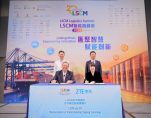
The MoU was signed at the LSCM Logistics Summit 2026 at Hong Kong Science Park
The two parties will collaborate on ICT infrastructure, AI, general computing, operating systems and cyber resilience
HONG KONG, CHINA – Media OutReach Newswire – 15 October 2026 – ZTE Corporation (0763.HK / 000063.SZ), a global leading provider of integrated information and communication technology solutions, announced that its wholly owned subsidiary ZTE (Hong Kong) Limited (“ZTE Hong Kong”) and The Logistics and Supply Chain MultiTech R&D Centre (“LSCM”) today officially signed a Memorandum of Understanding (MoU) at Hong Kong Science Park during the LSCM Logistics Summit 2026.
The signing ceremony was attended by representatives of both parties. Ir Prof Alan Lam, Chairman of the Board of Directors of LSCM, and Mr. Mei Zhonghua, Senior Vice President of ZTE, jointly witnessed the signing; Mr. Simon Wong, Chief Executive Officer of LSCM, and Ms. Wang Huan, Managing Director of ZTE Hong Kong Representative Office, signed the MoU on behalf of both parties..
In accordance with the principles of complementary strengths, equality and mutual benefit, and win-win cooperation, both parties reached a consensus on cooperation focusing on Hong Kong’s digital and intelligent development, enhancing e-government information services, and promoting the local application of secure and reliable diversified technologies in Hong Kong. They also agreed to jointly cultivate a digital and intelligent industry ecosystem suited to Hong Kong’s actual needs.
The Logistics and Supply Chain MultiTech R&D Centre (LSCM) was established in 2006 with funding from the Innovation and Technology Fund of the Hong Kong Special Administrative Region Government. Since its establishment, LSCM has been committed to researching and developing various technologies that promote the development of industries related to logistics and supply chains, and to assisting industries across Hong Kong and mainland China in adopting relevant technologies.
ZTE (Hong Kong) Limited was incorporated in Hong Kong in 2000 and is a wholly-owned subsidiary of ZTE Corporation. ZTE Hong Kong has been deeply rooted in the Hong Kong market for many years, serving local operators over the long term. It has a strong localized service team and delivery capability, enabling it to respond quickly to customer needs, as well as full-stack locally developed products and IT application innovation solutions, which have been widely implemented. With a deep understanding of the Hong Kong market and rich project experience, ZTE Hong Kong has achieved breakthroughs and established a presence in key industries such as the public sector and finance, providing safe and reliable ICT solutions to customers across various industries. In the future, ZTE Hong Kong will continue to leverage its localized service advantages to support the digital transformation of industries in Hong Kong.
Under the MoU, cooperation between the two parties covers areas including ICT infrastructure, artificial intelligence, general computing, operating systems, and cybersecurity. Both parties will also actively promote technology and talent exchange, fully leverage their respective R&D strengths, comprehensively carry out joint innovation in areas such as general computing and artificial intelligence, and jointly develop and incubate a digital and intelligent ecosystem suited to Hong Kong. Focusing on the C86 next-generation computing platform, the two parties will carry out in-depth cooperation in areas such as locally developed computing infrastructure development and the digital transformation of government and enterprises, jointly promoting the high-quality development of industries in Hong Kong and the Greater Bay Area.
The signing of this MoU marks the official launch of the strategic cooperation between the two parties in promoting Hong Kong’s digital and intelligent development and the application of secure and reliable technologies. Both parties will take this opportunity to deepen cooperation and complement each other’s strengths, jointly contributing to Hong Kong’s innovation and technology development and enhancements in trusted public-sector digital capabilities.
Hashtag: #ZTE
The issuer is solely responsible for the content of this announcement.
Artificial intelligence agents are being deployed to challenge investment proposals at an Abu Dhabi sovereign wealth fund, while businesses are extending the technology into procurement processes under human supervision, executives told Sharjah Investment Forum 2026. Maria Sanchez, senior vice-president of AI product delivery at G42’s Inception, disclosed the investment application during a panel on Wednesday, describing a system that examines proposed deals and produces arguments against proceeding […]
Senior Minister of State Tan Kiat How to attend as Guest-of-Honour at the 12 November summit, which will bring together leaders from across public relations, journalism, business and technology
SINGAPORE – Media OutReach Newswire – 15 October 2026 — The Institute of Public Relations of Singapore (IPRS) has announced the keynote speakers for the Media OutReach Newswire PRISM Summit 2026, taking place on 12 November at METT Singapore. Mr Tan Kiat How, Senior Minister of State for Digital Development and Information, and National Development, will attend as Guest-of-Honour.
Held under the theme “From Message to Mandate”, the Summit will examine how communications professionals can move beyond message delivery to influence organisational decisions, safeguard reputation and build stakeholder trust in an environment increasingly shaped by artificial intelligence, fragmented media and heightened scrutiny.
The programme brings together perspectives from newsrooms, corporate leadership, technology and the communications industry to address a central question: how can communications leaders maintain credibility and demonstrate their strategic value when the information landscape is changing faster than ever?
Notable keynote speakers include Rosianna Silalahi, President Director of KompasTV, whose session, “Holding the Line: What Newsrooms Need from Communicators”, will draw on the Indonesian broadcaster’s experience navigating demonstrations, external pressure and the growing challenges of verifying information. Her contribution will examine the responsibilities journalists and communicators share in protecting information integrity, maintaining editorial independence, and establishing accountability for AI-generated content.
The relationship between media credibility and organisational reputation will also feature in the keynote by Glenda Gloria, Co-Founder and Executive Editor of Rappler, who will deliver “Keepers of the Record”, reflecting on journalism’s role in an era of disinformation and declining trust, and what the changing media landscape means for communications professionals.
Beyond the newsroom, the Summit will consider how communications can deliver greater strategic value to organisations. Terence Lyons, Founder and CEO of TSC.ai, will examine how stakeholder intelligence can help organisations anticipate emerging issues and understand influence, while Wendy Wang, Founder of getUGC.io, will explore the evolving relationship between creators, communities and brand trust.
Another focus will be the growing influence of artificial intelligence on how organisations are discovered and understood. Shaad Hamid, General Manager, Singapore at GrowthOps Asia, will examine the relationship between earned media and AI visibility, while Emma Dale, Co-Founder and Managing Director of Prospect Resourcing, will consider the human judgement, trust and leadership that remain essential as AI becomes more embedded in communications work.
Jennifer Kok, Founder and CEO of Media OutReach Newswire, will deliver the Title Sponsor Keynote, “The Golden Age of PR: Why an AI-Enabled Global Newswire Matters More Than Ever”, exploring the role of earned media and newswire distribution in building brand trust and visibility in an AI-driven environment.
The programme will culminate in the unveiling of findings from the inaugural Singapore State of PR and Communications Survey, jointly conducted by Media OutReach Newswire and IPRS. The research will offer insights into how communications practitioners view changing PR dynamics, the evolving media landscape, AI visibility, and their use of AI tools in daily workflows.
Other speakers include Liu Xiaowei, Co-Founder of Retension; Nicholas Leong, Head of Media Relations, Asia Pacific at DHL; Raju Chellam, Editor-in-Chief of the AI Ethics & Governance Body of Knowledge; Emily Poon, CEO of the Singapore Institute of Directors; Shefali Srinivas, Head of Business Communications, APAC at Meta; Esther An, Chief Sustainability Officer at City Developments Limited; and Brian Fletcher, Director, Public Policy APJ at CrowdStrike.
PRISM Summit 2026 is supported by Title Sponsor Media OutReach Newswire, Coffee & Silver Sponsor Notified, Silver Sponsors Isentia and Truescope, Official PR Agency Pinpoint and Venue Partner METT Singapore.
Supporting Partners include Edge Digital, the Public Relations and Communications Association (PRCA), World Communication Forum Association (WCFA), Davos Communications Summit & Awards, Asia Pacific PR Network (APRN), Singapore Institute of Directors (SID) and Singapore Press Club (SPC). Media Partners include Humas Indonesia and PR Indonesia.
Full speaker line-up The PRISM Summit 2026 speaker line-up comprises:
Anita Kapoor – Host
Ross Gan — President, IPRS; Chief Communications Officer, Bitdeer Technologies
Jennifer Kok — Founder & CEO, Media OutReach Newswire
Raju Chellam — Editor-in-Chief, AI Ethics & Governance Body of Knowledge
The issuer is solely responsible for the content of this announcement.
About the Institute of Public Relations of Singapore
The Institute of Public Relations of Singapore represents public relations and communications practitioners in Singapore and promotes professional standards, continuing development and the advancement of the profession.
BERLIN, GERMANY – Newsaktuell – 14 October 2026 – The World Health Summit 2026 concluded with new funding commitments, research findings, and initiatives. Under the theme “From Crisis to Resilience: Innovating for Health,” the Summit convened more than 4,000 on-site participants from 130 countries and territories, generated over 50,000 livestream views, and featured more than 400 speakers, including 20 ministers and state secretaries, across 76 sessions.
World Health Summit
Major announcements and launches
€250 million Women’s Health Initiative in Bangladesh: The Government of Bangladesh and the European Investment Bank outlined plans to improve women’s health and strengthen district hospitals and critical care services.
US$100 million commitment to prevent stillbirths: The Gates Foundation and Wellcome Leap announced a joint commitment to Uzima: A Stillbirth Prevention Program, aiming to halve stillbirth rates within a decade in selected countries.
Lancet Commission on 21st Century Global Threats to Health: The Commission identified two potential threats to human existence: malicious use of artificial intelligence and nuclear conflict.
Wellcome Global Monitor 2026: Wellcome presented global findings showing that trust in science has declined compared with pre-COVID-19 levels.
Gallup’s State of the World’s Emotional Health 2026 Report: Gallup and the World Health Summit presented findings on emotional health and well-being, revealing a complex relationship between social media use and well-being that varies by age, time spent online, and geographic location.
€10 million German contribution to maternal and child health: Germany pledged €10 million to the Global Financing Facility’s Sustainable Commodities Access Program to improve access to family planning and maternal, newborn, and child health products.
The World Health Summit is the leading platform for global health. It brings together stakeholders from politics, science, the private sector, and civil society to set the agenda for a healthier future.
Hashtag: #WorldHealthSummit
The issuer is solely responsible for the content of this announcement.
Bengaluru-based Flying Wedge Defence & Aerospace has unveiled a full-scale static prototype of its FWD Supreme autonomous combat aircraft in New Delhi, while preparing a lighter demonstrator for its maiden flight.
The company presented the programme on Tuesday as a proposed family of artificial intelligence-piloted aircraft intended for surveillance, strike and coordinated combat missions. Its smaller FWD Supreme Lite has completed taxi trials, founder Suhas Tejaskanda said, but no first-flight date has been confirmed.
The unveiling marks a further stage in the company’s effort to move from aircraft designs to flight-tested hardware. A static prototype demonstrates the proposed configuration rather than operational performance, and the aircraft’s advertised speed, range and combat capabilities remain development targets.
Flying Wedge envisages two principal versions. The approximately 250kg Supreme Lite is intended to test autonomous navigation, flight control and cooperation between aircraft. The larger Supreme Heavy is designed for longer-range intelligence, surveillance and reconnaissance operations, precision strikes and missions conducted alongside other aircraft.
Company specifications for the heavier aircraft describe a flying-wing configuration measuring roughly 10 metres across, with an internal weapons bay and a payload of about 350kg. The proposed maximum speed is Mach 0.8 to 0.85, with cruising speeds of 500 to 600 kilometres an hour.
Flying Wedge also projects a range exceeding 1,500km and endurance of more than two hours, supported by satellite communications. Those figures have not been validated through publicly documented flight trials of the Supreme Heavy. Its propulsion and systems integration will be crucial to determining whether the design can meet them.
The company calls its operating concept the Mobbing Doctrine. It envisages groups of autonomous aircraft exchanging information and coordinating decisions during missions, rather than relying exclusively on individual high-value combat platforms. Under the concept, surviving aircraft would continue assigned tasks if others were lost.
Such coordination would require dependable communications, reliable target identification and systems capable of operating when links are disrupted. Flying Wedge says artificial intelligence will support navigation, sensor processing and mission execution, although the extent of human oversight during weapons employment has not been established in publicly available technical documentation.
Tejaskanda has described affordability and operational relevance as central aims of the programme. The company is also seeking foreign participation in an India-led development and manufacturing initiative called Operation Triple Seven. Details of binding investment commitments, production arrangements and customer orders have not been publicly established.
A Anbarasu, director general for acquisition at the Ministry of Defence, linked the initiative to the government’s emphasis on joint operations, domestic manufacturing and innovation. His remarks signalled policy interest in such technologies but did not amount to confirmation of a procurement contract or an operational requirement for the aircraft.
Flying Wedge has outlined plans to increase domestically sourced components and has identified the Defence Research and Development Organisation’s Manik engine as a potential propulsion option. The company has indicated that the proportion of locally sourced content could depend substantially on the engine eventually selected.
Its proposed navigation technologies include visual odometry, which estimates an aircraft’s movement by comparing successive camera images. The approach could supplement conventional satellite navigation where signals are degraded or unavailable, although its effectiveness in military conditions would need to be demonstrated through testing.
The Supreme programme joins international efforts to develop uncrewed aircraft capable of cooperating with piloted fighters or carrying out assigned missions autonomously. Such projects differ widely in maturity, from conceptual designs and ground tests to aircraft already conducting experimental flights. Their development does not establish that fully autonomous combat operations have been approved for routine military use.
Flying Wedge previously released footage of the Supreme Lite technology demonstrator undergoing development and ground preparations. Its earlier target of a first flight during the third quarter of 2026 has passed, making completion of taxi trials the clearest publicly stated milestone ahead of airborne testing.
The company separately develops Kaalbhairav unmanned aircraft and smaller interception and loitering-munition systems. Those products form part of its broader portfolio but should not be confused with the Supreme fighter programme, whose larger aircraft has yet to demonstrate its stated performance in flight.
Flying Wedge operates from Bengaluru’s Electronic City area. Its published product portfolio includes surveillance aircraft, interceptor drones and compact loitering munitions, alongside the proposed Supreme family. The company also lists agricultural unmanned aircraft among its products, reflecting its involvement in civilian applications.
Artificial intelligence models could soon copy themselves across vulnerable internet-connected devices without human assistance, Anthropic has warned, raising concerns about a new category of decentralised cybersecurity threat. Research published on Monday by the company’s Frontier Red Team suggests smaller AI systems may acquire the capabilities needed for autonomous replication within months. Such systems could operate on ordinary consumer electronics rather than depend on expensive data-centre infrastructure, complicating […]
Companies generating at least $1 billion annually are more than twice as likely as smaller businesses to knowingly leave serious software vulnerabilities unpatched, a global cybersecurity survey released on Wednesday found. Research commissioned by software security company Chainguard showed that 66% of security leaders at businesses with revenue of $1 billion or more acknowledged leaving high or critical vulnerabilities unresolved at least sometimes. The corresponding figure was […]




 https://vinhomes.vn/en






 https://www.linkedin.com/company/institute-of-public-relations-of-singapore/p