Vertiv has unveiled an artificial intelligence-based predictive maintenance service designed to help data centre operators manage the growing operational strain created by high-density computing and AI-driven workloads. The service, branded Vertiv Next Predict, is positioned as a response to the rising complexity of power and cooling infrastructure as operators race to support advanced computing environments. The company said the new platform uses machine learning models, real-time sensor […]
A sprawling winter storm stretching across the southern and eastern United States has crippled highways, shuttered schools and sent air travel into disarray, as forecasters warned of heavy snowfall and a destructive ice belt cutting from east Texas through the Carolinas. The U. S. National Weather Service said a wide swathe of the country faced hazardous conditions, with snow totals measured in tens of centimetres in parts […]
Evidence emerging from a long-running population study in the UAE is sharpening the focus on the mouth as an early warning site for metabolic disease, with researchers identifying distinct patterns of oral bacteria associated with obesity and related conditions. The findings, drawn from analyses within the UAE Healthy Future Study, suggest that shifts in the oral microbiome could help flag metabolic risk earlier than conventional markers and […]
Arabian Post Staff -Dubai Dubai has approved a Dh12.8bn expansion of Dubai Silicon Oasis, signalling a renewed push to scale the emirate’s knowledge economy and deepen its appeal to global technology, research and advanced manufacturing firms. The programme was launched by Sheikh Mohammed bin Rashid Al Maktoum, Vice President and Prime Minister of the UAE and Ruler of Dubai, and positions the zone for a new phase […]
Strong international validation for India’s ambitions in semiconductors and artificial intelligence has emerged during Union minister Ashwini Vaishnaw’s visit to Veldhoven, the Netherlands, where he held discussions centred on advanced manufacturing technologies and long-term collaboration. Vaishnaw described the engagement as a major opportunity to understand cutting-edge systems and align partnerships that could accelerate India’s high-technology ecosystem.
The visit to Veldhoven, home to the world’s most sophisticated chipmaking equipment capabilities, comes at a time when New Delhi is pushing to anchor itself more firmly in global semiconductor supply chains while building domestic capacity. Vaishnaw indicated that interlocutors acknowledged India’s policy direction and scale as compelling factors for deeper cooperation across semiconductors and artificial intelligence, two areas that are increasingly intertwined in next-generation computing and industrial automation.
Discussions during the trip focused on lithography technologies, supply-chain resilience and skills development, according to people familiar with the engagements. India’s pitch rests on a combination of policy incentives, a large engineering workforce and expanding demand from electronics, automotive and data-driven sectors. Officials accompanying the minister underlined that partners in Europe see India as a credible long-term manufacturing and innovation base rather than merely a consumption market.
The Netherlands occupies a critical position in the global chip industry because of its dominance in extreme ultraviolet lithography, a technology essential for producing advanced semiconductors. India’s engagement with Dutch stakeholders is therefore viewed as strategically important, particularly as countries and companies diversify supply chains amid geopolitical and commercial pressures. Vaishnaw’s meetings sought to map pathways for collaboration spanning equipment ecosystems, materials, precision engineering and research linkages.
Artificial intelligence featured prominently in the conversations, reflecting the convergence between advanced chips and AI workloads. Executives and policymakers discussed how specialised processors, high-performance computing and data infrastructure underpin AI deployment across sectors such as healthcare, mobility, energy management and public services. Indian officials emphasised the country’s growing base of AI startups, public digital platforms and applied research, arguing that closer alignment with global technology leaders would strengthen both sides.
The endorsement referenced by Vaishnaw also reflects broader international assessments of India’s semiconductor strategy, which combines fiscal incentives with infrastructure support and regulatory facilitation. Several fabrication and assembly projects have been announced across different states, while partnerships with global firms aim to address gaps in design, packaging and testing. Industry analysts note that execution risks remain, including timelines, talent depth in specialised manufacturing and integration into mature supply networks, yet acknowledge that momentum has improved.
From the Dutch perspective, collaboration with India offers access to a fast-growing market and diversification beyond traditional hubs. European technology firms have been recalibrating their engagement with Asia, balancing commercial interests with strategic considerations. India’s emphasis on trusted partnerships and standards-based cooperation resonates in this context, particularly in areas linked to critical technologies.
Vaishnaw’s visit also included interactions with research institutions and industry representatives to understand best practices in precision manufacturing and workforce training. Officials highlighted the importance of skilling programmes that align academic curricula with industry needs, a factor seen as decisive for sustaining semiconductor operations. India has been expanding such initiatives, including specialised training for chip design and manufacturing processes.
The talks in Veldhoven are part of a broader diplomatic and industrial outreach aimed at positioning India within high-value segments of global technology chains. Previous engagements with partners in East Asia and North America have similarly stressed co-development, supply assurance and innovation partnerships rather than transactional sourcing. The Netherlands visit adds a European dimension to that strategy.
Michigan’s cherry growers are turning to a small falcon with a big appetite for problem birds, placing nesting boxes for American kestrels across orchards to curb fruit damage and reduce contamination risks without chemicals. The approach, adopted over several growing seasons, reflects a broader shift towards nature-based solutions as producers balance yields, food safety and environmental pressures. Kestrels, among North America’s most widespread raptors, prey on starlings, […]
Taara, a California-based connectivity venture built around high-capacity laser links, has formally separated from Alphabet, marking a decisive shift in how ultra-fast internet could be delivered to hard-to-reach regions. The spin-out places the spotlight on a terrestrial alternative to satellite broadband, with the company arguing that its ground-based approach can deliver fibre-like speeds at lower cost and with fewer regulatory hurdles. Born inside Alphabet’s experimental “moonshot” unit, […]
HANOI, VIETNAM – Media OutReach Newswire – 23 January 2026 – The VinFuture Prize officially announces the launch of its 2026 season and opens the nomination period until 2:00 PM on April 17, 2026 (Vietnam time, GMT+7). Eligible nominations must pertain to scientific or technological inventions and solutions that demonstrate clear, measurable benefits for millions of people worldwide and must be submitted by distinguished individuals or reputable institutions within the global science and technology community.
A number of scientific breakthroughs recognized by the VinFuture Prize have subsequently been honored by the world’s most prestigious scientific awards, including the Nobel Prize. Photo: VinFuture
All nominations will undergo a rigorous screening and evaluation process conducted by the VinFuture Pre-Screening Committee and the Prize Council, which comprise leading scientists from around the world, including laureates of prestigious international awards such as the Nobel Prize, the Turing Award, and the Millennium Technology Prize.
The evaluation process is scheduled to be completed by September 2026, with the 6th VinFuture Prize Award Ceremony slated for early December 2026. Nominations submitted after April 17, 2026 will automatically be considered for the 2027 season.
In order to provide comprehensive information and strengthen engagement with its global network of nomination partners, the VinFuture Foundation will host two international webinars in the first quarter of 2026, featuring insights and perspectives from representatives of the Prize Council, the Pre-Screening Committee, and VinFuture Laureates. The first webinar will take place at 8:00 AM on January 26, 2026 (Hanoi time).
In 2026, the VinFuture Prize will continue the implementation of its Top Nominators Recognition Program, formally acknowledging the exceptional contributions of scientists whose discernment and scholarly leadership are instrumental in identifying and nominating scientific and technological achievements of transformative significance for humanity.
Having completed five successive and highly successful award cycles, the VinFuture Prize has established itself as a globally respected distinction within the international science and technology community. To date, it has received a cumulative total of 6,132 nominations from nearly 110 countries and territories and has recognized 48 outstanding scientists whose pioneering work has delivered profound, enduring, and far-reaching benefits to humanity.
Many of the achievements recognized by the VinFuture Prize are closely aligned with major milestones in human progress, ranging from global networking technologies, PERC solar cells, lithium-ion battery energy storage, and artificial intelligence to essential fields such as sustainable agriculture, healthcare, and environmental protection. Reflecting its expanding international reach, VinFuture’s global nomination partner network now includes nearly 15,000 scientists worldwide.
Dr. Thai-Ha Le, Managing Director of the VinFuture Foundation, stated: “After five years of establishment and development, VinFuture Prize has steadily affirmed its position as one of the world’s leading global science prizes, where outstanding scientific excellence is honored in parallel with social responsibility and the long-term interests of humanity. As we enter the 2026 season, we anticipate that nominations will continue to demonstrate the pivotal role of science and technology in addressing global challenges in a comprehensive manner, thereby advancing breakthrough solutions with strong applicability and the capacity to generate positive and sustainable impacts on a global scale.”
With its established international stature and credibility, VinFuture has contributed meaningfully to positioning Viet Nam as an emerging hub for global knowledge exchange and scientific collaboration. Numerous VinFuture partners have traveled to Viet Nam to engage in academic exchanges, share professional expertise, and strengthen ties with the domestic scientific community. Notable participants include Professor Aldo Steinfeld of the Swiss Federal Institute of Technology Zurich (ETH Zurich), recipient of the 2024 SolarPACES Lifetime Achievement Award; Professor Kurt Kremer, Honorary Director of the Max Planck Institute for Polymer Research (Germany); and Professor Chuanbin Mao of The Chinese University of Hong Kong (China), ranked among the world’s top 2% most-cited scientists in biomedical engineering…
Through VinFuture, many Vietnamese scientists have likewise gained access to, and established collaborations with, leading global researchers, actively engaging with the international scientific community to help shape a sustainable future for Vietnam and for humanity at large.
Hashtag: #VinFuture
The issuer is solely responsible for the content of this announcement.
A shift in global technology talent flows is becoming clearer as companies and professionals reassess the United States’ immigration environment, with India emerging as a leading beneficiary. Tightened visa scrutiny, policy uncertainty and prolonged processing timelines linked to Trump-era approaches to skilled migration have altered career calculations for engineers, researchers and founders who once saw the US as the default destination. Technology firms across Silicon Valley and […]
Mistral AI, the French artificial intelligence company behind a fast-growing portfolio of large language models, is in discussions to establish a Global Capability Centre in Bengaluru, a move that would place advanced engineering and research operations in one of Asia’s most competitive technology hubs. People familiar with the matter say the plan, still under evaluation, reflects the company’s need to scale product development while drawing on […]
Major powers are expanding sensor investment across land, air, sea, cyber and space as platforms grow faster, stealthier and more autonomous. Aerospace advances such as reusable launch vehicles, hypersonic flight and satellite mega-constellations depend on dense networks of precision sensors to operate safely and effectively. In military settings, those same tools are redefining early warning, targeting and defence. One of the most consequential shifts has been in […]
Arabian Post Staff -Dubai Saudi Arabia has moved to formalise real-world asset tokenisation with the launch of the Kingdom’s first dedicated Centre of Excellence, as Open World announced an in-Kingdom operating entity designed to support compliant digital-asset innovation aligned with Vision 2030 goals. The initiative positions Saudi Arabia to accelerate the tokenisation of physical and financial assets such as real estate, commodities, infrastructure receivables and private credit […]
Pressure is building on developers and corporate users of generative AI as “hallucinations” — confident statements that are wrong — continue to surface in customer service chats, legal filings, coding assistants and financial research notes, exposing organisations to reputational harm, regulatory scrutiny and operational risk. The problem has become harder to dismiss as adoption accelerates, because the errors often arrive wrapped in fluent prose, invented citations and […]
Greenlogue/AP The UAE Research Program for Rain Enhancement Science has named the recipients of its sixth cycle of grants, committing up to US$1.5 million to each selected project over three years as the country sharpens its focus on applied climate research and water security. The awards, announced by the UAE Research Program for Rain Enhancement Science, come with a ceiling of US$550,000 per year for each project […]
Policy makers and technology leaders are pressing ahead with a governance-by-design approach to artificial intelligence as deployment accelerates across public services, finance, manufacturing and health care, even as scepticism around generative systems keeps trust, data ethics and measurable returns at the centre of decision-making.
Momentum has gathered through a series of policy signals that place safeguards alongside scale. Draft frameworks circulated by NITI Aayog and implementation roadmaps led by Ministry of Electronics and Information Technology have reinforced principles around responsible data use, model transparency and accountability for outcomes, while stopping short of prescribing one-size-fits-all rules that could chill innovation. Officials involved in consultations say the intent is to embed risk controls early—covering bias, explainability and security—rather than bolting them on after systems are deployed.
Enterprise adoption has followed a similar trajectory. Banks, insurers and large manufacturers are prioritising AI programmes that demonstrate near-term productivity gains and compliance readiness, favouring narrowly scoped applications over open-ended generative tools. Executives interviewed across sectors point to fraud detection, demand forecasting and maintenance optimisation as areas where benefits can be quantified and audited. By contrast, unrestricted text and image generation remains subject to tighter internal review, particularly where customer-facing outputs could expose firms to reputational or regulatory risk.
Scepticism has not slowed investment, but it has reshaped it. Venture funding has tilted towards platforms that promise governance controls by default—model cards, audit trails and data lineage—alongside performance. Start-ups building on foundation models increasingly highlight enterprise-grade safeguards as differentiators, responding to procurement teams that now treat ethics and security as commercial requirements rather than public-relations add-ons. Industry analysts note that this shift mirrors global buyer behaviour, but localised rules on data residency and consent amplify its importance.
Public-sector pilots underscore the same pattern. State administrations experimenting with AI for grievance redressal, traffic management and land records have emphasised human oversight and explainability, often keeping decision authority with officials while using algorithms to triage or recommend. Procurement documents reviewed by this publication show explicit clauses on dataset provenance and bias testing, reflecting lessons from earlier digital programmes where opaque automation triggered legal challenges.
At the national level, interoperability with global standards remains a priority. Engagements with multilateral bodies and peer regulators have sought alignment with emerging norms on risk classification and model evaluation, while retaining flexibility for domestic conditions. Officials argue that a principles-based stance will allow rapid adaptation as technology evolves, avoiding the lock-in that can follow prescriptive rules. Critics, however, warn that voluntary compliance may prove uneven without clear enforcement pathways.
Talent development forms another pillar of the blueprint. Universities and skilling platforms are expanding curricula that combine machine learning with ethics, law and product management, aiming to produce practitioners who can translate policy into code. Industry groups say demand is strongest for professionals able to design systems that pass audits and deliver return on investment, rather than purely experimental research. This has influenced hiring, with firms rewarding cross-disciplinary expertise.
Cloud providers and chipmakers are also recalibrating offerings for a market that prizes trust. Secure enclaves, confidential computing and on-premise deployment options are being pitched to enterprises wary of exposing sensitive data. Partnerships between domestic integrators and global technology companies have focused on localisation—language support, regulatory reporting and sector-specific controls—over raw model size.
A $50 million initiative bringing together the Bill & Melinda Gates Foundation and OpenAI is being positioned as a practical push to embed artificial intelligence into public health delivery across multiple African countries, with backers arguing the effort could help overstretched systems do more with limited resources while raising questions about data governance and long-term capacity. The collaboration, branded Horizon1000, is designed to fund pilots and scale-ups […]
UAE and India have elevated their strategic partnership with a sweeping set of agreements signed during the visit of Sheikh Mohamed bin Zayed Al Nahyan, signalling a calibrated push to broaden cooperation across defence, energy, space, trade, investment and food safety. The pacts, endorsed alongside Narendra Modi, reflect a shared intent to anchor bilateral ties in long-term economic and security interests while navigating a volatile global environment.
The visit culminated in the exchange of multiple memoranda of understanding that collectively aim to translate political goodwill into operational outcomes. Officials from both sides framed the agreements as an expansion of the Comprehensive Strategic Partnership, emphasising implementation timelines and institutional coordination rather than aspirational language. At the centre of the package is a defence cooperation framework that strengthens military-to-military engagement, joint exercises, training exchanges and defence industrial collaboration, an area that has gathered momentum as both countries diversify security partnerships.
Energy cooperation featured prominently, with accords spanning hydrocarbons, clean energy and grid resilience. State-linked firms and private players outlined pathways to scale joint investments in upstream oil and gas while accelerating collaboration in renewables, green hydrogen and energy storage. The emphasis on clean energy dovetails with the UAE’s net-zero ambitions and India’s drive to expand non-fossil capacity, positioning both as partners in technology transfer and project financing across third markets.
Space cooperation agreements mark another pillar of the evolving relationship. Space agencies from Abu Dhabi and New Delhi committed to deeper collaboration in satellite development, earth observation, data sharing and human spaceflight training. The arrangements are designed to support applications ranging from climate monitoring and disaster management to urban planning and agriculture, underscoring the commercial and societal dividends of space-based assets.
Trade and investment pacts seek to build on the momentum generated by the Comprehensive Economic Partnership Agreement, which has reshaped tariff structures and supply chains between the two economies. New understandings focus on easing customs procedures, aligning standards and expanding market access for small and medium-sized enterprises. Investment promotion agencies agreed to coordinate sectoral roadmaps in manufacturing, logistics, digital services and infrastructure, with sovereign investors and development funds expected to play a catalytic role.
Food safety and agricultural cooperation agreements address a strategic priority for both governments. Protocols on standards, certification and inspection aim to streamline the movement of agri-food products while safeguarding consumer interests. Joint research initiatives are set to target crop resilience, post-harvest technologies and cold-chain logistics, reflecting lessons from climate stress and supply disruptions that have sharpened the focus on food security.
Diplomatic engagements during the visit also underscored people-to-people ties, education and skills. Universities and research institutions announced partnerships in advanced materials, artificial intelligence and health sciences, while vocational training programmes were aligned to labour market needs in construction, healthcare and digital services. These measures are intended to deepen the talent pipeline that underpins commercial ties.
Officials were careful to situate the agreements within a broader regional and global context. With shipping lanes under strain and commodity markets exposed to geopolitical shocks, both sides highlighted coordination on maritime security and supply chain resilience. The defence and logistics components of the package are expected to reinforce cooperation in the Indian Ocean region, where the UAE’s ports and India’s maritime capabilities intersect.
Economists note that the breadth of the accords reduces concentration risk by spreading cooperation across multiple sectors, while governance mechanisms embedded in the agreements could improve execution. Joint working groups, periodic reviews and dispute-resolution channels were outlined to ensure progress is measurable. Business leaders welcomed the clarity on standards and compliance, arguing that predictability lowers the cost of capital and accelerates project timelines.
Critics caution that delivery will depend on regulatory alignment and the pace of domestic approvals, particularly in capital-intensive sectors such as energy and defence manufacturing. Past initiatives have sometimes faced delays linked to procurement processes and technology transfer rules. Both governments acknowledged these constraints and signalled intent to address bottlenecks through empowered committees.
Scientists have uncovered a previously unseen protein interaction that appears to accelerate Parkinson’s disease by undermining the brain’s energy systems, offering what researchers describe as a promising route to therapies that tackle the condition at its biological roots rather than easing symptoms alone. The discovery links a specific molecular pairing to damage in mitochondria, the structures that supply energy to neurons, setting off a chain reaction that […]
Ubisoft is expanding its investment in generative artificial intelligence as project delays, cancellations and workforce reductions continue to weigh on one of the industry’s largest publishers, signalling a strategic bet that automation can stabilise pipelines and control costs while reshaping how blockbuster games are built. The company has been grappling with uneven release schedules and rising development budgets across its global studios, prompting leadership to prioritise tools […]
A major ransomware intrusion at a key manufacturing partner of Apple has intensified concerns over cyber resilience across global electronics supply chains, after attackers claimed to have stolen more than one terabyte of confidential data linked to unreleased products and internal operations. The attack, attributed to the criminal group RansomHub, targeted Luxshare, a long-standing supplier involved in assembling and producing components for flagship consumer devices. Information circulating […]
Electric motorbike maker Matter has outlined a $150 million investment programme running through the 2028 calendar year, signalling a sharp acceleration in its manufacturing capacity, product development and market reach as competition intensifies in the electric two-wheeler segment. The company has set an annual sales target of between 1.50 lakh and 1.80 lakh electric motorbikes by 2028, positioning itself among the more aggressive growth players in the […]
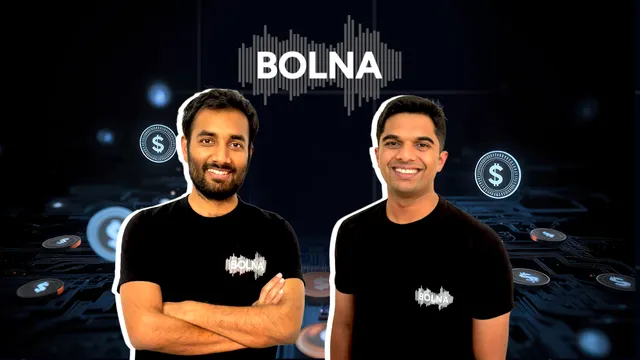
Bolna has raised $6.3 million in funding from General Catalyst, marking a significant capital infusion for the Bengaluru-based startup as it expands its voice orchestration platform designed for enterprises operating across multiple languages and customer touchpoints. The investment positions Bolna to deepen its presence in India-focused use cases while sharpening its technology for regulated sectors that demand reliability, security and compliance in automated voice interactions.
Founded to address the growing demand for natural, human-like voice interfaces in customer engagement, Bolna develops software that allows companies to design, deploy and manage AI-driven voice agents across telephony systems. The platform focuses on orchestrating speech recognition, natural language understanding, dialogue management and speech synthesis in a single workflow, enabling businesses to automate calls without sacrificing contextual awareness or linguistic nuance. The funding round underscores investor confidence in voice as a critical interface as enterprises look beyond chat-based automation.
Executives familiar with the company’s roadmap say the capital will be directed towards product development, hiring in engineering and applied linguistics, and expanding enterprise partnerships. Bolna has prioritised support for multiple Indian languages and dialects, a feature that has become central as companies in banking, insurance, logistics and commerce seek to reach customers outside metropolitan centres. Industry analysts note that voice automation in India faces distinct challenges due to code-switching, accent variation and noisy environments, making orchestration and model tuning more complex than in English-only deployments.
General Catalyst’s backing reflects a broader venture trend towards applied AI infrastructure rather than consumer-facing chatbots alone. Investors have increasingly focused on platforms that sit beneath applications, enabling enterprises to integrate AI safely into existing workflows. In Bolna’s case, the emphasis on orchestration allows companies to plug in different speech-to-text or text-to-speech engines, including proprietary or open-source models, while maintaining control over call logic and data handling. This flexibility has become attractive as organisations navigate data residency rules and sector-specific compliance obligations.
Voice AI adoption has accelerated as call centres confront rising costs and labour shortages, while customers continue to rely on phone-based interactions for sensitive or complex queries. Research firms tracking enterprise automation report that voice remains the dominant channel for high-value customer service in India, particularly in financial services and public-facing utilities. Bolna’s platform aims to complement human agents rather than fully replace them, handling routine calls and triage before escalating complex cases. Company officials have said this hybrid approach improves efficiency while reducing customer frustration associated with rigid interactive voice response systems.
Competition in the voice AI space has intensified, with global players offering end-to-end solutions and local startups focusing on language coverage and integration with domestic telecom infrastructure. Bolna differentiates itself by positioning as an orchestration layer rather than a monolithic model provider. This approach aligns with enterprise preferences to avoid vendor lock-in and to adapt quickly as speech and language models improve. Analysts also point to the growing importance of observability and analytics in voice systems, areas where Bolna has invested to give clients visibility into call outcomes, latency and error rates.
The funding arrives amid heightened scrutiny of AI ethics and transparency. Voice systems, in particular, raise concerns around consent, disclosure and bias. Bolna has stated that it builds safeguards into deployments, including clear disclosures when callers are interacting with automated agents and configurable controls to limit sensitive data capture. Such measures are increasingly demanded by enterprise clients as regulators and consumers push for responsible AI use.
Scientists have demonstrated a dependable method to generate large numbers of helper T cells from stem cells, removing a long-standing obstacle that has limited immune-based cancer treatments. The advance centres on mastering a developmental signal that decides which subtype of T cell emerges, allowing researchers to consistently produce the immune system’s key coordinators rather than a mixed and unpredictable population. Helper T cells do not usually kill […]
Boston Dynamics’ four-legged robot, widely known as the robot dog, has moved from laboratory demonstrations into everyday industrial and public-sector settings, reflecting a shift in how mobile robotics is being adopted across inspection, safety and data-collection roles. The machine, marketed as Spot, is designed to traverse environments that are difficult or hazardous for humans, combining advanced mobility with sensors and autonomous navigation software. Developed by Boston […]