News related to
secures

Messaging platform Telegram has successfully raised $1.7 billion through a convertible bond issuance, aiming to refinance existing debt and bolster its financial position. The five-year notes offer a 9% annual coupon and include a provision allowing bondholders to convert their holdings into equity at a 20% discount if Telegram proceeds with an initial public offering before maturity.

A significant portion of the proceeds, approximately $955 million, is earmarked to repurchase outstanding bonds from a 2021 issuance set to mature in March 2026. Telegram had previously repurchased around $400 million of this debt using internal funds. The remaining funds from the new bond sale will support the company’s operational expansion and strategic initiatives.

The bond offering attracted substantial interest from institutional investors. Existing backers like BlackRock and Abu Dhabi’s Mubadala Investment Company participated, alongside new entrants such as hedge fund Citadel. The high yield and potential for equity conversion made the bonds particularly appealing to investors seeking both income and growth opportunities.

Telegram’s financial performance has shown marked improvement. In 2024, the company reported a profit of $540 million on revenues of $1.4 billion, a significant turnaround from a loss of $173 million on $342 million in revenue the previous year. Projections for 2025 indicate a profit exceeding $700 million on revenues of $2 billion, driven by diversified income streams including advertising, in-app purchases, and premium subscriptions.

A notable contributor to Telegram’s revenue growth is a $300 million partnership with Elon Musk’s artificial intelligence firm, xAI. Under this agreement, Telegram will distribute xAI’s chatbot, Grok, within its platform, receiving compensation in both cash and equity. This collaboration signifies Telegram’s foray into integrating advanced AI technologies to enhance user engagement and service offerings.

Despite these financial strides, Telegram faces legal challenges. CEO Pavel Durov is currently under investigation in France for allegedly failing to cooperate with authorities probing illegal activities on the platform. Durov, who has been released on bail, is restricted from leaving France without official permission. His request to travel to the United States for investor meetings was denied by French prosecutors, citing insufficient justification. Durov maintains that Telegram has complied with all legal obligations and expresses uncertainty over the basis of the charges.

These legal issues have not deterred investor confidence. The successful bond issuance reflects a strong belief in Telegram’s growth trajectory and financial stability. The company’s user base continues to expand, with over 1 billion monthly active users and a doubling of paid subscribers to more than 15 million in the past year.

ADNOC Drilling has entered into an agreement to acquire a 70% stake in SLB’s land drilling rigs business in Kuwait and Oman for $112 million. The joint venture encompasses eight fully operational land rigs—two in Kuwait and six in Oman—currently under contract with the respective national oil companies. The transaction, pending customary regulatory approvals, is anticipated to close in the first quarter of 2026. ADNOC Drilling plans […]

Telegram has entered into a one-year agreement with Elon Musk’s artificial intelligence company, xAI, to integrate the Grok chatbot into its messaging platform, which boasts over one billion users globally. Under the terms of the deal, Telegram will receive $300 million in a combination of cash and equity, along with 50% of the revenue generated from xAI subscriptions sold through the app.

This partnership marks a significant expansion for Grok, which was previously available exclusively to premium subscribers of X . By integrating Grok into Telegram, xAI aims to broaden its user base and compete more directly with established AI chatbots like OpenAI’s ChatGPT and Google’s Gemini.

Telegram CEO Pavel Durov announced the collaboration on X, highlighting the strategic move to enhance user engagement through advanced AI capabilities. The integration of Grok into Telegram is expected to provide users with a more interactive and intelligent messaging experience, leveraging Grok’s ability to generate text, understand images, and summarise conversations.

The financial structure of the deal underscores the growing value of AI integration in messaging platforms. The $300 million investment from xAI not only provides Telegram with substantial capital but also aligns both companies’ interests through the shared revenue model. This approach reflects a broader trend in the tech industry, where companies seek to monetise AI tools by embedding them into widely used applications.

Grok’s integration into Telegram comes amid a competitive landscape for AI chatbots. xAI, founded by Elon Musk in 2023, has rapidly developed Grok to offer features such as web search results, PDF uploads, and image understanding. The chatbot is designed to provide responses with a touch of wit and humour, distinguishing it from more conventional AI assistants.

The rollout of Grok on Telegram also raises questions about content moderation and user data privacy. Telegram has faced scrutiny in the past for its approach to content oversight, and the addition of an AI chatbot with unfiltered responses could attract further attention from regulators and watchdogs. xAI has previously faced criticism for Grok’s use of user data from X, leading to investigations by European privacy regulators.

Telegram has successfully raised at least $1.5 billion through a bond issuance, attracting investments from prominent entities including BlackRock, Mubadala Investment Company, and Citadel. This financial manoeuvre underscores investor confidence in the messaging platform, even as its founder and CEO, Pavel Durov, faces legal challenges in France.

The five-year bonds, offering a 9% yield, are structured with a conversion option, allowing investors to convert debt into equity should Telegram pursue an initial public offering . While an IPO is not imminent, this feature provides potential upside for investors. Proceeds from the bond sale are earmarked to retire approximately $1 billion in debt from bonds issued in 2021, with Telegram having already repurchased around $400 million of those bonds using cash reserves.

Durov’s legal predicament stems from preliminary charges in France, accusing him of non-cooperation with investigations into illegal activities on Telegram, including child exploitation content. Both Durov and Telegram contest these allegations, asserting compliance with all binding legal requests. Despite being released on bail, Durov is restricted from leaving France without permission, a situation that has not deterred investor interest.

Telegram’s financial performance has shown remarkable improvement. In 2024, the company reported a profit of approximately $540 million on revenues of $1.4 billion, a significant turnaround from a $173 million loss on $342 million in revenue the previous year. This growth is attributed to an increase in paid subscribers, now exceeding 15 million, and revenue streams from advertising, in-app purchases, and partnerships with developers building on Telegram’s platform.

Looking ahead, Telegram projects revenues of $2 billion and profits surpassing $700 million for 2025. The company continues to expand its user base, recently surpassing one billion monthly active users, and is exploring opportunities in artificial intelligence, including a collaboration with Elon Musk’s xAI to integrate the Grok chatbot.

Dubai’s employment landscape continues to attract job seekers from across Asia, Europe, and Africa, with South Asians among the most visible presence. From tax-free salaries to a safe, cosmopolitan lifestyle and fast-track digital governance, the emirate is steadily reinforcing its image as a global work destination with an accessible entry point for skilled professionals.

Dubai’s appeal is anchored in a combination of economic liberalism and aggressive infrastructure development, which has made the city one of the busiest hubs for aviation, logistics, finance, hospitality, and tech. For those seeking employment from outside the UAE, Dubai offers two main routes: applying for positions remotely, or entering on a short-term tourist visa with the hope of converting that stay into full-time employment. While the latter path involves risk and financial outlay, it remains the most widely taken route for candidates without existing work permits.

The city’s population is made up of nearly 90% expatriates, with professionals from India, Pakistan, the Philippines, Bangladesh, and the UK dominating several industries. Recruiters in Dubai confirm that demand remains steady for roles in sales, marketing, IT, logistics, real estate, engineering, healthcare, and hospitality. According to hiring trends tracked by regional recruitment firms, companies in free zone jurisdictions are particularly active, often targeting foreign candidates who bring sector-specific experience.

Dubai’s tax structure is a major driver of migration. With no personal income tax and a salary-based remuneration system, employees receive their full contracted pay without statutory deductions. This setup increases the net earnings of professionals, particularly those coming from high-tax jurisdictions. However, the city’s high cost of living — with real estate, private schooling, and transport costs — offsets some of the financial advantage, making proper salary negotiations crucial before signing contracts.

For prospective applicants based outside the UAE, the digital ecosystem built around Dubai’s employment market is an essential resource. Company career pages, job portals such as Dubizzle and Bayt, and professional networks like LinkedIn are widely used by HR departments and hiring managers. LinkedIn in particular has emerged as a preferred screening tool, where recruiters assess candidates’ professional branding even before calling for interviews. A well-structured profile featuring quantifiable achievements, skills endorsements, and updated CV attachments is now considered essential.

Recruitment agencies based in Dubai and in neighbouring countries also play an intermediary role. Many global firms with a presence in the UAE outsource their talent acquisition to specialist agencies. These agencies have formal tie-ups with employers to fill positions across levels, from blue-collar to senior management. In India, for instance, manpower firms with UAE licenses are regularly approached for hospitality, construction, medical, and logistics roles. Candidates approaching these agencies are advised to verify accreditation details and ensure the agency operates under UAE labour ministry guidelines.

A significant portion of those who eventually land jobs in Dubai do so by entering on a 60-day or 90-day visit visa. This visa allows job seekers to attend interviews, network with prospective employers, and explore options in person. While this method can be effective for confident candidates with solid credentials, the costs — including visa fees, accommodation, and living expenses — must be budgeted in advance. Moreover, there is no guarantee of securing employment during this window, making it a calculated gamble for many families.

An alternative is to enter Dubai on a student visa. Universities and training institutions in Dubai offer various professional development courses, and part-time work is permitted in certain free zone jurisdictions. While this route also involves significant upfront costs, it has become popular among young graduates aiming to break into the UAE market through education-led migration. However, strict visa compliance rules and limited working hours under student permits make it less appealing for mid-career professionals.

Once an individual secures a job offer, the employer typically initiates the work visa and residency sponsorship process. This includes submission of documents such as educational certificates, previous employment references, and medical fitness results. Once approved, a UAE resident permit is issued, which then allows the individual to bring in dependents under family sponsorship. The entire onboarding and visa stamping process usually takes two to four weeks, depending on the company’s internal HR process and jurisdiction.

Dubai’s strategic geographical position — within a 4-hour flight radius from major South Asian cities — adds another layer of practicality for job seekers. With only a two-hour time difference from India and Sri Lanka, many multinational firms operate regional back-offices or satellite centres in Dubai, recruiting bilingual and culturally adaptive professionals who can bridge operations between West Asia and South Asia.

Climate compatibility is another subtle advantage for those relocating from tropical or semi-arid regions. Temperatures and humidity levels, while extreme during peak summer months, mirror weather conditions in parts of South Asia and the Gulf, reducing the cultural adjustment curve for new migrants.

Safety and rule of law remain among the top reasons cited by working professionals and families relocating to Dubai. The UAE consistently ranks among the world’s safest countries, with low crime rates and a strong police presence. For women professionals and young students, this perception of security plays a pivotal role in relocation decisions.

Another factor contributing to Dubai’s growing job market is its economic diversification programme. With Vision 2030 and associated sectoral strategies, the city is investing in AI, clean energy, space technology, and digital banking. These emerging sectors have triggered a wave of high-skilled job openings, especially for engineers, data analysts, fintech specialists, and regulatory professionals. Start-up hubs like Dubai Internet City and Dubai Silicon Oasis are witnessing increased hiring, backed by funding incentives and incubator schemes.

However, competition remains high, with thousands of applications flooding each job posting. Recruiters advise applicants to focus on niche skills, international certifications, and sector-specific experience. A generic application or a poorly crafted CV has minimal chance of clearing the initial screening stage. Instead, candidates are urged to tailor their applications to each role, use keywords matching the job description, and attach short, results-oriented cover letters.


Airbus and Tata Advanced Systems Limited have confirmed plans to establish a Final Assembly Line for the Airbus H125 helicopter in Kolar, Karnataka, marking the first privately-led helicopter manufacturing facility in India. This facility will become the fourth global production site for the H125, joining existing operations in France, the United States, and Brazil.

The H125, renowned for its versatility and performance, is expected to play a pivotal role in enhancing India’s civil aviation capabilities. With applications ranging from emergency medical services and disaster management to law enforcement and tourism, the helicopter is poised to address diverse operational needs. Its ability to operate in high-altitude and extreme environments, including a notable landing on Mount Everest, underscores its adaptability.

The decision to locate the assembly line in Karnataka was influenced by the state’s robust industrial infrastructure, skilled workforce, and supportive policies. The facility is anticipated to commence operations in 2026, with an initial production capacity of 10 helicopters annually, scalable based on demand.

This initiative aligns with the ‘Make in India’ programme, aiming to bolster domestic manufacturing and reduce reliance on imports. By producing the H125 locally, India seeks to meet its growing demand for helicopters, projected at 500 units over the next two decades, and position itself as a regional hub for aerospace manufacturing.

The collaboration between Airbus and TASL extends beyond this project, building on their partnership in the C295 military transport aircraft programme in Vadodara, Gujarat. This continued cooperation reflects a strategic commitment to developing a comprehensive aerospace ecosystem in India.

The H125 assembly line is expected to contribute significantly to the regional economy, creating employment opportunities and fostering technological advancements. It also represents a step forward in India’s efforts to enhance its capabilities in the aerospace and defence sectors through public-private partnerships.

Saudi Arabia’s premier travel company, Almosafer, has been appointed the first global travel agency partner of Hotel Management Company Adeera, a firm backed by the Public Investment Fund . The partnership is designed to bolster the Kingdom’s hospitality sector by integrating Adeera’s hotel brands into Almosafer’s expansive travel platforms, targeting both domestic and international travellers.

This collaboration aligns with Saudi Arabia’s Vision 2030, aiming to diversify the economy and enhance the tourism industry. By leveraging Almosafer’s digital reach and Adeera’s commitment to authentic Saudi hospitality, the alliance seeks to offer seamless booking experiences and promote the Kingdom’s cultural heritage to a global audience.

Muzzammil Ahussain, CEO of Almosafer, emphasized the significance of the partnership, stating, “Our expansive digital reach and integrated platforms make us the perfect partner to showcase PIF company Adeera’s authentic Saudi hospitality brand and services to the world.” He highlighted the goal of connecting travellers to the unique culture and heritage of Saudi Arabia through this initiative.

Stefan Leser, CEO of Adeera, echoed this sentiment, noting, “Saudi Arabia’s unique hospitality culture is an essential part of its identity and integral to the Kingdom’s ambitious tourism goals.” He expressed confidence that the partnership with Almosafer would further connect tourists to authentic Saudi hospitality that reflects the Kingdom’s unique culture.

Adeera, established by the PIF, aims to develop and manage hotel brands that embody Saudi Arabia’s rich hospitality traditions while adhering to global standards. The company focuses on creating homegrown hospitality brands and enhancing the capacity of the local sector through training and skills development programs in collaboration with international hospitality specialists.

Almosafer, a part of Seera Group, operates a comprehensive travel platform catering to various sectors, including consumer, corporate, and government travel. The company’s portfolio includes services for leisure and religious travel, offering a range of travel solutions from flight bookings to hotel reservations and local activities.

The partnership between Almosafer and Adeera is expected to play a pivotal role in promoting Saudi Arabia as a premier travel destination. By integrating Adeera’s hospitality offerings into Almosafer’s platforms, the collaboration aims to provide travellers with access to top-tier Saudi Arabian hospitality experiences.

Advertisements

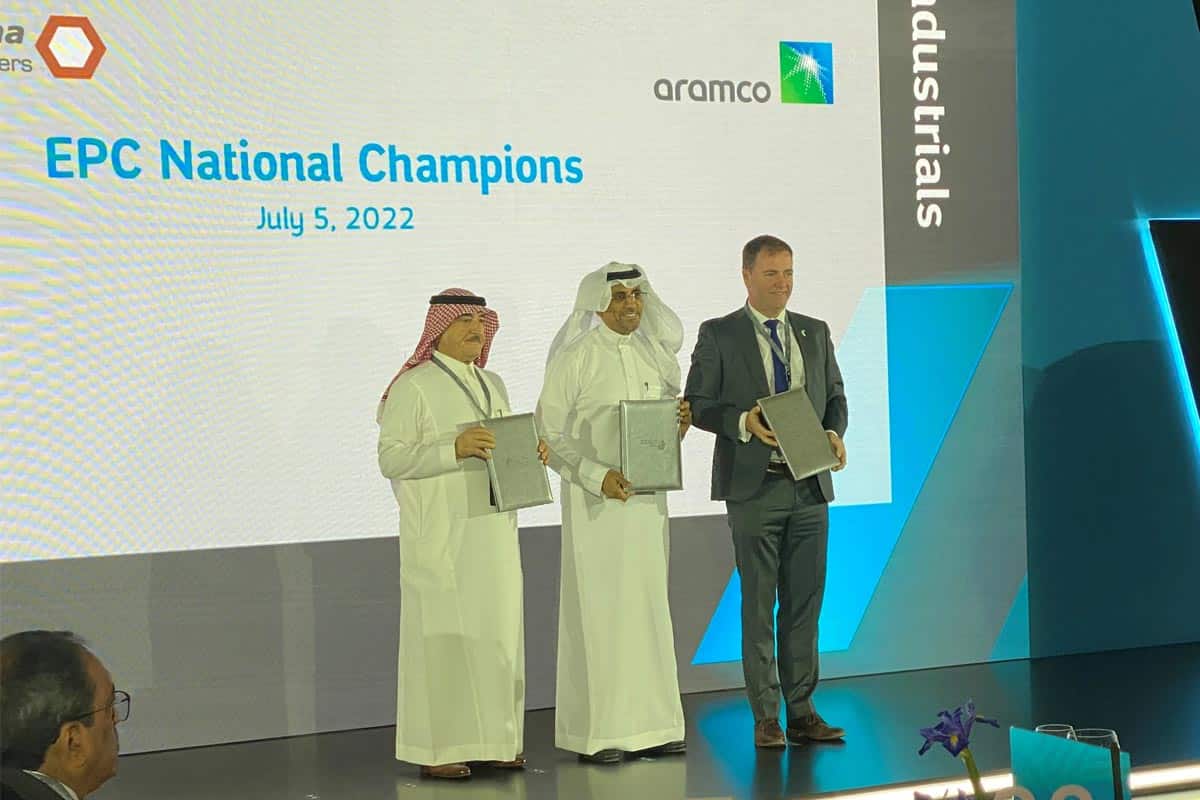
NesmaKent Energy Company , the joint venture between Saudi Arabia’s Nesma & Partners and the international engineering firm Kent, has secured a significant project management consultancy contract with Saudi Aramco. This contract marks a milestone for NKJV, positioning the partnership as a crucial player in the kingdom’s energy infrastructure development amid expanding ambitions in the energy sector.

The PMC contract involves comprehensive project oversight and management services for one of Saudi Aramco’s large-scale energy initiatives. NKJV’s responsibilities will span across planning, execution monitoring, quality control, cost management, and ensuring adherence to safety and environmental standards. This contract is part of Aramco’s broader strategy to engage specialised joint ventures that combine local expertise with international engineering standards, reinforcing Saudi Arabia’s Vision 2030 objectives to diversify and modernise its energy sector.

Nesma & Partners, well-established for its construction and engineering projects within the kingdom and region, has brought extensive local market knowledge and regulatory experience to the partnership. Kent, recognised for its global engineering and project consultancy portfolio, contributes advanced technical capabilities and international project management best practices. Together, the joint venture is expected to deliver high-quality consultancy services that meet Aramco’s stringent operational and environmental benchmarks.

The contract signals the growing trend among Saudi energy entities to engage collaborative partnerships that marry domestic strengths with foreign technological expertise. This aligns with the kingdom’s policy to increase localisation and private sector participation in mega projects. NKJV’s role as a PMC will extend beyond traditional supervisory functions, encompassing risk mitigation, technical advisory, and integration of innovative engineering solutions aimed at optimising project delivery and operational efficiency.

Saudi Aramco’s selection of NKJV follows a competitive tender process where multiple firms vied for the contract. The award underscores Aramco’s confidence in NKJV’s combined capabilities and track record. The project itself forms part of a wider portfolio of energy infrastructure investments by Aramco, which include enhancements in oil production facilities, downstream expansions, and renewable energy projects as the company transitions towards sustainable energy sources.

NesmaKent Energy’s contract exemplifies the shifting dynamics within the Saudi energy sector, where engineering consultancy and project management are gaining prominence as critical factors in successful project execution. The emphasis on specialised joint ventures highlights the kingdom’s commitment to leveraging cross-border partnerships to accelerate technological transfer and capacity building.

Industry experts note that the contract reinforces the strategic positioning of Nesma & Partners and Kent in the Middle East’s energy market. Nesma’s long-standing presence in Saudi Arabia has enabled it to navigate complex regulatory environments and develop robust relationships with government entities and private sector clients. Kent’s engineering pedigree, with a portfolio spanning oil and gas, petrochemicals, and infrastructure, complements Nesma’s regional experience with global standards.

The joint venture’s involvement in this Aramco project is expected to generate significant employment opportunities and skill development programmes in line with Saudi Arabia’s localisation agenda, known as Saudisation. NKJV plans to incorporate training modules and knowledge transfer frameworks to build local competencies in project management and engineering consultancy.

The energy project under NKJV’s management consultancy contract is critical to Aramco’s operational goals, encompassing upgrades to production capacity and the integration of advanced monitoring and control technologies. These developments are part of Aramco’s efforts to maintain its position as the world’s leading energy producer while adapting to evolving global energy demands and environmental regulations.

The scope of NKJV’s mandate also includes coordinating with multiple contractors, subcontractors, and regulatory bodies to ensure seamless execution. This requires a high level of technical expertise, project coordination skills, and compliance with international safety and quality certifications. NKJV’s approach reportedly emphasises sustainability and innovation, incorporating digital tools such as Building Information Modelling and real-time project analytics to enhance transparency and decision-making.

As Saudi Arabia intensifies its focus on energy diversification, including the expansion of renewable energy projects alongside traditional hydrocarbon investments, the expertise of joint ventures like NKJV will be crucial. Their ability to deliver complex projects efficiently and within budget will be pivotal in meeting the kingdom’s long-term strategic targets.

NesmaKent Energy’s success in securing this contract may open doors for further collaborations between Saudi and international firms in the energy consultancy sector. This contract reflects a broader trend of joint ventures becoming key conduits for technology transfer and knowledge exchange in the Gulf’s infrastructure and energy projects.

Lithuania’s Astrolight has secured €2.8 million in seed funding to advance its laser-based communication systems, aiming to establish a high-speed, secure optical data highway between satellites and Earth. This investment underscores the growing confidence in optical communication technologies as a superior alternative to traditional radio frequency systems. Astrolight’s flagship product, the ATLAS terminal, is engineered to facilitate data transmission from low Earth orbit satellites to ground stations […]

The African Development Bank has successfully issued a €1 billion five-year social bond, maturing in May 2030, with a fixed annual coupon of 2.500%. This benchmark transaction, aligned with the Bank’s Sustainable Bond Framework, aims to finance projects that promote inclusive growth and social development across its regional member countries. The issuance attracted robust investor interest, with the order book exceeding €1.5 billion, reflecting strong demand from […]

Uganda has formalised an $800 million financing agreement with the Islamic Development Bank to support a suite of infrastructure projects aimed at bolstering the country’s trade capabilities and economic integration within East Africa. The agreement, signed during the IsDB’s annual meeting in Algiers, encompasses investments in railway development, health, transport, and energy sectors. A significant portion of the funding is earmarked for the development of a railway […]

Greenlogue/AP Alt Carbon, a climate-tech startup based in Bengaluru, has raised $12 million in seed funding to expand its carbon dioxide removal operations across South Asia. The funding round was led by Lachy Groom, co-founder of robotics AI firm Physical Intelligence, with participation from existing investors including Shastra VC and ACT Capital Foundation. Founded by siblings Shrey and Sparsh Agarwal, Alt Carbon employs enhanced rock weathering to […]

Bitcoin Suisse, a pioneering Swiss crypto-financial services firm, has obtained regulatory approval to operate in Abu Dhabi, marking its inaugural venture beyond Europe since its establishment in 2013. This development underscores the United Arab Emirates’ emergence as a magnet for global digital asset enterprises.

The Abu Dhabi Global Market , the emirate’s international financial centre, granted the licence, enabling Bitcoin Suisse to offer its suite of crypto services within the region. This move aligns with the company’s strategy to tap into the Middle East’s burgeoning demand for regulated digital asset solutions.

Andrej Majcen, CEO of Bitcoin Suisse, emphasized the significance of this expansion, stating that the company’s Swiss heritage and decade-long experience position it well to serve the Middle Eastern market. He highlighted the UAE’s progressive regulatory framework and its commitment to fostering innovation in the financial sector as key factors influencing the decision.

Abu Dhabi has been proactive in establishing itself as a hub for digital assets, attracting a slew of international crypto firms. The ADGM’s introduction of comprehensive digital asset regulations in 2018 has been instrumental in this regard, providing clarity and fostering investor confidence.

Several notable crypto entities have set up operations in Abu Dhabi, including Standard Chartered-backed Zodia Markets, which received regulatory approval to operate as a virtual asset brokerage. Similarly, Singapore-based custody provider Liminal secured permission to offer its services in the region, reflecting a broader trend of global crypto firms gravitating towards the UAE.

The UAE’s appeal lies not only in its regulatory environment but also in its strategic location and robust infrastructure. The government’s initiatives to diversify the economy and invest in fintech have created a conducive ecosystem for digital asset companies.

Bitcoin Suisse’s entry into the Abu Dhabi market is expected to catalyze further growth in the region’s digital asset sector. The company’s comprehensive offerings, ranging from trading and custody to staking and tokenization, will cater to a diverse clientele, including institutional investors and high-net-worth individuals seeking regulated crypto services.

This expansion also signifies a broader shift in the global crypto landscape, with firms increasingly seeking jurisdictions that offer regulatory clarity and support for innovation. The UAE’s proactive stance positions it as a leading destination for such enterprises, potentially setting a benchmark for other regions aiming to attract digital asset businesses.

Zawos Group, a prominent business conglomerate in Oman, has entered into a definitive agreement to acquire NMC Healthcare LLC Oman and Elegant Medical Center Oman. The transaction encompasses two hospitals and six clinics and aesthetic centres, marking a significant development in the Sultanate’s healthcare sector. The acquisition is subject to customary closing conditions and is anticipated to be finalised within the next two months. Upon completion, NMC […]

AI security solution integrated with NVIDIA Enterprise AI Factory validated design HONG KONG SAR – Media OutReach Newswire – 19 May 2025 – Trend Micro Incorporated (TYO: 4704; TSE: 4704), a global cybersecurity leader, today announced its bringing powerful and simplified security capabilities to NVIDIA Enterprise AI Factory validated design, helping organizations worldwide safely transform their business with next-gen AI infrastructure. Eva Chen, Co-Founder and CEO at […]

The United Arab Emirates has finalised a significant agreement with the United States to import advanced American-made artificial intelligence semiconductors, marking a pivotal step in Abu Dhabi’s ambition to become a global AI hub. The deal, announced during President Donald Trump’s Gulf tour, permits the UAE to import 500,000 Nvidia H100 chips annually, facilitating the development of large-scale data centres in the region.

This agreement coincides with the UAE’s broader commitment to invest $1.4 trillion in the U.S. over the next decade, focusing on sectors such as AI infrastructure, semiconductors, energy, and manufacturing. The investment framework includes partnerships with major U.S. companies like BlackRock, Microsoft, and Global Infrastructure Partners, aiming to mobilise up to $100 billion for next-generation data centres and energy infrastructure.

A key component of the deal is the construction of a 10-square-mile, 5-gigawatt data centre in Abu Dhabi, led by Emirati firm G42 and involving several U.S. tech companies. This facility is set to be the largest of its kind outside the United States, significantly enhancing the UAE’s data processing capabilities and supporting its AI initiatives.

The agreement also includes substantial U.S. investments in the UAE, with American energy companies expected to invest in upstream oil and gas and unconventional energy projects. Top U.S. firms such as ExxonMobil, Oxy, and EOG Resources are involved in these initiatives, reflecting a deepening of bilateral energy ties.

President Trump’s Gulf tour, which included visits to Saudi Arabia, Qatar, and the UAE, focused on securing financial commitments from wealthy energy producers to boost the U.S. economy and create jobs. The UAE’s pledge to increase its energy sector investments in the United States to $440 billion by 2035, up from the current $70 billion, underscores the success of this diplomatic effort.

The UAE’s strategic shift towards the U.S. in technology and energy sectors is seen as a move to decouple from Chinese influence, particularly in AI. Emirati officials have explicitly pursued this realignment to secure U.S. technology transfers, including advanced semiconductors like Nvidia’s H100 GPUs. This pivot follows U.S. pressure to remove Chinese equipment from critical infrastructure, exemplified by G42’s removal of Huawei technology from its data centres.

The $1.4 trillion investment framework also encompasses initiatives in critical minerals and industrial capacity. The UAE’s $1.2 billion mining partnership with Orion Resource Partners targets lithium, cobalt, and rare earth metals essential for AI hardware and renewable energy systems. Additionally, Emirates Global Aluminum plans to build the first new aluminum smelter in the U.S. in 35 years, aiming to nearly double the country’s domestic production.

Greenlogue/AP Abu Dhabi Future Energy Company PJSC – Masdar has successfully raised $1 billion through its latest green bond issuance, marking a significant step in its commitment to expanding renewable energy initiatives globally. The issuance, structured in two equal tranches of $500 million with maturities of five and ten years, attracted substantial investor interest, culminating in an order book that peaked at $4.6 billion, reflecting an oversubscription […]

Oregon State University’s Open Source Lab , a cornerstone of the global open-source ecosystem, has averted closure after securing critical funding. The lab is now poised to embark on a comprehensive infrastructure overhaul aimed at long-term sustainability. Facing a $250,000 funding shortfall that threatened its operations, OSUOSL launched an urgent appeal to the open-source community. The response was swift and substantial, with contributions from individual donors, corporate […]

The United States has approved a $1.4 billion arms sale to the United Arab Emirates, encompassing six CH-47F Chinook helicopters and maintenance support for F-16 fighter jets. This development coincides with President Donald Trump’s diplomatic visit to the Middle East, highlighting the strengthening of US-UAE defense relations. The CH-47F Chinook helicopters, produced by Boeing, are renowned for their heavy-lift capabilities and versatility in various military operations. The […]

Cryptocurrency derivatives trading platform Flipster has entered the esports arena by securing naming rights for Talon Esports’ Dota 2 team, which will now compete under the moniker Flipster Talon. This strategic partnership marks a significant move for both entities, aligning a rising crypto exchange with one of Southeast Asia’s premier esports organisations.

The agreement grants Flipster prominent branding across team jerseys, digital platforms, and in-game identifiers. The rebranded team is set to make its debut at BLAST Slam II, a major Dota 2 tournament featuring a $1 million prize pool, scheduled to commence on 4 February 2025. This event will serve as a litmus test for the newly formed alliance’s impact on competitive performance and market visibility.

Talon Esports has undergone a significant transformation following a disappointing run at The International 2024. The organisation parted ways with its entire Dota 2 roster, including notable players such as Nuengnara “23savage” Teeramahanon and Rafli “Mikoto” Rahman. In their place, Talon has assembled a new lineup featuring seasoned players Carlo “Kuku” Palad and John Anthony “Natsumi” Vargas, under the guidance of head coach Park “March” Tae-won. This overhaul aims to revitalise the team’s competitive edge and reestablish its dominance in the Southeast Asian Dota 2 scene.

The partnership with Flipster is part of Talon Esports’ broader strategy to diversify its sponsorship portfolio. Previously, the organisation has secured deals with various brands, including gaming peripherals company SteelSeries and betting firms such as 1xBet and M88 Mansion. These collaborations have not only provided financial support but also enhanced Talon’s brand presence across multiple platforms.

Flipster’s foray into esports sponsorship reflects a growing trend of cryptocurrency companies seeking to engage with younger, tech-savvy audiences through gaming partnerships. By aligning with Talon Esports, Flipster aims to increase its brand recognition and tap into the expansive reach of the esports community. This move also underscores the increasing convergence between digital finance and competitive gaming, as both industries continue to evolve and intersect.

SINGAPORE – Media OutReach Newswire – 5 May 2025 – Co-Axis, a digital impact marketplace connecting funders with impact opportunities advancing the UN SDGs, has secured S$1.25 million in catalytic capital from the Richardson Family (RF), a UK based family office, and Catalytic Capital for Climate and Health (C3H), a catalytic vehicle by Temasek Trust, to support and scale solutions in climate, health, and their intersection. RF […]

DP World has successfully raised $1.5 billion via a 10-year green sukuk, priced at 145 basis points over U.S. Treasuries with a 5.5% coupon rate. The issuance attracted orders exceeding $3.3 billion, underscoring investor confidence in the company’s financial health and sustainability initiatives. The sukuk, set to be issued on May 8, 2025, under Regulation S and Rule 144A, is facilitated through DP World Crescent Limited, a […]

Advancing Asset Management and Structured Products Offering HONG KONG SAR – Media OutReach Newswire – 28 April 2025 – Victory Securities today announced that it has officially obtained two significant regulatory consent from the Securities and Futures Commission (SFC) of Hong Kong to provide virtual asset (VA)-related products and services: 1) provision of discretionary account management services (DAMS) to retail and professional investors, investing in spot VA, […]

KuCoin has officially launched its cryptocurrency exchange in Thailand after receiving full approval from the country’s Securities and Exchange Commission , positioning itself as the ninth licensed digital asset platform in the nation. Operating under the rebranded entity KuCoin Thailand, formerly known as ERX Company Limited, the exchange aims to deliver a locally tailored trading experience while leveraging KuCoin’s global infrastructure.

The platform offers support for Thai baht transactions, cryptocurrency trading, and services in the Thai language. Existing ERX users have been seamlessly migrated to the new system, accessible via the KuCoin Thailand website and mobile applications on both Android and iOS platforms.

Thailand’s crypto exchange landscape is becoming increasingly competitive, with KuCoin joining established players such as Bitkub Online, Gulf Binance, Upbit Exchange, and WAAN Exchange. Bitkub currently dominates the market with a daily trading volume of approximately $70 million, according to data from CoinGecko. In contrast, KuCoin’s global platform reports a daily volume of $3.8 billion, indicating its substantial presence in the international market.

Despite its global stature, KuCoin faces significant challenges in penetrating the Thai market. The country’s regulatory environment is stringent, particularly concerning the use of digital assets for payments, which the Bank of Thailand banned in 2022. While trading is permitted, authorities have intensified scrutiny on peer-to-peer crypto services operated from abroad to combat scams and money laundering.

VISHNU RAJA
RYO YAMADA
HITORI GOTOH
IKUYO KITA