News related to
smart

Greenlogue/AP Green GSM Philippines has secured a strategic financing and digital banking partnership with Philippine National Bank, giving the all-electric ride-hailing operator fresh support for fleet expansion, driver payroll and nationwide growth as the Philippines accelerates its shift towards cleaner urban transport. The partnership centres on P2 billion in credit facilities extended by PNB to finance the acquisition of electric vehicles and support working capital requirements. The […]

MANILA, PHILIPPONES – Media OutReach Newswire – 1 June 2026 – Green GSM Philippines and Philippine National Bank (PNB) officially announced a strategic partnership in financial and digital banking services to support the operations and expansion of Green GSM’s all-electric ride-hailing ecosystem in the Philippines. The agreement marks the next step in Green GSM’s strategy to develop the infrastructure supporting its electric mobility model, as the company continues to expand across major urban areas and gradually build a sustainable long-term operating ecosystem in the Philippine market.

Mr. Edwin R. Bautista, President and Chief Executive Officer of Philippine National Bank (third from left); Ms. Thuy Vu Dropsey, Chief Corporate Development & Strategic Finance Officer at Vingroup (third from right); and Mr. Dao Quy Phi, Managing Director of Green SM Southeast Asia (far right), together with representatives of the parties at the partnership signing ceremony between Green GSM and Philippine National Bank. Under the partnership, PNB provided a PHP 2 billion credit facility to support Green GSM's operational expansion and fleet growth in the Philippines. The facility supported Green GSM's fleet expansion and operating capacity in the Philippines.
Mr. Edwin R. Bautista, President and Chief Executive Officer of Philippine National Bank (third from left); Ms. Thuy Vu Dropsey, Chief Corporate Development & Strategic Finance Officer at Vingroup (third from right); and Mr. Dao Quy Phi, Managing Director of Green SM Southeast Asia (far right), together with representatives of the parties at the partnership signing ceremony between Green GSM and Philippine National Bank. Under the partnership, PNB provided a PHP 2 billion credit facility to support Green GSM’s operational expansion and fleet growth in the Philippines. The facility supported Green GSM’s fleet expansion and operating capacity in the Philippines.

Alongside the credit facility, the two parties also implemented digital account management and payment systems for Green GSM’s driver network. Through PNB’s corporate banking platform and digitized onboarding processes, account opening and activation times are significantly reduced, helping Green GSM strengthen operational management as it expands driver network.

As cities continue to seek lower-emission transport solutions, financial systems, digital payments, driver management and operating standards are becoming increasingly important to supporting mobility platforms at scale.

In the Philippines, Green GSM is building mobility model through the integration of technology, an all-electric fleet, and standardized operating systems. Following its strategic partnership with Xentro Group in 2025 and the launch of the Green Xentro fleet in Rizal earlier this year, the company continues to expand its presence through long-term collaborations with local partners and domestic financial institutions.

“We appreciate Green GSM’s long-term development direction in the Philippines, not only in advancing low-emission mobility, but also in the way the company is building an operating model with scalability and clear governance foundations,” said Mr. Edwin R. Bautista, President and Chief Executive Officer of PNB. “The transition toward sustainable transport will require ecosystems capable of supporting stable long-term growth, together with the financial and operational foundations needed to enable that expansion.”

Ms. Le Thi Thu Trang, Chief Executive Officer of Green GSM Philippines, said: “For Green GSM, developing an all-electric mobility model is not only about expanding the fleet, but also about building an operating system that is stable, standardized, and capable of sustainable long-term growth. Our partnership with PNB will help strengthen the financial and operational foundations needed to enhance service quality and support Green GSM’s continued expansion in the Philippines.”

Green GSM develops its all-electric mobility model through the combination of technology, standardized operating systems, and professionally trained drivers. The platform is supported by real-time monitoring and operational systems designed to maintain service consistency across major urban areas.

The partnership with PNB further reinforces Green GSM’s long-term direction in the Philippines, where the company continues to strengthen its operating foundations, service standards, and driver support systems in order to maintain service quality as operations scale further.

Hashtag: #GreenSM

The issuer is solely responsible for the content of this announcement.

About GSM & Green SM

GSM (Green Smart Mobility) is a pioneering multi-platform company operating all-electric ride-hailing services. With a focus on sustainable transport development, GSM operates a mobility model powered entirely by VinFast electric vehicles, combining technology, service standards, and operational ecosystems to support the future of low-emission urban mobility.

Green GSM is GSM’s official brand in the Philippines and is part of the broader Green SM global ecosystem, alongside Xanh SM in Vietnam and Laos, and Green SM in Indonesia. Across all markets, the brand focuses on delivering modern mobility experiences through VinFast electric vehicles, professional drivers, and operating systems built around safety, consistency, and service quality.

About Philippine National Bank (PNB)

Philippine National Bank (PNB) is one of the Philippines’ largest private commercial banks in terms of assets and deposits. The bank provides a full range of financial and banking services to individual customers, businesses, institutions, and overseas Filipino communities. With a history spanning more than a century, PNB continues to focus on growth strategies driven by digital transformation, operational efficiency, and sustainable development in the financial sector.

SoftBank Group has overtaken Toyota Motor as Japan’s most valuable company, underlining a sharp shift in investor preference from the country’s traditional manufacturing champions towards businesses seen as central to the global artificial intelligence build-out.

Shares in Masayoshi Son’s technology investment group surged in Tokyo trading, lifting its market value to about ¥47.2 trillion, or roughly $296 billion, ahead of Toyota’s ¥45.7 trillion after the carmaker’s stock fell nearly 5 per cent. The move placed SoftBank at the top of Japan’s corporate valuation table for the first time in more than two decades and added momentum to a Nikkei 225 rally that pushed the index above 67,000.

The change is more than a stock-market milestone. It reflects how the AI boom has reshaped capital allocation in Japan, where investors are assigning higher value to companies with exposure to semiconductors, data centres, power infrastructure and generative AI platforms. Toyota remains one of the world’s largest and most profitable carmakers, but its valuation is now being weighed against a slower earnings outlook, tariff pressure, currency swings and the heavy cost of electrification.

SoftBank’s advance has been driven by a powerful combination of portfolio gains and expectations that its AI-linked holdings could generate fresh liquidity. The group’s exposure to Arm, the British chip-design company it took public in 2023, has become a key pillar of its market value. Arm’s technology is used widely across smartphones, cloud computing and increasingly AI-related chips, giving SoftBank a central position in the semiconductor supply chain.

OpenAI has become the second major driver of investor attention. SoftBank has committed tens of billions of dollars to the ChatGPT developer and is positioning itself as a core financier of AI infrastructure. Expectations that OpenAI could move towards a public listing have intensified interest in SoftBank’s asset base, even as analysts continue to debate how much of the group’s valuation depends on private-market pricing and future monetisation.

The latest surge followed SoftBank’s plan to invest up to €75 billion in AI infrastructure in France, including data centres and power-intensive computing capacity. The first phase is expected to involve about €45 billion of investment to build 3.1 gigawatts of capacity by 2031, with further expansion potentially taking the total to 5 gigawatts. The project places France at the centre of Europe’s push to develop sovereign AI infrastructure, helped by its nuclear-heavy power system and available industrial sites.

SoftBank is also moving to create public-market vehicles around AI infrastructure. SB Energy, its power and data-centre platform, is preparing for a potential US listing and has been linked to a valuation above $50 billion. The company is involved in large-scale power projects designed to support AI workloads, including a 1.2-gigawatt data-centre development in Texas. A separate robotics venture, Roze, is also being prepared for a possible listing, highlighting SoftBank’s attempt to build an ecosystem around energy, construction automation and computing capacity.

Toyota’s fall in ranking does not signal operational weakness. The carmaker reported operating income of ¥3.8 trillion for the financial year ended March 2026, supported by vehicle sales and pricing power despite tariff costs and rising expenses. It remains a global force in hybrid technology, production efficiency and supply-chain management. However, investors have become more cautious about its growth outlook as the auto sector faces higher regulatory costs, slower battery-electric vehicle adoption in some markets, and intensifying competition from China-based manufacturers.

The contrast between SoftBank and Toyota captures a broader reordering of Japan’s equity market. AI-linked names, chip suppliers and infrastructure companies are drawing strong inflows, while parts of the auto sector and older industrial groups face questions over margin durability. Kioxia, the memory-chip maker, has also climbed sharply this year, showing how investor enthusiasm has spread beyond SoftBank into companies tied to storage and high-performance computing.

The rally has strengthened the profile of Son, whose investment record has swung between spectacular gains and painful losses. SoftBank’s Vision Fund suffered heavy write-downs after the collapse in technology valuations in 2021 and 2022, while earlier bets such as WeWork damaged confidence in the group’s risk controls. Its comeback has been powered by a more concentrated AI narrative, but that also leaves the shares vulnerable if expectations around OpenAI, Arm or infrastructure listings are revised lower.

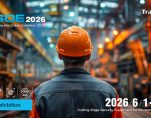
TAIPEI, TAIWAN – Media OutReach Newswire – 1 June 2026 – Asian Safety & Security Online Exhibition 2026 (ASSOE 2026) officially opens today, launching a five-month online exhibition dedicated to the global safety and security industry. Running through October 31, 2026, the exhibition connects international buyers with qualified suppliers across a wide range of safety, security, industrial protection, workplace safety, and smart security sectors.

新聞稿圖片 en 1200x628

Organized jointly by AsianNet and the global B2B marketplace TradeAsia (www.e-tradeasia.com), ASSOE 2026 provides suppliers with long-term international exposure while helping buyers efficiently discover products, compare suppliers, and submit sourcing inquiries online. Through TradeAsia’s B2B matchmaking platform, the exhibition supports cross-border procurement opportunities and strengthens business connections between global buyers and Asian manufacturers.

Expanding International Sourcing Opportunities Through Global Industry Exposure

To increase global visibility and sourcing opportunities, ASSOE 2026 aligns its exhibition period with several major international industry events, including INTERSCHUTZ 2026, Expo Seguridad México, NSC Safety Congress & Expo, SECURITY ESSEN, and FISP. By running alongside major international industry exhibitions, ASSOE 2026 helps increase global exposure for participating suppliers and creates more sourcing opportunities for international buyers.

Through the ASSOE 2026, buyers can review supplier information, browse product catalogs, and directly contact exhibitors for sourcing inquiries. ASSOE 2026 helps suppliers increase global exposure while giving buyers convenient access to qualified manufacturers and a wide range of safety and security solutions.

Comprehensive Product Categories Across the Safety & Security Industry

The exhibition also features a strong lineup of participating suppliers and manufacturers from across Asia’s safety and security industry. International buyers can explore products and sourcing solutions presented by companies including A-BELT-LIN INDUSTRIAL, PAN TAIWAN ENTERPRISE, DORIS INDUSTRIAL, MODERN AUTO, JI JUSTNESS INDUSTRIAL, CLEVER INTELLIGENCE UNITY, PERFECT MEDICAL INDUSTRY, LITEFILM TECH, ET&T TECHNOLOGY, FORMOSA GLOVE INDUSTRIAL, YAU YOUNG AUTO PARTS and HARCO ENTERPRISE.

These exhibitors showcase a diverse range of products and applications covering smart security technologies, industrial safety equipment, protective products, automotive safety solutions, access control systems, and related safety and security applications.

Supporting Global B2B Trade Through Digital Sourcing Solutions

Powered by TradeAsia’s B2B platform, ASSOE 2026 provides exhibitors with online product showcases, supplier profiles, and digital e-catalogs designed to increase international exposure and sourcing opportunities.

International buyers can browse products and communicate with suppliers online regardless of location or time zone, making it easier to compare products, evaluate supplier capabilities, and submit inquiries efficiently. The exhibition’s long-term online format also enables participating companies to maintain continuous visibility throughout the five-month exhibition period.

By integrating online sourcing, digital promotion, and buyer-supplier matchmaking services, ASSOE 2026 creates an efficient environment for global B2B trade and international procurement across the safety and security industry.

Start Sourcing Now

Explore suppliers, discover products, and connect directly with exhibitors through the official ASSOE 2026 online exhibition platform:
https://www.etradeasia.com/online-show/46/Asian-Safety-Security-Online-Exhibition-2026.html

Hashtag: #TradeAsia

The issuer is solely responsible for the content of this announcement.

About TradeAsia

The web-based marketplace located at functions as an essential vehicle for global B2B matchmaking by prioritizing transactional outcomes for procurement professionals and corporate vendors worldwide. This expansive network unifies an extensive audience of millions of registered buyers alongside more than 600,000 active manufacturing entities within a constantly evolving product database. Beyond its digital architecture, the enterprise leverages formal partnerships with hundreds of transnational trade federations and industrial expo organizers. This strategic framework merges cloud-based positioning with on-site promotional operations to optimize international market penetration and drive high-impact marketing results across geopolitical boundaries.

header

BUDAPEST, HUNGARY – Media OutReach Newswire – 31 May 2026 – The 2025/26 UEFA Champions League Final has drawn to a spectacular close in Budapest, with Paris Saint-Germain emerging victorious to lift the legendary trophy. As an official partner of the UEFA Champions League for four consecutive years, global technology brand OPPO joined the celebrations to mark the end of another action-packed season supporting football development and football culture worldwide with technology. With its advanced camera technology and Make Your Moment philosophy, OPPO has enabled millions of football fans worldwide to capture highlights and record life-defining moments both inside and outside the stadium this season, inspiring everyone to Take Your Shot with OPPO.

Legendary moments on the pitch shot on OPPO

Telephoto Camera & AI Take Match Viewing to a New League

At the event in Budapest, OPPO showcased its latest telephoto camera technology and AI innovations in an immersive exhibition featuring the latest flagship Find X series—including the newly launched OPPO Find X9 Ultra—alongside the Find N foldable series and the Reno series. Equipped with a Hasselblad-powered 10x optical telephoto zoom, the OPPO Find X9 Ultra enables fans to capture detailed stadium moments with remarkable clarity, even from the upper tiers, while 8K ultra-clear video recording and advanced AI imaging capabilities make it easier than ever to capture decisive match moments, including game-winning shots, as if standing on the sidelines. Through the comprehensive end-to-end image ecosystem, OPPO Find X9 Ultra users can also share footages at near to original image quality across social platforms instantly. From high-resolution capture, smart editing, to lossless sharing, OPPO makes it effortless to Take Your Shot and Make Your Moment with exciting match moments preserved in vivid detail.

OPPO's activities in Budapest
OPPO’s activities in Budapest

Empowering Global Football Development and Igniting Passion Worldwide

Beyond the pitch, OPPO continues to support football development through innovation and partnership programs, using its advanced smartphone imaging capabilities to help fans around the world capture iconic match moments and share the passion and emotion of the game. In collaboration with Discovery, OPPO has produced a UEFA Champions League short film that showcases the emotional power of football told through real fan stories, using OPPO imaging technology to bring the spirit of the game to audiences globally.

Over the past year, OPPO has also launched a range of football partnerships and community initiatives around the world. In Indonesia, OPPO became the official smartphone partner of the BRI Super League for the 2025–2027 season, supporting the continued development of football in the country. Meanwhile in Mexico, as the official sponsor of football club Gambeta FC, OPPO supported the club’s youth academy through equipment donations, scholarship programs, tournament organization, talent development initiatives, and professional coaching resources. Through these efforts, OPPO is helping players of different ages to develop their talent and chase their dreams of becoming professional football players while continuing to support and inspire a shared passion for football across communities worldwide.

In May 2026, OPPO Colombia announced football star Luis Díaz as its official brand ambassador. As part of the partnership, OPPO teamed up with the Luis Díaz Foundation to launch the “Lucho por Colombia (Fight for Colombia)” social responsibility initiative. The program provides smart connected devices and support for digital skills training centers across Colombia’s La Guajira region, helping expand access to digital education in local communities. Through collaborations with the football star, alongside other public welfare initiatives and continued product innovation, OPPO continues to strengthen its connection with local communities and further expands its presence across Latin America under its long-term commitment to the market.

Beyond these social and community welfare initiatives, OPPO has also launched a number of football-themed events that bring the brand and football fans closer together worldwide through a shared passion for football. On the eve of the UEFA Champions League final, OPPO invited football legends Theo Walcott and Claude Makélélé to join a 5v5 friendly match in Budapest, where the legends shared skills, career experiences, and discussed their perspectives on the game with fans. Key moments throughout the match were captured using OPPO’s latest flagship smartphone, the OPPO Find X9 Ultra, with every pass, shot, and interaction recorded in vivid detail through the device’s advanced imaging capabilities.

Theo Walcott and Claude Makélélé joined fans for a friendly 5v5 game

Inspiring Young Creators and Championing Football Culture

Ahead of the final, OPPO partnered with Discovery Channel to launch the Filmmaker Accelerator Program. With mentorship from Discovery, the initiative encourages aspiring creators to capture diverse stories using OPPO imaging technology, helping to support young creators globally. With football culture as one of the program’s core themes, OPPO is not only empowering the next generation of creators with a platform for expression but also enriching stories around football culture through these diverse perspectives, taking the spirit of football beyond borders to connect with broader audiences worldwide. As part of the program, a special documentary video exploring football culture is set to premiere worldwide at the end of June 2026.

As another sensational UEFA Champions League season comes to an end, OPPO looks forward to continuing to use its world-leading innovation to bring football fans around the world more powerful and user-friendly technology that enables everyone to Make Your Moment by capturing football highlights both on and off the pitch. In the meantime, OPPO will continue to deepen its long-term partnerships with global football institutions, promoting new ways of expressing and sharing football culture as it takes the game to the next level worldwide.

Hashtag: #OPPO

The issuer is solely responsible for the content of this announcement.

BYD has moved to reassure drivers over assisted-driving safety by pledging to cover some crash-related losses linked to its God’s Eye system, a step that could reshape expectations in China’s fast-moving smart-vehicle market while leaving key liability limits firmly in place. The Shenzhen-based carmaker said users of God’s Eye A, God’s Eye B and God’s Eye 5.0 would receive one year of cover for accidents occurring while […]

China-linked hacking groups have used the Middle East war to intensify cyber-espionage attempts against maritime, energy and political targets across the Gulf, exposing how regional conflict is being turned into an intelligence-gathering opportunity for rival powers. The activity, tracked between October 2025 and March 2026, shows threat actors aligned with Beijing moving quickly around geopolitical shocks, particularly after the escalation involving Iran from late February. Maritime affairs, […]

Advertisements

Spotify has expanded its mobile app with playlist folders, bulk editing, queue management, reshuffle controls and background downloads, marking one of its most practical upgrades for listeners who organise large music, podcast and audiobook libraries on phones. The update brings several desktop-style controls to iOS and Android, with playlist folders and in-playlist bulk actions being rolled out globally to all users. Premium subscribers gain additional tools, including […]

Arabian Post Staff -Dubai Sony’s Bravia 7 II has emerged as one of the clearest signs yet that RGB LED television technology is moving from demonstration floors into premium living rooms, with the company using its latest 4K HDR set to challenge OLED’s colour reputation while retaining the brightness advantage of advanced LED displays. The new television sits below the flagship Bravia 9 II but carries the […]

Over 80% Optimistic About Overseas Trade, Yet Tariffs and Costs Pose Key Hurdles

HONG KONG SAR – Media OutReach Newswire – 29 May 2026 – To support small and medium-sized enterprises (SMEs) in expanding into international markets, the Hong Kong Productivity Council (HKPC) and DHL Express Hong Kong (DHL) will co-host the “Blueprint for Global Expansion: Market Entry, Logistics & Risk Management” Forum on 12 June.

Amid an increasingly complex and rapidly evolving global supply chain landscape, the forum will delve into market strategies, logistics optimization, and risk management —equipping local businesses with the insights needed to navigate challenges and capture opportunities in global trade. As the first SME-focused forum jointly launched by HKPC and DHL, the initiative marks the beginning of a series of collaborative efforts to share practical expertise and support businesses in strengthening their international presence.

From Data to Strategy: Addressing the Three Key Barriers for SMEs Going Global
According to the latest quarterly “DHL Hong Kong Air Trade Leading Index (DTI)” survey, commissioned by DHL and conducted by HKPC, the primary challenges faced by enterprises expanding overseas are: “Complex tariff and customs clearance procedures” (23%), “High logistics and delivery costs” (20%) and “lack of local sales channels/ business partners” (12%). Despite these hurdles, over 85% of air traders remain neutral or positive about overseas trade prospects. In terms of readiness, 68% of respondents reported moderate confidence, while a further 18% showed high confidence, indicating a pragmatic and risk-aware approach among businesses pursuing global expansion.

In light of these findings, the forum will address the three critical dimensions of market, logistics, and risk management, offering professional guidance and targeted resources to help SMEs formulate immediate and actionable go-global strategies.

Andy Chiang, Senior Vice President and Managing Director, DHL Express Hong Kong and Macau, said, “DHL has long been committed to supporting SMEs in navigating the complexities of international trade. Through our GoTrade programme, we provide practical tools and expertise to help businesses manage cross-border logistics and customs processes more effectively. Our collaboration with HKPC focuses on equipping SMEs with actionable insights and strengthening their operational capabilities for global expansion. We look forward to continuing our partnership to deliver knowledge-sharing and networking opportunities that empower businesses to grow internationally with confidence.”

Three Thematic Sessions: A Comprehensive Global Expansion Blueprint for SMEs
The forum is specifically designed to address the pain points identified in the survey, featuring three expert speakers offering targeted insights:

○ Professor Roy Liang TAN, Practitioner Professor of Management and Business Strategy at the HKU Business School will provide an in-depth analysis of how to assess target market maturity, avoid common pitfalls, and leverage government funding schemes to optimise financial planning — transforming the go-global vision into a concrete action plan.

○ Ms Julian Tsoi, Director, Marketing Communications and Direct Sales, DHL Express Hong Kong, will share insights on how businesses can leverage global logistics networks and technology to enhance customs clearance efficiency and improve operational performance, while navigating the complexities of cross-border logistics and addressing common challenges in international expansion.

○ Mr Kenneth POON, Assistant General Manager – Business Division at the Hong Kong Export Credit Insurance Corporation, will analyse export trade risks across different stages in emerging markets and guide enterprises on using credit insurance tools to guard against bad debts and strengthen financing capabilities.

Beyond expert presentations, the forum will feature interactive networking and Q&A sessions, allowing participants to exchange practical experiences directly with speakers and fellow SMEs, and explore business growth opportunities together.

Registration is now open. Seats are limited, first come first served!

“Blueprint for Global Expansion: Market Entry, Logistics & Risk Management” Forum

Date: 12 June 2026 (Friday)
Time:
3:00 PM – 5:00 PM
Venue: LG1, Future Manufacturing Hall, HKPC Building, 78 Tat Chee Avenue, Kowloon
Language: Cantonese and Putonghua
Registration Link: https://campaigns.hkpc.org/zh-hk/rsvp-blueprint-for-global-expansion

Hashtag: #HKPC

The issuer is solely responsible for the content of this announcement.

About Hong Kong Productivity Council

The Hong Kong Productivity Council (HKPC) is a statutory body established in 1967, dedicated to enhancing the productivity and competitiveness of Hong Kong enterprises through world-class applied R&D, innovative technology services, and integrated manufacturing solutions. As a market-oriented, international R&D organisation, HKPC leverages its deep expertise and extensive industry experience in key areas such as AI, advanced manufacturing, life and health technology, green technology and new energy to drive new industrialisation and support the growth of emerging and future industries.

HKPC focuses on addressing businesses challenges and industrial technology needs, promoting the full integration between technological and industrial innovation. Through technology transfer, product innovation, intellectual property protection and commercialisation of R&D outcomes, the Council fosters collaboration with the local business community as well as top global R&D institutions, delivering added value to industries and advancing the development of new productive forces. HKPC’s world-class R&D achievements have been widely recognised over the years, winning an array of local and overseas accolades, reinforcing Hong Kong’s role as an international innovation and technology centre and a smart city.

To help enterprises capitalise on Hong Kong’s strengths in international connectivity to expand into global markets, HKPC offers comprehensive overseas expansion services tailored to critical areas including product development, technology, manufacturing, and management, enabling businesses to successfully go global from Hong Kong.

HKPC is also committed to providing timely and practical support to SMEs and startups with timely and practical , assisting them in accessing Government funding programmes. Through its FutureSkills training initiatives, HKPC helps both industry and academia stay ahead in latest digital and STEM technologies, nurturing a future-ready talent pool for Hong Kong.

For more information, please visit HKPC’s website: .

DHL – The logistics company for the world

DHL is the leading global brand in the logistics industry. Our DHL divisions offer an unrivalled portfolio of logistics services ranging from national and international parcel delivery, e-commerce shipping and fulfillment solutions, international express, road, air and ocean transport to industrial supply chain management. With approximately 389,000 employees in more than 220 countries and territories worldwide, DHL connects people and businesses securely and reliably, enabling global sustainable trade flows. With specialized solutions for growth markets and industries including technology, life sciences and healthcare, engineering, manufacturing & energy, auto-mobility and retail, DHL is decisively positioned as “The logistics company for the world”.

DHL is part of DHL Group. The Group generated revenues of approximately 82.9 billion euros in 2025. With sustainable business practices and a commitment to society and the environment, the Group makes a positive contribution to the world. DHL Group aims to achieve net-zero emissions logistics by 2050.

The logistics company for the world.

Motorola has disabled a phone software behaviour that routed some Amazon Shopping app launches through web tracking links before opening the app, after users and technology researchers found affiliate referral codes being inserted into shopping sessions without clear notice. The issue centred on Motorola’s preinstalled Smart Feed and Moto App Launcher experience, which appeared to intercept launches of Amazon from the app drawer on certain devices. Instead […]

Highlights of FY25/26 Results

  • Group sales US$3,650 million – up 0.1% compared to the prior year; a decrease of 2% on a constant currency basis
  • Gross profit US$840 million or 23.0% of sales (compared to US$843 million or 23.1% of sales in the prior year)
  • Adjusted EBITA US$287 million or 7.9% of sales (compared to US$344 million or 9.4% of sales in the prior year)
  • Net profit attributable to shareholders totalled US$202 million – a decrease of 23% compared to the prior year
  • Net profit, excluding non-cash unrealized currency movements, restructuring costs, impairment of certain intangible assets, and adverse fair value movements in investments, declined by 13% to US$234 million
  • Free cash flow from operations totalled US$217 million compared to US$286 million in the prior year
  • A recommended final dividend of 44 HK cents per share (5.64 US cents)
  • As of 31 March 2026, cash reserves amounted to US$902 million (compared to US$791 million at the prior year end); and the ratio of total debt to capital was 10%

HONG KONG SAR – Media OutReach Newswire – 28 May 2026 – Johnson Electric Holdings Limited (“Johnson Electric”), a global leader in electric motors and motion subsystems, today announced its results for the twelve months ended 31 March 2026.

Group sales for the 2025/26 financial year were US$3,650 million, an increase of 0.1% compared to the prior year. Net profit attributable to shareholders decreased by 23% to US$202 million or 21.59 US cents per share on a fully diluted basis. Adjusted net profit, excluding the effects of non-cash foreign exchange rate movements, the impairment of intangible assets, restructuring charges, and adverse fair value movements in investments, declined by 13% to US$234 million.

Sales Performance

The Automotive Products Group (“APG”) achieved sales of US$3,054 million, which amounted to 84% of total Group sales. Excluding currency effects, APG’s sales decreased by 3%.

Global automotive industry production volumes increased slightly over the prior year, but growth remains lacklustre in most markets due to affordability concerns and the challenges faced by OEMs and suppliers in adjusting to geopolitical uncertainty, tariff pressures, and the shifting economics of battery electric vehicles that continue to be shaped by the level of government subsidies available to consumers.

APG’s sales are divided broadly equally across the three major geographic regions of demand, but performance over the past year reflected distinct variations in local market conditions, as well as APG’s own mix of OEM customers and the timing of new program launches.

In Asia, the division’s sales declined by 7% on a constant currency basis primarily due to the ongoing erosion in market share held by Sino-foreign joint venture OEM customers in China. APG has continued to win significant new business awards from Chinese domestic OEMs and their suppliers, which now account for the majority of its sales in China. However, the division’s historically large share among joint venture customers has acted as a drag on its recent sales performance that is taking time to reverse. The domestic passenger vehicle market in China itself experienced a sharp slowdown in sales in the first quarter of 2026 due to the phasing out of trade-in subsidies designed to encourage the purchase of electric vehicles.

APG’s sales to the Americas increased by 1% on a constant currency basis in a market that saw total light vehicle production volumes broadly flat. The predominant factor constraining new car sales in North America is cost of living concerns, with many low to middle income car buyers struggling to afford new vehicles that, on average, have increased in price by over 30% since 2020.

In Europe, APG’s sales decreased by 2% on a constant currency basis. The European auto market continues to experience sluggish consumer demand at the same time that OEMs are hampered by excess production capacity and the impact of shifting emissions regulations on their product model line-ups.

APG’s strategy in the context of the varied and unpredictable operating environment for component suppliers is, firstly, to focus on bringing to market innovative motion technologies that enable electrification, reduce emissions, and enhance passenger safety and comfort. Secondly, APG aims to offer its diverse base of customers an unrivalled total cost and value proposition that combines speed, scale, and reliability of production with an adaptable global operating footprint.

The Industry Products Group (“IPG”) achieved sales of US$596 million – an increase of 2% compared to the prior year on a constant currency basis. After three successive years of declining sales, this marks an important return to growth for the division. In more commoditized product application segments, new business development has been redirected towards the rapidly growing base of Chinese manufacturers who are capturing an increasing share of the global market for consumer and commercial hardware goods – particularly for low-priced, entry-level products. In parallel, IPG is focused on supplying motion subsystem solutions to more specialized, higher-growth segments, including humanoid robotics, warehouse automation, medical devices, semiconductor manufacturing equipment, and liquid cooling applications.

Gross Margins and Operating Profitability

The Group’s gross profit of US$840 million, or 23.0% of sales, was essentially flat compared to the prior financial year. Slight increases in production staff costs, depreciation, and raw materials were offset by savings in other production overheads and direct labour.

Reported earnings before interest, tax and amortization (“EBITA”) amounted to US$258 million, a decrease of 22% compared to US$331 million achieved in the prior year. The decline was due to a combination of factors, including higher selling and administrative staff costs and other provisions, an impairment of intangible assets arising from a past acquisition, and reduced other income due to an adverse net change in the fair value of certain investments.

Net Profit and Financial Condition

Net profit attributable to shareholders decreased by 23% to US$202 million or 21.59 US cents per share on a fully diluted basis. Adjusted net profit, excluding the effects of non-cash foreign exchange rate movements, the impairment of intangible assets, restructuring charges, and adverse fair value movements in investments, amounted to US$234 million compared to US$268 million in the prior year.

The Group’s overall financial condition remains robust with a total debt to capital ratio of 10%, an interest coverage ratio of 22 times, and year-end cash reserves of US$902 million.

Dividends

The Board considers it appropriate to recommend maintaining the final dividend of 44 HK cents (5.64 US cents) per share, which together with the interim dividend of 17 HK cents per share, represents a total dividend of 61 HK cents (7.82 US cents) per share.

Chairman’s Comments on the Annual Results and Outlook

Commenting on the annual results for the financial year 2025/26, Dr. Patrick Wang, Chairman and Chief Executive, said, “Operating conditions for global manufacturing businesses during the financial year 2025/26 remained challenging, with end-market demand in most regions subdued and geopolitical events and uncertainties placing upward pressure on input costs.”

Dr. Patrick Wang further commented: “In the face of these headwinds, Johnson Electric maintained its long-standing resilience with sales and gross profit margins both holding up comparatively well. The bottom-line result, however, was negatively impacted by the effects of higher overhead expenses on a flat sales base, adverse net changes in the fair value of investments, and a non-cash intangible assets impairment charge.”

Concerning the near-term financial outlook, Dr. Patrick Wang said: “The global economy demonstrated resilience over the past year, despite the protracted conflict between Russia and Ukraine and the geopolitical shock of tariffs being imposed on US imports of goods from almost all countries. Looking ahead, the unstable and unpredictable conditions for trade and global manufacturing have been made even more precarious by the outbreak of war in the Middle East.”

“Johnson Electric has a long-standing track record in successfully navigating volatile global markets. In the near term, with geopolitical and macro-economic dynamics impossible to forecast with precision, management remains focused on cost control, managing the effects of inflation, and maintaining a prudent financial risk profile.”

“In parallel, however, we are also committed to invest in adapting and scaling our business model to meet strong underlying demand for our motion subsystem solutions in several high-growth end-markets and new product applications. Included among these are: thermal management systems for electric and hybrid vehicles that depend on a combination of water pumps, valves and actuators to support optimal vehicle cabin temperature, extend electric vehicle driving range, and contribute to longer battery life; solid oxide fuel cell power generation systems that are becoming established as an important source of low-emission, on-site electricity supply to AI data centres; and AI-enabled humanoid robots, which are widely viewed as one of the most significant industrial and commercial opportunities over the next ten to twenty years.”

Forward Looking Statements

This news release contains certain forward looking statements with respect to the financial condition, results of operations and business of Johnson Electric and certain plans and objectives of the management of Johnson Electric.

Words such as “outlook”, “expects”, “anticipates”, “intends”, “plans”, “believe”, “estimates”, “projects”, variations of such words and similar expressions are intended to identify such forward looking statements. Such forward looking statements involve known and unknown risk, uncertainties and other factors which may cause the actual results or performance of Johnson Electric to be materially different from any future results or performance expressed or implied by such forward looking statements. Such forward looking statements are based on numerous assumptions regarding Johnson Electric’s present and future business strategies and the political and economic environment in which Johnson Electric will operate in the future.

Note to Editors and Securities Analysts: The full text of the Annual Results announcement, includingfinancial statements, is available through the Investors section of company’s website at www.johnsonelectric.com
Hashtag: #JohnsonElectric

The issuer is solely responsible for the content of this announcement.

About Johnson Electric Group

At Johnson Electric, our vision is to be the world’s definitive provider of innovation and reliable motion systems.

We are a global leader in electric motors, actuators, motion subsystems and related electro-mechanical components, serving a broad range of industries including Automotive, Liquid Cooling, Robotic Joints, Smart Metering, Business Equipment, Ventilation, Home Automation, Large Appliances, Power Tools, Medical Devices and Lawn & Garden Equipment. The Group is headquartered in Hong Kong and employes over 30,000 individuals in more than 20 countries worldwide. We are listed on The Stock Exchange of Hong Kong Limited ( Stock no. 179). For further information, please visit: .

Cybercriminals behind the ClearFake campaign have shifted deeper into blockchain-based command infrastructure, using BNB Smart Chain testnet contracts to deliver malicious code and frustrate conventional takedown efforts. The campaign marks an escalation in the abuse of decentralised infrastructure for malware operations. Instead of relying on domains, hosting providers or disposable servers that can be suspended, the operators are storing payload logic and routing instructions inside smart contracts […]

Cybersecurity researchers have warned that BTMOB, an Android remote access trojan, has developed into a potent tool for criminals seeking to hijack smartphones, steal data and run fraud from compromised devices. The malware, first identified in early 2025, has moved beyond the narrower behaviour associated with many banking trojans. It can capture screens, record activity, manage files, intercept credentials, control device functions and give an attacker near-live […]

Arabian Post Staff -Dubai MarsLab Pte Ltd has introduced a Singapore-based roadmap for AI inference infrastructure, positioning the company around enterprise and edge deployment at a time when organisations are shifting from model experimentation to production-scale artificial intelligence systems. The roadmap, announced on 28 May, centres on what MarsLab describes as a system-first approach to inference, the stage at which trained AI models generate outputs in live […]

A phishing campaign using sponsored Google search advertisements has drained more than $400,000 from cryptocurrency users after directing them to cloned Uniswap websites designed to empty connected wallets. The attack centred on fraudulent ads that appeared above or near legitimate search results for Uniswap, one of the largest decentralised exchanges on Ethereum. Users who clicked the promoted links were taken to interfaces that closely resembled the authentic […]

Qualcomm has secured a major opening in artificial intelligence infrastructure through a deal to supply ByteDance with chips for AI data centres, giving the San Diego-based group a high-profile customer as it pushes beyond its traditional smartphone processor business. The agreement covers application-specific integrated circuits, or ASICs, designed to support AI workloads in ByteDance’s expanding data-centre operations. The chips are expected to be used for AI agent […]

Code4Mzansi highlights the growing strength of South Africa’s developer ecosystem and the role of youth-led innovation in shaping the country’s digital future

JOHANNESBURG, SOUTH AFRICA – Media OutReach Newswire – 26 May 2026 – South Africa’s emerging developers are building close to the ground, with many of the strongest solutions at the inaugural Huawei Code4Mzansi finals focused on systems people use every day: township retail, healthcare, energy, agriculture, payments and the creative economy.

The winners at the Huawei Developer Competition, Code4Mzansi

The competition was held in partnership with the Department of Small Business Development. “The Code4Mzansi competition is not just a celebration of achievement, it is a launchpad for the future,” said Minister Stella Ndabeni, whose department co-hosted the event and delivered the closing address.

The finals revealed a clear shift from building abstract digital products to practical tools that help small businesses trade better, communities access services more easily, and local industries solve problems faster.

Four finalist teams focused directly on the township economy, with solutions covering food safety verification for spaza shops, offline point-of-sale systems built for load-shedding, WhatsApp-native marketplaces for informal retailers, and community credit systems for SASSA grant recipients.

Others addressed AI-driven healthcare access, electricity theft detection, smart agriculture, financial infrastructure for the creator economy, and AI-generated African music.

Held at Huawei Office Park in Woodmead, the finals brought together more than 100 attendees, including government representatives, academic partners, industry leaders and media.

“The quality of the finalist solutions demonstrated the potential of local innovation to respond to real market needs,” said Steven Chen, Cloud CEO of Huawei Technologies South Africa.

Academic partners included the University of Pretoria, the University of Johannesburg, the University of the Witwatersrand and the University of Cape Town.

“Small businesses are the backbone of our economy, and technology is their greatest accelerator. The participants here today are future entrepreneurs who will drive South Africa’s digital economy forward,” said Professor Thokozani Shongwe, Vice Dean of Postgraduate Studies, Research and Internationalisation at the University of Johannesburg’s Faculty of Engineering and the Built Environment.

Industry partner rain also attended. Leon Nortje, Principal and Senior Architect at rain, said the competition offered a strong view of the country’s emerging technology pipeline.

“It is always good to see new projects and new teams working on solutions that are valuable and industry-related. We will be looking out for potential new employees,” said Nortje.

The winners

The finalists competed for a prize pool of R800,000. MAAT by SIMVAK was named the overall grand winner and received the Business Value Award, taking home R300,000. The platform addresses food safety and regulatory compliance in South Africa’s informal retail sector through AI agents, real-time product recall alerts, and counterfeit detection for the spaza shop ecosystem.

“The spaza network is the supply chain for most South African households,” said SIMVAK founder Shingirayi Mandebvu.

HealthHive by FTCK received second prize in the Business Value Award category, taking home R200,000, for its AI telemedicine platform that matches patients with the right medical practitioners based on their symptoms.

Auraa received the Grand Innovation Award for its AI music engine built to generate authentic African sound. The platform has been associated with an album that has crossed one million streams.

The Future Star Award went to e-Khadi, a community credit and stokvel platform giving SASSA grant recipients access to essentials at their local spaza shops, supported by AI-assisted credit scoring and fraud detection.

The People’s Choice Award, voted by the public on Huawei’s social media channels, went to DevRift, a semi-finalist in the competition, who took home R100,000.

Minister Ndabeni delivered the closing address, positioning Code4Mzansi within the government’s agenda for youth entrepreneurship, small business development and digital inclusion.

“Our task is to ensure that innovation does not remain a moment of applause, but becomes a pathway to enterprise creation, digital inclusion, and sustainable growth,” she said.

“Thank you to Huawei for being a perfect partner on the journey that we are travelling, and of course, those that matter most, the developers who dared to compete,” she said.

Code4Mzansi forms part of the global Huawei Cloud Developer Competition. In its inaugural edition, South Africa attracted more participants than any other country: 1,041 across 353 teams, including 176 enterprise teams, resulting in the highest enterprise participation rate among all competing markets. Twenty semi-finalists were selected before the top nine advanced to the final.

For the finalists, the work is just beginning. As Minister Ndabeni said, “Go home today proud. But tomorrow, wake up, build again.”

Hashtag: #Huawei #Code4Mzansi #SouthAfrica


The issuer is solely responsible for the content of this announcement.

About Huawei

Founded in 1987, Huawei is a leading global provider of information and communications technology (ICT) infrastructure and smart devices. With 213,000 employees operating in over 170 countries, we serve more than three billion people worldwide.

Huawei is committed to bringing digital to every person, home, and organisation for a fully connected, intelligent world. In 2025, Huawei generated CNY880.9 billion in revenue, reinvesting 21.8% (CNY192.3 billion) into R&D, with about 53.7% of its employees working in R&D. As a private company fully owned by its employees, Huawei focuses on customer-centric innovation and open collaboration to create lasting value and drive technological breakthroughs globally.

For more information, please visit Huawei online at www.huawei.com or follow us on:


China’s artificial intelligence market is entering a faster and more expensive phase, with enterprise spending forecasts pointing to a surge that could reshape global competition in cloud computing, semiconductors, robotics and industrial automation.

Global enterprise AI expenditure is expected to reach about $940 billion in 2026 and climb to roughly $2.1 trillion by 2029, reflecting a shift from experimental deployments to large-scale use across manufacturing, finance, logistics, health care, energy and public services. China is emerging as one of the fastest-expanding markets within that cycle, helped by heavy infrastructure spending, state-backed industrial policy and a corporate race to build domestic alternatives to foreign chips, models and cloud platforms.

The acceleration is no longer confined to model development. China’s AI buildout is moving across the full technology stack, from data centres and accelerators to enterprise software, robotics and agentic systems capable of handling complex workflow tasks. The first phase of the investment wave was dominated by computing power, foundational models and large infrastructure projects. The next phase is being shaped by applied AI, intelligent services and automation across production lines, offices and consumer platforms.

That transition is putting pressure on global rivals. US technology groups still lead in advanced chips, frontier models and hyperscale cloud capacity, but China’s market has advantages in deployment speed, manufacturing depth and policy coordination. Companies including Alibaba, Tencent, Baidu, Huawei and ByteDance are expanding AI services while also trying to reduce dependence on restricted US semiconductor supplies. Alibaba has unveiled a new AI chip through its T-Head unit and is directing tens of billions of dollars into cloud and AI infrastructure over several years. Huawei’s Ascend processors have become central to China’s domestic accelerator strategy as export controls limit access to top-tier Nvidia products.

Infrastructure remains the foundation of the race. Worldwide AI infrastructure spending is on course to exceed $1 trillion by 2029, with accelerated servers accounting for the overwhelming share. China remains the second-largest AI infrastructure market after the US, even though export restrictions have created supply constraints for high-end accelerators. Those restrictions have encouraged domestic chip design, local server ecosystems and more efficient deployment models for inference, where many commercial AI applications run after models have been trained.

China’s data centre expansion is also moving into more specialised formats. AI workloads demand dense computing power, stable electricity supply and advanced cooling, all of which are raising costs and straining grids. Projects near Shanghai and other technology hubs are testing alternative energy and cooling systems, including offshore and renewable-powered facilities. These efforts reflect a broader attempt to manage the energy burden of AI while supporting national ambitions in cloud services, industrial software and smart manufacturing.

Robotics is becoming a central pillar of the spending wave. China already has the world’s largest industrial robot base and is pushing into embodied intelligence, where AI systems are integrated into machines that operate in factories, warehouses, homes and public spaces. Forecasts for China’s robotics market point to rapid expansion over the next five years, with demand coming from electric vehicles, electronics, logistics and elder care. The combination of AI models, sensors, batteries and manufacturing scale gives domestic firms a route to compete internationally beyond software alone.

Policy support is reinforcing corporate investment. Beijing’s “AI Plus” strategy, issued in 2025, aims to embed artificial intelligence across the economy by expanding access to data, compute and talent while promoting open-source ecosystems and industrial adoption. Local governments have added funding programmes, innovation parks and procurement support, creating competition among cities such as Beijing, Shanghai, Shenzhen and Hangzhou. That model can accelerate deployment, though it also raises the risk of duplicated capacity, uneven standards and projects driven more by subsidy incentives than commercial demand.

The competitive picture remains mixed. China leads in AI publication volume, citations, patent output and industrial robot installations, while the US continues to produce more frontier models and higher-impact patents. The performance gap between leading US and Chinese models has narrowed, aided by open-source releases and engineering efficiency from Chinese labs. DeepSeek’s breakthrough earlier in the cycle demonstrated that capable systems could be produced with fewer resources than previously assumed, intensifying debate over whether raw spending alone will determine leadership.

Arabian Post Staff -Dubai Sennheiser has unveiled the Momentum 5 Wireless, its next flagship over-ear headphone, positioning the model as a direct challenge to Sony, Bose and Apple in the premium noise-cancelling audio market. The headphones, announced on 25 May 2026 and set to go on sale in the United States from 16 June at $399.99, bring stronger active noise cancellation, Dolby Atmos support with head tracking, […]

Sebi is preparing a regulatory reset for debt-only listed companies as it seeks to widen corporate bond issuance, reduce avoidable compliance costs and test a tokenised bond market that could make settlement faster and records more transparent.

The Securities and Exchange Board of India is examining whether companies that list only debt securities should continue to face disclosure and compliance obligations similar to those imposed on equity-listed companies. The review is part of a wider effort to deepen the corporate bond market, where heavy reliance on private placements, limited retail participation and concentration among highly rated issuers have kept market breadth below policy ambitions.

Chairman Tuhin Kanta Pandey, who took charge of the regulator in March 2025, has signalled that the next phase of reform will focus on making the debt market more usable for issuers and investors without weakening safeguards. A pilot framework for tokenising corporate bonds is expected to be launched within six to nine months, testing whether distributed-ledger technology can improve settlement speed, servicing, traceability and operational efficiency.

The proposed easing would be especially relevant for entities that raise money only through listed non-convertible securities and do not have listed shares. Such issuers have argued that several provisions under the Listing Obligations and Disclosure Requirements framework were designed primarily for equity-market governance, where public shareholders carry voting and ownership rights. Debt investors, by contrast, are focused mainly on credit quality, repayment capacity, covenant compliance and timely interest payments.

The regulatory challenge is to separate investor-useful disclosure from procedural duplication. Quarterly financials, credit-rating updates, default alerts, asset-cover statements, related-party exposure and material event reporting remain central to creditor protection. Requirements linked more closely to equity ownership, board-shareholder dynamics and public float may be reviewed where they impose costs disproportionate to the risks faced by bondholders.

India’s corporate bond market has expanded sharply but remains structurally narrow. Net outstanding corporate bonds rose from ₹17.5 trillion in FY2014-15 to about ₹53.6 trillion in FY2024-25, with fresh issuances touching ₹9.9 trillion during 2024-25. The market accounts for roughly 15-16 per cent of GDP, far below deeper Asian and developed markets, and is still dominated by highly rated financial and public-sector issuers.

Private placements remain the preferred route for large borrowers, while public bond issues account for only a small share of overall issuance. That pattern has kept institutional investors at the centre of the market and limited participation by individuals, smaller corporates and lower-rated issuers. For policymakers, the issue is not simply market size but market diversity, liquidity and the ability of bonds to finance infrastructure, housing, manufacturing and growth-stage companies at competitive rates.

Tokenisation is being positioned as a market-infrastructure experiment rather than a replacement for existing bond-market systems. Under such a model, a bond can be represented as a digital token on a permissioned ledger, with ownership transfers, coupon payments and redemption records updated through automated processes. A well-designed pilot could reduce reconciliation gaps, improve audit trails and allow faster post-trade processing while preserving regulatory oversight.

Global fixed-income markets have been exploring tokenisation for similar reasons. Automation through smart contracts can simplify issuance, settlement and corporate actions, while better record keeping can lower operational risk. The benefits, however, depend on legal clarity, interoperability with depositories and clearing systems, cyber-security standards and clear rules on investor rights if technology vendors, wallets or ledger nodes fail.

Sebi’s review also comes amid wider changes in India’s debt-market architecture. Online bond platforms have been brought under regulation, the request-for-quote platform has gained traction, and policymakers are looking at ways to widen access to international debt products through regulated channels. Municipal bonds are also drawing greater attention as cities seek market funding for infrastructure, adding to the broader shift from bank-led financing towards market-based debt.

Investor protection will remain the central test for any relaxation. Lighter disclosure rules could encourage more issuers to list debt securities, but weaker transparency would raise borrowing costs and damage confidence if defaults rise or credit risks are obscured. The most likely outcome is a calibrated framework that retains credit-critical reporting while reducing requirements that do not materially affect bondholder decisions.

MTN Uganda is exploring a partnership with Starlink as the arrival of satellite broadband reshapes the country’s data market and pushes established telecom operators to treat the new entrant as a possible infrastructure ally rather than a direct threat. The talks follow Uganda’s decision to clear Starlink Services LLC for operations after a long regulatory process. The Uganda Communications Commission signed a memorandum of understanding and a […]

Echo Protocol’s Monad deployment suffered a major security breach after a compromised administrator key allowed an attacker to mint about 1,000 unauthorised eBTC tokens, creating a notional exposure of roughly $77 million and forcing the project to halt cross-chain activity. The incident, detected on 19 May 2026, centred on eBTC, Echo Protocol’s synthetic Bitcoin asset used across decentralised finance markets. The unauthorised tokens were created on Monad, […]

THORChain has halted core network activity after a coordinated exploit drained about $10.7 million from one of its liquidity vaults, putting fresh scrutiny on the security model behind decentralised cross-chain swaps. The incident took place on May 15 and affected a single vault within the protocol’s infrastructure. Early estimates placed the loss lower, but subsequent checks revised the figure to about $10.7 million. The remaining vaults were […]

VISHNU RAJA
RYO YAMADA
HITORI GOTOH
IKUYO KITA