News related to
smart

Dubai’s Roads and Transport Authority has completed a trio of targeted road improvements in Business Bay, seeking to significantly enhance traffic flow, safety, and capacity in the high-density mixed-use district. The works — spanning arterial streets, service roads and bridge access — are part of a wider strategic plan to upgrade Dubai’s road network in line with growing urban demands. At the heart of the project is […]

HONG KONG SAR – Media OutReach Newswire – 24 June 2025 – SiegFund, a fintech–driven proprietary trading platform, has officially completed its brand upgrade and will now operate as SiegPath, serving proprietary traders worldwide and ushering in a new chapter in global expansion. To further strengthen its rebranding, SiegPath has simultaneously launched its brand-new official website, built with a user-centric approach and equipped with a range of […]

Abu Dhabi sovereign investor ADQ is negotiating the acquisition of a 35 percent stake in Limagrain’s vegetable seeds unit, forging a strategic partnership focused on developing hard‑climate‑resilient crops. The envisioned alliance includes joint research and development initiatives in the UAE, designed to accelerate innovation in seeds tailored to extreme conditions. The proposed investment centres on Limagrain Vegetable Seeds, the vegetable‑seed division of France‑based cooperative Limagrain, a global market […]

SINGAPORE – Media OutReach Newswire – 26 June 2025 – Singapore based fintech ROSHI has released a new report analysing credit card debt levels across Southeast Asia, providing insights into how consumers in the region are managing high-interest unsecured debt amidst ongoing economic pressures. Credit Card Debt in ASEAN and Beyond 2025 The report reveals that Singapore has one of the highest average credit card balances in […]

Poland has become the first European country to pilot palm vein–based biometric payments, while Tencent is advancing similar technology in Thailand, setting the stage for a wider rollout across Southeast Asia. Autopay’s HandGo system and Tencent’s palm biometrics reflect a growing global interest in contactless and secure transaction methods.

Autopay has initiated a pilot of HandGo by allowing customers at select venues—such as the Limitless sauna complex in Sopot—to make purchases by placing their palm on a scanner. Once a user links a payment card in the Autopay app, they register their palm vein pattern via QR-triggered enrolment. A digital hand token is then stored securely, enabling future transactions without a card, smartphone, or smartwatch. Autopay emphasises that no actual image of the hand is stored—only encrypted vein pattern data and a payment token meeting PCI‑DSS standards. Company executives describe the offering as a potential game‑changer for wellness and sports facilities, emphasising convenience and hygiene.

Globally, competitors already include Amazon’s Amazon One and Alipay’s PL1 device. Autopay distinguishes itself in Poland by being the nation’s first palm-auth payment provider, placing it alongside early vein‑scanning efforts by BPH bank and fintech Payvein. Another biometric contender, PayEye, combines iris and facial recognition for payment authorisation. Despite its versatility, PayEye requires merchants to deploy specialised terminals that support both biometric and traditional card payments, boosting acceptance rates.

Meanwhile, Tencent Cloud is intensifying its push into palm biometrics in Thailand. Vice‑president Jimmy Chen told the Bangkok Post that the country, backed by its “Cloud First” policy and digital transformation initiatives, makes an ideal launchpad. Tencent is collaborating with local technology firms such as MFEC and True IDC to test the system across multiple sectors, including convenience stores, retail, entertainment, education and finance. Early trials in venues like 7‑Eleven, Siam Commercial Bank, and The Mall Group underscore a focus on Thailand’s tourism-driven retail sector, where international visitors may welcome a card- or cash-free experience.

Tencent Cloud’s palm recognition has already been implemented in China at Beijing Airport Express, Shenzhen University, and numerous 7‑Eleven outlets. The system uses infrared imaging to analyse both surface palm lines and the vein network beneath the skin. Data is encrypted and stored with irreversible transformation to safeguard privacy. The architecture integrates local data centres—in Thailand’s case—with no cross-border transfers, aligning with regulatory frameworks. Analysts from GlobalData suggest that if the trials succeed, Thailand could become the gateway for adoption across Indonesia and Malaysia, offering scalability and enhanced security compared with fingerprint or facial recognition.

The initiative follows earlier pilot projects: Tencent partnered with Visa in Singapore in November 2024 during the Fintech Festival, allowing DBS, OCBC and UOB cardholders to enrol palm biometrics at café POS terminals and make payments thereafter through voice‑free palm scans. Tencent’s palm system, recognised with a Fintech Excellence Award in Singapore, reportedly supports transaction speeds within a second, even under poor lighting or wet conditions.

In Southeast Asia, Alipay’s PL1 palm scanner is already deployed across several markets. PL1 requires users to enrol their palm lines and vein data, then allows tap‑free transactions at metro gates, buses and retail outlets. The competitive landscape also includes Amazon’s Whole Foods adoption of palm scan technology in the US and pilot programmes by J.P. Morgan and Mastercard for palm‑based checkout systems.

A newly disclosed series of vulnerabilities in Realtek’s Bluetooth Low Energy implementation jeopardises the stability and security of connected devices, with one issue rated medium and another deemed high severity. The exposed flaws, affecting the RTL8762E BLE SDK version 1.4.0 and its EKF‑EVB derivative, allow attackers to trigger denial‑of‑service conditions during the pairing process by injecting crafted packets at precise stages. The first flaw, identified as CVE‑2024‑48290, […]

Dubai’s skyline is poised to gain a striking addition as OMNIYAT officially unveiled its Visionary commercial tower, Lumena, a 48-storey ultra‑luxury workplace development on Sheikh Zayed Road, scheduled to open in the fourth quarter of 2029. The project, valued at AED 3.6 billion, will comprise 91 customizable office units, including full‑floor, half‑floor and standard spaces with panoramic glazing, state‑of‑the‑art biophilic design and smart‑building technology. Shortly after its launch at […]

Advertisements

Dubai has earned its reputation as the financial and technological capital of the Middle East—and when it comes to cryptocurrencies, the city is blazing ahead. With crypto-friendly regulations, tax-free gains, and strong government support for blockchain innovation, more people than ever are turning to secure, efficient crypto exchanges in Dubai to buy, sell, and hold digital assets. Whether you’re an investor, trader, or curious beginner, choosing the […]

Qatar Islamic Bank has rolled out the QIB Junior App, marking the nation’s inaugural “figital” banking solution tailored for children and teenagers. The new app enables guardians to supervise allowances, instil sound financial habits and foster independence, all while maintaining comprehensive parental oversight.

The launch reflects a broader shift in digital finance, blending app-based convenience with in-branch oversight—a hybrid model dubbed “figital.” Users can schedule pocket money, set spending limits and receive instant notifications whenever funds are used. The app also features age-appropriate financial literacy content, including interactive quizzes and short videos designed to teach smart saving and responsible spending.

Banking executives emphasise that QIB Junior aims to instil healthy money habits from an early age. Parents retain full control, with the ability to approve transactions and view spending history, alleviating concerns about safety and oversight. The platform integrates with existing QIB Minor and Misk accounts, allowing seamless fund transfers and real-time tracking via the parent’s primary banking app.

Industry analysts note the banking sector’s growing emphasis on early engagement. By introducing youth to structured money management within parental guardrails, banks hope to foster long-term customer loyalty and financial resilience. This user-centric, educational approach aligns with global trends, where banks in Europe and North America have increasingly introduced junior accounts to promote early financial inclusion.

According to the bank’s statements, the Junior App is now available on major app stores and follows recent enhancements to QIB’s digital services, including fully digital account opening and an Instant School Fee Payment feature. These developments reflect QIB’s ambition to maintain leadership in financial innovation within the region.

QIB is channeling significant resources into digital transformation, investing in AI and data analytics to deliver personalised experiences. The Junior App’s gamified features and secure allowance tools showcase QIB’s strategic shift towards targeting emerging customer segments while reinforcing its fintech credentials.

Parental feedback, gathered during pilot testing, was notably positive. One mother commented that the app “helps my son learn budgeting without losing oversight,” highlighting the dual focus on education and control. QIB reports high pilot engagement and suggests the full roll-out may include future enhancements like goal-setting tools and savings competitions among users.

Qatar’s regulatory environment supports such innovations. The central bank has encouraged development of fintech solutions aimed at youth, aligning with national financial literacy initiatives. QIB anticipates collaboration with schools and educational bodies to embed the app in classroom programmes.

Other banks in the region are beginning to follow suit. Emirates NBD and Mashreq have introduced junior banking features, though none combine learning modules, parental controls and standalone app functionality on par with QIB’s offering. QIB has therefore positioned itself at the forefront with its comprehensive figital solution.

A wave of San Francisco‑based ad tech companies is spearheading a shift in digital marketing, harnessing AI, automation and privacy‑first solutions to transform advertising. Demandbase, Marin Software, Metric Theory, Segment, Smartly.io, AdRoll, AdEspresso, Liftoff+Vungle and Quantcast are emerging as key players influencing how brands reach audiences at scale. Demandbase, founded in 2007, has cemented its status as a leader in account‑based marketing for B2B enterprises. Its platform offers […]

Polymarket, the world’s largest blockchain-based prediction market platform, is on the verge of completing a funding round exceeding $200 million that would value the company at over $1 billion. The strategic investment reflects growing investor confidence in forecasting platforms as tools for real-time insights and market intelligence.

The company, founded in 2020 by Shayne Coplan and headquartered in New York, has previously secured $70 million across Series A and B rounds led by General Catalyst, Founders Fund, alongside participation from Ethereum co-founder Vitalik Buterin. That capital helped Polymarket scale its operations offshore, particularly following regulatory setbacks in the United States, where it withdrew services under pressure from the Commodity Futures Trading Commission.

Sources indicate the new investment round will build on these foundations, raising upwards of $200 million and propelling Polymarket into unicorn status with a valuation north of $1 billion. Those close to the transaction describe a diverse syndicate of venture capital firms, strategic investors and high-profile figures from the crypto and financial sectors, though official names are yet to be disclosed.

Polymarket’s appeal lies in its novel combination of decentralised finance, crowd-sourced wisdom and smart contract automation. The platform allows participants to trade on real-world events—ranging from elections and policy outcomes to entertainment and economic indicators—by buying and selling shares reflective of outcome probabilities. Transactions occur using USDC on Polygon, ensuring on-chain settlement and transparency.

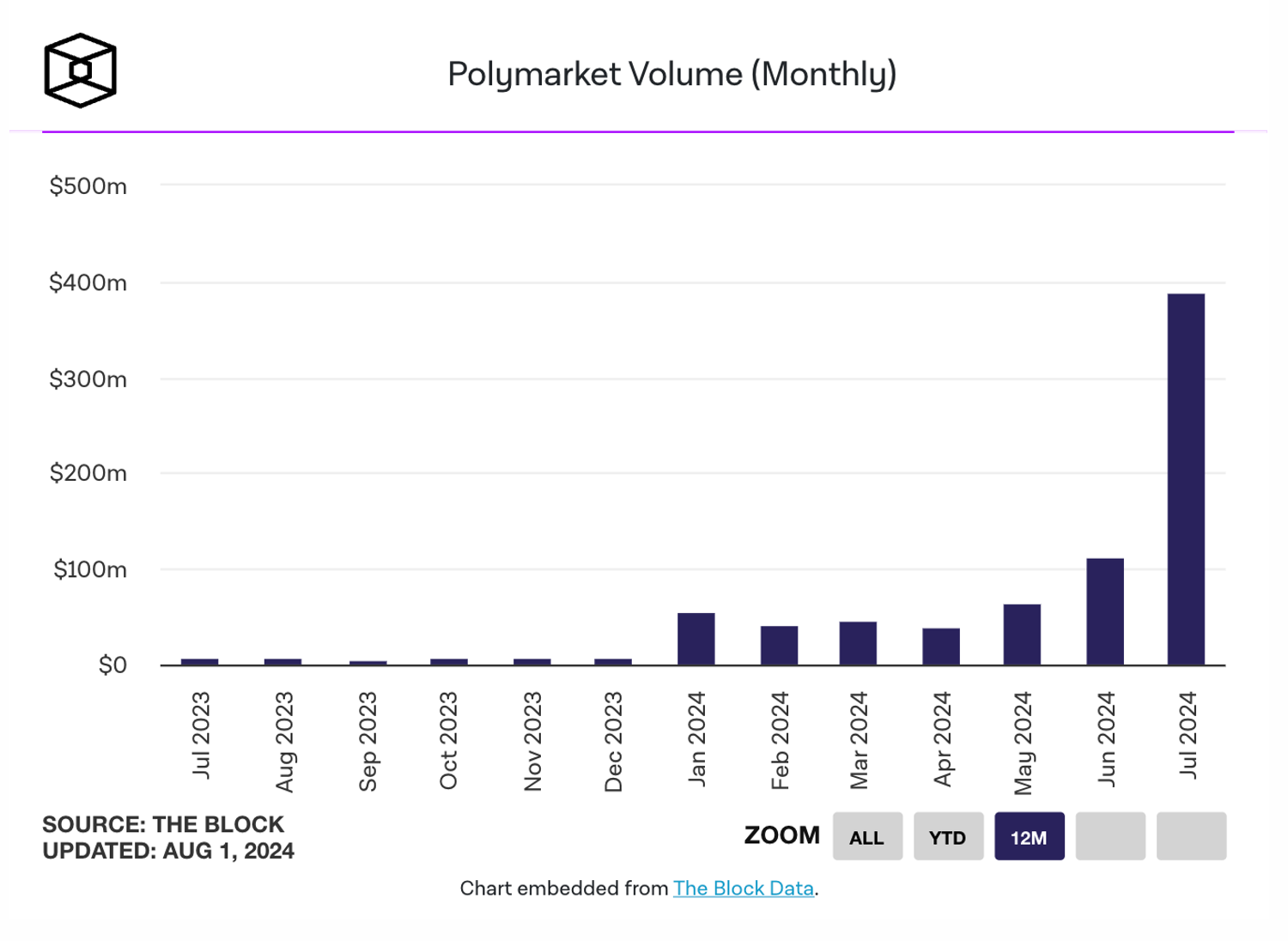
Trading volumes attest to the platform’s influence. In August 2024 alone, Polymarket processed approximately $472 million in trades, with political markets—especially those related to the US presidential election—accounting for nearly $1 billion in wagers by November 2024. Peter Thiel’s Founders Fund highlighted its trust in Polymarket’s market intelligence: “checking Polymarket when breaking news happens has become a habit”.

That compelling performance comes amid regulatory headwinds. Polymarket has barred US users since reaching a settlement with the CFTC in early 2022, which included a US$1.4 million fine and the appointment of former CFTC chairman J. Christopher Giancarlo to its advisory board. These changes aimed to address compliance concerns as the platform expanded internationally. More recently, the FBI reportedly raided Coplan’s home in autumn 2024 as part of an investigation into whether US-based activity violated these agreements.

Despite these challenges, Polymarket has continued to deepen its appeal. Ethereum co-founder Vitalik Buterin has publicly supported the broader application of prediction markets, terming them pioneers in “Info Finance,” an area he believes can enhance journalism, governance and scientific transparency. Polymarket’s data is now cited within Bloomberg’s Terminal services, offering institutional investors fresh analytical layers based on global betting dynamics.

The potential $200 million funding round is expected to include an allocation of token warrants enabling investors to participate in a future token issuance by Polymarket. Earlier reporting by CoinDesk and The Defiant in late 2024 highlighted a $50 million interim funding plan tied to a utility token offering, intended to integrate with or supplant the UMA oracle dispute-resolution system. That mechanism would allow users—or token holders—to validate market outcomes, an evolution that could expand Polymarket’s governance and on-chain autonomy.

Market observers view this token strategy as a logical advancement. Rising volumes and user engagement on election forecasts have revealed limitations in relying solely on external oracles; introducing a native token could decentralise verification and cement Polymarket’s position in the governance of its own markets.

Emerging trends suggest Polymarket is transitioning from an insurgent, crypto-native prediction exchange to a mainstream information infrastructure. Its user base now spans political analysts, financial professionals and retail traders. The recent partnership with X integrates Polymarket’s probabilistic feeds into social media dynamics, allowing users to access market sentiment in real-time alongside breaking news.

Yet questions over regulatory alignment remain. The CFTC is reportedly examining off-shore platforms that permit US bettor access, and lawmakers are considering broader prohibitions on event-based derivatives. The fallout from the 2024 FBI inquiry adds a layer of legal uncertainty, even as Polymarket navigates regulatory environments in Europe and Asia, where its platform has faced access restrictions from gambling regulators in Belgium, Poland, Singapore and France.

As Polymarket nears completion of its landmark funding round, it stands at a crossroads defined by opportunity and scrutiny. A valuation exceeding $1 billion would underscore investor conviction in its model, but unlocking the full potential of prediction markets may depend as much on regulatory clarity as on capital infusion.

Ethiopia’s financial sector has entered a decisive phase as Nib International Bank and Arifpay Financial Technologies formally join forces to upscale the nation’s digital payment infrastructure. With card acceptance, a merchant‑centric app and payment gateway on the launchpad, the alliance aims to expand financial inclusion, support small and medium enterprises and attract foreign currency inflows. Nib International Bank, the country’s sixth‑largest private lender, brings to the table […]

Factories are increasingly adopting a Unified Namespace architecture—an event‑driven, centralised framework that unites data from diverse systems under a single, real‑time source of truth. By standardising naming conventions and utilising protocols like MQTT, this model dismantles data silos, enhances scalability, and accelerates decision‑making across engineering, operations, and management teams. UNS addresses the critical issue of fragmented automation ecosystems, where legacy PLCs, SCADA, MES, ERP and new IIoT […]

Businesses across Houston are accelerating their transition to Voice over Internet Protocol blended with cloud services, aiming to streamline communication, enhance customer experience and reduce costs. Leading this shift is Phonoscope Communications, a Houston-based provider that leverages its fibre-optic metro network to integrate VoIP and cloud-based services for enterprises across eight counties. With a history dating to 1953—and pioneering two-way videotelephony in schools—Phonoscope now supplies unified voice, […]

HUALIEN, TAIWAN – Media OutReach Newswire – 23 June 2025 – Discover a new side of Taiwan with the new direct flight from Hong Kong to Hualien, launched in late 2024 by HK Express. Operating four times a week, this route makes it easier to reach Hualien’s stunning landscapes without the hassle of transfers or long train rides. Travelers can also fly to Kaohsiung on China Airlines […]

An Estonian-based blockchain project is upending traditional cryptocurrency mining by enabling everyday mobile users to mine Bitcoin Solaris via a smartphone app. The Solaris Nova App, currently in its private beta, allows earning tokens through adaptive, low‑energy background processes—sidestepping the need for ASIC rigs and high electricity costs.

The platform combines conventional Proof‑of‑Work with Delegated Proof‑of‑Stake, boasting energy efficiency nearly 99.95% lower than Bitcoin yet capable of processing over 10,000 transactions per second with two‑second finality. It includes built‑in wallet features, real‑time analytics, gamified leaderboards and a marketplace for leasing computational power, aiming for a secure but user‑friendly experience.

Engagement has surged. Over 11,500 users have joined the presale, contributing more than $5 million, at an average price of $8 a token, with scheduled price increases to $9 ahead of a $20 launch value. Phase 7 is underway, confirming momentum as the project enters its final presale phase.

Independent audits from Cyberscope and Freshcoins, plus KYC verification, reinforce security credibility. Market analysts such as Ainvest note the platform’s one‑tap mining and liquid staking features as transformational for retail traders.

Bitcoin Solaris’s dual‑layer architecture merges SHA‑256 Proof‑of‑Work with a high-speed Delegated Proof‑of‑Stake layer. This enables smartphone‑based mining via the Nova App, steering the network’s validation duties to unused storage and CPU cycles—a model described as authentic on-chain participation rather than gamified simulation.

Device‑level mining accommodates Android, iOS, desktop and browser setups. It adjusts load according to hardware: simpler algorithmic backend for phones, scalable tasks for laptops. Energy consumption remains negligible compared to traditional setups. These advancements allow earning BTC‑S tokens immediately, even enabling leasing of computing capacity via smart contracts, and fostering deeper DeFi involvement through liquid staking.

Tokenomics emulate Bitcoin’s scarcity: 21 million total tokens, with 66.7% allocated to mining over 90 years, 20% set aside for presale, and 5% for liquidity. Early presale investors also access bonus slots—up to 10% in earlier phases—highlighting the company’s emphasis on accessible wealth-building.

Crypto commentators highlight its egalitarian potential. Coin World describes it as aimed at making mining accessible to average traders. Analytics Insight suggests mobile mining is generating a wave of new crypto millionaires. Observers such as Crypto Nitro, Crypto Infinity and Crypto Show emphasise its blend of energy efficiency with scalability and inclusivity.

Technical infrastructure rests on security measures, including zero‑knowledge proofs, rotating smart validator sets and continuous audits. Developers argue this permits afforded decentralisation without sacrificing speed or integrity.

Operationally, the project is on a tight timeline: the private beta is active, presale entering its final stage, and full exchange listing expected by July–August. Marketing strategies include referral bonuses, token rewards and daily spins, designed to sustain engagement as broader exposure looms.

Critics note that presale hype may inflate expectations and urge diligence. But Bitcoin Solaris counters with transparent audits, robust KYC, and smart contract evidence of functioning architecture. The simplicity of an app‑based mining system breaks from older models that few retail users can access profitably.

Industry significance could be profound. By transforming everyday devices into contributors to blockchain consensus, Bitcoin Solaris substantially lowers barriers. This may redefine early‑phase crypto wealth dynamics, where first movers historically held advantage via specialist mining investments.

As global attention turns to scalable, eco‑conscious blockchain models, Bitcoin Solaris positions itself at the intersection of accessibility and utility. With the Nova App reaching beta testers and node count rising, the platform is providing tangible participation alternatives for small investors.


ArabyAds has secured the prestigious Snapchat Advanced Partner badge, marking a significant milestone that positions the UAE-based ad-tech firm at the forefront of digital innovation across the Middle East and North Africa. The designation grants the company exclusive access to Snapchat’s latest tools, data analytics, and strategic support, enabling clients and creators in the region to harness full‑funnel campaign opportunities on the platform.

This recognition underlines ArabyAds’ deliberate investment in human capital and know‑how, rather than simply technical capability. As part of the Snapchat Advanced Partner programme, the company gains access to private training sessions, expert enablement, account‑management backing and early‑stage features like Snap’s Creator Discovery API and Snap Creator Marketplace Beta. The badge also comes with visibility and credibility as Snapchat builds its ecosystem through trusted agency partnerships.

ArabyAds Vice‑President of Digital, Ayah Reyad, emphasised that working with Snapchat has been instrumental in expanding market share and inspiring creativity, and that the advanced partner status will deepen relationships with clients and unlock new possibilities in digital storytelling. The move adds another layer to ArabyAds’ portfolio of regional achievements, which include being named Marketing Platform of the Year 2023 by MMA Smarties MENA and the prior launch of their AI‑powered Household Graph for cross‑platform audience reach.

Snapchat states that over 67% of users follow creators to see real, everyday moments, underlining the emphasis on authentic connection. The platform reports that 97% of users are open to brand‑sponsored creator content, and 59% have made purchases following exposure to such campaigns. This context sets the stage for ArabyAds to broker more effective creator partnerships on behalf of brands, using bespoke targeting informed by data and platform insight.

The Advanced Partner badge places ArabyAds among an elite selection of regional agencies, including Publicis Groupe‑Content Practice, Creo, InHype and The Goat Agency MENA. Snap’s pilot cohort benefits from direct collaboration opportunities with Snapchat teams, hands‑on enablement events and tailored access to analytics and certification from Snap Focus. A Partner Enablement Day in Dubai offered immediate immersion into platform tools and strategic best practice, reinforcing the parent company’s goal to build a vibrant creator economy across the MENA region.

Senior figures from other agencies in the cohort echoed Snap’s confidence in ArabyAds. Timothée Desormeaux, Managing Partner and Co‑founder of Acquisit, noted that Snap values their data‑driven and measurement‑focused approach, which has helped solve complex client challenges in the region.

Snap’s head of agency relations in the region, Rasha El‑Ghoussaini, described the partner initiative as part of a broader strategy to support agencies amid rapid transformation across digital markets.

For ArabyAds’ clients, the benefits are multifaceted. The Creator Discovery API enables mapping and analysis of over 100,000 MENA creators, enabling data‑led influencer alignment. End‑to‑end ROI tracking, combined with advancement in AR and creative strategy, allows brands to build measurable campaigns that drive deeper engagement and conversions.

ArabyAds is now well placed to offer clients a full‑stack solution on Snapchat: from creator identification and certification through Snap Focus, to influencer campaign activation using the Creator Marketplace, and ongoing optimisation via account management and platform insights. The firm’s trajectory signals intention not only to maintain growth, but to shape what high‑impact creator collaboration looks like in the region.

The United Arab Emirates will integrate its National Artificial Intelligence System into the highest levels of government from January 2026. The system will serve as an advisory member of the Council of Ministers, the Ministerial Development Council, and the boards of all federal entities and government-owned companies. Its mandate includes supporting decision-making, providing real-time analysis, offering technical advice, and enhancing policy efficiency across every sector.

Dubai’s ruler and UAE Prime Minister, Sheikh Mohammed bin Rashid Al Maktoum, made the announcement on 20 June, emphasising that the world is undergoing “comprehensive transformation—scientifically, economically and socially.” He underscored that the move is intended to prepare the country for future challenges and to “ensure continued prosperity and a dignified life for future generations”.

This development builds upon the UAE’s decade‑long focus on artificial intelligence, which began with the appointment of Omar Sultan Al Olama as the world’s first Minister of State for Artificial Intelligence in October 2017. In early 2019, the National Artificial Intelligence Strategy 2031 was launched, setting the ambition to position the UAE as a global AI leader by 2031. Subsequent milestones include the founding of the Mohamed bin Zayed University of Artificial Intelligence in 2019 and Abu Dhabi’s Digital Strategy 2025‑2027, which aims to establish a fully AI‑powered government by 2027.

Analysts suggest that embedding the AI system at ministerial and federal‑company levels could accelerate data‑driven governance, reduce bureaucratic lag, and foster greater inter‑departmental cohesion. One Gulf Business commentator noted that the AI system would “enhance the efficiency of government policies adopted… across all sectors”. However, questions remain over oversight and transparency mechanisms, especially as the system begins analysis in real time.

International observers view the UAE’s strategy as part of a wider push by governments to use AI in public administration. Examples include Japan’s smart city prototype “Woven City” and various national AI offices globally. Still, no other nation has yet placed an AI inside its cabinet with ministerial‑level access.

Experts highlight both promise and peril. Proponents argue the system’s analytical speed can help identify emerging economic, environmental, and public health challenges before they escalate. Critics, however, caution that AI must be complemented by human judgment to avoid embedding algorithmic bias or over‑reliance on model outputs. Ethical guidelines—such as transparency, accountability, and fairness—will need to be codified and enforced to mitigate these risks.

Practical implementation looms as another challenge. Seamless integration into federal bodies and government companies will require significant investment in digital infrastructure, staff training, and inter‑agency coordination. These tasks fall within the remit of the Minister of State for AI, Digital Economy and Remote Work Applications, Omar Sultan Al Olama, who has spearheaded the country’s AI strategy since 2017.

As part of a broader governance overhaul, Sheikh Mohammed also announced the launch of a dedicated Ministry of Foreign Trade, led by Thani bin Ahmed Al Zeyoudi—and the renaming of the Ministry of Economy to the Ministry of Economy and Tourism under Abdullah bin Touq Al Marri.

The government asserts that the AI system will augment human capacity without replacing it, and that final decisions on strategy and policy will remain with elected or appointed officials. Mechanisms to monitor AI‑led inputs and outcomes are expected to be announced before the system’s January 2026 launch, according to insiders.

By K Raveendran Last week shattered any lingering illusions about the supposedly robust camaraderie between Prime Minister Narendra Modi and former U.S. President Donald Trump—a relationship that had been paraded for years as emblematic of India’s rise on the global stage. The myth of a strategic friendship, carefully choreographed across Howdy Modi rallies and effusive […]

The University of Dubai and the Artificial Intelligence Journalism for Research and Forecasting have unveiled the Arab AI Researchers initiative, marking the first pan‑Arab programme dedicated to training academics in artificial intelligence for research and teaching. The launch aligns with efforts to implement the Arab Index for Artificial Intelligence in Universities, announced in May 2024, and formalised at the 5th Artificial Intelligence Journalism World Forum in Sharjah earlier this year.

President of the University of Dubai, Dr Eesa Al Bastaki, explained that AAIR responds to a growing call for universities in Arab states to embed AI into scholarly work and curricula. He noted that the programme reflects the aim of the AIU, which benchmarks integration across six domains: curriculum design, faculty capabilities, smart laboratory infrastructure, student proficiency, research output, and global partnerships.

Dr Saeed Al Dhaheri, Director of the Centre for Futures Studies and President of the AIU, emphasised the initiative’s breadth. “AAIR offers specialised training to integrate AI across all academic tiers,” he said, underscoring the programme’s ambition to reach a wide academic audience across the Arab world. That ambition gains momentum in tandem with AIJRF’s global training portfolio of more than 120 courses and over 20 active AI initiatives, which includes the annual AIJWF and the GAIJI index.

Under the leadership of AIJRF’s CEO Dr Mohamed Abdulzaher, AAIR will offer a free, accredited training programme conducted thrice yearly. Each session will involve four days of intensive instruction—totalising 15 practical hours—for approximately 150 participants. Graduates, upon submission of a project, will receive certification jointly from AIJRF, the University of Dubai and cooperating institutions. Dr Abdulzaher emphasised the programme’s dual focus: practical AI tool use in research and instruction that covers emerging pedagogical approaches such as smart classrooms, automated assignments and AI‑generated project frameworks, underpinned by ethical guidelines.

Experts highlight the significance of AAIR against a backdrop of evolving demand for localised AI capacity in the region’s higher education sector. Gulf News records that the Arab Index for AIU initially pioneered this area by evaluating Arab universities on their strategic integration of AI into humanities and theoretical sciences, spanning institutions from Morocco to Qatar. This quantitative benchmarking now finds practical implementation through AAIR.

The initiative affords multiple strategic gains. It aims to develop an Arab‑centred community of practice in AI, offer Arabic‑language curricular resources, and foster collaborations among universities, research centres and technology providers. Policy experts suggest that by nurturing such ecosystems, the region can more accurately reflect its socio‑cultural context in AI tools and methodologies.

AAIR also responds to economic and educational drivers. UAE government-backed surveys estimate the Arab educational sector will expand rapidly alongside digital acceleration, yet critical gaps remain in Arabic‑language AI content and smart infrastructure. By empowering faculty and students alike, AAIR seeks to deepen the region’s AI talent pool and sustainability.

Formative metrics indicate uptake: AIJRF announced an AAIR target of training 500 academics during the first phase, with enrollment details shared via LinkedIn and public briefings. Dr Abdulzaher credits the partnership between University of Dubai, AIJRF, and other institutional collaborators for enabling broad access to the programme.

Still, the initiative faces challenges inherent to regional adoption. Previous AI integration efforts highlight logistical barriers—such as uneven access to AI‑equipped labs, variable levels of faculty digital literacy, and limited Arabic AI datasets. AAIR’s focus on standardisation and community‑based learning aims to alleviate such bottlenecks.

Industry observers are tracking AAIR’s impact on research and higher education closely. Stakeholders expect ripple effects, including: greater academic publication in AI‑focused journals; the emergence of Arab‑context AI pedagogies; enhanced employability of STEM graduates with real‑world AI experience; and institutional impetus to invest in smart infrastructure.

The AAIR launch also complements AIJWF’s wider initiatives, including the Human Talents vs Gen‑AI Challenge introduced at the 5th edition in April at American University of Sharjah. Collectively, these initiatives contribute to a regional strategy to navigate the Fourth and Fifth Industrial Revolutions, with emphasis on generative AI and its socio‑economic consequences.

Matein Khalid The India-Pakistan war in May and the Iran-Iraq war that rages as I write only reinforces my conviction that wars will be won or lost via a access to the latest missile air defense, stealth fighter jet platforms, ballistic hypersonic missile, power projection capabilities and state of the art ISR (intelligence surveillance reconnaissance) defense technologies. A nation without these capabilities is akin to a Stone […]

Arabian Post Staff -Dubai Meta has unveiled the Oakley Meta HSTN, a new smart glasses model tailored for sports enthusiasts that introduces high-resolution video and extended battery life. Pre-orders open on 11 July for the premium $499 edition, with standard variants priced from $399 available later in the summer. Initial markets include the US, Canada, UK, select European countries, Australia, and later expansions slated for Mexico, India, and the […]

MANILA, PHILIPPINES – Media OutReach Newswire – 20 June 2025 – Women usually play an important role in family car-buying decisions, and the VinFast VF 6, recently launched in the Philippines, meets the key priorities of many women buyers. The old stereotype paints a familiar picture: men kick tires, debate horsepower, and make the final call on family cars. Reality tells a different story. According to CDK […]

Acquisition strengthens Chemin’s capabilities in complex AI data services amid global demand surge SINGAPORE – Media OutReach Newswire – 20 June 2025 – TDCX Group, a leading provider of digital customer experience (CX) and growth services for global enterprises, today announced the acquisition of SUPA, a cutting-edge data labeling and annotation platform known for its agile, gig-powered delivery model. SUPA will be integrated into Chemin, TDCX Group’s […]

VISHNU RAJA
RYO YAMADA
HITORI GOTOH
IKUYO KITA