News related to
smart

Iracemápolis, São Paulo – Media OutReach Newswire – 16 August 2025 – In the early hours of August 16 (Beijing time), GWM’s Brazil plant officially commenced operations, marked by a grand ceremony for the rollout of its first vehicle, the HAVAL H6 GT. The plant, located in Iracemápolis, São Paulo, was acquired from Daimler Group and has since been upgraded into an intelligent manufacturing base. As GWM’s […]

The United Arab Emirates’s cloud-seeding programme continues to play a pivotal role in enhancing water resources, generating between 168 million and 838 million cubic metres of extra rainfall annually, of which 84 million to 419 million cubic metres is usable water—significant volumes in a country where the total annual rainfall stands at approximately 6.7 billion cubic metres.

Efforts are particularly intensive in 2025, with 185 cloud-seeding missions already carried out to date, including 39 operations in July alone. These missions, executed using advanced tools such as hygroscopic flares, nanomaterials and electric-charge emitters, aim to raise rainfall by 10 to 25 per cent under favourable conditions.

The programme is backed by a technologically advanced infrastructure. The UAE employs a fleet of four dedicated aircraft, 12 trained pilots, and utilises more than 60 weather stations, an integrated radar network, and the Emirates Weather Enhancement Factory, which produces high-quality seeding flares. With over 900 flight hours each year, the initiative represents a significant operational commitment.

New investments have further enhanced the programme’s precision and effectiveness. The integration of artificial intelligence and machine-learning tools enables real-time analysis of meteorological data, optimising cloud-seeding timing and target areas. Additionally, nano-enhanced flares, with superior rain-inducing capabilities, are being developed and deployed.

Scientific assessment supports the programme’s efficacy. A statistical study comparing historical rainfall data found that cloud seeding has contributed to a 22.8 per cent average increase in annual surface rainfall over seeded zones between 2010 and 2019. Other estimates suggest enhancements of up to 30–35 per cent in clear atmospheres and 10–15 per cent in more humid environments.

On the cost front, cloud seeding remains economical. Harvestable water produced through cloud seeding costs just $0.01 to $0.04 per cubic metre, compared with approximately $0.31 per cubic metre from advanced desalination plants. This makes rain enhancement a compelling supplementary strategy in the face of rising demand and declining groundwater levels.

While cloud seeding bolsters water availability, it does not function in isolation. Broad concerns remain regarding drainage infrastructure, which has demonstrated limitations during extreme rainfall events. For instance, heavy storms in April 2024 overwhelmed urban systems—while some speculated about cloud-seeding’s role, authorities and experts concluded that infrastructure constraints and climate-change-driven weather intensity were the primary causes.

Nevertheless, those involved in the research highlight the programme’s strategic importance. Alya Al Mazroui, Director of the UAEREP, emphasises its growing global recognition and potential applicability in other water-scarce regions. The programme—which is administered under the Ministry of Presidential Affairs and backed by the National Centre of Meteorology—continues to drive innovation in rain enhancement science.

Dubai’s Burj Khalifa illuminated the night sky on Friday, August 15, 2025, with the vibrant hues of the Indian flag—saffron, white, and green—to commemorate India’s 79th Independence Day. The world’s tallest building became a beacon of unity and cultural pride, drawing large crowds of Indian expatriates and residents who gathered to witness the spectacular light show.

The Indian Consulate in Dubai confirmed that the display commenced at 7:50 PM local time, marking the occasion with a visual tribute that resonated deeply with the Indian community in the UAE. The illumination was accompanied by the instrumental rendition of India’s national anthem, “Jana Gana Mana,” amplifying the emotional significance of the moment.

Spectators, many of whom were capturing the event on their smartphones, expressed their pride and joy through cheers and applause. The display not only celebrated India’s independence but also underscored the strong and enduring ties between India and the United Arab Emirates. Social media platforms were abuzz with videos and messages, with many sharing the experience and extending their Independence Day wishes.

The Burj Khalifa’s annual tribute to India’s Independence Day has become a cherished tradition, symbolising the deep-rooted friendship between the two nations. This gesture is part of a broader initiative where the UAE’s landmarks light up in the colours of various countries’ flags to honour their national days, reflecting the UAE’s commitment to fostering international camaraderie and cultural appreciation.

In addition to the Burj Khalifa’s illumination, the Indian missions in the UAE organised flag-hoisting ceremonies and cultural events to mark the day. The Indian Consulate in Dubai held its flag-hoisting ceremony at 6:30 AM, while the Indian Embassy in Abu Dhabi conducted theirs at 7:15 AM, accommodating the early morning hours to avoid the intense summer heat. These ceremonies were attended by members of the Indian community, dignitaries, and friends of India, all coming together to celebrate the nation’s journey towards independence and its achievements over the years.

The celebrations were further enriched by cultural performances showcasing India’s diverse heritage, including traditional dances, music, and art exhibitions. These events provided an opportunity for attendees to connect with their cultural roots and share in the collective pride of India’s progress and unity.

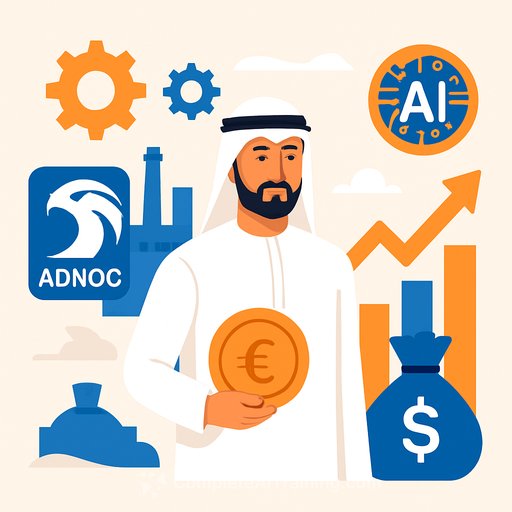
ADNOC Group’s six publicly listed entities posted a combined net profit of USD 4.7 billion for the first half of 2025, underscoring how the widespread deployment of advanced artificial intelligence across operations has sharpened efficiency and underpinned robust growth.

At the heart of this transformation lies MEERAi, ADNOC’s proprietary AI platform. It is deployed across ADNOC Gas, ADNOC Distribution, ADNOC Drilling, ADNOC Logistics & Services, Fertiglobe and Borouge, delivering real-time, data-driven insights that are elevating decision-making and operational precision across the board.

ADNOC Gas achieved a record Q2 net income of USD 1.385 billion, marking a 16 per cent year-on-year rise, while EBITDA increased 8 per cent to USD 2.256 billion, propelled by surging local demand and operational prowess. Investors will see the payoff as the board approved an interim dividend of USD 1.792 billion, up 5 per cent, due for disbursement in September 2025. MEERAi’s impact was central in guiding the board’s strategic decisions.

ADNOC Distribution delivered its highest first-half EBITDA to date—USD 566 million, up 10 percent—with net profit climbing 12.2 percent to USD 358 million. Fuel volumes surged to a record 7.62 billion litres, and non-fuel retail gross profit lifted 14.9 percent. The AI-driven enhancements include predictive fuel-demand forecasting, intelligent assortment planning and hyper-personalised customer offerings. The company introduced MEERAi to its board for real-time strategic oversight, and it expects to distribute a USD 350 million dividend in October 2025.

ADNOC Drilling also delivered standout performance, with management attributing its ability to scale through diverse energy cycles to advanced technologies including AI. The board approved a USD 217 million second-quarter dividend in August 2025. The company is also pursuing regional expansion, including a majority stake acquisition in SLB’s land drilling business across Kuwait and Oman.

Borouge’s AI, digitalisation and technology programme generated USD 307 million in value, including an AI-powered control room in collaboration with Honeywell and integration with MEERAi. New product innovations such as medical-grade polyolefins and recyclable packaging also featured prominently.

Meanwhile, ADNOC’s broader push to harness AI is also playing a central role in its clean-energy pivot. Following earlier investments in AI tools like RoboWell and AR360, which generated USD 500 million in value and reduced around one million tonnes of CO₂ emissions between 2022 and 2023, the company is now deploying AI to advance low-carbon energy frontiers including hydrogen and carbon management, in partnership with entities such as SOCAR, Microsoft and Masdar.

Across all six listed companies, the near-term financial performance echoes the effectiveness of ADNOC’s strategy of embedding AI across both core operations and emerging markets. The unified deployment of MEERAi is not just enhancing control-room functions, but reshaping boardroom dynamics, driving smarter strategy execution, operational optimisation, emissions reduction and product innovation.

Key players in this transformation include the leadership of ADNOC Distribution, championing digital retail evolution; ADNOC Drilling’s CEO Abdulla Ateya Al Messabi, who has publicly credited AI for the company’s resilience and growth momentum; and the broader ADNOC executive team, aligning technology and energy transition goals. Their collective efforts are reinforcing ADNOC’s position as a global energy player committed to leveraging AI for sustainable value creation.

Singapore has firmly established itself at the forefront of global digital finance innovation, particularly in the realm of tokenized assets. The city-state’s embrace of blockchain technology is reshaping the investment landscape, enabling quicker, more accessible, and transparent transactions. As financial institutions, startups, and regulatory bodies collaborate, Singapore is positioning itself as a pivotal player in the tokenization of assets.

Tokenization, the process of converting assets into digital tokens on a blockchain, has garnered significant attention for its potential to revolutionize various sectors, from real estate to commodities. In Singapore, tokenized finance is progressing from pilot projects to full-scale adoption, driving the country’s financial ecosystem towards greater efficiency and market accessibility.

One of the main driving forces behind Singapore’s success in this area is its robust regulatory framework. The Monetary Authority of Singapore has been instrumental in fostering innovation by providing a clear set of rules that encourage experimentation while maintaining investor protection. This regulatory clarity has given businesses the confidence to explore tokenized finance solutions without fear of running afoul of the law.

The growth of blockchain technology in Singapore has been swift, particularly in sectors like real estate, where tokenized property shares allow for fractional ownership. Investors no longer need substantial capital to gain exposure to high-value properties. Instead, they can purchase smaller stakes in tokenized properties, broadening the pool of potential investors and promoting liquidity in traditionally illiquid markets.

Equally noteworthy is the role of Singapore’s thriving fintech sector. The city has seen a surge in startups developing blockchain-based solutions, ranging from platforms for trading tokenized securities to services that facilitate the creation and management of digital assets. This startup ecosystem is supported by venture capital, which has flooded the market with investment, accelerating the development of blockchain applications in finance.

Global players are also taking note of Singapore’s advancements in tokenization. International banks and financial institutions are increasingly setting up operations in the city, attracted by the favourable regulatory environment and the city’s growing reputation as a hub for blockchain and digital asset innovation. For instance, HSBC and Standard Chartered have partnered with local firms to explore tokenized securities and digital asset offerings, cementing Singapore’s status as a global leader in this space.

The introduction of projects like Project Ubin has been pivotal in demonstrating the benefits of blockchain technology within the financial services sector. Initiated by the MAS, Project Ubin explored the use of blockchain for the clearing and settlement of payments, offering proof of concept for tokenized digital currencies. This project not only advanced the understanding of blockchain within financial markets but also helped to strengthen Singapore’s position as a blockchain innovation leader.

The government’s commitment to blockchain and tokenization goes beyond regulation. Singapore has also established itself as a key player in blockchain research and development, with several academic institutions focusing on the technology’s financial applications. Collaborations between private companies and research bodies ensure that Singapore stays at the cutting edge of blockchain development.

Tokenization also promises to democratize finance, giving more people access to investment opportunities that were once restricted to the wealthy. By lowering the barriers to entry, tokenized assets open up new possibilities for retail investors, who can now invest in a wide range of tokenized products with much smaller capital commitments.

Despite these advancements, challenges remain. As tokenization grows, concerns about security, compliance, and the stability of the underlying blockchain systems need to be addressed. Singapore’s regulatory bodies are aware of these risks and continue to refine regulations to ensure that tokenized markets remain secure and trustworthy. The development of more sophisticated security protocols and smart contract auditing tools is expected to further strengthen the ecosystem.


Peloton Interactive Inc. is gearing up to launch its most significant product upgrades in years, with plans to boost sales by introducing new hardware, fresh accessories, and cutting-edge artificial intelligence features. These moves come as the company strives to reassert itself in the competitive fitness market and rebuild consumer confidence after a series of financial setbacks and slowing growth. The company is set to unveil a revamped […]

BANGKOK, THAILAND – Media OutReach Newswire – 14 August 2025 – As Thailand accelerates investment in artificial intelligence (AI), new research from PRCA APAC and YouGov reveals that trust is the cornerstone of public acceptance. While there is cautious optimism and strong calls for regulation, the Thai public expects transparency from brands and institutions to build and maintain that trust. Presented at the inaugural PRCA Thailand Conference […]

Advertisements

SonicWall’s latest release features built-in Zero Trust, embedded warranty, and co-managed services empowering partners to deliver scalable, smart security with simplicity and confidence SINGAPORE – Media OutReach Newswire – 14 August 2025 – SonicWall today introduced nine new firewalls as part of its Generation 8 portfolio, taking a pivotal step in delivering a cybersecurity platform purpose-built for Managed Service Providers (MSPs), Managed Security Service Providers (MSSPs), and […]

Atlassian has forged a strategic partnership with Google Cloud to enhance cloud adoption across its client base and integrate advanced artificial intelligence features into its collaboration platforms. This multi-year agreement is designed to combine the strengths of both companies, enabling businesses to leverage cutting-edge technology to improve operational efficiency, productivity, and innovation. The partnership aims to expand Atlassian’s suite of tools, such as Jira, Confluence, and Trello, […]

Hyperliquid, a decentralised exchange platform, has resolved a significant technical issue that temporarily hindered user access to its trading services. The glitch, reported by users in various online communities, involved a disruption that prevented some traders from executing orders and impacted the platform’s ability to update prices accurately. The malfunction, which occurred during a period of high trading volume, raised concerns about the reliability of the system, with some users expressing frustration over the lack of transparency and communication from the platform’s support team.

The issue first came to light after multiple reports surfaced from users who found themselves unable to place or complete transactions, while others faced price slippage due to delays in the system’s updates. The disruption coincided with a surge in demand for certain assets, leading to increased pressure on the platform’s infrastructure. Hyperliquid acknowledged the problem in a statement, revealing that it was related to a backend technical failure in its order-matching system, which handles the execution of trades.

Technical teams at Hyperliquid worked quickly to address the malfunction, with a fix implemented within several hours. The platform’s engineers carried out a series of updates to its infrastructure and order-matching logic, designed to prevent such issues from recurring. Hyperliquid assured its users that it was closely monitoring the situation and would continue to improve its systems to ensure a smooth trading experience in the future.

This glitch on Hyperliquid is part of a wider trend that has raised concerns about the stability of decentralised exchanges, which rely on smart contract-based mechanisms to execute transactions. While decentralised platforms are often touted as more secure and resistant to manipulation, they can face unique technical challenges that centralised exchanges do not. These issues range from software bugs to network congestion and other performance bottlenecks, particularly during periods of heightened activity.

In light of this disruption, many users have called for greater transparency from decentralised exchange platforms regarding their technical operations. Some have questioned whether such glitches could undermine trust in the decentralised finance space, which is increasingly seen as an alternative to traditional financial systems. The DeFi ecosystem has seen explosive growth in recent years, with millions of dollars flowing through platforms like Hyperliquid. However, incidents like this highlight the vulnerabilities inherent in even the most sophisticated blockchain-based systems.

Hyperliquid’s response to the outage, including the quick deployment of a fix, has been largely positive among the platform’s users, although many are still wary of potential future disruptions. Several traders noted that while the issue was resolved swiftly, the lack of clear communication from the platform during the downtime was a point of contention. Some have suggested that platforms like Hyperliquid could benefit from providing users with more detailed updates in real time, especially during periods of service disruption.

The incident has also sparked a broader conversation within the DeFi community about the need for better infrastructure and risk management protocols. Experts have pointed out that while decentralised exchanges offer innovative features such as privacy and self-custody of funds, their technological foundations must be solid enough to handle spikes in demand without compromising the user experience.

BAODING, CHINA – Media OutReach Newswire – 12 August 2025 – Great Wall Motor (GWM) has combined sport, technology, and industrial pride in a landmark event—the 2025 GWM Smart Factory Half Marathon—held inside its Xushui Smart Factory in Baoding, Hebei Province. Over 10,000 runners raced through stamping, welding, and assembly workshops, surrounded by a living showcase of China’s cutting-edge automotive manufacturing. From the rhythmic movements of robotic […]

Jumbo Enterprise has entered into a strategic partnership with Jio Haptik to offer next-generation Agentic AI solutions to enterprises across the GCC. This collaboration brings together the regional reach and IT expertise of Jumbo with Jio Haptik’s advanced AI-driven customer experience technology. The agreement positions both companies to transform enterprise operations in the Gulf region. By integrating Agentic AI, businesses will benefit from more efficient customer engagement, […]

By Ashok Nilakantan Ayer When the U.S. President Donald Trump slapped heavy tariffs on a range of Indian goods this month, Prime Minister Narendra Modi responded almost immediately with quiet contingency planning: supply a targeted, limited financial backstop to exporters and small manufacturers whose cash flows are being squeezed by sudden loss of competitiveness in […]

SINGAPORE – Media OutReach Newswire – 12 August 2025 – As scam networks across Southeast Asia grow more coordinated and transnational, the Global Anti-Scam Alliance (GASA) is responding with counterforce and progress. This year’s Global Anti-Scam Summit (GASS) Asia 2025 will be held on 2-3 September in Singapore and will convene over 1,200 industry leaders, policymakers, and enforcement agencies from over 60 countries (physical and online) to […]

Information technology expenditure across the Middle East and North Africa region is poised to climb to $169 billion by 2026, reflecting a notable 8.9 percent growth from 2025, according to projections from Gartner. The surge in IT spending underscores a region-wide shift towards digital transformation, fuelled by the increasing reliance on artificial intelligence, intelligent automation, and AI-optimised infrastructure enhancements. This rise in spending is taking place against […]

Dubai’s real estate sector has seen a notable surge in licensed activities, with 4,049 new registrations reported in the first half of 2025. This increase highlights the city’s continuing appeal as a hub for global investment, underscoring its position as a growing economic powerhouse.

The expansion in real estate-related activities is a key indicator of investor confidence in Dubai’s property market. The city’s ongoing efforts to enhance its investment climate, alongside the development of new regulations and policies, have solidified its standing as a global player in the real estate sector. The uptick in the number of new real estate ventures reflects a broader trend of diversification in the market, as Dubai seeks to expand beyond traditional residential and commercial projects into emerging sectors like hospitality, mixed-use developments, and smart city infrastructure.

The Dubai Land Department has been instrumental in driving these developments by continuing its focus on transparency, innovation, and regulatory improvements. One of the standout features of Dubai’s property market has been its emphasis on simplifying procedures for investors, which has directly contributed to the rise in new real estate-related ventures. The DLD’s efforts to digitise property transactions and improve investor accessibility have been particularly significant in this regard.

Dubai’s status as a business-friendly environment has also played a critical role in attracting international investors. Policies such as long-term residency visas, 100% foreign ownership in certain sectors, and reforms in property ownership laws have all enhanced the city’s attractiveness to global capital. The emirate’s strategic location, offering easy access to both Eastern and Western markets, has further positioned it as a key destination for multinational companies and high-net-worth individuals looking to invest in its growing real estate sector.

Dubai’s commitment to diversification has allowed it to weather global economic fluctuations better than many other markets. The emirate’s drive towards sustainability and innovation in urban planning has led to the development of numerous smart city projects, which blend residential, commercial, and leisure spaces in ways that appeal to both investors and residents. These initiatives have attracted attention from international real estate developers who view Dubai as a model for the future of urban living.

The diversification of Dubai’s real estate market is not limited to the types of properties being developed, but also to the services and amenities that accompany them. The growing prominence of serviced apartments, co-working spaces, and eco-friendly developments shows that the market is increasingly catering to a wide range of needs. The ongoing shift towards more integrated communities reflects broader global trends, such as the rise in remote working and demand for work-life balance.

Dubai’s real estate sector has also been buoyed by its ambitious infrastructure projects, such as the expansion of its transport network, the Dubai Expo City, and the upcoming World Expo 2030, which is expected to bring even more global attention and investment to the emirate. The government’s plans to develop future-focused infrastructure align with global trends in technology, sustainability, and connectivity, positioning the city as a model for future urban development.

Investor interest in Dubai’s property market is further supported by the city’s relatively stable macroeconomic environment. The UAE’s strong economic performance, backed by diversification efforts in sectors like tourism, technology, and renewable energy, continues to drive demand for commercial and residential properties alike. Despite global uncertainties, the Dubai real estate market remains a safe haven for investors, thanks to its robust regulatory framework, investor-friendly policies, and a growing base of international buyers.

SINGAPORE – Media OutReach Newswire – 11 August 2025 – Energea has debuted its highly anticipated tech collection, perfect for travel and everyday use, now available in Gunmetal, Cobalt, and Champagne. Leading the charge is the MagDuo Arc, which recently clinched the Best Product award in the Mobile Products category at Channel Summit META. Power meets versatility. The full range of Energea tech gear in Gunmetal, Cobalt […]

Mira Developments, a UAE-based luxury real estate developer, has made a significant move into Oman with the acquisition of a one million square foot plot of land in the Dhofar Governorate. This strategic expansion positions the company to tap into the growing demand for luxury properties in Salalah, particularly as the region gains attention for its potential in high-end tourism and residential developments.

The announcement came shortly after Mira Developments hosted a high-profile three-day mastermind retreat that brought together over 100 top-tier real estate professionals. The retreat, which included brokers, architects, and representatives from luxury brands, marked a pivotal moment in the company’s ambitious expansion strategy. The event served as both a networking platform and a launchpad for the company’s upcoming developments in Oman, including the highly anticipated Mira Coral Bay project.

Mira Developments’ decision to enter the Omani market underscores its broader vision to become a leader in luxury branded living across the Gulf Cooperation Council region. With a focus on integrating premium design, sustainability, and lifestyle excellence, the company aims to set new standards for luxury communities in the region. The project will not only contribute to the local economy but also elevate the standards of residential living in Salalah, which is emerging as a prime destination for affluent residents and tourists.

The retreat, which was set against the picturesque backdrop of Salalah’s unique natural landscape and the refreshing Khareef season, proved to be the perfect setting for brainstorming and collaboration. The event featured a series of workshops and strategic roundtable discussions that aimed to push the boundaries of innovation in real estate. Participants explored opportunities for cross-sector collaboration and exchanged insights on future trends in luxury living, from sustainable architecture to cutting-edge smart home technology.

The Dhofar region, known for its lush green landscapes and pristine coastline, offers a distinctive appeal for luxury developments. Salalah, in particular, is poised to benefit from its increasing popularity as a year-round destination. The Khareef season, which attracts tourists with its cool climate and stunning natural beauty, provides an ideal environment for high-end real estate projects designed to offer both comfort and exclusivity.

Mira Coral Bay, the flagship development, is expected to feature world-class amenities, including bespoke residences, upscale retail spaces, and recreational facilities, all designed to cater to the discerning tastes of luxury buyers. The development will incorporate sustainable practices, aligning with Mira Developments’ commitment to environmental responsibility. The company has also indicated that its approach will prioritise creating harmonious, eco-friendly communities that blend seamlessly with the natural surroundings of Salalah.

Real estate experts have noted that the luxury property market in Oman is ripe for development, particularly in regions like Dhofar. With its stunning landscapes and growing infrastructure, Salalah offers an attractive proposition for high-end investors looking for new opportunities outside of the more saturated markets in the UAE and Saudi Arabia. The entry of Mira Developments into the Omani market is seen as a significant endorsement of the potential of Salalah as a luxury destination, and the project is expected to attract both regional and international investors.

While Mira Developments’ focus is on luxury properties, its broader vision extends beyond just creating high-end residences. The company aims to shape the future of luxury living by fostering innovation and collaborating with leading experts across industries. Through its strategic expansions, Mira Developments is positioning itself as a key player in the future of real estate development in the GCC region.

Chainlink has launched a $1 million LINK Reserve to bolster the security and growth of its ecosystem. This strategic initiative is aimed at ensuring the long-term sustainability of its decentralized oracle network, which plays a critical role in connecting smart contracts with real-world data. The announcement comes at a time when demand for decentralized finance services and smart contract capabilities is accelerating, highlighting Chainlink’s pivotal role in the blockchain space.

The LINK Reserve is designed to support the ecosystem by providing liquidity for future network upgrades and facilitating new developments. The fund will primarily be used to strengthen Chainlink’s oracle infrastructure, ensuring that the network can handle increasing data demands from decentralized applications and other blockchain-based services. As blockchain technologies continue to gain adoption, the need for reliable, secure, and scalable oracle solutions has never been more critical.

Chainlink’s decision to allocate a portion of its treasury to this reserve reflects the platform’s commitment to fostering a secure and resilient network. By using its own LINK tokens, Chainlink aims to maintain a self-sustaining ecosystem, capable of weathering market fluctuations and supporting network enhancements. The reserve is part of a broader strategy to enhance the protocol’s utility and security, ensuring that it remains competitive in an increasingly crowded space.

This move comes amidst growing concerns over the potential risks associated with decentralized oracles, particularly regarding the reliability of data and potential vulnerabilities in the system. As decentralized applications rely heavily on accurate and tamper-proof information from external data sources, ensuring the integrity of this data is paramount. The LINK Reserve, therefore, serves as both a safeguard for Chainlink’s infrastructure and a proactive measure to strengthen the platform’s resilience against potential security breaches or disruptions.

Chainlink’s oracle network is a fundamental component of the blockchain ecosystem, enabling smart contracts to access real-world data, APIs, and payment systems. These capabilities are crucial for the functioning of DeFi protocols, insurance applications, supply chain management, and many other industries looking to integrate blockchain with traditional data sources. As these sectors continue to grow, Chainlink is positioning itself as a key player in facilitating this transition, particularly with initiatives like the LINK Reserve that help maintain the integrity of its services.

The LINK token, which powers the Chainlink network, is a key asset in securing and operating the platform. By creating the LINK Reserve, Chainlink aims to create additional incentives for its token holders while reinforcing the broader security of the network. This reserve also offers potential liquidity for developers and entities that depend on Chainlink’s services, further integrating the LINK token into the fabric of the blockchain ecosystem.

One of the primary objectives of the LINK Reserve is to ensure the continued growth of the network. As more companies and developers seek to leverage Chainlink’s oracle solutions, the need for scalable infrastructure and liquidity becomes ever more pressing. By securing the reserve, Chainlink can ensure that its ecosystem remains adaptable, responsive to new challenges, and ready to accommodate the growing demands of the blockchain industry.

Chainlink’s initiative also aligns with the broader trend of increasing institutional interest in blockchain technologies. As large corporations and financial institutions look to integrate decentralized technologies into their operations, the security and reliability of the infrastructure they rely on become crucial factors in their adoption decisions. Chainlink’s proactive approach with the LINK Reserve aims to meet these demands and position itself as the go-to oracle solution for enterprise-grade applications.

Arabian Post Staff -Dubai Barco Developers, a prominent real estate and investment firm known for its successful ventures across Europe and North America, is making its debut in the UAE market. The company is set to introduce an ambitious residential pipeline spanning two million square feet, marking a significant step in its global expansion strategy. With a proven track record in the development of large-scale residential, commercial, […]

Dubai Electricity and Water Authority has unveiled its strongest-ever financial performance for the first half of 2025, with significant growth across all key metrics. The company achieved an impressive revenue of AED14.6 billion, an EBITDA of AED7.0 billion, and a net profit of AED2.9 billion, marking notable year-on-year increases. DEWA’s results for H1 2025 reflect the effectiveness of its ongoing investments in infrastructure, as well as its […]

Humanoid robots, once viewed as the pinnacle of artificial intelligence and automation, continue to struggle with one basic task: folding a t-shirt. Despite extraordinary advances in AI and machine learning, the physical limitations of robot bodies have created a bottleneck in their progress, even as the brains behind them grow ever more sophisticated. Though AI systems now power these machines with remarkable computational capability, they remain far […]

STOCKHOLM, SWEDEN – NewsVoir – 8 August 2025 – Truecaller, the leading global platform for verifying contacts and blocking unwanted communications, reached a significant milestone in August as the number of monthly active users (including both Android and iOS) crossed 100 million in the MEA-region, representing a 19% growth y-o-y. “With the Middle East and Africa experiencing significant growth in smartphone adoption and mobile data adoption, we’re […]

SINGAPORE – Media OutReach Newswire – 8 August 2025 – In celebration of Singapore’s 60th birthday, OPPO Singapore has launched its vibrant SG60 campaign, a multi-dimensional initiative designed to honour this milestone through youth creativity, technology, and community engagement. As a flagship component of the campaign and part of the OPPO LUMO Photography Awards 2025, OPPO has proudly invited local photography community to capture the nation’s unique […]

VISHNU RAJA
RYO YAMADA
HITORI GOTOH
IKUYO KITA