Just in:

News related to
smart

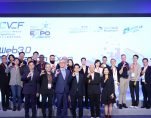
Two-day forum explores AI and blockchain venture capital landscape, unveiling new global capital trends HONG KONG SAR – Media OutReach Newswire – 7 November 2025 – Cyberport’s flagship event, the Cyberport Venture Capital Forum 2025 (CVCF), achieved a record-breaking over 500 deal flows, with more than 2,700 attendees and over 180,000 online views. Themed “The Innovation-Venture Nexus: Igniting Transformative Success”, the two-day forum, together with highlight events […]

DeAgentAI has surged by an astounding 722% in price, captivating the attention of the cryptocurrency market and piquing the interest of investors and traders alike. The token, built within the Sui ecosystem, is designed to power autonomous on-chain agents, a feature crucial for the next-generation automation in Web3. This explosive price rally comes despite an overall downturn in the crypto sector, highlighting the unique drivers behind AIA’s success.

The rally began with an announcement of a strategic partnership with Pieverse, a move that has sent ripples through both the AI and blockchain communities. The Pieverse collaboration promises to extend the utility of AIA beyond its initial Web3 integration, offering new opportunities for developers and businesses alike to leverage autonomous agents for smart contract execution and decentralized applications. Pieverse’s backing adds a significant layer of credibility and exposure to the project, attracting both institutional and retail investors looking to capitalise on the convergence of AI and blockchain technologies.

A key component in AIA’s rapid growth has been its technical breakout, surpassing significant Fibonacci retracement levels. These price levels, commonly used in technical analysis to predict potential areas of support and resistance, indicated a strong bullish momentum for AIA. The breakout above these levels signified to market participants that the token was primed for further price gains, encouraging both short-term traders and long-term investors to buy into the upward movement.

The growing interest in AI technologies has played a critical role in driving demand for DeAgentAI. As artificial intelligence becomes increasingly embedded in various sectors, from finance to healthcare, the crypto market has been eager to incorporate AI capabilities into blockchain networks. AIA’s offering of autonomous agents that operate on the blockchain fits neatly into this emerging trend. Investors are keen to position themselves in projects that aim to bridge the gap between AI advancements and decentralized systems, with DeAgentAI being one of the most prominent players at the intersection of these two fields.

Despite the sharp upward movement in AIA’s price, some analysts have raised questions about the sustainability of the rally. With the broader cryptocurrency market experiencing a dip, many are cautious about the potential for a price correction. The recent surge in AIA’s value, although impressive, has prompted concerns that the rapid increase may have been driven by speculative interest rather than long-term fundamentals. As is often the case with explosive price movements, questions about the stability and longevity of such rallies remain a focal point for both traders and analysts.

The market’s focus on DeAgentAI, however, reflects a growing interest in the broader Sui ecosystem, which has seen increased activity as more projects develop on its platform. Sui’s architecture, designed to scale quickly and efficiently, is drawing attention from developers looking for a robust foundation to build decentralized applications. As the ecosystem grows, projects like DeAgentAI are well-positioned to benefit from the network’s increasing user base and infrastructure.

Investors have also noted that the rise of DeAgentAI is indicative of a broader trend where tokens associated with new and innovative technologies, particularly in AI and Web3, are attracting significant capital. As the blockchain space continues to evolve, more investors are looking to identify the next wave of groundbreaking projects. DeAgentAI’s dramatic price increase positions it as one of the key players in this space, sparking conversations about its future potential and the broader implications for the AI-focused crypto market.

Apple is addressing one of the most prominent criticisms of its previous iPhone Air models by introducing a powerful camera upgrade in the upcoming iPhone Air 2. According to a top industry leaker, the iPhone Air 2 will feature a dual-camera system with two 48MP sensors, marking a significant leap in photography capabilities for the device. For years, iPhone Air users have complained about the device’s camera, […]

SINGAPORE – Media OutReach Newswire – 7 November 2025 – Synology marked its 25th anniversary today by unveiling a new generation of enterprise solutions designed to strengthen cyber resilience and accelerate intelligent transformation. Building on a quarter-century of innovation, it introduced advanced data protection, AI-powered video surveillance and high-performance storage systems tailored for today’s digital enterprises. Thachawan Chinchanakarn, Head of Southeast Asia at Synology, with the company’s […]

A field of 73 thoroughbreds are set to line up at Meydan Racecourse in Dubai for the opening evening of the 2025-26 Dubai Racing Carnival, with seven races and a total prize purse of AED 1.33 million. The fixture marks the beginning of a five-month season which culminates with the landmark 30th edition of the Dubai World Cup on 28 March 2026. Trainers and jockeys boasting international […]

Cyberport Welcomed 10 Listed Companies and 2 Unicorns over the past year Cyberport Investors Network (CIN) Celebrates 8th Anniversary with a Yearly Threefold Growth Cumulative Funds Surpassed HK$4.2 Billion HONG KONG SAR – Media OutReach Newswire – 6 November 2025 – The annual flagship event Cyberport Venture Capital Forum 2025 (CVCF) officially opened today at Hong Kong Cyberport. The two-day forum, themed “The Innovation-Venture Nexus: Igniting Transformative […]

A fresh platform launched by the startup SolarLedger is aiming to reshape how clean-energy data is processed and verified by introducing what it describes as a “green energy operating system” that embeds robust security features and market interfaces. At the heart of the offering are distributed-ledger and Internet-of-Things tools designed to automate the generation, trading and auditing of solar and other renewable-energy flows. According to the company’s statements, the system incorporates cryptographic tools such as zero-knowledge proofs and multi-signature verification to bolster data authenticity and traceability.

SolarLedger’s solution addresses growing concerns in green-finance and energy markets about the reliability of datasets underpinning asset-backed claims, such as renewable-energy certificates or carbon credits. By running real-time tracking of generation, storage, trading and settlement, the platform aims to reduce friction in peer-to-peer energy transactions and enhance transparency for smaller producers who have lacked access to institutional channels. This comes at a moment when distributed energy generation is expanding rapidly but remains under-represented in traditional electricity markets.

From a market-participant perspective, SolarLedger’s architecture is being pitched as transformative. It enables solar modules and storage systems not only to supply power but also to act as tradeable units with embedded provenance metadata. Smart-contract modules match producers and consumers, while traceable certificates of origin claim to be issued as each kilowatt-hour is generated. The firm states that its system eliminates much of the manual reconciliation and trust-layer overhead that currently slows clean-energy transactions, thereby unlocking new income streams for distributed generators.

On the technical side, the platform’s use of zero-knowledge proofs is particularly noteworthy. ZKPs allow one party to prove a fact is true without revealing the underlying data. This is increasingly recognised in academic literature as a potent tool for privacy-preserving validation in decentralized systems. In SolarLedger’s case, the firm says it uses ZKPs to validate meter-data reports and audit logs without exposing granular user or asset-level details. Complementing this, the system applies multi-signature verification — requiring multiple authorised parties to validate transactions — to further enhance trust in each asset’s lifecycle.

Emerging trends in the broader energy-tech space amplify SolarLedger’s relevance. Analysts observe that decentralised energy systems—particularly rooftop solar, microgrids and battery storage—are growing faster than transmission-interconnection frameworks in many regions. Traditional centralised electricity markets were built at a time when generation was large-scale and top-down. By contrast, distributed-generation assets today face barriers to participation in wholesale or retail markets, often due to information asymmetry, latency in settlement, and limited trust among counterparties. SolarLedger aims to bridge that gap by enabling smaller producers to join trading ecosystems on more flexible and transparent terms.

However, important challenges remain across regulation, interoperability and scalability. While SolarLedger cites pilot testing and proof-of-concept deployments, wide-scale adoption will require alignment with local grid-code legislation, energy-market rules, and national certification schemes. Integration with existing utilities and regulatory frameworks may prove complex, particularly in jurisdictions where grid operations and energy trading are tightly regulated. Furthermore, the academic literature on ZKP implementation cautions that although ZKP offers strong privacy and integrity gains, the complexity and computational overhead can be non-trivial — especially when applied to high-frequency data environments.

Another key player to watch in this space is Powerledger, an Australian blockchain-energy-software company which has built peer-to-peer energy-trading platforms and environmental-commodity tracking solutions. Its experiences highlight the twin challenges of scaling and commercialising such platforms in multiple jurisdictions. SolarLedger will need to demonstrate not just technical readiness but also market-acceptance, cost-competitiveness and regulatory compliance if it is to capture a meaningful share of the decentralised-energy-market value chain.

Advertisements

By TN Ashok NEW  YORK:When the polls closed at 9 p.m. on Tuesday, November 4, 2025, it took less than 40 minutes for the Associated Press to call the race. Zohran Mamdani, a 34-year-old democratic socialist and state assemblyman from Queens, had accomplished what many considered impossible just a year earlier: he defeated Andrew Cuomo—twice—to […]

The article The Mamdani Moment: A Political Earthquake In America’s Largest City appeared first on Latest India news, analysis and reports on Newspack by India Press Agency).

SINGAPORE – Media OutReach Newswire – 5 November 2025 – iHerb, a trusted global e-commerce platform for health and wellness, announced the launch of its annual 11.11 Wellness Mega Sale, offering customers in Singapore special sitewide discounts from November 5 to 24. From November 5–12, shoppers can enjoy 26% off sitewide with promo code “iherb26,” followed by 20% off from November 13–24 using promo code “iherb8.” The […]

Meta Platforms Inc.’s messaging service WhatsApp has launched a dedicated app for the Apple Watch that allows users to engage with chats, voice calls and media directly from their wrist, without constantly accessing an iPhone. The update marks a departure from years of limited smartwatch support and brings the Apple Watch experience much closer to the full smartphone version of WhatsApp. The new app offers call notifications, […]

DÜSSELDORF, GERMANY – Media OutReach Newswire – 4 November 2025 – Global AI energy brand Conow has officially launched the next-generation home micro-energy storage system, CBE2000 Pro, priced at €1099. Combining a powerful inverter, AI-driven energy management, and modular storage design, the new model delivers an efficient, intelligent, and plug-and-play energy solution for modern households. Guided by its vision of “Bringing smart energy to every home,” Conow […]

A significant security breach involving the open-source extension registry Open VSX Registry and maintained by Eclipse Foundation has exposed a vulnerability in the software-supply-chain ecosystem. Developer tokens that grant publish permissions were unintentionally made public, enabling threat actors to upload malicious extensions and target developers using the platform. Security researchers from Wiz flagged more than 550 exposed secrets within public repositories, among which tokens belonging to Open […]

Apple’s Wallet app is set to embrace a new era of digital identity with the introduction of a “Digital Passport” capability that will allow holders of United States passports to store their credential securely on an iPhone or Apple Watch. The innovation is expected to ship with iOS 26 and brings transformative implications for travel and identity verification, although its roll-out and functionality remain subject to constraints. […]

South Korean industry and government have secured a major hardware boost as Nvidia will deliver more than 260,000 of its flagship “Blackwell” AI chips to the Republic of Korea in a partnership spanning the public sector and major corporations. The deal, announced during the Asia‑Pacific Economic Cooperation Summit in Gyeongju on 31 October, positions South Korea as a rising artificial-intelligence hub and reflects Nvidia’s pivot amid shifting global semiconductor geopolitics.

The agreement covers deployments across multiple sectors: the government will obtain roughly 50,000 of Nvidia’s GPUs for its National AI Computing Centre; top chip-maker Samsung Electronics and conglomerate SK Group are each set to install about 50,000 units; automaker Hyundai Motor Group another 50,000; and internet-giant Naver Corporation around 60,000.

Nvidia’s chief executive, Jensen Huang, described the arrangement as an opportunity to “produce intelligence as a new export” for South Korea—drawing on its track record in electronics, ships and cars. He met President Lee Jae Myung and leading industrial executives during APEC’s leader-week, underpinning the deal’s strategic importance.

For South Korea the timing is critical. The country’s ambition to become one of the world’s top three AI powerhouses is tied to this surge in computing capacity. Officials estimate that the new GPU stock will raise South Korea’s installed AI-chip inventory from roughly 65,000 to over 300,000 units—more than a four-fold increase.

The motive spans multiple strands. Domestically, the government has signalled its intent through a budget push to triple AI-related spending to 10.1 trillion won in the 2026 fiscal year, with AI infrastructure now a key focus alongside semiconductors, autos and ship-building. Meanwhile, on the global stage, the transaction reflects Nvidia’s response to US export restrictions targeting China: by deepening partnerships with allied economies, Nvidia hedges market access and secures demand beyond geopolitical risk zones.

Industry commentators note the strategic value for South Korea’s private sector. Samsung’s aim to build an AI-factory on the back of these chips and Hyundai’s plan to apply them in autonomous driving and smart factories indicate a broad industrial integration of AI hardware. SK Group’s creation of an industrial-AI cloud, together with Naver’s scaling of its model-training infrastructure, further illustrate the ecosystem approach.

However, risks remain. The logistics of deploying such volumes of high-performance chips across multiple sectors present challenges in cooling, power supply and skilled workforce capabilities. Moreover, the influx of foreign hardware raises questions about long-term sovereignty of critical AI infrastructure—South Korea may become reliant on external chip providers even as it strives to build home-grown strength. Some analysts caution that building capacity alone does not always translate into global leadership in AI.

Another layer of uncertainty stems from the export environment. US policy is tightening its grip on shipments of Nvidia’s most advanced chips to China and other countries. While the South Korean deal has been approved, shifts in global regulation or export licences could affect timelines or chip-variants supplied.

For the key players in South Korea the stakes are substantial. Samsung and SK are leveraging this infusion to advance semiconductor development and edge-computing systems. Hyundai is tackling next-generation vehicle autonomy. Naver and Kakao increasingly rely on large-scale model training—now anchored to the new hardware. At a national level, the government aims to unlock innovation, jobs and exports through “sovereign AI” infrastructure under domestic control.

In global context, South Korea’s move places it firmly within the push by middle powers to stake out a significant role in the AI value chain, not merely as chip supplier but as a platform developer and services export economy. For Nvidia it reinforces its global reach and market dominance at a time when alternatives seek to challenge its position. The magnitude of the chip deployment and its industrial-strategic alignment make this one of the most consequential AI-hardware partnerships of the year.

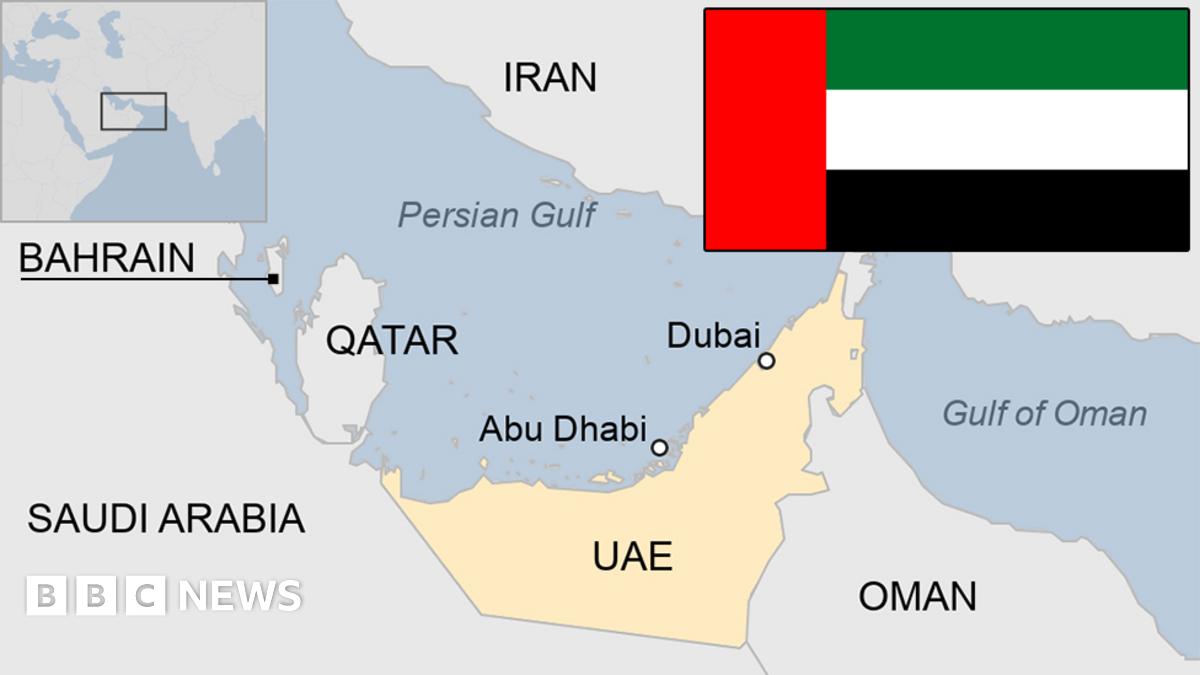
The United Arab Emirates has established itself as a leading hub for innovation and the deployment of advanced technology in the energy sector, according to George Bou Mitri, President of Honeywell for the Middle East, Türkiye and Central Asia. Speaking at the sidelines of the Abu Dhabi International Petroleum Exhibition & Conference 2025, he highlighted how the country’s digital transformation initiatives are serving as a global model for sustainable, technology-driven energy systems.

Bou Mitri said the UAE presents a distinctive example of openness, collaboration and synergy between public and private sectors in driving innovations that are making a tangible global impact in the energy industry. “The solutions created here in the UAE extend their influence far beyond its borders,” he commented. He noted that the country is actively integrating advanced technologies across its energy ecosystem, including expanding the use of LNG, hydrogen, solar and developing sustainable aviation fuel and bio-fuel as part of its emissions-reduction drive.

Honeywell is playing a significant role in this transformation. Bou Mitri pointed to the company’s participation in a landmark project with Abu Dhabi National Oil Company for the Ruwais LNG facility, expected to produce about 9.6 million tonnes annually. He also revealed that Honeywell is developing the region’s first fully autonomous control room powered by agent-based artificial intelligence in partnership with Borouge, aimed at managing petrochemical operations without direct human intervention.

Bou Mitri stressed that digital transformation forms the backbone of the sector’s future. He noted that global energy demand is projected to increase by 32 percent by 2050, while electricity demand is expected to grow by more than 75 percent in the same period, necessitating comprehensive tech solutions to balance growth with emission reduction and operational efficiency. He added that the UAE is clearly adopting that approach, emphasising that the country’s facilities are becoming important development grounds for technologies related to emissions management, artificial intelligence applications and workforce productivity improvements through digitalisation.

The autonomous control-room initiative with Borouge stands out as a practical demonstration of this strategy. According to Borouge, the project will deliver the petrochemical industry’s first AI-driven control room at its UAE plant operations and forms part of its “AIDT” programme with a targeted value generation of US$575 million. The collaboration is intended to optimise production, reduce energy use and enhance safety while lowering costs at what is set to be the world’s largest petrochemical site.

The UAE’s positioning as an innovation frontier for energy technologies comes at a time when the industry is under growing pressure to adapt. Emerging themes include the convergence of artificial intelligence, digital twins, autonomous operations, and clean-energy integration. The broader Middle East region is witnessing major energy investment momentum, with expectations of exceeding US$130 billion this year in oil and gas alone, and simultaneous major expansion in clean-energy investments including hydrogen, LNG and carbon capture projects.

For Honeywell, the UAE’s energy ecosystem is a fertile environment for deploying its digital and automation technologies, but challenges remain. Among these are workforce skills deficits — Bou Mitri pointed out that more than 50 percent of the global energy workforce is aged over 45 — and the need to transfer accumulated expertise to a younger generation. In a sector where downtime, operational safety and emissions control have high stakes, the technology must deliver in real-world conditions, not just in controlled test environments.

Critics might point to the scale of investment required, potential cybersecurity and data governance risks as operations become more connected and autonomous, and the difficulty of scaling pilot programmes into full-scale operations across multiple sites. Nonetheless, the UAE’s strategic posture — combining government backing, private-sector capability and a willingness to test and deploy cutting-edge systems — presents a compelling case study for the global energy community.

CAN GIO, VIETNAM – Media OutReach Newswire – 3 November 2025 – The Can Gio Urban Area Project – Vinhomes Green Paradise – has officially applied to become a Participant in the global “7 Wonders of Future Cities” campaign, launched by the world-renowned New7Wonders organization. By firmly embracing this global initiative, Vinhomes reaffirms its forward-looking vision, positioning Vinhomes Green Paradise not merely as a real estate development […]

US retail giant Walmart has chosen the upper-level of Clearwater Mall in the Strubens Valley area of Roodepoort, Johannesburg, as the site for its first branded store on the African continent. The cornerstone agreement was confirmed by mall owner Hyprop Investments and partner retailer Massmart, signalling a strategic push by Walmart into the broader Africa market. The move brings the hallmark “Every Day Low Prices” shopping model […]

HONG KONG SAR – Media OutReach Newswire – 31 October 2025 – The local online pharmacy platform “FastMed HK” is actively advancing smart healthcare development in Hong Kong. Through its innovative online consultation and dispensing model, it provides the public with convenient and professional medical services. The platform integrates a comprehensive electronic distribution system to deliver a seamless medication experience: “online consultation, same-day medication delivery.” Professional Consultations: […]

The blockchain platform admittedly known as Qtum has rolled out a new desktop artificial-intelligence agent called “Ally”, aiming to shift the landscape of AI productivity from cloud-only assistants to desktop-native, multi-model orchestration. The launch positions Qtum as a player in both blockchain and artificial-intelligence domains as users increasingly demand local control, privacy and advanced automation beyond chat-based tools. Ally can run on both Windows and macOS platforms […]

BANGKOK, THAILAND – Media OutReach Newswire – 31 October 2025 – The journey of Mr. Sansern Kiattivejsoonthorn, Founder of COSDENT Dental Clinic, encompasses resilience, creative design, and digital transformation—a journey recently celebrated with the Master Entrepreneur Award at the prestigious Asia Pacific Enterprise Awards (APEA) 2025 Thailand Chapter. With an education spanning Architecture and Urban Design, Sansern entered the healthcare sector with a unique vision: to fuse […]

Ethereum’s trajectory is showing signs of strengthening as institutional demand, staking growth and protocol upgrades converge to position the network for a possible lead in the upcoming crypto cycle. The asset has been trading in a holding pattern around the $4,000–$4,300 range while market watchers debate whether this consolidation presages a breakout or a renewed test of support. According to exchange-data and on-chain indicators, Ethereum’s fundamentals are increasingly robust as it faces critical technical levels.

Institutional flows into Ethereum-related products have doubled since early 2025, with fund holdings reaching an estimated 6.5 million ETH and staking totals climbing to a record near 36.1 million. These developments reflect rising confidence in the network’s long-term value proposition as more traditional investors enter the space. On-chain records show that major whale wallets and “smart money” participants are accumulating, while staking reduces circulating supply and enhances scarcity dynamics.

Ethereum’s dominance in the decentralised finance and stable-coin settlement sectors amplifies that structural momentum. The network remains the foundational layer for smart-contract use-cases, layer-2 roll-ups and tokenised assets, lending greater weight to its ecosystem compared with more speculative cryptocurrencies. Developer-activity metrics place Ethereum ahead in creating new builds, deploying upgrades and supporting applications, reinforcing its role as a critical infrastructure asset rather than simply a trading vehicle.

On the technical front, key resistance near $4,250–$4,300 has become a focal point for analysts. A sustained breakout beyond that zone could unlock targets in the $5,000–$6,000 range and potentially much higher over the next year or two. Conversely, failure to clear that barrier could invite a re-test of support zones around $3,900–$4,000, a scenario flagged by bearish analysts. Macro-conditions such as global interest-rate policy, liquidity flows and risk-appetite remain wild cards, keeping short-term momentum fragile even as the long-term case strengthens.

Competition from alternative layer-1 blockchains and regulatory uncertainties remain headwinds. While Ethereum remains the ecosystem leader, other chains are gaining traction with lower fees and faster speeds; the extent to which Ethereum preserves its dominance will depend on its ability to scale and manage cost pressures. Moreover, regulatory scrutiny of crypto assets and staking vehicles may alter the institutional adoption timeline, requiring cautious interpretation of bullish narratives.

Emerging upgrades to the network architecture provide a catalytic backdrop. The so-called “Fusaka” upgrade, scheduled for late 2025, aims to deliver enhancements to sharding and data-availability that should improve throughput and reduce fees. These technical improvements may lower entry barriers for decentralised-applications and stimulate further ecosystem growth, thereby reinforcing Ethereum’s value proposition. At the same time, staking yields continue to incentivise long-term holders and reduce the liquid supply, offering a structural support mechanism for price.

All-New Cardo BEYOND Helmet Represents Two Decades of Innovation Culminating in a Groundbreaking Fusion of Safety, Sound & Intuitive Technology SYDNEY, AUSTRALIA & WILLINGTON, NEW ZEALAND – Media OutReach Newswire – 30 October 2025 – Cardo Systems, the leader in wireless communication solutions for powersports riders, proudly introduces BEYOND GTS and BEYOND GT, the brand’s first-ever fully integrated sport-touring motorcycle helmets. The BEYOND line of helmets deliver […]

Thrifty Car Rental UAE has introduced the region’s first self-service digital car rental kiosk, a move aimed at transforming how vehicles are rented across the Emirates. The kiosk, unveiled at the lobby of Novotel and Ibis Deira Creekside Dubai, allows customers to browse available vehicles, complete identity verification and make payment entirely digitally — the car can then be delivered within one to three hours. The launch signals a clear shift toward technology-led mobility solutions in the car rental industry.

The kiosk offering is part of Thrifty’s broader strategy to engage customers seeking convenience, speed and flexibility. At the Arabian Travel Market 2025 the firm outlined its ambition to expand this self-service model across high-traffic zones, including residential areas, shopping centres and transit hubs. The head of retail at Thrifty, Chand Soni, said the company was “building more than a rental network; we’re building a connected experience.”

Industry data suggest that the regional car rental market is undergoing a fundamental digital transformation, driven by customer demand for contactless service and the tourism sector’s push for smarter mobility. A market research report covering Oman values the digitisation of car rental — including self-service kiosks and app-based models — at US$150 million and growing, citing rising smartphone penetration and government digital-economy initiatives.

Thrifty’s kiosk system employs a touchscreen interface, secure identity verification and live payment integration. Users select vehicle type, rental duration and location via the kiosk, triggering delivery logistics in what the company promises as “minutes, not hours”. The vehicle is dropped off at a location of the renter’s choice. The system is designed to address both leisure travellers and residents who may need a flexible vehicle-rental alternative without the usual counter-based rental process.

The shift comes as car rental players in the region face increased competition not just from traditional rivals but from app-based mobility services and subscription models. For example, Thrifty itself is rolling out flexible rental plans — including monthly specials and lease-to-own options — to attract customers who prefer longer-term flexibility over ownership. The kiosk adds another layer of convenience for shorter-term rentals or spontaneous plans.

The move may also help Thrifty scale more efficiently. By deploying kiosks in multiple locations, the company can reduce staffing and branch-infrastructure costs, optimise fleet utilisation and meet spontaneous demand without needing multiple full‐service outlets. Soni noted the goal of doubling the network of touchpoints in the period ahead.

However, executing this strategy will bring challenges. The initial investment in digital kiosks and supporting IT infrastructure is substantial, and the process requires robust identity verification, payment security and logistics coordination. According to regional research, smaller operators may struggle to deploy such tech due to cost constraints and customer inertia — in some markets a majority of users remain more comfortable engaging via staffed counters.

Another risk lies in customer adoption. While younger and tech-savvy users may welcome the kiosk format, others may prefer the human interaction offered by traditional rental counters. Thrifty will need to ensure service reliability, vehicle availability and customer support — especially if rentals are completed entirely digitally and delivery timelines become core customer expectations.

Regional mobility trends underscore the importance of innovation. With the UAE emphasising tourism growth, smart infrastructure and digital transformation, the launch aligns with broader national strategies. Thrifty’s positioning at the intersection of mobility, digital convenience and customer experience may help meet evolving consumer behaviour, but sustaining value will depend on execution across logistics, fleet management and customer service.

For business travel, hotel partnerships and leisure rentals, the kiosk offers a compelling convenience proposition. At the same time, Thrifty must manage fleet availability, delivery logistics and system uptime to avoid service disruptions. Monitoring how customers adopt the kiosks, how much rental behaviour changes and how much cost or revenue upside emerges will be key to assessing whether this innovation delivers long-term competitive advantage.


Arabian Post Staff -Dubai CASIO this week introduced two high-end additions to its G-SHOCK collection, launching the new MTG-B4000 and GBM-2100A models that aim to combine cutting-edge materials, advanced design and smart features. The company describes the MTG-B4000 as the first G-SHOCK timepiece with frame design co-created by human designers and generative artificial intelligence, while the GBM-2100A re-imagines the popular 2100 line with metal-clad build, Bluetooth connectivity […]

VISHNU RAJA
RYO YAMADA
HITORI GOTOH
IKUYO KITA