News related to
smart

Sam Altman, the CEO of OpenAI, has once again shifted the focus to the next evolution of artificial intelligence: GPT-6. With GPT-5 just beginning to take hold in various sectors, Altman is already laying the groundwork for what’s to come. Unlike the extended gaps between earlier versions, such as GPT-4 and GPT-5, the trajectory towards GPT-6 is expected to be significantly quicker. This fast-tracked development signals not […]

KUALA LUMPUR, MALAYSIA – Media OutReach Newswire – 23 August 2025 – YTL Cement, in partnership with The Edge, successfully concluded its third annual sustainable construction symposium recently, bringing together over 200 industry leaders and players to explore the future of construction under the theme “Building Trends Redefined: The Next Level” which explored urban liveability, sustainable construction ambitions, and smart green technologies. (From left) Skidmore, Owings & […]

Leveraging B2C and B2B Synergies to Capitalize on the Global K-Beauty Boom Results Highlights Revenue rose by 49.3% to US$243.93 million. Operating profit increased by 31.9% to US$18.68 million. Net profit grew by 26.7% to US$14.08 million. Business-to-Customer (B2C) YesStyle Platforms recorded revenue of US$164.86 million, up 31.7%, contributing 67.6% of the Group’s total revenue. Revenue of Business-to-Business (B2B) platform AsianBeautyWholesale surged by 110.9% to US$77.94 million, […]

YouTube Music has unveiled “taste match” playlists as part of its tenth-anniversary rollout, a feature that crafts shared playlists by blending the listening habits of participating users into a daily-refreshed soundtrack. This move mirrors Spotify’s Blend functionality, suggesting Google is keen to edge more firmly into the social recommendation space. The rollout also includes interactive touches—fans can begin leaving comments directly on albums and playlists, loyalty badges […]

A landmark onchain gaming tournament has been launched by the Moonbeam Foundation and N3MUS, with Sao Mai Games also joining the initiative. The competition, named GLMillionaiRe, is set to capture the attention of competitive gamers and blockchain enthusiasts alike. Offering a significant 1,000,000 GLMR prize pool, the event aims to promote not just high-level gaming but also to attract new users to the Moonbeam ecosystem. The entry fee for participants is set at just 10 GLMR, ensuring accessibility for a wide array of players.

Moonbeam’s innovative approach to integrating blockchain into gaming is expected to be a major driver for the platform’s expansion. As a decentralised smart contract platform, Moonbeam allows developers to easily build and scale blockchain-based applications. With this tournament, Moonbeam is not only offering financial rewards but is also positioning itself as a hub for the next wave of blockchain gaming, an increasingly popular sector within the cryptocurrency and gaming industries.

N3MUS, known for its strategic partnerships in the blockchain and gaming space, has also played a key role in the development of this tournament. The company’s involvement in GLMillionaiRe reflects its ongoing commitment to bringing innovative projects to life. Their partnership with Moonbeam aims to offer players a seamless, high-performance gaming experience underpinned by blockchain technology, offering transparency, security, and decentralisation.

The 1,000,000 GLMR prize pool, which stands as one of the largest in onchain gaming tournaments, is expected to draw participants from across the globe. This event is particularly notable due to its emphasis on accessible entry, allowing both seasoned gamers and newcomers to compete on a level playing field. The inclusion of a relatively low entry fee serves as an invitation for new users to engage with the growing Moonbeam ecosystem while also presenting them with the potential for significant rewards.

The tournament will feature multiple rounds, each designed to test the skills, strategy, and adaptability of participants. Players will face off in various gaming challenges, each incorporating elements of blockchain technology such as smart contracts and decentralized applications. By incorporating onchain features, the tournament ensures that every aspect of gameplay, from registration to rewards distribution, operates transparently and securely, an increasingly important consideration for modern gamers.

Moonbeam’s ecosystem continues to expand rapidly as more developers and projects look to harness the capabilities of its interoperable blockchain. The foundation has been making strides in attracting major players in the blockchain and gaming sectors, with GLMillionaiRe serving as a prime example of its growth. By bridging the gap between gaming and decentralised finance, Moonbeam offers an ecosystem where players, developers, and investors can all engage meaningfully.

For N3MUS, this partnership marks another significant milestone in its mission to push the boundaries of what is possible within the blockchain and gaming realms. The company’s reputation for delivering cutting-edge gaming experiences ensures that GLMillionaiRe will be closely watched by both the gaming community and blockchain investors. As the tournament progresses, it is expected that the level of competition and interest will only increase, further solidifying the event’s status as one of the most ambitious in the space.

Sao Mai Games, a key player in the gaming development space, is providing the technical expertise and gaming content that will power the tournament. The involvement of Sao Mai Games ensures that the gaming experience for participants is smooth, immersive, and enjoyable, making the competition not only lucrative but also fun for all involved. As the tournament evolves, the partnership with Sao Mai Games will likely continue to shape the future of onchain gaming events.

The cryptocurrency market is witnessing a surge of activity, as Bitcoin Swift makes its way into Stage 6 of its development cycle, and Ethereum continues to hold steady above $3,100. Meanwhile, Bitcoin Hyper, a new player in the presale market, is igniting interest with its presale price hovering just above one cent. This confluence of developments signals a dynamic phase for blockchain technology and its associated assets.

Ethereum, the second-largest blockchain by market capitalisation, has remained resilient in a volatile market. With a focus on upcoming upgrades, such as Ethereum 2.0 and its scalability initiatives, Ethereum continues to attract investors seeking a robust and versatile platform for decentralised applications. Analysts note that Ethereum’s ability to maintain a strong position despite competition from emerging networks speaks volumes about its foundational role in the broader crypto ecosystem. The anticipation surrounding its future upgrades further fuels confidence in its long-term potential.

Bitcoin Swift, which recently entered Stage 6 of its development, is generating significant attention. The coin’s rapid ascent through its various stages has been marked by rising investor confidence, and as it advances to Stage 6, more attention is now being paid to its potential. Backed by a highly ambitious roadmap, BTC3 aims to position itself as a major player in the cryptocurrency space by offering a range of technological advancements, including faster transaction times and a more scalable consensus mechanism. BTC3’s move into Stage 6 marks a crucial point in its development, drawing in investors who see it as a promising competitor in the market.

Bitcoin Hyper, a new entrant in the crypto presale market, has also made waves due to its highly affordable presale price, which currently sits just above one cent. This has led to a significant uptick in investor interest, particularly among those looking for early-stage opportunities in a rapidly expanding market. Despite being in the early stages, Bitcoin Hyper’s project has attracted attention for its innovative features, including a focus on security and privacy for its users. Its low presale price and promising roadmap have set the stage for potential rapid growth.

The rapid growth of Bitcoin Swift and Ethereum has sparked discussions about the evolving competitive landscape within the blockchain sector. Many investors and developers are keen to see how these two will perform as blockchain technology matures. Ethereum’s scalability upgrades are expected to play a pivotal role in its ability to retain its market position and further challenge other blockchain platforms.

At the same time, Bitcoin Swift is looking to carve out its niche by providing solutions that are expected to address some of the scalability issues that have long plagued the cryptocurrency market. The growing demand for faster, more secure transactions is driving interest in Bitcoin Swift, with its features expected to position it as a key player in the crypto space.

Bitcoin Hyper, despite its early presale price, has set ambitious goals to stand out in a crowded marketplace. It is targeting markets where privacy and security are critical, making it an attractive proposition for those seeking a more secure and anonymous way to conduct transactions. Its early success in the presale market demonstrates investor confidence in the potential of the platform, even as it works through its development phases.

Ethereum’s continued dominance in the space is further solidified by its diverse range of use cases, from decentralised finance to non-fungible tokens. As Ethereum prepares to unveil key updates to its network, the platform is expected to enhance its ability to handle a growing number of transactions while reducing gas fees. These upgrades, particularly the Ethereum 2.0 transition, are expected to provide the blockchain with a much-needed scalability boost, keeping it competitive with newer entrants.

Despite the competition, Ethereum’s strong brand and extensive developer community offer it a distinct advantage over some of its rivals. Many blockchain developers are continuing to build on Ethereum due to its robust infrastructure, which supports decentralised applications, smart contracts, and DeFi protocols. As the network transitions to Ethereum 2.0, the platform is poised to capture a larger share of the blockchain market.

While Ethereum looks to expand its capabilities, Bitcoin Swift and Bitcoin Hyper are positioning themselves as innovative disruptors with distinct value propositions. Bitcoin Swift’s focus on transaction speed and scalability, coupled with Bitcoin Hyper’s privacy-first approach, offers compelling alternatives to Ethereum’s more open ecosystem.

As the world continues to generate data at an unprecedented rate, the search for efficient storage solutions has intensified. Traditional hard drives, once the backbone of digital storage, are now struggling to keep pace with the exponential growth of data. The rise of AI, smart devices, and IoT is creating a demand for more advanced, sustainable, and compact storage methods. One promising avenue for addressing this challenge […]

Advertisements

Honda Motor Co. has secured a multi-year collaboration with a prominent Silicon Valley-based artificial intelligence startup, marking a significant step towards the development of autonomous driving technologies. The Japanese automotive giant aims to enhance its self-driving capabilities, leveraging the startup’s cutting-edge software and AI expertise. This partnership signals Honda’s commitment to staying competitive in the rapidly evolving automotive landscape, particularly as manufacturers race to implement autonomous vehicle […]

SINGAPORE – Media OutReach Newswire – 21 August 2025 – CNA, the global news and current affairs brand of Mediacorp, is offering a new service which allows businesses and brands from around the world to seamlessly publish their media releases in a dedicated section on its flagship website, cna.asia, via its very first partner, Media OutReach Newswire. This new third-party paid content service offers businesses unprecedented access […]

TAIPEI, TAIWAN – Media OutReach Newswire – 21 August 2025- The Southeast Asia Office of the Industrial Technology Research Institute (ITRI) and LogHealth of Mahidol University are collaborating to host the “Smart Health Industry Forum” on September 9, 2025 in Bangkok. The event aims to explore the latest trends and developments within the smart health industry of both Taiwan and Thailand. The smart health industry continues to […]

Dubai has unveiled a development that could reshape the future of global information security. At a closed event organized by Vektor T13 Technologies, researcher and developer Dmytro Momot, better known as Vektor T13 and as a creator of the Antidetect Project, presented a unique artificial intelligence system under the codename A_BotAlpha, capable of detecting fake digital identities with unprecedented accuracy and protecting infrastructure from cyber threats. A system […]

Two former Harvard students are poised to disrupt the tech world with a groundbreaking product: AI-powered smart glasses designed to record and listen to every conversation, even when the wearer is unaware. The venture, which has already garnered attention from the technology sector, promises to revolutionise the way people capture and interact with the world around them. The glasses, equipped with highly sensitive microphones and an advanced […]

POKERIN has unveiled the world’s first mobile application that allows players to engage in live-dealer Texas Hold’em directly from their smartphones, marking a significant advancement in the online gaming sector. This innovative platform combines cutting-edge technology with the thrill of real-time casino play, providing a seamless experience for users anywhere in the world. The app’s core feature is its live-dealer capability, where players can interact with real […]

The United States has emerged as the dominant force in greenfield foreign direct investment in Saudi Arabia for the first half of 2025. Accounting for 61 projects with a combined value of $2.7 billion, American investments represented nearly a third of the total project count and capital investment during the period, according to a report by Emirates NBD. Saudi Arabia continues to be an attractive destination for […]

Dubai is poised to see a substantial rise in its millionaire population, with projections indicating that up to 10,000 affluent individuals could relocate to the emirate by the end of 2024. This influx is expected to further solidify Dubai’s position as a premier destination for global wealth, driven by a combination of favourable tax policies, a booming property market, and a growing reputation as a business hub.

As of December 2024, Dubai’s population of resident millionaires is forecast to grow to 81,200, significantly contributing to the UAE’s total of 130,500 millionaires. The surge is linked to Dubai’s ongoing efforts to attract wealthy individuals and investors through various initiatives, such as long-term residency programmes and tax advantages, which have made it an increasingly attractive place to live and do business.

The growth of millionaires in the UAE is not just a result of Dubai’s policies but also the broader trends in the global economy, with high-net-worth individuals seeking stability and investment opportunities in the face of geopolitical uncertainty. Wealth management firms, real estate brokers, and investment advisors have all noted the heightened interest from international clients in securing properties in the emirate.

Dubai’s luxury property market is one of the key factors driving this influx. The demand for high-end residential units has been on a steady rise, with prime real estate in sought-after locations such as Palm Jumeirah, Downtown Dubai, and Dubai Marina witnessing increasing sales. This growth has been further fuelled by the city’s transformation into a financial and cultural hub, alongside its status as a global tourism hotspot.

The emirate’s real estate sector has been particularly attractive to millionaires looking to invest in luxurious homes that offer not only aesthetic appeal but also potential for high returns. Dubai’s strategic position as a gateway between the East and West makes it an ideal location for international investors, offering tax incentives and the possibility of high rental yields in a stable economic environment.

The UAE’s relaxed residency laws, particularly the Golden Visa programme, have made it easier for wealthy individuals to relocate and establish themselves in Dubai. The programme grants long-term residency permits to investors, entrepreneurs, and skilled professionals, thus encouraging a more permanent presence of the ultra-wealthy in the city. It is these factors that have contributed to Dubai’s appeal as a sanctuary for wealth and a hub for international business activity.

With its pro-business environment, ease of living, and world-class infrastructure, Dubai continues to attract entrepreneurs and executives looking to make the city their new home. Additionally, the city’s vast infrastructure, which includes state-of-the-art airports, world-class medical facilities, and a thriving arts and culture scene, only adds to its desirability for those with significant financial means.

The role of real estate developers has been critical in meeting the needs of this burgeoning millionaire class. Developers are increasingly focused on delivering bespoke, high-end properties that cater specifically to the tastes of the global elite. These residences offer everything from private pools and exclusive beach access to cutting-edge smart home technology and private helipads. The push for luxury is evident across all sectors, from private villas to penthouses that offer unparalleled views of the city’s skyline.

The local government has also been proactive in ensuring that the infrastructure keeps pace with this growing demand. New residential and commercial developments are being planned across Dubai, especially in emerging areas like Dubai Creek Harbour and Dubai South, which offer a mix of luxury living and connectivity to key business districts and international airports.

For many of these new residents, Dubai is not just a place to live but also a base from which to manage their global business interests. The city’s financial services sector is thriving, with an increasing number of wealth management firms and family offices establishing a presence in the emirate. These firms provide a full range of services, including estate planning, investment management, and tax consulting, ensuring that wealthy individuals can efficiently manage their wealth while residing in the UAE.

Foxconn Technology Group has committed to investing $30 million in Robocore, a robotics firm specialising in medical and elderly care solutions. This move marks the company’s strategic push into the rapidly growing healthcare robotics sector, a field poised to revolutionise the care of ageing populations globally. Robocore, based in Taiwan, develops advanced robotic systems designed to assist elderly people with daily activities, enhancing their mobility, independence, and […]

HANOI, VIETNAM – Media OutReach Newswire – 19 August 2025 – To mark the 80th anniversary of the National Day of the Socialist Republic of Vietnam, Vingroup inaugurated and broke ground on six major projects across the country. The highlight was the inauguration ceremony of the National Exhibition and Convention Center in Dong Anh, Hanoi, alongside five other landmark projects in the fields of socio-economic infrastructure, transportation, […]

Cyber-security researchers have exposed a covert malware distribution effort exploiting pirated software download sites to deliver a modular loader known as HijackLoader, bypassing key defences such as ad-blockers and Microsoft Defender SmartScreen. The campaign has been traced to illegal download pages and SEO-poisoned sites that continue to evade detection, putting users at elevated risk. HijackLoader, first identified in 2023, has rapidly evolved into a multi-module loader capable […]

A bold partnership between the Central Bank of the UAE and Presight, the AI arm of G42, is unfolding a new era in financial infrastructure. The joint venture will embed artificial intelligence across core systems – spanning digital currency, instant and real-time payments, card services and open finance platforms – designed, built, and managed within the UAE. The agreement places AI at the heart of systems such as the Central Bank Digital Currency, Instant Payments, Domestic Card Scheme, National Card Switch, Real-Time Gross Settlement, and Open Finance network.

The initiative underpins the Financial Infrastructure Transformation Programme, a sweeping architectural modernisation blueprint launched by CBUAE in February 2023, with full deployment anticipated by 2026. Where CBUAE once relied on external vendors for supervisory technology and data systems, the new venture shifts toward a sovereign, AI-driven approach.

Ebrahim Obaid Al Zaabi, Assistant Governor for Monetary Policy and Financial Stability, characterised the venture as a strategic move “to ensure the UAE’s financial market infrastructure remains resilient, secure, efficient and future-ready.” He also noted that merging FIT’s leadership with Presight’s technological prowess will reinforce the UAE’s financial ecosystem and underpin national economic stability, strengthening its position as a global financial centre.

Thomas Pramotedham, Chief Executive of Presight, described the venture as a “decisive leap forward,” stating that by “focusing exclusively on AI-driven financial solutions, we are creating a sovereign finance technology powerhouse that will redefine how financial markets operate—faster, with applied intelligence, and more securely than ever before.”

Already, FIT has delivered functional platforms like Instant Payments and the Jaywan card scheme, with CBDC infrastructure currently under development. The venture now takes over these critical functions — charged with developing, maintaining and safeguarding them under a sovereign, AI-backed framework.

Beyond financial rails, this AI integration offers promise across several performance benchmarks: settlement speed, fraud detection, transparency, and cost efficiency all stand to improve. These enhancements align with broader technological sovereignty goals: reducing dependence on foreign providers, enhancing cybersecurity responsiveness, and supporting fintech innovation with locally administered smart infrastructure.

In a parallel development, the Emirates Institute of Finance’s Innovation Hub has entered into a Memorandum of Understanding with HSBC, Al Maryah Community Bank, Presight, and Core42 to explore applications of both traditional and generative AI across banking. The objective is to augment operational efficiency, strengthen cybersecurity, and enrich customer service within the banking sector.

In the broader academic and regulatory sphere, scholars have analysed the transformative potential of AI in finance, alongside its risks: regulatory opacity, bias, data privacy issues, systemic vulnerabilities, and ethical concerns. Recent studies advocate for explainability, human oversight, auditability, and adaptive, principled governance frameworks to safeguard trust while fostering innovation.

By embedding AI at the infrastructure layer, the UAE initiative intersects with these academic prescriptions — though realisation of such ideals will hinge on effective governance, transparency, and operational resilience. As financial systems globalise and grow increasingly complex, ensuring AI’s reliable, accountable implementation will determine whether this model achieves its promise.


The United Arab Emirates has reached a significant milestone, securing the 16th position globally in the 2025 Government Support Index, as outlined in the IMD World Competitiveness Yearbook. This index evaluates how effectively governments foster the conditions needed for businesses to thrive, measuring factors such as infrastructure, regulatory environment, and public sector efficiency. With this advancement, the UAE solidifies its standing as a global leader in creating […]

Greenlogue/AP Suqia, the UAE’s national water charity, continues to solidify its global humanitarian efforts, reaching nearly one million people in Tanzania with clean drinking water. In partnership with the Emirates Red Crescent and backed by a grant from HH Sheikh Mohammed bin Rashid Al Maktoum, this initiative aims to address water scarcity, one of the most pressing issues facing communities in East Africa. The project, a part […]

LUSAKA, Zambia — The largest climate adaptation event of the year wrapped up in Lusaka, where world leaders, policy makers, and experts issued a strong appeal for increased financial commitments to tackle the accelerating impacts of climate change. Hosted in Zambia, the UN Climate Adaptation Expo served as a key platform for discussing strategies to protect vulnerable populations and economies from the worsening climate crisis. The Expo, […]

The total Ethereum balance held across centralized exchanges has dropped to its lowest level in nine years, a trend that reflects broader shifts in the cryptocurrency ecosystem. According to data from blockchain analytics firm Glassnode, the decline is part of a wider move towards decentralised finance solutions and self-custody. The drop in ETH held on exchanges is viewed as a significant signal for the cryptocurrency market, highlighting a transformation in investor behaviour and the growing trust in blockchain-based alternatives.

The total amount of ETH on exchanges has seen a steady decline over the past few years. Figures from Glassnode show that as of late 2025, the figure stands at its lowest since 2016. This shift is attributed to multiple factors, ranging from the rise of Ethereum 2.0, a push for increased decentralisation, to increased concerns over the security and control of centralized platforms. Investors are increasingly opting to take control of their assets, preferring private wallets, staking services, and decentralised protocols over traditional exchanges.

Experts suggest the move could be indicative of a maturing market. “This trend shows a growing level of sophistication among investors,” said Dr. Linus Hoff, an economist at the Blockchain Research Institute. “Ethereum’s evolving infrastructure, such as the transition to proof-of-stake and increasing use of layer-2 scaling solutions, is leading to a more confident investor base.” The shift away from exchanges also speaks to broader concerns over centralised platforms following a series of high-profile exchange failures and regulatory scrutiny.

Ethereum’s shift to proof-of-stake, which completed its transition in 2022, has had a profound impact on the ETH market. The upgrade enables holders to stake their ETH, earning rewards for supporting the network’s security, rather than leaving their assets on exchanges. This has fostered a growing staking ecosystem where users are incentivised to lock their ETH into DeFi platforms or staking protocols, removing it from exchange balances.

The declining ETH supply on exchanges has consequences for market liquidity. Lower liquidity can sometimes lead to higher volatility, with fewer assets available for immediate sale or trade. However, it can also reduce downward pressure on ETH prices, as large sell-offs become more difficult due to a lower concentration of tokens on exchanges.

The movement of ETH away from exchanges coincides with growing concerns over security. Many investors, especially those who have witnessed the collapses of firms like FTX and Celsius, are moving their holdings to wallets and decentralized applications. As a result, decentralized finance protocols have witnessed rapid growth in adoption. According to data from DeFi Pulse, the total value locked in DeFi has increased by over 40% in the past 12 months, with Ethereum remaining the dominant blockchain.

The continued growth of Ethereum’s staking ecosystem has become a focal point of this shift. As Ethereum offers a higher annual percentage yield for staking ETH compared to other forms of investment, it presents an attractive option for long-term holders. Decentralized exchanges like Uniswap and Sushiswap have benefitted from the movement, with increasing volumes being traded on these platforms. Furthermore, institutional adoption of Ethereum as a staking asset is increasing, providing another layer of legitimacy to the DeFi ecosystem.

The broader implications of the trend also affect the governance of Ethereum itself. As more ETH moves off exchanges and into private wallets or staking protocols, the distribution of Ethereum across a wider range of holders could lead to more decentralised decision-making. This trend could reinforce Ethereum’s position as the go-to blockchain for decentralised applications and smart contracts, which are critical to its future development.

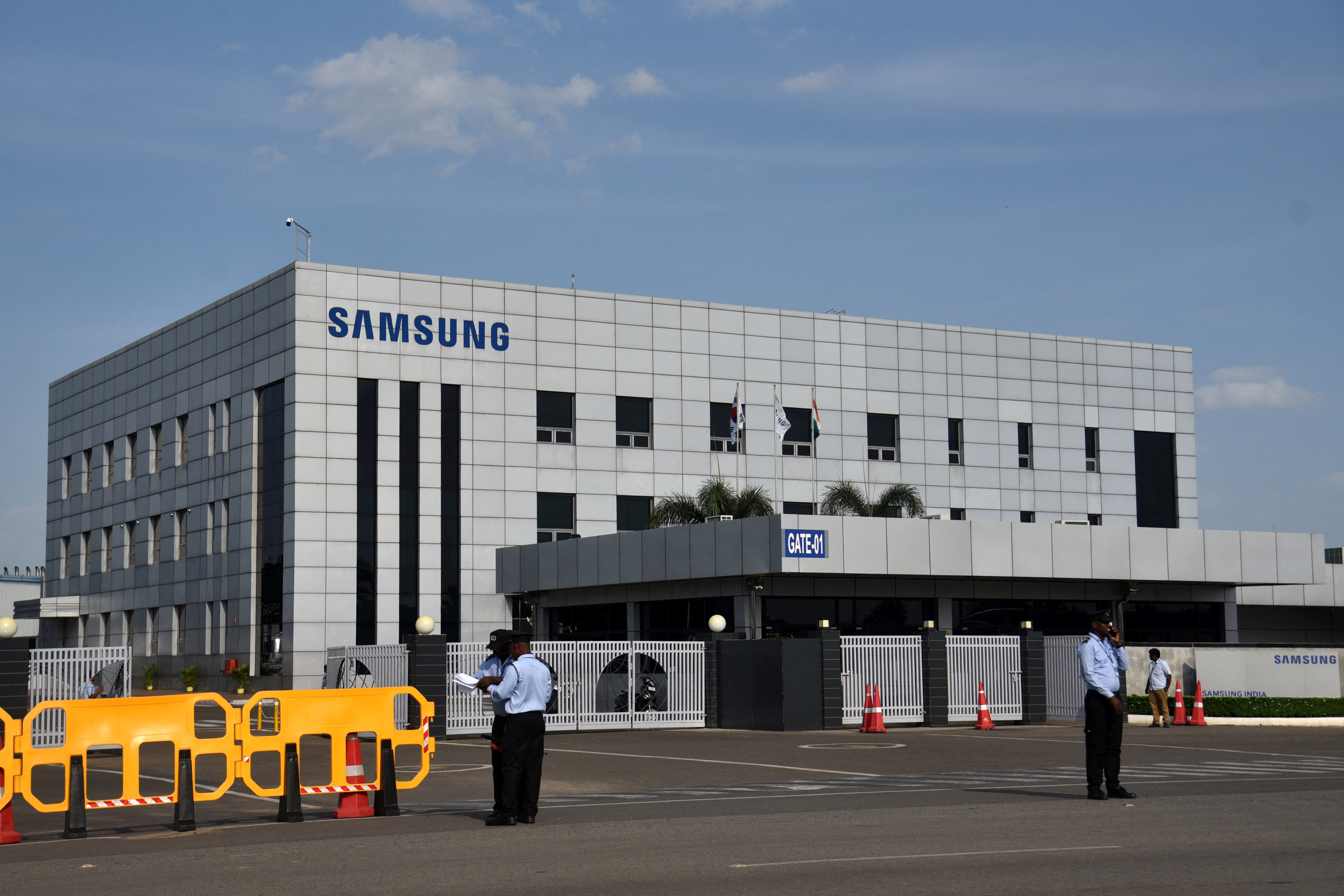
Samsung has commenced local production of laptops in India, marking a significant shift in its manufacturing strategy. The move follows growing trends in the global tech industry, where companies are increasingly decentralising their manufacturing to cater to regional markets and mitigate supply chain risks. The tech giant’s decision to set up its laptop assembly line in India comes as part of a broader push to diversify its production capabilities and tap into the country’s emerging manufacturing ecosystem.

The new facility, which is located in Noida, is expected to meet rising demand for Samsung laptops in India and other parts of Asia. The plant will focus on assembling a range of models, from entry-level to premium devices, with an emphasis on enhancing the supply of high-performance laptops. By doing so, Samsung aims to capitalise on the Indian government’s incentive schemes aimed at boosting local manufacturing and creating jobs in the sector.

India has become an increasingly attractive destination for global manufacturers due to its robust infrastructure, competitive labour costs, and a growing pool of skilled engineers and technicians. Samsung’s decision to invest in local laptop production highlights the country’s status as a strategic hub for tech companies looking to scale operations. The move also aligns with the Indian government’s vision of becoming a global manufacturing leader under the “Make in India” initiative, which encourages foreign companies to establish production bases in the country.

The South Korean company has been investing heavily in India over the past few years, with a significant focus on expanding its footprint in consumer electronics, particularly smartphones. The expansion of laptop production further strengthens its position in the Indian market, where the demand for personal computing devices has been steadily increasing. India, with its young population and rapid digitalisation, presents a lucrative market for tech companies. By establishing local manufacturing units, Samsung can not only meet this demand more effectively but also potentially lower the cost of its devices by reducing import duties and other logistical expenses.

Samsung’s Noida plant will be equipped with advanced manufacturing technology, allowing the company to ensure that its laptops meet international quality standards. The facility is expected to produce several million units annually, with an eye on both the domestic and export markets. This localisation strategy is expected to significantly cut down on shipping costs and delivery times, giving Samsung a competitive edge over other international brands that continue to import their devices into the country.

The move comes at a time when India is becoming increasingly attractive to global technology firms. Companies like Apple, Dell, and HP have already ramped up their manufacturing presence in India in recent years. India’s well-established electronics sector, supported by the government’s push to improve infrastructure and streamline regulatory processes, has led to a surge in foreign direct investment in the country’s tech manufacturing ecosystem.

Samsung’s expansion into laptop production also reflects the growing importance of India in the global supply chain. The country’s status as a low-cost production base, combined with its large consumer market, makes it an attractive location for companies looking to avoid the risks associated with heavy dependence on single countries, such as China. By shifting some of its manufacturing operations to India, Samsung can reduce its exposure to potential disruptions in China, which has long been the dominant player in global electronics manufacturing.

This shift is also likely to have broader implications for the Indian tech industry. With global giants like Samsung setting up local production lines, it is expected that the country will see an increase in the number of skilled jobs in the tech sector. Additionally, the growing demand for locally manufactured devices may spur innovation in the country’s tech ecosystem, encouraging the development of homegrown talent and technologies. This would not only strengthen India’s position as a manufacturing hub but also lay the foundation for the growth of its own tech startups.

VISHNU RAJA
RYO YAMADA
HITORI GOTOH
IKUYO KITA