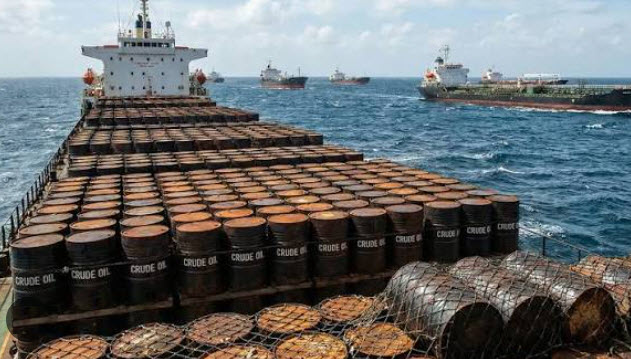
Iron ore remained close to its lowest level in more than two years as weakening steel demand in China and rising global shipments kept pressure on prices, despite expectations of additional economic support from Beijing. The benchmark November contract on the Singapore Exchange traded around $90.60 a tonne on Monday, October 26, after falling below $90 earlier this month. The most-traded contract on China’s Dalian Commodity Exchange […]
Artificial intelligence and cryptocurrency are moving towards practical financial applications, but regulatory uncertainty, technological limitations and institutional infrastructure remain significant obstacles, industry executives and investment specialists told the CryptoAI Summit 2026 in New York. The conference, organised by blockchain news platform Bitpush, brought together representatives from banking, investment management, technology, academia and digital asset businesses to examine how artificial intelligence could reshape payments, trading and financial services. […]
Microsoft, Alphabet and McDonald’s are among 22 publicly traded companies objecting to plans to offer blockchain-based versions of their shares on a proposed US trading platform, complicating a venture backed by cryptocurrency exchange OKX and New York Stock Exchange owner Intercontinental Exchange. The opposition widened on Friday when six more companies, including Wells Fargo, Arm Holdings and Intuit, joined the list of issuers resisting the proposed OKXICE […]
China’s state-linked equity funds attracted their largest weekly inflows since the April 2025 trade-war sell-off, signalling intensified efforts to support a stock market battered by persistent selling.
Nine exchange-traded funds widely associated with the country’s so-called national team recorded combined net inflows of 128.7 billion yuan ($19 billion) during the week ending 23 October. The total was the highest since nearly 140 billion yuan entered the same closely watched group during the tariff-driven market turmoil 18 months earlier.
The surge followed a punishing decline in mainland shares that pushed the CSI 300 benchmark into bear-market territory, conventionally defined as a fall of at least 20% from a previous peak. Investors have been monitoring large purchases of index-tracking funds for indications that state-backed institutions are seeking to contain further losses.
The figures measure money entering funds favoured by official investors rather than confirmed purchases by government-controlled entities. No public announcement has established how much of last week’s inflows came directly from the state, making the scale of official intervention difficult to determine precisely.
Central Huijin Investment, a unit of sovereign wealth fund China Investment Corporation, is among the principal institutions associated with market stabilisation. Its investment activity has become an important signal for traders attempting to assess Beijing’s willingness to support share prices during periods of intense volatility.
The latest inflows were concentrated in exchange-traded products offering exposure to broad mainland equity benchmarks. Such vehicles enable institutions to acquire diversified holdings quickly, directing demand towards major listed companies without having to purchase individual shares separately.
Thursday’s trading illustrated the pressure facing authorities. The CSI 300 fell into a bear market as persistent selling overwhelmed earlier signs of institutional support. Funds favoured by state investors attracted approximately 46 billion yuan that day, highlighting the contrast between substantial new subscriptions and continuing weakness in underlying shares.
Friday brought a partial reversal. The CSI 300 finished 1.7% higher at 4,105.33 after falling by as much as 2% during the session. The recovery coincided with unusually active trading in several large index funds, although trading patterns alone cannot identify the buyers responsible.
One CSI 300 exchange-traded fund managed by E Fund Management registered turnover of about 19.5 billion yuan on Friday, its busiest session since October 2024. Heavy turnover can reflect purchases and sales by multiple participants and does not, by itself, establish the size of net state investment.
The rebound provided relief after a prolonged retreat that had already tested confidence in official market-support measures. The benchmark had endured a record sequence of weekly declines, leaving investors focused on whether additional institutional demand could interrupt the selling pressure.
Analysts at China Securities, including Yao Ziwei, had previously identified large subscriptions to leading broad-market funds and heavier activity towards the close of trading as characteristics consistent with institutional buying against the prevailing market trend. Their observations did not amount to confirmation of individual investors’ identities.
The scale of potential support has also attracted attention. Analysts including Rebecca Sin estimated that Central Huijin raised approximately $231 billion through exchange-traded fund sales during the first half of 2026 and redeployed about $43 billion after purchases resumed in July. Their calculations suggested considerable remaining capacity, although available resources do not guarantee further buying.
Those estimates underscore the distinction between market intervention and a sustained recovery. Purchases can provide immediate demand for shares, but their effect depends partly on whether other investors become willing to hold equities without continued institutional assistance.
The comparison with April 2025 is significant because that episode followed sweeping American tariff announcements that triggered sharp market losses. Authorities subsequently introduced measures intended to stabilise trading and confidence. Last week’s inflows approached the scale seen during that earlier emergency, despite the different circumstances surrounding the latest decline.
The nine-fund basket represents only part of China’s exchange-traded fund market. Subscription figures can vary depending on the funds selected, the valuation method and the period measured, while changes in units outstanding cannot establish the identity of the ultimate purchaser.
Mainland exchange-traded funds are listed securities whose prices fluctuate throughout the trading day. Their creation and redemption mechanisms allow authorised institutions to adjust the number of units outstanding as investor demand changes. These mechanisms can produce substantial changes in reported fund flows even when trading activity involves different categories of institutional and individual market participants.
CoinDCX has confirmed a cryptocurrency loss of nearly $16 million after an internal transfer system failed, reversing its initial dismissal of suspicious withdrawals from wallets previously compromised in a security breach. The Mumbai-based exchange said on Sunday that it had absorbed the loss of 15.99 million USDT, a dollar-linked cryptocurrency issued by Tether, and that customer balances and active trading systems remained unaffected. Its disclosure followed questions […]
By K Raveendran Escalating tensions between the United States and Iran are threatening to push global oil markets into another period of turbulence, but India has found an unexpected measure of protection in President Donald Trump’s decision to ease sanctions on Russian energy. The policy reversal, driven partly by Washington’s own need for Russian diesel, […]
By T N Ashok NEW YORK: The latest diplomatic signals from Washington and New Delhi suggest that a prolonged India–US trade confrontation may finally be approaching a settlement. US President Donald Trump says a deal is close. Secretary of State Marco Rubio, after meeting External Affairs Minister S. Jaishankar in Mumbai on October 20, has […]
OpenAI is nearing a funding round of up to $30 billion at a proposed $1.25 trillion valuation, below the $1.4 trillion initially discussed with investors, as negotiations enter their final stages. The revised figure represents a $150 billion reduction in the ChatGPT developer’s valuation target, although the financing remains under discussion and neither the amount raised nor the final price has been confirmed. OpenAI has not publicly […]
Bank of America’s $1.2 billion anti-money laundering charge has intensified scrutiny of outdated compliance systems after US regulators identified extensive failures to detect and report suspicious transactions. The penalty, disclosed alongside the bank’s third-quarter results on October 14, reduced earnings by 17 cents a share and highlighted the financial consequences of weaknesses that regulators said persisted despite earlier warnings and corrective commitments. The bank reported quarterly net […]
New report sets out a method the industry can use to put a financial value on climate resilience
The Westbund Central case study shows that its resilience measures are expected to keep storm-surge and rainfall-flood losses in 2050 below the losses an unprotected building would face today
HONG KONG SAR – Media OutReach Newswire – 23 October 2026 – Hongkong Land Holdings Limited (“Hongkong Land”) today published Building Value That Lasts: Quantifying the Return on Climate Resilience in Real Estate. The report developed with Marsh puts a financial value on designing buildings for a changing climate. Its case study is Westbund Central, Hongkong Land’s mixed-use waterfront development of approximately 1.7 million sq. m. on Shanghai’s Huangpu River.
(From left to right) From left: Michael Long, Head of Group Sustainability, Hongkong Land; Stuart Grant, Chief Executive of Westbund Central, Hongkong Land; Swenja Surminski, Managing Director of Climate and Sustainability, Marsh; and Michael Li, Chairman and President, Marsh Risk China.
The report finds that the development’s resilience measures cut expected storm-surge losses by 84% and rainfall-flood losses by 88% under today’s conditions. Westbund Central’s resilience measures are expected to keep storm-surge and rainfall-flood losses in 2050 below the losses an unprotected building would face today.
Closing the resilience valuation gap
Climate risk now shapes how real estate is assessed, financed and insured. Almost every climate related disclosure acknowledges the need for adaptation, yet fewer than one in ten puts a number on it. Hongkong Land and Marsh set out to close that gap together by treating resilience as an investment with a measurable return, not a cost to be absorbed.
Resilience pays, and the reductions are large
Working with global leading insurance broker and risk advisor Marsh, Hongkong Land modelled the average annual loss (AAL) at Westbund Central from storm surge, rainfall flooding and wind. AAL is the expected yearly cost of physical damage. The modelling compared climate risks today and in 2050 for buildings with and without resilience measures beyond those required by building codes. It assumed a future in which global greenhouse-gas emissions remain high.
Without the development’s enhanced resilience measures, expected storm-surge losses would more than double and wind losses would more than triple by 2050. The measures reduce expected losses as follows:
storm-surge losses fall by 84%, both today and in 2050
rainfall-flood losses fall by 88% today and 79% in 2050
wind losses fall by 36% today and 31% in 2050
Built for the climate of 2050
Westbund Central was engineered for projected climate conditions in 2050, rather than historical conditions. These measures significantly reduce the impact of increasing climate risk:
Storm surge: with Westbund Central’s resilience measures in place, average annual losses in 2050 are projected at 0.12%, compared with 0.38% for a building without these measures today.
Rainfall flooding: with the resilience measures in place, average annual losses in 2050 are projected at 0.05%, compared with 0.19% for a building without these measures today.
Insurers are raising premiums, tightening terms and withdrawing cover from exposed locations. In that market, a lower and more stable loss profile matters.
Westbund Centrals resilience features include:
23% more drainage capacity, protecting against a 1-in-100-year rainfall event
Grade 1 waterproofed basements and the elevation of critical equipment
A “Sponge City” network of more than 12 features designed to capture and store stormwater, with capacity exceeding 2,000 m³
The figures are conservative. They count physical damage only and exclude extreme heat, the fastest-growing hazard at the site, which the development manages through design and operations.
Michael T. Smith, Group Chief Executive of Hongkong Land, said: “Climate change is a significant force reshaping real estate. At Westbund Central, climate resilience is core to all that we do because we believe resilience and commercial performance reinforce each other. This report shows the return on that investment can be measured today, with tools that already exist. The industry no longer has any excuse not to.”
Stuart Grant, Chief Executive of Westbund Central, said: “A premium destination is a seamless one. Much of the resilience work at Westbund Central is deliberately invisible to the tenants and visitors who use it every day. Its value shows in the disruption that never reaches them. Keeping the precinct open, comfortable and trading regardless of weather conditions is how resilience facilitates commercial performance.”
Michael Li, Chairman and President of Marsh Risk China, said: “Climate risk is now a balance-sheet risk. Westbund Central shows that adaptation pays back through lower loss exposure and stronger access to capital. As a risk orchestrator, Marsh matches protection needs to capital flows, helping clients quantify resilience and close the valuation gap.”
A method for the industry
The report is offered as a method others can apply, not just as an account of one development. It traces how climate risk can be assessed from site selection through to operations and linked to financial outcomes. It calls on the industry to:
quantify early, at site selection and design, when action is most cost-effective
bring insurers and lenders in from the start
build a shared standard so resilience can be benchmarked across assets, as carbon already is
For further details, please see the full report which is available for download [here].
Hashtag: #HongkongLand
The issuer is solely responsible for the content of this announcement.
Westbund Central
Hongkong Land’s Westbund Central is the Group’s largest-ever single investment. Scheduled to complete in phases up until 2028, it is an US$8 billion development encompassing approximately more than 1.7 million sq. m. of prime mixed-use property strategically located at Shanghai’s Xuhui Waterfront. It is a flagship development of Hongkong Land’s prime commercial properties’ CENTRAL Series. The ultra-premium integrated commercial property includes 240,000 sq. m of retail space, 650,000 sq. m. of premium Grade A offices, 160,000 sq. m. of high-end waterfront luxury residences, two hotels (55,000 sq. m.) and over 50,000 sq. m. of cultural and art venues.
Hongkong Land
Hongkong Land is a major listed property development, investment and management group. It focuses on developing, owning and managing premium and ultra-premium mixed-use real estate in Asian gateway cities, featuring Grade A office, luxury retail, residential and hospitality products. With over US$50 billion in assets under management, Hongkong Land’s ultra-premium mixed-use real estate footprint spans over 1.97 million sq. m. lettable area in operation and 1.43 million sq. m. lettable area under development, with flagship mixed-use projects in Hong Kong, Singapore and Shanghai. Its properties hold industry leading green building certifications and attract the world’s foremost companies and luxury brands. Established in 1889, Hongkong Land takes a long-term view, investing significantly alongside its capital partners and concentrating its portfolio where it can create the most value for tenants, customers and investors. Hongkong Land Holdings Limited has a primary listing on the London Stock Exchange, with secondary listings in Singapore and Bermuda. Hongkong Land is a member of the Jardine Matheson Group.
Marsh Marsh (NYSE: MRSH) is a global leader in risk, reinsurance and capital, people and investments, and management consulting, advising clients in 130 countries. With more than 95,000 colleagues, Marsh helps build the confidence to thrive through the power of perspective. For more information, visit marsh.com, or follow us on LinkedIn and X.
By Bhasha Singh New defence partnerships are emerging across the world. Their purpose is not merely to strengthen military capabilities but also to reduce dependence on other countries for weapons production and technology. On October 21, Türkiye, Pakistan, Indonesia and Qatar signed the Badr Memorandum of Understanding in Doha, the capital of Qatar. Under this […]
Meta Platforms has agreed to give chief executive Mark Zuckerberg greater freedom to sell shares without surrendering voting control, securing his commitment to remain in California as voters prepare to decide on a billionaire wealth tax. The arrangement, disclosed in a regulatory filing, follows Zuckerberg’s warning that he was considering moving his primary residence outside the state to avoid a potentially multibillion-dollar liability under Proposition 40, which […]
Gold prices fell on Friday and headed for their sharpest weekly decline in more than four months as rising energy costs reinforced expectations that the US Federal Reserve will keep interest rates elevated. Spot bullion traded around $4,021 an ounce, extending its weekly loss to approximately 3.6 per cent. US gold futures dropped 0.6 per cent to about $4,035, bringing the psychologically important $4,000 threshold into sharper […]
SoftBank Group shares fell sharply on Thursday, bringing the Japanese investment company’s market value close to half its June peak as investors questioned the cost of financing its expanding artificial intelligence commitments. The stock dropped more than 5% in Tokyo trading, extending a retreat that has accompanied broader selling across Asian technology markets. The decline has put renewed attention on SoftBank’s reliance on borrowing and the uncertain […]
Alibaba Group Holding Ltd shares plunged nearly 6% in Hong Kong on Thursday, leading a technology sector selloff after China’s market regulator demanded stronger product quality controls and consumer protection measures across major ecommerce platforms.
The company’s stock fell to HK$97.55 during morning trading, marking its steepest intraday decline in two months. Investors reacted to indications that Beijing could intensify scrutiny of online marketplaces, potentially increasing compliance costs for Alibaba and its competitors.
China’s State Administration for Market Regulation disclosed on Wednesday that it had convened a meeting in Beijing with representatives of leading digital commerce businesses to discuss improving product standards, strengthening consumer safeguards and addressing shortcomings in platform governance.
Shares of JD. com dropped approximately 4.7%, while Kuaishou declined more than 4%. Other technology companies, including Tencent, Meituan, Xiaomi and NetEase, also suffered losses as selling spread across the sector.
Hong Kong’s Hang Seng Index declined nearly 3%, touching a three-month low, while the Hang Seng Tech Index dropped more than 4%, reaching its weakest level since September 2024. The technology benchmark has lost more than 30% this year.
The regulatory announcement focused on persistent problems involving counterfeit merchandise, misleading advertising and products failing to match descriptions provided by online sellers. Authorities identified livestream shopping, instant retail services and social commerce as areas where product safety risks have become increasingly complex.
The regulator said platforms must strengthen their responsibilities as gatekeepers, establish comprehensive quality management systems and improve supervision throughout commercial supply chains. Companies were instructed to align their practices with existing regulatory guidance and the government’s 2026 quality improvement priorities.
Officials also emphasised greater transparency, improved aftersales services and more effective mechanisms for resolving consumer complaints. The measures seek to strengthen accountability among platform operators without necessarily introducing an entirely new regulatory framework.
Representatives from Alibaba’s Taobao and Tmall businesses attended the meeting alongside JD. com, Pinduoduo, Xiaohongshu, Kuaishou, Douyin, Vipshop and other online trading platforms.
The gathering followed guidance issued last year by ten government departments, including the market regulator, the Cyberspace Administration of China and the Ministry of Industry and Information Technology, concerning product and service standards across digital marketplaces.
Authorities acknowledged that companies had implemented improvements under those guidelines but said substantial challenges remained. Emerging business models were creating additional difficulties for regulators attempting to identify unsafe products, deceptive marketing and inadequate consumer safeguards.
For Alibaba, the renewed regulatory emphasis directly affects its domestic commerce operations, particularly Taobao and Tmall, which connect merchants with consumers across China’s vast online retail market.
Stricter monitoring requirements could oblige marketplace operators to devote additional resources to merchant verification, product inspections, complaint handling and supply chain oversight. The financial implications will depend on how existing requirements are implemented and enforced.
The announcement did not disclose fresh financial penalties against Alibaba or establish a timetable for additional enforcement measures. The market reaction therefore reflected concerns about possible regulatory consequences rather than confirmation of sanctions against the company.
Broader investor caution compounded the selling pressure. Mainland investors had reduced their exposure to Hong Kong equities during the preceding trading session, while technology valuations remained under pressure amid questions surrounding substantial expenditure on artificial intelligence infrastructure.
Alibaba has committed significant capital to expanding its computing capacity and artificial intelligence operations, making investor assessments of profitability and spending particularly important alongside regulatory developments.
The company completed an HK$80 billion share placement in August, allocating approximately 60% of net proceeds towards expanding global computing infrastructure and the remainder towards hyperscale artificial intelligence data centres and upgrades to cloud systems.
That financing underlined Alibaba’s commitment to technological investment even as its established ecommerce businesses face heightened expectations concerning operational standards and consumer safeguards.
The regulator also encouraged companies to use commercial data to improve product quality among suppliers, linking information gathered through online transactions with manufacturing improvements and better supply chain coordination.
Another proposal involved developing and publishing platform quality governance indices, intended to provide consumers with clearer information about standards maintained by different marketplaces.
Officials urged participating companies to strengthen cooperation with regulators and other stakeholders while making information about products and services more transparent.
The meeting included discussions of the ISO 9001 quality management framework and methods for businesses to assess their own governance arrangements. Platform representatives exchanged views on implementing quality improvements and addressing weaknesses identified by the authorities across online trading activities.
Arabian Post Staff -Dubai BlackRock has launched a robotics-focused exchange-traded fund, widening its artificial intelligence investment range as investors become more selective about exposure to the technology. The iShares Future Robotics and Related Technologies Active ETF began trading on NYSE Arca on Wednesday, 21 October, under the ticker RBTX. The fund seeks investments across businesses developing, supplying and deploying intelligent machines that automate physical tasks, including operations […]
A US food importer has challenged President Donald Trump’s 50 per cent tariffs on Canadian goods in the United States Court of International Trade, arguing that the administration exceeded its legal authority. Gellert Global Group filed the lawsuit on Tuesday, October 20, with representation from the Liberty Justice Center. The New York-based court has been asked to halt collection of the duties, declare them unlawful and order […]
Arabian Post Staff -Dubai A unit of Abu Dhabi Investment Authority has secured shares in Paras Healthcare’s Rs 14.5 billion initial public offering, placing the emirate’s sovereign wealth capital among the hospital operator’s institutional backers. The Gurugram-based company opened its public subscription on Wednesday, October 21, with bidding scheduled to close on Friday. Its anchor placement, completed on October 19, raised Rs 6.525 billion from domestic and […]
Jio Platforms opens its $3.2 billion initial public offering to public investors on Wednesday, launching India’s biggest share sale and the first flotation from Mukesh Ambani’s Reliance group in two decades. The telecom and digital services company has priced its shares between Rs 1,065 and Rs 1,119, with subscriptions running until Friday. At the upper end, the offering of 270 million new shares would raise approximately Rs […]
Cryptocurrency trading platform Bitget has announced plans to acquire a licensed digital asset exchange in Thailand, seeking a regulated operating base in the country through a transaction that remains subject to official approval. The proposed acquisition involves Bangkok-based GMO-Z. com Cryptonomics (Thailand) Co., Ltd., which operates a digital asset exchange and brokerage. Bitget said on Tuesday that the purchase would be undertaken through its interest in BTGT […]
The world’s most powerful central banks are lining up to raise interest rates at the same time. History suggests this rarely ends quietly. The Federal Reserve is, I believe, likely to hold this month, then hike in December. Markets put the odds of a European Central Bank rise in December at 84%. Canada’s inflation has smashed through its target. British wage growth keeps running hot. Everywhere you […]
Arabian Post Staff -Dubai Abu Dhabi National Energy Company (TAQA) has launched a dual-tranche US dollar bond offering, targeting international investors as the utility group seeks financing for eligible green projects and other corporate requirements. The transaction, launched on Monday, October 19, comprises a long five-year tranche and a 10-year tranche of senior unsecured notes. Initial pricing discussions placed the shorter maturity at approximately 130 basis points […]
Industry Giants Gather in Ningde to Jointly Accelerate the Layout of the “Tesson Smart Power” Ecosystem
HONG KONG SAR – Media OutReach Newswire – 19 October 2026 – Tesson Holdings Limited (Stock Code: 01201.HK, hereinafter referred to as “Tesson Holdings”), a company listed on the Main Board of The Stock Exchange of Hong Kong Limited, today issued an official announcement stating that its direct wholly-owned subsidiary has entered into an agreement with CCPOM Limited to acquire 100% equity interest in Contemporary Huazhi New Energy Technology Hong Kong Limited (hereinafter referred to as “Contemporary Huazhi (Hong Kong)”) for RMB 98.4 million, with a simultaneous capital injection of RMB 21.6 million (representing a total consideration of RMB 120 million).
On the same day, the “Solar-Storage-Charging-Inspection & Intelligent Zero-Carbon” Innovation Seminar and Strategic Signing Ceremony, co-hosted by Times Huazhi (时代华智) and Tesson Holdings, was grandly held at Fujian Jixin Solar-Storage-Charging-Inspection Technology Co., Ltd. (福建集新光储充检技术有限公司) in Overseas Chinese Building, Ningde, Fujian (福建宁德华侨大厦). At the seminar, Mr. Huang Shilin, Co-founder of Contemporary Amperex Technology Co., Limited (hereinafter referred to as “CATL”) and Chairman of Fujian Jixin Solar-Storage-Charging-Inspection Technology Co., Ltd. (福建集新光储充检技术有限公司) delivered a keynote speech. He conducted an in-depth analysis of the industry trends regarding the integrated development of new energy and intelligent charging/inspection, which drew enthusiastic responses from the attendees.
The signing ceremony brought together many distinguished guests. Under the joint witness of officiating guests including Mr. Huang Shilin, Professor Yu Changyuan from The Hong Kong Polytechnic University, and Mr. Wei Qingwen, representative of the major shareholder of Tesson Holdings, Tesson Holdings and Times Huazhi (时代华智) officially completed the agreement signing. At the same time, Tesson Holdings joined forces with Times Huazhi (时代华智), Inspur Group, EV Power, Wanji International (万吉国际), and several other industry-leading enterprises as well as top research institutions to sign multiple Memoranda of Understanding (MOUs) for strategic cooperation. This marks a breakthrough achievement for Tesson Holdings in platform-based operations of smart power and new energy infrastructure layout since the launch of its new brand “Tesson Smart Power” in August this year.
Dual Strategy of Acquisition and Capital Injection: Anchoring the Innovative Track of “Solar-Storage-Charging-Inspection and Intelligent Zero-Carbon”
According to the announcement, RMB 38.4 million of the total consideration for this transaction will be paid in cash. The remaining acquisition consideration of RMB 60.0 million will be satisfied and completed by issuing consideration shares at HK$2.00 per share, while the simultaneous capital injection of RMB 21.6 million will be paid and completed as consideration for the subscription shares.
As a pioneer enterprise in the field of intelligent zero-carbon park operations for solar-storage-charging-inspection systems, Times Huazhi (时代华智) has successfully deployed multiple solar-storage-charging-inspection and zero-carbon park projects in core cities such as Shanghai and Fuzhou. Upon completion of this acquisition and capital injection, Tesson Holdings will directly incorporate high-quality new energy infrastructure assets, further enhancing the company’s operational capabilities and asset scale in high-power fast charging, energy storage, and zero-carbon microgrids.
Signing of Three Major MOUs: Building a Closed-Loop Chain of “Computing-Power Synergy + Energy-Carbon + Industry-Academia-Research”
At the signing ceremony held on the same day, Tesson Holdings and Times Huazhi (时代华智), together with several industrial partners, reached four deep strategic collaborations:
1. Computing-Power Synergy and Joint Innovation (AIDC): Partnered with Inspur Group and Micro-Gathering Power Sale (微聚售电) to jointly explore the integration model of AI Data Center infrastructure (AIDC) with new power sales and Virtual Power Plants (VPP).
2. Hong Kong Layout and Collaborative Innovation for Solar-Storage-Charging-Inspection: Partnered with EV Power, a leading EV charging operator in Hong Kong, and Wanji International (万吉国际), a green logistics operator, while introducing the 5D Power team from The University of Hong Kong and the HYBAY team from The Hong Kong University of Science and Technology, to jointly create demonstration projects for solar-storage-charging-inspection and green logistics in Hong Kong.
3. Joint Construction of International Innovation Design Center (Hong Kong & Fujian): Partnered with Fuzhou University Design & Research Institute (福州大学设计研究院), Gesuo Technology (格索科技), and Anlaseo (a spin-off enterprise from The Hong Kong Polytechnic University) to promote the engineering applications of achievements such as smart energy replenishment stations for solar-storage-charging-inspection.
Tesson Holdings and Times Huazhi (时代华智) deepened their cooperation by leveraging the advantages of the global industrial chain ecosystem resources of CATL to jointly explore the strategic collaborations implementation and innovative industrial upgrading of securitization for energy-carbon assets in new power track of solar-storage-charging-inspection.
Management of Tesson Holdings stated that the completion of this acquisition and multi-party strategic cooperation marks a crucial step for the company toward becoming an “Innovative Operator in Smart Power and Energy-Carbon”. Looking ahead, Tesson Holdings will rely on its development roadmap of “Battery Manufacturing — Zero-Carbon Microgrid & Energy Storage Operations — AI Power Trading & Energy-Carbon Asset Platform”, and fully utilize the strong support and resource empowerment from strategic shareholder Mr. Huang Shilin, Co-founder of CATL. The company will continue to deepen its green energy network layout in the Greater Bay Area and core cities, creating long-term value for urban low-carbon transformation.
Hashtag: #TessonHoldings
The issuer is solely responsible for the content of this announcement.
About Tesson Holdings Limited (1201.HK)
Tesson Holdings Limited (Stock Code: 01201.HK) is a company listed on the Main Board of The Stock Exchange of Hong Kong Limited, focusing on (among other things) the deep integration of the new energy industry chain. Its strategic positioning includes being an innovative operator in smart power and energy-carbon. Centering on “Smart Power Source + Smart Electricity”, the company comprehensively expands into energy storage, solar-storage-charging-inspection, zero-carbon microgrids, AI energy management, and energy-carbon asset operations, striving to connect global high-quality industrial and capital resources to empower the high-quality development of the new energy ecosystem.
Strategy, the bitcoin treasury company chaired by Michael Saylor, has acquired another 267 bitcoin for approximately $22.1 million, taking its holdings to 848,517 coins as it continues buying the cryptocurrency despite pressure on its shares. The latest acquisition, disclosed on Monday, 19 October, represents an average expenditure of roughly $82,800 per bitcoin. Strategy’s cumulative holdings were acquired for approximately $64.02 billion, including transaction costs, at an average […]