News related to
trading

A federal lawsuit filed on 24 October 2025 in the US District Court for the Northern District of California alleges that Pi Network and its parent company SocialChain Inc. secretly sold roughly 2 billion Pi tokens, engaging in what the plaintiff describes as securities fraud and market manipulation. The claimant, an investor from Arizona, seeks US$10 million in damages, claiming that the covert sales and misrepresentation caused his holdings—and those of many others—to plummet in value.

The complaint targets the project’s co-founders, Chengdiao Fan and Nicolas Kokkalis, alongside related entities, charging that the insiders misled users about token distribution, retained disproportionate control over supply, and withheld access to liquidity while off-loading large holdings to third-party IOU-markets without disclosure. As per the filing, the transfers and sales occurred despite the mainnet not being officially open for trading, raising serious doubts over fairness and transparency.

Defenders of Pi Network point out that the lawsuit appears to focus on third-party IOU markets rather than the mainnet-bound Pi coin itself. The project has always warned users that such markets are speculative and unofficial, with no guarantee of liquidity. They argue that the circulating IOU valuations, sometimes cited in arguments over alleged losses, reflect nothing more than unregulated speculation rather than legitimate market price.

Man Group Plc has moved to secure a regulatory licence to establish an Abu Dhabi office next year, signalling a deeper shift among global asset managers toward the Gulf as the region accelerates its ambitions to become a leading centre for alternative investments. The London-listed hedge fund confirmed the application, underscoring its intention to broaden its footprint in a market that has drawn some of the world’s […]

Web3 momentum across the Gulf is increasingly visible in grassroots spaces where developers, founders, and early-stage investors gather to exchange ideas far from official boardrooms. The growth of these informal networks in Dubai, Abu Dhabi, Riyadh, and Bahrain has become a notable driver of activity in blockchain, tokenisation, digital assets, and decentralised applications, complementing government-led strategies that have positioned the region as a key hub for emerging […]

A dramatic shift in digital asset markets unfolded as one of the year’s fastest-rising crypto trades, which surged more than 2,600% at its peak, unravelled with an 86% wipeout, shaking confidence across a sector already grappling with volatility, liquidity strains, and shifting regulatory expectations. The abrupt reversal, mirrored in the steep fall of smaller token clusters linked to speculative momentum strategies, highlighted how rapidly sentiment can turn in an ecosystem vulnerable to leverage-driven cycles.

Market data from major exchanges showed that the trade, centred on a group of micro-capitalisation tokens propelled by algorithmic buying, began losing momentum after a wave of profit-taking by early entrants. Traders close to proprietary desks reported that liquidation cascades—triggered as automated systems unwound positions—accelerated the decline. The severe downturn echoed patterns seen during previous speculative surges, where liquidity gaps magnified losses within hours.

Analysts tracking blockchain activity noted that the rally’s ascent had attracted retail inflows, partly due to social-media-driven narratives framing the tokens as high-growth opportunities. As prices climbed, leverage amplified exposure, drawing in traders seeking outsized returns. Once selling pressure gained traction, that leverage turned into a critical vulnerability, forcing positions to unwind just as liquidity thinned. Several independent market researchers observed that the velocity of the downturn suggested a structural fragility, rather than a simple correction.

The collapse also revived discussion about the role of automated strategies in amplifying market instability. Many of the instruments involved were linked to quant-driven flows, where bots responded to volatility triggers rather than underlying fundamentals. As one portfolio strategist explained, these systems can cause price swings that move far beyond what traditional finance would consider tolerable, adding that crypto lacks the circuit-breaker mechanisms that help stabilise other asset classes. This dynamic, according to several fund managers, remains one of the most persistent challenges for institutions considering deeper exposure to decentralised markets.

Regulatory uncertainty added to the unease. Authorities in key jurisdictions have been scrutinising high-risk digital asset structures, and policymakers have signalled the possibility of tighter oversight for tokens driven by momentum rather than intrinsic value. Market observers said that while there is no direct link between regulatory commentary and the downturn, the broader environment has weighed on risk appetite. Investor caution intensified as questions resurfaced about transparency in the trading strategies behind the surge.

The downturn also exposed liquidity fragmentation across exchanges. Some platforms reported delays in order execution as volumes spiked, and spreads widened sharply during peak selling. Professional traders said this fragmentation remains a major impediment to maturing the sector, as it complicates price discovery and heightens vulnerability to abrupt swings. Several firms specialising in market-making suggested that the episode would likely prompt renewed calls for better liquidity management frameworks within decentralised ecosystems.

Amid the turmoil, major digital assets such as Bitcoin and Ether showed relative resilience, though both experienced elevated intraday volatility. Their ability to avoid the extreme swings seen in smaller tokens prompted commentary that the market may be entering a phase where speculative micro-caps detach from more established assets. Still, derivatives positions linked to broader sentiment recorded notable adjustments, indicating that traders remain sensitive to signs of systemic stress.

Industry insiders highlighted that the steep crash follows a pattern of momentum-driven phases that have punctuated crypto cycles since the first wave of retail adoption. A veteran analyst noted that while earlier episodes centred on initial coin offerings or meme-driven tokens, the current one underscores how algorithmic and social-media amplification have merged, producing sharper and faster boom-and-bust phases. The analyst added that such swings complicate long-term valuation models, as fundamental metrics often become secondary to speculative flows.

Venture-backed projects tied to the affected tokens faced heightened scrutiny as investors assessed whether the price collapse would impair broader ecosystem development. Some founders sought to reassure stakeholders by highlighting active user bases and ongoing technical upgrades, although several funds acknowledged that valuation resets were unavoidable. Market participants stressed that while token prices do not always reflect underlying project viability, extreme volatility can hinder funding conversations and stall adoption.


Sui’s token structure is drawing heightened attention as analysts warn that the network’s locked supply and insider concentration could influence market behaviour during the next phase of token distribution. A new assessment suggests that questions around the durability of Sui’s rally persist despite the project’s growing activity in decentralised applications and its positioning as an alternative to high-throughput chains. The concerns have surfaced as market participants look for signals on whether Sui could mirror the type of extended rally seen in Solana during its strong periods of expansion.

Sui’s token model includes a large quantity of locked tokens that are programmed to enter circulation according to a long-term schedule. Data compiled by blockchain monitoring platforms indicates that more than half of the total supply, around 50.57 per cent, remains locked. The release of these tokens is staggered, but analysts note that the size of the locked tranche means the market will continue to grapple with questions about absorption capacity and price impact. A cohort of early backers and core contributors holds about 15.3 per cent of the supply, a figure that has prompted market watchers to examine whether insider allocations could add to selling pressure once vesting windows open.

Developers behind the network emphasise that the emissions framework was designed to support long-term decentralisation and sustainable staking rewards. They argue that the programme aligns incentives for validators, node operators and builders working on the Layer-1 blockchain. However, the scale of the locked supply and the pace at which it is due to unlock have remained central to external evaluations, especially against the backdrop of aggressive capital rotation across digital asset markets.

Sui has promoted itself as a platform capable of handling high transaction throughput through its parallel execution model, distinguishing itself from chains that rely heavily on sequential processing. The project has advocated for its ability to support complex applications, with gaming, asset tokenisation and digital commerce cited as core areas of growth. Activity on the network has picked up over multiple trading cycles, with decentralised exchanges and gaming protocols playing a visible role in boosting usage. Even so, market analysts caution that network adoption alone cannot insulate the token from structural risks tied to large unlocks.

The comparison with Solana has intensified as traders search for the next high-growth ecosystem. Solana’s expansion was driven by rising developer activity, strong venture backing and an improving macro climate for risk assets, elements that contributed to a prolonged appreciation in its token price. Some traders argue that Sui possesses a similar mix of technical ambition and ecosystem investment. Others counter that Solana’s earlier supply dynamics were markedly different, with less pronounced unlocking over short intervals. These observers state that expectations of a parallel trajectory should be tempered until Sui demonstrates a firmer balance between token issuance and organic demand.

Several research desks have highlighted that tokenomics alone do not determine the long-term trajectory of a blockchain project but can exert considerable influence during early growth phases. Analysts tracking the project have pointed to previous unlock waves that resulted in more volatile trading sessions. They note that liquidity conditions matter significantly when large quantities of tokens transition from locked to tradable status, particularly during market downturns. Market participants monitoring derivatives markets also report that funding rates and open interest data reflect cautious positioning around major unlock dates.

The project’s foundation continues to emphasise builder incentives, community grants and ecosystem expansion. Grants directed towards game studios, consumer applications and infrastructure tools have created steady interest among developers seeking alternatives to more congested chains. Daily active accounts and transaction counts have shown periodic spikes, although interpreters of blockchain data stress that differentiating genuine usage from opportunistic activity remains essential when evaluating the long-term strength of an ecosystem.

A growing number of young people in the UK are trading ambition for a university degree in favour of apprenticeships and vocational training in skilled trades — a shift driven by worries that artificial-intelligence tools will undermine the viability of many white-collar careers. At London’s City of Westminster College, enrolments in plumbing, electrical work, construction, carpentry and similar hands-on courses are climbing sharply. Among those heading to […]

A curious experiment in automated finance has produced a result that is raising questions about the limits of machine-driven markets. A trading tournament built to showcase the sophistication of competing AI systems has ended in a collective stumble, with every participating model posting losses. The outcome is fuelling debate over whether advanced algorithms are as market-ready as their creators claim, and whether any model can reliably navigate […]

Advertisements

A proposed acquisition involving Solmate and RockawayX is set to form a digital-asset business valued at about $2 billion, marking one of the most significant consolidation moves in the crypto infrastructure segment this year. The companies have signed a term sheet that lays the foundation for a unified institutional platform, bringing together treasury management, custody, infrastructure services, and investment capabilities under a single framework aimed at accelerating growth in regulated markets.

The structure under discussion places Marco Santori at the helm of Solmate as chief executive, overseeing the combined treasury and infrastructure strategy. Santori, whose career has spanned legal, compliance and policy roles across the crypto sector, is expected to steer the organisation through advancing regulatory requirements and the maturation of institutional demand for blockchain-based services. Viktor Fischer will continue as chief executive of the RockawayX subsidiary, maintaining operational continuity for the unit’s investment and venture activities, while supporting its integration into the broader strategy being shaped for the merged entity.

The term sheet signals a drive toward strengthening institutional-grade products, an area that has been expanding as asset managers, banks and corporates look for secure and compliant exposure to digital assets. Market analysts note that consolidation among service providers has intensified during the year, with firms seeking scale to meet tighter rules around custody, disclosures and consumer protection. The combined platform is positioned to benefit from these pressures, particularly as policymakers in Europe and the Gulf continue to advance clearer frameworks for crypto trading and asset tokenisation.

Both companies have been active in digital-asset infrastructure, with Solmate operating from the UAE while expanding its footprint across treasury services, custody architecture and enterprise solutions, and RockawayX building a presence in venture investment and decentralised finance infrastructure. Industry observers point out that merging these capabilities could create a diversified revenue base that spans recurring service fees and strategic investment returns. The proposal aligns with a wider shift toward vertically integrated models, enabling providers to streamline operations and reduce dependence on external platforms.

The acquisition plan comes at a time when institutional appetite for blockchain-based solutions has grown. Asset tokenisation has gained traction across global financial centres, with several regulators encouraging pilots in settlement, fund distribution and real-world asset token structures. Market estimates from financial institutions tracking tokenisation flows suggest that the segment could expand into multi-trillion-dollar territory over the next decade, creating opportunities for firms positioned to serve corporate treasuries and fund managers seeking secure digital infrastructure.

Santori has highlighted in prior industry engagements that regulatory clarity is central to institutional adoption. His role in shaping the combined strategy is seen as critical as Solmate works to align its offerings with evolving rules across the EU, the UK and the Gulf. Fischer, meanwhile, has maintained a focus on early-stage blockchain innovation and decentralised services, an area where RockawayX has built strong networks with founders and developers. The proposed structure allows both executives to operate within their respective strengths while contributing to a unified long-term roadmap.

The companies are expected to enter a detailed due-diligence phase, during which they will assess operational integration, regulatory conditions and market positioning. While the term sheet outlines key leadership and structural arrangements, the final agreement will depend on further negotiations and any regulatory permissions required in relevant jurisdictions. People familiar with transactions of this scale emphasise that the coming stages typically involve extensive compliance reviews, cybersecurity audits and technology-stack assessments, especially for firms engaged in digital-asset custody and treasury operations.

Market participants say the combined entity’s valuation of around $2 billion reflects the premium placed on platforms capable of serving institutional demand for secure storage, liquidity management, infrastructure and tokenisation support. Comparable transactions this year have highlighted a rising interest among investors in firms that can bridge traditional financial practices with advanced blockchain tools. Analysts also point out that bringing treasury and venture operations together may create synergies, allowing insights from early-stage ecosystems to inform enterprise-level product design.

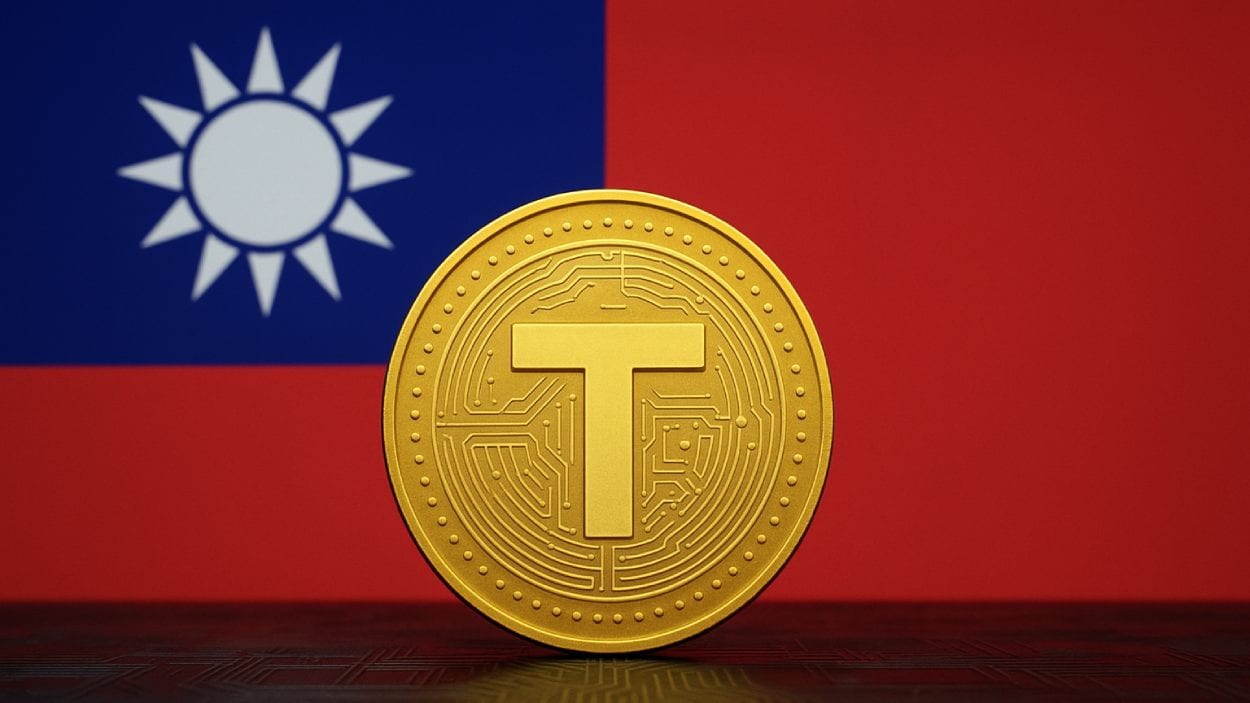
Taiwan’s financial authorities have confirmed that the territory is preparing to introduce its first regulated stablecoin by the second half of 2026, marking a significant step in its oversight of digital assets. The move establishes a formal framework for issuers and signals a wider effort to balance financial innovation with stricter consumer safeguards.

The Financial Supervisory Commission said the project aims to create a compliant asset-backed token that can operate within a supervised environment. Officials outlined that the proposed model would require issuers to undergo licensing, maintain verifiable reserves and implement robust disclosure rules. The initiative forms part of a broader regulatory roadmap that includes enhanced governance standards for exchanges and custodians, supplemented by anti-money laundering protocols already legislated in earlier phases of Taiwan’s digital asset oversight.

Taiwan has seen increased retail interest in digital tokens over the past two years, accompanied by concerns about informal trading platforms and fragmented reserve practices. Authorities have been developing clearer definitions around virtual asset providers, following earlier commitments to draft bespoke legislation for the sector. The stablecoin proposal marks the first time regulators have publicly set a target date for a national, fully supervised token that can circulate in mainstream financial channels.

Officials involved in the planning process described the stablecoin framework as an attempt to reduce systemic vulnerabilities that arise from lightly governed instruments. They indicated that the 2026 timeline allows sufficient room for market consultation with local banks, fintech operators and blockchain firms. The authorities emphasised the need for transparency around backing assets, independent audits and liquidity arrangements to prevent redemption shocks during periods of market stress.

Taipei’s policy trajectory mirrors a wider shift across Asia, where governments have begun formalising rules for digital currencies amid concerns about financial stability and technological competitiveness. Japan’s stablecoin regulations came into force earlier, requiring issuers to be banks, trust companies or registered intermediaries. Singapore’s approach has focused on wallet security, reserve segregation and consumer risk warnings. Taiwan’s proposed regime appears to blend elements of both models, adapting them to domestic institutions and supervisory capacities.

Market analysts say the announcement demonstrates how regulators are transitioning from broad guidance to more detailed rule-making. They note that several local financial institutions have shown interest in blockchain-based settlement systems but have lacked the legal certainty required to develop pilot projects. A regulated stablecoin could allow banks to explore tokenised deposits, speed up cross-border payments and reduce settlement backlogs, provided the technology meets stringent compliance standards.

Developers and industry groups argue that clarity around governance will be crucial to gaining public trust. They expect Taiwan’s framework to include ring-fencing of reserves, real-time reporting tools and strong oversight of custodial arrangements. Several blockchain service providers in Taiwan have already contributed to consultation papers, advocating for interoperability with international systems and stronger penalties for misappropriation of client funds.

Policy advisers involved in the consultation say authorities are mindful of global regulatory pressure, as jurisdictions coordinate rules for financial stability and cross-market supervision. They note that Taiwan has studied overseas cases where unbacked or poorly audited stablecoins faced severe liquidity issues, prompting large-scale withdrawals and disruptive price swings. Officials believe a regulated model will help Taiwan avoid similar vulnerabilities and foster safer digital innovation.

Some opposition lawmakers have urged the commission to publish more technical details, particularly regarding the choice of reserve assets, settlement architecture and the criteria required to issue the token. They want clearer rules on redemptions, consumer rights and supervisory intervention during market volatility. Financial regulators responded that these elements remain under review and will be formalised following extended consultation with the private sector.

Industry observers expect the stablecoin to be structured as a fully collateralised token backed by high-quality liquid assets such as government bonds or cash equivalents. This design is intended to minimise counterparty risk and ensure immediate redemption at par value. Regulators are also exploring how to embed cybersecurity requirements and resilience testing into the licensing regime, responding to heightened concerns about digital infrastructure vulnerabilities.

VTB — Russia’s second-largest bank by assets — has announced plans to allow its clients to directly buy, sell and hold cryptocurrencies through its brokerage accounts starting in 2026. The move was disclosed by the head of its brokerage services at an investment conference in Moscow, signalling a shift from derivatives-based crypto exposure toward full asset-level trading.

At present, VTB already offers clients access to cryptocurrency derivatives. The planned service would enable investors to acquire digital assets such as Bitcoin through regular investment or brokerage accounts once regulatory approval is secured. The bank is canvassing regulators and expects authorisation to come through within months.

This development comes against a broader backdrop of rapid evolution in Russia’s digital-asset infrastructure. The Moscow Exchange has recently launched ruble-settled Bitcoin futures and other crypto-linked instruments for institutional investors — part of a broader effort to open new investment channels under carefully structured legal regimes.

Under the current regulatory framework, only “specially qualified” investors — those with high net worth or significant annual income — can directly engage in cryptocurrencies. VTB’s new offering may broaden participation beyond derivatives and institutional-only vehicles, assuming the financial regulator approves the shift.

For VTB, the initiative represents a diversification of its services at a time when Russian banks face mounting pressures. The bank is grappling with new capital requirements imposed by the Central Bank of Russia, which its chief has described as a major challenge going forward.

Seamless Access Across Time Zones with Preferential Brokerage Fee HONG KONG SAR – Media OutReach Newswire – 4 December 2025 – Dah Sing Bank, Limited (“the Bank”) announced the extension of its US stock trading service to 24 hours*, offering investors round-the-clock trading experience. The US equity market remains the largest globally by market capitalisation and continues to be a key focus for investors. In recent years, […]

The Connecticut Department of Consumer Protection has ordered Kalshi, Robinhood and Crypto. com to stop offering sports-event contracts to state residents and to allow withdrawal of all funds held on their platforms. The move puts Connecticut among a growing number of states rejecting the argument that such contracts constitute federally regulated derivatives rather than gambling.

The cease-and-desist letters cite multiple violations: the trio lacked a Connecticut sports betting licence, were offering wagers to individuals under the state’s minimum age of 21, and were targeting individuals on the state’s self-exclusion list and college campuses. Regulators flagged these practices as unfair and potentially open to insider trading, given the platforms’ broader access to events with widely known outcomes. The state warned of civil or criminal action if platforms did not comply.

The action in Connecticut comes after a series of legal defeats for Kalshi in several states. In Nevada, a federal judge ruled that Kalshi is subject to state gaming laws, rejecting its claim that only the federal Commodity Futures Trading Commission has jurisdiction over its contracts. That decision freed state regulators to enforce gaming rules against the firm. Previously, regulators in Arizona, Maryland, Illinois, Montana, Ohio and New Jersey had also issued similar orders, some of which led to ongoing litigation.

In Nevada, following the judge’s ruling, Robinhood suspended new sports-event contracts effective December 1, with Crypto. com taking a similar step. Kalshi, however, opted to appeal rather than shut down — underscoring a broader conflict over whether state gambling laws or federal derivatives regulation should govern this space.

Millions of Americans are heading into 2026 facing sharply higher health-insurance costs. Employer-based insurance premiums are projected to rise by nearly 9 percent, marking the steepest increase in fifteen years. For families paying for their own coverage through public marketplaces created under the Affordable Care Act, the shock will likely be greater. Premiums on those plans are expected to jump by roughly 26 percent, and enhanced subsidies […]

United Kingdom legislation now formally recognises digital assets such as cryptocurrencies and stablecoins as personal property, offering holders protections under established property law. The Property Act 2025 — previously a bill — received royal assent, confirming that digital tokens may be treated as a third category of personal property alongside traditional “things in possession” and “things in action.” This marks a decisive shift from earlier reliance on case-by-case rulings by courts.

Legal recognition ensures that crypto-owners gain enforceable rights in instances of theft, fraud or insolvency, and enables digital assets to be included in estates or bankruptcy proceedings under the same protections afforded to conventional property. The Act does not itself define which digital assets qualify — courts will decide those details over time.

Judicial developments had already begun to lay the groundwork for this change. As early as 2019, the UK Jurisdiction Taskforce concluded that crypto-assets met criteria for property under English law: they could be defined, identified, transferred and treated as assets capable of value retention. A key case, AA v Persons Unknown, saw the High Court of England and Wales recognise Bitcoin provided as ransom in a cyber-attack as property, granting the insurer a proprietary injunction.

Advocates of the law hailed it as providing clarity long sought by individuals and businesses holding crypto-assets. CryptoUK, a leading trade body for digital assets, noted that while courts had already treated crypto as property in some cases, codifying the principle into statute removes uncertainty and streamlines legal protections across theft, insolvency and estate-related scenarios.

Legal experts say the Act reflects the recommendations laid out by the Law Commission in a 2023 report, which urged reform to ensure the law could accommodate emerging digital assets under a flexible yet robust framework. The Commission argued that existing categories of personal property under law were too rigid to account for assets that lacked physical form or contractual rights.

This statutory change arrives as UK regulators concurrently refine the broader regime for crypto-assets. Draft legislation published earlier this year already seeks to amend the Financial Services and Markets Act 2000 to designate certain “qualifying cryptoassets” and “qualifying stablecoins” as regulated investments, bringing market-level rules for trading, custody and compliance under formal oversight.

While the law does not render cryptocurrency a legal tender — meaning it still cannot be used to settle debts in substitute for currency — its classification as property gives holders legal certainty over ownership and enforceable rights. Taxation and regulatory treatment will continue to follow established frameworks, though this legal milestone reduces ambiguity over the status of crypto-assets in private law contexts.

Judges, lawyers and market participants anticipate that the Act will lead to a more stable and predictable legal environment for crypto-asset ownership, enabling individuals and institutions to treat tokens with the same legal respect accorded to traditional assets. As the courts start applying the new law in real cases, the boundaries of which digital assets qualify will grow clearer — and the UK’s position as a regulatory pioneer in digital asset law will be reaffirmed.

Concerns over Oracle Corporation’s massive borrowing to fund its artificial-intelligence ambitions have pushed its debt instruments into territory unseen since the 2008 financial crisis. The company’s bonds have sold off, yields on maturing notes have climbed, and its credit default swap spreads have surged — signalling growing investor anxiety about the sustainability of its heavy spending on cloud and AI infrastructure. The sell-off follows disclosure that Oracle […]

Solana has formed a double-bottom reversal pattern around the $125 support level, setting up bulls for a possible surge past the $145 resistance zone.

Price data shows that SOL is trading near $143, with technical indicators on daily charts signalling a strong buy: moving averages across 5-, 10-, 20- and 50-day periods align bullish, while MACD, CCI and other oscillators support renewed upward momentum.

Longer-term studies point to a bullish swing if SOL clears $145, a level viewed by many as a crucial barrier to resetting next-leg targets. One prominent analysis suggests that if SOL flips this resistance to support, upside zones near $165 and $179 could come into play — levels that previously acted as consolidation thresholds.

Support near $125 has been repeatedly defended following a dip from higher levels. That makes the double-bottom pattern more credible: the chart shows two distinct troughs at roughly the same price, followed by a rebound — a textbook technical reversal signal.

Traders are watching on-chain metrics as well. The blockchain’s ecosystem remains active with strong total value locked and steady stablecoin and DEX activity, providing some fundamental stability alongside the technical setup.

A sophisticated attack on the liquidity pool of yETH — the liquid staking token index offered by Yearn Finance — drained millions of dollars in assets when an attacker minted an effectively unlimited amount of yETH and exchanged the bogus tokens for real ETH and other liquid-staking assets. Blockchain data indicate close to 1,000 ETH — roughly US$ 3 million — was swiftly moved through mixing service Tornado Cash in a single transaction, while the wider financial impact may scale significantly higher.

The exploit hinged on a critical flaw in the smart contract underpinning yETH’s “stableswap pool,” which permitted the creation of an unbounded number of yETH tokens. Immediately after minting, the attacker used those tokens to withdraw real ETH and other assets from liquidity pools tied to yETH, rapidly draining the pool. Multiple helper contracts deployed for the attack self-destructed soon after, making tracing efforts challenging.

Shortly after the event, Yearn Finance confirmed the breach and clarified that its core vault offerings — including V2 and V3 vaults — remain unaffected, noting the issue appears isolated to the legacy yETH pool. That distinction may have prevented a broader protocol-wide collapse, although internal assessments are ongoing to fully understand the exploit’s scope.

Further on-chain analysis by security firms suggests total losses could approach US$ 9 million, once damage to auxiliary pools — including a yETH–WETH pool — are accounted for. Nearly US$ 3 million in stolen ETH has already been funneled through Tornado Cash, rendering recovery difficult as funds are mixed and dispersed.

Market reaction was immediate: major cryptocurrencies including Bitcoin and Ether slid sharply during Asian trading hours, signalling heightened investor anxiety about DeFi security vulnerabilities. The incident has reignited scrutiny over legacy smart-contract code within decentralised finance platforms and underscored persistent risks associated with innovation outpacing security audits.

China’s central bank has reaffirmed its prohibition on cryptocurrency use and announced a renewed enforcement drive targeting stablecoins and underground trading networks. At a high-level interagency meeting convened in Beijing by the People’s Bank of China, officials declared that all virtual currencies remain outside the legal tender framework and insisted that any related business activity constitutes illicit financial conduct.

The PBOC underscored heightened concerns over what it described as a resurgence in speculative trading and misuse of stablecoins. According to the statement delivered at the meeting, stablecoins fail to meet mandatory requirements for identity verification and anti-money-laundering safeguards — deficiencies that increase their vulnerability to use in fraud, money laundering and unauthorised cross-border transfers.

China outlawed trading and mining of cryptocurrencies in 2021, with regulators barring financial institutions and intermediaries from facilitating such activity. The current announcement makes explicit that the ban also extends to stablecoins — digital assets whose value is typically pegged to fiat currencies or other claims — signalling a shift from broad prohibition to more specific targeting.

Officials from thirteen government agencies, including judicial and cyberspace regulatory bodies, participated in the enforcement meeting, indicating that anti-crypto efforts are being treated as a coordinated, cross-sector priority. The agencies pledged to intensify monitoring, crack down on underground trading platforms, clamp down on illicit payment flows and coordinate information sharing across law enforcement and regulatory bodies.

The renewed clampdown comes even as some on-the-ground activity suggests partial revival of mining in certain energy-rich provinces, driven by low electricity costs and data-centre growth. Reports indicate that a segment of cryptocurrency miners have quietly restarted operations despite the 2021 ban, suggesting enforcement may be uneven across China’s vast terrain.

Regulators framed the move as necessary to safeguard financial and economic stability, citing recent upticks in speculation, fraud and illegal cross-border capital flows linked to virtual currencies. The articulation of fresh enforcement measures and explicit inclusion of stablecoins reflects a shift in China’s regulatory approach — from discouragement to active suppression.

Given the global ripple effects of China’s policy, observers expect tightening enforcement to influence not only domestic underground markets but also international crypto platforms, stablecoin issuers and cross-border payment flows that might involve Chinese users or capital.

Oil prices climbed as OPEC+ upheld a halt on output increases through the first quarter of 2026, prompting traders to weigh the repercussions of escalating geopolitical tensions around Venezuela. Brent crude futures hovered close to $63 a barrel while U. S. West Texas Intermediate rose above $59, reflecting tentative optimism in energy markets. The group’s decision to maintain the pause—originally declared at the start of November—was confirmed […]

Arabian Post Staff -Dubai A US$500 million Sukuk issued by Sharjah Islamic Bank has begun trading on Nasdaq Dubai, strengthening the exchange’s position as a leading hub for Sharia-compliant debt instruments and marking another step in Sharjah’s broader capital-raising strategy. The exchange confirmed that the five-year issuance, structured under the lender’s US$3 billion Trust Certificate Issuance Programme, enhances the visibility of Gulf-based issuers seeking to tap international […]

Stock market information for Bitcoin
Bitcoin is a crypto in the CRYPTO market.
The price is 91117.0 USD currently with a change of -180.00 USD from the previous close.
The intraday high is 91871.0 USD and the intraday low is 90476.0 USD.

Stock market information for Ethereum
Ethereum is a crypto in the CRYPTO market.
The price is 3017.08 USD currently with a change of -6.16 USD from the previous close.
The intraday high is 3042.57 USD and the intraday low is 2986.89 USD.

A substantial volume of cryptocurrency derivatives — exceeding $15.4 billion in notional value of Bitcoin and Ethereum options — are due to expire today, marking one of the largest monthly expiries of the year. This event may influence market dynamics as traders on major platforms close or roll over positions, potentially triggering volatility in spot prices.

Options from the leading derivatives exchange Deribit are included in today’s expiry, with roughly $13.4 billion in Bitcoin-denominated contracts and an additional $1.7 billion in Ethereum options scheduled to contract. The put/call ratio for BTC sits at approximately 0.58, signalling that calls outnumber puts — a structure often interpreted as mildly bullish when prevailing price levels are below key strike thresholds. For Ethereum, the put/call ratio is at 0.50, indicating an even balance between put and call positioning.

Max pain points — the strike prices at which the greatest number of options expire worthless — are calculated at about $100,000 for Bitcoin and near $3,400 for Ethereum. Both levels lie above the current trading prices, suggesting that many options might expire out-of-the-money unless the underlying assets rally.

Market observers note that this expiry arrives after a turbulent period of price slides. Bitcoin has shed more than 20 percent over the month, reflecting pressure from liquidity outflows, shrinking stable-coin pools, and forced deleveraging across derivatives platforms. Ethereum has struggled to regain momentum, and broader crypto sentiment has been cautious.

Some analysts say the large open-interest unwind could act as a cleansing event, reducing overhang and setting the stage for potential accumulation. Others caution that if a large number of holders close call positions without rolling them over, downward pressure on spot markets could deepen — particularly if liquidity remains muted around the expiry window.

Derivative-market data indicates that open interest has contracted sharply in the days leading up to expiry, signalling a wave of liquidations. That said, clustering of residual open interest at strike ranges between $80,000 and $100,000 for Bitcoin suggests that some investors are hedging or anticipating a rebound, possibly anchoring expectations for volatility post-expiry.

Dogecoin has attracted fresh attention as price action strengthens in tandem with the debut of its first U. S. spot ETFs, even though initial institutional demand appears muted. Trading volume surged and chart patterns suggest growing bullish conviction among some market participants.

The first U. S.-listed spot Dogecoin ETF, Grayscale GDOG ETF, began trading on the NYSE Arca with a zero-fee structure for early investors. Its opening-day volume totalled just $1.41 million—well below some analyst estimates—but the listing nevertheless marks a milestone, signalling growing institutional interest in meme-coins like Dogecoin. The ETF’s modest start prompted tempered expectations, yet it underscores a desire among asset managers to provide regulated exposure to DOGE beyond speculative retail trading.

Parallel to the ETF launch, DOGE’s price behaviour has drawn attention. The token has been defending a support zone around the $0.15 level. Technical indicators show a compression of exponential moving averages and the formation of a falling wedge on daily and 12-hour charts—structures often interpreted by analysts as consolidation preceding a potential breakout. Should DOGE clear the resistance zone near $0.154–$0.16 with convincing volume, traders believe a move toward $0.18–$0.20 could follow.

Some traders cite the emergence of “higher lows” in recent trading sessions as evidence that buying pressure is gradually building. That pattern reflects increasing confidence in the token’s support base, potentially signalling a shift away from prolonged downtrends that have weighed on many altcoins over recent months.

Still, scepticism persists among observers. The low launch volumes of both the Grayscale ETF and comparable products highlight caution among institutional players. Compared with high-visibility fund flows into leading cryptocurrencies such as Bitcoin, the uptake of DOGE appears subdued—underscoring doubts about the token’s long-term appeal beyond meme status.

Macroeconomic conditions and broader market sentiment remain uncertain. Elevated volatility in crypto markets, combined with macroeconomic headwinds, may continue to dampen aggressive accumulation strategies. For DOGE to sustain upward momentum, technical breakout must align with renewed investor conviction.

At present, DOGE’s trajectory appears to hinge on whether it can secure a decisive breakout above the $0.16 resistance zone backed by volume. A successful move could ignite a rally toward $0.18–$0.20 and possibly higher; failure to do so may leave the token vulnerable to further consolidation or declines.

Stock market information for Dogecoin

A malicious Chrome extension disguised as a trading tool has been unmasked after evidence emerged that it silently siphons cryptocurrency from users executing swaps on the Solana network. The extension, known as Crypto Copilot, inserts secret transfer instructions into swaps made via the decentralized exchange Raydium, routing a portion of users’ SOL to an attacker-controlled wallet without their awareness. Crypto Copilot appeared in mid-2024 promoted as a […]

Stellar’s native token XLM jumped above $0.25 as U. S. Bank embarked on a pilot to issue a bank-grade stablecoin on the public Stellar blockchain. That move marks a notable shift for legacy finance, signalling growing institutional comfort with blockchain rails offering compliance, speed and programmability.

U. S. Bank, the fifth-largest commercial bank in the United States, is working in partnership with advisory firm PwC and the Stellar Development Foundation to test issuance of a custom stablecoin using the Stellar network. The pilot aims to evaluate whether a traditional bank can leverage a public blockchain for regulated payments by utilising Stellar’s ability to freeze assets and reverse transactions — features deemed essential for regulatory compliance and customer protection. According to a bank executive, those built-in safeguards helped make the network an attractive choice for a stablecoin pilot.

This institutional endorsement of Stellar coincides with the network’s ongoing development push. A major upgrade code-named Protocol X-Ray is slated for rollout in early 2026. The upgrade will support zero-knowledge applications, giving institutions optional privacy tools for confidential transfers while retaining blockchain auditability — a balance likely to appeal to regulated financial players concerned with compliance and confidentiality.

On-chain metrics suggest the network’s fundamentals are strengthening. Total value locked on Stellar’s smart-contract layer has climbed substantially this year, while transaction volume of stablecoins on the chain — including $AUDD, a prominent fiat-pegged token — has surpassed the $1 billion mark. Observers point out that this surge reflects genuine usage by businesses and institutions rather than speculative activity.

The market has reacted positively. XLM recorded a 2.6 percent uptick, rising from around $0.244 to $0.2505 over 24 hours, with trading volume surging about 45 percent above the daily average. That breakout cleared a key technical resistance near $0.246 and pushed the token past the psychologically significant $0.25 level, renewing optimism among investors who follow price action closely.

While the stablecoin pilot at U. S. Bank remains at an exploratory stage, the partnership underscores a broader shift in the financial sector toward embracing tokenised assets under regulatory guardrails. If the trial succeeds, other banks may follow, potentially driving further demand for blockchain platforms that combine compliance, efficiency and transparency.

VISHNU RAJA
RYO YAMADA
HITORI GOTOH
IKUYO KITA