News related to
trading

Chinese foreign exchange regulators are stepping up pressure on banks to persuade corporate clients to hedge more of their currency exposure, to reduce companies’ vulnerability to yuan swings.

Some local branches of the State Administration of Foreign Exchange have urged lenders to encourage businesses to increase hedging, extending a campaign that has pushed corporate derivatives use to record levels. The guidance targets companies with sizeable foreign-currency receipts or payments as the yuan trades near three-year highs.

The push reflects Beijing’s preference for companies to manage exchange-rate risk through forwards, swaps and options. SAFE has repeatedly promoted what it calls an exchange-rate risk-neutral approach, arguing that companies should focus on their underlying business and use hedging tools to reduce the effect of currency movements on earnings.

Corporate hedging has risen sharply this year. SAFE said enterprises used foreign-exchange derivatives covering 35.3 per cent of their currency transactions in the first half of 2026, up 5.3 percentage points from the full-year level in 2025. The contracted value of derivatives used for exchange-rate risk management reached nearly $1.4 trillion, an increase of about 40 per cent from a year earlier.

The regulator has also broadened access to hedging services. About 130 major domestic and foreign-funded banks can provide foreign-exchange derivatives to companies, while a SAFE database shared with lenders covers about 290,000 foreign-trade enterprises. Authorities have encouraged banks to expand online dealing channels and improve credit and margin arrangements for smaller businesses.

The effort also seeks more balanced corporate behaviour. The latest local instructions add to earlier informal guidance from the central bank and SAFE asking some lenders to lift corporate hedging ratios. Such measures are part of a wider effort to prevent companies from building large unprotected positions after periods when many exporters assumed the yuan would remain weak or move gradually.

That behaviour became more costly as the currency strengthened. The yuan has appreciated this year against the dollar and was trading near a three-and-a-half-year high last week, while global currency markets have been unsettled by changing interest-rate expectations, higher energy prices and geopolitical tensions. Exporters receiving dollars can suffer valuation losses when the yuan rises unless they hedge future receipts.

Beijing has simultaneously tried to avoid an excessive or disorderly rise in the currency. The People’s Bank of China removed a 20 per cent foreign-exchange risk reserve requirement on forward dollar purchases from March 2, lowering the cost of buying dollars forward after a strong yuan rally. The move gave companies and banks more flexibility while signalling that policymakers wanted to discourage one-sided appreciation expectations.

SAFE data show that China’s foreign-exchange market remains supported by large trade and capital flows. Banks recorded a $271.2 billion surplus in foreign-exchange settlement and sales in the first half. The regulator said the ratio measuring companies’ willingness to convert foreign-currency earnings into yuan stood at 65 per cent, while the ratio reflecting demand to purchase foreign currency was 61 per cent.

Foreign-exchange reserves rose to $3.438 trillion at the end of August from $3.419 trillion a month earlier. The yuan gained 0.49 per cent against the dollar during August, while the dollar weakened against a basket of major currencies, contributing to valuation changes in China’s reserve holdings.

Officials have stressed that greater hedging is intended to strengthen corporate resilience rather than direct the yuan toward a particular level. SAFE has said exchange rates are determined by market supply and demand and are difficult to predict, making risk management more important as two-way fluctuations become more common.

The regulator has reduced some transaction costs for smaller companies and encouraged financial institutions to simplify documentation for derivatives. Banks have been asked to use enterprise data to identify firms with foreign-currency exposure and offer products suited to their cash flows rather than promote speculative positions.
Binance has set out a compliance and user-protection drive in West Africa as regulators in the region move to bring cryptocurrency trading, custody and related services under oversight. Its approach combines identity checks, transaction monitoring, sanctions screening, fraud prevention, asset-security controls and co-operation with law-enforcement agencies. Binance also says it now has more than 1,500 people in compliance-related roles globally, spending about $300 million a year on […]

Metaplanet has cut the potential share pool attached to its Series 10 stock acquisition rights by 41.1%, reducing possible issuance to 188.19 million shares after shareholders challenged the dilution created by the executive compensation structure. The Tokyo-listed bitcoin treasury company said on September 11 that it would lower the number of shares underlying each Series 10 right from 696 to 410. The change reduces the aggregate potential […]

The National Media Authority has joined the 35th Abu Dhabi International Book Fair, using its pavilion to highlight media regulation, publishing services and content-sector initiatives. The authority is taking part in the fair from September 13 to 18 at ADNEC Centre Abu Dhabi, where its pavilion in Hall 5 is hosting sessions, initiatives and activities focused on media, culture and content creation. The participation places the federal […]

Ether remained confined to a narrow trading range after more than 116,000 tokens were withdrawn from cryptocurrency exchanges over 48 hours, a shift that reduced immediately available supply while traders watched whether the market could break through resistance around $2,500. The withdrawals, valued at roughly $300 million at prevailing prices, were highlighted by crypto analyst Ali Martinez. Exchange outflows can indicate that holders are moving assets into […]

Dogecoin co-creator Billy Markus has joked that the US government should spend $1.2 trillion buying Dogecoin and distribute the cryptocurrency to Americans, turning a contentious cash-dividend proposal into a meme-coin thought experiment rather than advancing a formal policy plan. Markus, who uses the name Shibetoshi Nakamoto on X, made the remark on September 12 while responding to President Donald Trump’s promise of a $5,000 payment to every […]

Hyperliquid’s HYPE token has remained close to record levels after a sharp September advance, supported by rising derivatives activity, institutional investment products and a fee-funded buyback mechanism, while Bitwise chief investment officer Matt Hougan has separately argued that tokenised real-world assets could eventually reach $200 trillion. HYPE touched an all-time high around $88-$90 this month after Hyperliquid’s open interest recovered to roughly $14.3 billion, close to levels […]

Advertisements

Aave’s fourth-generation lending platform has crossed $900 million in deposits, giving its AAVE token fresh support as traders assess whether stronger protocol activity can help the cryptocurrency challenge the $160 level. Aave said on September 9 that deposits in v4 had moved above $900 million, less than six months after the new architecture went live on Ethereum. Market data on Sunday showed AAVE trading around $128, up […]

Chinese President Xi Jinping and Prime Minister Narendra Modi agreed to strengthen economic, transport and people-to-people links while preserving peace along their disputed frontier, using Xi’s first visit to India in seven years to push forward a cautious repair of bilateral relations.

The two leaders met on Saturday on the sidelines of the BRICS summit in New Delhi and welcomed what the Prime Minister’s Office described as steady progress in ties since their meeting in Tianjin in August 2025. They agreed that relations should be approached from a strategic and long-term perspective and that differences should not be allowed to become disputes.

Modi said peace and tranquillity in border areas remained an essential basis for further development of the relationship. He called for both sides to observe existing agreements and understandings on frontier issues and said engagement should be guided by “mutual respect, mutual sensitivity and mutual interest”.

Both leaders committed themselves to seeking a fair, reasonable and mutually acceptable settlement of the boundary question, while expanding cooperation in areas where their interests converge. They also backed stronger cultural exchanges, business links and mobility, alongside efforts to resolve economic frictions.

Trade featured prominently in the discussions. The two sides agreed on the need to address concerns over the structural trade imbalance, supply-chain issues and access to each other’s markets. Bilateral trade reached a record $155.6 billion in 2025, while India’s imports from China were about $132 billion, leaving a large deficit that New Delhi has repeatedly sought to narrow.

The meeting marked Xi’s first trip to India since 2019, when he travelled to Tamil Nadu for an informal summit with Modi. Relations deteriorated sharply after the 2020 military confrontation in eastern Ladakh, including the Galwan Valley clash that killed 20 soldiers from India and four from China.

A disengagement agreement reached in October 2024 helped end key points of the military standoff and opened the way for higher-level political contacts. Modi and Xi then held a substantive bilateral meeting during the BRICS summit in Kazan that month, followed by another meeting in Tianjin in August 2025.

Diplomatic and military mechanisms have since been revived. At the 25th round of Special Representatives’ talks in Beijing on August 25, National Security Adviser Ajit Doval and China’s Wang Yi agreed on eight measures covering border management, military communication, boundary negotiations, trade routes, pilgrimage arrangements and cooperation on trans-border rivers.

Among those steps were two additional channels for military hotlines in the eastern and middle sectors and two additional meeting points for senior commanders. The two sides also agreed to continue work towards a framework for settling the boundary dispute and to use existing diplomatic and military channels to deal promptly with incidents along the Line of Actual Control.

Practical links have also begun returning. Direct passenger flights have resumed, business visa processing has improved and the Kailash Mansarovar pilgrimage has restarted, while three traditional border trading points have reopened. Those measures have not removed the deeper trust deficit, but they have restored channels that were largely frozen after 2020. Officials on both sides have indicated that further easing will depend on predictable border management and progress on commercial concerns over the coming months.

Despite the thaw, major differences remain. Large troop deployments continue along sections of the Himalayan frontier, and the boundary itself has not been settled. Economic engagement is also constrained by investment screening, regulatory barriers, visa delays and security concerns affecting sectors considered sensitive by either government.

Xi’s visit nevertheless gave both governments an opportunity to demonstrate that political contacts are becoming more regular after years of strained relations. Beijing has repeatedly said the two countries should view each other as partners rather than rivals, while New Delhi has maintained that normal relations require durable peace at the border.

Ripple is targeting corporate treasury flows as a major growth avenue for its RLUSD stablecoin, with executive Jack McDonald pointing to customers of its treasury platform that process about $13 trillion in payments annually. McDonald, Ripple’s senior vice-president of stablecoins, said the company sees an opportunity to place RLUSD more deeply into the day-to-day movement of corporate cash, including cross-border transfers, transactions between subsidiaries and domestic payments. […]

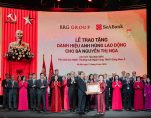
HANOI, VIETNAM – Media OutReach Newswire – 12 September 2026 – Entrepreneur Nguyen Thi Nga, Chairwoman of BRG Group and Standing Vice Chairwoman of SeABank’s Board of Directors, has been conferred the title of Labor Hero in the Renewal Period by General Secretary cum President To Lam, in recognition of her outstanding achievements in labor, creativity and service to the country. BRG Group and SeABank have each received a First-class Labor Medal for their outstanding contributions to the state budget and socio-economic development.

National Assembly Chairman Tran Thanh Man presents the Labor Hero title to entrepreneur Nguyen Thi Nga.

At the ceremony, National Assembly Chairman Tran Thanh Man congratulated Labor Hero Nguyen Thi Nga, BRG Group and SeABank, expressing his hope that they would continue advancing their vision, determination and pioneering spirit in developing and contributing to Vietnam’s economic growth.

In response, Labor Hero Nguyen Thi Nga affirmed: “We will transform these prestigious honors into concrete actions to expand international relations, promote sustainable development and create greater practical value for our country.”

BRG Group is Vietnam’s leading private multi-sector economic and services group, founded by entrepreneur Nguyen Thi Nga. The Group provides high-quality products across key sectors, including real estate, golf, hospitality and tourism, retail, banking and finance, manufacturing and trading, and services, currently employing more than 22,000 people nationwide.

BRG Group partners with Hilton, Marriott International, IHG, Accor and Sumitomo Corporation to bring international governance and service standards to Vietnam. The Group also pioneers in the golf industry with 10 international-standard golf courses, collaborating with world-leading names such as Greg Norman and Jack Nicklaus. BRG Group is also dedicated to preserving and promoting Chu Dau Ceramics, a nearly 600-year Vietnamese ceramic tradition with artifacts displayed at 46 museums across 32 countries.

SeABank is one of the earliest-established JSC banks in Vietnam. For many consecutive years, SeABank has been ranked among the best banks by the State Bank of Vietnam and among the Top 10 most reputable private JSC banks in Vietnam. SeABank currently serves more than 4.2 million customers and holds Ba3 credit ratings with a Positive outlook from Moody’s. To promote green finance and financial inclusion while supporting SMEs and women-owned businesses, SeABank has mobilized nearly US$1.1 billion in funding from international financial institutions, including IFC, DFC, AIIB, ADB and others.

Hashtag: #SeABank

The issuer is solely responsible for the content of this announcement.

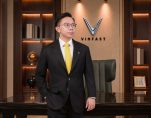
HANOI, VIETNAM – Media OutReach Newswire – 12 September 2026 – VinFast and GSM today officially announced new leadership appointments, succeeding Mr. Pham Nhat Vuong and Ms. Pham Thu Huong in senior global leadership roles. Accordingly, Mr. Pham Nhat Quan Anh, currently Chairman of VinFast Global, will concurrently assume the position of CEO of VinFast Global, succeeding Mr. Pham Nhat Vuong, while also taking on the roles of Chairman and CEO of VinFast Vietnam. Mr. Nguyen Quoc Tuan will assume the position of Chairman of GSM Global, succeeding Ms. Pham Thu Huong, while Mr. Pham Nhat Minh Hoang will become CEO of GSM Global and concurrently CEO of GSM Vietnam.

Mr. Pham Nhat Quan Anh, Chairman and CEO of VinFast Global, and Chairman and CEO of VinFast Vietnam.

The strengthening of the senior leadership teams at VinFast and GSM comes as Vingroup and companies across its ecosystem accelerate the training and development of in-house talent and transition leadership responsibilities to a younger generation of leaders, in line with the needs and growth trajectory of the system. In particular, both VinFast and GSM are entering a period of strong and decisive growth on a global scale.

Prior to assuming the position of Chief Executive Officer of VinFast Global from Mr. Pham Nhat Vuong, Mr. Pham Nhat Quan Anh was appointed Chairman of VinFast Global in May 2026. With his official assumption of the positions of Chairman and Chief Executive Officer of VinFast Global, as well as Chairman and Chief Executive Officer of VinFast Vietnam, Mr. Pham Nhat Quan Anh will hold ultimate and comprehensive responsibility for all of VinFast’s operations as the company enters a new phase of growth.

Following his official appointment, Mr. Pham Nhat Quan Anh commented: “I am deeply honored by the Board of Directors’ trust and confidence in entrusting me with the additional responsibility. Built on a strong foundation established over the years and supported by the growing confidence of customers across our markets, VinFast is well positioned to seize the significant opportunities ahead and further strengthen its role in advancing the global transition to sustainable mobility. I am committed to working closely with our talented team to uphold VinFast’s core values and continue delivering world-class products and the highest standards of service to customers around the world.”

Born in 1993, Mr. Pham Nhat Quan Anh holds a Bachelor’s degree from Singapore Management University and has held several key leadership positions at VinFast and other companies within the Vingroup ecosystem before being appointed Chairman of the Board of Directors of VinFast Auto Ltd. in May 2026. With extensive cross-sector management experience and a strategic operational mindset, he has made significant contributions to VinFast’s development, from building its foundation in the domestic market to expanding its presence internationally.

In addition to his senior leadership responsibilities at VinFast, Mr. Pham Nhat Quan Anh will continue to serve as Chief Executive Officer of VinMetal Trading and Production JSC, a high-quality steel manufacturer within the Vingroup ecosystem.

At GSM, Mr. Nguyen Quoc Tuan, currently Chief Executive Officer of GSM Global, has been appointed Chairman of GSM Global, succeeding Ms. Pham Thu Huong. Mr. Pham Nhat Minh Hoang will succeed Mr. Tuan as Chief Executive Officer of GSM Global and concurrently assume the position of Chief Executive Officer of GSM Vietnam.

Mr. Pham Nhat Minh Hoang, CEO of GSM Global and CEO of GSM Vietnam.

Born in 2000, Mr. Pham Nhat Minh Hoang has held senior leadership positions at VinFast, Green Future, VinSmart Future, GSM and other companies. In addition to his management responsibilities, he has directly invested in and serves as a major shareholder of several industrial, technology, energy and infrastructure companies within the Vingroup ecosystem, including VinSpeed, VinEnergo, VinMetal, VinVentures and robotics companies.

VinFast currently has a presence in 16 countries worldwide, including key markets such as Vietnam, India, Indonesia, the Philippines, Europe, the Middle East and North America. VinFast electric cars and electric motorcycles are currently manufactured at four facilities across three countries: Vietnam, Indonesia and India.

Alongside VinFast, GSM operates its green mobility brand, Green SM. The company currently operates in seven countries, including Vietnam, Laos, Indonesia, the Philippines, India, Kazakhstan and Denmark, and plans to expand into at least three additional markets within this year. GSM is also targeting a transition into a globally scaled public company with its shares listed on an international stock exchange.

The appointment of senior leadership is of particular importance, not only in addressing the more demanding requirements of the companies’ next phase of development, but also reflecting positive expectations for the future of VinFast and GSM as they continue their expansion into international markets.

Hashtag: #VinFast #GSM

The issuer is solely responsible for the content of this announcement.

VinFast has signed memoranda of understanding with 13 dealer groups to develop 27 new showrooms across the Philippines, advancing a plan to build a 60-dealership network in the country during 2026.

The Vietnamese electric-vehicle maker said the proposed outlets would span Luzon, Visayas and Mindanao, extending its reach beyond major centres such as Metro Manila and Cebu into markets including Cagayan de Oro, Tacloban and Subic Bay. The sites are expected to combine vehicle display, customer consultations, sales and after-sales services under VinFast’s global showroom standards.

The agreements, announced on September 11, bring together Elite North Auto Cars Inc., MG Gateway Mantrade Corp., Grand Canyon Multi Holdings Inc., Britannica United Motors Incorporated, VF Auto Sto Tomas Inc., GR8 Marketing Motors Inc., ARCMA Motors Corporation, Autonomics Motor Corp., Gershom Car Trading Corp., Areza Motor Sales Inc., Central Auto Resources Inc., Autolink Global Motors Inc. and Greenport Mobility Inc.

VinFast said the partners’ distribution experience and regional networks would help accelerate expansion and improve access to its electric cars and support services. The company did not disclose investment values, opening dates for individual locations or how many of the 27 sites would provide full workshop facilities.

Antonio Zara, chief executive of VinFast Southeast Asia, said the Philippines remained a key market in the company’s longer-term regional and global plans. He said VinFast was seeking to develop not only its retail footprint but also products, services, infrastructure and the wider electric-vehicle ecosystem, working with local partners to make battery-powered mobility more accessible.

The latest dealer push builds on a network expansion already under way. VinFast said in April 2025 that it had reached agreements with six Philippine dealers to establish more than 60 new showrooms, including planned locations in Metro Manila, Quezon City and other urban centres. Its third-quarter 2025 financial disclosure later said the company had nine showrooms operating nationwide, underscoring the gap between announced development plans and sites actually opened.

That distinction remains important for the new programme: the 27 outlets are covered by memoranda of understanding and are expected to be developed, rather than being newly opened locations. VinFast’s stated target is to develop a total network of 60 dealerships in the Philippines in 2026.

The company has also been adding after-sales and charging capacity as it seeks to reduce practical barriers to electric-vehicle ownership. VinFast previously signed an agreement with Motech aimed at bringing up to 63 service workshops into its authorised repair, warranty and maintenance network. It has also worked with other service partners and has promoted charging infrastructure through V-Green, the charging-network business associated with the wider Vingroup ecosystem.

VinFast entered the Philippine passenger-vehicle market with a battery-electric range that has included the VF 3, VF 5, VF 6, VF 7 and VF 9. At the Philippine International Motor Show in June 2026, the company displayed its broader mobility offering and highlighted programmes combining vehicle access, charging and transport services.

Its expansion comes as carmakers compete for position in a Philippine electric-vehicle market supported by government measures intended to encourage cleaner transport. The Electric Vehicle Industry Development Act established a national policy framework for EV adoption, charging infrastructure and industry development, while tariff measures have lowered import costs for qualifying electric vehicles and components.

Dealer coverage is a central challenge for newer entrants because buyers expect servicing, spare parts and warranty support alongside vehicle sales. VinFast has increasingly used local dealer partnerships across Southeast Asia and other markets rather than relying solely on company-owned retail outlets, allowing it to add sales points faster while drawing on established operators’ local knowledge.

The 13 new partners are expected to help VinFast reach customers across several island groups, where distribution and after-sales logistics can be more complicated than in a single contiguous market. VinFast has separately worked with logistics providers in the Philippines to support vehicle inspection, distribution and servicing as its product range expands.

Adobe posted record third-quarter revenue and crossed one billion monthly active users, but investors remained cautious as its expanding freemium strategy slowed some recurring-revenue indicators and tempered near-term growth expectations. The software group reported revenue of $6.76 billion for the fiscal third quarter ended August 28, up 13% from a year earlier and above market expectations of about $6.7 billion. Adjusted earnings were $6.13 a share, also […]

Arabian Post Staff -Dubai QatarEnergy is negotiating multi-year liquefied natural gas supply agreements with US producers running through 2031 as it seeks to replace output lost after Iranian strikes damaged key facilities at Ras Laffan, people familiar with the talks said. Discussions include Venture Global, Cheniere Energy and Woodside Energy, according to people with knowledge of the negotiations. The move would shift QatarEnergy beyond the spot-market purchases […]

Prime Minister Narendra Modi is hosting the BRICS summit in New Delhi with Russia and China displaying a closer strategic alignment, adding pressure to India’s effort to preserve strong ties with Moscow while managing a cautious thaw with Beijing and maintaining partnerships with the West. Russian President Vladimir Putin met Modi on Friday, a day before the leaders’ summit, and the two reviewed cooperation spanning trade, defence, […]

Stablecoin liquidity is returning to Binance after months of withdrawals, offering a tentative sign of stronger buying capacity as Bitcoin remains above $75,000. CryptoQuant data show Binance recorded more than $1 billion in net stablecoin inflows during August, reversing part of the persistent drain from cryptocurrency exchanges that had characterised much of 2026. Bitcoin was trading around $77,300 on Saturday, September 12, after moving between roughly $76,000 […]

HANOI, VIETNAM – Media OutReach Newswire – 11 September 2026 – VinFast has announced the signing of strategic Memoranda of Understanding (MOUs) with 13 dealer partners in the Philippines to develop 27 new showrooms nationwide. The agreements mark an important step in VinFast’s plan to expand its electric automotive distribution network in the Philippines, while laying a strong foundation for the brand to reach its goal of developing a total of 60 dealerships in the country in 2026.

Representatives of VinFast Philippines and 13 dealer groups at the Memorandum of Understanding (MOU) signing ceremony, aimed at expanding VinFast's nationwide dealer network.
Representatives of VinFast Philippines and 13 dealer groups at the Memorandum of Understanding (MOU) signing ceremony, aimed at expanding VinFast’s nationwide dealer network.

Under the agreements, the 27 VinFast showrooms are expected to be developed across all three major geographical regions of the Philippines: Luzon in the north, Visayas in the central region, and Mindanao in the south. The network will strengthen VinFast’s presence in major urban centers such as Metro Manila and Cebu, while extending its reach to new, high-potential areas including Cagayan de Oro, Tacloban, and Subic Bay. This will bring VinFast’s electric vehicles and services closer to customers nationwide.

Developed in line with VinFast’s global standards, the showrooms will offer modern and convenient spaces where customers can learn about and experience the brand’s products, as well as access sales and after-sales services. The expanded network will also improve access to electric vehicles and related services, helping meet the growing demand for EVs in the Philippine market.

Supporting VinFast in the development of its new showroom network are 13 established local partners: Elite North Auto Cars Inc., MG Gateway Mantrade Corp., Grand Canyon Multi Holdings Inc., Britannica United Motors Incorporated, VF Auto Sto Tomas Inc., GR8 Marketing Motors Inc., ARCMA Motors Corporation, Autonomics Motor Corp., Gershom Car Trading Corp., Areza Motor Sales Inc., Central Auto Resources Inc., Autolink Global Motors Inc., and Greenport Mobility Inc.

These 13 companies bring extensive experience in automotive distribution in the Philippines and share VinFast’s commitment to advancing the green transition. Their market knowledge, operational capabilities, and extensive networks will provide additional momentum for VinFast to accelerate the development of its distribution system, expand customer access, and enhance service quality across the country.

Mr. Antonio Zara, CEO of VinFast Southest Asia, said: “The Philippines is one of the key markets in VinFast’s long-term growth strategy in the region and globally. Here, we are not only focused on expanding our sales network, but also on building a sustainable foundation for growth spanning products, services, infrastructure, and the broader EV ecosystem. With the support of our local partners, VinFast will continue to expand our operations in the years ahead, gradually making green mobility a more accessible and convenient choice for Filipino consumers.”

VinFast is steadily building a comprehensive “For a Green Future” electric vehicle ecosystem across key markets in Southeast Asia. In the Philippines, VinFast continues to invest in products, services, and infrastructure to make EV ownership as convenient as possible for customers. Alongside a diverse EV lineup and attractive customer support policies, VinFast is placing a strong focus on expanding its after-sales service network and charging infrastructure with the support of V-Green and local partners. Through these efforts, the brand reaffirms its long-term commitment to investing in the Philippines and supporting the country’s transition to green mobility.

Hashtag: #VinFast

The issuer is solely responsible for the content of this announcement.

Shanghai Enflame Technology nearly tripled in value on its Shanghai trading debut on Friday, extending a wave of listings that has turned founders of loss-making Chinese artificial-intelligence chipmakers into billionaires as investors bet heavily on domestic alternatives to Nvidia.

Enflame’s shares closed 179 per cent above their initial public offering price on the STAR Market, lifting the company’s market value to about 171 billion yuan from 61.2 billion yuan at the offer price. The Tencent-backed company raised 6.12 billion yuan by selling 43.04 million new shares at 142.18 yuan each.

The surge came despite Enflame having never reported an annual profit since its establishment in 2018. Its 2025 revenue reached 990.2 million yuan while its net loss narrowed to about 1.2 billion yuan. The company has forecast revenue of 2.3 billion yuan to 3 billion yuan for the first nine months of 2026, alongside a net loss of 700 million yuan to 860 million yuan.

Revenue has expanded quickly from 301 million yuan in 2023 and about 722 million yuan in 2024, but losses have remained substantial as the company spends heavily on research and product development. Enflame recorded net losses of about 1.67 billion yuan in 2023 and 1.51 billion yuan in 2024 before narrowing the deficit last year, underscoring how far commercial growth has run ahead of earnings for the company.

Enflame said in its prospectus that it expects to reach break-even or profitability in 2026 or 2027. It plans to direct much of the IPO proceeds towards development and industrialisation of fifth- and sixth-generation artificial-intelligence chips, software and large-scale computing systems.

The company’s rapid revaluation also highlights the unusual economics of China’s artificial-intelligence chip boom. Investors have rewarded several young semiconductor groups whose sales are expanding quickly but whose research spending remains heavy and earnings records are limited or negative.

Moore Threads Technology, another Shanghai-listed graphics processor developer, created several billionaires after its market debut in December 2025, when its shares rose more than fourfold. Founder and chairman Zhang Jianzhong, a former head of Nvidia’s China operations, was valued at several billion dollars after the listing, while co-founders Zhang Yubo and Wang Dong also crossed the billionaire threshold based on their holdings.

MetaX Integrated Circuits produced a similar outcome after its Shanghai flotation. Chairman and chief executive Chen Weiliang, who previously worked at Advanced Micro Devices, became a billionaire as investors pushed the company’s valuation sharply higher despite continuing operating losses. Early investor Ge Weidong also joined the billionaire ranks through his stake.

The valuations reflect expectations that domestic chipmakers will capture a larger share of China’s fast-growing demand for artificial-intelligence computing as access to the most advanced US-designed processors remains constrained. Domestic producers are competing to supply cloud companies, data centres and developers running large language models, recommendation engines and other computing-intensive services.

Enflame’s commercial position, however, remains unusually concentrated. Tencent is its largest shareholder, with a 17.95 per cent stake after the offering, and sales linked to the technology group accounted for 83.79 per cent of Enflame’s 2025 revenue. The concentration gives Enflame a major anchor customer but also leaves its growth closely tied to purchasing decisions by one group.

The company employed about 860 people as of September 2025, according to disclosures compiled from its listing materials. Founded by former AMD executives Zhao Lidong and Zhang Yalin, Enflame develops accelerator chips, add-on cards, computing systems and software for artificial-intelligence training and inference in data centres.

Only 17.9 million shares, equivalent to 4.16 per cent of Enflame’s enlarged share capital, were freely tradable at the start of trading, limiting the initial public float and potentially amplifying price swings. The retail portion of the offering attracted thousands of times more demand than the shares available.

National Stock Exchange of India has cut the size of its long-awaited initial public offering by more than 15 per cent, with several existing shareholders reducing planned sales after the exchange settled on a lower valuation range.

The offer will now comprise up to 126.44 million shares, down from about 148.91 million in the draft prospectus, according to the red herring prospectus dated September 10. The price band has been fixed at Rs 1,700 to Rs 1,785 a share, valuing NSE at as much as roughly Rs 4.42 trillion.

At the top of the band, the offer could raise about Rs 22,568 crore, compared with roughly Rs 26,580 crore had the original number of shares been sold at the same price. The transaction is entirely an offer for sale, meaning NSE will not receive proceeds and no fresh shares will be issued.

The revised structure follows concern among prospective investors about whether the exchange could sustain the growth rates that supported higher valuation expectations before tighter rules cooled activity in its lucrative derivatives business. An earlier marketed range of about Rs 2,000 to Rs 2,100 a share would have implied a valuation of as much as Rs 5.26 trillion.

Several large shareholders have reduced the number of shares they plan to sell. State Bank of India cut its proposed sale to about 15.97 million shares from 24.75 million, while Bank of Baroda, Indian Bank and other institutional holders also lowered their offers. SBI Capital Markets was added as a selling shareholder with nearly 8.8 million shares.

Other investors, including Canada Pension Plan Investment Board and ICICI Lombard General Insurance, retained their proposed sale quantities. The changes reduce the stake being offered to about 5.2 per cent of NSE’s equity from the 6 per cent envisaged in the draft prospectus.

The downsizing comes as investors scrutinise the exchange’s dependence on derivatives activity. NSE derives a substantial share of its revenue from options trading, where volumes have weakened after the Securities and Exchange Board of India introduced measures aimed at curbing excessive speculation and reducing risks for retail participants.

Options trading volumes on the exchange fell more than 12 per cent from a year earlier in August, adding to questions about the pace of future transaction-related revenue growth. Those concerns have been balanced by NSE’s strong profitability and dominant position in cash equities and derivatives.

For the quarter ended June, NSE reported a 6.7 per cent increase in net profit to about Rs 3,120 crore, while revenue rose roughly 13 per cent to Rs 4,560 crore. The figures give prospective investors a clearer view of the exchange’s earnings power as they assess the lower offer price.

The public offer is scheduled to open on September 17 and close on September 21, with anchor investors expected to bid a day earlier. A listing is expected around September 24, subject to completion of the offer process and final regulatory requirements.

The timetable follows regulatory clearance that removed a key obstacle to the listing. The Securities and Exchange Board of India approved the IPO prospectus on September 4 after NSE moved to settle long-running disputes linked to allegations of unfair access to its trading systems.

The Supreme Court also dismissed the market regulator’s appeal in the co-location matter after the parties indicated that a settlement had been reached. NSE had agreed to pay about Rs 1,491 crore to resolve the case, allowing the listing process to advance without that litigation hanging over the issue.

The reduced transaction will no longer challenge Hyundai Motor India’s 2024 flotation for the record as the country’s largest IPO by proceeds. Hyundai raised about Rs 27,870 crore, while NSE’s offer is expected to be worth about Rs 22,500 crore at the top of its announced price band.

CALGARY, CANADA – Media OutReach Newswire – 10 September 2026 – Colossal Energy Fields Corp. (“Colossal Energy”) is pleased to announce the appointment of Warren Irwin as Special Advisor. With 40 years of financial markets, investment management, corporate finance and capital allocation experience, Mr. Irwin will provide strategic counsel to the Company’s management team and Board of Directors as it evaluates growth opportunities, financing alternatives and disciplined investment in projects related to oil and gas resources.

Mr. Irwin founded Rosseau Asset Management Ltd. in 1998, following several successful years in proprietary investing at Deutsche Bank Canada. Rosseau’s flagship fund, Rosseau LP, was established on December 31, 1998 and has earned a strong reputation for investment performance and disciplined, research-driven decision-making. In his time at Rosseau, Mr. Irwin has had extensive experience investing in offshore oil projects off the coasts of South America and Africa, and onshore projects throughout the world.

Prior to founding Rosseau, Mr. Irwin’s experience also includes corporate finance and mergers and acquisitions at CIBC Wood Gundy, credit analysis and fixed-income management at Scotia Capital Markets, and proprietary trading at Deutsche Bank Canada. Mr. Irwin holds a Bachelor of Mathematics from the University of Waterloo, is a Chartered Financial Analyst (CFA) and holds a Masters of Business Administration from the University of Western Ontario.

“Warren’s extensive financial, investment and capital-markets background along with his passion for offshore oil exploration will be a significant asset to Colossal Energy Fields,” said Curtis Cohen, Chairman of the Board of Directors of Colossal Energy.

“His analytical mindset, discipline, governance and professionalism will greatly strengthen funding resource opportunities, as well as capital allocation and long-term shareholder value.”

Colossal Energy’s commitment to sustainable, inclusive growth shines brightest in nations where its investments in energy access, community empowerment, and equitable development directly advance energy equity for all.

Hashtag: #ColossalEnergyFieldsCorp.

The issuer is solely responsible for the content of this announcement.

About Colossal Energy Fields Corp.

Colossal Energy Fields Corp is a Canadian oil and gas exploration company focused on exploration and production opportunities in Africa. Proven Upstream Pedigree. Colossal Energy has deep expertise in exploring offshore opportunities and developing near-to-producing field opportunities.

US producer prices rose 5.4 per cent in the 12 months through August, accelerating from July and coming in slightly above market expectations, as higher energy costs pushed wholesale inflation to its strongest annual pace in months. The Producer Price Index for final demand increased 0.4 per cent from July on a seasonally adjusted basis, the Bureau of Labor Statistics said on Thursday. The monthly rise matched […]

  By R. Suryamurthy India’s trade with BRICS has expanded dramatically, but the numbers reveal an uncomfortable imbalance beneath the rhetoric about a multipolar world and alternative financial architecture. Between FY2021 and FY2026, India’s total merchandise trade with the 11-member grouping more than doubled, from $203.1 billion to $417.5 billion. Yet the expansion was overwhelmingly […]

The article Bricks cannot de-dollarise its way out of India’s huge trade imbalance appeared first on Latest India news, analysis and reports on Newspack by India Press Agency).

Nasdaq has invested $100 million in Payward, the parent company of cryptocurrency exchange Kraken, extending a relationship that already spans tokenised equities and digital-market infrastructure. The investment places one of the world’s largest exchange operators directly on Payward’s shareholder register and adds a financial dimension to a strategic partnership announced earlier this year. Payward operates Kraken alongside businesses including NinjaTrader, Breakout, xStocks and CF Benchmarks, using a […]

VISHNU RAJA
RYO YAMADA
HITORI GOTOH
IKUYO KITA