Just in:
Geely’s i-HEV Intelligent Hybrid Technology Offers a New Direction Vision for Gasoline-Powered Vehicles // Geely’s i-HEV Intelligent Hybrid Technology Offers a New Direction for Gasoline-Powered Vehicles // UK air traffic outage inflicted £33m financial losses // Oil and chip shares retreat after Democratic victories // Asia Left Behind: Ten international companies have yet to report delivering on their cage-free egg pledges across the region // Cloudflare unveils Zero Wire vulnerability intelligence service // OpenAI identifies 948 Linux privilege escalation flaws using AI // APT29-linked campaign exploits outdated Apple and Android software // Ta’ziz finalises $1.39bn funding for Ruwais industrial facilities // Emirates Group records AED 4.1 billion half-year profit // Millions Of Indians May Soon Be Deprived Of Government Assistance // Ousted top Kochi cop gets IG post // TVM –Mangaluru Vande Bharat claims top spot // Private varsities bill all set to face the axe // Emaar approves Development buyout ahead of planned delisting // Hong Kong mandates crypto transaction disclosures to tax authorities // Xi Jinping Preparing For A Trilateral Summit With Trump And Putin At APEC Summit On Nov 18-19 // Trump’s Iran War Has A Share Of Contribution To His Midterm Debacle // Kochi police detain two actors over bid to honey trap doctor // Fast Just Got Fastest: STING Energy Boost™ Celebrates Kimi Antonelli’s Formula 1® World Championship and the Fan Energy Behind It //

News related to
trading

China’s aluminium exports accelerated in May as overseas buyers turned to the world’s biggest producer to offset supply disruption triggered by the Middle East war, while crude oil imports dropped to their lowest level in eight years in a sign of strain across the country’s commodity flows.

Customs figures showed a sharp rise in outbound shipments of unwrought aluminium and aluminium products, extending the strong performance seen in April, when exports reached 598,000 metric tonnes. The increase underlined China’s role as the main buffer for a global market unsettled by production cuts, shipping delays and higher insurance costs linked to the conflict around the Gulf and the Strait of Hormuz.

The aluminium surge came as China’s wider trade machine gathered pace. Total exports rose 19.4 per cent from a year earlier in May, beating forecasts and widening the trade surplus to more than $105 billion. Imports also grew 27.4 per cent, but the headline gain masked a sharp fall in crude purchases, with volumes down about 29 per cent as refiners leaned more heavily on inventories and cut some buying amid elevated freight and geopolitical risks.

Aluminium has become one of the clearest channels through which the Middle East war is reshaping industrial supply chains. Producers in Gulf states account for a meaningful share of non-Chinese primary aluminium supply, and disruption to power-intensive smelting, port activity and shipping routes has tightened availability for consumers in Europe, Asia and North America. Prices in London climbed to a four-year high this month as traders priced in the risk of prolonged supply constraints.

Chinese exporters have benefited from the opening. Producers and traders have increased shipments of semi-finished products and other aluminium categories where overseas premiums have risen faster than domestic prices. The price gap has improved margins for exporters, even as Beijing continues to manage capacity growth in a sector long associated with heavy energy use and emissions.

The market shift is particularly important for manufacturers in transport, construction, packaging, power infrastructure and renewable energy. Aluminium is widely used in electric vehicles, aircraft parts, solar frames, building systems and high-voltage transmission equipment. A sustained shortage outside China could raise input costs for industries already dealing with expensive financing, disrupted shipping schedules and volatile energy markets.

China’s advantage rests on scale. The country dominates global aluminium production and has built deep processing capacity across provinces such as Shandong, Henan, Guangxi and Yunnan. Its producers can move quickly when export margins improve, though output remains constrained by power costs, environmental controls and the national ceiling on smelting capacity.

The export rise also carries political sensitivity. Western governments have long argued that China’s industrial policies create excess capacity and depress global prices. A fresh wave of metal exports, even if driven by war-related shortages, could sharpen trade friction at a time when the United States, Europe and other economies are expanding scrutiny of Chinese goods in sectors ranging from steel and batteries to solar components and electric vehicles.

Crude oil tells a different story. China remains the world’s largest crude importer, but May’s decline showed how refiners are adjusting to uncertainty in Gulf shipping. The Middle East supplied a large share of China’s crude last year, with Saudi Arabia, Iraq, the United Arab Emirates, Oman, Kuwait and Qatar among key reported suppliers, while Iranian barrels have continued to reach Chinese buyers through opaque trading channels.

Refiners have drawn on commercial and strategic inventories built during earlier periods of lower prices and heavy discounted buying. Weak domestic fuel margins have also reduced the incentive to import aggressively. Independent refiners in Shandong and state-run plants have faced pressure from high crude costs, capped fuel prices and softer demand growth as electric vehicles erode petrol consumption.

The fall in crude imports may help ease immediate pressure on global oil markets, but it also reflects the vulnerability of China’s energy security to maritime disruption. The Strait of Hormuz remains central to crude and liquefied natural gas flows, and any prolonged interruption would force Beijing to rely more on stockpiles, pipeline supplies from Russia and Central Asia, and alternative seaborne routes.

For commodity markets, May’s trade data showed a split picture. Metals exports are expanding where China can monetise overseas shortages, while energy imports are being managed more cautiously to reduce exposure to war-driven price spikes. Copper imports slipped from April, suggesting that parts of the manufacturing supply chain remain uneven despite the strong headline export performance.

Europe’s largest airline groups have warned Brussels that extending carbon charges to long-haul international flights would lift fares, raise cargo costs and deepen a dispute over how aviation should pay for its climate impact. Chief executives from major carriers including Air France-KLM, IAG, Lufthansa, Ryanair, easyJet, TUI and AirBaltic have urged European Commission President Ursula von der Leyen not to widen the European Union’s Emissions Trading System […]

By Nantoo Banerjee It is good that the government has finally decided to introduce the Producer Price Index (PPI) as a more reliable inflation tracker than the Wholesale Price Index (WPI). However, it may not be desirable to dump WPI entirely after a period of the next five years. Wholesale price levels remain highly valuable […]

The article Producer Price Index Is Welcome Though WPI Need Not Be Dumped appeared first on Latest India news, analysis and reports on Newspack by India Press Agency).

MetaMask has launched Agent Wallet, a self-custodial product designed to let AI agents trade and manage crypto activity while keeping users in control of funds, approvals and risk limits. The Consensys-owned wallet provider introduced the service on 8 June through a limited early-access programme, initially aimed at traders and developers testing autonomous finance tools. A wider rollout is planned over the coming months as crypto firms race […]

Software developers across close to 100 organisations have been targeted by a likely North Korea-linked hacking operation that used fake recruitment and code-review tasks to steal cryptocurrency, browser credentials and wallet data. The campaign, tracked by security researchers as UNK_DeadDrop, unfolded over April and May and reached targets in technology, finance, cryptocurrency, education, business services and other sectors. More than 250 phishing emails were sent during a […]

Citrini Research has placed Hyperliquid among its more compelling crypto ideas, arguing that the decentralised exchange stands apart from much of the digital asset market because it generates meaningful cash flow and channels a large share of trading fees into token buybacks. The research firm’s attention carries unusual weight after its February essay on artificial intelligence and market risk helped trigger a sharp sell-off across technology and […]

GenZVerse has completed a full burn of its liquidity provider tokens and moved core ecosystem contracts into a multisignature governance structure, positioning the Polygon-based Web3 project as it pushes ahead with plans for a broader “super app” model. The project said 100% of its LP tokens had been permanently burned, securing more than $170,000 in on-chain liquidity. LP tokens typically represent control over liquidity deposited into a […]

Advertisements

Capital. com has enabled a Model Context Protocol server plugin that allows traders to connect their accounts directly with compatible AI assistant environments, marking a step towards more integrated use of artificial intelligence in retail trading and market research. The free, open-source tool links a trader’s Capital. com account to an AI assistant running on a desktop environment, giving users the ability to view market data, analyse […]

Air France-KLM has left open the possibility of taking a role in any takeover approach for easyJet, adding a strategic airline dimension to Castlelake’s early-stage interest in the Luton-based low-cost carrier. Chief Executive Ben Smith indicated that the Franco-Dutch airline group would consider contact from Castlelake if the investment firm sought a partner for a possible offer. His comments come as the US-based asset manager studies whether […]

South Korea has moved to contain pressure on the won after the currency fell towards its weakest levels since the global financial crisis, with authorities warning that speculative trading and herd behaviour in the foreign exchange market would face firm intervention.

The response came after the won slipped past psychologically important levels against the dollar, intensifying concern among policymakers over inflation, capital flows and financial stability. Finance Minister Koo Yun-cheol convened senior economic officials and signalled that Seoul would act quickly if market moves became excessive, while the Bank of Korea and financial regulators kept watch on trading patterns across currency, bond and equity markets.

The won traded around the 1,520 range against the dollar after touching levels not seen for years, reflecting a mix of domestic and external pressures. Higher energy import costs, a strong dollar, portfolio outflows and demand for overseas investments have combined to weaken the currency despite South Korea’s current account surplus and continued strength in key export sectors.

Authorities are seeking to draw a line between normal market adjustment and disorderly moves that could spill into inflation expectations or funding conditions. Their measures are focused on sharper surveillance of foreign exchange transactions, closer coordination among financial agencies and readiness to respond to speculative flows that amplify one-way bets against the currency.

Seoul has avoided announcing broad capital controls, mindful of its ambition to deepen market access and secure developed-market recognition from global index providers. Instead, officials are relying on targeted stabilisation tools, verbal intervention and coordination with major institutional investors to smooth dollar demand. The National Pension Service remains central to those efforts because of the scale of its overseas investment activity and its potential impact on dollar-won liquidity.

The currency’s slide has complicated the Bank of Korea’s policy choices. Inflation rose to 3.1 per cent in May, the highest level in more than two years, pushed up by petroleum products and international travel costs. A weaker won increases the local-currency cost of imported fuel, food and raw materials, raising the risk that price pressures remain above the central bank’s 2 per cent target for longer than expected.

Rate policy now sits at the intersection of slowing growth, currency stability and household debt risks. A rate increase could support the won and restrain inflation, but it would add pressure on consumers and businesses already facing tighter financing conditions. Holding rates steady could protect domestic demand, but might leave the currency exposed if dollar strength persists or foreign investors continue to rebalance away from won assets.

Market pressure has also been shaped by South Korea’s stock market boom and its role in global technology supply chains. The country’s chipmakers and artificial intelligence-linked companies drew heavy investor interest, but sharp gains have also encouraged profit-taking and portfolio reallocation. When offshore investors sell equities or hedge exposure, demand for dollars can rise, adding to currency volatility.

Exporters have not provided the same level of support to the won that authorities might have expected during previous cycles. Companies with large overseas revenues have been cautious about converting dollar earnings, partly because of expectations of further currency weakness and partly because global investment plans require foreign currency holdings. That has deepened the imbalance between dollar demand and supply.

South Korea’s external position remains stronger than the currency’s movement alone suggests. The economy continues to benefit from semiconductor exports, sizeable foreign reserves and a sophisticated financial system. Yet the won has become more sensitive to swings in global risk appetite, partly because households, pension funds and institutional investors have increased overseas securities purchases over the past several years.

The government’s challenge is to calm markets without appearing to defend a fixed exchange-rate level. Officials have framed their intervention as an effort to prevent excessive volatility rather than reverse market fundamentals. That distinction matters because heavy-handed action could invite criticism from trading partners and undermine Seoul’s commitment to market liberalisation.

The United States and South Korea have already discussed currency stability, with both sides describing excessive volatility in the won as undesirable. Those consultations add a diplomatic layer to Seoul’s response, especially as South Korea balances foreign exchange concerns with large investment commitments abroad and shifting trade policy under Washington’s current tariff regime.

Arabian Post Staff -Dubai Revolut is exploring a secondary share sale that could lift its valuation to about $115 billion, setting up a fresh test of investor appetite for one of Europe’s most valuable private technology groups after a decisive regulatory breakthrough in the UK and a push into US banking. The potential transaction would allow existing shareholders, including employees and early backers, to sell stock without […]

Bitcoin slipped below $60,000, extending a sharp retreat that has weakened confidence among bulls and underscored a broader shift in speculative capital towards artificial intelligence-linked equities, large technology listings and parts of the gold trade. The world’s largest cryptocurrency touched its weakest level since October 2024 after failing to hold support around $65,000, a level traders had treated as critical following last month’s attempted recovery. The latest […]

Crypto markets were hit by a sharp wave of forced selling as about $155 million in leveraged long positions were liquidated within 60 minutes, deepening a broader sell-off that pushed Bitcoin and major tokens lower and exposed the risk built up across perpetual futures and margin trading platforms. The liquidation burst reflected a rapid unwinding of bullish bets after prices broke through key support levels, leaving heavily […]

HONG KONG SAR – Media OutReach Newswire – 5 June 2026 – A large high-level business delegation led by John Lee, Chief Executive of the Hong Kong Special Administrative Region (HKSAR), today (June 5) wrapped up its five-day visit to Kazakhstan and Uzbekistan respectively, achieving fruitful results of strengthening bilateral relations and deepening ties with Central Asia.

The delegation of over 70 business and institutional leaders from Hong Kong and the Chinese Mainland is the largest and most diverse overseas mission led by the current term of the HKSAR Government so far.

Hong Kong SAR's Chief Executive, John Lee (fifth right) and the Advisor to the President of Uzbekistan on Strategic Development, Sardor Umurzakov (fourth right) witness the exchange of memoranda of understanding and co-operation agreements between government departments, enterprises and organisations from Hong Kong and Uzbekistan.
Hong Kong SAR’s Chief Executive, John Lee (fifth right) and the Advisor to the President of Uzbekistan on Strategic Development, Sardor Umurzakov (fourth right) witness the exchange of memoranda of understanding and co-operation agreements between government departments, enterprises and organisations from Hong Kong and Uzbekistan.

Speaking to the media in Uzbekistan yesterday (June 4), Mr Lee set out the three main objectives of the visit: further explore emerging markets and lay the foundation for long-term economic and trade development; strengthen government-to-government (G2G) relationships and promote closer bilateral co-operation; and build a “hub-to-hub” model of co-operation.

He said the visit had been successful, yielding achievements in eight areas, including:

  • Establishing high-level contacts and ties between the HKSAR Government and the Governments of Kazakhstan and Uzbekistan, and reaching consensus on co-operation in multiple areas;
  • A total of 96 co-operation agreements and memoranda of understanding (MoUs) were reached during the visit (61 with Kazakhstan, 35 with Uzbekistan), involving specific amounts exceeding US$1.65 billion in total;
  • The governments agreed to commence bilateral discussions on agreements in various areas;
  • Deepening project matching and research collaboration between Hong Kong and Central Asian region in areas including finance, innovation and technology (I&T), and aviation;
  • Demonstrating Hong Kong’s effective role as a platform for going global and achieving substantial results, with Hong Kong and Mainland enterprises joining forces in tapping new markets and bringing synergistic advantages into full play;
  • Facilitating more convenient people-to-people exchanges by promoting direct flights, aviation and transport co-operation, and extensions to the mutual visa-free period;
  • Promoting exchanges in education, talent and culture to further deepen people-to-people bonds; and
  • Advancing a hub-to-hub co-operation model to open up broader room for co-operation between Hong Kong and the Central Asian region.

image-1.jpeg

While in Tashkent (June 3-5), Mr Lee met with local leaders, government officials and business representatives to deepen co-operation between Hong Kong and Uzbekistan in areas including trade, investment, finance, I&T, and people-to-people exchanges.

Mr Lee held meetings with the President of Uzbekistan, Shavkat Miromonovich Mirziyoyev, his Advisor on Strategic Development, Sardor Umurzakov, the Prime Minister, Abdulla Nigmatovich Aripov, as well as the Deputy Prime Minister, Jamshid Khodjayev, to exchange views on furthering mutual co-operation.

Mr Lee highlighted that under the “one country, two systems” principle, Hong Kong enjoys both the China advantage and the global advantage. He said that Hong Kong would continue to play its roles as a “super connector” and a “super value-adder” to further deepen co-operation and exchanges with Uzbekistan on various fronts in line with Uzbekistan’s goal of achieving high-quality development.

Hong Kong SAR's Chief Executive, John Lee (left) meets with the President of Uzbekistan, Shavkat Miromonovich Mirziyoyev.
Hong Kong SAR’s Chief Executive, John Lee (left) meets with the President of Uzbekistan, Shavkat Miromonovich Mirziyoyev.

Earlier (June 3), Mr Lee met with the Minister of Foreign Affairs of Uzbekistan, Bakhtiyor Saidov, after which they jointly witnessed an exchange of notes between the two places on a mutual visa-free arrangement, which would allow a visa-free period of 30 days for visitors from both sides.

“Moreover, we are glad to have initialed the Air Services Agreement with Uzbekistan, and look forward to launching direct passenger flights between the two places soon,” Mr Lee said, during a high-level business dinner (June 4). The Chief Executive pointed out that Hong Kong and Uzbekistan are important trade and investment gateways to their respective regions – the Asia-Pacific and Central Asia.

“It helps that we are all believers in the Belt and Road (B&R) Initiative, a modern expression of the ancient Silk Road spirit,” Mr Lee said. “Today, China is Uzbekistan’s largest trading partner, and the two countries work closely on major infrastructure and connectivity projects that are revitalising the Silk Road. Hong Kong is a pivotal player in the B&R Initiative, thanks to our world-class professional and financial services expertise.”

The delegation also toured the IT Park Uzbekistan and the Center for Islamic Civilization before concluding its visit in Tashkent.

Hashtag: #HongKong #BrandHongKong #CentralAsia #Kazakhstan #Uzbekistan


The issuer is solely responsible for the content of this announcement.

HONG KONG SAR – Media OutReach Newswire – 5 June 2026 – On June 4, 2026, Money20/20 Europe—the premier global fintech event—officially concluded at the RAI Amsterdam Convention Centre.

Epay Captures Global Spotlight at Money20/20 Europe

As an innovative driver of global payment solutions, Epay made a powerful international impression by showcasing its robust product matrix and vertical industry solutions. Amidst this prestigious gathering of top-tier global decision-makers, Epay emerged as a focal point of the event, drawing significant industry attention with its specialized sector expertise and deep compliance capabilities.

Connecting Finance, Shaping the Future

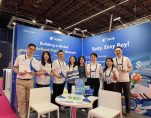
Throughout the event, the Epay booth buzzed with high-energy discussions as a steady stream of industry leaders and representatives gathered for consultations. Against the backdrop of an evolving global trade landscape, the strategic synergy and bidirectional flow between high-growth markets in Europe and the Asia-Pacific region emerged as a primary focus for many attending businesses.

On the floor, Epay’s expert team provided in-depth, tailored consultations for fintech peers, social media platforms, digital marketing agencies, and B2B trading enterprises. Addressing complex pain points such as global pan-entertainment payouts and cross-border supply chain fund flows, the team demonstrated Epay’s core global collection and payout capabilities alongside its flexible API solutions, precisely empowering businesses to expand internationally.

Furthermore, the Epay team engaged in deep-dive strategic dialogues with local commercial banks, international clearing organizations, and financial experts from various countries. Moving forward, Epay remains dedicated to expanding robust local payment networks, leveraging its forward-looking vision to power the global digital economy.

Hashtag: #EPay

The issuer is solely responsible for the content of this announcement.

About Epay

Forging Ahead, Driving Digital Growth
The curtain has fallen, but a new journey has just begun. For Epay, the conclusion of this international expedition marks the starting point for a new chapter in empowering global growth.

Standing at the forefront of the global digital economy, Epay remains committed to security as its foundation and innovation as its driving force, continuously building a compliant and rock-solid fintech infrastructure. Looking ahead, Epay will continue to dissolve geographical and financial barriers, marching alongside visionaries worldwide. We look forward to leveraging an even more forward-looking ecosystem to safeguard the global expansion of cross-border enterprises.

With past milestones honored and the future ahead, we look forward to seeing you at our next stop—ChinaJoy in Shanghai!

Bitget has added 15 tokenised stocks and exchange-traded funds as eligible margin assets for futures trading, extending the role of equity-linked digital assets from spot exposure into collateral management inside its unified trading system. The change took effect on June 4, UTC+8, and applies to the exchange’s Unified Trading Account and Multi-Asset Mode for USDT-M Futures. It allows users to deploy selected tokenised equities and ETFs as […]

ChangeNOW has been named Best Digital Assets Fintech at the BeInCrypto x Proof of Talk Institutional 100 Awards 2026, giving the non-custodial crypto platform fresh visibility as financial institutions deepen their involvement in blockchain-based services, tokenised payments and regulated digital asset infrastructure. The award was presented at a live ceremony at the Louvre Palace in Paris during Proof of Talk 2026, a two-day Web3 and digital finance […]

Premu has launched user-created leveraged prediction markets ahead of the 2026 FIFA World Cup, positioning the tournament as a major test for decentralised event-trading platforms seeking to turn fan forecasts into liquid, tradable markets. The Stockholm-linked platform is allowing participants to create markets tied to World Cup outcomes, make them available for trading and receive a share of fees generated by activity in those markets. The model […]

Arabian Post Staff -Dubai Crude loading at Oman’s Mina al Fahal terminal was suspended on Friday after an explosion near its single-buoy mooring berths, disrupting operations at one of the Sultanate’s most important oil export outlets. Two people familiar with the matter said the blast occurred between SBM 1 and SBM 2 and was believed to have followed a drone attack. The timing of the incident was […]

MEXC has integrated with TradingView, allowing users to execute crypto trades directly from the charting platform and reducing the gap between market analysis and order placement in one of the fastest-moving areas of digital-asset trading. The Victoria, Seychelles-based exchange said the tie-up gives traders access to TradingView’s charting interface while connecting them to MEXC’s spot and derivatives markets. The move is aimed particularly at active crypto users […]

Goldman Sachs has joined Apex Group and Archax in launching a blockchain-native real estate fund, marking a fresh institutional test of whether tokenised structures can bring greater efficiency, transparency and transferability to a traditionally illiquid asset class without moving outside regulated fund frameworks. The Luxembourg-domiciled fund has been developed with LRC Group and Ownera, combining established alternative investment fund structures with on-chain issuance of fund units. The […]

Gas engine manufacturer Innio has raised $2.43 billion in a US initial public offering, pricing an upsized share sale at the top of its marketed range as investors continue to chase companies tied to the electricity demands of artificial intelligence. The Munich-based distributed energy group priced 90 million shares at $27 each, above the 75 million shares originally planned and at the upper end of the $24 […]

Persistent dollar strength pushed the yen back towards 160 per US dollar on Wednesday, reviving concern that Tokyo may step into the foreign exchange market as renewed Gulf hostilities drove investors towards the US currency.

The yen traded near 159.92 per dollar in Asian dealings, close to the level widely viewed by traders as a possible trigger for official action. The move erased much of the currency’s rebound after Japan’s ¥11.7 trillion intervention campaign earlier this year, leaving markets alert to fresh warnings from the Ministry of Finance.

Dollar demand strengthened after renewed fighting in the Gulf raised fears of wider disruption to energy supplies and trade routes. The US currency benefited from its reserve status, while risk-sensitive currencies came under pressure. The dollar index held around 99.27, supported by geopolitical uncertainty and firm US labour indicators that have reduced expectations of near-term monetary easing by the Federal Reserve.

Japan’s authorities have intensified verbal warnings as the yen weakens. Finance Minister Satsuki Katayama has said the government is ready to respond appropriately to excessive currency moves, language that traders typically read as a signal that intervention remains on the table. Officials have also stressed coordination with the United States, a politically sensitive point because unilateral currency action can draw scrutiny from trading partners.

The yen’s slide reflects a combination of external pressure and domestic policy constraints. Japan remains heavily dependent on imported energy, much of it priced in dollars. Higher oil prices therefore worsen the trade position and add pressure to household costs, while a weaker yen raises import bills further. Brent crude climbed towards $95 a barrel as Gulf tensions fed concerns over supplies, adding another layer of strain for Japan’s economy.

Attention is now focused on Bank of Japan Governor Kazuo Ueda, whose next policy signals will be watched closely ahead of the June 15-16 policy meeting. Markets have increased bets that the central bank could raise interest rates from 0.75% to 1%, especially as imported inflation pressures build. Any move would mark a further step away from the ultra-loose policy framework that kept Japan’s rates far below those of other major economies for years.

Still, the Bank of Japan faces a difficult balance. A rate increase could support the yen and help restrain inflation expectations, but policymakers remain cautious about tightening too sharply while domestic demand stays uneven. Wage growth has improved, yet household purchasing power remains vulnerable to higher energy and food costs. A premature tightening cycle could hurt consumption just as companies pass on higher input costs.

The interest-rate gap with the United States remains central to the yen’s weakness. US policy rates are still high by comparison, keeping dollar assets attractive to global investors. Stronger US jobs data has strengthened the argument that the Federal Reserve may keep policy restrictive for longer, or even consider further tightening if inflation risks intensify. That has limited any relief for currencies trading against the dollar.

Other major currencies also softened. The euro slipped as investors assessed rising energy-driven inflation in the eurozone and the possibility of a European Central Bank rate increase at its June 11 meeting. Sterling edged lower, while the Australian and New Zealand dollars were weighed down by weaker risk appetite. Cryptocurrency markets also came under pressure as investors moved away from volatile assets.

For Japan, the 160 level carries market and political significance. Authorities intervened when the yen breached similar levels in 2024 and again used large-scale buying this year to slow the currency’s decline. The effectiveness of intervention, however, depends on whether monetary policy and global market conditions move in the same direction. Without a narrower yield gap or a broader fall in the dollar, direct yen purchases can lose impact quickly.

Oman India Fertiliser Company is preparing to sell 25 per cent of its share capital through an initial public offering, setting up a July debut on the Muscat Stock Exchange as Oman pushes ahead with a broader programme to widen public ownership of strategic assets.

The offering will comprise existing ordinary shares held by the company’s current shareholders, meaning proceeds from the sale will go to the selling shareholders rather than to OMIFCO. The subscription period is expected to open this month, subject to final regulatory approvals from the Financial Services Authority, with trading targeted for July if market conditions remain supportive.

OMIFCO is 50 per cent owned by Oman state energy group OQ, while Indian Farmers Fertiliser Cooperative Limited and Krishak Bharati Cooperative Limited each hold 25 per cent. The float is expected to give investors access to one of Oman’s largest industrial exporters and a fertiliser producer with strong exposure to global urea and ammonia demand.

The company operates from Sur Industrial City, where its complex includes two ammonia trains and two urea trains. Annual nameplate capacity stands at about 1.15 million tonnes of ammonia and 1.65 million tonnes of urea, making the producer one of the largest fertiliser operators in the Gulf. The business is supported by long-term gas supply arrangements, established marketing relationships and export infrastructure, including a dedicated deep-water berth that connects the plant to overseas markets.

The IPO comes at a sensitive moment for fertiliser supply chains, with Middle East producers drawing stronger investor attention as global prices respond to disruptions in energy and shipping routes. Urea remains OMIFCO’s dominant revenue source, accounting for the bulk of sales, while ammonia provides an additional export stream and supports integrated production at the Sur complex.

OMIFCO generated revenue of $802.3 million in 2025, with an EBITDA margin of 50.6 per cent and a net profit margin of 40 per cent. Revenue for the first quarter of 2026 reached $207.4 million, while EBITDA margin stood at 50.5 per cent and profit margin at 40.4 per cent. The company has said it has maintained a net cash position for several years and has no interest-bearing debt, a profile likely to feature prominently in investor marketing.

The company expects to distribute dividends of about RO71.2 million, equivalent to roughly $185 million, for the 2026 financial year. The payout is planned in two equal instalments, scheduled for September 2026 and April 2027. For the following two financial years, dividend guidance is expected to be linked to either 90 per cent of net profit or a minimum annual compounded increase from the 2026 dividend base, whichever is higher.

The planned sale follows a series of listings and privatisation moves aimed at expanding the depth of Oman’s capital market. OQ Exploration and Production’s 2024 listing was one of the largest offerings in the region that year, while Asyad Shipping also formed part of the state-linked pipeline of public market transactions. OMIFCO’s proposed listing would extend that momentum into industrial manufacturing and food-security-linked exports.

Bank Muscat and Société Générale have been appointed joint global coordinators for the offering, with Bank Muscat also acting as issue manager. Arqaam Capital and United Securities are serving as joint bookrunners. The final structure, allocations and investor eligibility terms will be detailed in the prospectus after approval by the Financial Services Authority.

The offering is expected to include tranches for institutional and retail investors, with participation governed by Oman’s regulations for public joint stock companies. Shares will also be offered to selected qualified investors outside the United States under applicable securities rules, broadening the potential investor base while keeping the formal listing on the Muscat Stock Exchange.

OMIFCO’s position is closely linked to demand from agriculture markets, particularly urea used in crop nutrition. India has remained a major destination for its exports, supported by long-term commercial ties with its cooperative shareholders. From 2023 to 2025, the country accounted for most exported urea volumes and a substantial share of ammonia shipments, reinforcing the company’s role in cross-border fertiliser supply.

VISHNU RAJA
RYO YAMADA
HITORI GOTOH
IKUYO KITA
Just in:
Emirates Group records AED 4.1 billion half-year profit // Technology shares plunge as Nasdaq enters correction // Geely’s i-HEV Intelligent Hybrid Technology Offers a New Direction Vision for Gasoline-Powered Vehicles // Ta’ziz finalises $1.39bn funding for Ruwais industrial facilities // Xi Jinping Preparing For A Trilateral Summit With Trump And Putin At APEC Summit On Nov 18-19 // Miss Universe Hong Kong Jen Zhou Departs for Puerto Rico to Compete in the 75th Miss Universe World Final // Millions Of Indians May Soon Be Deprived Of Government Assistance // TVM –Mangaluru Vande Bharat claims top spot // Geely’s i-HEV Intelligent Hybrid Technology Offers a New Direction for Gasoline-Powered Vehicles // Cloudflare unveils Zero Wire vulnerability intelligence service // OpenAI identifies 948 Linux privilege escalation flaws using AI // Emaar approves Development buyout ahead of planned delisting // Trump’s Iran War Has A Share Of Contribution To His Midterm Debacle // Meraas showcases five residential zones at Dubai Design Week // Dubai details five-year visa benefits for returning visitors // e-Crime Bureau Signs Cybersecurity Partnership With Smart Africa, Reinforcing Its Global Expansion // APT29-linked campaign exploits outdated Apple and Android software // Kochi police detain two actors over bid to honey trap doctor // After Reaching 7 Million Users in the Philippines, Skyro Launches Transparent Cash Loans in Malaysia // UK air traffic outage inflicted £33m financial losses //