News related to
venture

Goldman Sachs and a subsidiary of the Abu Dhabi Investment Authority have entered into a co-investment alongside PAI Partners in Froneri, valuing the ice­cream conglomerate at around €15 billion, including debt. The transaction restructures PAI’s 50 per cent stake in Froneri by rolling it into a new vehicle, with ADIA as a “significant minority” and a Goldman-led continuation vehicle also taking a position.

PAI has formally completed the €3.6 billion equity transaction, creating a fresh ownership arrangement for its Froneri shareholding. The Goldman Sachs Alternatives instruments, deployed via a single-asset continuation vehicle, attracted oversubscription, while the ADIA subsidiary secured its role as co-investor. PAI emphasised the move underscores confidence in Froneri’s trajectory and enables further growth ambitions. The firm also appointed Weil as legal counsel for the transaction.

Froneri, launched in 2016 as a 50:50 joint venture between PAI’s R&R Ice Cream and Nestlé’s European ice cream operations, now reports annual revenues near €5.5 billion and over 12,000 employees across 25 markets. In 2019 it further expanded by acquiring Nestlé’s U. S. ice cream arm—bringing brands such as Häagen-Dazs, Drumstick, and Outshine into its portfolio. That acquisition elevated Froneri’s global presence and sharpened the competition with Unilever’s Ice Cream business, soon to be spun off as Magnum Ice Cream Company.

Nestlé is retaining its circa 50 per cent share in Froneri and has expressed support for this new capital injection and structural reset. PAI, on its part, expects the new format to help it maintain alignment with institutional investors while reaping long-term value from an asset already showing consistent growth.

The ADIA involvement aligns with the sovereign fund’s strategy to diversify into private equity and alternative investments. ADIA was among the most active sovereign wealth funds in the first nine months of 2025, particularly in co-investment deals and private equity events across global markets. Placing capital into a well–established consumer goods platform like Froneri helps balance its portfolio between growth and stability.

Continuation vehicles, such as the one orchestrated by Goldman Sachs in this case, have seen increasing adoption in private equity markets. They allow firms to extend holding periods for assets beyond the life of original funds, while offering liquidity options to existing limited partners. In this Froneri transaction, demand exceeded expectations—signalling investor appetite for high-quality consumer assets.
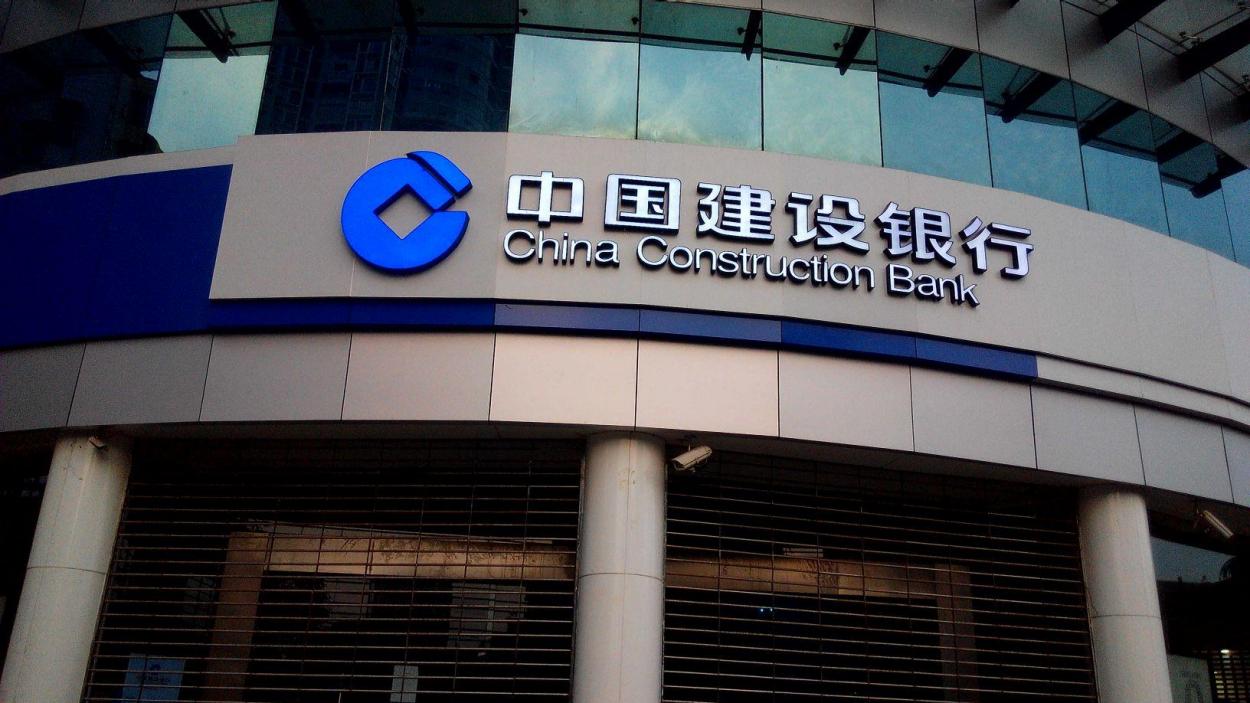
China’s largest state banks have committed over $3.75 billion in debt financing to Saudi Aramco’s Jafurah gas project, while Chinese investment funds have declined to take equity stakes in the venture, sources told Reuters.

The bulk of this funding comes from Bank of China, ICBC and China Construction Bank, each contributing around $1 billion, and Agricultural Bank of China adding roughly $750 million. This debt financing accounts for more than one-third of the total capital sought for what is expected to be the largest shale gas development outside the United States.

Aramco’s deal involves an $11 billion lease-and-leaseback agreement signed in August with a consortium led by Global Infrastructure Partners, an arm of BlackRock. Under the arrangement, a new entity called Jafurah Midstream Gas Company will lease processing assets to Aramco for 20 years. Aramco retains a 51 per cent stake, while the consortium holds the remaining 49 per cent.

Despite the opportunity to join the equity syndicate, several Chinese state-linked funds declined to participate, a move that sources attribute to heightened U. S.–China tensions. Beijing is said to have discouraged fund-level engagement with U. S.-affiliated private capital firms, even when such firms do not have overt U. S. exposure.

The Chinese banks’ decision to provide senior debt but avoid equity signals a calibrated strategic posture: backing the project financially without direct governance alignment with U. S.-linked investors.

Aramco’s broader ambition is to expand its gas production capacity by 60 per cent over 2021 levels by 2030. The Jafurah basin is estimated to contain 229 trillion standard cubic feet of raw gas and 75 billion stock tank barrels of condensate.

The BlackRock-led consortium is also negotiating additional capital of around $10.3 billion with a mix of debt instruments; participants in those talks include JPMorgan and Sumitomo Mitsui Banking Corporation. Those financial structures are intended to support the lease-and-leaseback model without ceding control of core infrastructure assets to external parties.

Within the Gulf, Chinese lenders’ prominent involvement in Jafurah’s financing echoes a broader trend. Analysts note that China is repositioning its role in Gulf energy infrastructure by leveraging its strengths in project debt and export credit rather than co-investment in U. S.-sponsored equity schemes.

Saudi Arabia is concurrently expanding its gas network. It has signed over $25 billion in contracts for the second phase of Jafurah development and further gas-network enhancements, including pipeline extensions of 4,000 km to increase capacity by 3.2 billion standard cubic feet per day. Chinese firms, such as Sinopec, are among the contractors participating in these projects.

For Aramco, the dual approach of securing large-scale debt from Chinese banks while partnering with international investors via the leaseback model helps it mobilise capital without relinquishing decisive control. The arrangement offers investors predictable tariff-based returns.

Chinese banks’ exposure gives them influence over covenant terms, loan pricing and repayment schedules. That leverage, without the burdens or political friction associated with equity, aligns with Beijing’s financial diplomacy toward strategic energy corridors.

The full constellation of debt and equity deals around Jafurah—and the dynamics among Gulf producers, Chinese state capital, and U. S.-linked private investors—will be among the key nodes shaping the next wave of energy infrastructure financing.

Space42 has issued its Foresight Constellation Viewpoint, a strategic dossier that underscores how Synthetic Aperture Radar satellite systems, when paired with artificial intelligence, can reshape decision making for governments and industries. The viewpoint emphasises the capacity for persistent imaging, all-weather operation and near-instant analytics — capabilities that are becoming mission-critical in an era of intensifying climate, security and infrastructure challenges.

At the heart of the Viewpoint is GIQ, Space42’s AI engine that converts raw SAR data streams into decision-grade intelligence within minutes. The report argues that the combination of high-resolution persistent coverage and AI transforms Earth observation from static imagery into a dynamic intelligence layer for monitoring, planning and emergency response. Launching Foresight-1 in August 2024 and Foresight-2 in January 2025 has already bolstered the UAE’s Earth observation capability.

Space42 frames its approach as not just a technological upgrade, but a sovereign asset: reliance on third-party satellite data leaves states vulnerable to disruptions, but a domestic SAR-analytics ecosystem offers resilience and control. The global SAR market, currently estimated around $5.8 billion, is forecast to nearly double to $9.8 billion by 2030. According to the Viewpoint, deployment of integrated SAR systems can yield cost savings — for instance, reducing predictive maintenance expenses by up to 30 per cent while improving emergency response by as much as 90 per cent.

The technical backbone of this strategy depends on both the satellite constellation and ground systems. Space42 has entered into a joint venture with ICEYE to localise manufacturing of SAR satellites in the UAE, aiming to strengthen supply chains and transfer expertise. The joint venture builds on prior collaboration: ICEYE’s technology underpins the Foresight satellites, and cooperation is intended to deepen over coming years.

Foresight-2 was successfully deployed via a rideshare launch on 14 January 2025, expanding the constellation’s capabilities and reinforcing its ability to revisit areas multiple times per day. With Foresight-1 and 2 in orbit, the full constellation is expected by 2027. The satellites exploit SAR’s unique ability to image through clouds and in darkness — a significant advantage over optical systems, especially in disaster and high-latency environments.

The Viewpoint also positions its narrative with real-world scenarios. It cites the 2023 Turkey earthquake, in which optical systems were hindered by cloud cover, while SAR satellites continued functioning — enabling assessments of a major dam’s structural integrity in crisis conditions. That example supports the argument that SAR ecosystems must be treated not as supplements but as core infrastructure for resilience and security.

Space42 positions itself as a full-stack player: not merely a satellite operator but a systems integrator combining space services, geospatial analytics and AI. Its dual business units—Space Services and Smart Solutions—serve satellite operations and downstream intelligence markets respectively. Among its touted use cases are border surveillance, maritime monitoring, infrastructure health, mobility and disaster management.

Yet challenges remain. Building sovereign SAR ecosystems demands investment in ground infrastructure, antenna networks, data processing centres and skilled personnel. Market competition is increasing: global players—commercial and governmental—are accelerating developments in miniaturised SAR payloads, hybrid optical/SAR systems and edge AI processing. Moreover, the cost dynamics of deploying dense constellations must be managed against returns from clients in defence, environment and infrastructure sectors.

BERLIN, GERMANY – Media OutReach Newswire – 2 October 2025 – Under the theme “Travel Taipei – A City of Layers”, Taipei is strengthening its promotion in Europe, presenting itself as a city where modern lifestyle, cultural depth, natural landscapes, and culinary excellence converge. From September 20 to 25, the campaign rolled out a series of events in Germany and the Czech Republic to showcase the city’s […]

Elon Musk has become the first individual in recorded history to attain a net worth of $500 billion, according to the latest Forbes billionaire index. His estimated fortune stood at $499.5 billion as of October 1, driven by sharp gains in Tesla shares and upward revaluations of his other ventures. Tesla’s stock climbed nearly 4 per cent on that day, contributing over $7 billion to Musk’s wealth, […]

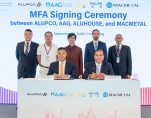
HONG KONG SAR – Media OutReach Newswire – 1 October 2025 – Aluminium Products Company (ALUPCO), an aluminum extrusion producer in Saudi Arabia and Asia Aluminum Group (AAG), a leading Hong Kong aluminum extrusion manufacturer with a production base in Mainland China, signed an agreement on September 29 in Hong Kong. The partnership will form three joint ventures, including AAG member companies AluHouse and MacMetal, With a […]

A joint venture between UAE grocer Spinneys and Philippines conglomerate Ayala Corporation aims to introduce premium supermarkets across the archipelago, with the first outlet slated for the fourth quarter of 2026. Ayala will control 60 per cent of the venture, with Spinneys holding the remaining 40 per cent, launching the Dubai-based brand’s first expansion beyond the Gulf Cooperation Council. The two-phase deal calls for Spinneys to bring […]

Advertisements

Etihad Rail has confirmed that passenger services will begin operations in 2026, ushering in a new era of high-speed connectivity across the UAE. At the Global Rail 2025 exhibition in Abu Dhabi, the company revealed the first public visuals of its passenger rolling stock and detailed plans for its network, integration efforts, and operating partnerships. Azza Al Suwaidi, deputy CEO of Etihad Rail Passenger Services, stated that […]

Hong Kong startups and business leaders join renowned entrepreneur on his first Asia tour to explore the mindset behind successful founders HONG KONG SAR – Media OutReach Newswire – 30 September 2025 – Hong Kong Science and Technology Parks Corporation (HKSTP) and Tatler called on the innovation community to “Keep Up with Steven Bartlett”, at an exclusive breakfast dialogue with the world-renowned entrepreneur and host of the […]

HONG KONG SAR – Media OutReach Newswire – 30 September 2025 – KPMG celebrated its 80th anniversary in Hong Kong last Friday, reaffirming its enduring commitment to the city’s growth and its role as a leading international financial centre. The milestone event, held at the Hong Kong Convention and Exhibition Centre, was graced by The Honourable John KC Lee, The Chief Executive of Hong Kong Special Administrative […]

0.1 percent of first-year regular premium equivalent from Family Takaful products launched after 1 August 2025 will be donated to the Community Chest of Singapore SINGAPORE – Media OutReach Newswire – 30 September 2025 – Etiqa Insurance Singapore, the insurance arm of Maybank Group, today announced a charity pledge linked to the launch of its latest Takaful products. Invest purpose, a new Shariah-compliant investment-linked plan designed for […]

Washington’s plan to sharply raise the cost of H-1B visas—the key route for skilled overseas professionals into the United States—has consequences far beyond immigration policy. It signals a potential reallocation of talent, capital and innovation that could redefine where the next wave of technology growth takes place. If the US prices out the world’s top engineers, data scientists and entrepreneurs, those individuals will gravitate toward regions offering […]

Finran Group has launched Teiza, Malaysia’s First Native Layer 0 foundational blockchain, enabling transparency and interoperability, strengthening regulatory and compliance, meeting the needs of Government and business, whilst catalysing blockchain innovation and ecosystem development. KUALA LUMPUR, MALAYSIA – Media OutReach Newswire – 29 September 2025 – Finran Group, an institutional finance group with a digital financial venture capital arm and a digital finance advisory firm announces the […]

Sheikh Mohammed bin Zayed Al Nahyan received Sam Altman, chief executive of OpenAI, in Abu Dhabi on Saturday, where they engaged in talks designed to deepen AI collaboration between UAE institutions and OpenAI. The meeting concentrated on intensifying research cooperation, advancing practical AI applications, and aligning strategies to bolster the UAE’s integrated AI ecosystem. The UAE’s state media noted the partnership “aligns with the UAE’s ambition to […]

Digital asset treasury firms, which raise capital to accumulate crypto assets on their balance sheets, are being reimagined by market analysts as possible long-term powerhouses akin to Berkshire Hathaway. Ryan Watkins, co-founder of Syncracy Capital, argues that the more successful of these firms—currently seen by many as speculative vehicles—could evolve into permanent capital engines that deploy resources, build operating businesses, and influence ecosystem governance.

These treasury firms already collectively manage over $105 billion in crypto holdings, across assets such as Bitcoin, Ethereum and others. Watkins emphasises that the largest winners will be those that transition from mere accumulation into diversified operations across staking, lending, infrastructure and enterprise investment.

The model diverges from traditional crypto “hoard and hope” strategies. Rather than simply acting as passive holders, Watkins projects that top-tier treasury companies will adopt a hybrid role: asset manager, growth investor, and operational builder. In his view, they may eventually resemble conglomerates that deploy capital into promising ventures, fund ecosystem projects, and re-invest profits strategically.

Some firms already reflect parts of this shift. MicroStrategy remains a benchmark, having raised capital through equity and convertible debt to purchase Bitcoin. As of mid-2025, dozens of public and private entities have announced intentions to create treasury arms or adopt treasury strategies. Firms are expanding beyond Bitcoin into Ethereum, Solana and other networks, seeking yield diversification.

A newly announced example is AVAX One, backed by Anthony Scaramucci and Hivemind Capital, which aims to raise $550 million to acquire AVAX tokens and expand into fintech and insurance acquisitions on the Avalanche network. This signals growing appetite for treasury firms to enter adjacent sectors and integrate vertically.

At the same time, regulatory and ethical challenges loom. Critics warn that some treasury firms may disguise self-dealing as capital deployment, favouring projects in which insiders hold undue influence. Without rigorous governance, the line between strategic investment and insider enrichment can blur.

Regulatory scrutiny is also emerging: authorities like the U. S. Securities and Exchange Commission and FINRA have initiated probes into suspicious trading around announcements by publicly traded firms adopting crypto treasury plans, seeking to determine whether some investors benefitted from non-public disclosures. Meanwhile, treasury entities face pressure to provide transparency in reserves and audit practices, especially as they reassure investors about balance sheet integrity.

Beacon Media, the entertainment venture co-founded by wellness advocate Dr Deepak Chopra, has joined forces with MovieVerse Studios — the mainstream content arm of IN10 Media Network — to launch a content alliance aimed at elevating storytellers across the Global South. The partnership seeks to establish a “borderless content ecosystem” connecting Hollywood, India, the Middle East, Africa and Latin America — with a prospective audience reach exceeding […]

Emergent today announced it has secured a total of USD 30 million in funding, led by a USD 23 million Series A round from Lightspeed, marking a strategic push into the Middle East and North Africa region. The Bengaluru-based startup, founded in 2025, is already claiming USD 15 million in annual recurring revenue within 90 days of launch, underlining strong investor confidence in its rapid growth model. […]

Dubai has secured a position among the world’s top four FinTech centres, according to the latest Global Financial Centres Index published on 25 September, signalling a pivotal shift in the emirate’s financial technology trajectory.

The GFCI report places Dubai at 11th globally in the overall ranking of financial centres, but underscores its standing as one of the most dynamic hubs for FinTech innovation. The Dubai International Financial Centre has played a central role in driving this transformation.

DIFC now houses over 1,500 companies focused on AI, FinTech, and innovation, making it the region’s largest cluster of its kind. These firms have collectively raised more than US$4.2 billion in funding, strengthening the UAE’s appeal as a destination for growth-stage tech ventures. Sheikh Maktoum bin Mohammed bin Rashid Al Maktoum, First Deputy Ruler of Dubai and Minister of Finance, credited the rise to the strategic goals of the Dubai Economic Agenda D33 and to Dubai’s business-friendly infrastructure and regulatory regime.

Essa Kazim, Governor of the DIFC, stressed that the momentum reflects long-term planning and deep investment. He noted that positioning Dubai among the top global FinTech players has required calibrated incentives, robust legal frameworks, and international partnerships. Arif Amiri, Chief Executive Officer of the DIFC Authority, said the locale’s success stems from synergy among institutional support, talent attraction, and ecosystem-building efforts.

Dubai’s ascent in the FinTech league emerges amid intensifying global competition. Traditional financial centres such as London, Singapore, and Hong Kong continue to maintain strong footholds, leveraging established networks, global institutions, and mature regulatory systems. Yet Dubai’s rapid rise indicates that newer hubs with nimble regulation and aggressive incentives can leapfrog in the tech-driven financial services landscape.

The GFCI 38 ranking shows Dubai overtaking several peers in the Gulf and Asia, with the city gaining one rank to 11th place overall and closing gaps in score metrics used to assess competitiveness, such as human capital, reputation, and business environment. The GFCI emphasises that “expected future significance” is one of the domains in which Dubai leads globally—an indication that market participants foresee further growth in its influence.

Ethereum co-founder Jeffrey Wilcke has moved 1,500 ETH into the Kraken exchange, sparking debate over whether he plans further liquidations as the market faces renewed pressure. The transfer coincided with Ether’s slide below the $4,000 threshold.

Wilcke’s latest deposit comes less than a month after he offloaded ETH worth approximately $9 million, according to on-chain analytics. His known holdings still exceed 90,000 ETH, translating to a valuation above $350 million at current market rates.

Moving cryptocurrency into exchange wallets often suggests intent to sell, but it doesn’t guarantee action. Observers note this transaction fits Wilcke’s pattern of prior transfers, including earlier large deposits of 105,737 ETH and 9,840 ETH to Kraken. He has also reshuffled holdings across multiple wallets in the past — a tactic that clouds the true motive.

Ether’s price has lost ground recently, breaking technical support at $4,000. That drop has intensified concerns about downward momentum, amid warnings that failure to reclaim $4,841 could trigger a deeper pullback toward $2,750.

Yet the broader market tells a mixed story. Over the past two days, at least 15 whale wallets have acquired more than 406,000 ETH, sourcing tokens from major platforms including Kraken, Galaxy Digital, BitGo, and FalconX. That level of accumulation suggests some large holders see current prices as a buying opportunity.

The timing of Wilcke’s transfer coincided with Kraken’s own developments: the exchange announced a $500 million funding round, valuing it at $15 billion and laying groundwork for a prospective 2026 IPO. Some analysts have argued that Wilcke’s move could be a strategic internal adjustment ahead of market shifts rather than a direct sale.

Wilcke’s role in the Ethereum project dates back to its earliest years, notably in the development of Geth, the Go-based client now central to the network’s operations. Although he stepped back from core Ethereum development in 2018, he later founded Grid Games, a venture into online gaming. His pattern of wallet activity in recent years has drawn attention — transfers of tens or hundreds of thousands of ETH have periodically triggered speculation.

Abu Dhabi-based XRG P. J. S. C. has finalised its acquisition of an 11.7 percent equity interest in Phase 1 of the Rio Grande LNG project in Brownsville, Texas, marking the company’s first natural gas investment in the United States. The purchase was made through a joint-venture structure involving Global Infrastructure Partners, an investment vehicle affiliated with BlackRock. Phase 1 of Rio Grande LNG is one of […]

President Duma Boko has declared that his government intends to secure a controlling share in De Beers by the end of October, pushing Botswana to renegotiate its position in the global diamond supply chain. The move comes as Anglo American, the majority owner of De Beers, appears ready to divest its 85 percent stake. Botswana currently holds 15 percent of De Beers and jointly operates the mining […]

Crafting a serene but vigorous harvest season for guests with a repertoire of exquisite multifaceted dining, wining, and playing choices MACAU SAR – Media OutReach Newswire – 25 September 2025 – As the air begins to cool in Macau, the city’s appetite turns towards indulgence; nourishment for the body, soul, and appetite becomes a premier priority. At Galaxy Macau™ Integrated Resort (hereafter “Galaxy Macau”), autumn is a […]

Dubai is gearing up to host the third edition of the Invest Web3 Forum, powered by bepay money, assembling over $500 billion in assets under management and more than 80 institutional investors. The one-day gathering, slated for 15 October at Dubai Knowledge Park, seeks to advance institutional adoption of blockchain through capital allocation, policy dialogue and startup investing. Market watchers point to the forum as a bellwether […]

A high-profile gathering scheduled for 29 September in Singapore will convene health professionals, AI innovators and medtech entrepreneurs to examine the evolving intersection of artificial intelligence and clinical care. Titled CliniConnect: AI X Healthcare SG Edition, the event aims to catalyse collaboration across disciplines and continents.

Organisers say the agenda will include interactive panels, pitch sessions, and roundtable debates focused on real-world adoption of AI in diagnostics, hospital systems, and patient care. They expect participation from clinicians, researchers, startup founders and regulatory stakeholders alike. The event is expected to coincide with TOKEN2049, a major AI & blockchain gathering, offering cross-domain exposure and synergy.

CliniConnect has hosted several prior editions in Singapore and other regional hubs, with past speakers including Dr Adam Chee, founding lead of Singapore’s Centre for AI-Enabled Health. These gatherings have emphasised bridging the gap between algorithm development and clinical deployment, with attention to ethics, data governance and system integration.

One central topic will be how hospitals and health systems can scale AI solutions beyond pilot phase. Many institutions struggle to integrate point-solutions into legacy electronic health records or workflows. Executives and innovation leads at the event will share strategies for deploying AI at scale without fragmenting operations.

Another critical strand will explore trust, explainability and regulatory oversight. While AI is making strides in pathology, radiology and triage, clinicians often resist “black-box” models. Some speakers plan to advocate hybrid approaches combining model outputs with human oversight or modular interpretability frameworks.

Regulatory perspectives are expected to feature heavily. Several jurisdictions are updating medical device rules to account for adaptive algorithms. Singapore’s Health Sciences Authority has begun consultations on AI frameworks, and regional alignment across ASEAN markets remains a challenge. CliniConnect hopes to provide a forum for convergence on standards, data privacy and cross-border validation.

On the entrepreneurship front, medtech startups will pitch innovations aimed at workflow automation, predisposition risk modeling, remote patient monitoring, and imaging augmentation. Organisers have indicated that venture capital and hospital innovation arms will be present, seeking collaborations or early investments.

The event also intends to showcase case studies from institutions that have begun deploying AI in clinical settings. Narratives are expected from hospitals in Singapore, South Korea, India and Dubai on how they piloted decision-support tools, performance-monitoring systems or diagnostic assistants, and the bottlenecks they encountered in scaling. These stories will help attendees assess trade-offs, resource requirements and institutional readiness.

Observers note CliniConnect’s growing ambition: it now brands itself not just as a regional meetup but as a bridge between Asia’s health tech communities and global AI networks. By aligning with TOKEN2049 and leveraging cross-sector partnerships, it hopes to attract more international participants and raise its influence in defining health AI standards.

VISHNU RAJA
RYO YAMADA
HITORI GOTOH
IKUYO KITA