News related to
venture

A UAE-based investment vehicle, Aqua 1 Foundation, has acquired $100 million in governance tokens from World Liberty Financial, the cryptocurrency venture affiliated with the Trump family, making it the most prominent publicly disclosed investor to date. The move, confirmed by both parties, signals a strategic push to accelerate the creation of a blockchain-based financial ecosystem built on stablecoins and tokenised real-world assets.

Aqua 1 described the allocation of governance tokens—known as WLFI—as an opportunity to contribute to decisions on the platform’s development. Although WLFI is currently non-transferable, World Liberty has confirmed it is “working behind the scenes” to enable trading functionality. At the Permissionless conference in Brooklyn, WLF co‑founder Zak Folkman stated that WLFI could soon be tradable, with the stablecoin set for an independent audit “within days”.

Dave Lee, founding partner at Aqua 1, emphasised the synergy expected from the partnership, citing plans to jointly identify and foster high‑potential blockchain initiatives. The intention is to integrate WLF’s USD1 stablecoin infrastructure into global commercial payments and treasury systems. The move marks Aqua 1 as a key bridge between traditional finance and decentralised finance, aligning with its ambition to extend influence into South America, Europe, Asia and Middle Eastern markets.

Despite its substantial investment, Aqua 1 has maintained a low profile. Reports indicate its web presence is minimal—with just a handful of social media posts and evidence of a website only registered on 28 May.

WLF, launched in late 2024 by Donald Trump, three of his sons and associate Steve Witkoff, has raised well over half a billion dollars through token sales. The Trump family controls a significant stake—around 60% ownership and 75% of net token sales revenue—raising concerns over conflicts of interest. Democratic lawmakers and ethics watchdogs have repeatedly voiced apprehension that these financial interests may influence policy, amid reports that WLF proceeds reached hundreds of millions of dollars.

WLF’s stablecoin, USD1, is 100% backed and supported by U.S. dollar reserves, including Treasuries, and has already drawn sizeable institutional backing. In May, an Abu Dhabi firm used USD1 in a $2 billion transaction with Binance, while WLF prepares to publish an attestation of its stablecoin reserves as part of forthcoming audit disclosures.

The institutionalisation of WLFI governance aligns with the platform’s roadmap, which includes plans to launch a consumer‑friendly mobile app to streamline access to its digital ecosystem. The expected transition to transferable governance tokens is likely a precondition to broader distribution and potential listings on third‑party exchanges.

Regulatory scrutiny remains a key challenge. Critics argue that WLF’s entanglement of private financial interests with public office contradicts norms protecting against foreign influence. At least one senator has raised concerns after the Abu Dhabi stablecoin transaction. Additional worries stem from the Trump administration’s shift toward crypto deregulation, a change that coincides with WLF’s rise, prompting concerns from ethics groups about policy bias favoring the platform.

That overlap of influence has fuelled broader debates in Congress. Legislators have begun proposing amendments such as the GENIUS Act, which would regulate stablecoins more robustly, and restrictions on digital asset investments by sitting presidents. Observers note that WLFI’s new status and Aqua 1’s involvement could sharpen the need for regulatory clarity and transparency around token governance.

Meanwhile, WLF’s expansion plans are proceeding apace. The platform is reportedly developing a Middle East‑based Aqua Fund to support digital economy projects leveraging blockchain and artificial intelligence. The collaboration is expected to produce tokenisation platforms such as BlockRock, targeting institutional asset-digitisation markets.

Aqua 1’s governance stake marks a turning point. By becoming the lead institutional backer, the foundation now holds significant influence over decisions shaping WLF’s evolution. With token transferability and app launches on the horizon, WLFI stands poised for a new phase of adoption—though progress will likely be watched closely by regulators and investors alike.

Over 40 per cent of current agentic AI initiatives are projected to be halted by the close of 2027, Gartner warns, owing to spiralling costs, opaque business value and insufficient risk frameworks. Despite overwhelming industry enthusiasm, most ventures remain confined to pilot stages or proofs of concept and are driven more by hype than by tangible returns. Gartner’s senior director analyst, Anushree Verma, cautions that many vendors are indulging […]

Alain Robert, the daredevil climber known as the French Spiderman, has ascended the 116‑metre Meliá Barcelona Sky Hotel without any ropes or harnesses to launch TIGERSHARK—claimed as the world’s first cryptocurrency backed by real‑world extreme sports feats. Clad in Tigershark-branded gear and accompanied by his son, former French Navy marine Julien Robert, he live-streamed the stunt via X to mark what organisers call a “Mission 1: Spiderman & Son” initiative.

Organisers describe TIGERSHARK as part of an emerging “Action Economy” in which each token is tied to real adrenaline-fuelled missions spanning big‑wave surfing, wingsuit flying, motocross and parkour. Holding the token grants access to private events, exclusive behind‑the‑scenes content and athlete “drops” – an attempt to fuse thrill‑seeking with blockchain community building.

Lilly Douse, spokesperson for Tigershark, emphasised the departure from traditional token launches: “not airdrops, not smoke and mirrors, but actual real‑world extreme feats, true adrenaline”. She added that the venture is betting on “guts and grits” as the currency’s value proposition.

Robert’s legacy as an urban climber spans more than 150 structures, including the Burj Khalifa, Eiffel Tower and Petronas Towers, all scaled without safety gear. At his current age in the early 60s, he remains committed to pushing boundaries—and this stunt launches a broader strategy merging sport, entertainment and crypto technology.

Discussions are already underway with elite athletes in other high‑risk disciplines—such as base jumping, parkour, wingsuiting and motocross—to participate in future missions. Tigershark’s roadmap includes sponsorships, branded merchandise, global events and athlete plugins, positioning itself as more than a token, but a fully-fledged action-sports brand powered by cryptocurrency.

The circus‑style unveiling has caught the attention of both crypto enthusiasts and adventure-sport communities. While token offerings tied to lifestyle and entertainment have a precedent, Tigershark’s novel angle lies in monetising raw human risk and authenticity. Crypto commentators on social media have amplified the narrative, describing the stunt as “the realest launch Web3 has seen” and “the wildest crypto launch ever”.

However, critics have raised concerns. The stunt’s stunt‑token concept may attract speculative interest, but some analysts warn linking token value to unpredictable physical events could introduce heightened volatility. Moreover, regulatory scrutiny looms over crypto ventures that employ unconventional marketing tactics, especially those involving public stunts with safety or legality risks.

Tigershark’s strategic focus on live‑streamed extreme feats and token‑holder exclusives mirrors broader trends in Web3: blending content, experience and community. Yet the project must deliver consistency and transparency. Observers will scrutinise whether future missions occur as scheduled, whether token economics remain sound, and whether token-holders genuinely receive promised perks.

By embedding risk and spectacle into its founding act, TIGERSHARK sets itself apart from conventional token launches. Early investor sentiment appears buoyed by novelty and potential for real‑world engagement. But delivering a sustainable “Action Economy” will require navigating regulatory complexities and proving that this fusion of blockchain and extreme sport can transform fleeting adrenaline into long‑term value.

Abu Dhabi sovereign investor ADQ is negotiating the acquisition of a 35 percent stake in Limagrain’s vegetable seeds unit, forging a strategic partnership focused on developing hard‑climate‑resilient crops. The envisioned alliance includes joint research and development initiatives in the UAE, designed to accelerate innovation in seeds tailored to extreme conditions. The proposed investment centres on Limagrain Vegetable Seeds, the vegetable‑seed division of France‑based cooperative Limagrain, a global market […]

Malaysia has officially unveiled the Startup ASEAN platform during its tenure as ASEAN chair, establishing a fully operational digital gateway designed to unite entrepreneurs, investors and ecosystem enablers across Southeast Asia. The launch—following a developmental blueprint initiated in 2024—unlocks access to regional markets, capital, talent and data, with an aspirational target of onboarding at least 10,000 startups by year-end.

The platform’s roll‑out represents phase two of the ASEAN Startup Technology Ignite initiative. Development and a soft launch took place in 2024, while the newly announced phase includes capacity‑building programmes and a Startup ASEAN summit. A third phase commencing in 2026 will see the establishment of an ASEAN Centre of Excellence dedicated to early‑stage ventures.

Minister of Science, Technology and Innovation Chang Lih Kang described the platform as a “strategic enabler” born from collaborative efforts among all ASEAN member states. He highlighted its role in bridging fragmented access to finance, talent and market opportunities. At the launch in Putrajaya, he underlined that approximately 5,000 startups have already joined and affirmed the year‑end goal of doubling that number.

ASEAN Secretary‑General Dr Kao Kim Hourn echoed these commitments, stating that the platform exemplifies deeper regional integration and presents “unprecedented opportunities” through technology. He noted that the platform extends to ecosystem builders and government institutions, reflecting ASEAN’s dedication to fostering inclusive innovation.

Cradle Fund Sdn Bhd, appointed by Malaysia’s MOSTI, is spearheading implementation. Its group chief executive, Norman Matthieu Vanhaecke, emphasised that the platform transcends mere technology: it is designed to generate meaningful partnerships, foster cross‑border initiatives and catalyse growth across the region. He said it will track metrics such as startup onboarding, investment activity and regional collaboration, aiming to involve 2,000 investors and 500 strategic partners by 2025.

Dr Kao highlighted the context underpinning this push. Southeast Asia hosts over 680 million people—more than half under 35—with a combined GDP exceeding US$3.9 trillion and a digital economy projected to surpass US$1 trillion by 2030. Kuala Lumpur’s leap into the top 20 emerging startup hubs, ranking 18th in the Global Startup Ecosystem Report 2025 by Startup Genome, provided a credible basis for regional leadership.

CupTuring beyond connecting stakeholders, the platform is set to host a suite of programmes. Already underway are collaborative initiatives with international partners such as South Korea and China, and plans include additional regional market‑access sessions and mentorship opportunities. The launch event featured a video tour with startup success narratives and a regional market access session, ASEAN CrossConnect, which paired ten seasoned mentors with participating startups.

The platform’s ecosystem metrics are compelling: as of the launch, more than 4,000 startups and 1,087 investors were registered, contributing to an ecosystem valued at over US$131.2 billion.

Governments from less developed ASEAN nations were assured of equal standing on the platform. Chang emphasised its borderless design, allowing any startup with internet access to connect with markets and investors across the region.

The Startup ASEAN initiative traces back to 2023, when ASEAN leaders approved a framework empowering Cradle to lead policy development, ecosystem readiness, and cross‑sector partnerships. The recent formal launch marks the first major deliverable of the Ignite initiative under Malaysia’s ASEAN chairmanship.

Experts view the initiative as a timely response to ASEAN’s broader economic integration agenda, reflected in recent high‑level declarations such as the Kuala Lumpur Declaration. The new platform aligns with ASEAN Community Vision 2045, aiming to strengthen innovation, connectivity and socio-economic resilience.

The Magic Newton Foundation has unveiled its NEWT token, aiming to revolutionise token launches by embedding transparency and equitable distribution at its core. The native token of the Newton Protocol, NEWT debuts with a fixed supply of 1 billion, of which 21.5%—215 million tokens—is initially available.

Designed to tackle persistent issues of insider trading and opaque allocations, NEWT introduces several industry-first safeguards. All allocations are publicly tagged on-chain for independent verification, while quarterly reports will detail usage across community, internal, and liquidity categories. Furthermore, team and contributor allocations are subject to a mandatory 36-month vesting with an initial 12-month lock-up.

Solid data underpins the initiative: research indicates insiders preceded 56% of all ERC‑20 listings since 2021, and studies suggest 10–25% of token listings may involve insider activity. Mohammad Akhavannik, Managing Director of the Foundation, said the goal is to “correct information asymmetry” with full on-chain transparency and equitable distribution.

A significant 60% of the token supply is allocated to community-focused initiatives—growth, ecosystem development, staking, liquidity support—with structured unlocking schedules: 20% at launch, the balance over a 48-month span. The remaining 40% is directed to internal stakeholders—core contributors, early backers, and Magic Labs—with vesting periods designed to align long-term incentives.

Beyond tokenomics, NEWT underpins the Newton Protocol’s AI-driven automation. It serves four primary roles: securing the network through validator staking; acting as the protocol’s native gas fee; funding registration and operational services for AI agent models; and enabling governance participation via staked holdings. The protocol integrates trusted execution environments and zero-knowledge proofs to ensure tasks executed by AI agents adhere to user-defined parameters.

Binance has listed NEWT for margin, futures trading, and inclusion in Earn programmes. The token also features on Coinbase, Upbit, Bybit, and Bithumb. Following the announcements from Upbit and Bithumb, NEWT saw a 40% price surge, which was further bolstered by backing from PayPal Ventures and Polygon securing US$90 million in pre-launch investment.

The launch included a 10% airdrop—100 million tokens—to early community participants and users active on the Kaito platform, including a 0.9% allocation specifically for Kaito rewards, based on an eligibility snapshot on 20 June 2025.

Magic Labs, the principal developer behind Newton Protocol, brings extensive web3 infrastructure experience, having supported over 50 million embedded wallets since 2018 through partnerships with notable platforms such as Polymarket and WalletConnect. This technical legacy, combined with NEWT’s layered governance and economic utility, positions the Foundation to challenge established norms in on‑chain finance.

Critical voices within the crypto community have noted discrepancies in the top-tier distribution: for example, the top 1,000 social‑platform accounts received 0.9% of the circulating tokens, prompting debate over whether influence is being prioritised over grassroots contributors.

Claira, a New York–based deal intelligence platform, has closed a $7 million seed funding round co-led by Barclays and Citi, alongside Reimagine Tech Ventures. Additional backing came from Activant Capital, KDX and OPCO Ventures. Claira’s platform integrates domain-native artificial intelligence directly into deal workflows, enabling banks, private-credit funds and financial institutions to speed up due diligence, unlock historical deal insights and scale decision‑making processes. Founder and chief executive […]

Advertisements

HONG KONG SAR – Media OutReach Newswire – 25 June 2025 – DL Holdings Group Limited (1709.HK) issued a voluntary announcement to the Hong Kong Stock Exchange on June 24, 2025, stating that it has signed a non-legally binding term sheet with ViaBTC Holdings Limited (hereinafter referred to as “ViaBTC”). The two parties plan to establish a joint venture to initiate in-depth collaboration and jointly explore the […]

Efforts to foster youth entrepreneurship in Sharjah have taken decisive shape with the launch of a new initiative by the Municipal Council and Sharjah City Municipality alongside the Family Development Department. Known as the Sustainable Future Youth Programme, the project seeks to streamline startup processes, facilitate licensing, and provide mentorship and finance support for young innovators.

The programme introduces a unified one-stop-shop for business setup, combining municipal services with regulatory and advisory support. It aims to reduce administrative delays and lower barriers to entry for promising youth-led enterprises. Stakeholders hope this will catalyse innovation and expand economic diversification within the emirate.

Under the scheme, participants benefit from facilitated licensing via the municipality’s dedicated entrepreneurship centre. Young entrepreneurs will receive support in completing documentation, securing permits, and understanding compliance requirements. Meanwhile, Family Development Department branches will offer training sessions in business planning and financial literacy targeted at individuals aged 18–35.

Sources within the Sharjah Youth Council say the programme differentiates itself through its inclusive approach to sustainability. Every startup selected must embed at least one sustainable development objective—whether in social impact, environmental protection, or economic resilience—into its business model. Mentorship and advisory services will be provided by experts from government, private sector, and academia, ensuring access to high‑value networks.

Officials emphasised that one of the programme’s early successes is its cooperation with Sharjah FDI Office’s Emerging Entrepreneurs initiative. Since its inception in early 2024, the Emerging Entrepreneurs initiative reportedly processed its first licenses within days—365 Luxury Watches being one example of a brand that expanded into the emirate swiftly. The new youth programme is designed to build upon this momentum and scale the model to a broader demographic.

The launch event featured remarks by Saif Al Suwaidi, Acting Manager of the Sharjah Investors Services Centre, who highlighted the intent to “embrace young entrepreneurs and innovators eager to launch their projects and businesses in the emirate’s vibrant markets”. Sheikha Issa Al Harmoudi of the Sharjah Youth Council stressed that aligning municipal and youth-targeted efforts is key to reduce obstacles faced by local innovators.

Ruwad, the Sharjah SME foundation, will also play a pivotal role by offering membership benefits, financing options, and virtual incubation facilities—especially targeting universities and alumni. As of early 2024, Ruwad’s network of roughly 1,500 members had already started utilising such support programmes.

Earlier in 2025, complementary youth measures were introduced in the emirate. The Sharjah Capacity Development Foundation released Masar, focused on bridging the gap between education and employment for graduates. The Sharjah Youth Council, together with the Ministry of Industry and Advanced Technology, also organised the “Industry Pioneers – Make it in the Emirates” session to orient Emirati youth towards emerging industrial opportunities under the national diversification strategy.

These activities reflect Sharjah’s broader ambition to bolster non‑oil sectors—such as manufacturing, tech, and creative industries—to contribute significantly to the UAE’s economic targets by 2031. They also coincide with the Municipality’s efforts during UAE Innovation Month in January that included youth‑centric programmes like Innovative Engineer and Innovative Farmer, aimed at nurturing a culture of creativity within municipal services.

Analysts note that the sharpening focus on youth-empowerment initiatives is timely, given the global rise of youth-led impact ventures and the UAE’s increasing competition with regional innovation hubs. According to market data, Sharjah’s share in domestic non‑oil FDI and startup investment has grown significantly, though it remains modest compared to Abu Dhabi and Dubai. The new programme aims to narrow that gap by improving regulatory efficiency and offering targeted support.

Critics, however, caution that sustainable impact depends on measurable outcomes. They argue the programme should establish clear metrics—such as business survival rates, job creation, and investment attraction—to accurately assess its effectiveness. Some have also emphasised the need to extend outreach to rural and underrepresented communities across the emirate.

Government responses indicate that a central dashboard for monitoring and reporting outcomes will be unveiled in the coming quarter. The Municipality has committed to publishing annual impact reports detailing licence issuance, active ventures, funding accessed, and employment generated. They also plan to host follow‑up workshops and bootstrap funds later this year.

As implementation proceeds, attention will turn to integration with existing initiatives. Stakeholders emphasise synergy with SAEED’s established model, Ruwad’s incubation services, and the Youth Council’s outreach. Plans to forge links with private sector incubators and international investor networks are also under exploration, signalling Sharjah’s ambition to transform municipal-level support into a globally connected entrepreneurship ecosystem.

A six-month-old San Francisco‑based venture, Thinking Machines Lab, has secured a staggering $2 billion seed round, propelling its valuation to at least $10 billion. Led by Andreessen Horowitz with participation from Conviction Partners and reportedly the government of Albania, this marks one of the largest initial funding rounds in Silicon Valley history. Founded in February 2025 by former OpenAI chief technology officer Mira Murati, the company has assembled a formidable […]

Polymarket, the world’s largest blockchain-based prediction market platform, is on the verge of completing a funding round exceeding $200 million that would value the company at over $1 billion. The strategic investment reflects growing investor confidence in forecasting platforms as tools for real-time insights and market intelligence.

The company, founded in 2020 by Shayne Coplan and headquartered in New York, has previously secured $70 million across Series A and B rounds led by General Catalyst, Founders Fund, alongside participation from Ethereum co-founder Vitalik Buterin. That capital helped Polymarket scale its operations offshore, particularly following regulatory setbacks in the United States, where it withdrew services under pressure from the Commodity Futures Trading Commission.

Sources indicate the new investment round will build on these foundations, raising upwards of $200 million and propelling Polymarket into unicorn status with a valuation north of $1 billion. Those close to the transaction describe a diverse syndicate of venture capital firms, strategic investors and high-profile figures from the crypto and financial sectors, though official names are yet to be disclosed.

Polymarket’s appeal lies in its novel combination of decentralised finance, crowd-sourced wisdom and smart contract automation. The platform allows participants to trade on real-world events—ranging from elections and policy outcomes to entertainment and economic indicators—by buying and selling shares reflective of outcome probabilities. Transactions occur using USDC on Polygon, ensuring on-chain settlement and transparency.

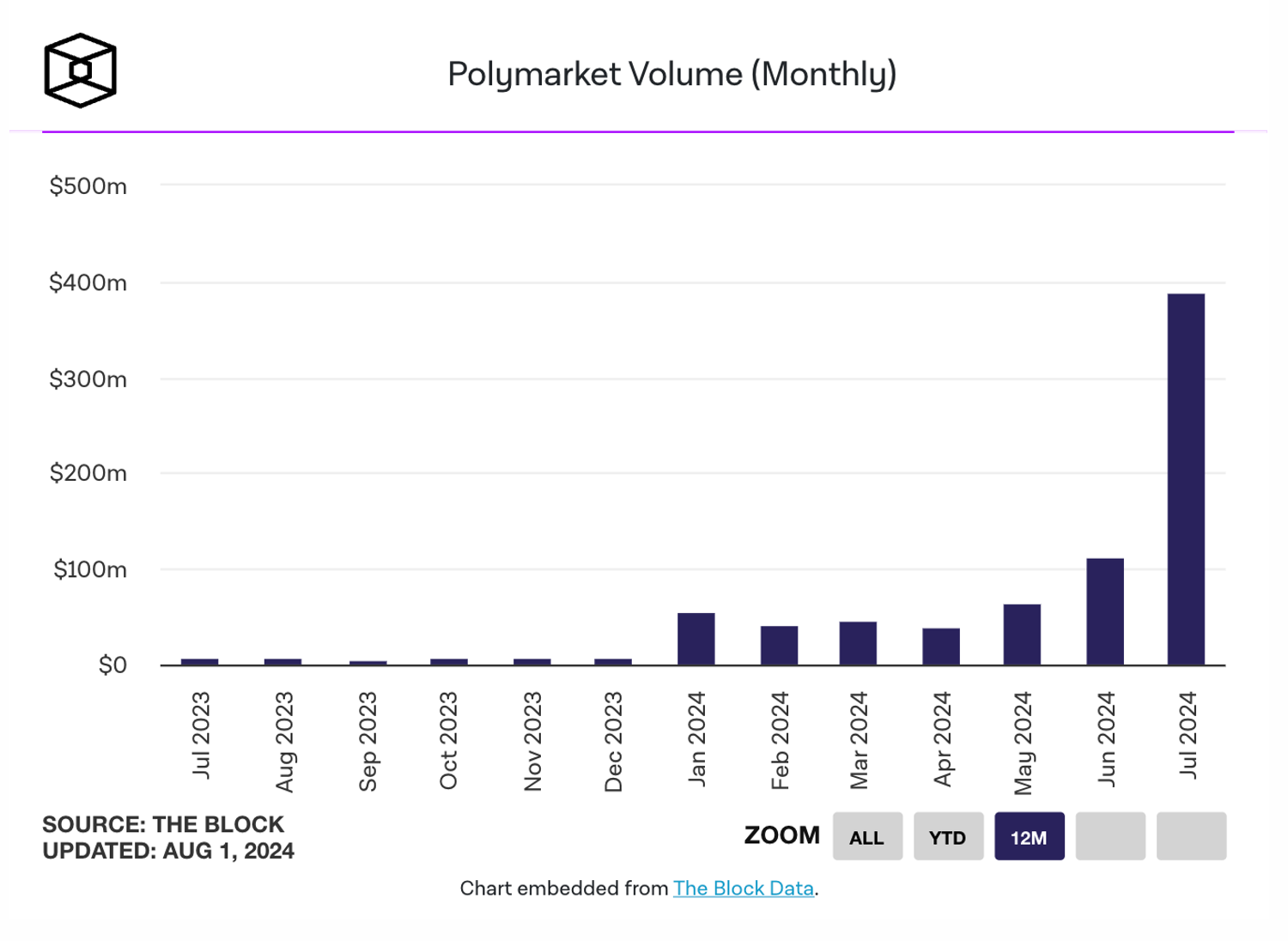
Trading volumes attest to the platform’s influence. In August 2024 alone, Polymarket processed approximately $472 million in trades, with political markets—especially those related to the US presidential election—accounting for nearly $1 billion in wagers by November 2024. Peter Thiel’s Founders Fund highlighted its trust in Polymarket’s market intelligence: “checking Polymarket when breaking news happens has become a habit”.

That compelling performance comes amid regulatory headwinds. Polymarket has barred US users since reaching a settlement with the CFTC in early 2022, which included a US$1.4 million fine and the appointment of former CFTC chairman J. Christopher Giancarlo to its advisory board. These changes aimed to address compliance concerns as the platform expanded internationally. More recently, the FBI reportedly raided Coplan’s home in autumn 2024 as part of an investigation into whether US-based activity violated these agreements.

Despite these challenges, Polymarket has continued to deepen its appeal. Ethereum co-founder Vitalik Buterin has publicly supported the broader application of prediction markets, terming them pioneers in “Info Finance,” an area he believes can enhance journalism, governance and scientific transparency. Polymarket’s data is now cited within Bloomberg’s Terminal services, offering institutional investors fresh analytical layers based on global betting dynamics.

The potential $200 million funding round is expected to include an allocation of token warrants enabling investors to participate in a future token issuance by Polymarket. Earlier reporting by CoinDesk and The Defiant in late 2024 highlighted a $50 million interim funding plan tied to a utility token offering, intended to integrate with or supplant the UMA oracle dispute-resolution system. That mechanism would allow users—or token holders—to validate market outcomes, an evolution that could expand Polymarket’s governance and on-chain autonomy.

Market observers view this token strategy as a logical advancement. Rising volumes and user engagement on election forecasts have revealed limitations in relying solely on external oracles; introducing a native token could decentralise verification and cement Polymarket’s position in the governance of its own markets.

Emerging trends suggest Polymarket is transitioning from an insurgent, crypto-native prediction exchange to a mainstream information infrastructure. Its user base now spans political analysts, financial professionals and retail traders. The recent partnership with X integrates Polymarket’s probabilistic feeds into social media dynamics, allowing users to access market sentiment in real-time alongside breaking news.

Yet questions over regulatory alignment remain. The CFTC is reportedly examining off-shore platforms that permit US bettor access, and lawmakers are considering broader prohibitions on event-based derivatives. The fallout from the 2024 FBI inquiry adds a layer of legal uncertainty, even as Polymarket navigates regulatory environments in Europe and Asia, where its platform has faced access restrictions from gambling regulators in Belgium, Poland, Singapore and France.

As Polymarket nears completion of its landmark funding round, it stands at a crossroads defined by opportunity and scrutiny. A valuation exceeding $1 billion would underscore investor conviction in its model, but unlocking the full potential of prediction markets may depend as much on regulatory clarity as on capital infusion.

Free shuttle network connects to Disney, KOOZA, and transport hubs, while baby gear rentals and kid perks turn stays into seamless adventures HONG KONG SAR – Media OutReach Newswire – 24 June 2025 – This summer, experience Hong Kong’s most anticipated events from the award-winning 4.5-star Dorsett Wanchai, Hong Kong. Strategically located to provide family travellers with unparalleled convenience, the hotel not only offers the iconic Hong […]

Startup founders drained by endless pitch decks, venture capital ghostings, or hallucinating LLMs may still be better off than those feeling stuck in joyless desk jobs. According to a wave of AI entrepreneurs and mental health observers, the strange cocktail of risk, creativity, and irrational optimism that drives many toward launching doomed startups could actually be a viable—if unconventional—antidote to existential malaise. Rather than seeing the creation […]

Saudi Arabian Oil Company, widely known as Aramco, is dramatically expanding beyond its oil and petrochemical roots into a diversified, technology-centric energy powerhouse. Under Chief Executive Amin Nasser, the enterprise is balancing its historic role as a revenue pillar for the Kingdom with aggressive investments in artificial intelligence, renewables, blue hydrogen, carbon capture and e‑fuels. Aramco’s strategic pivot is anchored in its financial strength. The company reported […]

Niger’s military-led government announced on 19 June 2025 that it is nationalising the Somair uranium joint venture, formerly dominated by French nuclear fuel company Orano. The announcement, aired on national television, declared that the State will now hold full ownership and management of the mine, citing inappropriate and inequitable conduct by Orano. Authorities assert that the 63 per cent stake held by Orano—alongside the remaining 37 per cent via state firm […]

Travel + Leisure Luxury Awards Asia Pacific 2025 and Tatler Best Hong Kong and Macau Awards 2025 Recognise Galaxy Macau with Top Honours MACAU SAR – Media OutReach Newswire – 20 June 2025 – Galaxy Macau™ (“Galaxy Macau”) the World-class Luxury Resort, celebrates a glittering array of award wins in the Travel + Leisure Luxury Awards Asia Pacific 2025, and the Tatler Best Hong Kong and Macau […]

European Commission regulators have launched an in-depth inquiry into the corporate restructuring of X following its $33 billion acquisition by Elon Musk’s AI venture, xAI in March. Officials have issued formal information requests probing whether the deal reshaped the obligations and liabilities under the Digital Services Act, which could trigger fines of up to 6 per cent of global turnover or even a suspension of operations within the EU. At […]

The United Arab Emirates drew AED 167.6 billion in foreign direct investment in 2024, climbing to tenth position globally, according to the UN Conference on Trade and Development’s World Investment Report 2025. This 48.7 percent surge from 2023 cements the UAE as a top-tier destination for international capital, with greenfield projects playing a central role. Foreign investors backed 1,369 new greenfield ventures worth AED 53.3 billion, placing the UAE second globally in […]

Saudi Energy Minister Prince Abdulaziz bin Salman told delegates at the St Petersburg Economic Forum on 19 June that OPEC+ has evolved into a “key guarantor” of global oil prices and market stability. The alliance’s capacity to respond to evolving economic and geopolitical realities distinguishes it as an effective and trustworthy instrument for safeguarding the sector. At the forum, Prince Abdulaziz emphasised that OPEC+ adapts proactively to prevailing […]

Experience the legendary ‘Plácido Domingo’ live in Thailand for the first time—alongside an Indian epic, dazzling Chinese ballet, operas, and jaw-dropping acrobatics Tickets Now Available! BANGKOK, THAILAND – Media OutReach Newswire – 20 June 2025 – Get ready for a world-class spectacle like no other—right here in Thailand. Bangkok’s 27th International Festival of Dance & Music is making a grand comeback, bringing 14 stunning performances from over […]

Donald Trump’s family has quietly reduced its stake in World Liberty Financial, the crypto venture closely tied to his business and political interests, trimming its holding from 60 per cent to 40 per cent after June 8. The move marks a significant shift in the family’s involvement in the blockchain sector.

The reduction in equity coincided with a rising valuation for WLF, which earlier sold US$550 million in its native $WLFI tokens and has attracted substantial foreign investments, including a US$2 billion infusion from a UAE-backed entity using its stablecoin USD1 for Binance transactions. Analysts estimate the 20 per cent stake sale could have fetched around US$190 million, with approximately US$135 million potentially going to Donald Trump personally.

World Liberty Financial, launched during the 2024 election cycle, has been a central hub of the Trump family’s crypto strategy. The firm is a decentralised finance protocol that aggressively markets its connection to Trump, listing him as “chief crypto advocate” and involving his sons in senior Web3 roles. Under its structure, Trump-linked entities capture 60 per cent of ownership and 75 per cent of token sale revenues.

The firm’s high-profile stablecoin USD1, launched in March 2025, swiftly became one of the top five global stablecoins, with a circulating supply exceeding US$2 billion by April. In May, the WLF stablecoin was chosen by an Abu Dhabi investment fund to purchase US$2 billion in Binance shares—a deal criticised for merging private enterprise and diplomatic influence.

Critics have raised concerns that the share reduction, lacking any formal announcement, typifies the project’s secretive nature and the family’s opaque handling of crypto profits. DT Marks DEFI LLC—an entity renamed from DT Tower II LLC in 2024 and fully owned by Trump family—holds the WLF stake. Ownership structure has branched out to include Don Jr., Eric, and Barron Trump, each holding minor positions alongside their father within the DEFI entity.

The lack of disclosure prompted scrutiny, and no official response has emerged from the Trump Organisation or WLF regarding the transaction. This latest move mirrors an earlier reduction in January 2025, when the family lowered its control from 75 per cent to 60 per cent.

The pivot comes amid intensifying criticism of World Liberty’s entanglement with state and family interests. Steve Witkoff—Trump’s Middle East envoy—is linked to key dealmaking, with his son Zach co-founding WLF. Their collaborative efforts to court foreign investment from UAE and Pakistan have sparked concern over potential conflicts between diplomatic roles and private profit. Legal experts and ethicists question the blending of public service and personal gain in a venture that funnels income to the Trump and Witkoff families while concurrently lifting Trump administration deregulatory actions on digital assets.

The share reduction enters a broader regulatory moment. The US Senate recently passed stablecoin legislation that may reshape legal frameworks around such assets, while Circle, a peer stablecoin issuer, saw its valuation spike—heightening investor comparisons with WLF. With global crypto markets in flux and the Trump-linked coin ecosystem expanding, the timing of the sale aligns with strategic portfolio recalibration.

World Liberty continues to promote itself as the “official” Trump crypto brand, prompting its legal team to issue cease-and-desist directives against unauthorised token imitations. There is no indication that the stake reduction signals a retreat; rather, it appears to be a calculated liquidity event amid heightened scrutiny and shifting valuations.

Bitcoin Solaris is gaining rapid momentum, positioning itself as a potential outperformer of Polkadot’s early expansion. Analysts and on‑chain metrics highlight growth indicators that not only replicate Polkadot’s debut phase but in several cases significantly surpass it. Market observers attribute this shift to Solaris’s mobile‑first mining approach, hybrid consensus architecture, and aggressive presale execution.

Polkadot established its reputation through multi‑chain interoperability and shared security via parachains—a design emphasising developer adoption over mainstream user engagement. In contrast, Bitcoin Solaris is scaling through mass inclusivity. Its Solaris Nova app enables users to mine with everyday smartphones or PCs, eliminating the need for costly ASICs or complex infrastructure—barriers that still restrict Polkadot validator participation. This strategy has sparked an influx of retail interest, including among existing Polkadot investors turning to BTC‑S presale phases in search of higher short‑term returns.

Solaris’s roadmap reflects an ambition to execute where Polkadot encountered slowdowns. From launching testnet and mobile wallet in early 2026 to a full mainnet and exchange listings by late 2026, the timeline is concrete and time‑bound. In contrast, Polkadot’s parachain roll‑out, while pioneering, has been criticised for complexity and slower-than-expected mainstream uptake.

Technically, Solaris combines foundational Proof‑of‑Work for security with Delegated Proof‑of‑Stake for instant transactions and smart contracts. Its target throughput—10,000 to 100,000 TPS with finality in as little as two seconds—edges ahead of both Polkadot and competing layer‑1 networks. Validators rotate daily to enhance decentralisation, and its Helios security layer brings protocol-level safeguards comparable with Bitcoin’s scarcity model and Solana’s performance.

Energy consumption is also a focal point. Solaris claims 99%+ savings in power usage compared with legacy mining operations. With escalating scrutiny of crypto’s environmental impact, that low‑energy design resonates with both regulators and eco‑conscious investors.

The presale narrative underscores urgency. Currently in mid‑phases, token pricing has ranged from US $2–8, with anticipated exchange‑launch pricing plateauing near US $20. This structure has already attracted over US $4–5 million in capital, and presale bonuses approach 12–14% per phase.

Comparisons to Bitcoin’s early growth phase are emerging. Financial analysts argue that Bitcoin Solaris’s fixed supply, mobile mining model, and early‑stage presale echo crypto’s 2013 dynamics. Even modest investments—US $1,000 today—are being framed as having potential to outperform multi‑thousand‑dollar Bitcoin buys over a similar timeframe.

However, such enthusiasm is not without admonitions. As a relatively new protocol, Solaris remains in development, with adoption hinging upon mainstream acceptance of the Nova app, audit outcomes, smart contract integrity, and exchange listings. Polkadot’s longevity and proven ecosystem via robust parachain deployment stand as a counterpoint—Solaris must demonstrate resilience under live load.

The academic and developer communities have taken note of Polkadot’s strengths—shared security via NPoS consensus, governance frameworks, and scholarly analysis of its sharding mechanisms. Yet critiques surrounding complexity, validator cost thresholds, and centralisation risks persist. By contrast, Solaris is proactively targeting those criticisms with user‑centric design, streamlined entry, and full audit transparency.

Early data from presale participants suggests substantial uptake. West African and Southeast Asian communities—traditionally underrepresented in high‑end mining—are increasingly engaging through mobile mining accessibility. While precise regional figures are opaque, anecdotal evidence and community growth metrics from Solaris’s Telegram and X channels point to significant global traction.

Institutional interest remains unsubstantiated. Vertex Ventures and other blockchain‑focused funds have yet to announce allocations. Solaris’s validation remains retail‑driven, though its governance plan includes institutional play in later roadmap phases. By contrast, Polkadot has cultivated grants via Web3 Foundation and tapped institutional bonds for parachain funding.

As of now, the crypto community stands at a divergence point. One path reflects Polkadot’s methodical but slower‑burn strategy, centred on developer utilisation and cross‑chain infrastructure. The other is a sprint toward inclusion, speed, and mobile participation via Bitcoin Solaris.

Hundreds of metal industry professionals converged on Cairo this week for the debut of the wire and Tube Middle East Africa events, held alongside GIFA and METEC Middle East Africa at METAL & STEEL EGYPT, hosted at the Egypt International Exhibition Center from 2 to 4 September. The four Messe Düsseldorf satellite fairs collectively presented machinery, technology, materials and services from the wire, cable, tube, foundry and […]

Greenlogue/AP Mubadala Investment Company and the Abu Dhabi Projects and Infrastructure Centre have formalised a partnership designed to accelerate the emirate’s infrastructure agenda. The agreement, inked during the opening of the Abu Dhabi Infrastructure Summit 2025, establishes a broad cooperation blueprint aimed at advancing key development projects. The accord commits both entities to conduct thorough feasibility studies and share knowledge to assess the viability of proposed ventures. It also […]

VISHNU RAJA
RYO YAMADA
HITORI GOTOH
IKUYO KITA